

Learning

When No Eye-Witnesses Remain: LJC Invites Public to Internet Discussion on Holocaust

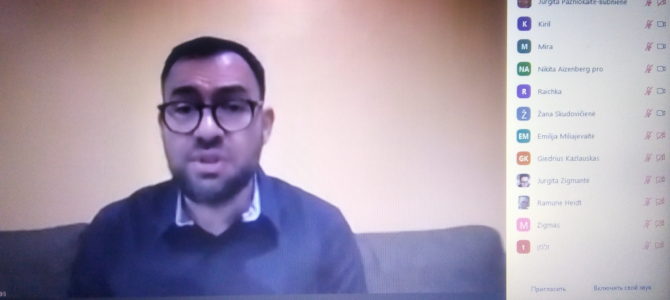
To mark International Holocaust Remembrance Day, the Lithuanian Jewish Community is holding an internet discussion called “When No Eye-Witnesses Remain” at 2:00 P.M. on Wednesday, January 27, at https://www.facebook.com/zydubendruomene

LJC chairwoman Faina Kukliansky, who helped initiate the virtual conference and plans to take part, said: “There are ever fewer Holocaust witnesses who can take an active part in educating society. When the last eye-witnesses die, all responsibility for preserving memory will pass to the younger generations. Memory of the Holocaust should become simply an history lesson where dates, names and locations are the most significant. It should be an eternal lesson in human moral values which moves the heart as well as the mind.”

Watch live, starting at 2:00 P.M.:

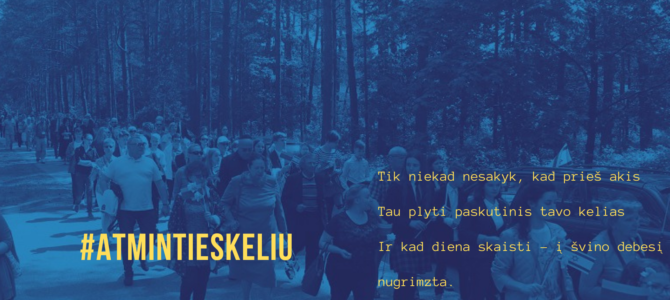
Remembering and Honoring Holocaust Victims: Global #MesPrisimename/ #WeRemember Campaign

Remembering and Honoring Holocaust Victims: Global #MesPrisimename/ #WeRemember Campaign

by Nadežda Spiridonovienė, historian, museum specialist, Nalšia Museum

Lithuania along with the United Nations marks Holocaust Remembrance Day on January 27. Only by preserving the memory of the victims of the Holocaust can we create a safe future for humanity, the kind in which no anti-Semitism, racial, ethnic and religious hatred and discrimination would remain.

We remember the tragedy of the extermination of 6 million European Jews on International Holocaust Remembrance Day.

What happened to people during the Holocaust? What happened in Švenčionys where Lithuanians, Jews, Tartars, Ukrainians, Poles, Russians and other peoples lived together? Where within a territory of a few kilometers people prayed at Catholic church, five synagogues, the Orthodox church and other houses of prayer? What happened 80 years ago to people if there was such a catastrophe, and what can the younger generation do today to insure it never happens again?

They Aren’t Beating Jews on the Street and Drawing Swastikas on Our Backs, But There’s Still a Lot of Hate

They Aren’t Beating Jews on the Street and Drawing Swastikas on Our Backs, But There’s Still a Lot of Hate

According to the Lithuanian Jewish Community, there are currently about 5,000 Jews living in Lithuania, constituting less than one percent of the country’s total population. Despite their small demographic spread, members of the Jewish community living in Lithuania continue to encounter a lack of tolerance and expressions of hate. Lithuanian Jewish Community chairwoman Faina Kukliansky says that although no one is beating Jews or drawing swastikas on their backs, there could be a lot more respect and the sense of shared humanity.

No lack of angry comments, go back to Israel

“Thirty years of independence have expanded our society’s horizons and made us more tolerant of one another. Travelling in other countries people begin to recognize diversity and realize we are all different. Even so, when some positive information appears in the public space about Jews and supportive of this community in Lithuania, there come endless disgusting comments and hate speech,” Kukliansky said.

She revealed she had experienced a number of anti-Semitic attacks in her life and therefore would never allow herself to think of another person as somehow lesser because of their ethnicity, race or other characteristics.

Implementing the IHRA Definition of Anti-Semitism for NGO Funding

Implementing the IHRA Definition of Anti-Semitism for NGO Funding

About the speakers

Prof. Gerald Steinberg is founder and president of NGO Monitor and professor emeritus at Bar Ilan University. His current research focuses on the politics of human rights, soft power and non-governmental organizations (NGOs). His book “Menachem Begin and the Israel-Egypt Peace Process: Between Ideology and Political Realism” was published in 2019.

Ellie Cohanim served as deputy special envoy to monitor and combat anti-Semitism at the U.S. Department of State. Former deputy special envoy Cohanim helped inform and carry out policies and related initiatives that aim to counter global anti-Semitism at the State Department.

Mike Whine is a senior consultant at WJC. Between 2010 and 2012 he acted as lay advisor to the Counter Terrorism Division of the Crown Prosecution Service. In September 2013 he was appointed UK member of the European Commission Against Racism and Intolerance (ECRI), a human rights agency of the Council of Europe.

Olga Deutsch is vice president at NGO Monitor where she works with elected officials around the world. Olga brings extensive experience in international politics and Europe-Israel relations, and expertise in advocacy and building effective strategies to combat delegitimization, BDS and modern anti-Semitism.

The Institute for NGO Research, 10 Yad Harutzim , Jerusalem, 9342148 Israel

Register here.

Happy Birthday, Vilnius

Happy Birthday, Vilnius

We are celebrating the official birthday of Vilnius with great enthusiasm and devotion, and on this occasion we would like to share with you an extraordinary work; Rafailas Karpis and Darius Mažintas accompanied by Dalia Dedinskaite on violin and Gleb Pyšniak on cello present the music video “A Tour of Jewish Vilnius” using the musical composition of Anatolijus Šenderovas.

More on the #MesPrisimename Campaign to Remember the Victims of the Holocaust

More on the #MesPrisimename Campaign to Remember the Victims of the Holocaust

International Holocaust Remembrance Day will be marked around the world January 27 and the Lithuanian Jewish Community has and is inviting the people of Lithuania to join the #MesPrisimename (#WeRemember) campaign to remember the Jewish communities of Lithuania’s cities and towns exterminated in the Holocaust, the survivors and the rescuers.

“We remember the tragedy of the destruction of six million Jews of Europe every year at this time. We invite everyone–heads of state, politicians, the entire academic and education community and all the people of Lithuania–to remember on the eve of International Holocaust Remembrance Day the people who were murdered in the flames of the Holocaust. This is our shared loss, the loss of the entire country,” Lithuanian Jewish Community chairwoman Faina Kukliansky said.
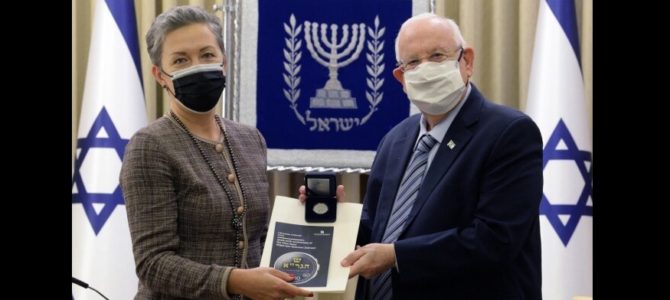
“We appeal to the entire academic and education community: use the opportunity this day provides and give attention to educating young people on commemorating the victims of the Holocaust. Hold virtual meetings with older members of the Jewish communities who remember these horrific periods of history. We still have the unique opportunity to speak directly with the eye-witnesses of these events, so let’s use it,” she added.

Internet Discussion: When All Eye-Witnesses to the Holocaust Are Gone

Internet Discussion: When All Eye-Witnesses to the Holocaust Are Gone

The Lithuanian Jewish Community is holding an internet discussion on International Holocaust Remembrance Day, January 27, called “When All Eye-Witnesses to the Holocaust Are Gone, There Must Still Be Public Commemorations.” The internet discussion is scheduled for 2:00 P.M. Wednesday.

Participants are to include LJC chairwoman Faina Kukliansky, writer and law professor Justinas Žilinskas, Institute of the History and Archaeology of the Baltic Region Hektoras Vituks, Human Rights Monitoring Institute executive board member and philosopher Paulius Gritėnas and director of the Media and Democracy Program of the Vilnius Policy Analysis Institute Donatas Puslys. Šeduva Jewish Memorial Fund director and writer Sergejus Kanovičius is to moderate the event.

Those interested in “attending” are invited to go to the LJC facebook page for the event or youtube channel at the designated time and date.

#MesPrisimename Campaign to Mark International Holocaust Remembrance Day

#MesPrisimename Campaign to Mark International Holocaust Remembrance Day

The annual commemoration of International Holocaust Remembrance Day takes place on January 27, the day Auschwitz-Birkenau was liberated, and this year will mark the 76th time the United Nations’ commemorative day has been marked.

The Lithuanian Jewish Community wants to use this day to teach young people about the Holocaust and to hold virtual meetings between young people and survivors.

The LJC invites you to join the #WeRemember campaign on social media, which is called #MesPrisimename in Lithuanian. You can make a sign or inscription with either variant and photograph yourself with it, then post it with these hashtags, and send it projects@lzb.lt before January 25.

Artist and Cartoonist Leizeris Kaganas

Artist and Cartoonist Leizeris Kaganas

by Polina Pailis on his 110th birthday for Septynios meno dienos newspaper

New trends in art appeared in Lithuania in the early 20th century based on new ideas and the search for new techniques for expression. Many cartoonists and caricaturists appeared in the press in the interwar period. The artist Leizeris Kaganas was especially prolific from 1931 to 1933.

Kaganas was born in 1910 and his place of birth is unknown. In 1929 he attended the Kaunas Art School but left after his first year. His off-the-cuff sketches and caricatures first appeared in the Kaunas newspapers in 1931. In the second half of that year he moved to Riga and competed in sketching contests there. In 1932 and 1933 he held exhibitions in Lithuania. In 1932 he was part of an exhibition in Stockholm. In 1939 and 1940 he lived and worked in Denmark. Kaganas’s fate following the German occupation of Denmark is unknown.

The first article about the young artist appeared in Lietuvos aidas newspaper on September 30, 1931, which said his talent had been noticed from the beginning.

Lithuanian Jewish Community Chairwoman on Importance of January 13 to Nation’s Jews

Lithuanian Jewish Community Chairwoman on Importance of January 13 to Nation’s Jews

Photo: Faina Kukliansky, by Vidmantas Balkūnas, courtesy 15min.lt

Lithuanian Jewish Community chairwoman Faina Kukliansky remembers January 13. Lithuanian Jews, who restored their community finally 30 years ago after decades of restrictions, took part in events in those days [in 1991] Nowadays when they talk about the struggle for freedom, members of the community emphasize the greatest gift: the opportunity to speak freely.

What do you remember personally about that fateful night at the TV tower, the Lithuanian Radio and Television building and the parliament? What does the Jewish community remember about these events?

Jews did the same thing as everyone else in Lithuania. We have collected the recollections of our community members of that fateful night. They watched the television broadcast until it was cut off and they went to the barricades, in Vilnius but also in Kaunas and other cities.

We were there where the majority of Lithuania was. I remember when I travelled from Varėna during that time and saw the road full of tanks. At that time I had an elderly guest from America who said he was seeing tanks for the first time in his life.

On that particular night my friends and I–all of us were together with our young children–followed events, held vigil, waiting for our husbands who were there in the crowd by the barricades or who were doing their job as doctors.

My children are now grown up and always remember that night and the tension. It wasn’t clear what would happen and the tanks were already in place in the city. We didn’t have any information, we had seen the final frame when E. Bučelytė had to quit the [television] studio. We learned that night from medics that there were dead and wounded people.

The Rebel from Žagarė Who Dared Criticize Stalin

The Rebel from Žagarė Who Dared Criticize Stalin

Facts worth knowing about the Litvak poet Osip Mandelshtam

by Rūta Ribinskaitė, LJC member, for 15min.lt

As we mark the 130th anniversary of Osip Mandelshtam, the Lithuanian Jewish Community is inviting the public to take a new look at one of the most renowned poets of the Silver Age of Russian poetry. We present to readers long-forgotten and little-known facts about the phenomenal poet Osip Mandelshtam.

Mandelshtam’s family on both his mother’s and father’s side came from Lithuania. The Mandelshtam family’s roots are in northern Lithuania in the town of Žagarė. There are assertions the family settled in the town in the early 19th century.

The poet’s mother Flora Mandelshtam née Verbolvskaya was a musician and his father Hatzkel-Emil Mandelshtam belong to the first guild of merchants and was a leather tanner. The young married couple lived in Warsaw where the future poet was born on January 15, 1891, and then moved to live in St. Petersburg, Russia, in 1896 and 1897.

Full text in Lithuanian here.

Hebrew Classes

Hebrew Classes

Hebrew classes resume at the Lithuanian Jewish Community January 17 and will take place on Sundays. Classes for beginners start at 11:15 A.M., 1:00 P.M. for advanced students and 2:45 P.M. for intermediate learners.

To register, send an email to ruthreches@gmail.com

LJC Celebrates Life and Work of Osip Mandelshtam on 130th Birthday

LJC Celebrates Life and Work of Osip Mandelshtam on 130th Birthday

The Lithuanian Jewish Community is inviting the public to learn more about one of the best poets of Russia’s Silver Age, Osip Mandelshtam.

Join the virtual day of poetry at 2:00 P.M. on January 15 on facebook by going to https://fb.me/e/1cV0KYzFo

Speakers and critics will present new insights and little known facts in Mandelshtam’s biography and poetry. The actors Viačeslavas Lukjanovas and Larisa Kalpokaitė will read excerpts in Russian and Viktorija Verikaitė will read Lithuanian translations of Mandelshtam’s poetry.

Ilan Club to Teach Sabbath History

Ilan Club to Teach Sabbath History

The Ilan Club and the Lithuanian Jewish Community are inviting children to come together and celebrate the Sabbath this January 15 at 5:00 P.M. on Zoom. We will read the history of the Sabbath together with the children. Please register by sending an email to sofja@lzb.lt or by calling +370 601 46656.

Primary School Students and Parents Invited to Emotional Literacy Workshop

Primary School Students and Parents Invited to Emotional Literacy Workshop

Primary school students and their parents are invited to attend an emotional literacy workshop at 1:30 P.M. on Sunday, January 17. This time we’ll use reading therapy which connects literature with psychology to talk about self-confidence, fun and boredom. Parents are also invited to spend quality time together and to get to know one another better. The workshop will be held on Zoom. Please register by sending an email to sofja@lzb.lt or by calling *370 601 46656.

#PiešiuLaisvę

#PiešiuLaisvę

On the eve of January 13 the Lithuanian Jewish Community invited children and young people to draw a forget-me-not flower to commemorate those who defended Lithuanian freedom and insured the independence of the state. Thank you to the Kaunas Jewish Community, the Panevėžys Jewish Community, the Šiauliai Regional Jewish Community, the Vilnius Jerusalem of Lithuania Jewish Community, the Klaipėda Jewish Community and especially to the children: Bernardas, Ariana, Vincas, Danielius, Kajas, Luiza, Daniel, Tėja, Sofija, Luisa, Emilis, Anita, Polina, Augustinas, Eliza, little Beatryčė, Diana, Zoja, Adomas, Arnas, Sonia, Natanas, Liuka, Diana, Vladikas, Zlata, Nikolė, Marija, Nora, Dovas, Meira, Liza, Markas and all the rest.

Here are some of the drawings we received.

Our Freedom We Won Back Thirty Years Ago on January 13

Our Freedom We Won Back Thirty Years Ago on January 13

Tanks next to Lithuanian Radio and Television. Photo: P. Lileikis

Aleksandra Jacovskytė, scenographer, photographer, graphic artist

Šura Jacovskytė remembers those days in January of 1991. She lived in the center of Vilnius and her friends used to gather at her apartment during those tense days and they watched events unfold together on LRT television.

“I saw and I still remember the final frames when Soviet soldiers broke into the television [studio], the image vanished and there was darkness… It was a horrible feeling,” Šura recalled. “I felt the same as everyone else did. I couldn’t believe the Soviet miasma would come back. The people of Lithuania were already different, they had got a taste of freedom, so it was impossible to go back. It was by then inconceivable to support the actions of the government of the Soviet Union, what they were getting up to, that was totally clear. Even a few months later, after the coup began, I told myself: ‘No, this cannot be…'”

Algirdas Malcas, director, Vilnius the Jerusalem of Lithuania Jewish Community

“I was at the parliament during those days. I walked every day from one site to another, and I had arrived with my dog. I used to go day and night, like a watchman’s rounds. I lived in the center so friends used to come to me to warm up. I was young then and the memories are unerasable.

Drawing Contest to Mark January 13 Holiday

Drawing Contest to Mark January 13 Holiday

Dear leaders, members and friends of the Lithuanian Jewish Community,

As January 13th, Lithuania’s Day of the Defenders of Freedom, approaches we intend to mark the 30th anniversary of the blood events at the Vilnius Television Tower when Soviet troops killed unarmed civilian protestors.

On January 13, 1991, Soviet tanks and troops attempted to take over the television tower, the Radio and Television Committee headquarters and other sites in the capital of the breakaway Soviet republic.

The LJC invites children and young people to use the day to learn about this history and to don in solidarity with Lithuanians the forget-me-not flower symbol. Please draw your own forget-me-not and send in a high resolution photograph of the drawing or of you holding the drawing in your hand.