
Learning

On Jewish Motifs, Historical Facts and Lithuanian Identity in Kristina Sabaliauskaitė’s Work

Kristina Sabaliauskaitė

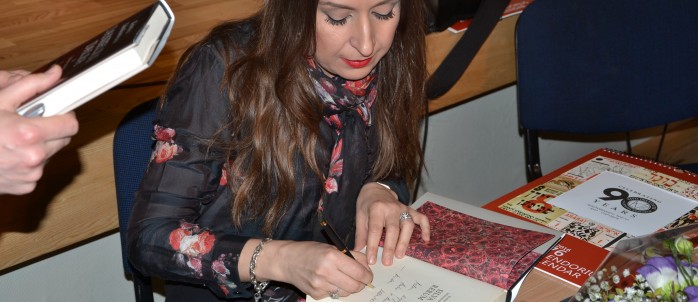
The 24th meeting in the Destinies series of seminars and lectures took place at the Lithuanian Jewish Community on February 17, called “Jewish Motifs in the Works of Writer and Art Historian Dr. Kristina Sabaliauskaitė. Teacher and essayist Vytautas Toleikis moderated the meeting and LJC deputy chairwoman Maša Grodnikienė, the organizer, served as MC and introduced Sabaliauskaitė in person to the audience, noting she was very popular outside of Lithuania as well in Poland and Latvia.

Moderator Toleikis addressed the full hall saying “Kristina has returned Lithuania’s historical memory. She brought back 200 years of history which, due to [historian] Šapoka’s paradigm were lost to Lithuanian consciousness. ‘Silva Rerum’ [‘Forest of Things’ trilogy by Kristina Sabaliauskaitė, 2008, 2011 and 2014] is for us an unexpected historical good fortune, as if the nation had won the lottery. We are lucky Kristina has brought back centuries of history. The author’s memory is not selective, she writes about everything in the past, about Poles and Jews as if they were her own people. This is the attitude of a 21st-century person, it could not be otherwise.”

The conversation during the Destinies meeting revolved around Jewish characters and how the figure of the Jew came to be included in Kristina Sabaliauskaitė’s works in a way very different from the more common portrayal found in Lithuanian literature. Sabaliauskaitė chose the elite person of the doctor Aaron Gordon.
A Great Loss

Kaganas

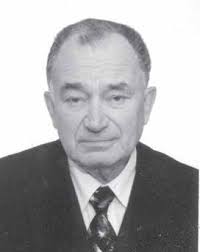
The Lithuanian Jewish Community is sad to report the death of Isaak Kagan (b. March 13, 1929 in Kaunas), Lithuanian attorney and public figure.

From 1947 to 1952 Kagan studied at and graduated from the Law Faculty of Vilnius University. He worked as a teacher and as legal consultant for different organizations, serving as a consultant on the judicial commission as well. He was a consultant for the Justice Ministry from 1971 to 1973 and worked as a lawyer at the 2nd Office of Lawyers of the City of Vilnius from 1974 to January of 2009.

Kagan wrote and had published a number of monographs and about 50 articles on law, some appearing in the books called “Selected Speeches by Lawyers in Court” and “On the Status of the Defendant in Criminal Proceedings.” He also delivered a presentation called “Communist Regimes: Perpetrators of Ethnic Genocide” as a member of the Lithuanian independence movement Sąjūdis, which he joined in 1988. He was a member of the executive committee of the Lithuanian parliament from 1992 to 1994, a member of the Lithuanian Sąjūdis Commission for Drafting a Constitution for the Republic of Lithuania in 1992, a member of the Public Constitutional Protection Commission, the Lithuanian Council of Attorneys, the Lithuanian Citizens Charter, the Supreme Election Commission and the vice president of the Lithuanian UN Association, among other organizations.

The Lithuanian Jewish Community sends all of our deepest condolences to his wife and family.

Marijus Jacovskis: “Every New Creations Begins in Existential Terror”

M.Jacovskis
Bernardinai.lt Austėja Mikuckytė

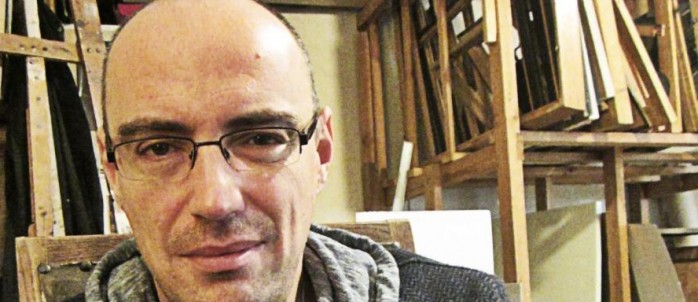
Scenographer Marijus Jacovskis’s worktable is covered with designs and drawing implements. He says the fall is a very productive time for him. The atmosphere of creative ferment is palpable in the artist’s studio. Jacovskis talks about his taste for drama, memorable works, relationships with directors and about authorities in the field, and gives an assessment of his own artistic tendencies.

How did you decide to study scenography?

It’s connected with family, of course. My father and aunt graduated from the Art Academy. It was almost a given I would study there, too. There was a moment, though, when I was thinking I would study painting, but I changed my mind at the last moment.

On the one hand, I realized painting is not a profession, but something intangible, something impossible to learn formally. On the other hand, painting is a very complex and complicated activity. I realized painting was too serious for me. I thought, well, I can paint without a studio just as well, but I didn’t become a painter. I only work in the theater.

Full interview in Lithuanian here.
bbb

Presentation of New Issue of Brasta, an Almanac of Jewish History and Culture

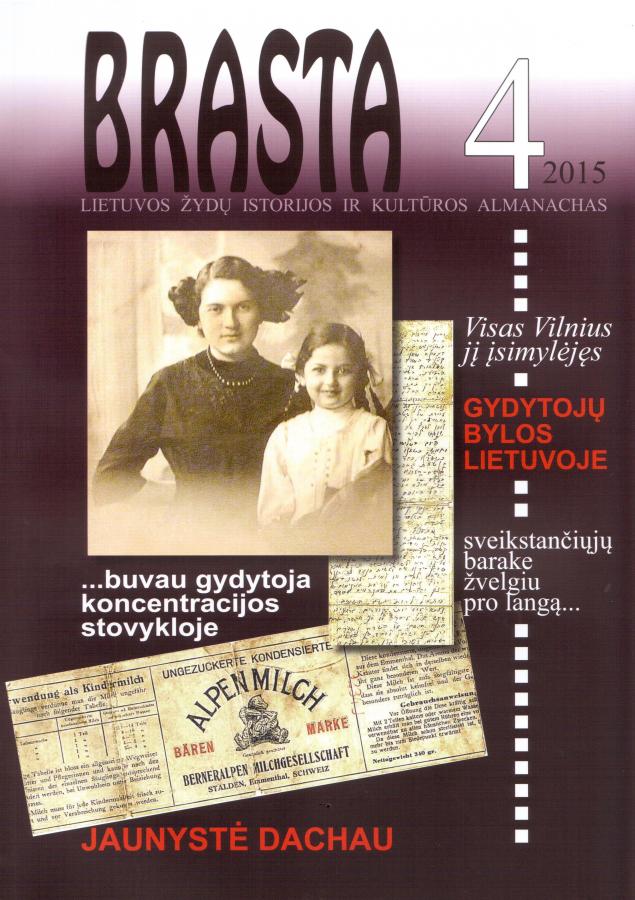
You’re invited to attend a presentation of issue number 4 of Brasta, an almanac of Jewish history and culture, at the Vilnius Jewish Library at Gedimino prospect no. 24, Vilnius, at 4:00 P.M. on Friday, February 19. This issue is in English and Lithuania and is arranged on the theme of the origins of Jewish humanitarian medicine and Vilnius doctors.

Brasta

“This issue of Brasta is not just about showcasing famous or not-so-famous names from the world of medicine, but to make explicit the foundational principles of Jewish medicine and the loyalty of doctors to a centuries-old tradition. The publication attempts to bring into focus the core of Jewish medicine and its foundations enriching the practice and science of healing world-wide, to publicize the traditions Lithuania’s doctors held dear and which are still alive today,” editor-in-chief Dalia Epšteinaitė said.

Attending the event: MEP Petras Auštrevičius; chemist, biotechnologist, businessman and scholar professor Vladas A. Bumelis; historian Arūnas Bubnys; editor-in-chief, author and translator Dalia Epšteinaitė; and project director and director of the Vilnius Jewish Library Žilvinas Beliauskas.

Brasta is a publication published by the Vilnius Jewish Library’s Charity and Welfare Foundation. It describes itself as an almanac of Jewish culture and history which publishes popular, literary and theoretical pieces. The annual publication presents readers interesting positions and insights by Lithuanian and foreign authors, studies and ongoing research on Jewish cultural phenomena and insight and analysis of same.

Bernardinai.lt
bbb

Delegation from Argentine Rabbinate Visits Panevėžys Jewish Community

Panevez vasaris

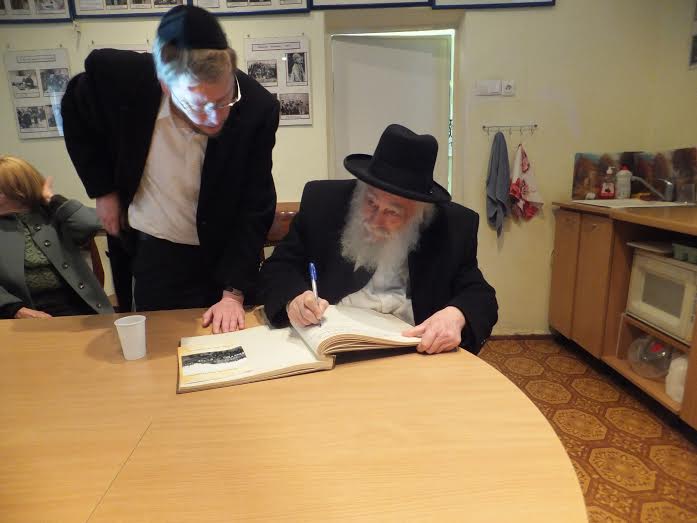
Rabbi Shmuel Arieh Levin from Argentina visited the Panevėžys Jewish Community on February 15. He arrived with eight members of his religious community. The purpose of the visit was for the delegation to observe with their own eyes the state of the Jewish community in Panevėžys, to learn more about their history, to learn about the world-renowned yeshiva and to find out more about the founder of the Ponevezh yeshiva, Rabbi Yosef Shlomo Kahaneman, the Ponovezher Rov and chief rabbi and former member of the Lithuanian parliament who founded in 1919 the yeshiva where 500 students from Europe studied. Rabbi Kahaneman and his eldest son, who had diplomatic status, left for America in 1940, and during World War II moved the Ponevezh yeshiva to, or reëstablished it in Bene Berak (Bnei Brak, with a sister institution in Ashdod), Israel. Rabbi Levin was graduated from the Ponevezh yeshiva in Israel and personally knew Rabbi Kahaneman and his son Elias Kahaneman. Today the world-famous yeshiva where more than 1,000 students study is led by his grandson, Rabbi Eliezer Kahaneman (Cohenman).

Vampires in Medieval Jewish Texts: What Are They Doing There?

Vampires in Medieval Jewish Texts: What Are They Doing There?

Haaretz reports on an unexpected find in old Hebrew texts and commentaries from Europe.

Secure in their monotheism, Jews may scoff, but some of the earliest texts on vampires were written in Hebrew by their coreligionists.

by Elon Gilad

The vampires which abound in popular culture today are, for the most part, a literary embellishment of an old Slavic belief that under certain circumstances, the dead can rise from their graves at night and kill their neighbors, friends and family.

Modern Jews might scoff at vampire culture, secure their monotheism rules out belief in such nonsense. But they should hold their tongues. Some of the earliest texts on vampires were written in Hebrew by their coreligionists, albeit after learning about the plague of the undead from their neighbors.

Lithuanian Jews, Fostering Lithuanian Independence since 1918. An excerpt from Vilius Kavaliauskas’s book

sarasas2
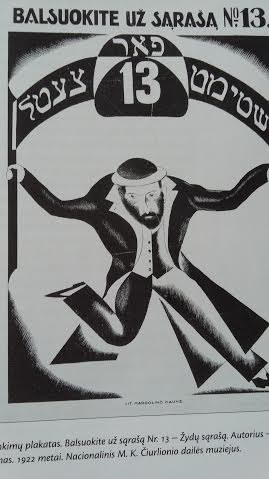
Election poster. Vote for List Number 13–the Jewish List.

A translated excerpt from Vilius Kavaliauskas’s book “Pažadėtoji žemė – Lietuva,” or “Lithuania, the Promised Land”:

After independence was reestablished and the Lithuanian state was established on democratic principles on February 16, 1918, one of the most important events in Lithuanian Jewish history was the Jewish Affairs Institute established by the independent state in 1919, which in essence performed the functions of a government ministry. Dr. Maksas Soloveičikas became minister without portfolio.

From 1918 to 1926 Lithuania’s Jewish population successfully involved themselves in the country’s governance structures and actively ran for posts in elections to municipal bodies and the parliament of the Republic of Lithuania. There were a number of Jewish members of the ministerial cabinet of the Lithuanian government as well: minister without portfolio for Jewish affairs [sic] Jokūbas Vygodskis, Maksas Soloveičikas, Bernardas Fridmanas (from Panevėžys, judge at the Panevėžys District Court in 1925) and Simonas Rozenbaumas.

Doctor of philosophy Maksas Soloveičikas (1883-1957) was exceptional for his erudition and education. He studied in Petropol [Petrograd, Leningrad, Saint Petersburg. etc.], Germany and Switzerland. He was an active member of the Zionist movement and a Jewish press correspondent. He spoke Russian with his fellow ministers. In 1921 he was elected to the World Zionist executive committee in London.

The cabinet of ministers tolerated the Jewish community’s aspiration to turn the ministry into a political institution while the Vilnius question remained unsolved. When the Christian democrats came to power in 1924, the accreditation for the ministry was withdrawn and the ministry ceased to exist.

Chess Tournament to Celebrate Lithuanian Independence Day Held at LJC

332b6b05-17f9-4554-880a-50794b55861a

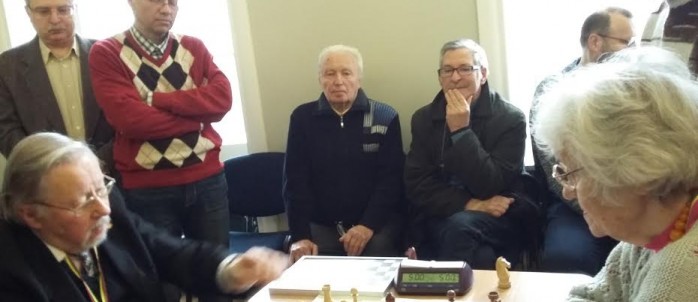
A chess tournament held by the Rositsan and Maccabi elite checkers and chess club dedicated to celebrating February 16, Lithuania’s pre-war independence day, began at the Lithuanian Jewish Community on schedule at 11:00 A.M. on February 14.

Tournament director and FIDE master Boris Rositsan welcomes contestants and gave the floor to Vytautas Landsbergis, the first chairman of the independent Lithuanian parliament, Lithuanian independence leader and avid chess player. Not only avid, but good: he won a match against Marytė (Marija) Kartanaitė, Lithuanian chess master many times over, at the LJC. “Playing chess, it’s important not to lose the initiative and not to give up,” Landsbergis said. “It’s important how much space you occupy. The opponent, it seems, is pressuring you to give up, but don’t lose the initiative. It’s nice chess players are honoring February 16, and that Boris Rositsan wants to demonstrate Lithuanian history through chess. Chess is the school of life and part of the culture of our country, and influenced our independence,” he commented.

Lithuanian Jewish Community chairwoman Faina Kukliansky spoke and characterized chess players as educated and honorable people. This year has been named the Year of Kazys Grinius, the interwar Lithuanian president and a Righteous Gentile who was also a fine chess player, and who rescued chess player Dima Gelpern from death during the Holocaust.

Opening of Exhibit “YIVO in Vilnius: The Legend Begins”

YIVO-d5281c3b6c78a6447dd232c1c135c8d3.jpg

You are invited to the opening of the exhibit “YIVO in Vilnius: The Legend Begins” at the Lithuanian National Museum at Arsenalo street no. 1 in Vilnius at 4:00 P.M., February 18. Exhibit curators: Dr. Lara Lempertienė and Dr. Giedrė Jankevičiūtė.

The exhibit was created to celebrate the 90th anniversary of the creation of YIVO in Vilnius. It includes previously unseen material from Lithuanian state collections on the history and work of YIVO. It demonstrates how YIVO’s work gave stimulus to the intellectual life of the Jews of Vilnius and the wider Central and Eastern European arena. It also presents the city and urban community as a source of inspiration and as the historical and cultural hearth and sustenance for the institute’s work. The exhibit was first shown at the Galicia Jewish museum in Cracow from September 30 to November 8, 2015. The exhibit to open in Vilnius contains additional material.

Israeli Scientists Discover Early Detection Method for Lung Cancer

40
by Michael Ordman

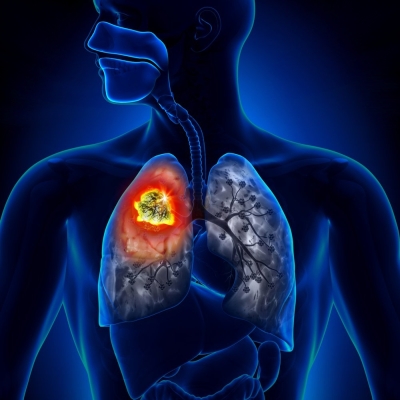
Scientists at Tel Aviv University and Rabin Medical Center have discovered they can detect lung cancer early in smokers by performing a CAT scan at the time they are admitted as pneumonia patients. Often the pneumonia is caused by young cancer cells blocking airways.

According to the American Journal of Medicine, lung cancer is the leading cause of cancer mortality in the US, associated with a 5-year survival of 17%.

The most important risk factor for lung cancer is smoking, which causes approximately 85% of all lung cancer cases. Only 15% of patients are diagnosed at an early stage.

Lithuanian Jewish Community Webpage Adds Academic Section to Mark 25 Years of Lithuanian Independence

Many scholars and academics took part in the early days of the Lithuanian Jewish Community during the period when Lithuania was reestablishing national independence. They formed their own Union of Scholars. This organization is no longer active. The Community would like to revive the Union of Scholars in the name of its noble founders who did so much for Lithuania and the Jewish Community, including historian and sociology professor Izraelis Lempertas; physics professor Adolfas Bolotinas; philologist, lexicographer and Lithuanian language reformer Chaceklis Lemchenas; and many others. The time has come to continue the Union’s work. We, members of the Lithuanian Jewish Community, are not just citizens of the Republic of Lithuania and consumers, we are creators. Scholarship and research is of utmost importance to us. We can set learning against the ignorance of anti-Semites. A new generation of productive scholars has matured in the Jewish Community. Although learning knows no communal boundaries, academic studies provide us with more self-confidence and significance, and therefore we will support in multiple ways scholarship and research in all fields. We begin our new Learning section with an introduction to the psychological and other effects of the Holocaust. Mazl tov!

Academic Insight into the Holocaust Experience

Dita Shperling: Germans Did Not Distinguish Lithuanians from Jews

“During the first days of the war the Germans who came to Kaunas couldn’t tell the difference between Jews and Lithuanians, but Lithuanians helped them to do,” Kaunas ghetto prisoner Dita Shperling recalled, citing the words of the German soldiers themselves.

09223

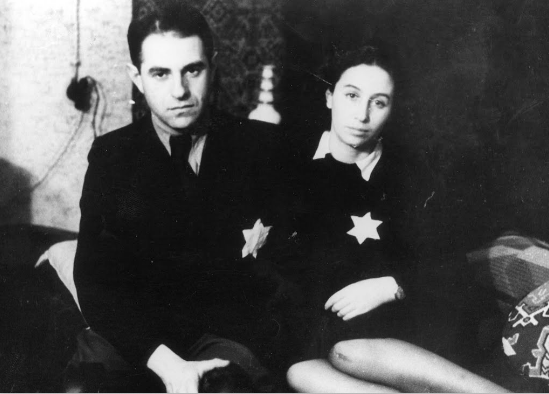
Dita (Yehudit) Schperling and her husband Yuda Zupowitch

Dita Schperling tries to travel every summer to Vilnius from Israel where she lives. She agreed to discuss her experience in the ghetto with staff from the LJC webpage.