
Learning

The Residents of Darbėniai Who Saved Their Doctor Jochveda

After the army of Nazi Germany invaded Soviet-occupied Lithuania on June 22, 1941, they soon began to carry out macabre repression turning into genocide against Jewish Lithuanian citizens.
1100-07
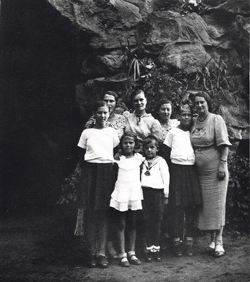
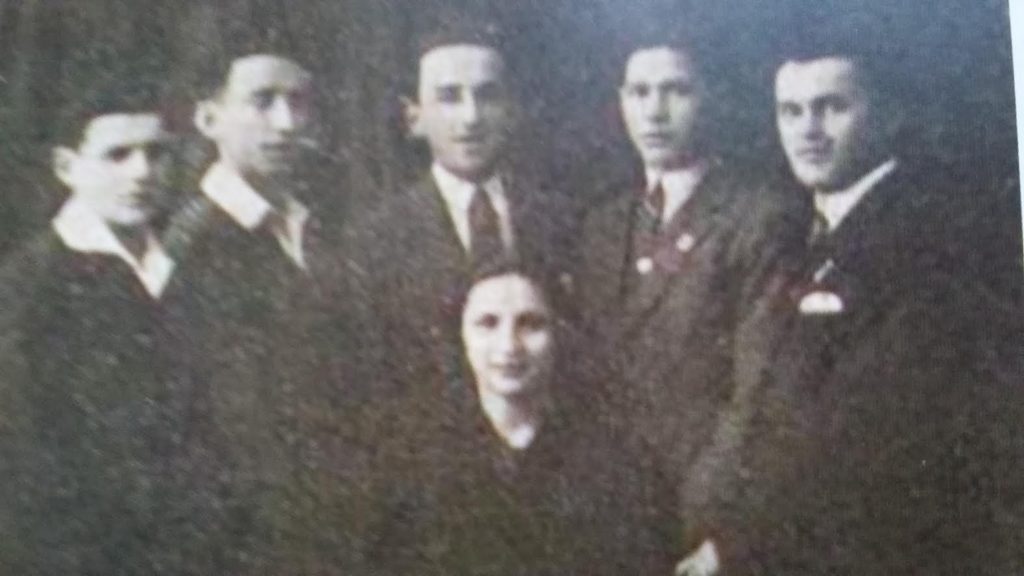
J. Marijampolskaitė (right) with her friends from
Darbėniai and children in Palanga, ca. 1935

Although a small portion of local residents became staunch Nazi supporters and contributed to the repressions, the majority felt sorry for their Jewish neighbors and tried to help them. Even now old-time Darbėniai residents remember the almost legendary story of the ultimately tragic rescue of the doctor of Darbėniai, Jochvedas Marijampolskaitė, discovered by this author [Romualdas Beniušis] as he browsed through the case of the deportation to Siberia of Būtingė village residents Katerina and Benediktas Bagdanavičius.

Jochveda Marijampolskaitė was born to a Jewish family in Vilkaviškis on April 23, 1898. It wasn’t possible to learn more about her family and childhood. The Lithuanian Central State Archive conserves documents concerning Jochveda Marijampolskaitė’s studies from the Medicine Faculty of the Lithuanian University, which they have shared with US-resident professor of history E. Goldstein, revealing some new information about her life. This includes a certificate showing she was graduated with a silver medal from the Tambov Women’s Gymnasium in 1917. It appears she was evacuated to Russia during World War I together with the students and staff of the Marijampolė [Staropol] Girls’ Pre-Gymnasium who moved to Trakai in February of 1915 when the Germans occupied Marijampolė, and then as the front drew near withdrew eastward to the town of Tambov in western Russia. She soon matriculated at one of the oldest schools of medicine in the Russian Empire, the medical faculty of Kharkov University, established in 1804. Female Jews were allowed to study medicine in Russia beginning in the late 19th century and many girls dreamed of pursuing this prestigious career with a steady salary and insuring social status. Students from Lithuania had studied at Kharkov University for a long time, and a Lithuanian Students Association was established there in 1894.

Full story in Lithuanian here.
Dubi Club Announcement

Dear parents and Dubi Club members,

Club activities won’t be held on November 27, 2016. The next activities will be on December 4, 2016.

We remind you Dubi Club is for 4-6-year-olds.

Club activities usually take place every Sunday from 11:00 A.M. to 2:30 P.M.

For more information, please contact Dubi Club coordinator Margarita Koževatova by telephone: +370 618 00577

Attend Unveiling of Plaque Commemorating 1927 Lithuanian Table Tennis Champions in Kaunas

makabi-tenisininkai1927

Photo of 1927 Lithuanian table tennis champions. Sitting: O.Gurvičaitė, champion in women’s group. Standing from right: I. Šimensas (first place), I. Keperis (second place), B. Podzelneris (director of the table tennis section of Makabi), I. Godas (third place), Ch. Šimensas (fifth place).

A plaque will be unveiled at 2:00 P.M. on Tuesday, November 29, on the western façade of the A. Martinaitis Art School in Kaunas located at Šv. Gertrūdos street no. 33 with the inscription:

“In this building on March 12 and 13, 1927, the first LITHUANIAN TABLE TENNIS CHAMPIONSHIP took place, organized by the Makabi athletics club.”

Makabi Athletics Club
Lithuanian Table Tennis Association
Kaunas Jewish Community

Children’s Chess Tournament

The Lithuanian Jewish Community and the Rositsan Elite Chess and Checkers Club invite you to a children’s chess tournament at 11:00 A.M. on November 26, 2016.

The tournament is dedicated to the memory of former world champion Michailis Talis.

The tournament will take place at the Lithuanian Jewish Community, Pylimo street no. 4, Vilnius.

Tournament director: Ričardas Fichmanas

For further information and to register, please contact:

info@metbor.lt
+3706 5543556

Professor Sofya Gulyak Discovers Documents about Her Family in Lithuanian Central Archive

Professor Sofya Gulyak of London visited the Panevėžys Jewish Community during her trip to Lithuania to find out more about her family’s roots. Many Jews from around the world are currently looking for their roots in the Lithuanian archives. The documents they are finding reveal interesting family histories.

Sofya learned from the Central Archive her ancestors lived in Panevėžys. She received copies of the passports of her great-grandfather Meier Gelvan, great-grandmother Keila Ringaitė-Gelvan and grandmother Rocha Gelvan from the archives in 2013.

Litvak Bob Dylan Hedges on Nobel Again

In a seeming about-face, US folk musician Bob Dylan, born Robert Zimmerman to a Litvak mother in Duluth, Minnesota, has now announced he will not attend a ceremony to confer the Nobel prize for literature to him scheduled for December 10 in Stockholm, Sweden.

Britain’s Guardian newspaper reported he had contacted the Nobel committee to say he wasn’t coming.

Initially the committee had been unable to contact him, and dedicated fans had hoped he would decline the prize as inappropriate and an attempt by the increasingly irrelevant Nobel prize group to remain relevant following earlier follies, including awarding US president-elect Barak Obama the peace prize for no reason. Nobel committee members attacked Dylan as rude and even arrogant for not answering their telephone calls.

Now it appears Dylan will accept the prize, just not in person.

The Guardian quoted the late Leonard Cohen, a fellow North-American-born Litvak, who advised Dylan the prize was superfluous: “…Before he died, Dylan’s songwriting peer and friend Leonard Cohen said that no prizes were necessary to recognize the indelible mark records like Highway 61 Revisited had made on popular music. ‘To me,’ he said, ‘[the Nobel] is like pinning a medal on Mount Everest for being the highest mountain.'”

Full story here.

Leonard Cohen, Litvak, Dead at 82

Canadians, Israelis and fans around the world continue to mourn the loss of one of the world’s great songwriters and singers, novelist and poet Leonard Cohen, born in Montreal in 1934 to Litvak mother Masha Klonitsky, daughter of Talmudic writer Rabbi Solomon Klonitsky-Kline, and father Nathan Cohen, whose father came from Lithuania.

Cohen passed away at his home in Los Angeles on the night of November 7, 2016. He was buried in the family plot before his death was announced publicly.

Cohen’s fourteenth and final album, You Want It Darker, was released just two weeks before his death, on October 21, 2016.

The Lithuanian Jewish Community extends our deepest condolences to his family during this time of grief.

International Tolerance Day in Panevėžys

gennprin

In 1996 the General Assembly of the United Nations passed resolution 51/95 inviting member-states to observe November 16 as the International Day for Tolerance. The day has been observed in Lithuania for over a decade now. Each year’s commemoration has featured a different symbol. This year it was a bird. More than 700 cultural and educational institutions marked the day. Tolerance birds decorated schools, kindergartens, private educational agencies and daycare centers.

The Šviesa special education center organized Tolerance Day events for November 14 through 16 in Panevėžys, in which the Panevėžys Jewish Community participated. Also participating were representatives from the Panevėžys primary school for the deaf and hearing-disabled and students and teachers from other primary and secondary schools. Sign-language interpreters conveyed speech to deaf members of the audience.

Vilnius: In Search of the Jerusalem of Lithuania

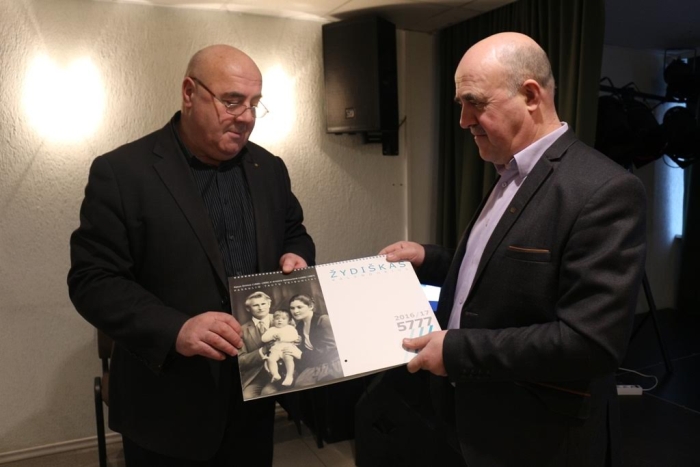
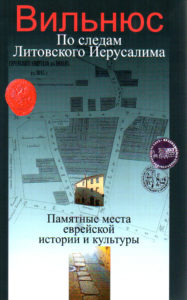
The Lithuanian Jewish Community this week hosted the launch of the second corrected and expanded edition of Irina Guzenberg and Genrikh Agranovsky’s book in Russian about Jewish Vilna.

The new edition has been reorganized with a new structure and better indices of names and sites.

Author Irina Guzenberg has done exhaustive research to provide authentic street names from the period and the book is graced with attractive period photographs. Much of the history is unknown to modern residents of the Lithuanian capital, which was not very Lithuanian before the 1950s. Before the war one heard Yiddish, Polish and Russian spoken on the street.

World Union of Jewish Students Nominates LJC Student Union for Awards

The World Union of Jewish Students has nominated the Lithuanian Union of Jewish Students of the Lithuanian Jewish Community for awards in two categories.

Lithuanian Union of Jewish Students director Amit Belaitė is up for one of the awards, and says her friends and colleagues in the Union need to learn more about Jewish life and Jewish traditions. She said Jewish students in Lithuania have been cut off from many Jewish things, including how to celebrate Sabbath, largely because Jewishness was forced into hiding in Lithuania after the Holocaust. She added there is a revival underway in Lithuania, including of Jewish holidays our great-grandparents celebrated, and said now there is a great deal of communication with Litvaks of the same age as Union members living around the world who have not lost their traditions.

amit

LJC and Dalia Kutkaitė Artistic Gymnastics Academy Invite Girls to Gymnastics Class

Dear girls and parents,

We are pleased to announce the Lithuanian Jewish Community and the Dalia Kutkaitė Artistic Gymnastics Academy are holding girls’ gymnastics classes! Girls aged 5 to 6 are invited to attend and learn this graceful and charming sport. Gymnastics activities are to begin at 3:00 P.M. on December 2. The class lasts one hour.

Equipment needed: tight shirts, tight tights and white stockings. You will also need a warm sweater (because the hall is cool). Hair should be worn tied on top of the head so it doesn’t interfere.

Please register: natalijade@gmail.com

Challa Event at the Kaunas Jewish Community

The Lithuanian Cultural Service supports the Lithuanian Jewish Community’s campaign to revive the baking of challa in the different regions of Lithuania.

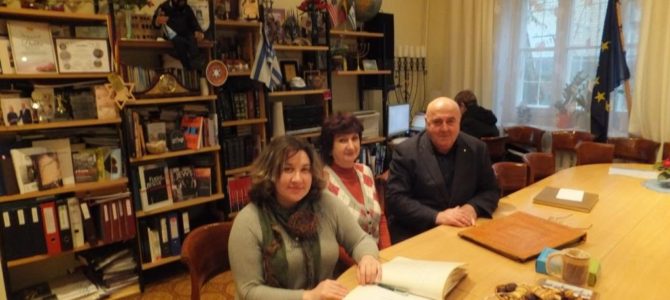
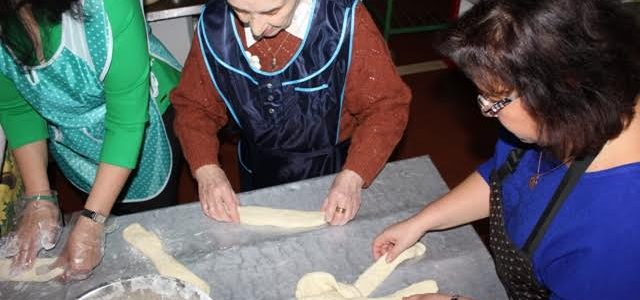
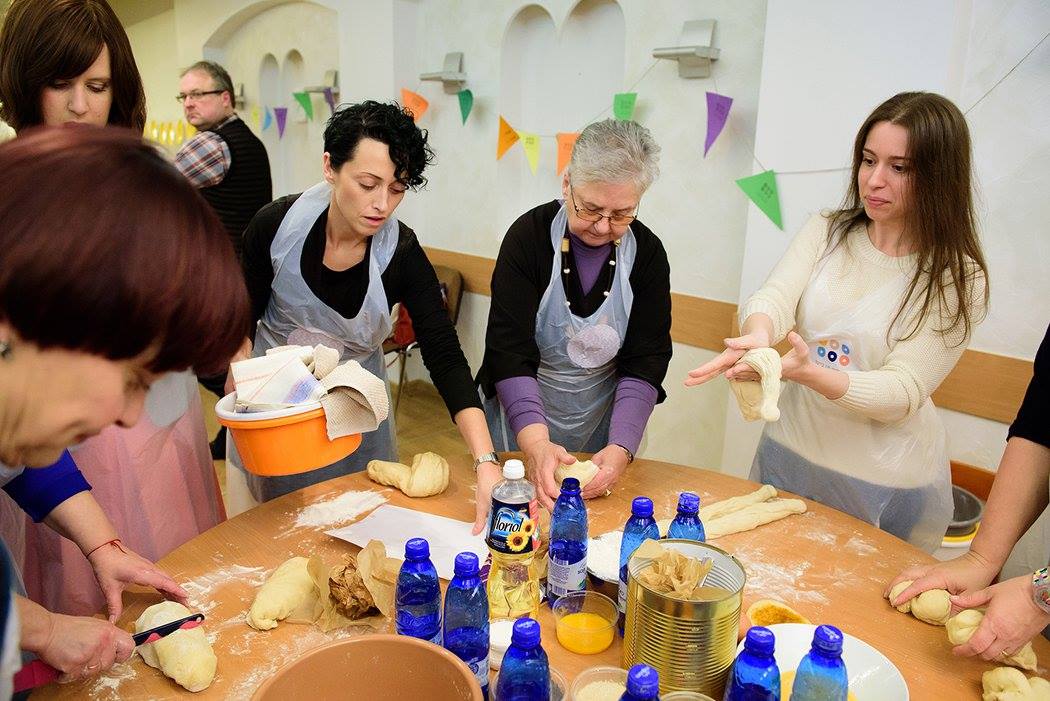
On November 11 members of the Kaunas Jewish Community met together and separately to bake challa, and there was a strong sense of concentration and responsibility but also a lot of positive emotions. The fresh-baked challa adorned the Sabbath table within hours. Iser Shreiberg, the chairman of the Kaunas Hassidic religious community, gave an interesting presentation o the symbolism and traditions of making challa. Guests included former Kaunas ghetto prisoner Asia who came all the way from New York with her husband and son these many years later to her hometown to see her memories of early childhood again and to look for traces of the stories her mother told her.

kchala2

Sabbath Challa in Panevėžys

The Panevėžys Jewish Community joined the Shabbos Project November 11 to bake challa bread. Participants included staff from the educatio department, teachers and Community members.

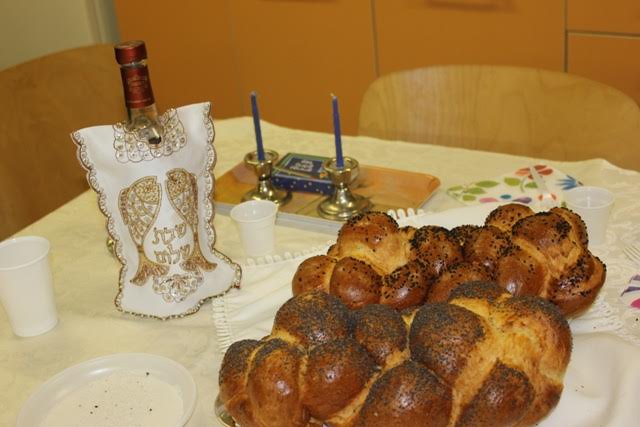
Preparations for the baking event got underway in the morning and all the necessary ingredients were purchased: eggs, yeast, oil, salt and poppy seeds. The main ingredient was of course highest-quality flour. Kosher flour left over from last year worked perfectly for making the dough. Different recipes were suggested, but in the end the traditional recipe was used, because the Panevėžys Jewish Community’s oven is not large and can’t be used for large-scale production. Housewife Virginija prepared the dough.

Administrator Lina gave a brief talk about challah-baking traditions in Jewish families. Although every housewife has her own recipe for challah bread baked for the Sabbath, the result is always the same: a blessed and delicious loaf of challa.

Chess Tournament Dedicated to the Late Alvydas Rajunčius

The chess tournament to be held by the Rositsan and Maccabi Chess Club at 11:00 A.M. on Sunday, November 20, will be dedicated to the memory of Alvydas Rajunčius.

The tournament will take place at the Lithuanian Jewish Community, Pylimo street no. 4, Vilnius. Tournament director: FIDE master Boris Rositsan.

For more information and to register:

info@metbor.lt
+3706 5543556

Letter to Rabbi Krinsky

Dear Rabbi Krinsky,

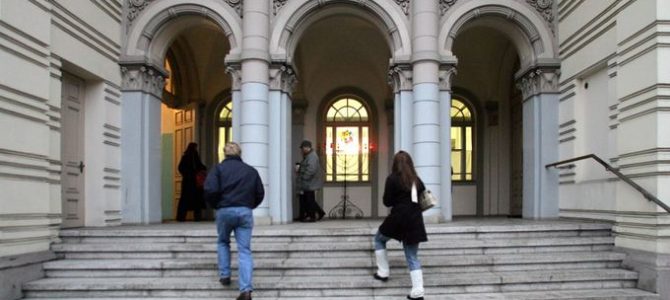
As you may know, the Vilnius Choral Synagogue has been closed for repairs and we need to confirm some very basic rules we will need you to respect after the synagogue is reopened.

We would like you to know that your refusal to follow these rules will unfortunately force us to not allow you or anyone else disobeying these rules to enter the building and participate in the services.

The rules in question are as follows:

1. Vilnius Choral Synagogue is run by rabbis who have been officially appointed by the Lithuanian Jewish Community.

2. Any religious activities taking place in the synagogue must be approved by the official Community rabbis and any other activities must be approved by the chairman of the Vilnius Religious Jewish Community.

3. Anyone who wishes to organize a party, wedding ceremony, brit milah, lecture, class, meal, speech, bar/bat mitzvah or any other event has to confirm it with an official Community rabbi and receive approval ahead of time.

4. Any food or food products must be inspected and approved by an official Community rabbi before being brought into the synagogue.

5. Any prayer books or learning material/books for studying must be approved by an official Community rabbi before being brought into the synagogue.

6. Every Jew is welcome to come to the synagogue and participate in our services, but no one may conduct any services or any part of a service without the permission of the official Community rabbis. Only Community rabbis have the right to decide on the procedures of aliyos, hazakos, yorzeit and all tefillim-related issues according to established Lithuanian custom.

Any person who does not respect these basic rules cannot be a part of the synagogue (just as in all other synagogues).

We kindly ask you to acknowledge that you are ready to follow the aforementioned rules of the synagogue. Regrettably, until you do so, we have no other choice but to bar your entry to the synagogue.

Thank you for your understanding, and we await your reply.

Signed,
Rabbi Krelin
Rabbi Izakson

On Removal of the Plaque Commemorating Jonas Noreika

November 11, 2016
No. 367

To: Mayor Remigijus Šimašius
Vilnius Municipal Administration

On Removal of the Plaque Commemorating Jonas Noreika
November 11, 2016
Vilnius

Currently there is a commemorative plaque on display on the façade of the library of the Lithuanian Academy of Sciences building located at Žygmantų street no. 1/8 in Vilnius dedicated to the dubious fame of Jonas Noreika, [also] known by the pseudonym General Vėtra. Information has reached us the plaque commemorating this person on the building at Žygmantų street no. 1/8 possibly was put up illegally, without required permission from the municipality of the city of Vilnius, and possibly in violation of the requirements of other laws as well. Please provide the Lithuanian Jewish Community with all documentation related to installation of the aforementioned commemorative plaque.

The honoring by commemorative plaque of this person with his undisputed role in committing genocide against citizens of Lithuania doesn’t make sense to the Lithuanian Jewish Community.

For information on and a copy of the order signed by Jonas Noreika seizing the property of Jews, please see http://www.anarchija.lt/component/content/article/81-istorija/38185-kodel-jonas-noreika-generolas-vetra-paskelbtas-vidvyriu and http://www.jpost.com/Opinion/Will-Lithuania-continue-to-honor-Nazi-collaborators-412701

The municipality of the city of Vilnius needs to take a look at article 170 of the criminal code of the Republic of Lithuania (incitement against any national, racial, ethnic, religious or other group of people) in which section 2 defines as a criminal act the mockery, belittlement, encouragement to hate or incitement to discriminate against a group of people or a member of that group based on gender, sexual orientation, race, ethnicity, language, origins, social status, religious belief or personal convictions and views.

The installation of a plaque commemorating Jonas Noreika in the city of Vilnius is wholly understood by the Lithuanian Jewish Community as a public mockery of the group of Lithuanian citizens who suffered the most during World War II, the Jews of Lithuania.

Please take measures quickly for the removal of the possibly illegal plaque from the building in Vilnius which commemorates Jonas Noreika and which publicly mocks the Jewish people.

[signed] Faina Kukliansky, chairwoman
Lithuanian Jewish Community

Shabbos Project a Great Success in Vilnius

ghg

The Lithuanian Jewish Community’s Shabbos Project event on Thursday, November 10, attracted a large number of participants including a majority of young people.

The event was held in the large space behind the Bagel Shop on the first floor.

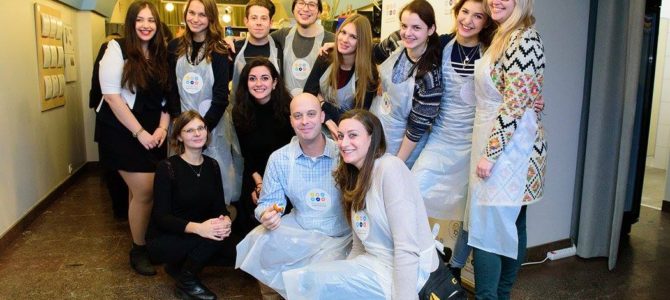
Mainly girls and women but also a few young men took up stations around a number of tables preset with ingredients and mixing bowls. Different tables had different dominant languages. The largest group pushed two tables together, and spoke mainly English with some Hebrew, members and friends of the Lithuanian Jewish Student Union mainly in their 20s. United States ambassador to Lithuania Anne Hall and LJC chairwoman Faina Kukliansky shared a table with staff from the Bagel Shop. Another table conversed in Russian, another in Lithuanian, and children and younger people predominated at a normal and a small table near the back, including several students from the Sholem Aleichem Gymnasium.

From the stage a presentation of challa and the Sabbath was provided, including a symbolic lighting of the Sabbath candles. A Sabbath song was performed by the cantor of the Choral Synagogue accompanied by violin. Rabbi Shimson Izakson was on hand for the entire event as well.

Yaffa Eliach, Historian Who Captured Faces of the Holocaust, Dead at 79

10eliach-obit2-articlelarge

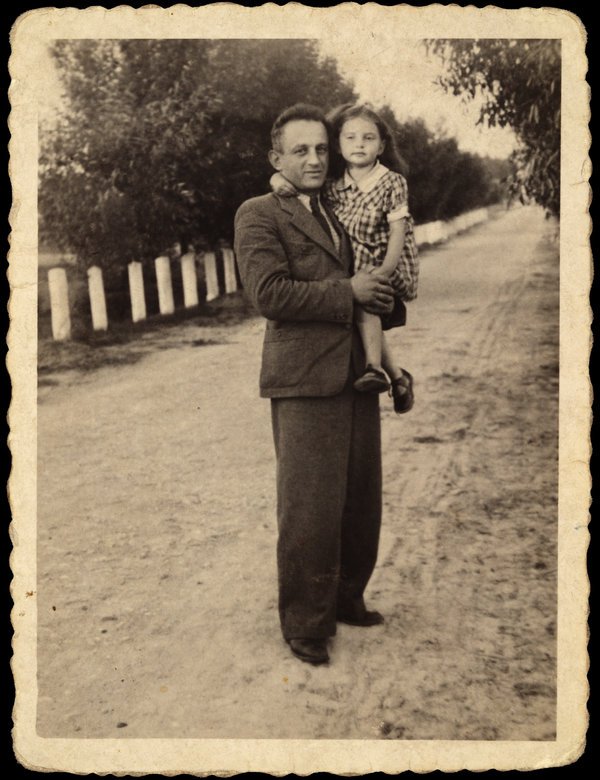
Yaffa Eliach, who as a 4-year-old survived the Nazi massacres of Jews in her Lithuanian town, and went on to document their daily life in a kaleidoscopic book and a haunting, three-story canyon of photographs at the United States Holocaust Memorial Museum in Washington, died on Tuesday at her home in Manhattan. She was 79.

Her death, after a long illness, was confirmed by Thea Wieseltier, a family friend.

After a childhood that might have throttled a person of lesser spine, Professor Eliach (pronounced EL-ee-akh) dedicated herself to the study and memorialization of the Holocaust and its victims.

Starting in 1969, she did so as a professor of history and literature in the department of Judaic studies at Brooklyn College, and by founding the pioneering Center for Holocaust Studies at the Yeshivah of Flatbush in Brooklyn. Though modest in scale, its collection of taped interviews, diaries, letters, photographs and artifacts became a model for dozens of such centers.

Her mission, she said many times, was to document the victims’ lives, not just their deaths, to give them back their grace and humanity. She determined to do so as a member of President Jimmy Carter’s Commission on the Holocaust during a visit to the death camps, where she realized that the victims were portrayed only as bulging-eyed skeletons in ragged striped uniforms, not as the vital people they once were.

Professor Eliach decided to recreate the shtetl she had known in Lithuania — Eisiskes, known in Yiddish as Eishyshok — where 3,500 Jews, almost the entire Jewish population, were killed, by collecting photographs of its inhabitants.

Full necrology here.