
Learning

Kazys Škirpa: When an Inconvenient Truth is Suppressed


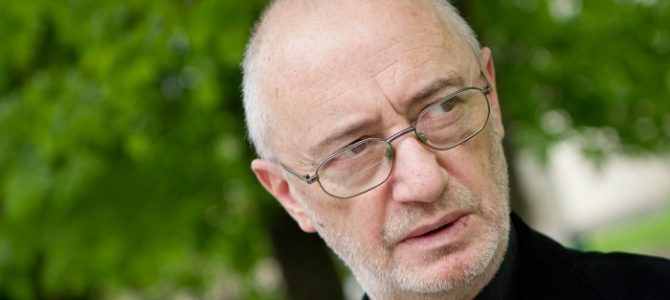
by Arkadijus Vinokuras

I carefully read Vidmantas Valiušaitis’s article “Why Is Kazys Škirpa Slandered?” I felt I was missing the position of the late Barry Rubin, the famous Litvak, also well known in Lithuanian, and professor of Israeli history.

There he goes: “I would like to stress that events need to be examined as objectively as possibly, that evidence needs to be provided objectively, it needs to be confirmed and then the facts need to be pursued.” Professor Rubin’s relatives were murdered in Lithuania. www.delfi.lt provided an interview with Barry Rubin in which he said without qualification that Jews who became Communists had become traitors to Jewish society, and that it was laughable to be afraid to talk about the crimes of Communism and to argue who had suffered more.

I base my claims on statements by Lithuanian historians. For instance, professor emeritus Saulius Sužiedėlis, liberal arts professor Alvydas Nikžentaitis and Vilnius Gediminas Technical University Philosophy and Communications lecturer Andrius Kulikauskas. I also base my claims on famous interwar Lithuanian diplomat Eduardas Turauskas (1896-1966), a member of the Futurist Society, an attorney, a journalist, diplomat and a member of the Lithuanian Catholic Academy of Sciences.

Full story in Lithuanian here.
Lithuania Initiated Netanyahu Visit to Brussels

BNS–Lithuania initiated the historic visit by Israeli prime minister Binyamin Netanyahu to Brussels to meet with EU foreign ministers, diplomats confirmed Tuesday.

“Lithuania initiated what led to the planned meeting between the Israeli prime minister and EU foreign ministers during a meeting of EU member-state foreign ministerial council December 11,” Lithuanian Foreign Ministry media representative Rasa Jakilaitienė told BNS. Over the last decade Lithuania has become one of Israel’s strongest diplomatic supporters within the EU. Many other EU member-states take stronger exception to the expansion of Israeli settlements in the occupied territories.

Lithuanian foreign minister Linas Linkevičius remarked direct dialogue is necessary to solve remaining disagreements.

In a comment sent to BNS, Linkevičius wrote: “We seek discussion between all EU states on the concerns of the Union and Israel. Direct dialogue is crucial. Only by hearing the arguments presented in discussion can we harmonize what are sometimes very different positions.

Observers say Lithuania’s pro-Israel stance might stem partially from coordination of policy with the United States and might also be due to the history of Lithuanian Jews. Recently Israel and Lithuania have intensified bilateral relations in the military and economic spheres. The Jerusalem Post reports this will be the first visit by the prime minister to Brussels in more than two decades.

Israel annexed the West Bank, the Gaza Strip and East Jerusalem following the Six-Day War in 1967. Most EU countries and the EU as a federated entity do not recognize Israel’s declaration Jerusalem is the nation’s capital and cite the need to follow United Nations Resolution 181, or Partition Plan for Palestine, of 1947 which envisaged Jerusalem as an international city. The Jerusalem Corpus Separatum in that plan included Bethlehem and surrounding areas.

Launch of Victor David Brenner Catalog

You’re invited to the launch of a catalog of works by Victor David Brenner, the Litvak who designed, among other things, the United States one-cent coin.

The publication will be launched at the Jewish Culture Information Center at Mėsinių street no. 3a in Vilnius at 3:00 P.M., Monday, December 4, 2017. The launch of the catalog will be accompanied by an exhibit showcasing Brenner’s design work.

Bagel Shop and Israeli Embassy at Charity Christmas Fair in Vilnius


Photo, from right: Prime minister Saulius Skvernelis, LJC chairwoman Faina Kukliansky, Israeli embassy deputy chief of mission Efrat Hochstetler, PM’s wife Silvija Skvernelė

An international Christmas fair fundraiser was held again this year at the Old Town Square in Vilnius. Visitors were invited to purchase handicrafts, Christmas decorations, sweets and other knick-knacks made and sold by the spouses of foreign ambassadors resident in Vilnius, embassy personnel, social welfare organizations.

Photo: President Valdas Adamkus, Faina Kukliansky, former first lady Alma Adamkienė

The international Christmas fair is an annual initiative by the International Women’s Association of Vilnius, which includes women from Lithuania and foreign women temporarily living and working in Lithuania as members.

Photo: Apostolic nuncio archbishop Pedro Quintana

Lithuanian Jewish Community and Bagel Shop volunteers went all out this year to make this event a success. The Israeli embassy’s booth sold Lithuanian and Israeli products and collected almost 4,500 euros for charity, three times more than last year’s amount.

More photos here.

Happy 70th, Daumantas Levas Todesas!

The Lithuanian Jewish Community sends birthday greetings to Daumantas Levas Todesas, born November 25, 1947, a long-time member of the LJC executive board, the director of the Jakovas Bunka charity and support fund, vice-president of the Makabi athletics club and consultant to the director of Moscow’s Vakhtangov theater, among other things.

You have dedicated so much of your life to the preservation of Litvak heritage and of the remaining wooden synagogues, to promoting Jewish history and culture, to fostering understanding between Jews and Lithuanians and to encouraging recognition of Jewish traditions in Lithuanian society.

In 1989 you were one of the organizers of the Makabi delegation sent to the Maccabiah Games in Israel, back when Lithuania was still under the Soviets, the delegation of athletes who raised the Lithuanian flag for the first time in decades at an international event.

Daumantas, we wish you health and happiness and that your beguiling charm, great sense of humor and sharp wit would continue to illuminate the Community for many years to come!

Lebn zolstu biz hundert un tsvantsik yor! Mazl tov!

Saulius Sužiedėlis Interview on Lithuanian Holocaust Collaboration


by Mindaugas Jackevičius, www.delfi.lt

U.S.-based professor emeritus of history Saulius Sužiedėlis says it’s inappropriate for the state to honor those who contributed in any way to the Holocaust, and calls upon Lithuania to review for whom statues have been erected

Sužiedėlis says Lithuania could have and should have done more to detect and prosecute Holocaust perpetrators. He says Lithuania doesn’t have to admit complicity in the murder of Jews, but finally needs to admit collaboration by Lithuanians without excuses and to stop downplaying the significance of that collaboration.

The historian says this is harming Lithuania’s reputation which is important for defending national sovereignty. Sužiedėlis says no one will want to defend a country with such a poor reputation.

Well-known German historian Dr. Christoph Dieckmann, who in 2011 wrote the fundamental work “Germany’s Occupation Policy in Lithuania 1941-1944” [co-authored by Saulius Sužiedėlis], in an interview with Delfi last spring raised the moral question of why Lithuanian society, seeing and hearing the Jews being killed around them, didn’t protest. Do you think this is a well-founded question?

I think the question is not completely justified, because there were few opportunities to resist. And let’s remember that in the first two months the Lithuanian consciousness was still focused on the deportations, and Red Army soldiers shot at least 1,000 innocent Lithuanians as they withdrew. The psychology was completely different. What Lithuanian would die for Stalin? So resisting would have been difficult psychologically.

Grigory Kanovich: A Good Book is a Life Teacher

G. Kanovičius: gera knyga visada yra gyvenimo mokytoja
by Donatas Puslys, www.bernardinai.lt

Rūta Oginskaitė’s book “Gib a Kuk: Žvilgtelėk” recently hit the book shops, in which the author, Grigory Kanovich and his wife Olia paint a portrait of the Lithuanian writer and an entire era. On November 29 London’s Central Synagogue will host the launch of the English translation of Kanovich’s book “Shtetl Love Song.” We spoke with Grigory Kanovich about his relationship with his readership, love of homeland and the painful moments in our history.

There’s a proverb that a prophet is not recognized in his homeland. Your work is an important monument to the history of the Jews of Lithuania and their memory. The book requires, however, a reader who is able to enter into a dialogue with the text. Do you sense the presence of such readers in Lithuania, do you think there is a dialogue and discussion going on with your texts? Should we conclude from your recent works published abroad that your work is more interested to foreign than Lithuanian readers?

I hold to the view that prophets are rare in their homeland, and one more frequently encounters only clairvoyants and the righteous. I think “prophet” is hyperbole. I won’t deny that my novels are an attempt to create a monument to pre-war Jewish history and to commemorate my compatriots.

I wouldn’t dare claim some wide-ranging discussion is taking place between me and my readers in Lithuania, but I do receive a lot of good-willed responses from different locations from readers reading my work in Lithuanian and Russian. I can’t complain about that. I am happy foreign publishers are interested in my work. For instance, the recent publication of my Shtetl Love Song by a leading London publisher.

Full interview in Lithuanian here.

The Litvaks: 900 Years of History

You are invited to a multimedia presentation called “Litvaks: 900 Years of History” by the students of the Saulėtekis school in Vilnius. The Saulėtekis school has presented a number of plays on Litvak culture and the Holocaust. The school has a strong Holocaust education component. In addition, student choirs often perform songs in Yiddish and Hebrew, most recently at the Holocaust commemoration at Ponar at the end of September where they performed the Vilnius ghetto anthem, Zog Nit Keynmol.

The presentation will take place at the Russian Drama Theater at Basanavičiaus street no. 13 in Vilnius at 6:00 P.M. on Wednesday, November 29.

Admission is free.

Japanese Volunteer Teacher Visits Panevėžys Jewish Community

Svečio iš Japonijos Susumu Nakagawa vizitas Panevėžio miesto žydų bendruomenėje

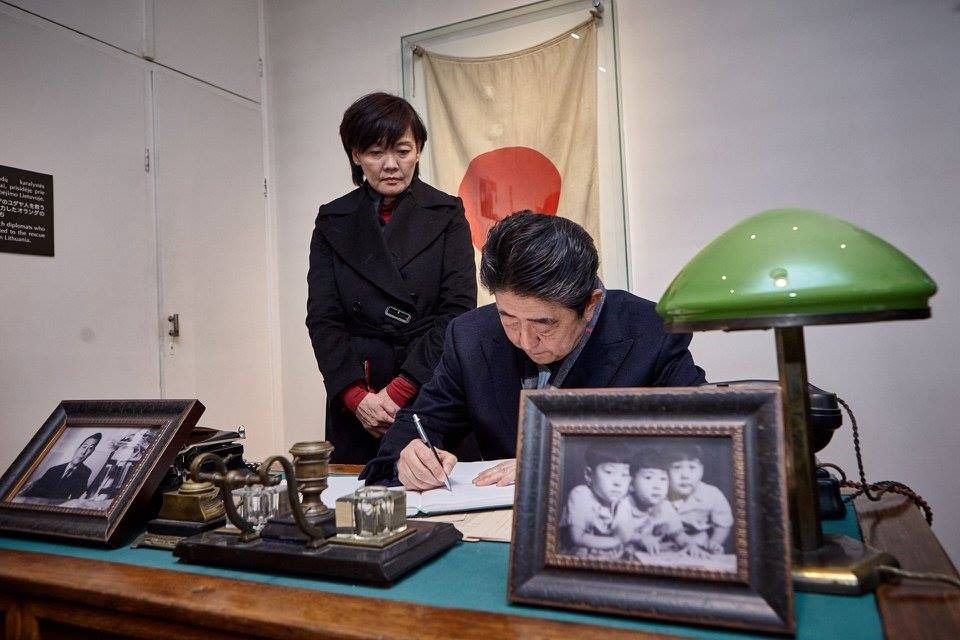
Last week Susumu Nakagawa from Japan visited the Panevėžys Jewish Community. Mr. Nakagawa is visiting Panevėžys for the second time as a volunteer teacher, teaching beginning Japanese at the Panevėžys Technology and Business Faculty of Kaunas Technology University. Mr. Nakagawa is building a bridge of friendship between the two countries, he says. He’s interested in Litvak history and culture, and when he learned there is a living Jewish community in the Lithuanian city, he decided to visit. He was accompanied by art teacher Loreta Januškienė.

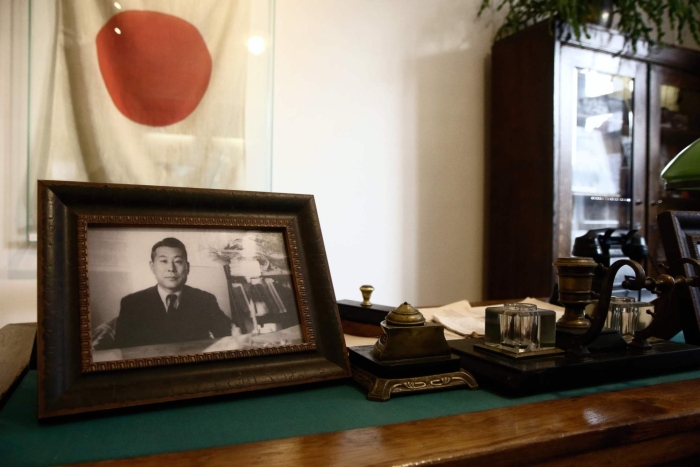
Mr. Nakagawa and his family are Christians and interesting in the Old Testament and Jewish history and traditions. Panevėžys Jewish Community chairman Gennady Kofman told Mr. Nakagawa about the history of the Panevėžys Jewish community over tea, and showed him documents and photographs. Mr. Nakagawa posed a number of questions to the chairman, and they touched upon the legacy of Chiune Sugihara, the Japanese diplomat who rescued Jews in Kaunas during the first stages of the Holocaust.

Exhibit of Miniatures by Valius Staknys

An exhibit of miniature drawings by Valius Staknys called Letters will open at the Lithuanian Jewish Community at 5:30 P.M. on November 30. The opening ceremony will include a retrospective of the artist’s life and work. He is best known as a theater director. The exhibit will run until December 18 on the third floor of the Lithuanian Jewish Community.

Faina Kukliansky Says Jews and Lithuanians Need to Resolve Disagreements


Photos: BNS
by Birutė Vyšniauskaitė, www.lrt.lt

Although the scandal caused by writer Rūta Vanagaitė’s statements on the partisan Adolfas Ramanauskas has subsided, Lithuanian Jewish Community chairwoman Faina Kukliansky believes the tranquility is only temporary. Vanagaitė’s book Mūsiškiai about the mass murder of Jews in Lithuania is soon to appear in English translation. She also enjoys the support of the European Jewish Congress and has many proponents in Israel. In an interview with LRT [Lithuanian Public Radio and Television], Kukliansky said we shouldn’t fear coming scandals.

“I really liked historian Saulius Sužiedėlis’s idea that it’s possible to read a given document or set of documents a number of times and come to different conclusions. It takes special training and understanding to study documents. An elderly grandmother could read the same documents, and while they might be interesting to her, she won’t be able to make sense of them. So, what if a book is written for public relations, seeking profit and to sensationalize readers and listeners?” Kukliansky told LRT regarding the aftermath of the Vanagaitė scandal.

Tens of Thousands of Jewish Documents Lost during Holocaust Discovered in Vilnius


YIVO announces the discovery of 170,000 Jewish documents thought to have been destroyed by the Nazis. Photo: Thos Robinson/Getty Images for YIVO

NEW YORK (JTA)–A trove of 170,000 Jewish documents thought to have been destroyed by the Nazis during World War II has been found.

On Tuesday the New York-based YIVO Institute for Jewish Research announced the find which contains unpublished manuscripts by famous Yiddish writers as well as religious and community documents. Among the finds are letters written by Sholem Aleichem, a postcard by Marc Chagall and poems and manuscripts by Chaim Grade.

YIVO, founded in Vilnius in what is now Lithuania, hid the documents, but the organization moved its headquarters to New York during World War II. The documents were later preserved by Lithuanian librarian Antanas Ulpis who kept them in the basement of the church where he worked.

Most of the documents are currently in Lithuania but 10 items are being displayed through January at YIVO, which is working with Lithuania to archive and digitize the collection.

“These newly discovered documents will allow that memory of Eastern European Jews to live on, while enabling us to have a true accounting of the past that breaks through stereotypes and clichéd ways of thinking,” YIVO executive director Jonathan Brent said Tuesday in a statement.

United States Senate minority leader Charles Schumer, democrat from New York state, praised the discovery.

“Displaying this collection will teach our children what happened to the Jews of the Holocaust so that we are never witnesses to such darkness in the world again,” Schumer, who is Jewish, said in a statement.

Israeli consul general in New York Dani Dayan compared the documents to “priceless family heirlooms.”

“The most valuable treasures of the Jewish people are the traditions, experiences and culture that have shaped our history. So to us, the documents uncovered in this discovery are nothing less than priceless family heirlooms, concealed like precious gems from Nazi storm troopers and Soviet grave robbers,” he said.

Full story here.

Samuel Bak Museum Opens

Painter and Vilnius native Samuel Bak attended a press conference in Vilnius Wednesday to announce the opening of a Samuel Bak museum in Vilnius.

Bak, now based in the US, donated over 50 of his artworks for the museum. Born in 1933, the Jewish painter is a Holocaust survivor. He began drawing and painting in the Vilnius ghetto. After the war he lived in Israel and Western Europe. He and members of his family plan to spend just over a week in Vilnius on their current visit.

Bak is scheduled to be awarded honorary citizen of Vilnius at a ceremony to be held at the Vilnius Old Town Hall. The museum is to open November 17. 2017.

LRT TV Program Author Vitalijus Karakorskis Wins Prize for Intercultural Communication

November 16 is UNESCO’s International Day of Tolerance. Under the UNESCO definition in its Declaration of the Principles of Tolerance, tolerance doesn’t mean a tolerant attitude towards social injustice, nor the renunciation of one’s principles and their replacement with someone else’s. It means everyone is free to hold their own convictions and recognizes the right of others to do the same. It means recognizing people are born with different appearances into different social conditions, learn different languages, behavior and values, and have the right to live in peace and preserve their individuality.

The Ethnic Minorities Department under the Government of Lithuania named winners of its prize for intercultural communication November 13. There were 37 separate works in the running this year, including television programs, articles and interviews.

The judges’ panel awarded the prize to journalist, editor and filmmaker Vitalijus Karakorskis for originality and for discovering incredible connections between the ethnic communities resident in Lithuania in his making of an episode of the Lithuanian public television (LRT) program Menora on the topic of Dr. Jonas Basanavičius and Lithuanian Jews, on the 90th anniversary of the death of the patriarch of the Lithuanian state. They also awarded the prize to Siarhey Haurylenka for exceptional treatment of the cultures of Lithuanian ethnic minorities and the Belarusian language in the LRT television series about culture and history called “Cultural Crossroads: The Vilnius Notebook.”

New Fall Issue of the Bagel Shop Newsletter

After skipping a beat this summer, the newest Bagel Shop newsletter has hit the stands. The fall issue includes a complete news round-up from spring to the present, the usual sections and articles about the history of the Bund, efforts to restore Jewish headstones removed from Soviet-era public works projects around Vilnius to their rightful locations and the history of the Jews of Skuodas. The Jewish Book Corner this issue features a book about the tractate Nazir from the Babylonian Talmud and the Telšiai Yeshiva.

Look for the newest issue at the Bagel Shop Café, available for free, or download the electronic version below:

Bagel Shop Newsletter No. 2, 2017

AJC Decries Hateful Demonstrators on Poland’s Independence Day

November 13, 2017, Warsaw — AJC is urging the Polish government to speak out clearly against rising hatred inspired by the country’s far right. The call to action comes after a large demonstration filled with neo-Nazi and white supremacist rhetoric that took place in Warsaw on Saturday, the country’s independence day.

“While the joyous 99th anniversary of Polish independence was appropriately celebrated in ceremonies led by president Duda, the day was seriously marred by hateful, far-right throngs that threaten the core values of Poland and its standing abroad,” said Agnieszka Markiewicz, director of AJC’s Warsaw-based Central Europe office. “The growth of xenophobic nationalism in Poland is becoming more dangerous, and we urge the government to condemn unequivocally the phenomenon and take appropriate action to counter it.”

An estimated 60,000 people participated in the “March of Independence,” an annual event organized by far-right groups in Poland that attracted many more people than last year, including some from other countries. Men and women wearing face-masks chanted “pure Poland, white Poland” and “clean blood, lucid mind” as well as “sieg heil” and “Ku Klux Klan.”

“The apparent tolerance shown for these purveyors of hate — and, let’s be clear, that’s exactly what they are — by some Polish government officials is particularly troubling,” said Markiewicz.

Interior minister Mariusz Blaszczak called the large demonstration “a beautiful sight,” adding that “we are proud that so many Poles have decided to take part in a celebration connected to the Independence Day holiday.”

AJC, an organization long involved in Poland and steadfastly devoted to fostering strong links among the U.S., Israel, Poland, and world Jewry, calls on the Polish government to counter all forms of xenophobia and racially-motivated hatred through concerted action. “History has painfully taught us that silence or inaction in such matters can come with a high price,” said Markiewicz.

“As the late President Lech Kaczynski laudably said during the 2008 independence day celebration, ‘Patriotism does not mean nationalism,'” Markiewicz said. “It is an important message worth remembering and reinforcing. Radical nationalism and the spewing of hatred should not be confused with patriotism.”

Shapiro Silverberg
AJC Central Europe Office

Makabi Tennis Tourney

The now-traditional Makabi doubles tennis tournament took place November 12.

Three pairs tied and the final winners, Anatolijus Faktorovičius and son Norbertas Faktorovičius, were decided by number of games won. The family team took first place for the second time. Kęstutis, Faktorovičius’s other son, also took part in tournament successfully and demonstrated a great swing. Danielius Merkinas and Aleksandra Miller took second and Lorensas Baliukonis and Laima Urbšienė took third in fierce competition.