
Learning

Opening of Exhibit “Mission: Lithuanian Citizens. Siberia”

Opening of Exhibit “Mission: Lithuanian Citizens. Siberia”

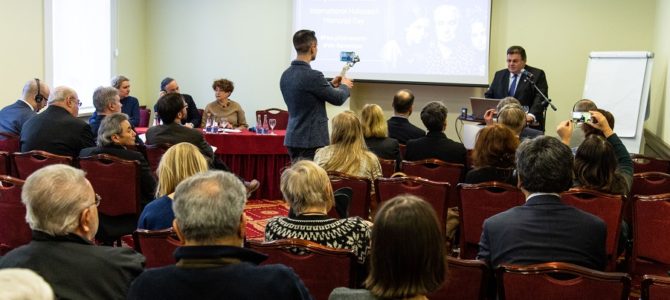
The Lithuanian Jewish Community invites you to come to a meeting/lecture/discussion/exhibit opening at 6:00 P.M. on December 4. The LJC is located at Pylimo street no. 4 in Vilnius. The “Mission: Lithuanian Citizens. Siberia” event is dedicated to discussing the deportations from Lithuania in June of 1941. The official telling of the story of the deportations often seems to exclude the multi-ethnic nature of the deportees and their diversity of views and beliefs. They were only united in the fact the occupational regime which swept into power didn’t approve of them.

Dr. Violeta Davoliūtė will give a presentation based on her research. LJC board member Daumantas Todesas, Vilnius Jewish Public Library director Žilvinas Beliauskas and Lithuanian Department of Ethnic Minorities director Dr. Vida Montvydaitė will also speak on the topic of the event.

An exhibit of photographs will officially open at the same time.

Latkes: Traditional Hanukkah Food

Latkes: Traditional Hanukkah Food

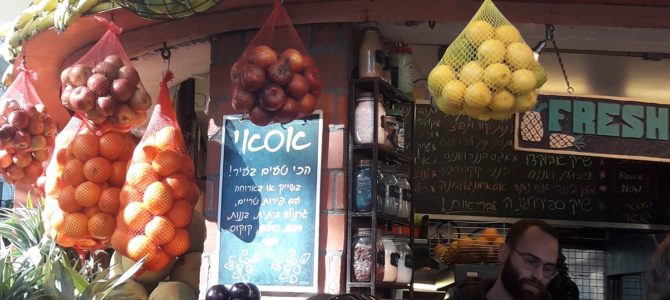
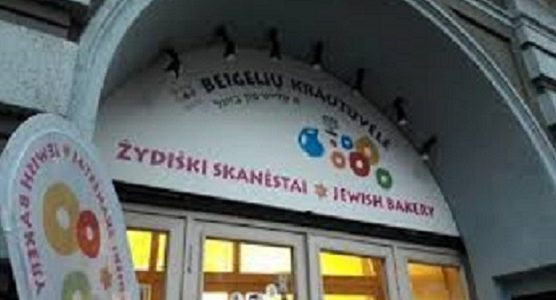
Latkes are potato pancakes which Jews consider a national dish, as do Lithuanians, Russians, Belarusians, Ukrainians, Germans, Czechs and the Swiss. The first mention of the potato dish seems to come from 1830 and seems to have been German cuisine. although the word itself comes into Yiddish probably from Russian. Whatever the case, Jews made latkes global and it is a required part of the Hanukkah table now.

Some sources say latkes were originally made of buckwheat. Others put their origins in Italy where pancakes were served with ricotta cheese. Rabbi Kalonymus ben Kalonymus (1286-1328) seems to be the first person to associate pancakes with Hanukkah, in a poem about the holiday.

When Spain expelled the Jews of Sicily in 1492, they took their ricotta cheese pancakes with them and introduced them to the Jews in the northern Italian lands. These pancakes reportedly were called cassola in Rome.

Conference “Remarkable Women of the Panevėžys Region”

Conference “Remarkable Women of the Panevėžys Region”

Acting Panevėžys mayor Petras Luomanas welcomed speakers and audience to the conference, saying: “It is very significant that we are now for the second time holding a conference in which we remember the remarkable women of our region whose contributions to culture, education, health-care, industry and other areas of endeavor in Panevėžys and throughout Lithuania have been gigantic.” Library director Loreta Breskienė spoke her library’s activities and “Lithuania’s Greats,” an exhibit of hand-sewn flags there. The author of the exhibit is Sofija Kanaverskytė, an artist and former resident of Panevėžys who did scenography at the J. Miltinis Drama Theater there.

The main topic of Panevėžys Jewish Community chairman Gennady Kofman’s presentation was historical information about the activities of notable Jewish women of Panevėžys till 1940. He said many of the Jewish women are little-known, including sculptress Marija Dilon, the businesswomen Ana Kisina and Lėja Chazanienė, social activist and doctor Ana Merienė, Panevėžys Jewish Hospital doctors Mirijam Todesaitė-Blatienė and Zinaida Kukliansky and the dentists Vera Dembienė, Golda Izraelienė, Liuba Gurevičienė and Chasjė Feigelienė. Much more widely known was the Jewish women’s Esperanto organization in the city of Panevėžys, whose members included Ana Grinberg, daughter of Rabbi Abraham Grinberg.

Kofman said the topic of notable Jewish women has been neglected in Panevėžys as it has throughout Lithuania. Many write about men and their contributions, while women remain on the margins. He said this conference was a very good idea and should serve to foster a more tolerant attitude towards life and history.

Conference participants included deputy director of the Panevėžys city administration for educational affairs Sandra Jakštienė, Panevėžys Regional History Museum director Arūnas Astramskis, principals and teachers of the gymnasia in Panevėžys and other professionals working in education in the city. Nine presentations were given, including by Panevėžys College library director Vilija Raubienė, Panevėžys District G. Petkevičaitė-Bitė Public Library librarian Albina Saladūnaitė, regional history expert from Šiauliai Irena Dambrauskaitė-Rudzinskienė, director of the Kalba Knyga Kūryba Communications Center Lionė Lapinskienė, museum specialist Donatas Juzėnas, Paįstrys resident and local history expert Stasė Mikeliūnienė and puppeteer Antanas Markuckis.

A Shadow over Europe: CNN Poll Reveals Depth of Anti-Semitism in Europe

A Shadow over Europe: CNN Poll Reveals Depth of Anti-Semitism in Europe

European Jewish Congress

Dear Presidents,
Dear Friends,

We would like to draw your attention on the findings of the CNN Poll on Antisemitism in Europe.

Please find below some of the most appalling results:

–According to the poll, more than a quarter of Europeans surveyed believe Jews have too much influence in business and finance. Nearly one in four said Jews have too much influence in conflict and wars across the world.

–One in five said they have too much influence in the media and the same number believe they have too much influence in politics.

–A third of Europeans polled said they knew just a little or nothing at all about the Holocaust.

Irene Pletka Donates Million Dollars for YIVO Bund Collection Digitization

Irene Pletka Donates Million Dollars for YIVO Bund Collection Digitization

YIVO in New York has had a separate collection for the Jewish Bund since 1992. Recently they announced a project to digitize that collection to make it accessible to scholars and the public around the world. Vice-chairwoman of the YIVO board Irene Pletka initiated the project and announced she is donating one million dollars to the effort.

More than 150 people came to the YIVO gallery in New York to honor Pletka for her exemplary donation, inspirational generosity and extraordinary sense of duty in preserving Jewish history and culture. After the Bund project receives donations totaling from 2.5 to 3 million dollars the first phase of digitization will begin.

The Bund Jewish political party began in Vilnius in 1897 with a socialist democrat platform and pledge to fight pogroms. YIVO describes the part as a Jewish political party adhering to a social democrat ideology in the context of Jewish culture and seeking Jewish political autonomy. Political science professor Jack Jacobs at Cambridge University in New York says the Bund was the first Jewish political party in Eastern Europe. Bund ideology was aimed at the Jewish working class.

Nun Who Helped Abba Kovner Dies at 110

Nun Who Helped Abba Kovner Dies at 110

Sister Cecylia Maria Roszak passed away at a convent in Cracow on November 16 at the age of 110, the archdiocese of Cracow reported. She was probably the oldest Catholic nun in the world at the time of her death. She was also a Righteous Gentile who harbored Jews in Nazi-occupied Vilnius, including writer and partisan leader Abba Kovner.

Maria Roszak was born March 25, 1908, in Kiełczewo and joined the Dominican order at the Gródek monastery (named after an old fortification and now neighborhood, adjacent to the Church of Our Lady of the Snows) in Cracow at the age of 21. In 1938 she and several fellow nuns were sent to Vilnius, then Wilno under Polish control, or more precisely to Naujoji Vilna outside the city, where the order had a wooden house and chapel on five hectares of land and intended to set up a monastery under Anna Borkowska, aka Mother Bertranda. World War II cut short these plans.

Vilnius came under Soviet occupation and then Nazi occupation. During the Nazi occupation Roszak and fellow nuns under Mother Bertranda hid 17 members of the Jewish resistance at their convent, including future ghetto underground leader, partisan and writer Abba Kovner.

Kaunas Jewish Community Meets Students

Kaunas Jewish Community Meets Students

Kaunas as the cultural capital of Europe for 2022 is preparing an educational program for high school students aged 15 to 18 called “The Challenge of Kaunas.”

The Bureau of Memory program is striving to interest high school students in the multi-ethnic and multicultural history of Kaunas. The students have an assignment: to draft a project for the younger and older generation, including KJC senior citizens, to work together. The students are being encouraged to learn about the city’s history from living eye-witnesses and to come up with proposals for what they themselves have to offer the elder generation; what manner of cooperation might work is left up to them.

The students had the opportunity at the meeting at the KJC to communicate directly with members of the Community and to learn about their biographies. The young participants reported that they were very interested and moved by the warmth of Community members.

The KJC said this meeting was the start of a new and beautiful friendship.

Visit the Lost Shtetlakh, the Jewish Towns in Lithuania

Visit the Lost Shtetlakh, the Jewish Towns in Lithuania

The popular Lithuanian travel page www.lietuvon.lt has been updated and now includes a new group of sites, the shtetlakh, towns which had a large Jewish population before the Holocaust.

The Lithuanian-language internet site is promising to continuously update local and regional Jewish heritage tourist routes (at https://www.lietuvon.lt/stetlai) which are being developed and advertised by local municipalities. tourism information centers, museums, libraries and individual travel enthusiasts.

This project is the fruit of a joint-venture between the Lithuanian Jewish Community and www.lietuvon.lt author Karolis Žukauskas.

The project receives support from the Lithuanian Cultural Heritage Department and the Goodwill Foundation.

Wordless Shadow Theater

Wordless Shadow Theater

The Ilan Club invites members and interested parties to attend a workshop on shadow theater at 1:00 P.M. on November 25. Those interested should send an email to sofja@lzb.lt or call 867257540.

The goal of the workshop is to create a short play based on traditional Jewish tales. The play will be expressed in light and shadow and without words. The director believes the lack of verbal content will enhance perception of the environment and people around us, thus increasing empathy and fostering new kinds of creativity. Participants at the workshop will discuss the play and will make scenography and shadow puppets with help from artists. Together with the director and actors, participants will explore different ways for characters to express themselves without using words.

Simon Karczmar Exhibit at Vilna Gaon Museum

Simon Karczmar Exhibit at Vilna Gaon Museum

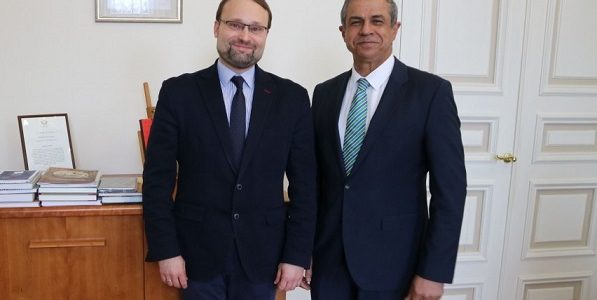
The Tolerance Center of the Vilna Gaon State Jewish Museum at Naugarduko street no. 10/2 in Vilnius will open an exhibit of paintings and prints by Simon Karczmar at 5:30 P.M. on November 22. The exhibit will run till January 21, 2019.

Karczmar was born in 1903 and died in 1982. His most productive period came later in life. He studied art in Paris as a young man but worked in the fur industry rather than as a professional artist. At the age of 57 he developed an allergy to fur and his wife encouraged him to return to making art. As a member of an artists’ colony in Safed, Israel, to which he moved in 1962, Karzcmar painted daily life in the Dieveniškės (Diveishok, Jevenishok) shtetl. His work has been exhibited in the USA, Canada, Israel and Mexico but never before in Lithuania. A month ago the School of Business and Technology in Dieveniškės hosted the exhibit. Karczmar’s son Natan came from Israel to attend and said the exhibit in Vilnius fulfills an old family dream.

Parliamentary Cultural Committee Considers Jewish Heritage Issues

Parliamentary Cultural Committee Considers Jewish Heritage Issues

A sitting of the Lithuanian parliament’s Cultural Committee November 14 addressed Litvak heritage. The meeting was held at the Tolerance Center of the Vilna Gaon State Jewish Musum in Vilnius with committee chairman Ramūnas Karbauskis attending.

Three main issues were discussed:

1. Further expansion and financing of the Vilna Gaon Museum
2. Jewish heritage issues
3. Restoration of the Great Synagogue in Vilnius

MP Emanuelis Zingeris proposed a resolution for the restoration of the Great Synagogue at the meeting. The Lithuanian Jewish Community expressed a different position. LJC chairwoman Faina Kukliansky said Lithuanian Jews are not asking and never had asked for the rebuilding of the Great Synagogue using state funds. She further noted that currently the LJC is engaged in studying other methods and problems in commemoration and preservation, having been tasked with drafting a study on Jewish heritage by the Lithuanian Government.

From the Vilnius Ghetto: Sutzkever’s Memoirs in Lithuanian

From the Vilnius Ghetto: Sutzkever’s Memoirs in Lithuanian

by Danielė Ūselytė

Abraham Sutzkever (1913-2010) was one of the most remarkable Yiddish poets in the 20th century, a Holocaust survivor, one of the leaders of the cultural resistance and in his memoirs “From the Vilnius Ghetto” provides a testimony of his authentic experience.

These texts were written immediately following the tragic events of World War II and were published in Moscow in 1946. These memoirs contain the living memories in the author’s mind and thus are a testimony of history. Feelings and states of mind are presented, indirectly, through specific situations, sometimes with irony, feelings of hopelessness, fear, debasement, but always the infinite desire to survive, to fight to the last breath. Resistance is supported by intense creativity in an extreme situation, in the belief its power will fortify human existence, and the historical narrative is based on this, demonstrating the possibility to write poetry in the tragic moment.

Full text in Lithuanian here.

Kaunas Jewish Community News for October

Kaunas Jewish Community News for October

In October the Kaunas Jewish Community experienced moments of celebration and painful losses, and commemorated the past.

The most momentous event in October was the celebration of the Community’s 30th birthday with a concert. The Kaunas State Philharmonic hosted the Klaipėda Chamber Orchestra accompanied by harpist Gabrielė Ašmontaitė, baritone Stein Skjervold and VilhelmasČepinskis on violin. Orchestra art director Mindaugas Bačkus presented a rich program of well-known and lesser-known works by Jewish and Litvak composers of different times and in different genres. He both played cello and presented the event.

The historian Linas Venclauskas told the audience about the history of the Jewish community and current events. He spoke about the Litvak contribution to Lithuania and together with KJC chairman Gercas Žakas presented thank-you letters from the Kaunas mayor and municipal culture department to long-standing and outstanding members of the Community, including Fruma Kučinskienė, Judita Mackevičienė, Motelius Rozenbergas, Basia Šragiene, Julijana Zarchi, Simonas Dovidavičius and Gercas Žakas himself.

Reflections in a Broken Mirror Exhibit Opens

Reflections in a Broken Mirror Exhibit Opens

The exhibit Reflections in a Broken Mirror detailing Litvak life in the period between the two world wars opened at the Lithuanian National Martynas Mažvydas Library November 12. Judaica Research Center director Dr. Lara Lempert presented the exhibit, talking about Jewish social life, modern art, literature, books, reading culture, publishing and medicine in the interwar period. The rich collection of multimedia exhibits presents Lithuanian and Vilnius Jewish life including the social welfare and medical system, education, art, learning and literature. It also demonstrates the importance of the Lithuanian and Vilnius Jewish communities in the context of world Jewry.

Commission for Preservation of America’s Heritage Abroad Chairman Visits Lithuania

Commission for Preservation of America’s Heritage Abroad Chairman Visits Lithuania

United States Commission for the Preservation of America’s Heritage Abroad chairman Paul Packer has visited the Lithuanian Jewish Community during his trip to Lithuania from November 6 to 8 to discuss Jewish heritage issues in Lithuania and participated in a prayer service at the Choral Synagogue in Vilnius where he discussed the need for a mikvah with members of the Community. Chairman Packer also visited the Zavl shul on Gėlių street in Vilnius, currently undergoing renovation.

It was due to Packer’s initiative and concern that an information stand was erected to mark the old Jewish cemetery in the Šnipiškės neighborhood of Vilnius. He and members of the Vilnius municipality discussed future commemoration of the Jewish cemetery during his most recent trip to Lithuania. Packer visited the Jewish cemetery on Olandų street in Vilnius and said it, too, needs more information for visitors. He also visited the only working Jewish cemetery in Vilnius on Sudervės road.

In Kaunas Packer visited the Hassidic synagogue building which, if restored, could serve the needs of Lithuania’s second largest Jewish community and Israeli exchange students living in Kaunas. The chairman expressed unpleasant surprise at the state of the old Jewish cemetery in the Žaliakalnis neighborhood of Kaunas where a number of notable Jewish religious and cultural figures are buried. Many of the headstones are broken and overturned in the cemetery near the city’s center, and Packer said this didn’t serve to demonstrate the city’s pride in its rich Jewish history. LJC representatives also contacted the appropriate institutions regarding technical problems with video surveillance at the cemetery.

Evening to Remember Pianist Nadežda Dukstulskaitė

Evening to Remember Pianist Nadežda Dukstulskaitė

The Lithuanian Jewish Community will host an evening to remember the pianist and teacher Nadežda Dukstulskaitė at 6:00 P.M. on Thursday, November 15. The evening will feature memories and performances by Rafailas Karpis, Robertas Bekionis, Dmitri Bulybanko and the Ąžuolai men’s choir. Dr. Leonidas Melnikas will moderate.

Nadežda Dukstulskaitė (1912-1978) was born into the family of a musician. In 1918 the family moved to Kaunas where from the age of 7 Nadežda attended private lessons in piano under Herbeck-Hansen. She was graduated from the Stern Conservatory in Berlin in 1926 and from 1926 to 1929 studied at the High Musical School in Berlin.

She was a concert master and soloist on Kaunas and Vilnius radio from 1929 to 1953. She toured Latvia, Estonia, Finland and Sweden in 1934, 1937 and 1938 and performed works by M. K. Čiurlionis, Juozas Naujalis, Stasys Šimkus, Juozas Tallat-Kelpša, Juozas Gruodis and Juozas Karosas.

She escaped the Kaunas ghetto towards the end of World War II with help from the writer Kazys Binkis and his wife Sofija. She hid in different locations around Kaunas for several days and then walked to Vilnius. From 1953 to 1959 she was the concert master of the Lithuanian Soviet Socialist Republic’s philharmonic, and from 1959 to 1978 concert master and piano teacher for the Ąžuoliukas choir.

Her students included the opera singer Vladimiras Prudnikovas and the pianists Robertas Bekionis, Dmitri Bulybenko and Leonidas Melnikas.

Demagogue Tango with the Conscience

Demagogue Tango with the Conscience

Valiušaitis’s article “Melo voratinklyje – antinacistinė ir antisovietinė rezistencija” [“In the Web of Lies: The Anti-Nazi and Anti-Soviet Resistance”] examines the art of Soviet disinformation. A truly necessary topic. But again, “including” captain Jonas Noreika, and again arguing as if there are no documents demonstrating Noreika’s Nazi collaboration, his violation of his oath as a military officer and his close cooperation with the murderers of Jews.

Unfortunately such proof exists, whether Valiušaitis likes it or not. So, in denying the established facts, trampling upon the principles of morality and ethics and human values, he seeks to push the worship of a tainted hero onto democratic society. Whether this is intentional or not, he is demanding the justification of fascist and Nazi ideology. But glorification and justification of these ideologies is forbidden by Lithuanian law.

A half-lie isn’t the truth. Using one historian as a source is not an indication of objectivity. Besides the Soviet sources, there are a plethora of others, just as there are many works by historians unaffected by Soviet disinformation. The rejection of the International Criminal Court’s definition of genocide doesn’t vindicate the crime. Proponents of Nazi ideology cannot claim to be anti-Nazis. During World War II, the “anti-Nazi underground” of the fascist Lithuanian nationalist parties, the LAF and LNP, was so unremarkable in Lithuania that they failed to rescue even a single Jew and failed to kill even a single Nazi. And attempting to whiten the mantle of an officer by presenting, for example, Pope Pius XII’s “silent” policy of rescuing Jews, does a disservice to the Pope. Not only did Noreika fail to rescue a single Lithuanian Jew, but he was responsible for one and a half years for the looting of the property of the Jews murdered and shook hands daily with the murderers of the Jews.

Celebrating Vidmantė Jasukaitytė’s 70th Birthday

Celebrating Vidmantė Jasukaitytė’s 70th Birthday

The Lithuanian Writers Union is holding a birthday party for the late writer Vidmantė Jasukaitytė from 5:30 P.M. to 7:00 P.M. on Thursday, November 8, 2018. The event will be held at the Writers Club located at K. Sirvydo street no. 6 in Vilnius and is open and free to the public. The program includes a reading of Jasukaitytė’s “The Sixth Commandmant: Thou Shalt Not Kill. Subačiaus Street. The Ghetto” based on her experience living at the former HKP Nazi labor camp in Vilnius, set to music and performed by Arkadijus Gotesmanas on percussion and Dimitrijus Golovanovas on piano. Jasukaitytė’s daughter Kunigunda, an artist in her own right, and a number of notable Lithuanian writers and poets are to attend and speak.

Renaissance Photo Exhibit at Pakruojis Wooden Synagogue

Renaissance Photo Exhibit at Pakruojis Wooden Synagogue

by Vilijus Žagrakalys (pictured above)

Renaissance, an exhibition of photographs at the Pakruojis synagogue from November 10 to 30, 2018, with the opening at 5:00 P.M. on November 9.

Everything that’s old comes back around. The 19th century was the period when photography began and flourished. The application of various techniques for forming an image on a plate progressed from wet-plate collodion to silver compound gelatin which dominated until the advent of digital cameras. The silver process gave rise to a surge in photography studios which captured portraits of their time in single and group portraiture. All sorts of visual photo albums were made. Silver gelatin emulsion was relatively easy to get and made this possible.

At around the same time the platinum method was discovered, dated at 1873 in the history of photography. William Willis patented the method in 1881. He received official awards for this in Great Britain in 1885. The method was popular until World War I, when platinum acquired greater value, and the technique gradually dropped out of use.

Around 1970 the technique was revived in the USA. It is now known as the king of the printing process.

When I began to get interested in photography techniques, I attempted to print several photographs. After much experimentation I seized upon the platinum/palladium method. The fragments of photographs in this exhibition were printed using this method.