Learning, History, Culture

Remembering Rivka Basman Ben-Haim

Remembering Rivka Basman Ben-Haim

by Zelda Kahan Newman
Last updated June 23, 2021

In Brief

Born February 20, 1925. Rivka Basman’s mother died when she was five. Her younger brother was ripped from her hands and murdered by the Nazis, and she escaped from the Nazi death march. After the war, she helped the illegal immigration movement to what was then Palestine. During that time, she met and married the painter Shmuel Ben-Haim, who designed every one of her books. The couple lived on Kibbutz Ha-Ma’apil for sixteen years, where she taught schoolchildren. During the 1960s, she studied comparative literature at Columbia University for one year, and later went to Russia, where her husband was Israel’s cultural attaché. In Russia, she furthered clandestine contacts between Soviet Yiddish writers and the outside world. After her husband died, she added Ben-Haim to her name.

Family and Education

Rivka Basman Ben-Haim was born in Wilkomir (Ukmerge), Lithuania to Yekhezkel and Tsipora (née Heyman) on February 20, 1925. Her mother died in 1930, and her father remarried; he and his second wife had a son, Aharon (Arele).

As a child, Rivka attended a Yiddish-speaking folk-shul, and she and her classmates read and delighted in the poems and stories of the Yiddish woman writer Kadya Molodowsky. Even then, she wrote poems in Yiddish. She continued studying in a Lithuanian gymnasium (academic high school), but in 1941, before she could graduate, her family moved into what later became the Vilna ghetto. She spent two years in the ghetto, where she met the poet Abraham Sutzkever and read him her poems in Lithuanian and Yiddish. He encouraged her to write only in Yiddish and was her mentor and friend till his death.

News from Kaunas

News from Kaunas

During the last few weeks the Kaunas Jewish Community hosted a number of events looking at history and commemorating significant figures. There was discussion at these events of timeless matters as well: adhering to one’s values, the resolution and choice to be free and preserve humanity, the courage to understand and accept the traumas of the past and being open to the truth however painful or unpleasant it might be.

Tadas Daujotas and the Gyvybės žygis [March of the Living] organization held a meeting with international March of Life/March of the Living founder and author of the book “Breaking the Veil of Silence” [Die Decke des Schweigens] Pastor Jobst Bittner from Germany.

The restored grave of Klaudijus Dušauskas-Duž [aka Kłaŭdzi Duž-Dušeŭski, Клаўдзі Дуж-Душэўскі, Клавдий Степанович Дуж-Душевский, Klawdziy Duzh-Dushewski] was also unveiled in a ceremonial setting. He rescued Jews in Lithuania during the Holocaust and created the red and white Belarussian flag. The ceremony took place on March 25, Belarus Freedom Day, commemorating the first independent but short-lived Belarussian state in 1918.

Condolences

With deep sadness we announce the death April 3 of Ezra Eta Gurvičiūtė. She was born in 1920 and was preparing to celebrate her 104th birthday this month. She was a member of the Lithuanian Jewish Community from the beginning and served for decades as a volunteer at the Community’s medical consultation center. Chairwoman Faina Kukliansky and the entire Community extend our sincere condolences to her son Eduardas Elija, grandchildren Tomas and Julija and her great-grandchildren. Final farewells can be made today, April 4, at 6:00 P.M. at the Nutrūkusi styga funeral home in Vilnius. The burial will take place at the Jewish cemetery on Sudervės road in Vilnius at 12 noon April 5.

A Game to Remember

A Game to Remember

“A Game to Remember”: Immerse Yourself in Stories That Change the World

The Lithuanian Jewish (Litvak) Community and its partners are launching “A Game to Remember,” an innovative project where history comes to life through interactive detective games. We invite you to travel back in time and experience the stories of Holocaust survivors ina new, engaging way.The European historical experience serves as a fundamental pillar of the European Union’s values. Today, as we face historical distortions, threats of war, and rising hatred, the preservation of memory and education about the events of the past century are more important than ever. We must remember the destructive power of authoritarian regimes, the significance of resistance, the tragedy of the Holocaust, and other historical turning points.

Only by understanding the past can we strengthen democracy and build a more peaceful future. The Lithuanian Jewish (Litvak) Community, together with a team of educators from Lithuania, has developed an interactive tool based on the principles of a detective game. This tool helps students expand their knowledge and gain a deeper understanding of Holocaust history in Lithuania. The educational research is based on Icchokas Rudaševskis’s “Vilnius Ghetto Diary.”

During the session, participants will solve a series of interconnected detective tasks and puzzles, ultimately leading one of the investigation teams to uncover the mystery of the study.

Who Are We?

We are an international team from five European countries: Bulgaria, Germany, Hungary, Lithuania, and Spain. Our mission is to collect and preserve Holocaust testimonies, transforming them into powerful educational tools.

Jewish Scouting Camp

Jewish Scouting Camp

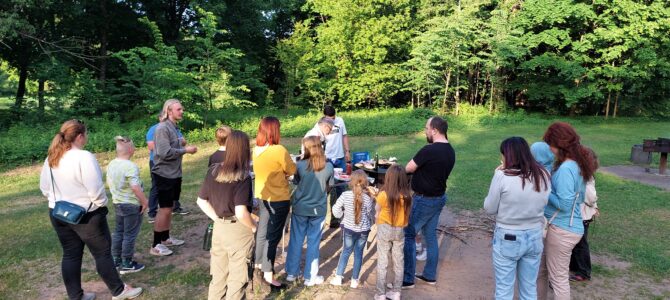
An overnight Jewish scouting camp will be held April 29 to 30 in a scenic natural setting. There will be a terrific program and the opportunity to meet other scouts. For more information and to register, send an email to scout leader Michail Adomas Kofman at skautai@lzb.lt. There is a significant discount for early enrollment and for siblings from a single household.

Charles Commemorates Child Refugees in Hamburg

Charles Commemorates Child Refugees in Hamburg

BERLIN (AP)–King Charles III commemorated the more than 30,000 people, mostly German civilians, who were killed in the Allied bombing of Hamburg almost 80 years ago as he visited the northern city Friday on the last leg of his first foreign trip since becoming monarch.

The attack in July 1943 carried out by British and American planes using incendiary bombs was a response to Nazi Germany’s deadly aerial raids on Britain. It resulted in a firestorm which destroyed large parts of the city and remains a painful memory in the Hanseatic port’s proud history.

Charles laid a wreath at the ruined church of St. Nikolai, now a memorial site, and listened to Hamburg’s bishop Kirsten Fehrs read the Coventry Litany of Reconciliation written to commemorate the destruction of the English city of Coventry by German bombers in 1940.

Earlier, Charles and Camilla visited a memorial to the Kindertransporte, or children’s transports, when more than 10,000 Jewish children found refuge from Nazi Germany in the U.K. in 1938.

Full story here.

Passover Drawings Sought

Passover Drawings Sought

Every Jewish family celebrates the ancient holiday of Passover, commemorating the exodus from slavery in Egypt, and every family has their own holiday traditions. With that in mind, the Lithuanian Jewish Community is inviting the youngest members of the community to draw pictures about Passover and send them in by e-mail to katrina@lzb.lt before April 13. Every young artist can expect to receive a package of chocolate-coated matzo.

New Book of Names at Yad Vashem

New Book of Names at Yad Vashem

Since its establishment Yad Vashem has endeavored to gather the names of the six million Jews murdered in the Holocaust, one of its central missions. Yad Vashem’s Book of Names is the unique result of meticulous and painstaking work that commemorates 4,800,000 men, women and children whose details have been gathered and uncovered over the years, through Pages of Testimony, the location of various Holocaust-era documents, cooperation with memorial sites and more, which are memorialized in Yad Vashem’s Central Database of Shoah Victims’ Names.

The Book of Names actualizes the inconceivable number of Holocaust victims, and displays their names together with their dates of birth, hometowns and places of death, when known. The information is printed on pages measuring two meters high and one meter wide, with the details illuminated by a gentle beam of light that shines from between the pages. The massive dimensions of the Book of Names testify to the enormity of the collective and unimaginable loss for humanity as a whole and for the Jewish people in particular. The last pages of the book are empty, symbolizing the names that are yet to be retrieved, documented and commemorated, and which perhaps never will be.

Designer: Chanan De Lange

The Book of Names was produced with the generous support of Marilyn and Barry Rubinstein, USA.

Opening: March 29, 2023.

Great Synagogue Listed as Protected Heritage Site

Great Synagogue Listed as Protected Heritage Site

The site of the former Great Synagogue in Vilnius with associated mikvot has been listed as a state-protected cultural heritage site, according to Baltic News Service.

The Lithuanian Culture Ministry issued a press release Thursday naming this site and the site of the first Lithuanian gymnasium in Vilnius was established on Basanavičiaus street. The YIVO occupied part of the latter space at its inception in 1925 before moving headquarters to Vivulskio street in Vilnius. The ministry reports state protection means more opportunities for funding protection and restoration of these sites.

The exact date the synagogue was built isn’t known. The Great Synagogue with adjacent ritual purification baths was part of a larger complex of synagogues, libraries and schools located around the Great Synagogue and the home of the Vilna Gaon.

Ownership of the ruins of the Great Synagogue and mikvot were passed to the Goodwill Foundation in 2020. Various plans for commemorating the site have been proposed, but so far the most likely is a humble protected excavation exhibit showcasing the subterranean main hall with bimah and floor.

Photo: Tunnel dug by archaeologists leading to central bimah, by Valdas Kopūstas, courtesy BNS.

Nancy Sasson Travels to Panevėžys Seeking Family Roots

Nancy Sasson Travels to Panevėžys Seeking Family Roots

Last week Nancy Sasson from the United States arrived in Panevėžys seeking genealogical information about her family. She believes her grandfather and perhaps great-grandfather lived in Panevėžys. She was accompanied by her old friend from Lithuania Vaida Zlatkutė and a guide who travelled from Israel to help.

Panevėžys Jewish Community chairman Gennady Kofman received them warmly and he and the Israeli guide gave the two women a tour of the city, pointing out significant Jewish locations and telling the Litvak story, the many important cultural contributions Litvaks made and the horrific end they suffered.

Nancy Sasson was visibly moved during the tour down the streets and sidewalks once traversed by her forebears.

Lithuanian-Born Yiddish Poet Rivka Basman Ben-Haim Dead at 98

Lithuanian-Born Yiddish Poet Rivka Basman Ben-Haim Dead at 98

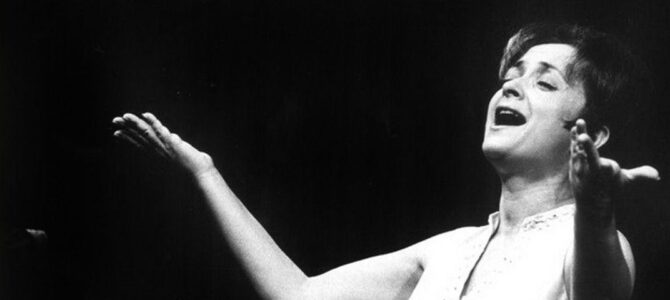
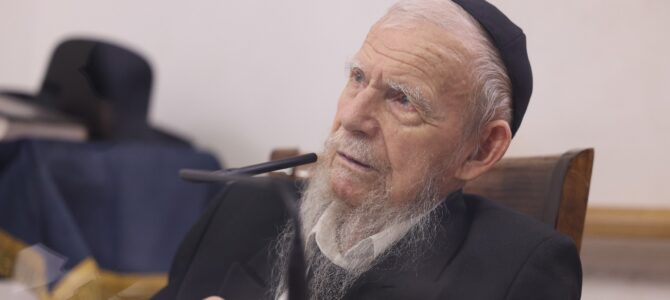
Yiddish poet Rivka Basman Ben-Haim died last week at the age of 98, the Jerusalem Post reports. She was the last living Yiddish poet of her generation.

She refused to call herself a Holocaust survivor. The person who entered the Nazi camps, she explained, did not survive, but died, and a different person emerged. Rivka found comfort in their new families, friendships and in love.

She was born in Wilkomir [Ukmergė], Lithuania. Her father and brother were murdered. She spent around two years in the Vilna ghetto and was then sent to the Kaiserwald concentration camp in Riga.

Full Jerusalem Post story here.

More information about Basman’s Litvak origins and life here.

Shalom Discussion Club to Meet

Shalom Discussion Club to Meet

Natalja Cheifec’s Shalom discussion club is planning to meet for an open-ended discussion at 5:30 P.M. on Wednesday, March 29, on the zoom internet platform. To receive login credentials register at https://bit.ly/3q0j7hg and when you’re filling out the questionnaire don’t forget to mention the topics you’d like to see discussed by the club. Wednesday evening’s meeting will include a link to a film which will be a topic for discussion as well.

Matzo on Sale

Matzo on Sale

Matzo has arrived for Passover and is available in 450 gram for 5 euros and 1 kilogram boxes for 10 euros at the Lithuanian Jewish Community, Pylimo street no. 4, Vilnius, on workdays except Tuesday, from 10:00 A.M. to 5:00 P.M.

Sunday Quiz: Why Is This Night Like No Other?

Sunday Quiz: Why Is This Night Like No Other?

Next Sunday’s quiz at the Bagel Shop Café is called “What Is Passover?” As usual, accomplished circus clown and investigative journalist Arkadijus Vinokuras will lead the fun, and shut-ins will be able to at least watch on the Lithuanian Jewish Community’s facebook page. It all happens at 2:00 P.M. on Sunday, April 2. Be there or be late to the table.