Learning, History, Culture

A blueprint to combat anti-Semitism in Europe

A blueprint to combat anti-Semitism in Europe

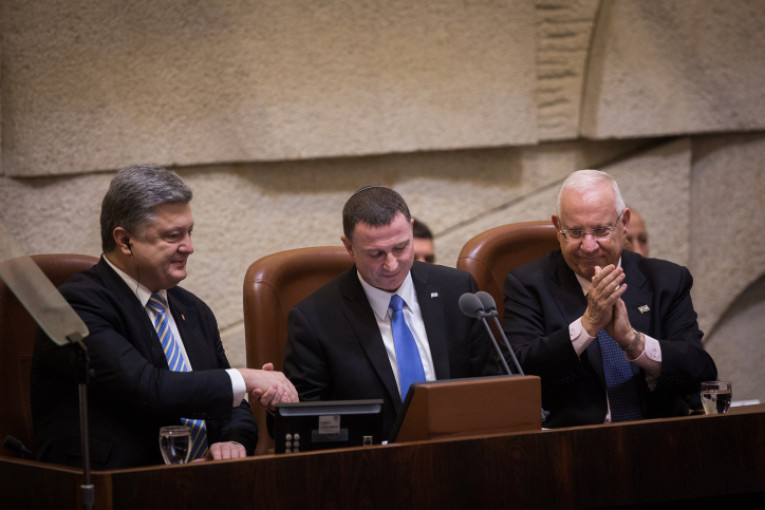
On January 27th the world will come together to observe International Holocaust Remembrance Day, marking 70 years since the liberation of Auschwitz-Birkenau.

Yet 70 years since end of the most horrific chapter in Europe’s history, anti-Semitism has once again surged to levels unprecedented since the end of the Holocaust, with virtually no part of Europe free from this oldest and most enduring form of hatred.

Whether it is the kosher supermarket attack in Paris this January, the shooting in the Brussels Jewish Museum last year, or frequent assaults against Jews and vandalism of synagogues and Jewish stores, there is an increasingly palpable sense of fear and insecurity among many Jewish communities in Europe.

Read more

What did I inherit from my family who survived the Lithuanian Holocaust?

What did I inherit from my family who survived the Lithuanian Holocaust?

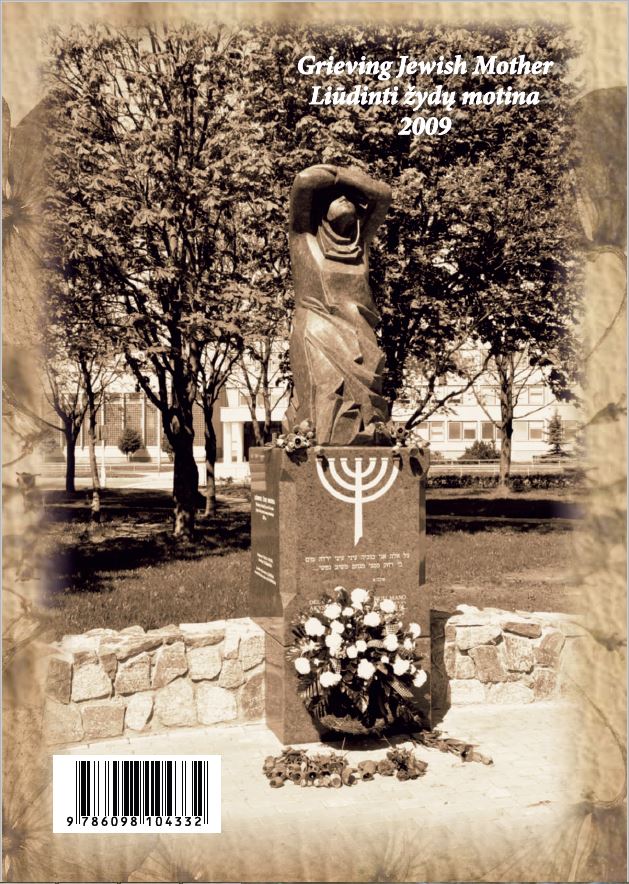
God, Faith & Identity from the Ashes: Reflections of Children and Grandchildren of Holocaust Survivors

Menachem Z Rosensaft, Editor, Elie Wiesel, Prologue by

In this important and poignant collection of thoughts and memories from descendants of Holocaust survivors, 88 men and women from around the world share personal, often heartrending reflections. As their parents and grandparents age and pass away, these adults remember the palpable darkness and shadows of fear that haunted them. Contributors were asked “how their parents’ or grandparents’ experiences and examples helped shape their own identities and their attitudes toward God, faith, Judaism, the Jewish people, and society as a whole.” The answers, some short, others longer, are all brutally honest. Whereas some found faith and a spark of hope amid the carnage, others lost religion entirely, and still others lament how similar tragedies could unfold in the aftermath of “never again.” Readers may shed tears of sorrow, but will be inspired by the strength and courage of this worthy volume. Elie Wiesel contributes a prologue.

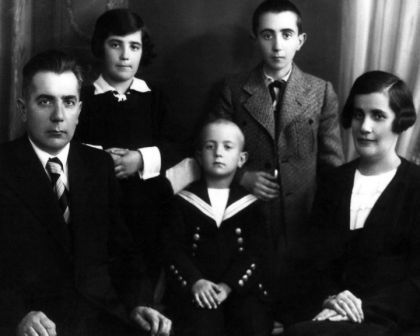
What did I inherit from my family who survived the Lithuanian Holocaust?

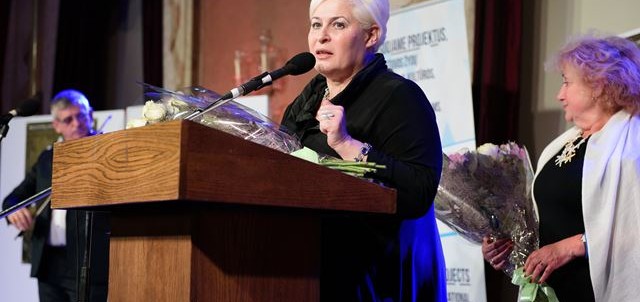
by Faina Kukliansky

New Monument Unveiled to Commemorate Rescuer of Jews Polina Tarasewicz

New Monument Unveiled to Commemorate Rescuer of Jews Polina Tarasewicz

A new commemorative stone erected in honor of Righteous Gentile Polina Tarasewicz (born 1905, murdered 1943) was consecrated at the cemetery in Parudaminis village in the Marijampolis aldermanship in the Vilnius region on October 30, 2014. Anatoliy Kasinski, formerly Kazriel Bernan, provided testimony on how Polina Tarasewicz took in and hid him, his brother and his mother at Predtechenka village (now known as Biržiškės) in the Vilnius region. A local turned Tarasewicz in and Nazis and local collaborators set up an ambush at night.

Tarasewicz had time to tell Anatoliy to run to the forest, which is the reason he survived. The murderers took Tarasewicz and the survivor’s mother and brother to a wooded area and shot them, then they burned down her house and farm. The next day Tarasewicz’s relatives secretly dug up her body and reburied her next to her mother’s grave at the Parudaminis cemetery. At an awards ceremony at the Lithuanian Government House on April 28 of 2014, Polina Tarasewicz along with 20 other people who saved Jews during World War II at risk to their lives and those of their families were honored.

Collapse No Longer Threatens Vilnius Synagogue

Collapse No Longer Threatens Vilnius Synagogue

Cultural Heritage Department to the Ministry of Culture of the Republic of Lithuania

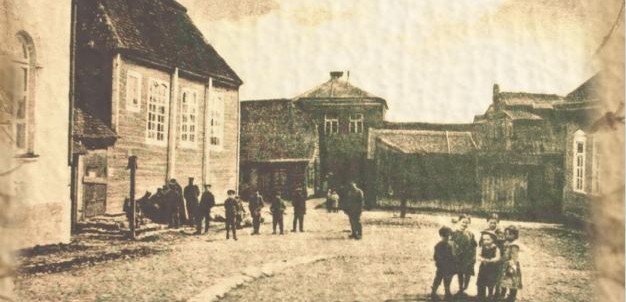
 Work is being done to stop the collapse of the Vilnius Synagogue (Gėlių street No. 6, Vilnius).

 Until the work was started, the house of prayer was in a dangerous condition. The roof has holes and so the building is being affected strongly by the environment. Because of this some of the flooring and the internal cupola collapsed, the wooden roof construction was rotting and the mortar in the walls was decaying.

 In order to avoid an accident and solve the dangerous situation, supports were put in place to hold up the wooden flooring and wooden rafters supporting the roof to keep it from caving into the building. Also, a wall of silicate brick and metal constructions which were obscuring the facade of the synagogue as well eroding the mortar in the original brick walls and thus endangering the entire building are being removed.

 The Cultural Heritage Department has allocated over 50,000 litas [approximately 14,431 euros] from its Heritage Conservation Program for 2014 to carry out these tasks. The Vilnius Jewish Religious Community has allocated a further 5,000 litas. Architect Irena Staniūnienė drafted the plan to save the building.

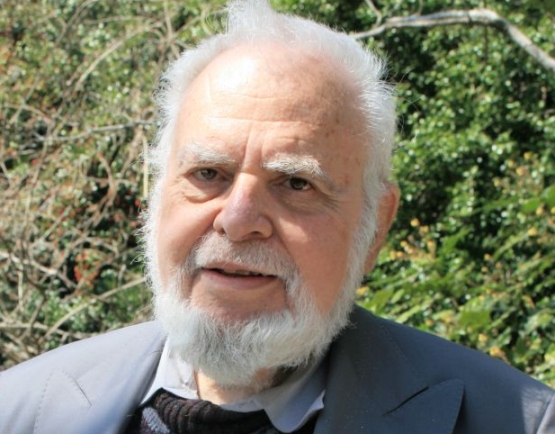
Aleksandras Bosas (1951-2014)

Aleksandras Bosas (1951-2014)

Picture: Aleksandras Bosas, fifth from left, holding a sign saying “Juozas Krištaponis is the Shame of Ukmergė.” Photo: Gediminas Nemunaitis / ukzinios.lt.

O B I T U A R Y

by Evaldas Balčiūnas

Aleksandras Bosas, a respected Lithuanian poet, died unexpectedly on July 24, 2014. The widerDefending History  community extends deepest condolences to the family and friends of our suddenly departed colleague, who is survived by his wife, Natalija, three sons and a daughter.

We have lost a courageously active literary voice against fascism and against the contemporary attempts at high levels to glorify fascism via posthumous honors for collaborators and local perpetrators of the Lithuanian Holocaust.

At the beginning of 2014 his book of poems dedicated to commemorating the Holocaust in Lithuania appeared. It is called Iš ten sugrįžtantiems (“For Those Who Returned from There”).

He last read his poetry publicly ten days before his death, on July 14. It is symbolically fitting for Bosas’s stature that the reading was held at a protest calling for the removal of a statue glorifying Holocaust perpetrator J. Krištaponis from a square in Ukmergė (Vilkomir).

More at defendinghistory.com