
Learning, History, Culture

Book PRICE of CONCORD

Book PRICE of CONCORD

MEMOIRS

PORTRAITS OF ARTISTS

INTERACTIONS OF CULTURES

Author: habil.dr. prof. Markas Petuchauskas

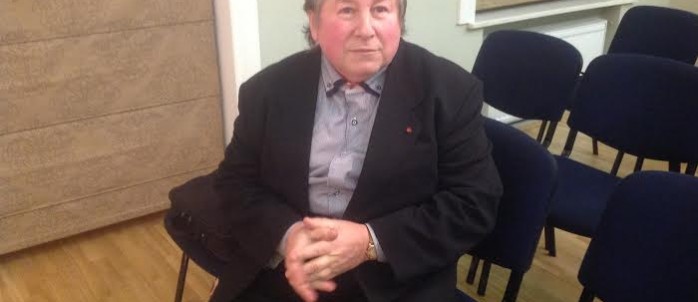
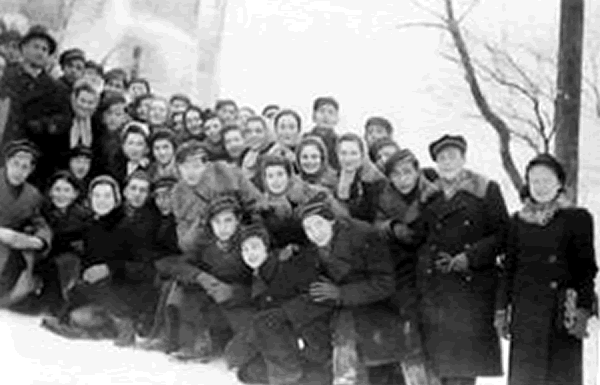
The life of Markas Petuchauskas, a former Vilnius Ghetto prisoner, famous theatre historian and critic, is marked by twists of fate rarely seen other than in dramatic theatrical portrayals. His survival could well be seen as a miracle as he joined the rare few who managed to escape the death that accompanied the Nazi ghettos.

Markas Petuchauskas

 ABOUT THE AUTHOR

Markas Petuchauskas was born in 1931 in Šiauliai, Lithuania. His distinguished father, Samuelis Petuchauskas, was a holder of the Order of the Lithuanian Grand Duke Gediminas, and for two decades of the inter-war period was Vice-Burgomaster of Šiauliai. In 1940, the family moved to Vilnius. At the beginning of the Nazi occupation, the author’s father was executed by shooting in Paneriai.

Jews Seek Their Roots in Žagarė

Jewish Culture Days are taking place in Žagarė, Lithuania, which was selected the Lithuanian capital of culture this year. Jews with roots in Žagarė have arrived from all over the world and are visiting Jewish architectural heritage sites, attending concerts and watching films.

The first Jewish community was established in Žagarė in the early 18th century and mainly Jewish craftsmen and merchants lived in the town. Many Jews were shot during World War II at the Žagarė park. The last Jewish resident of Žagarė died several years ago.

Leonora Vasiliauskienė, a former Žagarė resident, said: “Žagarė is my childhood, my youth, and there were sad chapters, such as when I learned my grandmother, two aunts and uncle were murdered here. They were transported from Tryškiai and shot.”

European Jewish Culture Day in Rokiškis, Lithuania

European Jewish Culture Day in Rokiškis, Lithuania

On September 6 an information sign was unveiled on Sinagogų street in Rokiškis, Lithuania to mark European Jewish Culture Day. The sign provides information on the Rokiškis Litvak community and the 3 synagogues which once stood here.

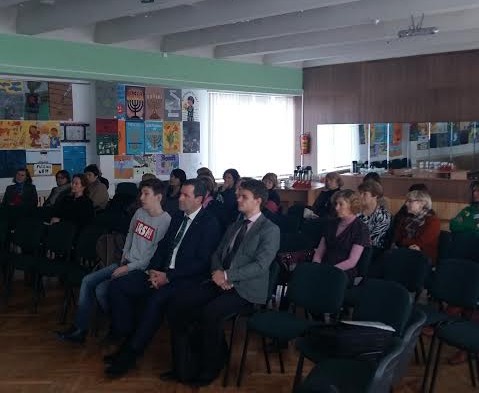
A significant gathering of locals interested in the history of their hometown attended the event.

Rokiškis regional administration mayor Antanas Vagonis and Rokiškis Local History Museum director Nijolė Šniokienė unveiled the sign.

The informational sign was prepared as part of the project “Commemoration of the Site of the Rokiškis Synagogues” financed by the Cultural Heritage Protection Department under the Lithuanian Ministry of Culture.

More pictures on Facebook

2015 Vilnius Yiddish Institute Summer Course Graduation Ceremony

2015 Vilnius Yiddish Institute Summer Course Graduation Ceremony

The 2015 Yiddish summer course at the Vilnius Yiddish Institute of Vilnius University concluded at the usual location, the courtyard of a restaurant adjacent to the university in the Old Town, with music, a theatrical presentation, the issuance of diplomas and plenty of food to go around. An addition this year was a sort of daycare center-corner for small children with toys and books.

Šarūnas Liekis, the head of the institute, served as MC and addressed the audience in Yiddish.

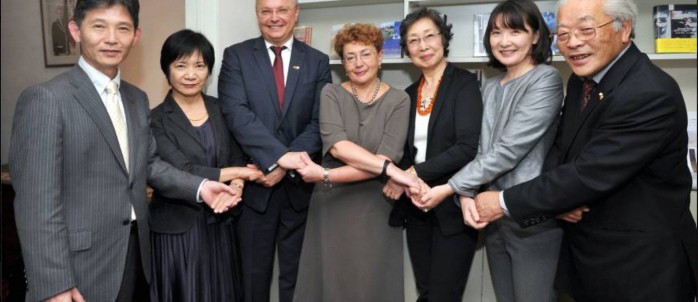
This summer’s crop of students included a Japanese individual, an American contingent, a Polish contingent, ethnic Lithuanians and people hailing from other parts of the world.

Arkady Vinokur presented a preview of the New Yiddish Theater project he is working on.

The audience included all the faculty and staff of the summer course, former students, Lithuanian Jewish Community chairwoman Faina Kukliansky and LJC deputy chairwoman Maša Grodnikienė, local Jewish and Jewish-friendly residents and what seemed like an unusal number of primary-school-age children who left before the event was over.

Pictures:

Vilnius Yiddish Institute Summer Course Students Celebrate Sabbath at Lithuanian Jewish Community

Vilnius Yiddish Institute Summer Course Students Celebrate Sabbath at Lithuanian Jewish Community

As in earlier years, this year’s crop of Yiddish summer course students were invited to celebrate Sabbath at the Lithuanian Jewish Community. The event scheduled for the Friday of July 31 was joined by the Union of Lithuanian Jewish Students and became a potluck rather than a hosted dinner.

A Lithuanian girl named Aistė served as greeter and hostess, directing people with dishes, tupperware and bottles of wine to the tables in front of the stage in the White Hall on the third floor of the Community building. Aistė said she was taking the summer course even though she had no Jewish heritage at all in her family, but is simply fascinated with the language and culture of Yiddish. There was some confusion as to the scheduled start of the evening, either 8:30 P.M. or 9, but in the end that lent to the informality of the evening.

The traditional Sabbath blessing was given by VYI summer course teacher professor Abraham  Lichtenbaum from Argentina with program head professor Dov-Ber Kerler lending assistance, after which the traditional challa bread was broken and passed around.

Lithuania’s Great Synagogue, demolished by Russians, draws archeological attention  Read more: The Jewish Chronicle – Lithuania s Great Synagogue demolished by Russians draws archeological attention

Lithuania’s Great Synagogue, demolished by Russians, draws archeological attention Read more: The Jewish Chronicle – Lithuania s Great Synagogue demolished by Russians draws archeological attention

The Great Synagogue in Vilnius, Lithuania was demolished by Russian troops just 55 years ago, but a local researcher from Duquesne University is already working on preserving its legacy.

Despite the synagogue’s relatively recent destruction, it is nonetheless the subject of an archeological project headed by a worldwide team of experts, including Philip Reeder, dean and professor of the Bayer School of Natural and Environmental Sciences at Duquesne.

Archaeological work undertaken to preserve or reconstruct history does not necessarily have to focus on ancient structures dating back thousands or even hundreds of years, according to Reeder. Rather, he said, archaeology is about “uncovering any history that is potentially lost, even if it 55 years old.”

Žiežmariai Synagogue: A Holocaust Site as Well as an Important Architectural Monument

Žiežmariai Synagogue: A Holocaust Site as Well as an Important Architectural Monument

The city council and mayor of Kaišiadorys, Vytenis Tomkus, are scheduled to meet with Lithuanian Jewish Community chairperson Faina Kukliansky and the community’s heritage protection specialist Martynas Užpelkis July 30 to discuss the conservation and exploitation of the Žiežmariai (Zhezhmer or Zezmer in Yiddish) Synagogue.

The Lithuanian Jewish Community in cooperation with the Cultural Protection Department has been working on how to preserve the town’s only surviving synagogue, one of the few surviving wooden synagogues in Europe, for several years now. A series of tests, studies and research including engineering and geological, archaeological, historical, building construction, timber, chemical and painting/decoration investigations, and the drafting of a detailed plan for renovation work are planned for completion this year. Restoration work beyond that, and most importantly the positive social and economic effect accruing from that, will be part of the town’s general plan for the conservation and use of heritage sites.

Double Genocide

Double Genocide

I met Yitzhak Arad in the cafeteria of his upscale retirement home outside Tel Aviv. To his enemies, this short man, softened by age and bundled in long sleeves against the facility’s overzealous air conditioning, is a kind of Jewish Kurt Waldheim: a brutal war criminal who deftly covered his tracks and went on to run one of the world’s leading human rights institutions. Waldheim, a former Nazi officer, famously became secretary-general of the United Nations before the truth came out. Arad allegedly committed atrocities against Lithuanian anti-Communists on behalf of Stalin’s secret police, the NKVD, before moving to Israel and becoming the director of Yad Vashem, the nation’s holocaust museum.

Read more

Tisha b’Av

Tisha b’Av

The Tisha b’Av fast this year falls on Saturday, July 25, beginning at 9:17 P.M. local time in Lithuania and ending at 10:26 P.M. on July 26.

Services will be held at the Vilnius Choral Synagogue at 9:00 A.M. and at 7:30 P.M. on July 26.

Tisha b’Av, literally “the ninth day of the month of Av,” commemorates the destruction of the First Temple of Solomon ca. 587 BCE and the Second Temple in 70 CE in Jerusalem and is traditionally a day of fasting and mourning. Observance includes five prohibitions, the main one being a 25-hour fast. The Book of Lamentations is read in the synagogue followed by the recitation of kinnos, liturgical dirges for the Temple and Jerusalem. Since the day has become associated with other major Jewish tragedies, some kinnos recall other events, including the murder of the Ten Martyrs in ancient Rome, pogroms against medieval Jewish communities and the Holocaust.

According to tradition, the sin of the Ten Spies is the real origin of Tisha B’Av. In the Book of Numbers, 13:1-33 when the Israelites accepted their false report of the Promised Land, they wept, thinking God could no help them. The night the people wept and wailed was the ninth day of Av, which then became a day of weeping and misfortune for all time, according to tradition, following which the Jews were made to wander the desert for 40 years.

Work to Restore Zavel Synagogue in Vilnius Begins

Work to Restore Zavel Synagogue in Vilnius Begins

The newspaper and news website Lietuvos žinios [News of Lithuania] reports work to restore the historic Zavel Synagogue on what is now called Gėlių street (former Sadova/Sadowa street, now a continuation of Sodų street) near the Vilnius train station has begun. The restoration plan includes repairs to the entry stairs, floors, windows, doors, roof and cupola as well as a façade-lift, according to the newspaper. The synagogue, traditionally known as Zavl shul, was once a venue for the preaching of Rabbi Nathan Mileikowsky, the grandfather of current Israeli prime minister Binyamin Netanyahu. The synagogue kept extraordinary hours to cater to travelling Jewish merchants who passed through the Vilnius
station regularly.

>>Complete article in Lithuanian

75th Yórtsayt of the famous Vilner Rov:  Rabbi Chaim-Ozer Grodzenski (1863-1940)

75th Yórtsayt of the famous Vilner Rov:  Rabbi Chaim-Ozer Grodzenski (1863-1940)

This week, the entire Ashkenazic Orthodox world, spread over many parts of the world, marked the 75th yórtsayt (anniversary of the death) of the beloved pre-Holocaust “last rabbi of Vilna,” Rabbi Chaim Ozer Grodzenski, forever known in Litvak Yiddish as Reb Chaim-Eyzer. To this day, Jewish visitors from around the world come to look at the legendary balcony on the corner of Zaválne (today’s Pylimo St.) and Greys-Pohulánke (Basanavičiaus).

One of the many tributes came in >>Hamodia

Dita Shperling: Germans Did Not Distinguish Lithuanians from Jews

“During the first days of the war the Germans who came to Kaunas couldn’t tell the difference between Jews and Lithuanians, but Lithuanians helped them to do,” Kaunas ghetto prisoner Dita Shperling recalled, citing the words of the German soldiers themselves.

09223

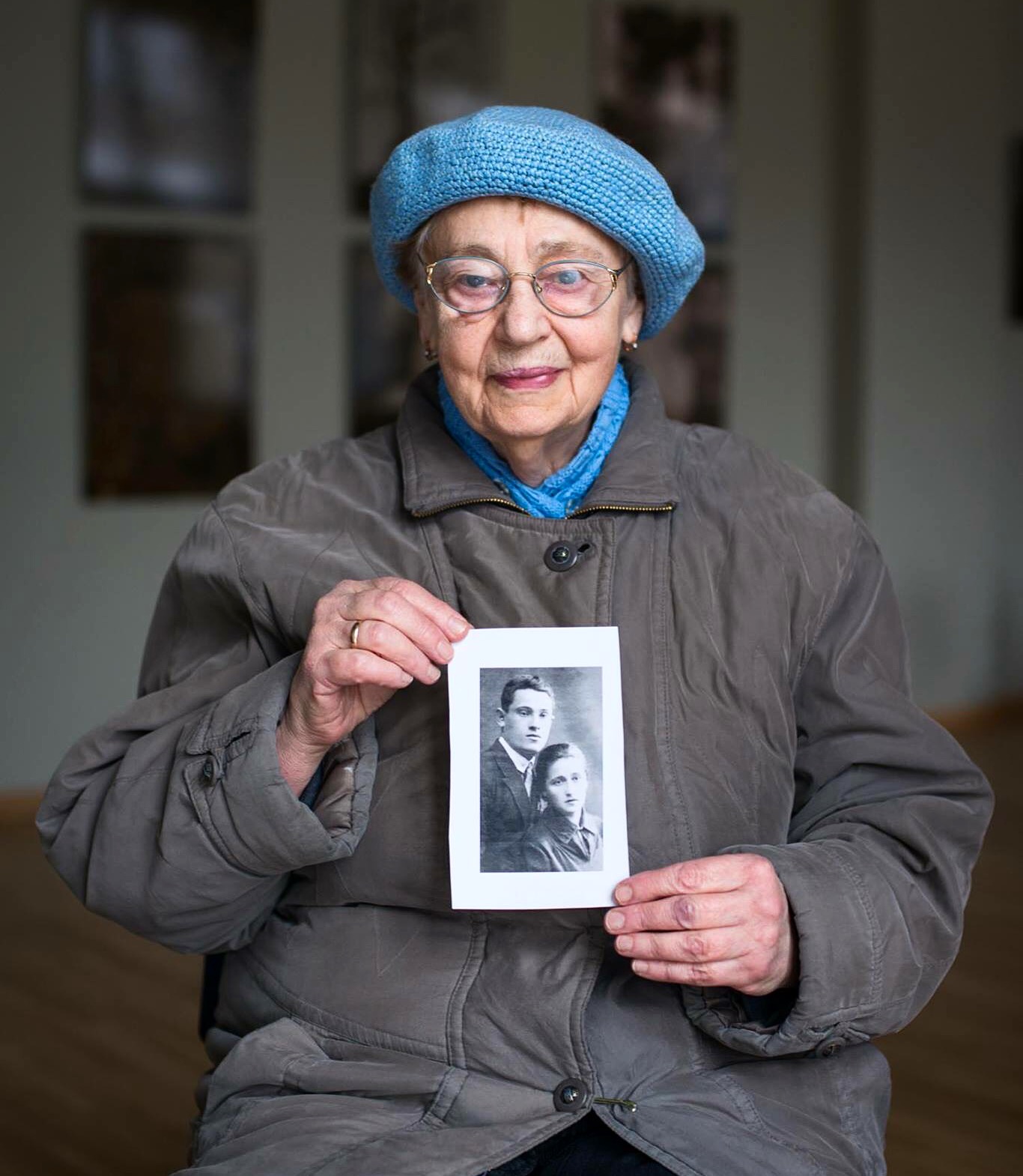
Dita (Yehudit) Schperling and her husband Yuda Zupowitch

Dita Schperling tries to travel every summer to Vilnius from Israel where she lives. She agreed to discuss her experience in the ghetto with staff from the LJC webpage.

Dr. Yusuf Hamied – Indian Real Life Hero Who Saved Million Lives

Many basic, life-saving medications remain unaffordable in low- and middle-income countries. Spurred on by that fact, Yusuf Hamied, chairman and managing director of Cipla Pharmaceuticals, has steered his enterprise (Cipla Ltd) to the forefront of global pharmaceutical development by manufacturing low-cost drugs, thus making drugs affordable for the poor people of the developing world and saving the lives . In an interview with India Knowledge@Wharton, Hamied describes his company’s skirmishes with multinationals looking to protect their patents on particular medications and explains why rules governing intellectual property rights in industrialized nations should not apply to poorer countries. The patent regime in India should be so devised that utmost priority is given to secure the people’s right to access affordable, quality health care.

Read more

Children raised in Nazi period carried forward anti-Semitism, study says

Children raised in Nazi period carried forward anti-Semitism, study says

The 12 years of Nazism (1933-1945) inculcated young Germans with anti-Jewish ideas that continued after the defeat of Hitler, according to a new study on anti-Semitism.

The study, which American and Swiss researchers released Monday, found that Germans who grew up during the 1930s were far more likely than their younger countrymen to have negative attitudes about Jews. It reported that anti-Semitic views were particularly strong among Germans raised in regions of the country that were known for anti-Semitism even before Hitler came to power.

According to the researchers, who analyzed surveys conducted in 1996 and 2006, the findings indicated that Nazi propaganda was highly effective, especially when it confirmed existing beliefs.

Read more

They Come Back

Geoff Vasil

Over the years they come back. Just a handful, to be sure, but they come. They come to find the site of the most confused chapter in the Lithuanian Holocaust. The Church of the Missionaries in Vilnius, where the Final Selection took place.

For the children and grandchildren of the few survivors, the very small group of witnesses who saw what happened there and lived to tell anyone, the site is Rosa. The name has been lost to modern residents of the city, many decades ago. The city itself has changed, not just the names. Once there was a courtyard behind the gate of the Church of the Missionaries on Subačius street just a block or two out of the Old Town. There was a railroad spur right there which connected with the central Vilnius train station, somewhat more distant than the Old Town and in a different direction. The square was called Rosa. There was a nunnery adjacent, and apparently a small jail called the Rosa Street Jail which the Nazis used, implying there was also a Rosa street. If you continue down Subačius or Subocz street past the church, you reach the two large apartment complexes where the Jews enslaved to the HKP, essentially the local automobile workshop for the Wehrmacht, were kept, just a hop, skip and a jump away from Rosa Square.

Shavuot – the Festival of Weeks

Shavuot – the Festival of Weeks

The Torah was given by G-d to the Jewish people on Mount Sinai more than 3300 years ago. Every year on the holiday ofShavuot we renew our acceptance of G‑d’s gift, and G‑d “re-gives” the Torah. The word Shavuot means “weeks.” It marks the completion of the seven-week counting period between Passover and Shavuot.

You shall count for yourselves — from the day after the Shabbat, from the day when you bring the Omer of the waving — seven Shabbats, they shall be complete. Until the day after the seventh sabbath you shall count, fifty days… You shall convoke on this very day — there shall be a holy convocation for yourselves — you shall do no laborious work; it is an eternal decree in your dwelling places for your generations. -Leviticus 21:15-16, 21

The Expulsion of Jews from Lithuania and Courland 1915: One Century Later

The Expulsion of Jews from Lithuania and Courland 1915: One Century Later

It was a time of trial and tribulation for World Jewry. Shavuot 1915 was one of the largest single expulsions of Jews since Roman times. Over 200,000 Jews in Lithuania and Courland would be abruptly forced from their homes into dire circumstances.

With the advance of the German army on the Eastern front in the spring of 1915, retreating Russian forces vented their fury against the Jews and blamed them for their losses. They leveled spurious accusations of treason and spying for the enemy and sought to keep a distance between Jews and German forces to prevent contact by expelling Jews near the war front. From province to province throughout Poland, multitudes of Jews were expelled. Many also fled from their homes as German forces moved eastward.

By March, German forces approached Lithuania as Russian forces continued their retreat. The first expulsion in Lithuanian took place in a small town of Botki. In April, at the town of Kuzhi, the local Jews were accused of hiding German troops in their homes. Although proofs were brought by members of the Duma debunking the charges as fiction, the accusations had already spread throughout Russia via newspaper reports and became another pretext to persecute Russian Jewry. Soon after, the mass expulsion from Lithuania commenced.

While preparing for the upcoming Shavuot holiday, notices appeared calling for the Jews living in areas closer to the war front to vacate their homes over the next day or two days. Most of the notices gave 24 hours or even less time.

In just a few days, Lithuanian Jewry, which had a legacy of hundreds of years made a hasty exit, ordered to move eastward. Even the sick and the infirmed were included in the decree. Those who did not comply faced execution.

Read more

From Holocaust envy to Holocaust theft

From Holocaust envy to Holocaust theft

VILNIUS — This month, on the seventieth anniversary of the defeat of Hitler’s Nazi regime and the end of World War II — ipso facto the end of the Holocaust — Western leaders have been faced with a symbological conundrum. How might they square honest commemoration of this major anniversary with Russian president Vladimir Putin’s record of progressively more arrogant dictatorship at home and cynical mischief in his near abroad?

Once Moscow made clear that the May 9th parade in the Russian capital would feature his latest tanks and planes, it became certain that most Western leaders would not feel comfortable being there. They do not want to become props for Putin’s attempts to use (as it happens, accurate) World War II history as cover for his indefensible policies and ethos. But in statecraft as in life, there is always an alternative danger that lurks: Do they want to become props for Nazi-apologists’ far-right elements in today’s anti-Russia East European states’ attempts to use (as it happens, inaccurate) World War II history as cover for denial of massive, lethal wartime collaboration, denial of the Soviet peoples’ role in defeating Hitler, and, along the same road, extreme nationalism, racism and a frenzy against Russian-speakers everywhere. Then, add into the unstable mix the American neocon obsession with stoking trouble far and wide to project American power and weapon systems, even where that means violating core American and Western values.

When Zalmen Reyzen’s Vilna Yiddish Newspaper Headlined an Evening for the Yiddish Writer A.I. Grodzenski

When Zalmen Reyzen’s Vilna Yiddish Newspaper Headlined an Evening for the Yiddish Writer A.I. Grodzenski

by Dovid Katz
 

A 1922 headline in Zalmen Reyzen’s daily newspaper, the Vilna “Tog” (“Day” —  issue of 17 Jan. 1922) announced a Saturday night event dedicated to the remarkable Vilna Yiddish writer Aaron Isaac (Arn-Yitskhok) Grodzenski (1891-1941), a secular Yiddish writer who was the nephew of the world famous rabbi Chaim-Oyzer Grodzenski (whose onetime home on Pylimo [Yiddish: Zaválne gas] still attracts visitors from around the world). Zalmen Reyzen, a famous Yiddish philologist, literary historian and editor, a co-founder of the Vilna Yivo in 1925, himself lived on Greys Pohulánke (now Basanavičiaus, where a bilingual Yiddish-Lithuanian plaque marks the site at no. 17).