
Learning, History, Culture

Opening of Exhibition of Litvak Art Accompanied by Music Performed by Levickis

SveikasIzraeli_parodos kuratorė V.Gradinskaitė

The Tolerance Center of the Vilna Gaon Jewish State Museum unveiled a new art exhibit December 16 called “Shalom Israel! Litvak Artists.” The show includes 37 works by 24 Litvak artists from the museum’s collections, the Lewben Art Foundation, the Lithuanian Exiles Art Fund, the attorney’s office Valiunas Ellex and other private collections. One of the more surprising items at the opening was a musical presentation by Martynas Levickis, accordion player and one of Lithuania’s most famous virtuosos. Levickis performed works by Paganini, Rossini and Vivaldi.

Deputy museum director Dr. Kamilė Rupeikaitė welcomed guests to the event and Valiunas Ellex director Rolandas Valiūnas, Lewben Art Foundation director Indrė Tubinienė and Lithuanian MP Emanuelis Zingeris spoke. Zingeris said Litvak artists kept putting Lithuania on the map even when the country was occupied and acted as Lithuanian ambassadors to the world. He said their Lithuanian origins were indicated next to their works at the most famous galleries everywhere.

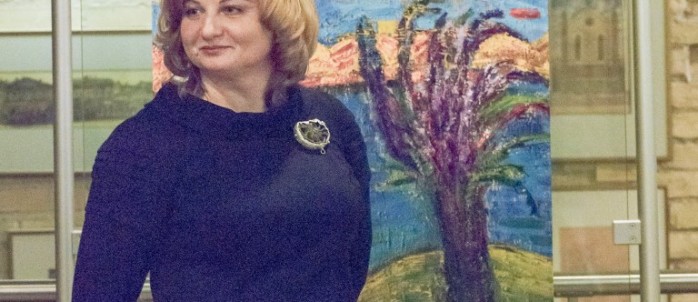
Art history expert and curator Dr. Vilma Gradinskaitė presented the idea behind the exhibit and pointed out that almost all of the works on exhibit were being shown publicly for the first time. Two contemporary artists, R. Savickas and A. Jacovskytė, even created works especially for this exhibition. Dr. Gradinskaitė said: “Some of the paintings and graphics works, drawing and medals executed in various styles reveal a dual process in the development of Jewish art and demonstrate how Litvak artists shaped Israeli art, as well as how Israel’s natural environment and local folk-art traditions affected the artistic expression of Litvak artists, including scenery, manner of painting, color palette and mood.”
Vilnius Yiddish Institute Announces Summer Program for 2016

main_photo

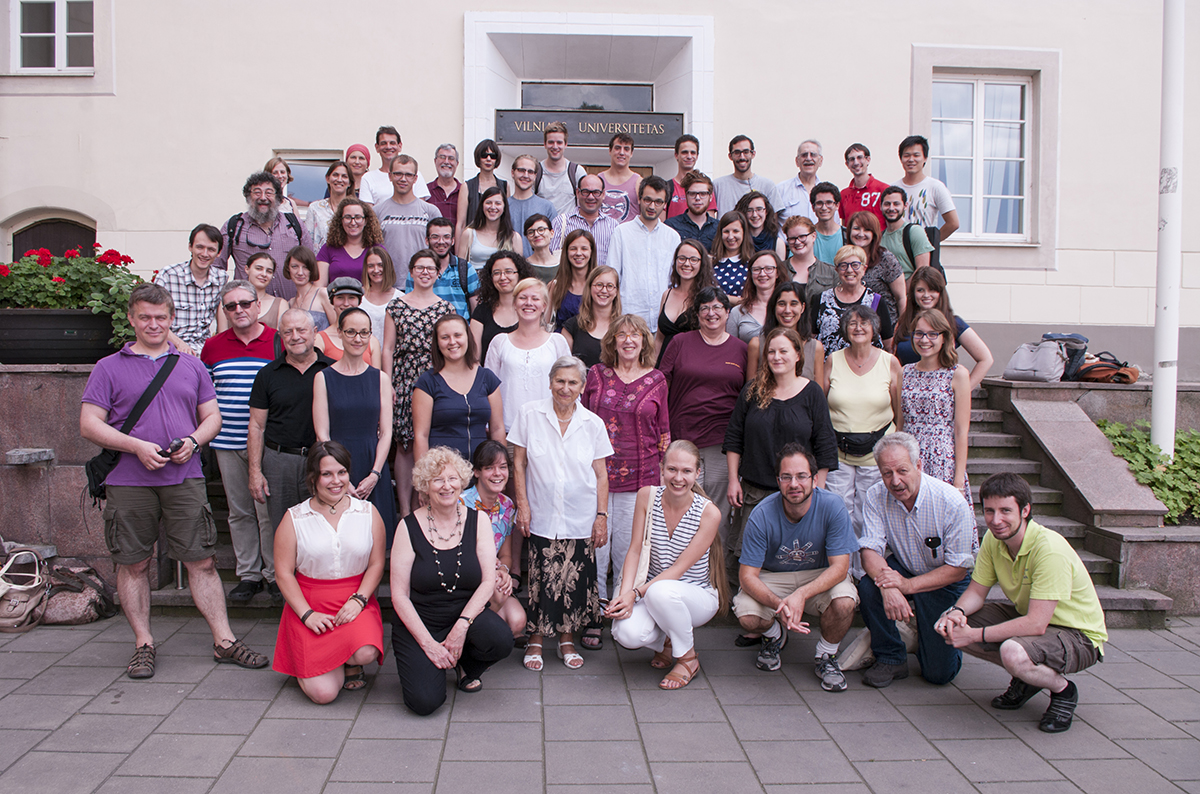
The Vilnius Yiddish Institute at the Vilnius University announces the Vilnius Yiddish Summer Program for 2016 to take place from July 17 to August 12, 2016, and offering four levels of intensive language instruction for beginners, intermediate, higher intermediate and advanced students.

For more information please contact Indrė Joffytė, program coordinator: info@judaicvilnius.com

http://judaicvilnius.com/

Vilnius Yiddish Institute
Universiteto g. 7
Vilnius 01513
Lithuania

Sugihara Film Second Only to the New James Bond in Japan

v

Name-recognition of Lithuania’s second city Kaunas is growing like mushrooms after a heavy spring rain in far-off Japan. The Japanese premiere of the new film about the Japanese diplomat Chiune Sugihara, “Persona non Grata: The Chiune Sugihara Story,” took place in early December and has achieved huge success.

Lithuanian ambassador to Japan Egidijus Meilūnas said the film is currently being shown at over 300 theaters in Japan and is second only to the new James Bond film in terms of popularity. Brochures about Kaunas are also being provided to the public at the movie theaters and other public spaces. Japan seems to be buzzing about the film, with many television programs discussing it and broadcasting images of Lithuania and Kaunas.

“Kaunas is being advertised very heavily right now,” ambassador Meilūnas said.

Full story in Lithuanian here.

Film trailer here.

Official film site page in Japanese on Sugihara, Kaunas and Lithuania here.

Jewish Cultural Tourism Route Association Established

The Jewish Cultural Route Association was officially established at a meeting at the Lithuanian Economics Ministry on December 5, 2015. The group is tasked with drafting and developing a Jewish cultural tourism program with a consistent itinerary of sites in Lithuania.

The meeting at the ministry was called at the initiative of the Cultural Heritage Department. Department director Diana Varnaitė presented the plan there and State Tourism Department director Jurgita Kazlauskienė presented the idea of a Lithuanian Jewish cultural tourism program as a competitive product in the market.

Lithuanian Jewish Community chairwoman Faina Kukliansky spoke at the meeting and said it wouldn’t have been possible to achieve the results achieved so far without the participation of all the various institutions involved. “I would like to thank you for the efforts made to preserve our cultural heritage and to present it to the world. Synagogues and Jewish cemeteries are today being renovated and put in order. There is still some suspicion in talk about us, characterizing relations with Jews as ‘us and them,’ but I would disagree with that sort of attitude,” she said.

Jewish Cultural Heritage in Lithuania

The Cultural Heritage Department under the Lithuanian Ministry of Culture has posted a PDF document called Jewish Cultural Heritage in Lithuania:

Jewish Cultural Heritage in Lithuania

Jews settled in the territory of historic Lithuania during the rule of Grand Duke Gediminas in the first half of the 14th century. Economic and historic conditions in the Lithuanian lands proved to be conducive for the emergence of a unique community of Lithuanian Jews, which later became known as the Litvaks. The growing Lithuanian Jewish communities attracted rabbis, who were knowledgeable and experienced in the field of education. Jewish quarters were formed in each town, with a synagogue and a synagogue yard as a prayer house and schooling and administrative centre of the local community. As the authority of Lithuania-based rabbis grew and the Lithuanian Jewish communities prospered, yeshivas, Jewish spiritual high schools, were founded in various Lithuanian towns. From the end of the 19th century, and with yet greater intensity after World War I, a network of secular educational institutions developed in the Republic of Lithuania, in Vilnius, and in the surrounding areas, offering instruction in the Yiddish and Hebrew languages. Local printing houses produced sacred and secular books needed for the educational process. All this collectively created a solid foundation for the Jewish press and high culture—theatre, art and literature—to grow and flourish. The Lithuanian Jewry, like Jewish people everywhere else in Europe, was subjected to the horrors of the Holocaust in 1941–1945. Their cultural heritage fell victim to the destruction alongside its creators. In present day Lithuania, the quiet witnesses of this formerly glorious culture can be encountered in various Lithuanian towns and villages.

Maestro Anatolijus Šenderovas at the “Destinies” Series at the LJC

likimai7

The twenty-second installment of the “Destinies” series regularly organized by Lithuanian Jewish Community deputy chairwoman Maša Grodnikienė featured one of the most famous of contemporary Lithuanian composers, National Prize recipient Anatolijus Šenderovas. Kamilė Rupeikaitė-Mariniuk, PhD, deputy director of the Vilna Gaon Jewish State Museum and an expert in cantillation and music, led the conversation with the composer.

Šenderovas, considered modern composer of unique talent, spoke cheerfully of his life and his musical career. Lithuanians seem quite proud of their composer. His works are performed by many musicians and orchestras, and new variations upon them constantly appear. Many people turned out for the “Destinies” event and left the auditorium inspired by his amazing energy.

Square Named after Emmanuel Levinas in Kaunas

December 11, BNS–The Kaunas city council executive body has agreed to rename the square next to lift carrying passengers to the neighborhood of Žaliakalnis after the philosopher Emmanuel Levinas, the municipality reported Friday. Levinas is considered one of the most famous of Kaunas’s sons. He was born and lived there. Viktoras Bachmetjevas, an early proponent of the project to rename the square, said the proposal is four or five years old.

“I was thinking about how Levinas was one of the most important people ever born in Kaunas, and that there is almost no sign of him here. As a resident of Kaunas, I felt it my duty to increase the number of those signs. If he becomes an attraction in the city, that will be the best way to remember him,” Bachmetjevas commented. Levinas was an existentialist philosopher and a professor at the Sorbonne. He was born and lived in Kaunas’s Old Town and met his future wife there, whom he later married in Paris. His family living in Kaunas were murdered at the beginning of World War II.

A street in Kaunas was named earlier in his honor and there is a memorial plaque to mark his place of birth on a building on Karaliaus Mindaugo prospect.

BNS

Darbėnai: Žemaitijan, Jewish, Japanese

Darbėnai, getting more beautiful by the day, has finished erasing its blemishes. Maintaining respect for its past, the town has reconstructed its main square and the areas around it, and has finally torn down the Soviet Palace of Culture which had become an abandoned eye-sore long ago. There’s only one thing left for the residents of Darbėnai to do: to come to terms with historical memory and let the Jewish past back into town, and learn how to live with it.

by Jūratė Kiliulienė, veidas.lt

While the ever-more-frequent chill winter winds still haven’t brought snow, the beauty of the small town is plain to see. Most likely the residents themselves still haven’t got used to it, and the changes so pleasant to the eye are a topic of conversation among the townspeople, who can now show the place off to outsiders. After archaeological digs, the sidewalks and pavement have been put back in order, there are new street lights and modern benches. Several years back the changes began in Darbėnai from the center, the old Market Square. In line with the preferences of residents, here, in front of the pre-war Jewish houses, paving stones were laid.

Full story in Lithuanian here.

Auschwitz Guard on Duty When Anne Frank Arrived to be Tried

An SS guard who was on duty when Anne Frank was brought to Auschwitz in 1944 has been found sufficiently healthy to stand trial for mass murder, the Daily Mail reports.

Hubert Zafke, 95, was examined by psychiatric doctors this week appointed by a court in Rostock and judged mentally sound to go on trial for his part in the murders of 3,681 people.

Full story here.

When Chiune Sugihara Celebrated Hanukkah in Lithuania

Hanukkah, 1939.
Kaunas.

I told him the story of how Judah Maccabee led his men into war against the powerful Greeks, who had defiled the temple, and how their tiny force defeated the much greater armies of Antiochus. Judah and his followers liberated Jerusalem, and set about rededicating the temple, but when they went to light the lamps they could find only enough oil to burn for one day. Keeping the faith, they used the one small cruse they had, and God made the oil burn for eight full days. This is how Chanukah became the festival of lights. Each evening the shammers, the one candle used to light all the others, was used to light one more candle, until on the eighth day all eight candles were burning.

The tables were laden with the best of food and drinks, including some Japanese food which [aunt] Anushka supplied from her shop. We also had veal with small roasted potatoes, roast duck in orange sauce, and many other wonderful things.

Mr. Sugihara also asked me about our family life and my hobbies. When I told him that I collected stamps, he invited me to come and visit him at the consulate. He said he would give me some stamps from Japan.

Review of Holocaust Fiction by Former Lithuanian Cultural Minister

The Lithuanian news, culture and religion website bernardinai.lt has published a review of a work of fiction by the former Lithuanian minister of culture about a Jewish child surviving the Holocaust in Lithuania.

Rimgailė Kasparaitė reviewed Saulius Šaltenis’s book “Žydų karalaitės dienoraštis,” or “Diary of a Jewish Princess,” published by Tyto alba publishers in Vilnius in 2015. The newspaper and website Lietuvos rytas provided a short synopsis of the book on their page kultura.lrytas.lt, describing it thus:

“‘Žydų karalaitės dienoraštis’ is a novel about young Jewish girl Estera Levinsonaitė’s life in Lithuania during and after the war in the family of a young couple in love. Naked and covered with blood, she crawls to the home of Vladas and Milda on their wedding night…

Lithuanian Jewish Community in Japan Times

Faina -Japonija
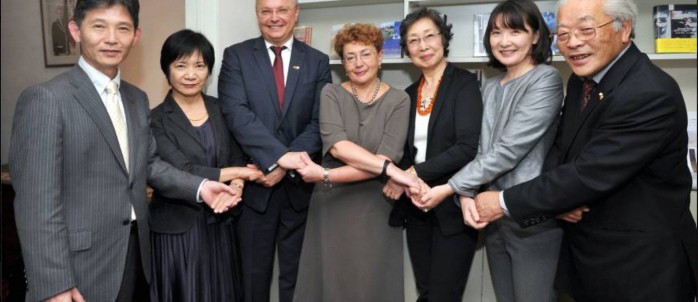
from left, vice-mayor Kazunori Nakayama, Tsuruga, Fukui Prefecture; Kazuko Shiraishi, ambassador for women, human rights and humanitarian affairs and ambassador in charge of Arctic affairs, Japanese Ministry of Foreign Affairs; Lithuanian ambassador Egidijus Meilūnas; chairwoman of the Lithuanian Jewish Community Faina Kukliansky; Michi Sugihara, executive director, Chiune Sugihara Visas for Life Foundation; Madoka Sugihara, vice-chairwoman, Chiune Sugihara Visas For Life Foundation and Shingo Akatsuka, mayor of Yaotsu, Gifu Prefecture, pose during the Chiune Sugihara event at the Lithuanian embassy in Tokyo on November 18. Photo: Yoshiaki Miura

LJC chairwoman Faina Kukliansky visited Tokyo, Japan in mid-November where she attended an event to honor the diplomat Chiune Sugihara at the Lithuanian embassy.

The large audience of Japanese were presented possibilities for cooperation in commemorating the Japanese diplomat who saved Jews during the Holocaust in Lithuania. They also learned about the cultural and intellectual legacy of the Litvaks, the Holocaust in Lithuania and the Lithuanian Jewish Community. The event created a stir and Jews who live and work in Japan participated. Chairwoman Kukliansky granted an interview to the Asahi Shimbun newspaper and their reporter showed great interest in the history of her family, their experiences during the Holocaust and impressions of Japan.

Tirkšliai Wooden Synagogue Gets Legal Protection

lz

A new cultural heritage site has been placed on the list of Lithuanian cultural treasures: the wooden synagogue of Tirkšliai in the Mažeikiai region of Lithuania. The synagogue is believed to be the earliest synagogue in the region built in the late classical style. Cultural Heritage Department director Diana Varnaitė said: “Wooden synagogues are now a rarity in Europe. Bearing in mind how the world values heritage made of wood from the past, we must understand that wooden synagogues are priceless.” She said she was glad another wooden synagogue had been added to the list of cultural treasures and that it will facilitate preserving the site. Antanas Eičas, head of the Telšiai section of the Cultural Heritage Department, said the Žemaitija region is exceptional for its wooden architecture and especially its wooden churches and synagogues. “The Tirkšliai synagogue built in the first half of the 19th century has been listed on the cultural treasures registry. It is now the only remaining wooden synagogue in the Mažeikiai region. It and the former Seda synagogue are from a similar late classical period. Up until World War II there was also wooden Jewish houses of prayer in Viekšniai, Židikai, Leckava, Laižuva and Pikeliai. Let’s preserve this rare and unique cultural heritage treasure,” Eičas commented.

Full story in Lithuanian here.

New Litvak Cultural Museum Concept Presented

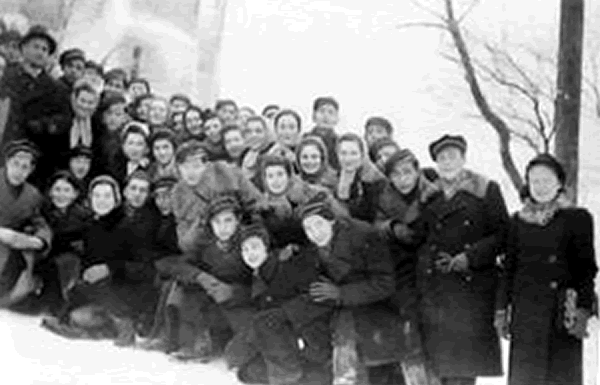
Tarbut students on a field trip ca. 1939. Courtesy vilnaghetto.com

Tarbut students on a field trip ca. 1939. Courtesy vilnaghetto.com

The Tolerance Center of the Vilna Gaon Jewish State Museum hosted a presentation by director Markas Zingeris of plans to restore the museum’s building at Pylimo street No. 4 in Vilnius for use as a new museum of Litvak culture and achievements December 3.

Currently the building is mostly empty but formerly housed the museum’s History Department and Gallery of the Righteous. It is actually part of the same building now as the Lithuanian Jewish Community and is connected by corridors with the LJC. Formerly it was the Tarbut Gymnasium or high school established after World War I. The name of the proposed new center is the Center of Litvak Culture and Art.

Zingeris’s plan includes showcasing famous Litvaks who have contributed to culture and science and he presented a number of figures including Nobel Prize winners for inclusion. He emphasized the need to teach the Lithuanian public about Litvak achievements as part of their own history. He also had a map projected onto the overhead screen showing other Jewish cultural museums in Europe and spoke specifically about Vilnius’s place on “the Northern European Jewish route.” Whether this “route” is an official EU program or not wasn’t made clear.

New Bagel Shop Magazine On-Line

The Bagel Shop newsletter is now a magazine and is available on-line in three languages, Lithuanian, English and Russian.

In this issue we present an interview with Laurina Todesaitė about Jewish cuisine, an excursion through the world of Jewish botanists in the inter-war period, a tour of Jewish Vilna, a new questions section and a new Mystery Photograph contest as well as all the usual columns.

Niv Shimoni Asks LJC for Help Finding Jewish Roots in Aukštadvaris

The Lithuanian Jewish Community has received a letter from Niv Shimoni of Israel. He is interested in his Lithuanian roots which he discovered only recently. His grandfather lived in Aukštadvaris. If anyone is able to help, please contact us via the Communicate section located on the right-hand side of the webpage.

Aukštadvaris

My grandfather, Sneur Razin, was born in Aukštadvaris in 1910, a small village 50 kilometers from Vilnius. During World War II most of his family was murdered in the Holocaust. Before the war he began studies in Kaunas in order to become a pharmacist yet decided to drop everything and make aliyah to Israel. He was active in the Zionist movement which greatly influenced him and of course helped him in his decision to come and be a part of Israel. Now, more than a hundred years later, his children wanted to see where their parents came from (their mother was from Latvia). They returned from this journey filled with emotional impressions, especially because after they discovered a small and remote Jewish cemetery in Aukštadvaris, the final resting place of their grandfather. I have now decided that I, too, must see with my own eyes his resting place and to discover more about him. It is impossible to describe the feelings I would have standing next to my great-grandfather’s resting place which until only a few weeks ago I did not imagine could ever be found. I have a special connection with the city of Vilnius, its past and future and ancient Jewish heritage. It is heartbreaking to see how one of the largest Jewish communities has disappeared almost completely.

All of my big family live in a small village in the north of Israel. They are people who contribute to the State of Israel and the Zionist movement in agricultural education and security. Our grandfather always said it was important to contribute to the state as much as possible. To do more and talk less. My goal is strengthening ties among Jewish communities with the land of Israel.

http://nivshimoni.wix.com/niv-s
http://nivshimoni.wix.com/niv-s#!contact/c24vq

Panevežys Jewish Community Conference Report

p2

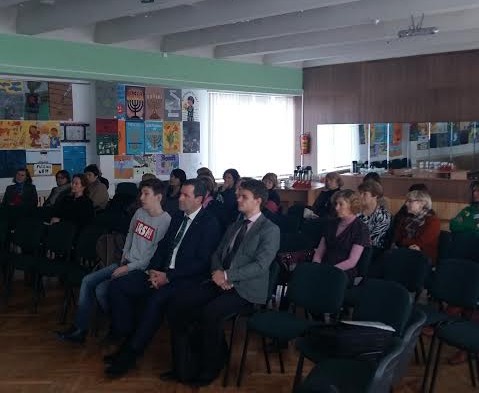
Principal Aida Adiklienė opened the conference “The History of the Holocaust: A Bridge from the Past to the Future,” financed by the Goodwill Fund and held on November 25 at the Rožynas Pre-Gymnasium in Panevežys, Lithuania. She emphasized the institution she heads supports the recognition of human rights. In consideration of that, the gymnasium constantly emphasizes local history, including local Jewish history. “It says in the Universal Charter of Human Rights that everyone is born free and equal, with intelligence and conscience,” the principal said. “When we talk about the Holocaust, we are truly talking about our own history. We need to be glad that we have addressed this topic for more than ten years now at the gymnasium.” Adiklienė said the Holocaust is one of the most complicated topics and not all schools want to deal with it. She was disappointed that even now not all people accept people of other religions and ethnicities. She said there were clear signs of intolerance at work in our society.

Lecture Series

Litvak Resettlement in the Novorossiysk Area of Krasnodarsk Region in the First Half of the 19th Century, by G. Baranova

12 noon, Sunday, November 29

Lithuanian Jewish Community Student Activities

Last Sunday the weekly lecture in the lecture series was dedicated to European Jewish youth life. Amit Belaitė, elected this year to the board of the European Union of Jewish Students, shared her impressions of this organization. Attendees had the opportunity to speak directly with three guests who attended via telephone and shared information about the life of youth in their countries. These were Viktoriya Grodnik from Ukraine, European Union of Jewish Students president Benjamin Fisher and Natan Pollak, a Litvak born in South Africa and former head of the Jewish student union whose great-grandparents came from Lithuania.

The students of the Lithuanian Jewish Community began a photographic project which will tell the stories of Lithuanian Jews. The first interview should be forthcoming immediately. If you’d like to take part in the project and tell your story, please write or call Amit Belaitė at amit.belaite@gmail.com or 869227326

image1Studentai