
Learning, History, Culture

Jewish Cut-Outs: An Exhibit

karp

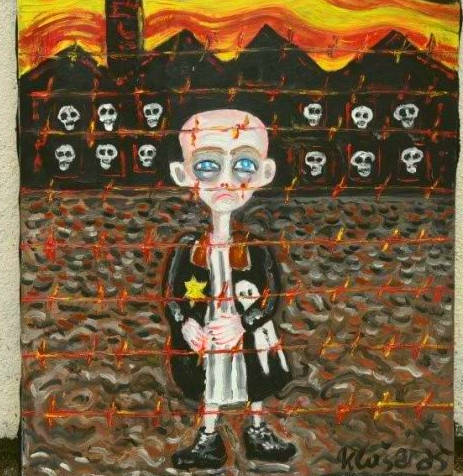
Klaidas Navickas, a recognized master who works in the medium of cut paper, is holding an exhibit of his works called Jewish Cut-Outs at Gallery A at the Vilnius Gediminas Technical University library, Saulėtekio alley no. 14, Vilnius, running from June 7 to August 26.

World Jewish Congress Israel Delegation Visits LJC

WJC IZ7

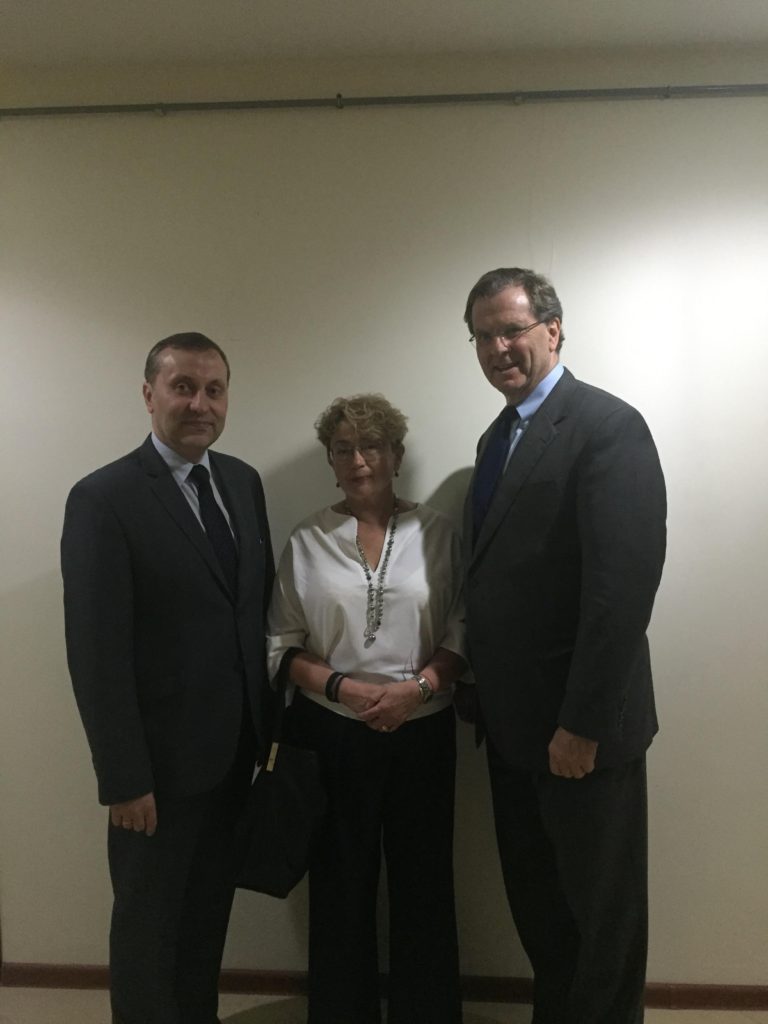
A delegation from World Jewish Congress Israel visited the Lithuanian Jewish Community. The delegation included WJC Israel chairman Shai Hermesh (former MK), member of the board of directors J. Moshe Leshem, foreign relations council director Dr. Laurence Weinbaum, Knesset Christian Allies Caucus chairman MK Robert Ilatov, MK Yakov Margi, KCAC director Josh Reinstein and WJC Israel director general Sam Grundwerg. WJC Israel visits national capitals annually to meet with members of national parliaments and Christian community leaders to establish contacts and discuss shared problems, set up Israeli support groups and increase understanding of Jewish problems. This sort of support is especially sought by Israel now, when the Jewish state is increasingly facing isolation in the international arena and especially in the EU. Last year delegations visited Russia, Poland, Latvia and Estonia.

On June 1 the delegation visited the Lithuanian Jewish Community, met LJC chairwoman Faina Kukliansky and were greeted with a musical welcome of Jewish song and dance provided by the Fayerlakh ensemble, which warmed everyone’s hearts and facilitated better communication. Former MK, current vice president of the WJC and leader of WJC Israel Shai Hermesh shared with everyone heartwarming news he received on the trip to Lithuania.

Reckoning the Number of Lithuanian Holocaust Perps

zydu-egzekucija-prie-siauliu-1941-metais-4fc7a7f95c1cd
photo: mass murder of Jews in Šiauliai in 1941

by Liepa Želnienė

It will perhaps never be known exactly how many Jews were murdered in Lithuania in the 1940s, or how many Lithuanians collaborated in perpetrating the Holocaust. Historians say we must first define whom we will include: those who pulled the trigger, those who stood guard at the mass murder sites, prepared the killing pits, or those who forced Jews into the ghettos, or those who stole Jewish property?

Full story in Lithuanian here.
15

List of Lithuanian Holocaust Perpetrators Could Run to 6,000

by Mindaugas Jackevičius, www.DELFI.lt

Avoiding the subject of the Holocaust and research in this field, Lithuania is in danger of becoming a nation of Jew-killers in the eyes of the world. Statements like that were aired at a conference held at the Lithuanian parliament Monday, where participants reiterated we still don’t know the true number of Jews murdered, or of the people who rescued Jews in Lithuania. MP Arvydas Anušauskas said at the conference people tend be very conservative in talking about the number of Lithuanian Holocaust perpetrators. He said it was difficult to calculate who took part in mass murder operations, for example, some people’s names are duplicated because they participated at different locations. There was also discussion of who should be included as perpetrators: should they only include people who fired weapons, or also those who transported the victims to the mass murder sites or otherwise aided the process.

Full story in Lithuanian here.
ejcdelfi

The Floodgates Within: Video Art from Israel

iz

Where: NGA Auditorium, Konstitucijos prospect no. 22, Vilnius
When: 6:00 P.M., Tuesday, June 7, 2016

On June 7-8 National Gallery of Arts presents the program of contemporary Isreali video art ‘The Floodgates Within: Video Art from Israel’ curated by Chen Tamir, curator at the Center for Contemporary Art in Tel Aviv. Chen Tamir will present two evenings of video from Israel. Designed to complement one another, these two events will situate Israeli contemporary art within historic, social, and political contexts, and offer a wide overview of experimental video-based art from this unique country.

Lithuanian Historian: Guards of Massacre Sites Should Also Be Listed as Murderers

VILNIUS, June 6, BNS–Not only those who pulled the trigger should be considered perpetrators of the Jewish genocide in Lithuania–they should include the individuals who transported Jews and guarded the sites of massacres, a local historian says.

Alfredas Ruksenas, a specialist of the Genocide and Resistance Research Center of Lithuania, said that the number of genocide perpetrators could be calculated very roughly.

“Shooters of Jews should include all participants of the operations, even if they did not pull the trigger but facilitated the operations,” Ruksenas said at a discussion at the parliament on Monday.

In his words, the battalions that were conducting the genocide are known, however, establishing a specific person or contribution is a difficult task.

First Auction of Children’s Art in Vilnius!

The Vilnius Art School for Children and Youth, the first independent private art educational institution in Lithuania, was created by Jūratė Stauskaitė in 1991.

Over its 25 years of history, the school has turned become a versatile and innovative artistic education resource where everyone gets a chance to express their individuality through freedom of expression and creativity, which are important in all professions.

Since 1991 several thousand pupils have attended and completed school programs. School staff have published various teaching aids and textbooks for other schools. The school has taken part in numerous artistic educational initiatives and charity events held by the Vilnius municipality and state authorities, and remains true to its main objective: to raise creative members of society.

Lithuanian Citizenship: Only Successful Applicant Is a Dead Jew

JewishRaport_Logo

by Daniel Lutrin

It was gratifying to see a recent article regarding the plight that Jews of Lithuanian origin (Litvaks) are facing when applying to have their Lithuanian citizenship restored. The article, however, does not hone in on the critical matter at hand, namely the extent to which Lithuanian bureaucrats have gone to deny Jews of their ancestral right to citizenship.

In the background, a meticulous selection process has been underway which is nothing more than a modern manifestation of the same anti-Semitism which saw 95 per cent of Litvaks murdered in the Holocaust (the highest in all of Europe).

Denying Litvaks citizenship has been made easy in Lithuania by declaring, based on nebulous case law, that those Lithuanians who left the country during its years of independence (approximately 1919 to 1940) were not persecuted and are therefore not eligible for dual citizenship.

You’re Invited to a Chess Tournament

The Lithuanian Jewish Community and the elite chess and checkers club Rositsan and Maccabi invite you to a chess tournament at the Lithuanian Jewish Community at Pylimo street no. 4 in Vilnius at 11:00 A.M. on Sunday, June 19.

The event is dedicated to the memory of interwar Lithuania’s third president and Righteous Gentile Kazys Grinius.

Tournament director: FIDE master Boris Rositsan
For more information and to register, contact: info@metbor.lt, telephone +3706 5543556

Kupiškis Jewish Community: Connections between Past and Present

Pan5

The Povilas Matulionis Pre-Gymnasium and the Kupiškis Ethnographic Museum held a conference at the school May 30 called “The Kupiškis Jewish Community: Connections between Past and Present.” Participants included Panevėžys Jewish Community chairman Gennady Kofman, Lithuanian MPs Aleksandras Zeltinis, who spoke first, and Sergejus Jovaiša, Israeli ambassador to Lithuania Amir Maimon, Kupiškis regional administration head Dainius Bardauskas, regional administration assistant director Aurimas Martinka, Kupiškis culture, education and sports department director Violeta Aleknienė and Povilas Matulionis Pre-Gymnasium principal Rimvydas Latvys.

MP Zeltinis said the former synagogue, now the Kupiškis public library, would be restored at his initiative. Ambassador Maimon delivered the first paper and called current relations Israel and Lithuania wonderful and warm. Historian Arūnas Bubnys gave a presentation on the mass murder of the Jews of Kupiškis during the Holocaust. Panevėžys Jewish Community chairman Gennady Kofman spoke about the Holocaust and righteous gentiles who rescued Jews.

Israelis Visit Panevėžys Jewish Community

Pan1

A large group of students and teachers from Jerusalem visited the Panevėžys Jewish Community May 26. Panevėžys Jewish Community chairman Gennady Kofman told the guests about the community’s activities in the Lithuanian city, including social welfare programs, and educational programs conducted with local schools. He also told them about the history of the city and of the Jews there. The guests appeared keenly interested and wanted to know what Jews there thought about Israel. A nun from the sisters of the Love of God was also at the meeting and showed guests pictures of Righteous Gentiles students had made at Marija Rusteikaitė Gymnasium.

Concert of Lithuanian Ethnic Minority Music and Lesson with Dr. Marija Kuprove-Berg

mk

Marija Kuprove-Berg will perform at the Tolerance Center, Naugarduko street no. 10/2, at 6:00 P.M. on Thursday, June 2, 2016. Violinist Vytautas Mikeliūnas will also perform. A lecture will be held in English as well. The event is being held by the Lithuanian Literature and Folklore Institute and the Tolerance Center of the Vilna Gaon State Jewish Museum. Entrance is free to the public.

Dr. Marija Kuprove-Berg’s repertoire includes songs in all the minority languages of Lithuania, including Yiddish, Ashkenazic Hebrew, Romany, Tartar and others, and embraces Karaïte musical traditions as well.

On Citizenship for Descendants of Litvaks

bbb
by Sergejus Kanovičius

First, the Litvaks died. Almost all of them.

Then began the first division of property stolen from them (with the “honorable” role played by general Vėtra in this).

After World War II, the Soviets legalized this theft, and no one was supposed to mention it, or even hint of it.

After March 11, 1990, that theft was legalized once again, by limiting dual citizenship and introducing into law the statement that “rights to surviving real estate are restored only to citizens of the Republic of Lithuania.” When I made an application for restoration of citizenship, I was told in a friendly way to include in the application the demeaning statement: “I don’t have any inherited property in the Republic of Lithuania.” And how could I inherit those pits on the margins of forests and villages? How could I inherit those two hundred graves where parents and grandparents lie buried? I don’t have any “property” except for this. Although others might. The fathers of independence have done everything to “protect” us from the completely legitimate property claims of Lithuanian Jews and Vilnius Poles–such an innocent desire that this time everything really would belong exclusively to, sorry, our people.

President of Israel Greets Holocaust Survivor, Partisan Fania Brancovskaja on Birthday

fb

Israeli ambassador to Lithuania Amir Maimon delivered a birthday greeting to Holocaust survivor, Vilnius ghetto prisoner and Jewish partisan Fania Brancovskaja at a small ceremony Friday, May 23, calling her an enduring miracle of hope and passion for everyone. He said her life was spoken of proudly and she serves as an inspiration and reminder to the younger generation.

Full story in Lithuanian

Exhibit of Works by Litvak Sculptor Victor Brenner in Šiauliai

brener

Victor David Brenner was born Viktoras Baranauskas April 12, 1871 in Šiauliai, Lithuania. His father was a jeweler and stamp maker. As an adolescent he helped his father complete easy orders. With his father’s help he set up an engraving shop in Šiauliai in 1887 and began to work on his own. In 1889 Victor and his parents moved to Kaunas where he achieved renown as a talented master engraver. He emigrated to the United States in 1890 and lived in New York. He took night classes at the Cooper Union college and worked at a New York metal ornament and medallion workshop.

Eight years later Brenner was in Paris, studying with the great French medalist, Oscar Roty at the Académie Julian. There he exhibited his work and obtained awards at the Paris Exposition of 1900. He returned to the United States, and from that time on his career prospered. He appeared to be on his way to the fulfillment of the splendid predictions made for his future by Rodin.

Israeli Ambassador Enchanted by Legendary Lithuanian Pastry

am
lr

Not just family and military service, but also cooking and olive oil–these values have clearly insinuated themselves in the life of Israeli ambassador to Lithuania, Amir Maimon, 57. Despite the hectic daily schedule of colonel Maimon, who began his diplomatic service in Lithuania about one year ago, he still finds time for his favorite pastime, cooking. The Lifestyle section of the newspaper Lietuvos rytas reports ambassador Maimon’s family lives in Israel, but isn’t complaining about a lack of food. Instead, he spends his free time cooking all sorts of dishes.

Full story in Lithuanian here.

Darius Udrys: What Does Lithuania Owe Its Jews?

ud
Photo: by K. Čachovskis, courtesy Delfi.lt

Lithuanian Jews have contributed to the creation and success of the Lithuanian state from its very foundation.

This is an indisputable fact. As we sometimes like to say with pride (without thinking too much about what responsibilities history places upon us), the Grand Duchy of Lithuania was for its time a conspicuously liberal state which sheltered and safeguarded many tribal and ethnic groups as its own citizens.

One doesn’t have to look far back in the past to find the contribution made by Lithuanian Jews. Called upon and supported by their community leaders to do so, young Litvaks stood shoulder to shoulder with our grandfathers and great-grandfathers in the battle for Lithuanian independence from 1918 to 1920. As Donatas Januta reminds us in the Lithuanian-American newspaper Draugas, the volunteer battalion established and provisioned by Jews was one of the first armed units of the Lithuanian military. Many of its members were decorated for their bravery and sacrifice with medals, including the Order of the Cross of Vytis.

Lithuania’s Jews didn’t just support Lithuanian independence and consolidation through financing, weapons and their lives, they also supported it politically. Simanas Rozenbaumas, a Jew, successfully represented Lithuania in the Paris peace conference at Versailles and in negotiations with the Soviet Union, and Jews took part in the first Constituent Parliament as well. Jews also strongly supported the return of the Vilnius territory to Lithuania.

In Memoriam

rrr

Sad news has reached the Panevėžys Jewish Community and the public that famous former Panevėžys doctor Mira Rozova has died in Israel after suffering from chronic illness. For half her life she was the senior doctor at the Panevėžys Infectious Hospital. In 1954 she was graduated from the Krasnodar Institute of Medicine. She performed a three-year residence in Kaliningrad and then moved to Panevėžys in 1957. She worked as a therapist at what was the Republic Hospital and Clinic. The infectious disease division was small at that time. The decision was made to open a separate infectious disease hospital and young and energetic Rozova was appointed the director of the new hospital. The Infectious Disease Hospital was established in the Panevėžys Jewish Hospital on Ramygalos street, which needed repair following the war. The hospital operated for 20 years in the unrenovated premises.

Work to Commemorate and Clean Up Jewish Cemeteries and Memorial Sites Continues in Kaunas

Kkapai3

Work to commemorate and clean up Jewish cemeteries and memorial sites in Kaunas continues, performed by the Kaunas municipal administration and city departments. The work was initiated by the Kaunas Jewish Community and Israeli ambassador Amir Maimon and their initiatives have the support of Kaunas mayor Visvaldas Matijošaitis and other ranking city officials.

The photographs below show new information boards and signs at the old Jewish cemeteries in Slobodka (Vilijampolė) and Žaliakalnis neighborhoods and at the operating Jewish cemetery on H ir O Minkovskių street. The gate to the Slobodka cemetery is now being kept locked and automobile traffic prohibited. The territory of the Seventh Fort memorial was cleaned up and there are preparations underway to cut trees blocking the view of the site from the other side of Sukilėlių street. The mass murder grave site at the Seventh Fort should be cleaned up this year with a monument to mark the tragic location.