Learning, History, Culture

There Is No Europe Without Jews

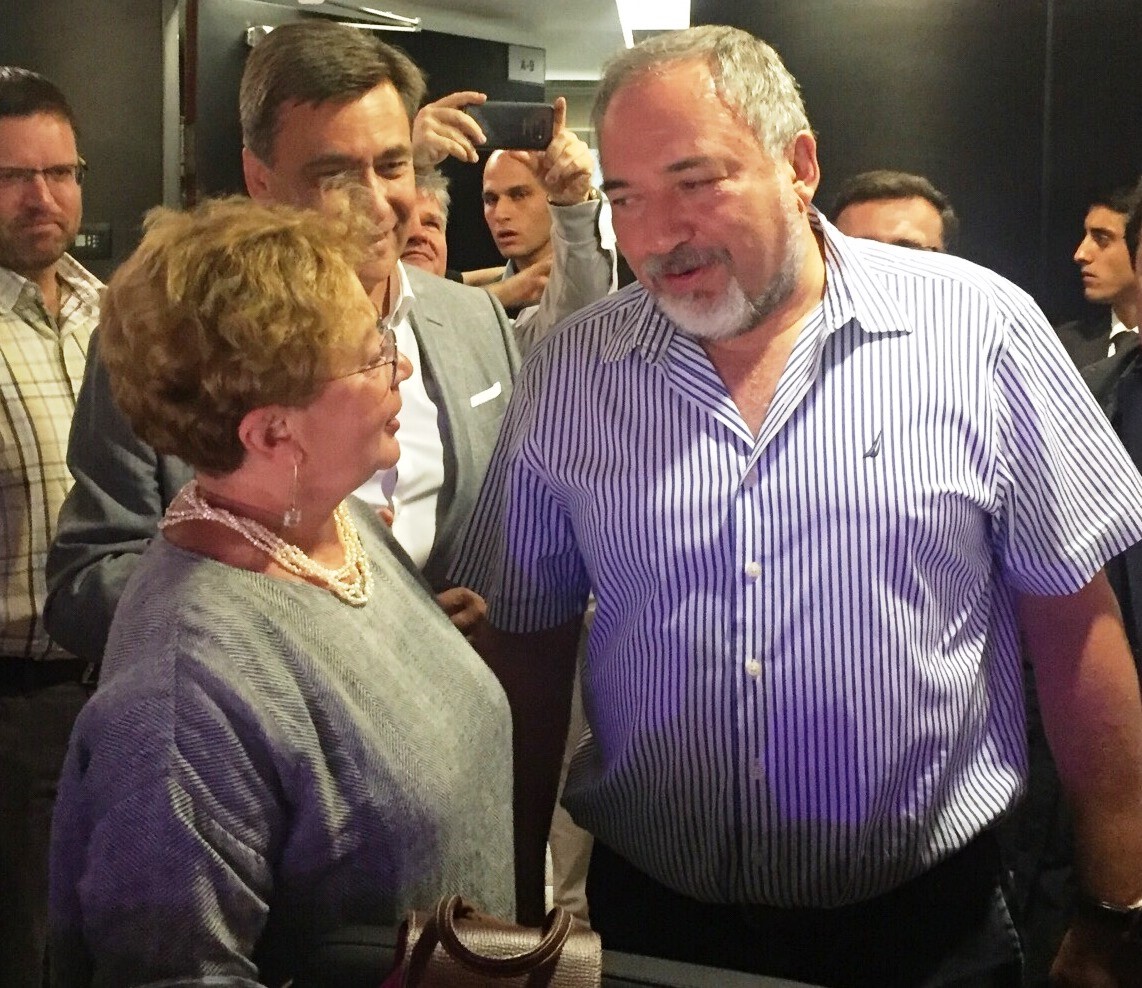
“There is no Europe without Jews,” Frans Timmermans, first vice-president of the European Commission, said during a meeting with Lithuanian Jewish leaders.

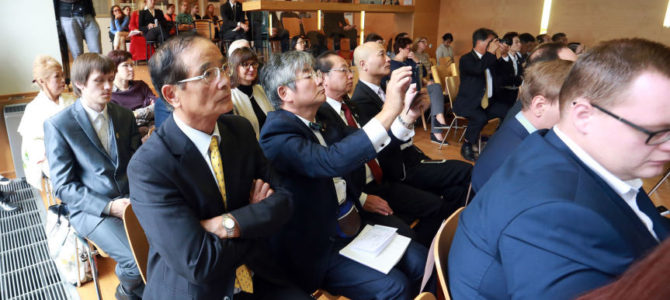
The first vice-president of the European Commission visited the Tolerance Center of the Vilna Gaon State Jewish Museum July 3 and met with museum director Markas Zingeris, Lithuanian Jewish Community chairwoman Faina Kukliansky and others there. Arnoldas Pranckevičius, European Commission representative in Lithuania, was also present. Timmermans asked about anti-Semitism in Lithuania. Chairwoman Kukliansky explained Lithuanian Jews, having lived in Lithuania for 700 years, don’t consider themselves an ethnic minority, see themselves as citizens of the country in common with ethnic Lithuanians and aren’t seeking any legal protection as a minority. She also expressed apprehension over solutions to Lithuanian Jewish problems offered by the Government, because governments change and the new Government won’t necessarily support the policies of the former one, leading to a lack of continuity in decision-making regarding matters of importance to Lithuanian Jews.

Based on his long political experience, Timmermans said the only antidote to anti-Semitism is learning Jewish history.

“There is no Europe without Jews,” he said, and stressed the importance of education which provides the opportunity to learn more about and understand Jewish history. Living history, or people who remember the actual events and the Holocaust, are dying, and historians now provide the facts and their interpretation, he noted. He said nostalgia is a kind of new opium. People operate on what they heard as children from adults, and knowing it to be wrong, nonetheless are prone to doubt new facts, Timmermans said. He also said he believed good history curricula are a must.

Vilnius Jewish Religious Community Statement on Conference to Commemorate Great Synagogue

Vilniaus žydų religinės bendruomenės pareiškimas dėl konferencijos, skirtos Vilniaus Didžiosios sinagogos įpaminklinimui

The Vilnius Jewish Religious Community in great concern categorically stands against any plans to build new buildings on the remains of the foundations of the Great Synagogue of Vilnius.

The Great Synagogue of Vilnius was and is the holiest site for Lithuanian Jews. We consider any plans calling for new buildings to commemorate the supposedly non-extant temple blasphemy and the appearance of new buildings a desecration rather than a commemoration.

We consider it an expression of total disrespect that, without asking the Vilnius Jewish Religious Community and without regard to earlier public statements against this by the Lithuanian Jewish Community, certain organizations are undertaking initiatives whose implementation would, without doubt, offend Jewish religious sentiments and bring on criticism by the followers of the Vilna Gaon around the world. We hope organizations which are attempting to initiate construction projects at the Great Synagogue site will take into account the request made by the Vilnius Jewish Religious Community and give up the plans they have announced.

The Great Synagogue of Vilnius, destroyed by the Nazis and the Soviets, or more accurately its remains which are still being investigated by archaeologists, should be left in peace. At the same time, we note there is an abundance of heritage sites in Vilnius and throughout Lithuania which truly need greater attention.

The Vilnius Choral Synagogue, for example, needs greater attention. It still has no ritual bath or mikveh, and needs authentic restoration of its interior.

If something must be changed at the Great Synagogue site, we suggest the sign with incorrect information be replaced, and that the statue to the Vilna Gaon which looks like some sort of caricature be removed and given to some museum in the city. With all respect to the sculptor, it was made without any understanding of Judaic tradition.

We invite those organizations which want to undertake construction at the Great Synagogue site to take into account the real and urgent actual needs of religious Jews.

The Great Synagogue of Vilnius is important as a symbol of annihilated Jewish civilization. There are less ostentation, cultured and respectful ways to mark the site where it once stood, without earth-moving equipment and construction cranes.

Shmuel (Simas) Levinas, chairman
Vilnius Jewish Religious Community

July 3, 2017
Vilnius

Citizens. Fellow Citizens. People


by Sergejus Kanovičius

The weird memory wars continue. Thank God they are being waged only in the virtual arena and, it seems to me, the atmosphere surrounding these memory gun-battles is becoming calmer and more on-topic.

Just last year after one large public event, the term “fellow citizens” began to be used very widely to refer to Jewish Holocaust victims. In one discussion where I objected that it wasn’t useful to underline the fact that “our fellow citizens” were murdered, because beyond the limits of this invitation to repentance remain many non-citizens of Lithuania who were victims of mass murder in Ponar and the Ninth Fort in Kaunas, I was presented with a rather unique argument, which goes something like this: by saying “our” fellow citizens were murdered, we make the victims “our own people,” meaning they become closer or dearer to us. Perhaps. I have noticed that even refined and let’s say modern nationalists who before now have not wanted even to mention the Holocaust, much less the victims, have begun gradually to get used to the idea, which becomes for them a kind of indulgence of forgiveness for saying anything at all on the topic. From among those modern and rather square nationalists you might overhear the following: “Well, since it was our ‘fellow citizens’ who were murdered, that’s a bad thing; killing Jewish ‘fellow citizens’ is unpatriotic.” This is the deconstruction of the nationalist’s reasoning having undergone, excuse the phrase, some degree of liberalization. But what about murdering non-citizens?

I’m not a lawyer, but it seems to me this constant emphasis–sincere or not–on Holocaust victims being Lithuanian citizens tends to undermine any sort of human compassion expressed, whether it be Christian, Jewish or Buddhist, undermining the moral dimension of regret, the feeling when you want to say simply and sincerely: I am sad for them, that shouldn’t have happened. And it doesn’t matter in which country those people held citizenship.

And for those whom the legal aspect is important: let them determine and count how many holders of Polish passports from occupied Vilnius, how many French nationals, how many citizens of independent or Soviet-occupied Lithuania lie buried in those pits. If someone is truly sorrowed for these people, it’s surely not because they were citizens of a certain country.

I was moved to write this by a photograph posted recently on social media; it seems there are people who still remember and remind others of the Lietūkis Garage massacre carried out on June 27, 1941. The photograph has in common with the massacres that it is from another future site of tragedy, the Kaunas ghetto. The photograph secretly taken by Kaunas ghetto inmate Zvi Kadushin (Hirsh (George) Kadish) is of two children. They will be murdered. As will be so many children, so many it seems pointless to write the number.

When we think about regret and repentance (if we are really thinking about it), do we need to note or be interested in the citizenship of these two souls?

Full article in Lithuanian here.

Lithuanian Makabi Athletics Club Leaves for 20th Maccabiah Games in Israel


Lithuanian Makabi team at 13th Maccabiah Games opening ceremony, Israel, 1989

The Lithuanian Makabi Athletics Club delegation is leaving for the 20th Maccabiah Games, held once every four years, in Israel, where more than 10,000 athletes from 80 countries will compete.

This will be the 8th Maccabiah Games attended by the Lithuanian team. In 1989 the team was the first to carry the Lithuanian national flag at the opening ceremonies as the country sought independence from the Soviet Union. Club president Semionas Finkelšteinas and club athletes remember well the event.

Semionas Finkelšteinas:

“The Lithuanian Makabi delegation will have 28 athletes in 8 sports: badminton, swimming, mini-soccer, judo, table tennis, tennis, chess and riding. A Canadian rider who has Litvak roots was accepted on the Lithuanian team since Canada didn’t send a team of riders this year. The Lithuanian team includes three former Maccabiah medal-winners: chess player Eduardas Rozentalis who took bronze in 1989, badminton player Alanas Plavinas who won silver in 2013 and Aleksas Molodeckis who took bronze in judo in 2013.

“It’s important to us to participate in the Maccabiah and we never miss a single Jewish Olympics. Whether our team is stronger or weaker, we have always participated and won medals. This time we have five young people, three of whom expect to win medals. We have three badminton players, and the swimmer and strong table tennis player Neta Alon who could be a medal winner. Markas Šamesas and Vitalija Movšovič are our badminton players who could come home with medals. Among the adult athletes the chess player E. Rozentalis, badminton player A. Plavinas, and judo martial artist A. Molodeckij have a good chance of winning medals. Salomėja Zaksaitė, an accomplished chess player, will be competing at the Maccabiah for the first time. Our soccer team is traveling there with their new trainer Arūnas Šteinas. Three of our strong soccer players are unable to attend for various reasons. Artūras Sobolis couldn’t take time off work, Danielius Gunevičius’s trainer won’t allow him to go and Romanas Buršteinas has to attend to family matters.

“All the young people will stay at the best hotel in Haifa. They will compete in the games after which they have a separate program of activities. The swimmers will compete at the Wingate sports complex. Athletes from 80 countries will attend Maccabiah opening ceremonies July 6 and global media always give large coverage to the event, the opening ceremony is covered outside Israel by CNN, BBC and other global televisions channels. The Jewish Olympics takes place once every four years and there is a broad cultural program arranged for all participants. This event is about more than just about sports.

Lietūkis Garage Massacre Remembered in Kaunas

The Kaunas Jewish Community and concerned citizens again marked the anniversary of the Lietūkis Garage massacre of Kaunas Jews on June 27, 1941. Kaunas Jewish Community chairman Gercas Žakas hosted the event and recalled the blood-curdling events, actress Kristina Kazakevičiūtė read moving lines of poetry and the brothers Antanas, Stasys ir Rokas Makštutis performed on clarinet. Some of those turned out followed the traditional annual route to the Slobodka ghetto, the Ninth Fort and the old Jewish cemetery in the Žaliakalnis district of Kaunas, where it is believed the remains of the victims were buried.

Joniškis White Synagogue Re-Opens

Re-Opening of White Synagogue in Joniškis

Joniškio Baltosios sinagogos atidarymas

During celebrations of Joniškis’s own city day next week the restored White Synagogue there is to host a re-opening ceremony. The synagogue was built in 1823 and its external face combines features of the late classicism and romantic styles.

Restoration of the synagogue was financed by European Economic Area grants allocated by the Republic of Lithuania, the state budget and the Joniškis regional administration for a total of 389,358.35 euros.

Larger Lithuanian cities but even smaller towns often featured two synagogues, built at different periods. Few double-synagogue complexes are still standing in Lithuania, only in Joniškis, Kalvarija and Kėdainiai.

The Joniškis synagogue complex is located on the eastern side of the town square. Two adjacent brick buildings, the White and the Red Synagogues, form the complex. They were built at different periods and have different architecture and interiors. Their location by the central town square but set back among other buildings is fairly typical. They are very visible from side streets but looking from the main street they are blocked by other buildings. Both synagogues have smaller one-storey and two-storey buildings surrounding them.

Jews settled in Joniškis around the middle of the 18th century when charter rights were granted the cities of Joniškis and Šiauliai. Jewish communal life was intimately connected with religion and the synagogues. In 1797 the Jews of Joniškis received permission to build a synagogue and acquire a piece of land for a Jewish cemetery. A synagogue is first mentioned in 1823. According to the inventory of the Šiauliai economy conducted in 1825 and 1826, there were 49 Jewish families in Joniškis. In the mid-1800s there were 1,042 Jews living there. A second synagogue is first mentioned in 1865, and in 1866 there are records of a third synagogue and a Jewish inn. By 1897 the Jewish population had grown to 2,277. The third synagogue located at Vilniaus street no. 8 was turned into a store and residential building in 1965 and 1966.

Jewish Community Proposes Cultural Museum in Vilnius Ghetto

Vilnius, June 27, BNS—The Lithuanian Jewish Community is proposing the creation of a cultural museum in the former Vilnius ghetto. There are considerations to include an open-air section beyond a single building housing the museum using modern technology. The LJC presented these ideas to Vilnius mayor Remigijus Šimašius Thursday.

Creative analyst Albinas Šimanauskas, one of the authors of the idea, said they hadn’t decided on a specific location for the museum yet, but there was a proposal to establish it near Rūdininkų square.

“Rūdininkų square, for example, where there is a statue commemorating Tsemakh Shabad, could be the site for a memorial to Righteous Gentiles. It’s a fine square which could host international events, concerts, thematic festivals… this would be a Vilnius Jewish cultural museum exhibiting historical events and cultural phenomena through living story-telling,” he told BNS.

Lithuanian Jewish Community chairwoman Faina Kukliansky said they are waiting for basic confirmation of the idea from the municipality and will decide on a location for the museum after that.

Lithuanian Jewish Community Now Member of the European Association for the Preservation and Promotion of Jewish Culture and Heritage

As of now, the Lithuanian Jewish Community is a member of the European Association for the Preservation and Promotion of Jewish Culture and Heritage, better known by the French acronym AEPJ. The AEPJ supports the preservation, appreciation and promotion of Jewish culture and heritage in Europe. The association is especially devoted to making Jewish cultural and heritage buildings and locations accessible to the public. To achieve that goal, the AEPJ conducts two main programs: the European Day of Jewish Culture and the European Jewish heritage tourism routes.

For more information, see here.

Catholic Priest Who Saved Jews Beatified

Vilnius, June 25, BNS—Archbishop Teofilius Matulionis, persecuted by the Soviets, was beatified and a ceremony was held to commemorate the event at Vilnius Cathedral Square Sunday.

The first-ever beatification ceremony held in Lithuania drew over 15,000 people where the Pope’s Franciscan envoy cardinal Angelo Amato made the announcement.

Matulionis was imprisoned for 16 years under the Soviets and he received his longest sentence in 1946 after refusing to collaborate with the Soviet regime in their demand he help squash the partisan movement in Lithuania and after criticizing the Communists for persecuting religious people. He was allowed to return to Soviet-occupied Lithuania after ten years of imprisonment. Although he was constantly followed, he was able to receive secret permission from the Vatican to consecrate bishop Vincentas Sladkevičius. Matulionis passed away in 1962 at the age of 89. Some believed he was poisoned by the KGB, although that hasn’t been demonstrated conclusively.

Matulionis becames the second person from Lithuania beatified. Bishop Jurgis Matulaitis’s beatification was announced in Rome in 1987. In order for Matulionis to be canonized, i.e., made a saint, evidence of a miracle must be presented, including those that occur posthumously, such as any which occur in invoking his name in a prayer to God.

Lithuania has a patron saint, Casimir, the grand duke of Poland and Lithuania who was canonized in 1602.

Teofilius Matulionis helped rescue a Jewish girl from the Holocaust. Dalia Epšteinaitė speaks about her childhood friend Estera Elinaitė whom he helped rescue.

Full story in Lithuanian here.

Historical Attention to Historic Lithuanian Jewish Buildings

by Martynas Užpelkis, LJC heritage protection specialist

An historical event! In recent days, almost a coincidence of sorts but more likely the result of dedicated and constant preparation, three historical Jewish community buildings in Vilnius have been repaired and restored at the same time. In spite of the temporary convenience, our thanks go out to everyone who contributed to the preservation of these Jewish historical heritage sites.

Renovation on the synagogue on Gėlių street in Vilnius, the Zavl Germaize and David Levinson Synagogue, continues, but work has been completed on the façade and floor, and new doors and windows in line with the traditional ones were installed. The Lithuanian Jewish Community owns the building. The role of contractor for renovation work was carried out by the public sector Lietuvos Paminklai [Monuments of Lithuania] enterprise and renovation was conducted by the Nivara company. This year as in the foregoing three reconstruction work was financed by the Lithuanian state and the Goodwill Foundation. In 2017 the Cultural Heritage Department under the Lithuanian Ministry of Culture allocated 120,000 euros and the LJC contributed 16,000 euros allocated by the Goodwill Foundation.

June 22, 1941: It’s War

This is the story of fighter pilot Lida Litvak (Leu Volfovna). Lida was born in Moscow on August 18, 1922. Her father was arrested in 1937, tortured by Stalin’s regime and murdered. Lida became a professional pilot before the war. As a pilot and instructor, she became one of the first women to volunteer for service in the Soviet Air Force in response to an invitation from the famous pilot Marina Raskova.

After being graduated from the Kherson Military Pilots School, Lida, at the rank of sergeant, was deployed to a female unit and took part in the defense of Saratov. In September the slim, blonde pilot and several of her friends were transferred to Stalingrad where a special female military unit had also been formed. She flew a Yak 1 with the identification number 32 painted on its fuselage. They said she had the most success, and even called her queen of the fighter aircraft fighting on the southwestern front.

In March, 1943, after downing two German aircraft, she was wounded and taken to hospital, where she recovered and was released, returning to her squadron in May and earning the rank of lieutenant, after which she was transferred to the southern front. In July she flew two dangerous sorties, was again wounded and had to make an emergency landing. Her third sortie was the fateful one: after destroying two enemy aircraft on August 1, 1943, she came under fire, and only one of her other fellow pilots saw her plane disappear into the clouds. She was awarded the title of Heroine of the Soviet Union.

Scholar Aleks Veksler has a deep interest in and has done much research on Jews who fought on the fronts in World War II. In 1943 secretary of the Communist Part of the USSR Shcherbakov decided to limit presentations of medals to Jews for heroism on the front lines. At the same time the decision was made, shamefully, to “correct” names and surnames on lists of earlier awards. Jews fought Hitler’s army not just to protect the homeland, but also because they personal debts to repay to the Nazis who killed their people. Soviet Army leaders decided to undertake anti-Semitic measures against the Jews on the front lines because Jews were getting more medals than Russians. By then Stalin had already announced that it was Russians who had dealt the decisive blow against the fascists, but counting the number of Soviet military heroes, it was clear the majority of them were Jews. Soviet state leaders began to implement a horrible and shameful anti-Semitic line at the state level. By the end of the war the number of Jews who had been awarded the title of Hero of the Soviet Union was 167.

Veksler and former Soviet Red Army colonel F Sverdlov published books called In the Ranks of the Brave and Jews: Armed Forces Generals of the USSR. M. Shtainberg wrote a book called Jews in War over the Millennia. Their work has revealed the truth about Jews who fought in World War II and so resolutely for the State of Israel. Jews were never cowards.

Lithuanian Political Illusions: The “Policy” of the Lithuanian Provisional Government and the Beginning of the Holocaust in Lithuania in 1941

The Lithuanian Jewish Community is publishing a series of articles by the historian Algimantas Kasparavičius, a senior researcher at the Lithuanian History Institute.

kasparavicius

Part 5

At the beginning of summer in 1941 it wasn’t just the LAF political leadership in Berlin and the Provisional Government in Kaunas who adhered to a pro-German, pro-Nazi strategy for the restoration of Lithuanian statehood, but also some of the Lithuanian diplomatic service in exile. That includes, for a time at least, the head of Lithuania’s diplomatic corps, Stasys Lozoraitis, Sr. At least two facts bear testimony to Lozoratis’s questionable actions at the end of June, 1941. As early as June 23 the head of Lithuanian diplomacy then in Rome sent congratulations by special telegram to fascist Italy’s foreign minister Gian Galeazzo Ciano on the Nazi invasion of the USSR, and then tried, unsuccessfully, to meet the ambassador of the Third Reich in Rome, again, “to express congratulations on the war against the Bolsheviks”. [1] Lozoraitis was unable to congratulate the Nazi ambassador at the time because the Nazi official refused the meeting and wouldn’t receive the Lithuanian diplomat. The sources show this activity by Lozoraitis was the result of his conviction that “the replacement of the Bolshevik occupation by the German occupation is a great step forward for us in the direction of the restoration of Independence.” [2]

Bearing in mind that from the beginning of the summer of 1940 Germany and Great Britain had been engaged in an existential battle on land and sea in what became known to history as the Battle for Britain, [3] that beginning June 16, 1941, United States president Franklin Delano Roosevelt ordered all Nazi diplomatic representations in US territory shut down, that all of Hitler’s diplomats were expelled from the country and suspect people of German origin were imprisoned in special camps; and if we consider charismatic British prime minister Winston Churchill on the afternoon of June 22, 1941, in his address on BBC radio promised “we shall give whatever help we can to Russia and to the Russian people. We shall appeal to all our friends and Allies in every part of the world to take the same course and pursue it as we shall, faithfully and steadfastly to the end. We have offered to the Government of Soviet Russia any technical or economic assistance which is in our power and which is likely to be of service to them,” and pledged His Majesty’s government “are resolved to destroy Hitler and every vestige of the Nazi regime,” then we cannot pretend the actions by the head of Lithuanian diplomacy in those days was not at the very least strange and controversial.

In effect is proves Lozoraitis was unable in practical terms of orienting in a rapidly shifting situation and that he for some time naïvely swam in the wake of events dictated by the Third Reich. We cannot refuse to admit the policy of the remaining Western democratic world was headed in one direction and the policy of the head of Lithuanian diplomacy as well as of the Provisional Government in Kaunas was headed in the exactly opposite direction. If we fully understand the dichotomy of the political situation, of the vectors of international relations, can we feign surprise that Lithuanians abroad failed to form a government in exile during World War II, or at the political status into which Lithuania fell following the war?

Cipla Does It Again

India’s pharmaceuticals giant Cipla Ltd., headed by the son of a Lithuanian Jewish mother and who was born in Vilnius, is at it once again.

Known for their defiance of Western drug companies in the battle to provide cheaper medications to patients in poorer countries, especial HIV treatments, Yusuf Hamied’s company is now teaming up with the American Cancer Society and pharma corp Pfizer to provide sixteen anti-cancer medications including chemotherapeutics to sufferers in the sub-Saharan countries of Ethiopia, Rwanda, Uganda, Tanzania, Nigeria and Kenya in Africa.

Jusuf Hamied inherited the company his Indian father began in Bombay in 1935. The younger Hamied was born in Wilno July 25, 1936. His Lithuanian Jewish mother and Indian father Khwaja Abdul Hamied met in Berlin at the university where they were both doing graduate work. Originally based in Bombay (now Mumbai), Cipla Ltd. now has additional headquarters in Miami, Cape Town, Surrey (UK) and in Belgium, and manufacturing facilities in Goa, Bangalore, Baddi, Kurkumbh, Pune, Patalanga (India) and Sikkim, and field stations in Durban (South Africa), Hyderabad, Delhi and Pune.

Lithuanian Film Festival Features Experiences of Discrimination

„Nepatogus kinas“ skatina prabilti apie patirtą diskriminaciją
Image courtesy Nepatogus Kinas

manoteises.lt

The Lithuanian documentary film festival Nepatogus Kinas [Uncomfortable Cinema] is to present a thematic program on discrimination this fall. To bring attention to how widespread this problem is, organizers are inviting people to share specific examples of the violation of their rights. The festival organizers are hoping their call to the public for personal experiences of discrimination will help break the existing wall of silence surrounding the subject. All examples provided, publicly or anonymously, will be presented to readers in the press and on social media.

“The word ‘discrimination’ often doesn’t mean anything, it’s an abstraction. But very specific personal stories are described by this word. Sometimes painful, sometimes inspiring. These stories allow us to realize we will all face discrimination at some stage in life,” festival director Gediminas Andriukaitis commented.

Lithuanian law forbids direct or indirect discrimination and harassment based on age, gender, sexual preference, disability, racial and ethnic identity, religion and beliefs. Uncomfortable Cinema organizers have also provided categories of language, social status, gender identity and family status for people who want to tell their stories.

Full story in Lithuanian here.

LJC Social Programs Department Staff Develop Skills at Warsaw Jewish Community

Staff from the Lithuanian Jewish Community’s Social Programs Department are currently visiting the Warsaw Jewish Community whose webpage is jewish.org.pl

The main community building is located in the center of the Polish capital with a Scandinavian-model kindergarten, a senior citizens day center and a kosher cafeteria adjacent to it.

Currently ten employees are building their skills set in Germany, France and Poland under the Erasmus + program in order to expand the social services network for the elderly and improve quality of services provided to clients.

Israeli Embassy Contributes to Summer Program for Children

The Israeli embassy to Lithuania June 12 invited more than 150 children from all over Lithuania to Vilnius where they saw a film at a movie theater, visited the President’s Office and ate pizza and ice cream near the White Bridge in the Lithuanian capital. The Israeli embassy contributed in this way to the Give a Child a Summer campaign. Ambassador Amir Maimon said projects to help children from at-risk families are important and the embassy follows Jewish traditions of caring for the community and neighbors. This is the second time the Israeli embassy has financed a holiday for children from families receiving social welfare support. Last year the embassy was part of the For a Safe Lithuania campaign initiated by president Dalia Grybauskaitė.

Vilna Gaon to Screen Defiance

The Tolerance Center of the Vilna Gaon State Jewish Museum invites the public to come watch the film Defiance (2008) made in Lithuania and based on historical facts, and to meet some of the Lithuanian actors in the film as well as meet attorney Leora Tec, the daughter of the author of the book upon which the screenplay was based, Nechama Tec.

The film, slightly over two hours, tells the story of the Bielski brothers and the partisan group they founded in Belarus near the Lithuanian border. Their struggle for life ended up saving around 1,200 Jews from the ghettos in Belarus and Vilnius.

Defiance is one of the highest-budget and most successful films ever made in Lithuania. The main roles were filled by English “James Bond” actor Daniel Craig as Tuvia Bielski, Liev Schreiber as Zus Bielski, Jamie Bell as Asael Bielski, and George MacKay as Aron Bielski. The Lithuanian side of the cast comprises a constellation of stars from the dramatic and musical stage as well and includes Leonardas Pobedonoscevas, Antanas Šurna, Rimatė Valiukaitė, Dalius Mertinas, Edita Užaitė, Dalia Michelevičiūtė and Vidas Petkevičius, among others.

The screening and meeting will take place at 5:30 P.M. on Wednesday, June 21, 2017, at the Tolerance Center located at Naugarduko street no. 10/2 in Vilnius. The film will be screened in the Lithuanian language and the discussion to follow will be in Lithuanian and English. The event is free to the public and members of the film crew, actors, extras and others involved in the making of Defiance are highly encouraged to come.

Israeli Citizen Borisas Joselovich Comments on Draft Amendments to Citizenship Law

Borisas Joselovich has sent Lithuanian Jewish Community chairwoman Faina Kukliansky a letter from Israel in Lithuanian. A translation follows.

Your thoughts in the text published on the issue of proposed draft amendments to the law of the Republic of Lithuania on citizenship about returning citizenship to former Jewish citizens of Lithuania who left for Israel after 1990 exactly mirror my own personal thoughts and probably the position and hopes of a large number of Litvaks living in Israel.

Spain, which deported the entire Jewish community 500 years ago, adopted a fair and honest decision to return national citizenship to Jews exiled from Spain. This decision by the Spanish government has been carried out successfully for several years now.

Lithuania, in whose territory almost the entire Jewish community was physically exterminated, is simply morally obligated to take the exact same step towards those several thousand descendants of murdered Jews living in Israel, and to return them the citizenship taken away from them earlier.

You are doing very important work in restoring what was for centuries the natural Jewish element of Lithuanian society to the place it belongs, and so I wish you the highest success in achieving your goals in this difficult mission.

Respectfully,

Borisas Joselovich
(Israeli citizen since 1993)

Jewish Deportations Just as Painful as Lithuanian Deportations, Forgotten by Lithuanians

Žydo tremtinio sąvoka Lietuvos visuomenėje šiandien yra beveik užmirštama. Ji tokia pat skausminga kaip lietuvių tremtis

About 1.3% of members of the Lithuanian Jewish community were deported to the Soviet Union in 1941. This percentage of deportations is the highest for any ethnic group in Lithuania. The deportations failed, however, to extinguish Jewish nationalism, and Zionist groups operated underground, organizing Hebrew education and exerting all efforts to allow Jews to leave for Palestine. According to Jewish historiography, in June of 1941 alone about 3,000 Jewish activists from the right and the left and Jewish owners of large industrial concerns and factories were deported. It is a great shame Lithuanian society today has almost no understanding of these deportations, or has chosen to ignore them, designating deportation an exclusively ethnic Lithuanian tragedy.

Historian Solomon Atamuk found there were 16 Jewish daily newspapers, 30 weeklies and 13 intermittent periodicals along with about 20 collections of literature published in Lithuania before World War II. After the June 14, 1940, ultimatum by the Soviet Union to Lithuania and the occupation which quickly followed, the Jewish community bore the brunt of social and cultural repressions. All leftist and rightist Jewish newspapers were shut down. Even Folksblat, popular among Communists and the organ of the Jewish People’s Party, was banned. Beyond the ban on the Jewish newspapers, editors of Jewish publications were fired and the new regime undertook a complete reorganization and shutting down of existing academic institutions. YIVO was made to heel, employees were fired, various books, newspapers and collections were seized. Opportunities to read in Hebrew were systematically lessened and Jewish libraries were shut down.