
Learning, History, Culture

Kaunas Jewish Community Honors Rescuers

Kauno žydų bendruomenė pagerbė gelbėtojus

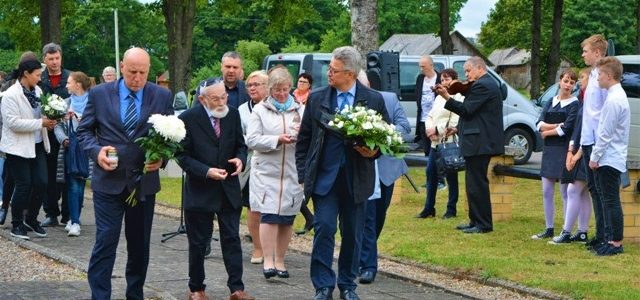
It is the duty of the Kaunas Jewish Community to remember the rescuers of Jews as well as the victims of the Holocaust, the quiet heroes and true apostles of humanity who risked life and family to help.

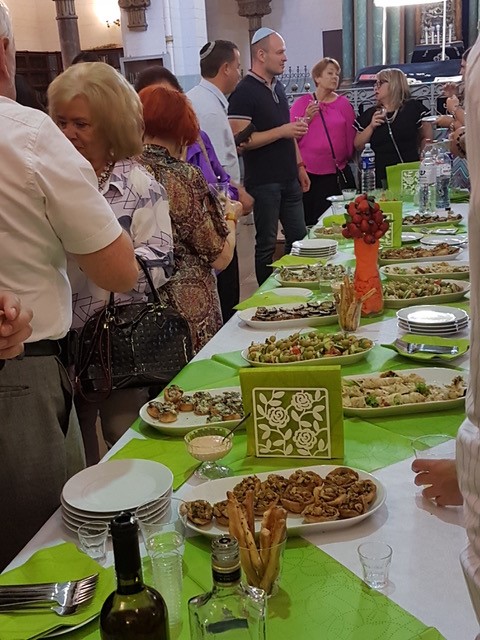
For more than two decades now the KJC has attempted to thank these Righteous Gentiles by inviting them to an annual event among friends. Of course it is inadequate and there is no way to truly thank them. As these heroes slowly fall to the attrition of age, their places among the ranks are assumed by their children and grandchildren in this gathering which has become a large family. The heads of school tolerance centers are also invited to attend and this year 8th graders Diana and Barbora performed dances and songs from the ghetto in Yiddish. The KJC thanks everyone for making this year’s event a success, including the great organizational work by KJC Rescuers Committee chairwoman Judita Mackevičienė.

Discussion on How to Protect Disappearing Jewish Heritage in Kaunas

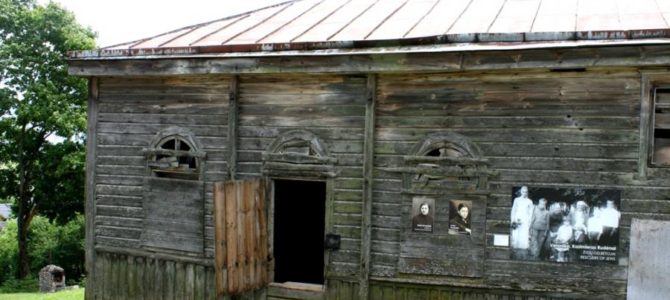
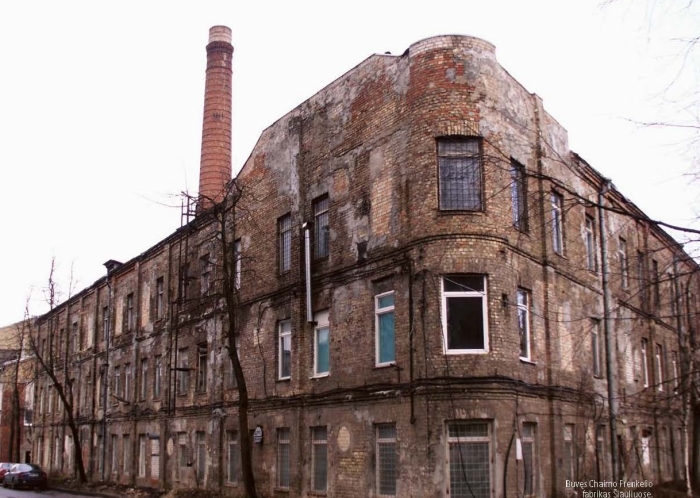
Lithuanian parliamentary speaker Viktoras Pranckietis and Lithuanian Jewish Community chairwoman Faina Kukliansky have visited the former Kaunas Hassidic synagogue now falling into ruin. They toured the building together with Kaunas Jewish Community chairman Gercas Žakas, Lithuanian Cultural Heritage Department Kaunas chapter senior state inspector Andrius Liakas, Vilnius Art Academy Kaunas faculty professor and Kaunas city council member Jonas Audėjaitis and others. The Vilnius Art Academy currently manages the property.

Participants discussed how to protect the Hassidic synagogue, an example of authentic Jewish heritage which is fast disappearing. Chairman Žakas and other members of the Kaunas Jewish Community presented to the parliamentary speaker the current needs of the Kaunas community and the need for a functioning synagogue. This synagogue was built in 1880 and following restoration would be one of only a handful of working synagogues in Lithuania, serving the religious and cultural needs of the local Jewish community. The Kaunas Jewish Community is the second largest Jewish community in Lithuania with more than 300 members.

Lost Shtetl Museum Construction Begins


Photo: Gintaras Šiuparys

A ceremony was held Friday to mark the beginning of construction work on the Lost Shtetl museum in Šeduva, Lithuania. The museum will be a completely new kind of experience using modern technology to present the history and culture of and to commemorate the former Litvak shtetl.

Marija Dautartaitė delivered a welcome on behalf of Lithuanian president Dalia Grybauskaitė, followed by speeches by speaker of the Lithuanian parliament Viktoras Pranckietis, prime minister Saulius Skvernelis, foreign minister Linas Linkevičius, Lithuanian Jewish Community chairwoman Faina Kukliansky, Vilna Gaon State Jewish Museum director Markas Zingeris, US ambassador to Lithuania Anne Hall, Finnish ambassador to Lithuania Christer Michelson, genealogist and education Eli Rabinowitz from South Africa and Australia, Holocaust film director Saulius Beržinis and Šeduva Jewish Memorial Fund founder and museum project manager Sergey Kanovich.

Also attending were ambassadors and heads of mission from the embassies of the United Kingdom, Ireland, Sweden, France, Germany, Russia and Romania, as well as members of the municipal and regional governments and interested citizens from all parts of Lithuania.

Site Selected in Vilnius for Commemorating Righteous Gentiles

In a letter to the Lithuanian Jewish Community dated April 28, 2018, Vilnius mayor Remigijus Šimašius agreed to a 2016 proposal by the LJC to erect a statue to honor rescuers of Jews from the Holocaust in the garden of the Church of the Missionaries near Ona Šimaitė street, renamed after the prolific rescuer several years ago. The walled-in garden area of the church was the site of the final selection of Jews for life and death after the liquidation of the Vilnius ghetto. Šimašius said an alternate site, Rūdninkų square inside the former ghetto, was no longer a fruitful option.

The Lithuanian Jewish Community thanks all parties for inter-agency cooperation in solving an issue of national importance, commemorating those who risked life and family to rescue Jews.

Statue Unveiled in Kaunas to Abraham Mapu, Founder of the Modern Hebrew Novel

A sculpture to honor Abraham Mapu, the founder of the Hebrew novel who was born in Kaunas, was unveiled to the public at a ceremony held in the courtyard of the Ars et Mundus Gallery on Mapu street in Kaunas Thursday evening. Sculptor Martynas Gaubas made the statue commemorating Mapu (1808-1867), who was born and lived in Kaunas and was a beloved local literary figure.

Lithuanian Jewish Community chairwoman Faina Kukliansky thanked the Kaunas municipality for its favorable view on commemorating Litvak figures and noted Mapu is known and loved in Israel where even small towns have a street named after him. She praised the Kaunas Jewish Community for its unity and initiative and singled out Kaunas Jewish Community chairman Gercas Žakas for his success in cooperation and getting things done.

Chairman Žakas and Olegas Darčanovas, the prime mover behind the statue project, noted the large turnout for the ceremony but also said the statue had begun drawing people into the yard even before the ceremony, with locals and tourists flocking to get a look.

Members of the Kaunas city council Ina Pukelytė and Jonas Audėjaitis spoke of the Litvak contribution to the cultural, economic and social life of Kaunas, Lithuania and the world, and confirmed there would be continued commemoration of notable Litvaks who were born, lived and worked in Kaunas.

Lithuanian Economics Minister Meets with Chairwoman of the Lithuanian Jewish Community

Lithuanian economics minister Virginijus Sinkevičius met with Lithuanian Jewish Community chairwoman Faina Kukliansky and discussed the function, content and language of amendments to the law on the protection of consumer rights. The minister said more precise amendments would be tabled in the near future in order to avoid misinterpretations and in light of suggestions made.

“I am encouraged by the frank and constructive conversation with the chairwoman of the Lithuanian Jewish Community. I believe this legislative package needs to be corrected so that no one has doubts about it, so that it wouldn’t be misinterpreted and wouldn’t become a means for distorting historical truth. In consideration of that, I will register [for consideration at parliament] the amendments needed in the very near future,” minister Sinkevičius said.

At a plenary session of parliament in late March, 93 MPs voted in favor of amendments proposed by the Government, 11 abstained and none voted against. The final version of the proposed amendments were drafted before the current leadership of the Economics Ministry took the post.

The Lithuanian Jewish Community expressed concerns over the amendments which would ban retail sales of goods which “distort the historical facts of Lithuania, belittle Lithuania’s history, independence, territorial integrity or constitutional order.” The Community pointed out this would serve as stimulus for the adoption at the national level of one official and “acceptable” version of Lithuanian historical events, which wouldn’t serve in the teaching of actual history but rather would become a censored interpretation of history.

Lag baOmer 2018

The Lithuanian Jewish Community and the Vilnius Jewish Religious Community held a picnic/barbecue celebration of Lag baOmer at Didžiulis Lake May 3. LJC chairwoman Faina Kukliansky, Rabbi Shalom Ber Krinsky and Israeli ambassador to Lithuania Amir Maimon attended.

Lag baOmer is the holiday of the unity of the Jewish people and usually includes fun and games, singing and dancing and prayers to the Creator. Bonfires are lit at night. The most important celebration takes place with the lighting of a bonfire above the tomb of Simeon bar Yochai in Meron in Upper Galilee in Israel. The light from the fire is meant to recall the Sefer haZohar, or Book of Splendor, the earliest written work in the Kabbalah tradition whose authorship is ascribed to the tannaitic sage.

The book sheds great light on the wisdom of the Torah, about which King Solomon said: “For a commandment is a lamp and the Torah is a light.” And according to the prophet Jeremiah, the Creator says: “Is not my word like as a fire?”

To mark Victory Day we invite you to come honor those who fought fascism and the victims of World War II at 12 noon on May 8 at the Sudervės road Jewish cemetery in Vilnius. A bus will carry passengers there from Pylimo street no. 4 in Vilnius and departs at 11:10 A.M. For more information and to register call (8 5) 2613 003 or email info@lzb.lt

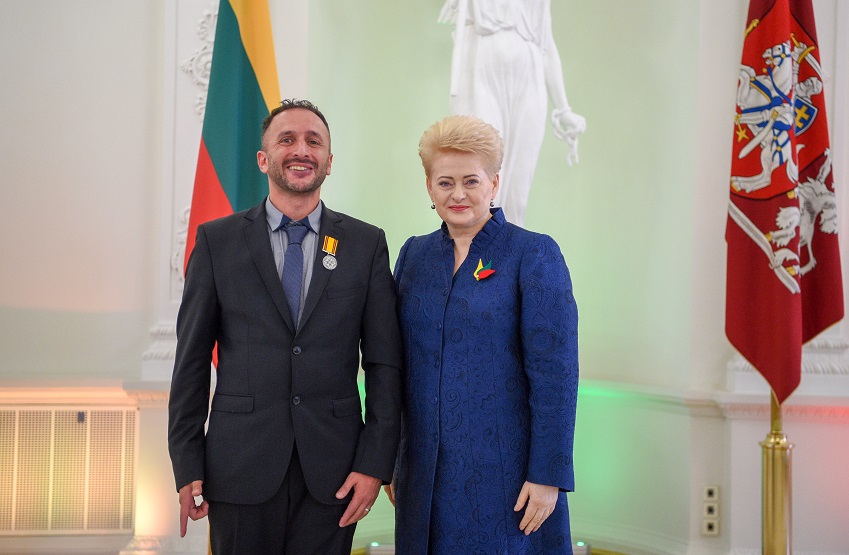
Vilnius U Rector Presents Holocaust Survivor “Return of Memory” Diploma in Israel

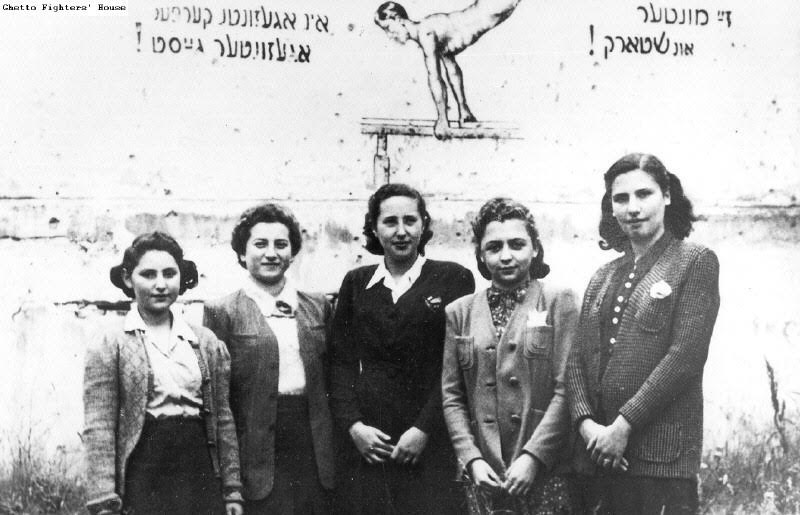
Vilnius University rector professor Artūras Žukauskas presented Estera Klabinaitė Grobman (98) a “return of memory” diploma May 1 in Arad, Israel. Grobman is a Holocaust survivor who was imprisoned in the Kaunas ghetto and the Stutthof concentration camp. She is the only surviving member of a group of students who experienced the Holocaust. In her youth she dreamt of being a chemist, matriculated at university, but only studied one year. In 1941, when WWII and the Holocaust began in Lithuania, she was removed from the student rolls because of her Jewish ethnicity.

Lag baOmer Celebration

The Lithuanian Jewish Community and the Vilnius Jewish Religious Community invite you to come celebrate Lag baOmer, the day of the unity of the Jewish people, at the fort next to the A1 Vilnius-Kaunas freeway 1 kilometer from Grigiškės at 6:00 P.M. on May 3. There will be music, a barbecue and activities for children including trampolines, face painting and shooting bows and arrows.

Kaunas Jewish Community Invites You to Unveiling of Mapu Statue

A presentation and ceremony to unveil a statue to commemorate Abraham Mapu will be held at 5:00 P.M. on May 3 in Kaunas. The ceremony will take place in the courtyard of the Ars et Mundus art gallery located at A. Mapu street no. 20 in Kaunas. The sculptor was Martynas Gaubas. The event will include Jewish music. Ars et Mundus is the author of the project and Artkomas and the Kaunas Jewish Community are partners.

Israeli Ambassador Celebrates Sabbath with Kaunas Jewish Community

Last Friday Israeli ambassador to Lithuania Amir Maimon celebrated Sabbath with the Kaunas Jewish Community. Everyone was impressed by the ambassador’s warmth, informal communication, good mood, improving skills in the Lithuanian language and his vocal abilities.

Ambassador Maimon said he found a happy, family atmosphere in Kaunas which he often misses on Friday evenings in Lithuania and shared his nostalgia for Sabbath in Israel, where you don’t have to consult the calendar to know the day has come.

LJC Holds BBQ to Celebrate 70th Birthday of State of Israel

The Lithuanian Jewish Community held a picnic/barbecue to celebrate the 70th anniversary of the founding of the State of Israel in Vilnius April 29. Participants sang the Israeli national anthem in the warm spring air. Vocalists from the Fayerlakh ensemble sang Jewish songs and celebrants began to dance spontaneously throughout the event. It was an all-ages, family affair with grandparents, parents and children attending. While some barbecued, others set the tables and served, and the younger children swung on swings, played and ran around.

Vilnius Ghetto Diary makes Top 7 List of Lithuanian Books for April

The Vilnius Ghetto Diary of Yitzhak Rudashevski was named as one of the top 7 books for April on the 15min.lt website’s monthly list. The diary was recently published in Lithuanian translation with the original Yiddish provided as the second half of the book. Other works recommended on the list included Lithuanian translations of Abraham B. Yehoshua’s Mar Mani [Mr. Mani], Isabel Allende’s Más allá del invierno [In the midst of Winter] and others, and original Lithuanian works such as Marius Burokas’s latest book of poetry Švarus buvimas [Clean Existence].

Vilnius Regional Jewish Community Established

Vilnius, April 26, BNS–A new Vilnius Regional Jewish Community is being established and will be headed by long-standing president of the Makabi Lithuanian Athletics Club Semionas Finkelšteinas.

Representatives of the association reported its establishment Thursday.

This has made more acute a conflict between Jewish organizations. Vilnius Jewish Community leader Simonas Gurevičius is angry not all who wanted were able to participate in the new organization’s establishment and said the new community is being established solely to support Lithuanian Jewish Community leader Faina Kukliansky.

A press release from the new organization Thursday said the Vilnius Regional Jewish Community “will actively bring together Jews of the Vilnius region who are in favor of working constructively” with the Lithuanian Jewish Community, regional Jewish communities and social organizations, and will also represent the social, cultural and political interests of Jews living in Vilnius and surrounding areas. The statement said the new organization will bring community old-timers and the powers of youth together for joint activity.

Monument to Jan Zwartendijk in Kaunas

Kaunas deputy mayor Simonas Kairys Thursday announced the plan to commemorate Dutch consul Jan Zwartendijk who rescued Jews during World War II.

Following four years of work between partners in Lithuania and the Netherlands, the deputy mayor said: “This day is truly extraordinary. Kaunas is like an outdoor museum city with many strata and signs testifying to different time periods. I think Kaunas has demonstrated many times over the city is strong when its content is strong and when the city is able to show that content to others.

Honorable Dutch consul Jan Zwartendijk issued so-called Curaçao end-visas to complement Japanese transit visas Chiune Sugihara issued Jews in Kaunas during the early days of World War II.

Full story in Lithuanian here.

Press Release

LITHUANIAN CENTER FOR HUMAN RIGHTS
PRESS RELEASE
FOR IMMEDIATE RELEASE

April 25, 2018, Lithuania

Personal Stories from the Holocaust Told in New Website

“’We drank tea using the observational method: we would hang a sugar cube by a string and sip tea while looking at it. This didn’t make the tea taste any sweeter, but it cheered us up,’ wrote Tamara Lazersonaite in her memoirs. She was the daughter of professor Vladimir Lazersonas, the pioneer of clinical psychology in Lithuania. Professor Lazersonas and his family drank their ostensibly sweetened tea in the Kovno Ghetto.” This is how the Lazersonas family, who were part of Kaunas intelligentsia before the start of World War II, are introduced in the new website stumblingstones.lt.

The pioneer of clinical psychology in Lithuania and his wife, doctor Regina Lazersoniene-Safochinskaite were incarcerated in the Kovno Ghetto. They both later died in concentration camps. Only two of the three Lazersonas children survived the Holocaust.

Lithuanian National Library Hosts Lecture “The Problem of Holocaust Memory in Current Lithuanian Historiography”

The Lithuanian National Martynas Mažvydas invites the public to a lecture in Lithuanian called “The Problem of Holocaust Memory in Current Lithuanian Historiography” by Klaipėda University professor Hektoras Vitkus at 5:30 P.M. on April 26.

Holocaust studies are expanding constantly at academic institutions in different countries. This topic has also received attention from scholars working in different disciplines in Lithuania and sometimes becomes the topic of public discussion. Even so, the question remains of how much scholarly attention is being devoted to the problem of Holocaust memory in Lithuania. This lecture will discuss the specific and topical issue of the place Holocaust memory occupies in current-day Lithuanian historiography.

Dr. Vitkus will examine the following questions: what concepts of Holocaust memory exist in contemporary Lithuanian historiography and what are their connection to global theoretical approaches to Holocaust memory? Has Holocaust memory research become an integral part of Holocaust historiography in Lithuania? Is there firm foundation for claiming Holocaust research and methodologies for such research are not yet being taken seriously by Lithuanian historians and at the current time independent studies remain exclusively in the scholarly fields of sociology and psychology?

Everyone is invited to the lecture which will be held in Lithuanian.

Old Užupis Jewish Cemetery Renovation Proposals

The Vilnius municipality is preparing proposals for renovating the old Užupis Jewish cemetery in Vilnius. The municipality’s planning agency Vilnius Plan has hired architect Victoria Sideraitė-Alon for this purpose and she has performed an examination of the territory and has provided proposals on how best to showcase fragments of headstones desecrated by the Soviets.

Sideraitė-Alon’s creative group (Samuel Bak is the author of the main symbol, A. Šimanauskas is the creator/designer, A. Perelmuter is the Israeli architect and consultant) has proposed a project called Arch, which was unanimously approved by an international advisory group on heritage issues established at the Lithuanian Jewish Community and by artists and intellectuals including P. Morkus, M. Ivaškevičius, S. Beržinis, S. Valius and by the Jewish Religious Community and the Lithuanian Foreign Ministry.

The Arch project proposal has not received the approval of the Vilnius Plan agency, which instead proposed a different project to commemorate the road blazed through the cemetery during the Soviet era, actually more of a ditch, called Kirkuto alley, but without any monument carrying a deeper semantic or emotional content. Instead, the alternate proposal is for arranging the headstones and fragments, more or less appearing now as stairs, in an artificial layer of soil above the parking lot where they are now housed to create the effect of a small “Jewish” graveyard there.