Learning, History, Culture

EBRD Awards Grigoriy Kanovich’s Book Devilspel European Literature Prize

EBRD Awards Grigoriy Kanovich’s Book Devilspel European Literature Prize

From Noir Press:

PRESS RELEASE

April 22, 2020

Lithuanian author wins €20,000 Literature Prize from European Bank for Reconstruction and Development
The UK publishing house Noir Press is delighted Lithuanian Jewish author Grigory Kanovich has just won the €20,000 EBRD Literature Prize, a prestigious award celebrating literature in translation.

The prize, normally awarded at Bank headquarters in London, was awarded virtually this year because of the quarantine announced by the UK Government. The award was announced on Twitter on April 22.

Rosie Goldsmith, chairwoman of the panel of judges for this year’s prize, said the winning novel “is sincere, it is warm, it is generous. It has the feeling of a very great classic.”

Three Hundredth Birthday of the Vilna Gaon

Three Hundredth Birthday of the Vilna Gaon

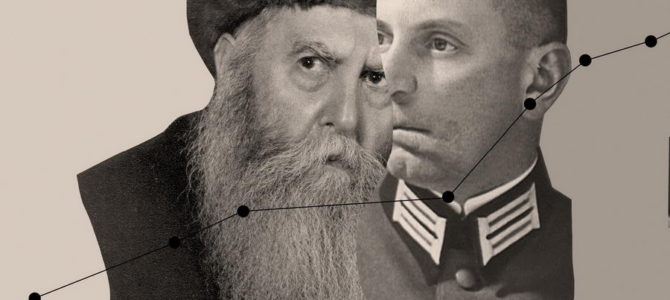
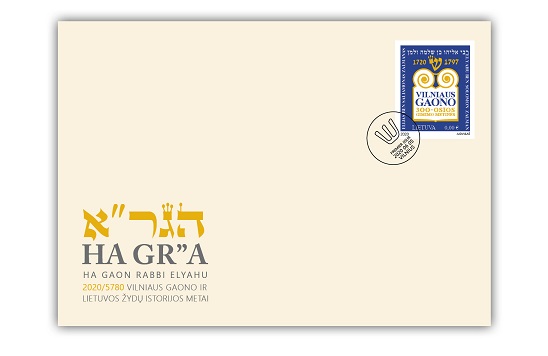
The Lithuanian parliament has proclaimed 2020 the Year of the Vilna Gaon, the 18th century scholar and cultural figure Eliyahu ben Solomon Zalman, and the Year of Litvak History. This anniversary has also been listed on UNESCO’s list of anniversaries for 2020 and 2021. On April 23 we mark the 300th birthday of the Vilna Gaon.

Scholars consider the Gaon the greated Talmudic scholar in Eastern European Jewish history. He is also the father of the rabbinical movement’s struggle against Hasidism and is considered the primary figure in rabbinical learning among Eastern European Jews. The Gaon and his followers, mitnagdim or misnagdim (literally “opponents,” i.e., of Hasidism) are sometimes called prophets of learning.

The Vilna Gaon had a deep interest in different branches of the exact sciences and his texts on geometry, astronomy and geography are often ascribed to the Haskalah, the Jewish enlightenment which arose in the 1770s in Central and Western Europe. Alan Nadler, professor emeritus of religious studies and formerly the director of a Jewish studies program in the USA, says the Gaon’s interest in secular subjects stimulated the expansion of many academic fields and the Gaon became a symbol of educated Judaism.

Yom haShoah Holocaust Commemoration Day Marked around the World

Yom haShoah Holocaust Commemoration Day Marked around the World

The traditional air-raid siren will announce the beginning of the Jewish day and the beginning of Yom haShoah throughout Israel at 7:45 P.M. on April 20. Yom haShoah–the Day of the Shoah–is one of several days commemorating the victims of the Holocaust and the most important of the commemorative days in Israel.

At 10:00 A.M. on Tuesday, April 21, the Lithuanian Jewish Community invites all to visit the LJC facebook page to mark the day with us via internet. We are asking everyone to observe a minute of silence for the victims when the siren sounds. The LJC facebook page is here.

Yad Vashem is asking people to take part in international readings of the names of victims and to post video using the hashtags #RememberingFromHome and #ShoahNames. More information on the Yad Vashem initiative here.

March of the Living: the annual march from Auschwits to Birkenau is taking place this year at 7:00 P.M. Lithuanian time on April 21, 2020. It will include recollections by Holocaust victims and an address by Israeli president Reuven Rivlin. The event will be broadcast live here.

The Holocaust Center for Humanity, the Holocaust education center in Seattle, will hold a virtual event at 12 noon Pacific Daylight Time on April 21. More information here.

For more events around the world, see here.

Eliyahu ben Shelomoh Zalman, the Vilna Gaon

Eliyahu ben Shelomoh Zalman, the Vilna Gaon

Eliyahu ben Shelomoh Zalman

(Gaon of Vilna; 1720–1797), Torah scholar, kabbalist, and communal leader. The Gaon of Vilna (known also by the acronym Gra, for Gaon Rabbi Eliyahu) was a spiritual giant, a role model and source of inspiration for generations, and the central cultural figure of Lithuanian Jewry. Eliyahu ben Shelomoh Zalman was born into a rabbinical and scholarly family, and following a short period of study in a heder, studied Torah with his father. At age 7, he was sent to study with Mosheh Margoliot, rabbi of Keydan (Lith., Kėdainiai). Soon thereafter, he began to study on his own, and at 18, left Vilna to go into “exile”—a period of wandering through Jewish communities of Poland and Germany.

Upon Eliyahu’s return to Vilna, he shut himself in his house and devoted his energy to Torah study. He continued in this path throughout his life, supported by the local Jewish community. When Eliyahu was 35 years old, Yonatan Eybeschütz, who was suspected of Sabbatian leanings, turned to him, seeking support and referring to him as “one who is unique, saintly, holy, and pure, the light of Israel, possessing all-embracing knowledge, sharp and well-versed, with 10 measures of esoteric knowledge . . . whose praise is recognized in all of Poland . . .” (Eybeschütz, Luḥot ha-‘edut [1756], p. 71). It seems, then, that the Gaon of Vilna had already achieved legendary status during his lifetime.

Yom Ha’Shoah: Local EU Statement

Dear friends and colleagues,

On the occasion of Yom HaShoah, let me share with you the joint statement by the Ambassador of the European Union to the State of Israel and the Ambassadors of all European Union member states represented in Israel:

“The Delegation of the European Union (EU) to the State of Israel, together with the 26 Embassies of EU Member States present in Israel, remember and pay tribute to the six million Jews who were murdered, on European soil, more than seven decades ago.

We join Jewish communities worldwide in commemorating the individual lives that were lost in the unimaginable tragedy of the Shoah, fathers, mothers, sons, daughters; in cherishing the survivors among us so that their experiences are not forgotten. As Shimon Peres has said: “We are their eyes that remember. We are their voice that cries out.”

Jewish Vilnius 1990

Jewish Vilnius 1990

German TV, also shown on Israel Channel 2, captures the early days of the revival of the Jewish Community in Lithuania in 1990. First Jewish organizations. Grigory Kanovich’s “Jewish Daisy”: to stay or to leave.

Condolences

Condolences

The Lithuanian Jewish Community extends our deepest condolences to the friends and family of noted writer and producer Felix Dektor who passed away at the age of 89 in Jerusalem. He was born December 21, 1930, in Minsk to a family of Litvaks. He lived there until being evacuated to the Ukraine and then Siberia during the Holocaust.

Graduated from the History and Philology Faculty of Vilnius University in 1955, Dektor continued studies at the Gorky Institute of Literature in Moscow including in Lev Ozerov’s literary translation seminar. Dektor translated a number of Lithuanian writers into Russian, including books by Justinas Marcinkevičius, Juozas Požėra, Alfonsas Bieliauskis and Mykolas Sluckis. His best-known translations were perhaps the novels of Icchokas Meras on Jewish death and valor during the Holocaust (Ничья длится мгновенье (Вечный шах) and На чём держится мир).

Dektor was removed from the Writers’ Union of the Soviet Union in 1975 in response to his publication and distribution of the Jewish cultural and educational magazine Tarbut.

Jewish Holiday of Freedom Celebrated without Foods Recalling Slavery

Jewish Holiday of Freedom Celebrated without Foods Recalling Slavery

Judita Gliauberzonaitė, 42, chairwoman of the Vilnius Lithuanian Jerusalem Jewish community, recalls how her grandmother Cilė Žiburkienė every spring before Passover would cleanse the entire house so that, God forbid, not even a grain of flour would remain, which would mean leavened bread remained in the house, a sign recalling the enslavement of the Jews in the land of Egypt.

Jews around the world who count their history in millennia begin celebrating their Passover holiday on the 15th day in the month of Nisan (March or April), lasting for seven days in Israel and eight elsewhere in the world. Secular Jews who keep to tradition usually celebrate the first and last days of Passover, gathering as families for dinner.

Judita Gliauberzonaitė says more religious Jews attend synagogue every day of Passover.

Passover often coincides with Catholic Easter. This year it began on April 8 and continues till April 15.

Defiant Zionist Spirit of the Bergen-Belsen DP Camp

Defiant Zionist Spirit of the Bergen-Belsen DP Camp

by Menachem Z. Rosensaft, associate executive vice-president and general counsel, World Jewish Congress

When the remnant of European Jewry emerged from the death camps, forests and hiding places throughout Europe in the winter and spring of 1945, they looked for their families and, overwhelmingly, discovered that their fathers and mothers, their husbands, wives and children, their brothers and sisters, aunts, uncles and cousins had all been murdered by the Germans and their accomplices. Yet they did not give in to despair.

On the contrary, in Displaced People camps throughout Germany, Austria and Italy, the Jewish survivors of the Holocaust, who could easily have given up on humankind, dramatically returned to life–spiritually, physically, culturally, and socially. Instead of allowing themselves to remain the prisoners of a horrific past, they looked toward the future, married, started new families, and proved, if only to themselves, that they had not only remained alive but that they had, in fact, prevailed. I am one of more than 2,000 children who were born in Bergen-Belsen, the largest of the DP camps, between 1945 and 1950.

Simultaneously, the survivors’ affirmation of their Jewish national identity took the form of a political and spiritually redemptive Zionism. The creation of a Jewish state in what was then called Palestine was far more than a practical goal. It was the one ideal that had not been destroyed, and that allowed them to retain the hope that an affirmative future, beyond gas chambers, mass-graves and ashes, was still possible for them.

Full article here.

WJC Yom HaShoah Commemorative Ceremony April 20

WJC Yom HaShoah Commemorative Ceremony April 20

Dear Friends,

This year Yom HaShoah will be very different.

For the first time ever there will be no commemorative ceremonies bringing people together physically in solemn reflection held around the world.

Whilst we are of course all preoccupied with the effect that the COVID-19 corona virus pandemic is having on our lives, we still feel that it is important to mark this day and pay our respects to the victims of the Holocaust.

We Did It, We Got Matzo to Our Seniors

We Did It, We Got Matzo to Our Seniors

Two weeks ago the Community accepted the challenge to distribute and home-deliver more matzo to more than 900 seniors living in Vilnius. Today we can truly say, mission accomplished.

It would have been mission impossible without the help of our volunteers who heeded the Community’s call for help. We had from 3 to 4 teams of Community staff and volunteers on the street daily.

The distribution of matzo took place so very smoothly because we were able to harness so many who offered to help.

A mitzvah should be done quietly and without fanfare, but the Community has a right to know who its heroes are.

Menachem Rosensaft Sends Passover Greetings

Menachem Rosensaft Sends Passover Greetings

Dear Friends,

I want to wish all of you and yours a peaceful and health-filled Pesach. May we all succeed in adapting to the pandemic crisis sufficiently to have meaningful Seders, in many (most) cases connecting remotely to family members who should have been sitting with us.

In advance of Yom HaShoah, Holocaust Remembrance Day, I also want to share with you a video that the World Jewish Congress produced, in cooperation with the World Federation of Bergen-Belsen Associations, (WFBBA) about the liberation of the Bergen-Belsen concentration camp, the Belsen Displaced Persons camp, and the more than 2,000 children born in the DP camp’s Glyn Hughes Hospital:
https://youtu.be/Jv9M0yvi_J0

I hope that the example of the survivors’ resilience, determination and optimism as they emerged from the horrors of the Holocaust will inspire us at this difficult and anxious time. Please feel free to share the video widely.

I am also pleased to share with you a second video, also produced by the WJC together with the WFBBA, based on the beautiful photography of Debbie Morag featuring daughters of Auschwitz survivors:
https://youtu.be/b_PrrHLp8U4

Again, I wish you and yours a peaceful, health-filled Pesach.

With all warm regards,

Menachem

§§§

Menachem Z. Rosensaft (born 1948 in Bergen-Belsen, Germany) an attorney in New York and the Founding Chairman of the International Network of Children of Jewish Survivors, is a leader of the Second Generation movement of children of survivors,[1] and has been described on the front page of the New York Times as one of the most prominent of the survivors’ sons and daughters.

LJC Chairwoman Faina Kukliansky and Lithuanian Jewish Religious Community Chairman Simas Levinas Send Passover Greetings to Community

LJC Chairwoman Faina Kukliansky and Lithuanian Jewish Religious Community Chairman Simas Levinas Send Passover Greetings to Community

Dear Community members,

So Passover, the holiday eagerly awaited by Jews around the world, has come.

The seder night is so important to Jews, when we eat matzo, meditate and remember G_d’s revelation during the flight from Egypt. We do this year after year. This is what our fathers and forefathers have done, and we do it, and we teach it to our children.

This year the seder won’t be so large, not all family members are able to come to the table, not here in the Diaspora and not in our historical homeland Eretz Israel.

This has happened to Jews many times before–slavery, the Inquisition, wars and other misfortunes have separated families so many times before, leaving some of us alone, turning some of us into outsiders. This year we celebrate Passover during a time which is difficult not just for Jews.

Nonetheless, let’s try. Let’s remember and tell in our thoughts the story of the exodus from Egypt. Let’s pose the questions to ourselves and find the correct answers. Let’s remember at least a few of the 248 mitzvot, let’s believe in miracles if only briefly, and in the arrival of the Messiah.

Let’s believe, let’s dream, let’s think and let’s thank the Most High that we are alive and spring has come, and let’s give thanks for every day lived and believe in the future.

Next year will be better. We just have to believe it.

A happy holiday to all, be free and be happy.

Lithuanian TV Program Crossroads of Cultures: Menora Asks How Lithuanian Jewish Community Is Doing under Quarantine

Lithuanian TV Program Crossroads of Cultures: Menora Asks How Lithuanian Jewish Community Is Doing under Quarantine

Following the state of emergency announced in Lithuania, the daily life of the Lithuanian Jewish Community has changed. All events have been canceled, entry to visitors is restricted and some staff are working from home. The work of the Community’s Social Center hasn’t stopped, though.

To view the program in Lithuanian, click below.

Kultūrų kryžkelė. Menora. Kaip žydų bendruomenė laikosi karantino laikotarpiu?

§§§

Panevėžys Jewish Community Sends Passover Greetings

Panevėžys Jewish Community Sends Passover Greetings

Despite the complicated time in the world, the dates assigned by the Torah to the holidays don’t change and they are part of the history and story of the Jewish people. Passover is one of the main Jewish holy days. Over the days of Passover Jews remember their historic liberation from slavery.

During these difficult days I wish you patience, the love of those around you and endurance. Maintain hygienic requirements and adhere to the safety measures as we fight the corona virus.

Gennady Kofman, chairman
Panevėžys Jewish Community

Lithuanian News Outlet on Boris Johnson’s Litvak Roots

Lithuanian News Outlet on Boris Johnson’s Litvak Roots

Photo: AFP/Scanpix

Boris Johnson’s family ties with Lithuania
the Lithuania Tribune, DELFI
July 25, 2016

Britain’s new foreign secretary Boris Johnson has ancestral ties with Lithuania. The controversial politician’s great grandfather was a Litvak born in Žemaičių Kalvarija, the famous American palaeographer Elias Avery Lowe (Loew).

Elias was born in Žemaičių Kalvarija in Lithuania in 1879. His family migrated from the Russian Empire to New York when he was 12.

Elias studied at Cornell University, became a US citizen in 1900. In 1902 he went to study in Germany, where in 1908 he defended his doctoral thesis written under the guidance of famous palaeographer Ludwig Traube.

Panic and Contempt

Panic and Contempt

by Arkadijus Vinokuras

When the heads of state lack any experience managing crises, panic envelops society. When leaders try to compensate for their lack of ability through dictatorial means, they demonstrate contempt for society. It’s pointless to blame Lithuanian health minister Aurelijus Veryga for changing his directives several times daily. He was appointed by those who have no experience themselves, and who are therefore unable to manage the crisis effectively. It seems they don’t really understand human lives are at stake. And freedom.

On panic. Seeking somehow to demonstrate the abilities he doesn’t have, health minister Veryga even donned military costume. He seems to have wandered into the tragicomic league of Don Quixote by attempting to fight the virus this way. Where you’re not sure whether to laugh or cry. If he had served in the military even at the level of lieutenant, he would know how orders are issued by a military commander. They would be based–and this is the crucial matter–on emergency management scenarios drawn up by the military leadership. But from the very first days of the spread of the virus in Lithuania it was completely clear the Lithuanian Peasants/Green Union Government is not following any emergency management plan.

The minister who has turned himself into a laughing stock with his military uniform should at least understand in a general way that an order by a military commander first indicates the prevailing situation in the theater of war. It indicates the time frame. It also enumerates enemy forces and our own forces, e.g., what we have and what we don’t have. Only then comes the definition of missions.

Genocide Center Wins Case Demanding Retraction of Jonas Noreika Finding

Genocide Center Wins Case Demanding Retraction of Jonas Noreika Finding

The Lithuanian Telegraphic Agency ELTA reports the Lithuanian Supreme Administrative Court dismissed a suit lodged by US-resident Litvak Grant Gochin against the Center for the Study of the Genocide and Resistance of Residents of Lithuania.

ELTA reports said the panel of judges rejected Grant Gochin’s demand the Genocide Center retract an historical finding they issued earlier on the person of Jonas Noerika during a hearing on April 1.

The court’s finding isn’t subject to appeal. The court also obliged Gochin to pay additional court costs to the Genocide Center.

Gochin was appealing a finding issued by the Vilnius District Administrative Court on March 27, 2019, in favor of the Genocide Center.

Full text in Lithuanian here.

Thank You for Helping LJC Seniors

Thank You for Helping LJC Seniors

Lithuanian Jewish Community administrative secretary Liuba Šerienė would like to send a big thank-you to Social Department director Michailas Segalas and staff members Ema Jakobienė, Ninel Skudovičiūtė, Rokas Dobrovolskis and Neringa Stankevičienė and colleagues, and to Michailas Tarasovas, Aušra, Snieguolė, Danutė Lena, Žana and Sonia for their great work helping our Social Department clients and senior citizens. Thank you so very much.