Litvaks

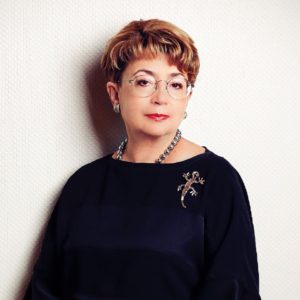
Statement by Lithuanian Jewish Community Chairwoman Faina Kukliansky on Shrovetide

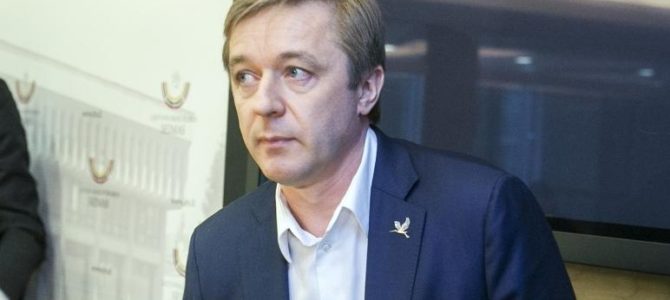
Parliamentary Culture Committee chairman Ramūnas Karbauskis on his social media page invites everyone to celebrate Užgavėnės [Lithuanian Shrovetide, or Carnival] in Naisiai, Lithuania. Event organizers used illustrations reminiscent of anti-Semitic propaganda used by the Nazis. This was reported on the internet site of the newspaper Lietuvos žinios on February 24, 2017.

“At the invitation of the most influential member of parliament R Karbauskis [Karbauskis is the chairman of the ruling Peasants and Greens Union party], the public is called upon to celebrate Shrovetide at the Naisiai location, associated with the politician, where, it seems, anti-Semitic ideas not only thrive, but are a part of everyday communication. Under the header of “Big Shrovetide in Naisiai” on social media, the invitation and publicity for the event provides more than just an events program, it also includes [anti-Semitic] sayings…”

It didn’t take long for the Lithuanian public to react. A wave of outrage appeared, as did anti-Semitic comments on the internet. One of the leaders of the governing coalition of the nation, after all, presented an invitation to celebrate Shrovetide using fascist propaganda from 1939. “Lithuanians know the Holocaust began soon after that,” LJC chairwoman Faina Kukliansky commented.

“Following the February 16 march in Kaunas where it was hard to tell the ultra-nationalists from the patriots, this is continuing now into Shrovetide,” chairwoman Kukliansky said. “Is this the policy of the new ruling party? How are we to understand this? An innocent holiday celebration is transformed in the Naisiai announcement into clearly anti-Semitic jingoism, a return to the pre-World War II era. How should Lithuanian Jews feel? The Shrovetide celebration is a holiday, we understand ethnology, but this is beyond Shrovetide and even its masks, these are anti-Semitic Nazi masks which arrived in Lithuania from Hitler’s Germany. We would like to hear from Mr. Karbauskis’s lips whether he is or is not an anti-Semite. I am the chairwoman of the Lithuanian Jewish Community and I am requesting an answer to the question about what his views are regarding Jews, if he has the courage to display such masks in public. Existing Lithuanian laws criminalize the spreading of fascist propaganda,” Kukliansky said.

About Jews and a Dream

[Note: The proposal Mr. Ivaškevičius makes in the following opinion piece in no way reflects the position of the Lithuanian Jewish Community. In fact, on several points it contradicts the positions of the LJC stated publicly in the past, namely, regarding the rebuilding of the Great Synagogue in Vilnius. Also, at least three Litvak museums, much like the one he proposes, are currently in the planning stage, two in Vilnius, and one scheduled to open in the shtetl of Šeduva in late 2017 or early 2018. The following translation is presented to our readers merely for the sake of information and the interest of our readers.]

by Marius Ivaškevičius
www.DELFI.lt

Yes, again, about Jews. Although, not really, this is perhaps more about us. About Vilnius, really, of which they were a part, and now we are. And this time not about repentance, guilt or about what we’ve lost, on the contrary, about what we can still get back. I want to propose a plan for how our dead Jews could still serve us.

About Vilnius

I love this city and I always tell my foreign friends it is a hidden pearl. When you need peace, it is peaceful. When you want noise and excitement, it has something to offer. The beauty here is obvious, brick-and-mortar and alive, the old architecture, the beautiful men and women, in a word, something to look at. For a long time my stories hit a polite wall of promises: “yes, of course, we will have to go there someday.” Someday, never. But suddenly it began to work. As if my foreign friends had made an agreement among themselves, they began to flood into Vilnius, asking what they should see first in this city.

So I got the opportunity to look at Vilnius not through the eyes of an insider living here, but through the eyes of someone who had just arrived. And I realized Vilnius doesn’t have anything to offer them. The Old Town, sure, it’s charming. But that charm wears off after a half day. You can spend the evening and night on the weekends in the bars. Then what? Then they want museums, but here these, it turns out, are each more boring than the last. Old armor, weapons and glazed tiles they have already seen, the picture galleries are only of local significance, there are no masterpieces and it takes a real fanatic, a tourist dedicated to art, to “consume” what is on offer.

The only thing which is truly not disappointing is the theater. The theaters of Vilnius are world-class and many drama enthusiasts come just for this, to see Nekrošius, Tuminas and Koršunovas in their hometown. Perhaps sometimes they murmur after the show about a lack of subtitles or translation, but essentially they’re satisfied. The plays fill their evenings, and during the day, seeking new experiences, they visit the Museum of Lithuanian Theater and Cinema, certain that it will be of the same high caliber as our theater which it represents. But they find that same museum boredom instead. A stoppage of time and museum women knitting.

Serbian President Awards Efraim Zuroff Gold Medal

serbgold

Serbia’s president Tomislav Nikolić presented Serbia’s Gold Medal for Merit to Dr. Efraim Zuroff, chief Nazi hunter and director for Eastern European affairs at the Simon Wiesenthal Center, on February 16 as part of celebrations of Sretenje, Serbia’s day of statehood. The award was presented for “exceptional achievements” by Dr. Zuroff and noted his “selfless dedication to defending the truth about the suffering of Jews, and also Serbs, Roma and other nationalities, during World War II.”

Zuroff was the first to be called to receive the award from the president’s hand and was one of only a few foreigners to be honored with the distinction. He is only one of two Israelis ever to have received the medal, along with Serbian-born Israeli justice minister Yosef “Tommy” Lapid. Efraim Zuroff has deep Litvak roots and has worked on Holocaust justice and education in Lithuania for many decades now.

Japanese Violinist Yurina Arai Wins Heifetz Contest

yuri

Yurina Arai has been named the winner of the Fifth Jascha Heifetz International Violin Competition in Vilnius, Lithuania. The 22-year-old Japanese violinist, who triumphed in the final with her performance of Tchaikovsky’s Violin Concerto, receives €10,000 and a number of performance opportunities. The student of Natsumi Tamai at the Tokyo University of the Arts won first prize at the Grumiaux Competition last year. The second prize worth €5,000 went to 17-year-old Dmytro Udovychenko from Ukraine, while third prize worth €2,000 went to 17-year-old R. Fukuda from Japan who won the Junior Division of the Menuhin Competition in 2014. Moscow Conservatory student 24-year-old Stepan Starikov and 17-year-old Japanese violinist Mayu Ozeki were awarded diplomas and €1,000. For the first time this year winners received a small sculpture of Heifetz by Lithuanian sculptor Romualdas Kvintas. The award was established by the Lithuanian Jewish Community. Professor Leonidas Melnikas who presented the prizes said “We want the winners to always remember Heifetz lived in Vilnius.”

More in Lithuanian here.

Was Hebrew Ever a Dead Language?

2017-01-24_Uchenaya_stepen_Yampolskaya01
Frequent VYI summer course student Sonya Yampolskaya at her doctoral defense in Russia

Frequent student at the Yiddish summer courses at Vilnius University Sonya Yampolskaya has successfully defended her doctoral dissertation casting serious doubt on the alleged morbidity and revival of the Hebrew language.

If Hebrew were a “dead language” before its revival as the official language of Israel, as is commonly accepted, then why was it being used by Russian Jews who were even opening new Hebrew newspapers right into the 20th century?

The first chapter of Yampolskaya’s dissertation at St. Petersburg State University details both the genesis of the myth of the death of Hebrew and its alleged “resurrection” by Ben-Yehuda, and a discussion of the concepts of “dead” and “alive” as they are used in different scientific paradigms, and especially their usage in linguistics and biology. The first chapter also explores developments within Ashkenazic Hebrew in the 19th and 20th centuries. Chapters Two and Three get down to the nitty-gritty, detailing the process of lexical borrowings into Ashkenazic and what is called the T-V (tu, vous) distinction in linguistics to demonstrate both innovations and the loss of traditional forms in the language in the 19th and 20th centuries.

Yampolskaya says Ashkenazic did undergo a kind of extinction in public use in the Soviet Union ca. 1925-1926, but that its rapid development from the 1850s to the 1920s resulted in publications in Latvia, Lithuania, Bessarabia (Moldova), Poland and the Ukraine besides Russia, whose output of text vastly outweighed Hebrew-language publications from Palestine, the Americas and Western Europe. The way words were borrowed from foreign languages carried over into the method used in modern Israeli Hebrew, Yampolskaya found. The idea Hebrew was a dead language, as might be said of Latin and classical Greek, found proponents in the Yiddish side of the battle between Hebrew and Yiddish for the soul of the Jewish people. Yampolskaya also notes the seemingly Christian symbolism ironically involved in the semi-official myth of Hebrew’s death and resurrection by the State of Israel ca. 1948 following 2,000 years of its alleged morbidity. Besides the use of Ashkenazic Hebrew in “high register” venues such as religious books and its “mid-level” use in the periodical press, Yampolskaya discusses its use as an everyday language among Russia’s Jews.

Yampolskaya’s dissertation at the Oriental Studies department of St. Petersburg State University is the first one in 50 years on Hebrew.

Dissertation in Russian with extensive English translation available here.

Photos and details of the doctoral defense in Russian here.

Agreement with Jurbarkas on Synagogue Square Memorial

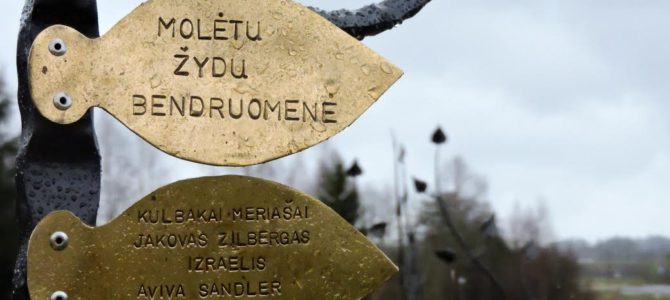
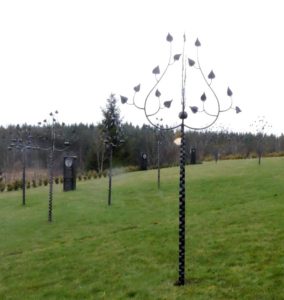
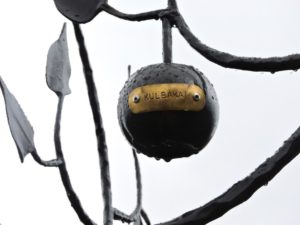
On February 9 the Lithuanian Jewish Community signed an agreement with the Jurbarkas regional administration and the New Artists College CAN of Israel on a projected called “Synagogue Square Memorial.” The memorial is dedicated to remembering the Jews of the shtetl (formerly known as Yurburg or Jurburg in Yiddish and Georgenburg in German) and is to be located on Kauno street in Jurbarkas where one of the most beautiful wooden synagogues in Europe once stood. The memorial is being created by Israeli sculptor David Zundelovich, who comes from Lithuania. It is to portray the waves of the Nemunas River and the wooden synagogue and is to be made of gray and black basalt. It is to include the names of Jews who lived in Jurbarkas and the names of people who rescued them during the Holocaust, with inscriptions in English and Hebrew.

Jurbarkas regional administration head Skirmantas Mockevičius said the group is looking for funding for the memorial. “Jews lived in Jurbarkas for a long time and there is no monument, so sign, even though they were the majority of the community,” Mockevičius told BNS. From three to four thousand Jews called Jurbarkas home before the Holocaust. The head of the regional administration said residents weren’t interested in a graveyard memorial and wanted the memorial to appeal to the people, including the youth. Under the plan the memorial is to be built within 8 months from the signing of the agreement. Mockevičius expected it to be in place in Jurbarkas by the fall.

Ongoing Hommage à Heifetz Project Provides Chance to Learn More about Jewish Culture

A meeting called “Vilnius, Litvak Culture in the 19th and 20th Centuries and Jascha Heifetz” was held in Lithuanian at the Lithuanian Jewish Community on February 9, 2017. It was a chance to reflect both on the past, the deep Litvak roots in Lithuania and the greatest violinist of all time, but also on the present Lithuanian Jewish Community. Speakers included Lithuanian Jewish Community chairwoman Faina Kukliansky, deputy chairwoman Maša Grodnikienė, Eugenijus Laurinaitis, Leonidas Melnikas, Larisa Lempert ir Donatas Katkus and Silvija Sondeckienė.

“Jascha Heifetz’s secret of his achievements was not only a unique talent, but practice, practice and more practice. The notes of his violin are not governed by the years and his life and achievements are not those of a typical Vilnius Jew living in the Pale of Settlement of Tsarist Russia. Heifetz achieved greatness and reached the pinnacle of musical achievement in the world for all time, our fellow countryman, our fellow Vilnius resident, Jascha Heifetz,” Lithuanian Jewish Community chairwoman Faina Kukliansky commented.

Snapshots from event on facebook.

Continuing Education University Students Visit Panevėžys Jewish Community

The History Faculty of TAU (Trečiojo amžiaus universitetas) University in Panevėžys under the direction of Jonas Lazauskas holds lectures, meetings and excursions. One such meeting took place at the Panevėžys Jewish Community with chairman Gennady Kofman.

He gave a lecture providing the history and activity of the Panevėžys Jewish Community. Audience members learned which buildings were Jewish and what happened to those buildings. The audience was visibly moved by the story of the Panevėžys Jewish cemetery destroyed in 1966 and of what happened to the headstones. The audience, made of elderly continuing-education students at the university, still remembered the Jewish shops which lined Freedom Square in the past, and the oldest Jewish cemetery and stone wall next to the theater.

TAU1

A Tale of Two Synagogues in Vilnius: Both Survived the Meat Grinder of History

geliu-kaireje-ir-vilniaus-choraline-sinagogos-589c865b874a9

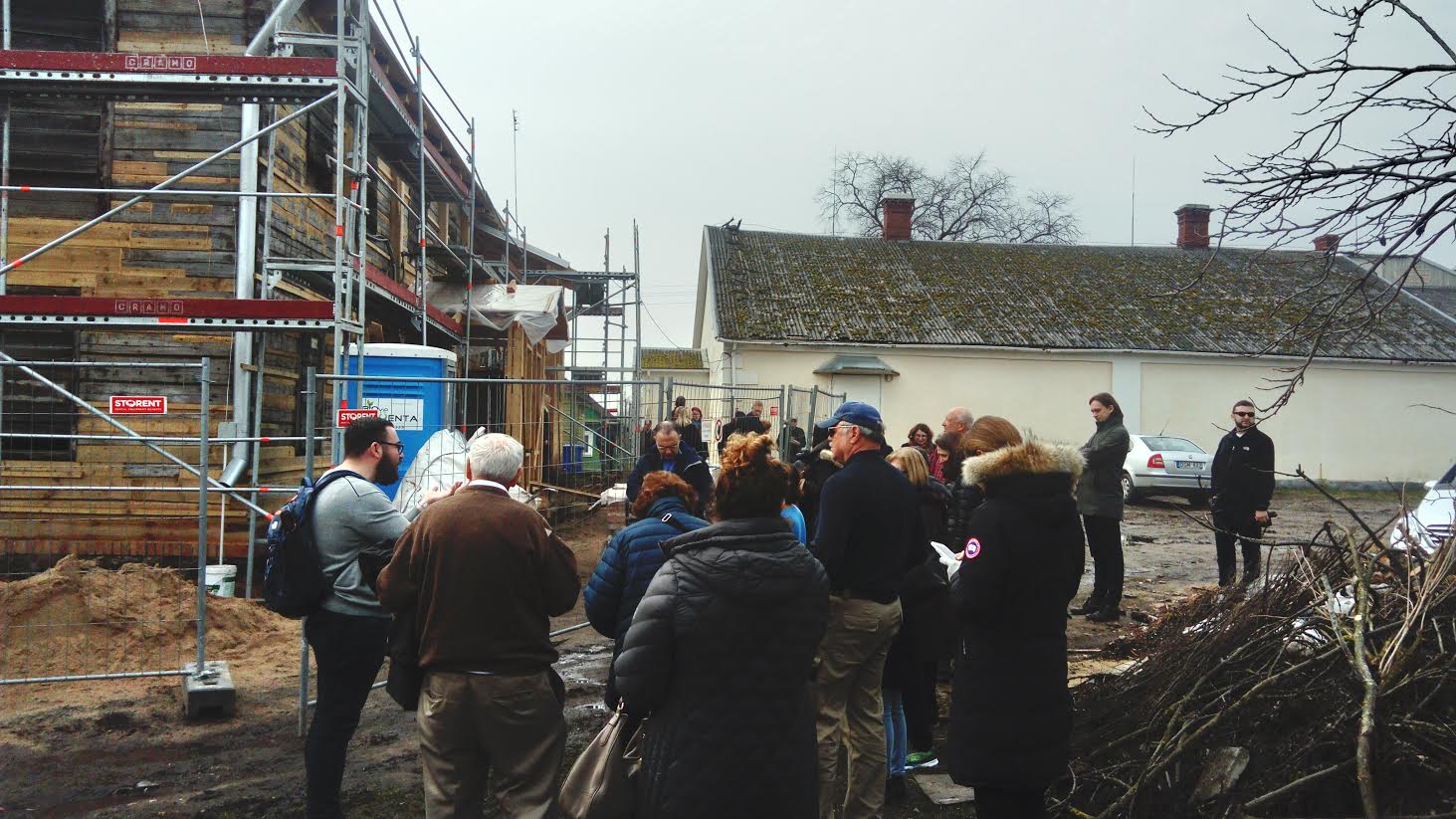
… If you call the Choral Synagogue the fortunate daughter, then another surviving synagogue near the bus station and train station could be called the poor stepdaughter in terms of appearance and visitors. The building located at Gelių street no. 6 only bears slight resemblance to a house of prayer. Restoration of the abandoned building began recently, in 2015.

Using several sources of financing, this synagogue has been slowly getting back on its feet over the last two years to become what it once was, a house of prayer. It’s said that it was the first stop for Jews arriving in Vilnius by train from all points in Lithuania. That’s hardly surprising, since the synagogue is right next to the railroad tracks!

This synagogue was in a state of imminent collapse until 2014 and its rebirth began with a “STOP” ribbon put up around it, followed by work to strengthen the roof. Over the three years since repairs began, great progress has been made. But it probably won’t be completed in 2017, it will take years longer.

Launch of Irena Veisaitė Biography in Kaunas

The President Valdas Adamkus Library/Museum and the publishing house Aukso žuvys launched historian Aurimas Švedas’s biography “Irena Veisaitė. Gyvenimas turėtų būti skaidrus” in Kaunas February 9. The author and the subject of his book attended. The discussion was moderated by professor Egidijus Aleksandravičius. A large number of readers including members of the Kaunas Jewish Community turned out for the meeting with one of the more remarkable modern Lithuanian cultural figures, professor Irena Veisaitė. Among the many subjects she addressed was her native city of Kaunas, which she said was “under her skin.”

Veisaite3

Holocaust Survivor Rūta Glikman Says Other Children Only Knew She Didn’t Have Parents

Holokaustą išgyvenusi R. Glikman: vaikai žinojo tik tiek, kad aš neturiu tėvų

manoteises.lt

Rūta Glikman who was smuggled out of the Kaunas ghetto as a child is celebrating her birthday. If not for her rescuers, Righteous Gentiles Jadvyga and Alfonsas Babarskis, the woman would have been murdered during the Holocaust, as was her entire family. Having survived the horrors of the war and Soviet oppression, Glikman resolved to honor both her families. It was due to her efforts that the Babarskis family was recognized by Yad Vashem in Israel. Now, she says, the time has come to commemorate her real parents as well. If all goes as planned, this summer their names will be inscribed on brass “memory stone” plates.

Glikman’s grandfather Chaim and father Leiba Basai had a business which was in operation in Kaunas since the end of the 19th century. They were in the fur, hat and fedora trade and exported goods to Latvia, Germany, France, England and other countries in Europe. Basai was a respected man in Kaunas. It was noted in numerous loan documents these businessmen were honest and ethical partners.

Full story in Lithuanian here.

Jewish Brothers of Lithuanian Soccer

futbolas Makabi
After a match between Kaunas LFLS and Kaunas Makabi in 1926

The Jewish community influenced the development of the sport of soccer in interwar Lithuania. In 1916 the Jews of Vilna followed in the footsteps of their fellow Jews in Warsaw and founded the Jewish athletics and sports club Makabi. Vilna Makabi not only propagated gymnastic and other fields of athletics, but also soccer. The interwar provisional capital of Lithuania, Kaunas, was mad about soccer then and became the center of sporting activity. The Lithuanian Athletics Union was founded there in 1919, and a year later was replaced by the Lithuanian Physical Fitness Sports Union (the Lithuanian acronym is LFLS). The Jewish Makabi Union soon followed and was established in Kaunas.

Full story in Lithuanian here.

State-of-the-Art Jewish Museum Planned in Šeduva

Seduva-museum1
Preliminary design concept for the Lost Shtetl Museum

Plans have been announced for a state-of-the-art Jewish museum scheduled to open in 2019 as part of the Lost Shtetl memorial complex in Šeduva, Lithuania.

The museum complex is to be designed by the Finnish company Lahdelma & Mahlamäki Architects who also designed the POLIN Museum of the History of Polish Jews in Warsaw. POLIN won the 2016 European Museum of the Year Award. They are towork together with local partner Studia2A established in 1994 and headed by Vilnius Art Academy dean of architecture Jonas Audejaitis.

The museum is to be located next to the sprawling Šeduva Jewish cemetery, completely restored and opened in 2015 as part of the memorial complex. The complex includes memorials at three sites of Holocaust mass murders and mass grave sites and a symbolic sculpture in the middle of the town. A study of the Jews of Šeduva was conducted as part of the project and is to result in a documentary film called Petrified Time by film director Saulius Beržinis.

Seduva6
Memorial statue in Šeduva. Photo © Ruth Ellen Gruber

Sergey Kanovich, founder of the Šeduva Jewish Memorial Fund, said the Lost Shtetl Museum will employ advanced technologies to teach visitors the history and culture of Šeduva and similar Litvak shtetls. It is expected to serve as an educational and cultural center.

“Visiting the Lost Shtetl will be a history lesson which will allow national and international visitors to learn about the lost Litvak shtetl history and culture,” he said.

“Lifestyle, customs, religion, social, professional, and family life of Šeduva Jews will serve a center point of the Museum exhibition,” he said. Visitors to museum will learn “the tragedy of Šeduva Jewish history which in the early days of World War II ended in three pits near the shtetl.”

Generations and Destinies

An exhibition of painting called Generations and Destinies opens at the Tolerance Center of the Vilna Gaon State Jewish Museum at 5:30 P.M. on February 13, 2017. The exhibit will run until May 21.

The exhibit is dedicated to the 100th birthday of Algirdas Savickis (1917-1943) and includes works by several generations of artists, including interwar Lithuanian diplomat and writer Jurgis Savickis, his sons Algirdas and Augustinas, his grandson Raimondas Savickas and his great-granddaughter Ramunė Savikaitė-Meškėlienė.

The opening is free to the public and the Tolerance Center is located at Naugarduko street no. 10/2 in Vilnius.

Happy Birthday to Aleksandras Rutenbergas

Sveikiname Aleksandrą Rutenbergą su jubiliejumi!

The Lithuanian Jewish Community sends heart-felt birthday greetings to its loyal member Aleksandras Rutenbergas on the occasion of his 70th birthday, wishing him much energy and excellent health!

Aleksandras is an interesting and highly-educated person, a great economist who contributed to the restructuring of the Lithuanian economy in the early period of independence. For 10 years now he has served as the director of the Jewish Cultural Support Center Foundation. The foundation, which restored and refurbished what is now the Tolerance Center of the Vilna Gaon State Jewish Museum, is supported by Austria. Aleksandras comes from a well-known Litvak family and his parents survived the Holocaust in the ghettos and concentration camps. He is deeply engaged with Jewish heritage and is an active member of the executive board of the Lithuanian Jewish Community, and participates in the activities of the Makabi athletics club.

Aleksandras, we wish you a continued interesting life and that you would achieve all that your heart desires!

Happy birthday!

Lithuanian State Auditors Find Compensation for Jewish Property Used Appropriately

BNS_logotipas

Vilnius, February 9, BNS–The Lithuanian State Auditor has no complaints on the use of compensation for Jewish religious communal property this year, although they found irregularities last year.

The State Auditor’s Office reported finding no violations in the 2016 audit of the use of such funds.

The year prior to that auditors said the foundation dispensing the funds had used some monies from the state allocated under the Lithuanian law on goodwill compensation for pre-Holocaust Jewish real estate had been used in the 2012-2015 period for matters not defined in the law, namely, to pay for administrative expnses of the disbursing foundation. In 2016 the Lithuanian parliament amended the law to allow for the Goodwill Foundation to pay its own administrative costs.

Fifth International Jascha Heifetz Violin Competition in Vilnius

The fifth annual Jasche Heifetz violin contest will take place in Vilnius February 13-19, 2017. The Jascha Heifetz contest is one of the most significant musical competitions held in Vilnius celebrating the enduring legacy of the great Litvak violin virtuoso.

Although the 20th century produced so many excellent violinists, Heifetz stands out as the star of the highest magnitude within that constellation.

He was born in Vilnius in 1901 to a Jewish family. Vilnius was home to many nationalities, and Heifetz preserved the memory of his multicultural hometown and the life and musical traditions of his home. He began the climb to greatness in 1907 in Kaunas as a six-year-old prodigy. In 1912 he received European recognition for his talent in Berlin, and in America, beginning in 1917, he achieved world acclaim. Heifetz’s mastery has become the template for all modern violinists. The scholar Yuri Grigoryev believes the essential feature which set Heifetz apart from all others was actually the inspiration he took from the architecture of Old Vilnius, manifesting in architectonic grandiosity, classical sensibility and variety of expression.

Once George Bernard Shaw, won over by Heifetz’s performance, warned the artist in a letter the next day: “If you provoke a jealous God by playing with such superhuman perfection, you will die young. I earnestly advise you to play something badly every night before going to bed, instead of saying your prayers. No mortal should presume to play so faultlessly.” But God was kind to the artist. His art became part of the eternal repertoire of Grand Music and Vilna has the honor to be remembered as his birthplace.

Profesorius Jurgis Dvarionas

Full story in Lithuanian here.

European Youth Music Contest Winners Mark Jascha Heifetz’s 116th Birthday

On the 116th birthday of violinist Jascha Heifetz on February 2 the winners of the European Youth Music Contest kicked off the Hommage à Heifetz project financed by the European Union program Creative Europe with a concert at the Royal Castle in Vilnius. Talented young musicians from Sweden, Japan, China and Lithuania held the first concert playing selections from Jascha Heifetz repertoire with the St. Christopher Chamber Orchestra of Vilnius conducted by Modestas Barkauskas.

Lithuanian Jewish Community chairwoman Faina Kukliansky gave a speech welcoming the audience and thank the organizers, partners, supporters and participants of the contest in the name of the community. On February 19 the winners will be presented a special prize from the Lithuanian Jewish Community.

Faina is Heifetz

Lithuanian Jewish Community Birthdays in February

LŽB 2017m. vasario mėnesio jubiliatai

Vilnius Jewish Community:

Jelizaveta Rodionova (February 3)
Aleksandras Rutenbergas (February 7)
Viktor Chramcov (February 8)
Jefim Pesin (February 10)
Isaak Štargot (February 12)
Ravelis Kozlovas (February 14)
Šura Cechanovskaja (February 15)
Valerij Šulman (February 20)
Inesa Fainštein (February 21)
Valentina Ivanuškina (February 23)
Vladimir Savenkov (February 27)

Kaunas Jewish Community:

Feiga Tregerienė (February 17)
Maksimas Rudekas (February 19)

Klaipėda Jewish Community:

Michail Muruzov (February 15)
Igor Zamanskij (February 26)

Šiauliai Jewish Community:

Garold Vaisbrod (February 13)
Chaimas Šeras (February 24)

Raseiniai:

Antanas Kaplanas (February 22)

Nemenčinė:

Grigorijus Kušneris (February 2)