
Litvaks

Leaders, Ambassador Send Condolences on Death of Tobijas Jafetas

lzinios.lt, BNS

Lithuanian Jewish Community chairwoman Faina Kukliansky told BNS Tobijas Jafetas was “a highly respected, active and refined person of the community” who had met her father when World War II began. “As I recall his father had a business in England and came to Kaunas just before the war started. It so happened that Jafetas and my father were at a [children’s summer] camp in Palanga when the war broke out. Neither was able to flee and they were taken to an orphanage in Kaunas,” Kukliansky said.

Israeli ambassador to Lithuania Amir Maimon expressed condolences over Jafetas’s loss on facebook.

Jafetas and his mother were imprisoned in the Slobodka ghetto in Kaunas in World War II. He told the story of how he escaped the ghetto in 1944 after hiding in an attic. The Katinskai family in Vilnius rescued him.

LJC chairwoman Kukliansky said Jafetas spoke German and English and maintained close contacts with survivors of ghettos in Europe.

Monument to Icchokas Meras to be Unveiled in Kelmė

Monument to Icchokas Meras to be Unveiled in Kelmė

A monument to Litvak writer Icchokas Meras (October 8, 1934 – March 13, 2014) is to be unveiled on the fifth anniversary of his death on Icchokas Meras Square in his hometown of Kelmė, Lithuania, at 1:00 P.M. on March 13, 2019. Meras, a Holocaust survivor, wrote in Lithuanian and won numerous awards in Israel and Lithuania. His work has been translated into over 25 languages including Yiddish and Hebrew. He moved to Israel in 1972 and passed away in Tel Aviv in 2014 at the age of 79.

The monument is the fruit of cooperation between the Lithuanian Jewish Community, the Jakovas Bunka welfare and support fund, the Lithuanian Jerusalem Vilnius Jewish Community and the Kelmė regional administration.

Those wishing to attend are invited to send notice of their intention to renginiai@lzb.lt because the LJC plans to provide free transportation to and from the event if there is sufficient interest. Please send an email by March 11 or call 8 673 77257 for more information.

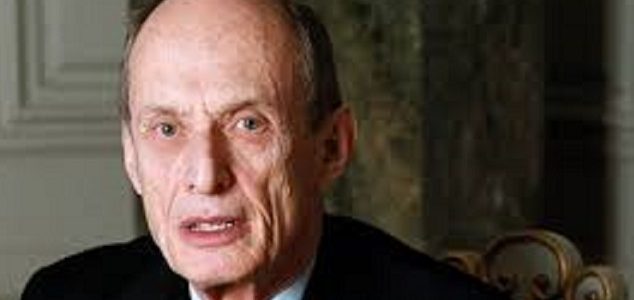
Tobijas Jafetas, Chairman of Union of Ghetto and Concentration Camp Prisoners, Dies

Tobijas Jafetas, Chairman of Union of Ghetto and Concentration Camp Prisoners, Dies

The Lithuanian Jewish Community has learned with great sadness of the loss of chairman of the Union of Former Ghetto and Concentration Camp Inmates Tobijas Jafetas. Born in 1930, he was still a child when World War II came to Lithuania. He often said he only survived because of help from Righteous Gentiles.

Although he was from Vilnius, he was with his mother Berta and uncle Lazeris in Kaunas when the Nazis arrived. Other relatives were imprisoned in Latvia. All of this family was murdered and he was the only survivor.

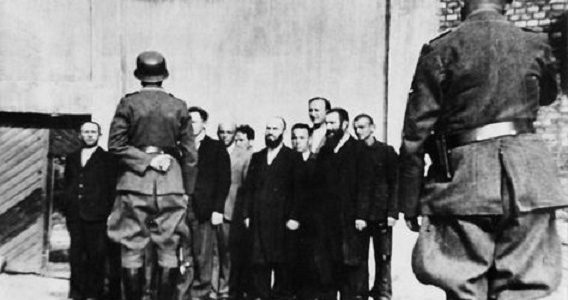
He, his mother and the other Jews of Kaunas were forced into the Slobodka ghetto.

“Life in the ghetto was very hard and one of the biggest problems was figuring out how to get enough to eat,” Jafetas said one year ago. “Tradition and the necessity of maintaining Jewish identity were very important to us under such conditions. In April of 1944 ghetto prisoners sensed danger and the ghetto was surrounded and the guard increased. I managed to escape death by hiding in an attic under hay for rabbits being raised there. The soldiers didn’t find me. In April of 1944 my mother told me to flee the ghetto as quickly as possible.

“I was 14 when I escaped. My aunt and uncle, from Kaunas, had moved to Vilnius at that time. My aunt’s father was a military officer from the time of Smetona and asked his sister living in Druskininkai, Kotryna Katinskaitė, to take me to Vilnius. The Katinskai family saved me. When the front approached my uncle travelled to Šilalė where my cousin was working and my aunt and I stayed in Vilnius. The front arrived and we hid from the bombardment in the St. James Church in Vilnius. That’s how we survived. After the war I lived with the Katinskai family until I finished high school.”

His experience of the Holocaust didn’t break Tobijas. Wise, sincere and always with a warm and beautiful smile–that’s how the Jewish community will remember Tobijas Jafetas as we express our shock and condolences over his loss to his daughter Judita, all his grandchildren and everyone who had the honor to encounter this sensitive and extraordinary person.

Ąžuoliukas Anniversary Concert at LJC

The Lithuanian Jewish Community and the Ąžuoliukas Music School will hold a chamber ensemble concert to celebrate the 40th anniversary of the school and the 60th anniversary of the Ąžuoliukas Boys and Young Men’s Choir.

The concert begins at 5:00 P.M. on Thursday, February 28, at the Lithuanian Jewish Community, Pylimo street no. 4, Vilnius.

Concert for Grigoriy Kanovich’s 90th Birthday

Concert for Grigoriy Kanovich’s 90th Birthday

Dear readers,

The first in a series of events to celebrate the 90th year of Litvak writer Grigoriy Kanovich will be a concert tonight, Wednesday, February 27, at 7:00 P.M. at the Vaidila Theater on Jakšto street no. 9 in Vilnius.

Lukas Geniušas will perform on piano works by Chopin and Tchaikovsky. This will also be the premiere of contemporary composer Leonid Desyatnikov’s Songs of Bukovina.

Audience members will receive a surprise gift as well.

Tickets available at bilietai.lt

Litvak Literature: Grigoriy Kanovich at 90

Litvak Literature: Grigoriy Kanovich at 90

by Sergejus Kanovičius

My father wrote “Shtetl Love Song” at the age of 84. And he promised himself he wouldn’t write more: “it’s better I not write, and I don’t want to write more poorly.” Over the last six years his books have been translated to and published in English, German and Macedonian. They are being translated now as well, and soon more will appear. No matter how my brother and I have tried to provoke Father to write more, he firmly keeps to the promise he made to himself. Not a month goes by that he doesn’t get a letter from publishers or journalists asking for interviews, to attend a book launch or to travel to deliver a lecture. Very rarely he agrees to answer questions in writing: “I have said everything already, I have written everything, let them read my books.”

It’s not the first time when his name is heard at the bustle of the book fair, when his selected writings are presented, Rūta Oginskaitė’s memoir biography “Gib a Kuk” [Take a Look] and now “Linksmos Akys” [Happy Eyes]. But the author is not at the book fair. And he won’t be at the next one, although there might be a different book. If not at the Lithuanian book fair, then maybe the German, Polish or English. As I recall Father never liked answering questions about his work. It seemed incomprehensible to him how an author could also interpret that which he has created, and he didn’t understand either how one could explain what one has experienced and given birth to. Just take me and read. Father doesn’t like questions about his work. Unless those questions are broader, about a worldview. But this is in the books, too.

Vilma Gradinskaitė’s Exhibit Lithuania in Litvak Art

Vilma Gradinskaitė’s Exhibit Lithuania in Litvak Art

A second exhibit about Litvaks has opened at the Town Hall section of the Kaunas City Museum. Dr. Vilma Gradinskaitė of the Vilna Gaon State Jewish Museum has added “Lithuania in Litvak Art” to the already-running exhibit on Litvak photographers in the interwar period.

The new exhibit shows how Lithuania was portrayed in painting, graphics arts, poetry, novels, songs, plays and films by Litvaks.

Organizers say the exhibit has a special audio guide which makes it accessible to those with sight disabilities. There is a hands-on item for children as well. The exhibit will run till March 31. The photography exhibit closes April 1.

Rudashevski Ghetto Diary Wins Main Prizes at Vilnius Book Fair

Rudashevski Ghetto Diary Wins Main Prizes at Vilnius Book Fair

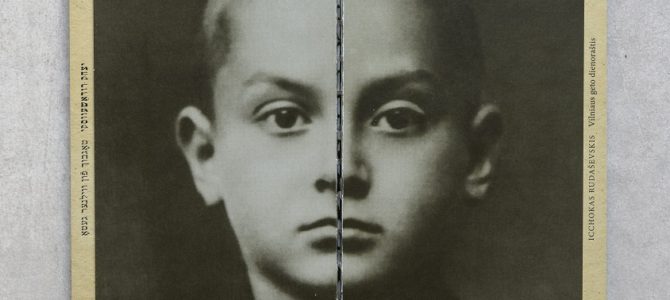
The Vilnius ghetto diary of Yitzhak Rudashevski, translated and published by the Lithuanian Jewish Community, has won the Book of the Year distinction at the annual Vilnius Book Fair currently being held in the Lithuanian capital.

Deputy minister for culture Gintautė Žemaitytė congratulated the designers and publishers, presenting them prizes and diplomas. The book was recognized as the best book in terms of design, taste and art for 2018. The Lithuanian Cultural Ministry has presented the prize annually 26 years now. Over 130 publications competed for the title this time.

Book designer Sigutė Chlebinskaitė won the main prize for sensitive aesthetics and holistic concept. Congratulations to Sigutė for her talent and for dedicating it to the boy from the Vilnius ghetto.

The LJC won in the category of publisher. We are so glad we were able to present this monument to the children of the Holocaust to the Lithuanian reader.

Born in Leviatan’s Clinic

Born in Leviatan’s Clinic

The Lithuanian Jewish Community hosted the launch of the Lithuanian translation of an unusual book on February 21. Professor Uri Leviatan’s book “From Hand to Hand” is unlike the academic works by this much-published anthropologist and sociologist who focuses on the modern phenomenon of the Israeli kibbutz. It is his own story, and that of his parents and grand-parents, which he began writing for his son Lior in 2014, the fruit of personal research stretching back decades, in which the author seeks to answer the question of his origins and what exactly happened to him as a child during the Holocaust.

The autobiography reads like a thriller novel and the author himself describes it as a series of detective stories.

Asked to speak about his experience as a child of the Holocaust at a Holocaust survivor and Jewish partisan conference held in Israel in the ’90s, Leviatan realized he had actually been passed from one guardian to another at least seven times. Initially his parents had him smuggled out of the Kaunas ghetto, where they perished, but after that his path to Israel after the war became very foggy in his own mind. Hardly unusual for a child born in 1939 to not remember all of the horror of the Holocaust in his first few years, but Leviatan’s memory gaps seem to have always bothered him, and he managed over the decades to track down real documentation of himself as a Jewish orphan in Lithuania and later at the Sanhedria children’s home in Israel, now sporting a different first name following what he described as his “almost kidnapping” by a Jewish religious group which gathered up Jewish orphans in Europe. This group changed his name, falsified his date of birth and it was only when his aunt, already in Israel, went looking for him and happened to ask another child from Kaunas about Uri that he was rescued.

Visit LJC Stand and Events at the Vilnius Book Fair

The Lithuanian Jewish Community will have a stand at the Vilnius Book Fair which opens February 21 and concludes on February 24. The stand number is 3.19.

At 2:00 P.M. on Thursday, February 21, Uriel Leviatan’s book “Iš rankų į rankas” [“From Hand to Hand,” translated from the Hebrew to Lithuanian by Victoria Sideraitė-Alon with an introduction by Dalia Epšteinaitė, who also edited the Lithuanian version] will be presented by the LJC in hall 3.1 at the Vilnius Book Fair. At 3:00 P.M. on Saturday, February 23, a presentation of Litvak literature celebrating the 90th birthday of Grigoriy Kanovich will be held in hall 5.2.

Presentation of Uri Levitan’s Book “From Hand to Hand” at LJC

Presentation of Uri Levitan’s Book “From Hand to Hand” at LJC

The Lithuanian Jewish Community kindly invites you to attend a presentation of the book “Iš rankų į rankas” [“From Hand to Hand,” translated from the Hebrew to Lithuanian by Victoria Sideraitė-Alon with an introduction by Dalia Epšteinaitė, who also edited the Lithuanian version] by head of the Sociology and Anthropology Faculty and head of the Kibbutz Institute of Haifa University professor Uriel Leviatan and a meeting with the author at 6:00 P.M. on Thursday, February 21, at the LJC in Vilnius.

Professor Leviatan was born in Kaunas. His grandfather Isaac Leviatan was a renowned gynecologist in prewar Lithuania. The birthing clinic he created on Miško street in Kaunas in 1926 is still operating. Isaac Leviatan was a talented doctor and an active figure in Kaunas public life. He became chairman of the Zionist party Zionim Klaleem in 1935 and was the long-time representative of that party at Zionist congresses held in Europe.

Of the family of Isaac Leviatan renowned in Kaunas and throughout Lithuania, only Uriel survived through a kind of miracle. His parents sensed the coming liquidation of the ghetto in 1943 and made sure three-year-old Uriel was smuggled out of the ghetto…

Jewish Scouts Hike to Synagogue in Žiežmariai

Jewish Scouts Hike to Synagogue in Žiežmariai

The Lithuanian Jewish Community invited Jewish scouts for a winter hike on February 17. The delegation left by train for Žasliai where they were welcomed by the town alderman and local students. The scouts presented the community and the school with a gift, the ghetto diary of Yitzhak Rudashevski in Lithuanian.

The hike began through Strošiūnai Forest where the scouts learned how to build a fire and had a snack.

Hikers later visited the Jewish mass murder site in Strošiūnai Forest where everyone laid a stone in memory of the victims. The hike concluded at the Žiežmariai Cultural Center where the scouts, along with Kaišiadorys regional administration head Vytenis Tomkus, they raised and viewed the traditional Žiežmariai haShomer haTzair scouting flag, generously donated for the occasion by the Vilna Gaon State Jewish Museum.

Launch of Book about Jews of Švėkšna

Launch of Book about Jews of Švėkšna

Monika Žąsytienė, a Bagel Shop project volunteer and museum specialist, has written a book called “Švėkšnos žydų bendruomenė XVII–XX a.” [The Jewish Community of Švėkšna from the 17th to the 20th Century].

The Bagel Shop Café will host the launch of the new book at 6:00 P.M. on February 19. Register here.

According to the author, the book makes no pretense of being an historical work. Instead, Monika Žąsytienė sought to bring together local lore and regional history for future work on the subject. She made use of material from Lithuanian archives, Yad Vashem and the Holocaust Museum in Washington, D. C. Some of the information–testimonies, memoirs, correspondence in Yiddish, Hebrew, German and English–appears for the first time in Lithuanian in her book.

Aaron Garon’s Book Vilnius Jewish World Presented at LJC

Aaron Garon’s Book Vilnius Jewish World Presented at LJC

Aaron Garon (Garonas, 1919-2009) was born in Vilnius and most of his life was associated with his beloved home town. He moved to Israel in 1992 but always looked forward to the summers when he would return to Vilnius.

Garon became a witness to the phenomenon of the Vilnius Jewish world at a young age and harbored a life-long and deep love of Jewish culture and his native Yiddish language.

A reserved and proud Litvak, Garon painfully witnessed, too, the decline of Yiddish: “How can we erase a thousand years of Jewish cultural history?”

Garon’s terse tales of his home, parents and school–all of which he adored–served as a kind of return to paradise lost for him: “If there is anything positive in me, I must thank my parents and school and our wonderful principal Sofia Gurevich for this,” he wrote.

The Jewish world of Vilnius thrived for centuries but was wiped out in the Holocaust, although survivors continued to speak Yiddish with their families for decades. Most of them made their way to Israel, and Yiddish was no longer heard on the streets of Vilnius. This book–a Lithuanian translation of select articles by Garon the journalist and writer–is more than just vivid memories, it is a testimony to and a painting in Yiddish of a lost world which might teach future generations just how much the city lost. The new book is in both Lithuanian and Yiddish.

Exhibit by Kaunas Collector at Choral Synagogue in Vilnius

Exhibit by Kaunas Collector at Choral Synagogue in Vilnius

An exhibit of items in the collection of well-known collector Michailis Duškesas regarding pre-war Vilnius Jewish organizations is on display at the Choral Synagogue in Vilnius showing the rich and active life of Vilnius Jews before the Holocaust.

Thank you to Michailis and Natalija Duškesai of Kaunas who made the effort to organize and set up this unique exhibit in Vilnius.

The second floor of the synagogue is still hosting an exhibit of photographs of wooden synagogues as well. The photos were donated by Daumantas Todesas, director of the Jakov Bunka support and welfare fund.

Fate of Litvaks in the Holocaust in Yad Vasherm Documents and Projects

Fate of Litvaks in the Holocaust in Yad Vasherm Documents and Projects

Serafima Velkovich from Israel delivered a public lecture at the Chaim Frankel villa on February 14, 2019, called “The Fate of Litvaks in the Holocaust in Yad Vasherm Documents and Projects.” The event was intended to mark the 75th anniversary of the liquidation of the Šiauliai ghetto. The lecture was in English with simultaneous translation to Lithuania. Velkovich works in the archives of the Yad Vashem Holocaust memorial institute in Israel. The event was attended by members of the Šiauliai Regional Jewish Community, Lithuanian MP Stasiys Tumėnas’s advisor Nerijus Brazauskas, representatives of the local municipal and regional administrations, employees from the Aušra, Joniškis and Pakruojis Museums, high school students from Šiauliai and local public figures and members of the public.

The event was organized by the Šiauliai Regional Jewish Community. Partners included the Goodwill Foundation, the International Commission to Assess the Crimes of the Nazi and Soviet Occupational Regimes in Lithuania, the Aušra Museum in Šiauliai, the Klaipėda Jewish Religious Community, the Kaunas Jewish Religious Community, the Conference of European Rabbis, descendants of Litvaks abroad, the Panevėžys Jewish Support Association and the Jewish Cultural Heritage Route Association.

Bagel Shop Celebrates Third Birthday

Bagel Shop Celebrates Third Birthday

The Bagel Shop Café is the café the Lithuanian Jewish Community opened three years ago on the first floor. Celebrating Litvak culinary heritage and traditions, the Bagel Shop makes bagels according to a family recipe and makes Sabbath challa every Friday, as well as many other items, and special foods on holidays. It began as an idea in 2014, as part of a tolerance campaign of the same name sponsored in part by a grant from Norway and aimed at fighting discrimination and anti-Semitism. Eventually the Bagel Shop became a real bagel shop.

Three years later, we’ve decided to surprise our customers and visitors with a presentation of Israeli street food and culture. Throughout February we’ll be baking pita, making falafel and talking about food.

Everyone’s invited at 10:00 A.M. on Sunday, February 17, to an educational celebration at the LJC where you’ll have the opportunity to sample falafel and sabih made the Israeli way, with musical accompaniment. Israeli ambassador to Lithuania Amir Maimon will talk about Israeli street food and Rabbi Sholom Ber Krinsky will teach on the topic of kosher food. Vilnius Jewish Religious Community chairman Simas Levinas is to take part in the event and synagogue cantor Shmuel Yatom will perform. Visitors will also have the chance to speak personally with Bagel Shop chef Riva Portnaja and others about Jewish cuisine.

Falafel, Cabbage, Gentrification and a Sense of Community

Falafel, Cabbage, Gentrification and a Sense of Community

You might have noticed recent items about the Bagel Shop Café and Israeli street food during the snowy month of February. We asked Community members and friends about the joy of life and sense of community to be discovered in eating and food.

Our chef Riva makes the best shakshuka in Vilnius although she prefers burek. We recommend you visit the site of the shakshuka cult in Tel Aviv. Our version comes from there, so what is burek? These are flaky layered pastry with all sorts of filling, including spinach, mushrooms and potatoes. We make it with scrambled egg as well. Riva buys these at bakeries on the street in Israel which overflow with baked goods Friday mornings and where it is difficult to even take it all in. Riva’s discovery this culinary season is cabbage from Jaffa. Expect a surprise!

Launch of Aaron Garon’s Vilnius Jewish World

Launch of Aaron Garon’s Vilnius Jewish World

The Lithuanian Jewish Community will host the launch of Aaron Garon’s (1919-2009) “Vilnius Jewish World” at 3:00 P.M. on February 17.

Participants are to include his daughter Tamara Garon, son Eugenijus Garon, Fania Brancovskaja, Simas Levinas, signatory to the Lithuanian Restoration of Independence Act Česlovas Juršėnas, Faina Kukliansky, publisher Stasys Lipskis, Maša Grodnikienė and Milan Chersonski.

“Vilnius Jewish World” is a collection of articles published in periodicals in Yiddish by famous journalist Aaron Garon illustrated with archival photographs. Most of the texts in the book are eye-witness accounts of Jewish Vilna in the interwar period.

Garon was born in Vilnius and most of his life was connected with his beloved city.

For more information call (8 5) 261 3003.