
Holocaust

Kaunas Jewish Community Honors Most Active Members

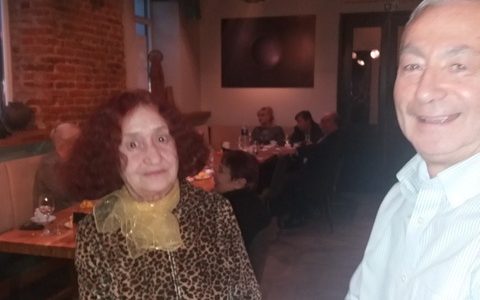
The Kaunas Jewish Community has been honoring its most active members for over two decades now. This year KJC chairman Gercas Žakas invited such members to an evening party to thank them for their sincerity, presence, communication and individual contributions of the most varied sort, including contributing homemade pastry for the Hesed Club, cakes cooked with love for various occasions, furthering traditions and the Yiddish language, honoring Holocaust victims, broadening individual horizons through excursions and cultural events, sharing memories and experience, participating at sporting events and extending a helping hand to other members of the community.

Live musical performances contributed to the fun with performances by the collective including Mihail Javič on saxophone, Arvydas Joffė on percussion, Rolandas Babraitis on keyboard and the young vocalist Viktorija. We all know small gifts can cement friendships and everyone who attended received valuable books.

Rudashevski Vilnius Ghetto Diary Presentation March 27

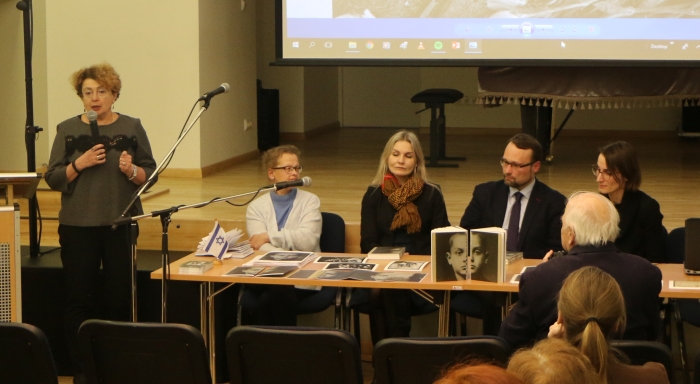
The literary monument of a fifteen-year-old chronicler of the Jewish ghetto to the suffering of the Holocaust, Yiddish culture, the will to survive and hope. For those who haven’t yet had a chance to learn about the Vilnius ghetto diary of Yitzhak Rudashevski, we invite you to come to the Lithuanian Jewish Community at 6:00 P.M. on March 27, 2018, for a public books launch. Participants: LJC chairwoman Faina Kukliansky, translator Dr. Mindaugas Kvietkauskas, designer Sigutė Chlebinskaitė, Holocaust historian Neringa Latvytė-Gustatienė. Dr. Lara Lempert will serve as moderator.

Zionist Political Aspirations

Sionistų politiniai lūkesčiai
Photo: Students and reporters from Lithuania at the 17th World Zionist Congress, Berlin, 1931

The LJC webpage is publishing a series of articles by Dr. Eglė Bendikaitė called “Zionist Priorities in the Struggle for Lite (1916-1918)” dedicated to marking the 100th anniversary of union of Zionist organizations in Lithuania. The first part was published here February 15 here.

The World Zionist Organization was established at the August, 1897, meeting of the First World Zionist Congress in Basel. Lithuanian Zionism disappeared as a subject of inquiry along with the Lithuanian Jewish community slaughtered in the Holocaust. Following Lithuanian independence more scholarly attention is being paid to the movement.

The word Zionism comes from Mount Zion, where the original Temple was built in Jerusalem. Early in Jewish history it came to serve as a synonym for Jerusalem and the Land of Israel. As a symbol of the desire to return to the Promised Land, it was an element of Jewish prayers for centuries. It was only towards the end of the 19th century it acquired a political meaning and began to stand for a social movement whose goal was to create a political home for the Jewish people in their historical homeland, in other words, to reestablish a Jewish state.

Condolences

Edmundas Ruvinas Zeligmanas passed away March 22. He was born February 25, 1931. He was a member of the Vilnius Jewish Community and the Union of Concentration Camp and Ghetto Prisoners. Our deepest condolences to his widow Janina, his daughter and all his many friends and family.

Zeligmanas was the sole survivor of the mass murder of the Jews of Šilalė. He was 10 when war broke out in Lithuania. He came from a religious family; his father was a cantor and studied at the Telzh yeshiva. Zeligmanas attended a religious school at the synagogue as a child. After losing his entire family in the Holocaust, he went on to study physics, taught physics, worked as an engineer at a counting machine factory and taught electronics at the Construction Technicum. He lived to have great-grandchildren. A frequent face at the synagogue in Vilnius while his health allowed, he was a regular member of the minyan there. May he rest in peace.

Invitation

A ceremony to unveil a memorial plaque commemorating German Jews sent to the Ninth Fort in Lithuania and murdered on November 25, 1941, will be held at 11:30 A.M. on April 13, 2018, at the Ninth Fort Memorial Complex, Žemaičių highway no. 75, Kaunas. You are invited.

Sabbath Celebration

The Lithuanian Jewish Community invites you to a Sabbath celebration with Righteous Gentile Ona Landsbergienė’s great-grandson Gabrielius Landsbergis. LJC executive director Renaldas Vaisbrodas will moderate.

The Sabbath ceremony will be held on the second floor of the LJC at 6:30 P.M. on Friday, March 23. The number of seats is limited and registration is required. Call 8 678 81514

Lithuanian Public Television Begins Righteous Gentiles Series

Lithuanian public broadcaster LRT has begun airing a series called “Righteous Gentiles,” presenting the stories of Lithuanians who rescued Jews from the Holocaust. Almost a thousand Lithuanians have now been officially recognized as Righteous Gentiles, per capita the largest percentage in any country. According to the national television broadcaster’s site, the series will tell hitherto unknown stories of Lithuanian heroism during the Holocaust.

Video and more information in Lithuanian available here and here.

Academic Ethics Ombudsman Fired for Anti-Semitism

Virgilius Sadauskas has been fired at academic ethnics ombudsman.

The Lithuanian Jewish Community welcomes this win for common sense and is grateful to the 29 MPs from the Liberal, Conservative, Social Democratic and Peasants factions for initiating a vote of confidence in Sadauskas.

The LJC feels the actions by this public servant, offering a monetary reward for collecting information “about people of Jewish ethnicity who contributed to deportations and torture,” incited ethnic discord and fall under the IHRA definition of anti-Semitism adopted by the European Parliament on July 1, 2017.

We hope this decision becomes an example of best practices in the continuing fight against anti-Semitism and other forms of hatred in our country at the national and community level.

In a secret poll, 77 MPs voted in favor of firing Sadauskas, 17 voted against and 13 abstained. Three ballots were ruined.

Abba Kovner’s 100th Birthday

Loss and renewal, the lot of victim and resistance, extermination and rebirth: these are the themes the writer Abba Kovner (1918-1987) wrote about from his own experience.

The first biography of the poet and partisan leader written by Dina Porat won the National Jewish Book Award for explaining history and bringing it to life.

Kovner was born in Oshmyani on March 14, 1918, a Lithuanian town in Belarus about 50 kilometers from Vilnius. After making aliyah to Israel following the war, he was often presented as a poet and prose writer, but Litvaks remember Kovner as a partisan leader who went on to help found the modern state of Israel.

In 1927 his parents moved the family to Vilnius and Kovner attended the Tarbut Gymansium. This building now houses the Lithuanian Jewish Community. He received a Jewish education there, including Hebrew and exposure to modern literature, and began to write poetry while in high school. In 1939 he was admitted as an auditor of classes at the Arts Faculty of Vilnius University. He engaged in illegal Zionist activities during the Soviet occupation of 1940. He became leader of the Ha-Shomer Ha-Tzair Zionist youth movement.

Plaque Commemorating Abba Kovner Unveiled at LJC

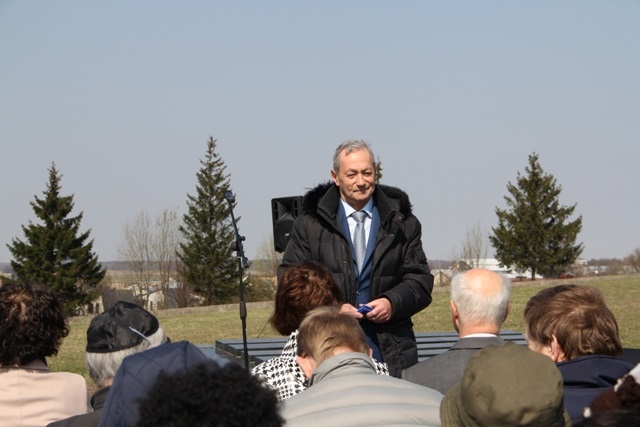
To mark the 100th anniversary of the birth of poet and Jewish partisan Abba Kovner, the Lithuanian Jewish Community March 14 unveiled a memorial plaque in his honor. The LJC is housed in the same building where Kovner attended high school until 1935, the former Tarbut Hebrew Gymnasium. The ceremony was attended by chairwoman Faina Kukliansky, fellow Jewish partisan Fania Brancovskaja and Israeli ambassador to Lithuania Amir Maimon, among others. Brancovskaja told the small gathering her memories of the Jewish leader.

A Year of the Jews without Jews?

Position of the Lithuanian Jewish Community
March 13, 2018

Today the parliament of the Republic of Lithuania is scheduled to consider announcing 2019 the Year of the Jews. What the Lithuanian Jewish Community thinks about this is apparently of interest only to members of the media, not the initiators of the Year of the Jews measure.

The writers of the measure have not consulted with the LJC, the largest Jewish organization in Lithuania, at any stage of their initiative, which compels us to question the contents of the proposed resolution and its sincerity. The laconic legislation contains nothing that doesn’t happen every other year, except for, one supposes, allocation of funding for a special commission or commissions. We hope if the measure is adopted it won’t turn into the formation of yet another commission which takes students on Holocaust “excursions” through mass graves during Sabbath.

With no prospect of learning the plans and intentions of the authors of the idea first-hand, this strange initiative looks like some sort of atavism of former times, as when Thursdays were fish day. On other days the people were not provided fish, but on the 100th anniversary of the founding of the Republic of Lithuania, is the issue of Jews really so uncomfortable and uninteresting? A whole slew of important dates for Lithuania and the Lithuanian Jewish Community are yet to come this year, including the 30th anniversary of the reestablishment of the Community; the 100th anniversary of the unification of Lithuanian Zionists, who supported Lithuanian statehood; the 75th anniversary of the liquidation of the Vilnius ghetto and the 115th anniversary of the founding of what is now Vilnius’s only working synagogue. We therefore call upon the authors of this Year of the Jews to begin that year this year, to celebrate 100th anniversary of the modern Lithuanian state together with the Lithuanian Jewish Community.

The Lithuanian Jewish Community esteems the progress of the state in solving issues topical for all of us, but political games using the Jews but not including the Jewish community are not an appropriate way to insure effective dialogue between ethnic Lithuanians and Jews.

Lithuanian Jewish Community

Pylimo g. 4
LT-01117 Vilnius
T:+370 5 261 3003
info@lzb.lt
www.lzb.lt

Hundredth Birthday of Abba Kovner

Dear members,

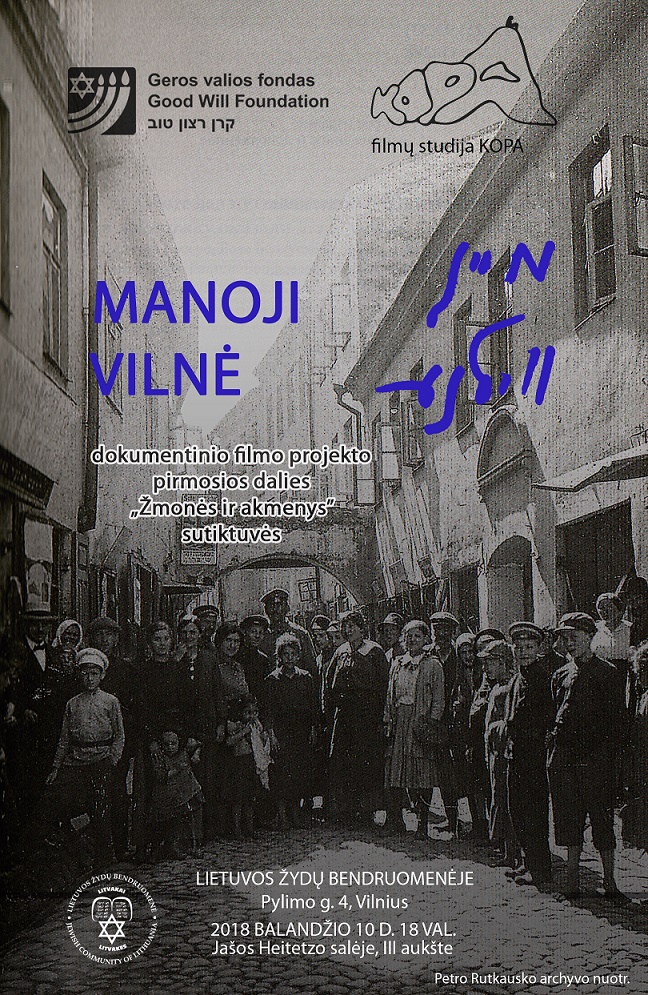
The Lithuanian Jewish Community will hold a ceremony to unveil a plaque commemorating Jewish partisan leader and poet Abba Kovner at 1:00 P.M. on Wednesday, March 14, 2018, outside the LJC conference hall on the second floor at Pylimo street no. 4 in Vilnius. Participants will include chairwoman Faina Kukliansky, Jewish partisan Fania Brancovskaja and Punchos Fridberg, who will speak about Kovner in Yiddish.

You are invited to attend a brief meeting in the conference hall following the unveiling.

Rudashevski’s Ghetto Diary Now in Lithuanian

Books link us to freedom, books connect us to the world.
–Yitzhak Rudashevski, December 13, 1942, Vilnius.

Teaching the Holocaust to children is a difficult matter. At what age is it appropriate to expose children to man’s greatest inhumanity to man and the horrible atrocities which took place throughout Europe, culminating in the calculated genocide of millions of people? The Maus comic book was one approach, but children aren’t stupid and they get the full impact of the horror anyway, despite the window dressing.

Teaching adults the Holocaust can be just as problematic. A large body of Holocaust literature including straight histories, survivors’ testimonies and even theological works, not to mention a signficant cinematic canon, can lead to burn-out quickly, the Holocaust hangover syndrome. It is too much to take in all at once, the mind rebels.

Some Holocaust commemoration projects and museums have recognized the old maxim, that a picture is worth a thousand words, and often an object–an abandoned shoe, a lost set of house keys, a broken doll–speaks louder to the soul of the visitor than any text, photograph or video.

Pakruojis Wooden Synagogue Featured on Lithuanian Public TV Culture Channel

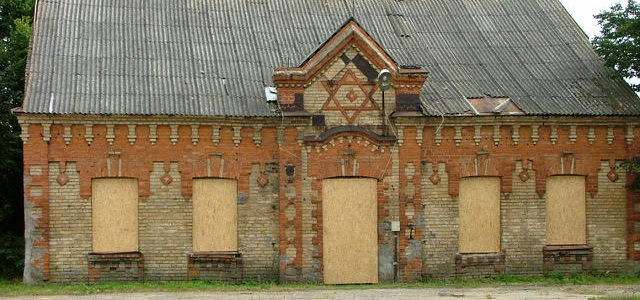
“Lithuania is slowly restoring the country’s rich legacy of synagogues. Synagogues are still standing in towns, the former shtetlakh, where not a single Jew has remained. Braver and cleverer mayors and communities, encouraged by the Lithuanian Cultural Heritage Department and the Lithuanian Jewish Community, have begun restoring what has now become the priceless Jewish legacy, wiped out by the Holocaust. The synagogues are coming back and are being used for the cultural needs of the towns.

“Lithuanian public television channel Kultūra is producing a series called Reflections devoted to heritage. On this page you will find and be able to watch a film about restored synagogues. At the beginning you will see the oldest surviving wooden synagogue in Lithuania, restored in 2017. The synagogue operated as such until World War II, when the Holocaust exterminated the Pakruojis Jewish community. The regional administration of Pakruojis has renovated the Pakruojis Jewish synagogue and adapted it for public use. The project was financed by Norway, Iceland and Liechtenstein. The restorers did great work and the interior is dominated by characteristically Jewish elements of decor and Jewish ethnic symbols, and the painting is filled with floral and faunal motifs. The former aron kodesh of this synagogue is especially decorative and impressive.

“After the Pakruojis synagogue, you will also see restored synagogues of Kaunas and Joniškis in the film”

Video program in Lithuanian here.

Yitzhak Rudashevski’s Vilnius Ghetto Diary Launched at Vilnius Book Fair

Yitzhak Rudashevski’s Vilnius ghetto diary is one of the most important testimonies to reach us from the Vilnius ghetto, an authentic eye-witness account of history as it happened. The Lithuanian Jewish Community went to extreme efforts to insure the diary finally be published in Lithuanian translation.

“I think my words are written in blood,” the young Rudaashevski wrote in his diary inscribed in school notebooks. After reaching the age of 15 in the ghetto, Rudashevski and his family were murdered in Ponar.

Chess Tourney to Celebrate 100th Anniversary of Lithuania

The Lithuanian Jewish Community hosted a chess tournament on February 25 to celebrate the 100th anniversary of the founding of the Republic of Lithuania. Chess players young and old flocked to the tournament. Tournament director and FIDE master Boris Rositsan and Lithuanian Chess Federation president Aleksandras Černovas told those who came the chess player is a person who never abandons hope. Chess player and Lithuanian MP Julius Sabatauskas, who often organizes chess tournaments in Alytus, Lithuania, attended and competed, and said he was very happy to see the Lithuanian birthday celebration at the LJC with so many people there. Former prime ministerial advisor and veteran Lithuanian journalist Vilius Kavaliauskas spoke about Litvak history and former late president Algirdas Brazauskas’s trip to Israel, during which Brazauskas made a controversial apology to the Jewish people for Lithuanian complicity in the Holocaust. Kavaliauskas accompanied PM Brazauskas on that trip and recalled how the late prime minister said Lithuania lost her greatest and brightest people to the Holocaust. Where would Lithuania be now if they had lived and worked for her future, he wondered.

Once There Lived Aizik Kanovich


Rokha (Rocha-Samuraj) and Dovid Kanovich, Solomon’s brothers Moshe-Yankel,
Aizik and Motl, sister Khava (from collections of Sergejus Kanovičius and Lisa
Abukrat-Kanovich)

by Sergejus Kanovičius

The sky was bright blue. “So clear, almost as clear as the water in the yard of our house in Jonava,” thought Aizik and closed his eyes again. A few soft snowflakes fell from the blue sky. It seemed you could count them. Like family members–snowflake Sara, snowflake Rosette, snowflake Joseph, and snowflake Bernard–one, two, three, four, counted Aizik with his eyes closed.

“Get a move on. Faster, come on, the train won’t wait for you.” One could hear the echo of insistent urging.

“Aizik, Aizik, get up, we’re almost there – one more step and we’re on the train. A little more and we’re home in Paris”, whispered Moris-Moisha Zuskind, bent over his friend, holding his hands under his armpits so they wouldn’t freeze.

In his mind, Aizik was traveling to his hometown, Jonava, and his native Žvejų street. Back to December of 1920 when he stepped over the threshold of his house and proudly announced:

Lithuanian Jewish Community Booth at Vilnius Book Fair

Lietuvos žydų bendruomenės stendas Vilniaus Knygų mugėje

The Lithuanian Jewish Community has participated with its own booth at the Vilnius Book Fair for the first time, launching a Lithuanian translation of Yitzhak Rudashevski’s Vilnius ghetto diary. The booth featured other books about Jewish history and culture published with financial help from the Goodwill Foundation. Purim treats were also passed out. Visitors were interested in the publications, but also had plenty of questions about what the Community does and Jewish culture and traditions. They shared stories from their grandparents about the latter’s childhood spent in common with Jewish children.

Translators Mindaugas Kvietkauskas and Akvilė Grigoravičiūtė signed books.