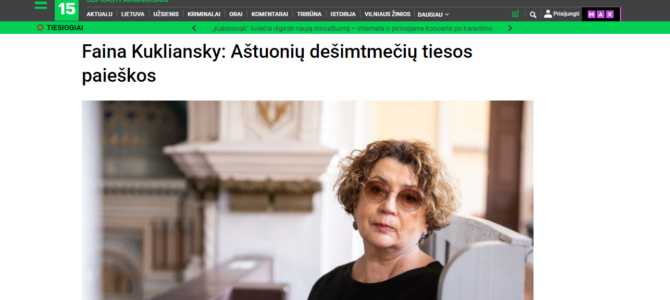
Listen to LJC chairwoman Faina Kukliansky‘s story in Yiddish and English!
Yiddish Book Center


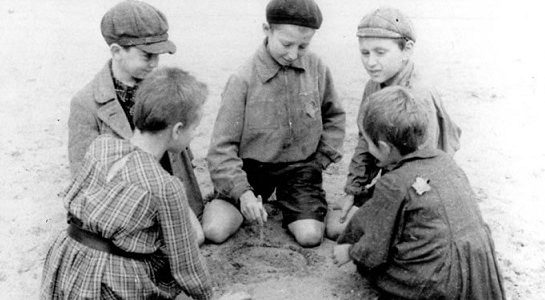
Photo: Children in Kaunas ghetto, courtesy Yad Vashem.
Today [June 15] the Lithuanian parliament adopted a resolution on commemorating the 80th anniversary of great losses and resistance to the occupations of Lithuanian by totalitarian regimes which says “After Nazi Germany occupied Lithuania, the Nazis began to carry out the genocide of the Jews of Lithuania, opening the way to mass murders and violence, leading to the loss of the larger part of the Jewish community.”
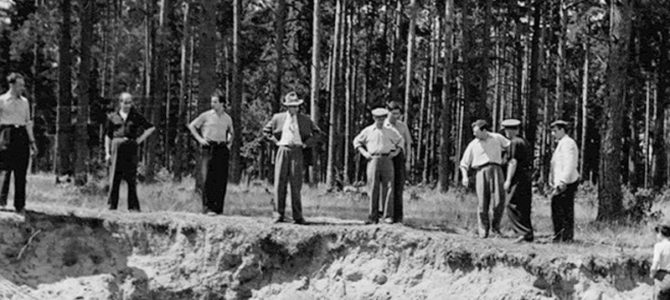
The language of the resolution is missing an essential element, a reminder that the mass murders were carried out with the aid of local collaborators. Would you like to put it more simply and clearly? There were people in the Lithuanian cities and towns who murdered their Jewish neighbors. Should we put it yet another way? There weren’t Nazi tanks and units standing by the side of the gravel pits on the forest margin, there were armed local men who fatally shot Jews lined up there, men, women and children [in Lithuania Jewish children were often murdered by smashing their heads against trees and rocks or with rifle butts in order to save ammunition–translator]. Another formulation which frightens us so much is also missing: there were Lithuanians among those who organized and physically carried out the genocide.
Does that sound horrible? But it’s the truth. The truth which is so hard to admit yet again. Perhaps the Lithuanian parliament is following the Lithuanian saying, “one teaspoon of tar ruins the barrel of honey?”
If so, it’s being misapplied, because the Lithuanian people aren’t a barrel of honey, and the Lithuanians who murdered Jews aren’t a teaspoon of tar. They are criminals who have committed crimes against humanity. A nation who can admit such people existed in its ranks is a brave and honorable nation. It’s not that their sins pass down to us, just that today’s generation is still afraid of the truth.
The Lithuanian Jewish Community had hoped the voice of the only Jewish member of the Lithuanian parliament, Emanuelis Zingeris, would be heard. He proposed amending the text of the resolution to read “the Nazis and their local collaborators.” He was not heard. Neither were the Lithuanian Jewish Community and the thousands of victims who stood before their armed neighbors, and millions of Jews and other people of goodwill around the world who are only asking for one thing, to face the truth.
Before writing this commentary, many people said: “It’s not worth raising the issue, it’s better to keep quiet, remain silent, not irritate, not sow discord.” But as Tomas Venclova said, “We should avoid descending into these scandals, but they will be inevitable as long as there are defenders of the Nazi collaborators.”
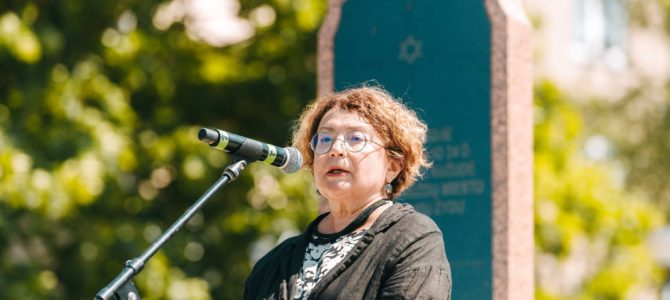
Faina Kukliansky, chairwoman
Lithuanian Jewish Community


The deportations of Lithuanian residents touched every ethnic group in the country, the Jews included. On 14 June 1941, some 3 thousand Jews were exiled from Lithuania.
In the fall of 1941, a train carrying a cargo of exiles from Lithuania rolled in to the foreign and cold city of Syktyvkar. Ravaged by famine and disease, they had travelled thousands of kilometres in tightly sealed cattle cars. Entire families would die from starvation. Those deported on orders from Joseph Stalin, the ‘Father of Nations’, included the Abramovičius family of Jews from the town of Tauragė (Taurogi shtetl): mother Taube-Leja and her three kids, the oldest son Leibas aged 12, the middle son Abramas, 8, and the youngest Aronas, just five.

June 9, 2021–European Commission president Ursula von der Leyen addressed thousands participating in the 2021 American Jewish Committee (AJC) Virtual Global Forum. She reiterated the Commission’s commitment to fighting antisemitism, fostering Jewish life, Holocaust remembrance and strong EU-Israel partnership.
“After taking office as Commission president in 2019, I stepped up Europe’s fight against anti-Semitism. This is why, later this year, the Commission will adopt its first-ever ‘EU Strategy on Combating Anti-Semitism and Fostering Jewish Life’ … All European students should learn about the Holocaust, no matter their background, family history or country of origin. … We want to foster Jewish life in Europe in all its diversity. We want to make sure that Jews are free to follow their religious and cultural traditions. … The European Commission has significantly increased the budget for preventing and addressing anti-Semitism and fostering Jewish life, and we will also take action if European money is used to call into question Israel’s right to exist.”
Full speech here.

Union of Former Concentration Camp Prisoners member Sulamita Lev celebrates her birthday June 7. She has been an employee of and volunteer at the Lithuanian Jewish Community and the LJC Social Center for many years.
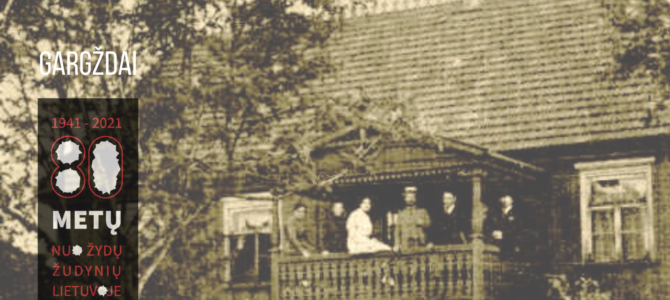
We wish her a happy birthday, much happiness and good health, strength of spirit and joy. We wish you many meaningful years to come and that you would always remain as you are, young at heart.
Mazl tov!
The newspaper Šiaulių Kraštas published the incredible story of Sulamit’s life and rescue from the Šiauliai ghetto two years ago. The text is available in Lithuanian here.

The Lithuanian Jewish Community congratulates Rūta Ribinskaitė for successfully defending and taking first place among final works for earning a bachelor’s degree at the International Relations and Political Science Institute of Vilnius University. Her work was titled “(Un)Fading Stereotypical Images of Jews: A Qualitative Analysis of the Internet News Site Delfi.lt.”
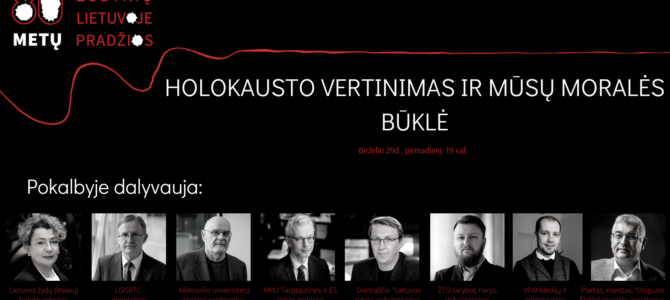
She told us: “Thank you for the opportunity to connect with the Jewish community, to acquire a lot of information, to gain experience and get to know members of the community, which led to my successful completion of studies.”
Way to go, Rūta.

Lithuanian Jewish Community chairwoman Faina Kukliansky has participated in the commission for the final supervisory assessment of work done to restore the synagogue in Žiežmariai, Lithuania. Work on the ground floor is now complete.
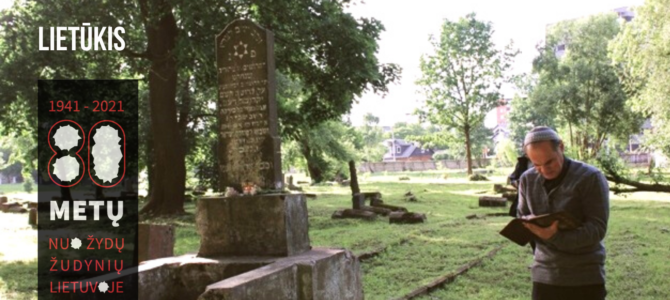
Work on the building is drawing to an end and the synagogue is set to begin hosting educational, cultural, tourist and other public activities. Following completion, it could become an important community site and tourist attraction.
Currently the synagogue is hosting an exhibit of reproductions of drawings by Dora Pilianskienė. She came from Žiežmariai and as a young Jewish woman left her hometown, but at an advanced age began drawing and painting images she cherished from Žiežmariai. Her relatives have bequeathed her works to the Žiežmariai Culture Center.

/Translation from the Lithuanian language/
Fresh at the GRRCL’s helm, Bubnys opens about the connection between the June Uprising and the Holocaust, Noreika’s personality, and historic truth
‘There is no such thing as the absolute historic truth. And I do not believe there can be any on principle,’ said Arūnas Bubnys, the new head of the Genocide and Resistance Research Centre of Lithuania (GRRCL). In his interview with the LRT.lt portal he also spoke about the challenges the Centre had faced, and the plans to boost the GRRCL’s prestige.
Bubnys did not have an easy accession to the post of the GRRCL’s director. After a conflict with the staff that had ran for a few months, Adas Jakubauskas, the Centre’s director for nine months, was fired in early April. The Parliament approved this decision by a majority vote, however Bubnys’s nomination as the new head was immediately met with allegations from the parliamentary opposition.

United States representative Brad Sherman (D, Sherman Oaks, California) has asked the Lithuanian ambassador to the United States for clarification regarding claims by the Lithuanian Government the pro-Nazi prime minister in the Lithuanian Provisional Government of 1941 was somehow exonerated by the Congress in the 1970s.
Congressman-Sherman-to-Ambassador-Plepyte-Letter-Response1Correspondence leading to the latest letter:

Dear Community members,
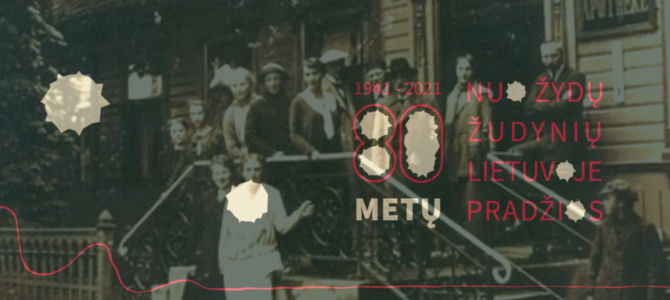
This year we’ll mark the 80th anniversary of the onset of the Holocaust in Lithuania. The Lithuanian Jewish Community is creating a digital chronicle to help the broader public understand how Litvaks lived before the Holocaust and what happened to their communities beginning in 1941.
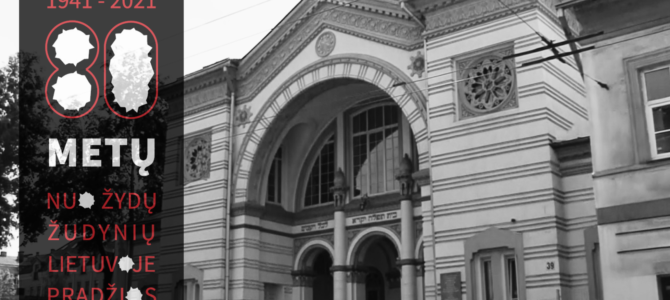
We are asking you to share the stories and photographs of your relatives who lived in the Lithuanian shtetls and died in the mass murders in 1941 or the years following.
Everyone is invited to participate by sending copies of photographs and short texts including biographies and descriptions of murders to info@lzb.lt or zanas@sc.lzb.lt
Please indicate the names of people in photographs, locations and dates if available.

Happy birthday to Fania Brantsovskaya, our living link with former Lithuania before the Holocaust. A Jewish partisan, she kept fighting after the war, educating generations about the truth of what happened. Most of us at a certain age in adulthood begin to slow down, to rise more slowly from our chairs, to walk more cautiously. Fania never did. She still walks with a spring in her step as if she were a teenager, with a smile for everyone and ready to talk to anyone without regard for social status. Happy birthday, Fania. Mazl tov! Bis 120!
We are ad to report the death on May 13 of long-time member Lidija Kazmina. She was born in 1927. We extend our deepest condolences to her children and grandchildren.

The renovated synagogue in Žiežmariai will become a new cultural center. The first synagogue in appeared sometime between 1690 and 1696. In the 19th century there three synagogues. Not surprising, since the majority of the population were Jewish. This synagogue which has survived and has now been renovated stands in the southern part of town between Vilniaus and Žalgirio streets, with the Strėva river flowing from southeastward from there. This synagogue was build in the mid-19th century and is one of only a handful of surviving wooden synagogues in Lithuania.
The plan is to use the refurbished synagogue to host cultural exhibits and events.
“At first there was doubt the synagogue could even be saved. It was so abandoned and ruined. Even so, we resolved to renovate it and now we are very proud we have such a beautiful building,” director of the Strategic Planning and Investment Department of the Kaišiadorys Regional Administration Ramutė Taparauskienė said.

Members of the Šiauliai Regional Jewish Community remembered the victims of World War II on May 9. Thank you to all the heroes who fought the Nazis from 1939 to 1945 for the sake of freedom and peace, for our future and for the opportunity given us today to take joy in each new day.

Lithuania’s Orwellian-named Center for the Study of the Genocide and Resistance of Residents of Lithuania, more commonly abbreviated to Genocide Center, lived up to their reputation of ignoring the Holocaust by reportedly issuing a special computer-graphic propaganda poster on facebook May 8, presented below with a translation into English.

Translation:
The Work of the Red Liberators
[photos of corpses, coffins and a Soviet train]
The End of World War II in Europe on May 8
The Red Liberators Liberated Europe and the Baltic States, and This is What Their Liberation Brought Lithuania:
20,000 murdered partisans
110,000 deported Lithuanians
The self-immolation of Romas Kalanta
500 arrested during the Kaunas Spring
14 Lithuanians murdered on January 13
7 officials murdered at the Medininkai border post
World War II ended in Europe on May 8.
After Germany surrendered unconditionally
the Soviets marched into Berlin on May 9
and proclaimed to the entire world “Victory Day” which for many
countries including Lithuania brought only fear,
pain and death.


On May 9, Israel will celebrate Yom Yerushalayim. Tell us more about this day and its significance.
Prior to the founding of the State of Israel, Jerusalem had different rulers, but it was always part of the prayer and the identity of the Jewish people. We have always called Jerusalem our eternal capital.
All the synagogues of the world are built in such a way that the prayers are directed towards Jerusalem, and during our two most important festivals–Pesach and Yom Kipur—we wish to meet each other in Jerusalem next year. Today, Jerusalem is also mentioned in our anthem: “The Land of Zion and Jerusalem” (in Hebrew, Zion is used as a synonym for the city of Jerusalem and the land of Israel).
On June 27, 1967, Israel won the Six-Day War and regained its historic capital, Jerusalem, which was later recognized as the official capital of Israel by the country’s parliament. Twenty years later, on the 28th day of the month of Iyar in 1998, Yom Yerushalayim was declared a public holiday.

Lithuanian Jewish Community chairwoman Faina Kukliansky personally visited World War II veterans in their homes to congratulate them on Victory Day. There are only six such veterans known to be resident in Vilnius. Warm wishes and congratulations to RIva Spiz, Aleksandr Asovski, Boris Lipnicki, Fania Brantsovksaya, Eliziejus Rimanas and Tatyana Arkhipova-Efros.
Holocaust survivor and historian and Jewish partisan Yitzhak Arad died May 6 at the age of 95 in Israel. He was one of the founders and the first director of the Yad Vashem memorial institute in Jerusalem. He also achieved the rank of brigadier general in the IDF. He was born in Švenčionys (Shventsian), Lithuania, in 1926, moved with his parents to Warsaw and escaped back into Lithuania with his sister at the onset of World War II. He escaped the Švenčionys ghetto and joined partisans in the forests in Belarus. In 1945 he went to Israel where he fought in four wars and was later appointed director of military education. He served in the Israeli military for 25 years and was appointed to head Yad Vashem in 1972. He earned a doctorate at Tel Aviv University and taught Jewish history, authoring numerous books about the Holocaust.
Our deepest condolences to his family and friends for their loss.

Brussels, December 2, 2020–European Jewish Congress president Moshe Kantor applauds the European Union Council Declaration on mainstreaming the fight against anti-Semitism across policy-areas, adopted unanimously by EU member states.
“This is an important decision, one that appreciates the sad growth of anti-Semitism and how it not only targets Jews, but is corrosive for any society,” Kantor said. “The EU firmly states that anti-Semitism is against European values and commits itself to a holistic program to eradicate it from the continent.”
“We are delighted that our strong message that fighting anti-Semitism robustly at all levels, that we have consistently delivered in our meetings and activities, is received.”
“The declaration adopted by the German presidency of the Council affirms several principles, including that anti-Semitism is an attack on European values, that protecting Jewish life and making it more visible as part of Europe’s identity is essential and that it is necessary to combat anti-Semitism head-on in all its forms, including in the context of the COVID-19 pandemic.”
“The importance that the EU is placing on protecting and emboldening Jewish life is also very important,” Dr. Kantor continued. “Jews have been a part of Europe for millennia and continue to contribute at all levels, so it is very gratifying to hear that our leaders will ensure that Jewish life will not only be protected but making it more visible.”

The Lithuanian internet news site 15min.lt is reporting what everyone already knew: the new head of Lithuania’s so-called Genocide Center, appointed by secret ballot in the Lithuanian parliament following an internal power struggle, will maintain the status quo at the state institution whose mission is commemorate the alleged genocide of Lithuanians under the Soviets, not the genocide of the Jews in the Holocaust.
Arūnas Bubnys in the 15min.lt interview maintained the party line formed and maintained by the Center for the Study of the Genocide and Resistance of Residents of Lithuania over the last three decades: Lithuanian heroes such as Jonas Noreika are sensitive, tortured and complicated individuals who cannot be judged one way or another. In other words, you still can’t call Lithuanian Nazis Nazis at Lithuania’s new and improved but still fake Genocide Center.
Full propaganda interview in Lithuanian here.