Holocaust

Jurbarkas Jewish Community: Signs and Memories

Jurbarko žydų bendruomenė: ženklai ir prisiminimai

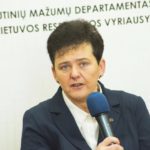
Leading tours of Jurbarkas, Nijolė Paulikienė tells tourists about Jews as well, because it is impossible to leave out the story of people who lived here for centuries. The guide gets her information from books and from Jurbarkas old-timers.

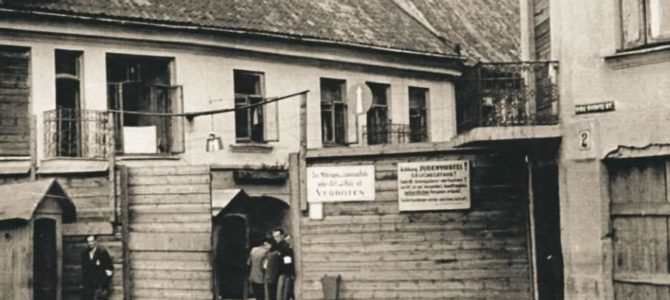
The large Jewish community who lived in Jurbarkas are now only commemorated on Kauno street, formerly called Didžioji and Vilniaus streets, where there are signs about genocide locations and graves. When Israeli ambassador Amir Maimon visited our town in June, Jurbarkas residents began to recall the legacy of the Jewish community more intently. At the end of October Israel Day events will be held at the public library, and there are plans for sites in the town to commemorate the memory of the Jews.

Guide and teacher Nijolė Paulikienė has much she can say about the Jews of Jurbarkas. She even dreams of setting up a Jewish museum there and is actively charting the vision for that museum. Individual old-timer residents of Jurbarkas still have memories of the Jews in the card-catalogs of their memories, as do the streets covered over in asphalt and the repainted façades of the Old Town. Before World War II Jews accounted for 42% of the population of Jurbarkas, but after the war only 76 were still alive.

Full story in Lithuanian here.

Academic Conference at Ninth Fort in Kaunas

The Ninth Fort Museum in Kaunas is holding an academic conference called Lokalinė Holokausto raidos analizė nacių okupuotuose Rytų ir Vakarų Europos valstybėse [Local Analysis of the Development of the Holocaust in the Nazi-Occupied States of Eastern and Western Europe]. The conference is scheduled for October 27 and 28 at the Best Baltic Kaunas Hotel, Mickevičiaus street no. 28, Kaunas.

“Shameful” House of Lords Event Condemned after Audience “Blames Jews for Holocaust”

by Marcus Dysch

The Israel Embassy in London has condemned an event at the House of Lords at which audience members compared Israel to Daesh terrorists and suggested Jews were to blame for the Holocaust.

One man said Zionism was a “perversion of Judaism,” and then implied an American rabbi had provoked Hitler into murdering six million Jews in the Shoah, using quotes reportedly taken from a neo-Nazi website.

Another speaker is shown announcing, to applause: “If anybody is antisemitic, it’s the Israelis themselves.”

Full story here.
tjc

Romania to Open First State-Run Jewish Museum

Set to open in Bucharest in 2018, the museum will focus on Europe’s third-largest Jewish community before the Holocaust

AFP


An honor guard soldier stands during a ceremony at a Jewish cemetery in Bucharest, Romania in February 2012, next to a monument bearing the names of Romanian Jewish refugees killed in 1942 aboard the SS Struma. Around 792 people drowned after the ship was struck by a Soviet torpedo (AP Photo/Vadim Ghirda)

Romania, which denied its role in the Holocaust for years, is to open the first state-run museum dedicated to the country’s Jewish community, once one of the largest in Europe before World War II.

The museum, due to open in 2018 in the capital Bucharest, will focus on the persecution of Jews and the Roma, said Alexandru Florian, the director of the National Institute for the Study of the Holocaust.

Cultural Historian Violeta Davoliūtė: Deportations to Siberia Were Lithuanianized, Catholicized

diskusija-apie-radikaliojo-nacionalizmo-nuotaikas-lietuvoje-51388c8860434-694x480

by Jūratė Juškaitė
manoteises.lt

Historians reckon about 17,000 people were deported from Lithuania during the first Soviet occupation. Cattle cars were sent deep into Russia from June 14 to June 18, 1941, and many of the deportees didn’t survive the first winter. Most people in Lithuania know these facts well, but June of 1941, often called the tragedy of the Lithuanian people, isn’t all that Lithuanian.

Research recently performed by cultural historian Violeta Davoliūtė soon to appear in the book “Population Displacement in Lithuania in the Twentieth Century” (Brill, 2016) attempts to bring the experiences of deported Lithuanian Jews back into collective memory regarding those days in June. The researcher says the narrative of deportations formed during the push for Lithuanian independence in the late 80s and early 90s contained ethnocentric elements and was often too “Catholicized.” Although the official politics of memory seem complicated if only for the widespread “Jewish Communist” stereotype, Davoliūtė says these and similar stereotypes have failed to divide this group of deportees, which is a tight-knit community based on shared experience.

In a recent discussion historian Dr. Arvydas Anušauskas was the first to call the 1941 deportations multiethnic. Why are they called this?

Ethical Will of Leonidas Donskis: Kaddish for Butrimonys

img_17_105
photo courtesy Milda Jakulytė-Vasil

In line with the expressed wish of the recently deceased Lithuanian philosopher and author Leonidas Donskis, a group will assemble in the Lithuanian town of Butrimonys Sunday, October 23, to say kaddish for the Jewish community murdered there in 1941.

“I would be happy, if while I am still alive, something similar would happen in Butrimonys… I feel a moral obligation to say kaddish there with Jews,” Donskis said in an interview on Delfi TV on July 31, 2016. The interview in Lithuanian is available here.

Kaddish will be performed by Lithuanian Jewish opera soloist Rafailas Karpis.

Time: 3:00 P.M. to 4:00 P.M., Sunday, October 23, 2016
Location: Jewish mass grave site in Butrimonys, Lithuania

Israeli Embassy to Present Awards to 3 Lithuanian Righteous Gentiles in Kaunas

The Israeli embassy in Vilnius is holding a ceremony to honor and award three Righteous Gentiles October 21 in Kaunas. The ceremony will confer the Yad Vashem title of Righteous among the Nations upon Antanas Blažaitis (1897-1949), his wife Adelė Blažaitienė (1903-1988) and their daughter Valentina Eugenija Blažaitytė Liutikienė (1927-1993). The Yad Vashem medals and certificates are being awarded posthumously and will be accepted by their children, grandchildren and great-grandchildren. The ceremony is scheduled for 1:00 P.M. on Friday, October 21, at the Kazys Grinius Pre-Gymnasium, Šiaurės prospect No. 97, Kaunas. Those who wish to attend should contact the Israeli embassy before October 20, telephone +370-5-2502510, fax +370-5-2502555, email press@vilnius.mfa.gov.il

Sara Lapickaja Has Died

Netekome Saros Lapickajos

Following prolonged illness Sara Lapickaja, 79, died in Ashdod, Israel, on October 11, 2016. An active former member of the Lithuanian Jewish Community, she was also a Yiddish language and literature expert and a held a doctorate in philology. The Lithuanian Jewish Community express our deepest condolences to her surviving family and relatives.

Sara Lapickaja was born in Kaunas on June 14, 1938. She and her 10-year-old brother managed to escape the Holocaust and flee to Russia without their parents, where they were sheltered at an orphanage in the Kirov oblast. Lapickaja was in the first class of the Vilnius Jewish School in 1945, but the school was shut down within several years and she transferred to a Russian school, then graduated from the Vilnius Music School where she received a degree in choir conduction. She taught high school in Vilnius and Kaunas until 1988 while devoting much of her energy to the Jewish community, setting up an amateur volunteer choir which she conducted and helping establish the Jewish kindergarten in Vilnius, among other things.

In 1988 with help from the Lithuanian Jewish community she travelled to Israel on a Soviet passport to study at Bar-Ilon University. In Israel she devoted herself to Yiddish language and literature and earned a master’s degree, then furthered her education in St. Petersburg, Russia, where she successfully defended her doctoral thesis, “Ber Gelpern: Editorial and Educational Work” in 1997. She taught Yiddish language and literature in Israel for many years at Bar-Ilon and other institutes of higher learning.

She had a deep and significant relationship with Vilnius’s famous writer Abraham Karpinovich who wrote in Yiddish. They often attended conferences together, including in Vilnius. Karpinovich devoted much of his creative fervor to Jewish life in interwar Vilnius and after his death in 2004 the Vilna Gaon State Jewish Museum set up a special room in his name containing much of his archives and other items.

Everyone who knew Sara loved her and we will remember her goodness, sincere and open nature and her goal of being useful to her people.

Let her rest in peace in the Land of Israel.

Panevėžys Jewish Community Visits Auschwitz, Birkenau

Panevėžio miesto žydų bendruomenė lankosi Aušvico ir Birkenau koncentracijos stovykloje

There were many events to commemorate the Holocaust in September at the Panevėžys Jewish Community. In August members of the Panevėžys Community took part in ceremonies marking the anniversary of the destruction of the Jewish communities of Biržai, Kupiškis and Rokiškis.

The series of commemorations of victims ended on September 30 with a trip to Poland where Panevėžys Jewish Community members visited the Auschwitz and Birkenau concentration camps.

During the trip Panevėžys Jewish Community members heard many tragic stories about the events of the World War II era. The tours of the death camps Auschwitz and Birkenau deeply affected children and parents. Over 1.5 million Jews, Russians, Roma and people of other ethnicities were murdered there. The Nazis murdered prisoners in the gas chambers and burnt the bodies of their innocent victims in the furnace.

The Nazi Hunter: Holocaust Collaborators Can No Longer Be Excused

warsawghetto061016
German soldiers search the belongings of Jews rounded up in the Warsaw ghetto after the uprising in 1943. This year Europe remembers the 75th anniversary of the beginning of the Holocaust (Getty)

By Efraim Zuroff @EZuroff
Thursday, October 6, 2016

Dr Efraim Zuroff is one of the world’s foremost Nazi hunters, as well as a renowned Holocaust historian.

Here, in his first article for talkRADIO, he talks about the widespread refusal to admit the Nazis didn’t act alone

This summer and autumn, we mark the 75th anniversary of the beginning of the systematic murder of European Jewry by the Nazis and their local collaborators in the areas which were then part of the Soviet Union.

The murders were carried out individually by shooting, and the names of places like Ponar, Fort IX, Rumbula, and Babi Yar became bywords for Holocaust atrocities.

Although the historical record of these crimes is crystal clear, and the identity of the perpetrators well-known, the new democracies of Eastern Europe are having great difficulties in admitting that it was not only Germans and Austrians who carried out these atrocities, but that their nationals also played an important role in implementing the Final Solution.

Lithuanian Prime Minister Sends Birthday Greetings to Markas Petuchauskas

Premjeras sveikina Marką Petuchauską jubiliejaus proga

Lithuanian prime minister Algirdas Butkevičius has sent birthday greetings to art history and theater scholar Markas Petuchauskas on the occasion of his 85th birthday.

“You are an important creator of the cultural history of Lithuania and have dedicated many years of your life to the study of art and art history, and especially the development of our theater. Led by mature wisdom and relying upon your wide erudition, you have revealed to us the unique nature of works by famous artists and have painted detailed and colorful pictures of celebrated personalities. You have always been a person of wide horizons and constructive dialogue, and therefore have contributed much to the understanding and to the good cooperation between the Jewish and Lithuanian peoples.

“I sincerely thank you for your great contribution to the spiritual fortification of our state and enrichment of cultural life,” the Lithuanian prime minister said in his birthday greeting.

Book about Lithuanian Public Figure Irena Veisaitė Launched in Paris

Paryžiuje pristatyta knyga apie Lietuvos visuomenės veikėją I. Veisaitę

The Lithuanian embassy in Paris hosted the launch of Yves Plasseraud’s new biography in English, “Irena Veisaitė: Tolerance and Involvement,” October 3. Lithuanian ambassador to France Dalius Čekuolis spoke and said he was happy to have the opportunity to present a French author’s book in English about a noble Lithuanian person who has inspired and set an example of tolerance, and who is an active champion of European values.

The presentation was followed by a discussion with the author, academic and attorney Yves Plasseraud, and the guest of the evening, Irena Veisaitė herself, professor of literature, drama critic and human rights activist. The discussion was moderated by professor Šarūnas Liekis, dean of the Political Science and Diplomacy Faculty at Vytautas Magnus University in Kaunas. Veisaitė’s daughter Alina also attended with her son and friends.

Veisaitė, born in Kaunas in 1928, is a well-known public figure in Lithuania, a celebrated scholar of the theater, a professor of literature, one of the founders of the Lithuanian Open Society Fund and a member of the Lithuanian national UNESCO commission from 1999 to 2007. She is a member of numerous international and national NGOs and has received many awards and distinctions in Lithuania and other countries. Veisaitė has consistently emphasized the need for dialogue and tolerance even in the most difficult situations life has to offer in all her work.

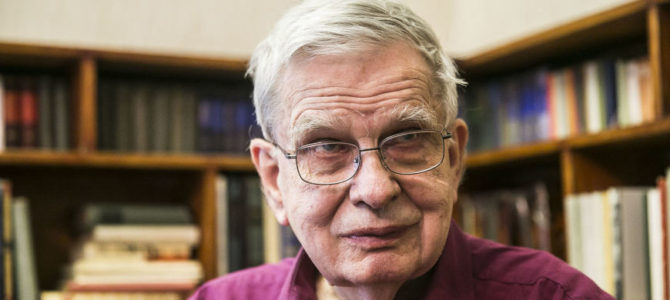
Happy 85th Birthday to Markas Petuchauskas

The Lithuanian Jewish Community wishes professor habil. Markas Petuchauskas a happy 85th birthday! The doctor of art history has written many books on theater and drama over many years.

We wish him continuing health, continuing creativity and hope for another of his wonderful books. Let’s all wish him inspiration, success and love.

Today Markas Petuchauskas is the only person who can speak with real authority about the Vilnius ghetto theater which operated in 1942 and 1943. He was a ghetto prisoner and miraculously survived, as did his mother, after being rescued by good people. For many years he has sought to renew the interrupted dialogue between Lithuanians and Jews, which, he says, is best understood through art.

Happy Birthday! Mazl tov! May you live to 120!

Holocaust Commemoration in Švenčionys

Spalio 2 d. Švenčionyse vyko renginiai, skirti atminti 75 m. sukakčiai nuo Holokausto pradžios

The tradition of gathering and remembering the Jewish victims of the mass murder in Švenčionys on the first Sunday in October has been followed for many years. Jews from around the world and local residents gather to mark the tragic occasion and bow before the mass grave. Israeli ambassador to Lithuania Amir Maimon was there this year on October 2, as were Švenčionys regional administrator Rimantas Klipčius, Ethnic Minorities Department to the Lithuanian Government senior specialist Aušra Šokaitienė, Vilnius Sholem Aleichem ORT Gymnasium principal Miša Jakobas, Švenčionys regional administration commissioners, members of the Jewish community and students.

Wreaths were laid and candles lit at the Menorah monument to the victims of the Švenčionys ghetto at 11:00 A.M. in the Švenčionys city park. The victims were then remembered at the military base where they were massacred in the village of Platumai in the Švenčionėliai aldermanship.

The Holocaust Wound That Never Heals in the History of the World

by Algis Jakštas, Švenčionių kraštas

We will probably never find an answer to why expressions of mass genocide [sic] keep repeating in human history, why people are murdered for their ethnicity, race and religion. A few years ago as I watched the film Salt of the Earth (2014) about the photographer Sebastião Salgado who has spent many years photographing genocide committed around the world at the end of the 20th and in the early 21st century, I recalled the Holocaust carried out by fascists against the Jewish people as well. I have spoken many times with Moise Preis who lives in Švenčionys and who passed through all the brutality of the ghettos and concentration camps and through a miracle survived. Sometimes as I listened to his stories I found it hard to even imagine how a person could bear such atrocities and survive, and preserve his humanity.

Aerial Daredevil Senior Rescued Jews in Youth

Sparnuotas senjoras, jaunystėje gelbėjęs žydų gyvybes

Vladas Drupas, a Kaunas resident who saved ten lives during the Holocaust, doesn’t consider himself a hero at all. It was like pulling teeth to get him to remember the events of 1943 and 1944 in Šiauliai and the surrounding area where a battle took place in secret from the Germans for the survival of individual Jews and their families.

Rescuer and Pilot

This year as the 75th anniversary of the Holocaust in Lithuania was marked there were many events, monuments were unveiled, mass murder sites were marked, rescued Jews and their rescuers were interviewed and 50 people were honored at the President’s Office (most of them posthumously). There are lists in the archive of the Department of the Righteous at the Vilna Gaon State Jewish Museum of hundreds of well-known teachers, doctors, attorneys, writers, musicians, professors, servants, priests, monks, farmers and people from other professions. These include Šiauliai gymnasium student Vladas Drupas who rescued ten Jews from destruction.

This 94-year-old Kaunas resident even now is surprising for his courage. As Lithuania’s oldest aerobatic pilot, several weeks ago he spent a half hour at the Pociūnai airport diving in the sky with his one-seat airplaine.

Full story in Lithuanian here.

WJC President: We Must Never Forget Babi Yar Massacre

Babi Yar: Kodėl Holokausto aukų atminimo išlieka svarbus?
by Menachem Rephun

World Jewish Congress leaders recently visited Ukraine in connection with the 75th anniversary of the Babi Yar massacre, in which over 33,000 Jews were murdered by the Nazis in 1941.

“Babi Yar is one of the most infamous pieces of ground in the entire world,” World Jewish Congress leader Ronald Lauder said. “Tens of thousands of our people were killed there for only one reason: because they were Jewish.”

Lauder noted Ukrainian collaboration with the Nazis to murder Kiev’s Jews.

“While Babi Yar was organized by the Nazis, there were willing helpers in the Ukrainian militia,” Lauder said. “This happened all across Europe. In almost every occupied country, local people helped the Germans round up their Jews.”

NCSEJ in Ukraine: Remembering Babi Yar

babi-yar

KIEV, UKRAINE September 29, 2016–Today the National Coalition Supporting Eurasian Jewry (NCSEJ) joined with government leaders from the U.S. and Europe and members of the Jewish community from around the world at an official ceremony to remember the 1941 massacre of Jews by Nazi forces at the Babi Yar ravine in Kiev, Ukraine.

A delegation of over twenty NCSEJ officers and board members traveled to Ukraine this week to participate in the ceremony and attend commemorations relating to the Babi Yar anniversary.

Babi Yar Anniversary Marked in Ukraine

babi-yar

The Ukraine Thursday marked the 75th anniversary of the murder of about 34,000 Jews during the Holocaust in a Kiev suburb.

The Babi Yar mass murder site is a ravine in the capital Kiev and has been subject to intense controversy within the Ukraine about the role Ukrainians played in the Holocaust.

Story in Lithuanian here.

Lithuanian Jewish Community Position on the Reconstruction of the Great Synagogue in Vilnius

The following is an official letter sent by the Lithuanian Jewish Community to concerned government agencies.

September 27, 2016

To:
Remigijus Šimašius
mayor, city of Vilnius

Alminas Mačiulis
Government chancellor

Šarūnas Birutis
minister of culture

Linas Linkevičius
minister of foreign affairs

Diana Varnaitė
director, Cultural Heritage Department under the Ministry of Culture

On the Reconstruction of the Great Synagogue

As public interest has grown recently in the history and cultural legacy of Lithuanian Jews (Litvaks) and specifically regarding artifacts uncovered at the site of the Great Synagogue in Vilnius, we feel it our duty to again present our view, that of the Lithuanian Jewish Community, regarding the issue of the conservation of surviving parts and the possible reconstruction of the Great Synagogue, a building with extraordinary significance to the Lithuanian and the global Jewish community.

As we have said before many times, we support all meaningful initiatives to preserve, protect and commemorate the legacy and heritage of the Jews of Lithuania, but we do not support unreasonable projects to rebuild non-existing buildings which are carried out in the name of Jews. It seems that is what we are facing again in the idea developing over many years by certain government institutions and possibly including hidden business structures to rebuild the Great Synagogue complex in Vilnius.

In 2015 the municipal government enterprise Vilniaus Planas was commissioned by the municipality’s Urban Development Department to prepare draft construction proposals for a memorial to the Great Synagogue under pre-project proposals submitted by the architect Tzila Zak. The terms of reference of the planning task itself revealed the client’s attitude towards the rebuilding of the Great Synagogue as an attractve real estate development project: the primary task presented to planners was to submit a list of the buildings proposed for rebuilding, to name the rooms and premises slated for reconstruction and to calculate floor space.