
History of the Jews in Lithuania

Litvak Nobel Prize Winner Bernard Lown Commemorated in Utena

Litvak Nobel Prize Winner Bernard Lown Commemorated in Utena

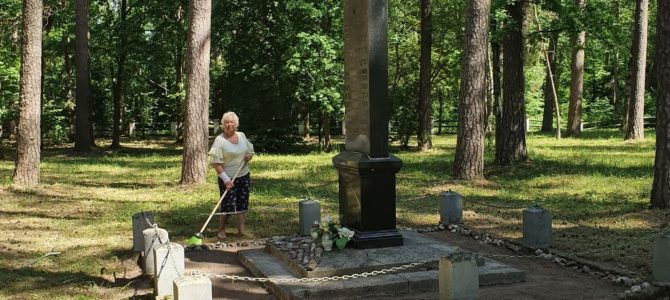
The city of Utena in northeast Lithuania has a new piece of public art, a bronze heart, to recall the birth there of Bernard Lown, Nobel prize winner and famous cardiologist who invented the defibrillator.

The statue comes as part of a project by cultural historian Sandra Dastikienė called “Old Neighbors” intended to bring public attention to the Jewish community’s legacy in the Utena region.

“To heal communication between the Lithuanian and Jewish peoples, we have to start at the grassroots level, from the culture of the small towns or shtetls, where both separate communities lived together in peace for centuries. It was that, namely neighborliness, that I want to emphasize with my project in Utena, Anykščiai, Molėtai and Dusetos,” Dastikienė said.

Lown was born in Utena on June 7, 1921, to a family of Jewish merchants. Fearing growing anti-Semitism and seeking a better life for their children, his parents took the family to the USA in 1935. Bernard Lown studied medicine there and was graduated in 1945. He passed away earlier this year in February at the age of 99.

Happy Birthday to Sulamit Lev

Happy Birthday to Sulamit Lev

Union of Former Concentration Camp Prisoners member Sulamita Lev celebrates her birthday June 7. She has been an employee of and volunteer at the Lithuanian Jewish Community and the LJC Social Center for many years.

We wish her a happy birthday, much happiness and good health, strength of spirit and joy. We wish you many meaningful years to come and that you would always remain as you are, young at heart.

Mazl tov!

The newspaper Šiaulių Kraštas published the incredible story of Sulamit’s life and rescue from the Šiauliai ghetto two years ago. The text is available in Lithuanian here.

Congratulations to Rūta Ribinskaitė on Earning Her Bachelor’s Degree

Congratulations to Rūta Ribinskaitė on Earning Her Bachelor’s Degree

The Lithuanian Jewish Community congratulates Rūta Ribinskaitė for successfully defending and taking first place among final works for earning a bachelor’s degree at the International Relations and Political Science Institute of Vilnius University. Her work was titled “(Un)Fading Stereotypical Images of Jews: A Qualitative Analysis of the Internet News Site Delfi.lt.”

She told us: “Thank you for the opportunity to connect with the Jewish community, to acquire a lot of information, to gain experience and get to know members of the community, which led to my successful completion of studies.”

Way to go, Rūta.

LJC Chairwoman Faina Kukliansky Part of Žiežmariai Synagogue Supervisory Assessment Commission

LJC Chairwoman Faina Kukliansky Part of Žiežmariai Synagogue Supervisory Assessment Commission

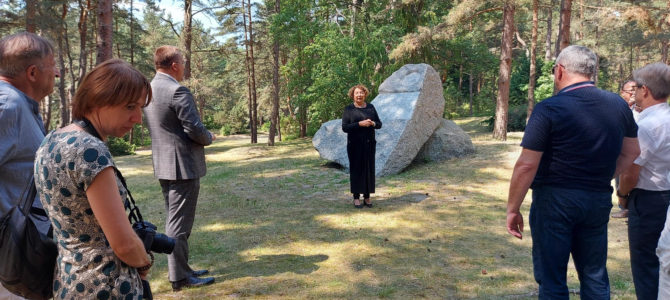
Lithuanian Jewish Community chairwoman Faina Kukliansky has participated in the commission for the final supervisory assessment of work done to restore the synagogue in Žiežmariai, Lithuania. Work on the ground floor is now complete.

Work on the building is drawing to an end and the synagogue is set to begin hosting educational, cultural, tourist and other public activities. Following completion, it could become an important community site and tourist attraction.

Currently the synagogue is hosting an exhibit of reproductions of drawings by Dora Pilianskienė. She came from Žiežmariai and as a young Jewish woman left her hometown, but at an advanced age began drawing and painting images she cherished from Žiežmariai. Her relatives have bequeathed her works to the Žiežmariai Culture Center.

US Rep: Quisling Lithuanian PM Brazaitis Wasn’t Exonerated or Rehabilitated

US Rep: Quisling Lithuanian PM Brazaitis Wasn’t Exonerated or Rehabilitated

United States representative Brad Sherman (D, Sherman Oaks, California) has asked the Lithuanian ambassador to the United States for clarification regarding claims by the Lithuanian Government the pro-Nazi prime minister in the Lithuanian Provisional Government of 1941 was somehow exonerated by the Congress in the 1970s.

Congressman-Sherman-to-Ambassador-Plepyte-Letter-Response1

Correspondence leading to the latest letter:

Help Mark the 80th Anniversary of the Beginning of the Holocaust in Lithuania This Year

Help Mark the 80th Anniversary of the Beginning of the Holocaust in Lithuania This Year

Dear Community members,

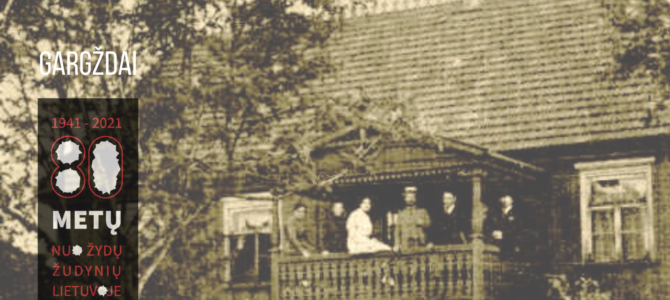
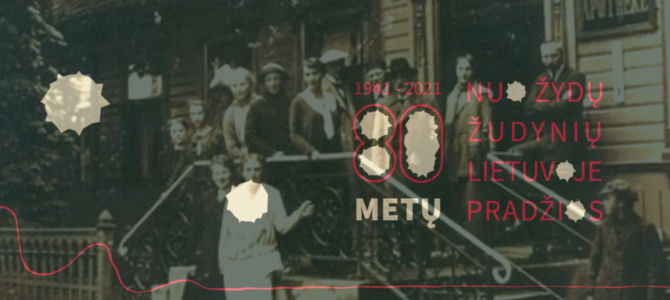
This year we’ll mark the 80th anniversary of the onset of the Holocaust in Lithuania. The Lithuanian Jewish Community is creating a digital chronicle to help the broader public understand how Litvaks lived before the Holocaust and what happened to their communities beginning in 1941.

We are asking you to share the stories and photographs of your relatives who lived in the Lithuanian shtetls and died in the mass murders in 1941 or the years following.

Everyone is invited to participate by sending copies of photographs and short texts including biographies and descriptions of murders to info@lzb.lt or zanas@sc.lzb.lt

Please indicate the names of people in photographs, locations and dates if available.

From Lazdijai to Hollywood: The Achron Phenomenon

From Lazdijai to Hollywood: The Achron Phenomenon

“From Lazdijai to Hollywood: The Joseph Achron Phenomenon” is a lecture celebrating Joseph Achron’s 135th birthday.

Joseph Achron (or Akhron, 1886-1943), the violin prodigy and composer born in Lazdijai, Lithuania, charmed audiences in Warsaw, Grodno, St. Petersburg, Berlin, Kiev and other cities around Europe, and went on to play Carnegie Hall. Having achieved fame in New York and Los Angeles, he remains little known in Lithuania. A close friend of Jascha Heifetz and Arnold Schönberg, he was humble on stage. He composed his greatest hit, Hebrew Melody, in barely an half hour.

How did his religious family support the young virtuoso’s musical career? What did Tsar Nikolai’s mother present as a gift to Achron? What did Achron contribute to the creation of professional Jewish music? Find out the answers and other interesting matters in Kamilė Rupeikaitė’s lecture “From Lazdijai to Hollywood: The Joseph Achron Phenomenon” at 3:00 P.M. on May 25.

Happy Birthday to Fania Brantsovskaya

Happy Birthday to Fania Brantsovskaya

Happy birthday to Fania Brantsovskaya, our living link with former Lithuania before the Holocaust. A Jewish partisan, she kept fighting after the war, educating generations about the truth of what happened. Most of us at a certain age in adulthood begin to slow down, to rise more slowly from our chairs, to walk more cautiously. Fania never did. She still walks with a spring in her step as if she were a teenager, with a smile for everyone and ready to talk to anyone without regard for social status. Happy birthday, Fania. Mazl tov! Bis 120!

Newly Renovated Synagogue in Žiežmariai to Host Cultural Events

Newly Renovated Synagogue in Žiežmariai to Host Cultural Events

The renovated synagogue in Žiežmariai will become a new cultural center. The first synagogue in appeared sometime between 1690 and 1696. In the 19th century there three synagogues. Not surprising, since the majority of the population were Jewish. This synagogue which has survived and has now been renovated stands in the southern part of town between Vilniaus and Žalgirio streets, with the Strėva river flowing from southeastward from there. This synagogue was build in the mid-19th century and is one of only a handful of surviving wooden synagogues in Lithuania.

The plan is to use the refurbished synagogue to host cultural exhibits and events.

“At first there was doubt the synagogue could even be saved. It was so abandoned and ruined. Even so, we resolved to renovate it and now we are very proud we have such a beautiful building,” director of the Strategic Planning and Investment Department of the Kaišiadorys Regional Administration Ramutė Taparauskienė said.

Interview for Jerusalem Day with Chargé d’Affaires Adi Cohen-Hazanov at Israeli Embassy to Lithuania

Interview for Jerusalem Day with Chargé d’Affaires Adi Cohen-Hazanov at Israeli Embassy to Lithuania

On May 9, Israel will celebrate Yom Yerushalayim. Tell us more about this day and its significance.

Prior to the founding of the State of Israel, Jerusalem had different rulers, but it was always part of the prayer and the identity of the Jewish people. We have always called Jerusalem our eternal capital.

All the synagogues of the world are built in such a way that the prayers are directed towards Jerusalem, and during our two most important festivals–Pesach and Yom Kipur—we wish to meet each other in Jerusalem next year. Today, Jerusalem is also mentioned in our anthem: “The Land of Zion and Jerusalem” (in Hebrew, Zion is used as a synonym for the city of Jerusalem and the land of Israel).

On June 27, 1967, Israel won the Six-Day War and regained its historic capital, Jerusalem, which was later recognized as the official capital of Israel by the country’s parliament. Twenty years later, on the 28th day of the month of Iyar in 1998, Yom Yerushalayim was declared a public holiday.

Three Interwar Lithuanian Republic Exhibits Displayed for First Time in Kaunas

Three Interwar Lithuanian Republic Exhibits Displayed for First Time in Kaunas

On May 6 the Atomic Bunker military heritage museum in Kaunas put on display three exhibits featuring items from museum founder Julius Urbaitis’s personal collection which he called a part of the history of Kaunas as the Lithuanian provisional capital in the interwar Republic.

The three exhibits are:

1. Goods and items from the D. Rozmarin manufactory and colonial goods [dried and canned goods and non-perhishables in general] store;
2. Ironworks and smithing equipment from the heirs of B. Rabinovitch;
3. Charming amateur and academic works commemorating anniversary of grand duke Vytautas the Great celebrated in 1930.

Kaunas mayor Matijošaitis, LJC chairwoman Kukliansky, Kaunas Jewish Community chairman Žakas, Volfas Engelman brewery general director Horbačauskas, Rūta company director Pridotkas and other honored guests attended the opening of the three exhibits.

Our respect and gratitude go to Julius Urbaitis for his concern for Jewish history and the contribution Jews made in establishing the first independent Republic of Lithuania. LJC chairwoman Kukliansky presented Urbaitis the commemorative medallion of the Lithuanian Year of the Vilna Gaon and Litvak History for this initiative of his and its implementation.

LJC Chairwoman Visits Veterans for Victory Day

LJC Chairwoman Visits Veterans for Victory Day

Lithuanian Jewish Community chairwoman Faina Kukliansky personally visited World War II veterans in their homes to congratulate them on Victory Day. There are only six such veterans known to be resident in Vilnius. Warm wishes and congratulations to RIva Spiz, Aleksandr Asovski, Boris Lipnicki, Fania Brantsovksaya, Eliziejus Rimanas and Tatyana Arkhipova-Efros.

Condolences

Holocaust survivor and historian and Jewish partisan Yitzhak Arad died May 6 at the age of 95 in Israel. He was one of the founders and the first director of the Yad Vashem memorial institute in Jerusalem. He also achieved the rank of brigadier general in the IDF. He was born in Švenčionys (Shventsian), Lithuania, in 1926, moved with his parents to Warsaw and escaped back into Lithuania with his sister at the onset of World War II. He escaped the Švenčionys ghetto and joined partisans in the forests in Belarus. In 1945 he went to Israel where he fought in four wars and was later appointed director of military education. He served in the Israeli military for 25 years and was appointed to head Yad Vashem in 1972. He earned a doctorate at Tel Aviv University and taught Jewish history, authoring numerous books about the Holocaust.

Our deepest condolences to his family and friends for their loss.

Ceremony to Commemorate Victims of World War II

Ceremony to Commemorate Victims of World War II

A small, closed ceremony will be held at noon on May 7 to commemorate the victims of World War II at the Sudervės road Jewish cemetery in Vilnius. LJC chairwoman Fainia Kukliansky, LJC representatives and foreign diplomats are scheduled to attend a wreath-laying ceremony at monuments commemorating ghetto victims and lost children. Because of wide-spread fears of viral contamination the ceremony won’t be open to the public and no further official commemoration ceremony to mark Victory Day will be held in Vilnius this year.

Lithuanian Foreign Minister Visits Lost Shtetl Museum in Šeduva

Lithuanian Foreign Minister Visits Lost Shtetl Museum in Šeduva

Lithuanian foreign minister Gabrielius Landsbergis visited the site of the Lost Shtetl Museum being built in Šeduva in central Lithuania May 4.

“The future modern museum in Šeduva will better showcase the extraordinarily rich history and legacy of the Litvaks for Lithuanians and the world. I sincerely thank the initiators and executors of the project,” he said.

The private initiative is supported by the Šeduva Foundation created by Jews with roots in the town and is being carried out in cooperation with the Radviliškis regional administration.

Thank You to the Students, Parents and Teachers of Sholem Aleichem

Thank You to the Students, Parents and Teachers of Sholem Aleichem

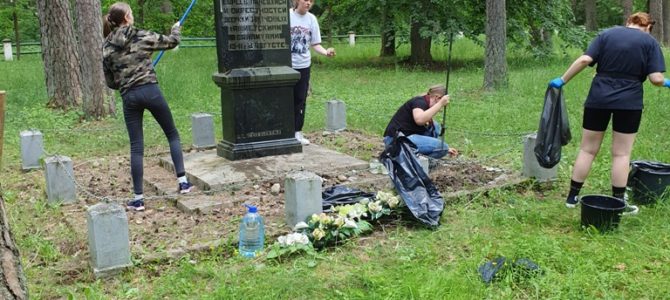
Lithuanian Jewish Community chairwoman Faina Kukliansky sends a big thank-you to all the students, parents and family members of students who responded to the call by the principal and teachers of Sholem Aleichem Gymnasium to come help clean up the Jewish cemetery on Sudervės road in Vilnius. The winter wasn’t kind to the cemetery and visitors have been few. Despite the cool weather and the fact it was Mother’s Day in Lithuania, many helpers arrived to pick up garbage and fallen branches and generally tidy the graveyard up for spring in the Lithuanian tradition of talka, a joint volunteer effort to put the environment in order. Students at Sholem Aleichem can also use the experience to get credits now required for community service, so to those of you who couldn’t make it, don’t be shy next time!

Thank you!

If a Genocide Happens in the Forest and No One Hears It…

If a Genocide Happens in the Forest and No One Hears It…

That’s the question the news service of the LNK television channel in Lithuania faced Friday when they were investigating the case of a mysterious Holocaust site which vanished somewhere along the Kaunas-Vilnius highway during reconstruction.

The mass murder site in the Strošiunas forest, aka Vladikiškės forest, near Bačkionys village in the Kaišiadorys region is the mass grave of about 1,800 women and children from Žiežmariai, Žasliai, Kaišiadorys, Rumšiškės and the surrounding areas murdered on August 29, 1941, according to Lithuania’s Cultural Heritage Department. The Lithuanian Holocaust Atlas says the number was 784 people from the same locations, with other, larger mass murder and mass grave sites in the same immediate area.

The paved road to the Holocaust memorial was fenced across and the sign announcing it as a mass murder site was removed about six months ago during reconstruction of Lithuania’s busiest highway. This is the only access to the site in the Kaišadorys region near Žiežmariai. LNK said they received a complaint from the Lithuanian Jewish Community and looked into it. After receiving mixed comments from Lithuania’s Department of Vehicle Routes Directorate, the fencing blocking access was removed within two hours–just in time for the evening news broadcast–with the promise to replace the road sign marking the Jewish mass grave in the immediate future.

Documentary about Eglė Ridikaitė and Jewish Culture

Documentary about Eglė Ridikaitė and Jewish Culture

LRT.lt

The Lithuanian Culture Institute and the Contemporary Arts Center in Vilnius are preparing to show a video documentary called “Jewish Vilnius in the Work of Artist Eglė Ridikaitė,” the Lithuanian Culture Institute announced in a press release.

The story directed by Mikas Žukauskas looks at the work of Lithuanian National Culture and Art Prize recipient Eglė Ridikaitė and at her artistic method of confronting difficult topics. Her cycle of paintings “We Are Guests” pictures fragments of the Great Synagogue in Vilnius uncovered by archaeologists and her sense of space within the razed synagogue. This is one of the rare cases where Lithuanian contemporary art addresses Jewish historical memory and heritage. Her works have drawn international attention.

The premiere of the short on April 28 will include a discussion titled “In Jewish Vilnius and Elsewhere: Contemporary Art and Historical Memory.” Participants will include professor of architecture Amnon Bar Or and the artist Dora Zlek Levy from Israel, Vilnius Museum director Rasa Antanavičiūtė and art history professor Adakhiar Zevi from Israel. Architecture historian Ūla Tornau, cultural attaché to the United Kingdom, will moderate.

Full story in Lithuanian here.