
History of the Jews in Lithuania

Purim for Seniors at the Community

Purim for Seniors at the Community

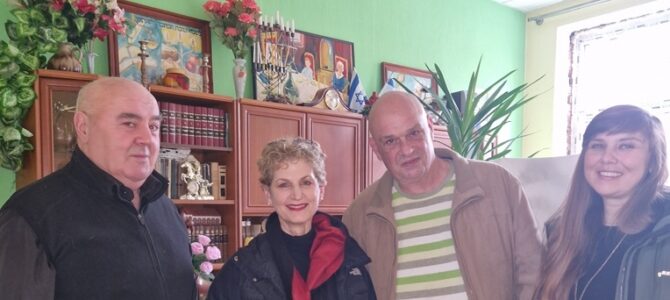
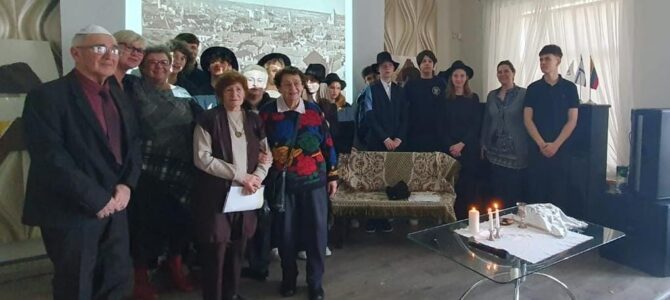
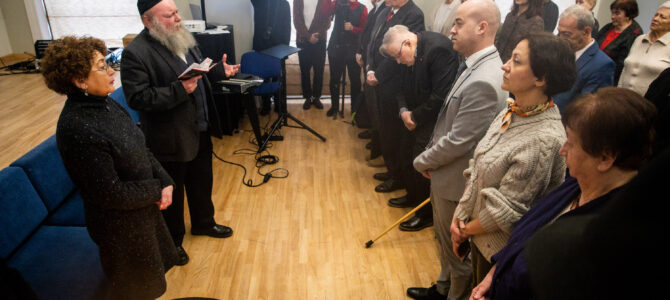
One of the distinguishing features of the Lithuanian Jewish Community is how we care about our oldest and wisest members, both in daily life and during the holidays. So we celebrated Purim together with our venerable senior citizens in the Jascha Heifetz Hall at the Community building in Vilnius, decorated for the occasion. A pleasant evening was had by all with dinner and a concert performance by members of the Fayerlakh Jewish song and dance ensemble, now celebrating their 50th birthday.

Insider’s Look at the EDJC Organizers and Coordinators Meeting for 2023

Insider’s Look at the EDJC Organizers and Coordinators Meeting for 2023

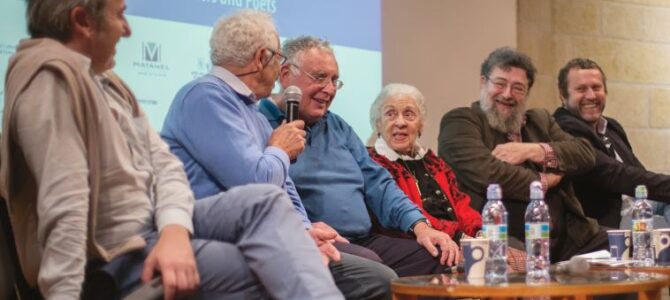
PARIS, FRANCE–The EDJC Organizers and Coordinators Meeting 2023 took place from February 22 to 23 with the majority of its sessions and workshops occurring at the Memorial de la Shoah and a final session and closing ceremony concluding the meeting at UNESCO headquarters in Paris. The bi-annual meeting for organizers and coordinators of European Days of Jewish Culture activities occurs in an extraordinary context and under the umbrella of an exceptional program the Citizens, Equality, Rights and Values program of the European Union.

Organizers and coordinators of the European Days of Jewish Culture had the opportunity to spend two full days together in the city of Paris with the aim of training and reflecting upon how to work with the 2023 edition’s theme of memory. The theme of memory is particularly relevant to the EDJC, as it allows us to explore and remember the rich history of Jewish culture and heritage. The festival provides participants with an opportunity to learn about Jewish culture and history, as well as to reflect on the rôle of memory in shaping our understanding of the past and the present.

During the meeting, attendees witnessed the uncovering of the poster of this year’s edition designed by Nikola Radic Lucati, Founder of the Center for Holocaust Research and Education in Belgrade, Serbia. Participants had the opportunity to participate in training sessions and workshops on the theme of memory, as well as to attend coordination meetings and networking events.

Full story here.

Purim Wouldn’t Be the Same without Hamentashen

Purim Wouldn’t Be the Same without Hamentashen

Purim starts tonight at sundown when the 14th day of the month of Adar begins on the Jewish calendar. One of the constituent features of Purim is the traditional pastry known as hamentashen. Although everyone has their own special recipe, Lithuanian Jewish Community chairwoman Faina Kukliansky makes her family’s version with poppy-seed filling, the traditional Litvak treat. The recipe dates beck to the period between the two world wars.

“This recipe was probably used earlier and recalls the time when the aroma of the pastry filled the Vilnius Old Town and many other cities and towns where Jews lived in Lithuania. Although you can purchase this version now, it’s always more fun to make it yourself,” she commented.

Happy Purim! Hag Purim sameakh!

§§§

Faina Kukliansky’s hamantashen recipe:

State Protection Proposed for Great Synagogue Ruins

State Protection Proposed for Great Synagogue Ruins

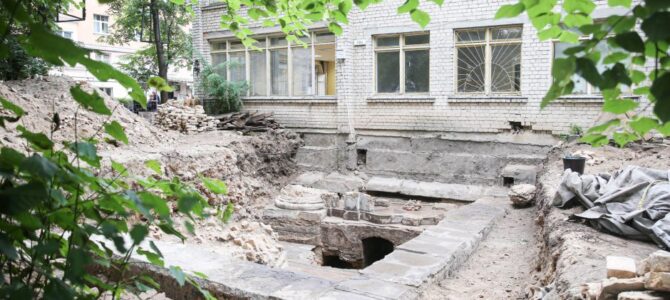
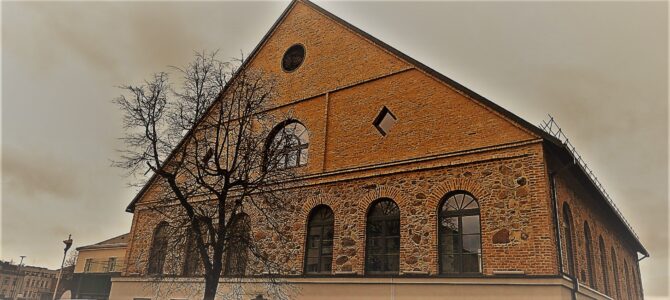
The ruins of the Great Synagogue and attached ritual Jewish bath in Vilnius has been proposed as a site for protection by the state.

The State Cultural Heritage Commission approved that recommendation but the actual listing of the site is up to the Lithuanian minister of culture. The site has architectural, archaeological, historical, commemorative and sacred features.

The State Cultural Heritage Commission said in a press release: “The archaeological, architectural, historical, commemorative and sacred significance of this complex in the Vilnius Old Town is undisputed.”

Full story in Lithuanian here.

Overnight Scouting Camp for Lithuanian Independence Day

Overnight Scouting Camp for Lithuanian Independence Day

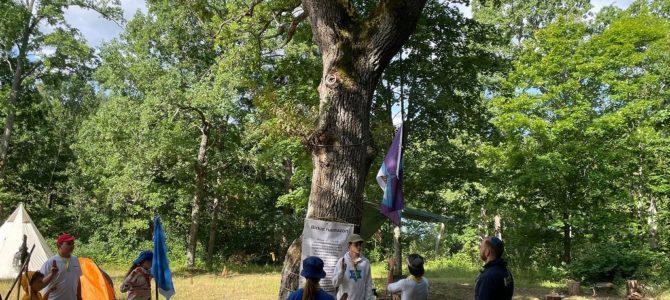
March 11 is one of Lithuania’s two independence days, marking the day in 1990 when the Lithuanian Supreme Soviet declared Lithuania’s independence from the Soviet Union. In line with pre-WWII Jewish scouting traditions, the Lithuanian Jewish Community invites young people and their friends and classmates to an overnight Jewish scouting camp to celebrate Lithuanian independence. The camp will include entertaining games, a scouting program, a flag-raising ceremony and a Sabbath ceremony as well as the chance to meet new friends.

Parents should deliver their children to the Sholem Aleichem ORT school in Vilnius from 3:00 to 3:30 P.M. on March 10 and the camp ends at 7:00 P.M. on March 11. Children and young people need to bring along written consent from their parents, a sleeping bag, dishes and utensils for food, toothbrushes and other personal hygiene items. The cost is 25 euros per person and includes breakfast, lunch, dinner and snacks.

Registration is open till 11:00 P.M. on April 7. Written consent needs to be delivered by parents to the scout leader at the collection point at Sholem Aleichem school.

To register, fill out the form here:
https://forms.gle/XYhx29EpZwLZiFrN7

For more information, write skautai@lzb.lt.

Preparations for Marking Yom haShoah in Alytus

Preparations for Marking Yom haShoah in Alytus

A delegation from the Lithuanian Jewish Community and the Association of Lithuanian Jews in Israel headed by director Arie Ben-Ari Grodzensky visited Alytus, Lithuania, yesterday and met with mayor Nerijus Cesiulis and staff to discuss commemorating Yom haShoah, Israel’s Holocaust remembrance day on the 25th of Adar, in the town southwest of Vilnius. The delegation visited the synagogue recently restored there and the mass murder site in Vidzgiris forest to pay their respects to the victims of the Holocaust there. The plan is to mark Yom haShoah in Alytus on April 17.

Righteous Gentiles Exhibit

Righteous Gentiles Exhibit

Architect Tauras Budzys and art historian Barbora Karnienė have constructed an exhibit to mark March 15, the day designated to commemorate Lithuanian rescuers of Jews from the Holocaust. The exhibit is called “Righteous among the Nations: Not Afraid to Die, They Became Immortal.” The exhibit will be on display until April 10 in the home and museum of Marija and Jurgis Šlapelis located at Pilies street no. 40 in Vilnius.

Discussion Club Topic: The Three Abrahamic Religions

Discussion Club Topic: The Three Abrahamic Religions

The next meeting of the discussion club #ŽydiškiPašnekesiai will be held at 5:00 P.M. on March 8 at the Bagel Shop Café at Pylimo street no. 4 in Vilnius. The topic will be “The Three Major Religions’ Attitude towards One Another, towards Responsibility, Love, Morality, Punishment and Politics.”

Moderator Arkadijus Vinokuras says there is a lack of interfaith dialogue in Lithuania. The benefits of interfaith discussion on society is obvious because of existing superstitions people hold regarding other religions and a general lack of knowledge.

Discussion panel participants are to include Simas Levinas, Lithuanian Mufti Aleksandras Beganskas, author and Catholic priest Mozė Mitkevičius and Arkadijus Vinokuras.

Jewish Scouts Expand Their Horizons

Jewish Scouts Expand Their Horizons

Over the weekend LJC scouts went to Panevėžys to celebrate with fellow scouts the birthday of Robert Baden-Powell.

On January 24, 1908, the Boy Scouts movement began in England with the publication of the first installment of Robert Baden-Powell’s “Scouting for Boys.”

Besides celebrating their founder’s birthday, the Jewish scouts from around Lithuania met up with other scouting groups, did handicrafts, built snow forts and snowmen and learned more about the natural environment in Panevėžys.

Lithuanian Jewish Community Conducting Project to Digitize and Preserve Lithuanian Jewish History

Lithuanian Jewish Community Conducting Project to Digitize and Preserve Lithuanian Jewish History

The open-source RODA (Repository of Authentic Digital Objects*) platform has been chosen to digitize and conserve our European Jewish legacy.

The international J-Ark European Jewish Community Archive project was started in early 2021 and will continue till early 2023, creating and testing a long-term storage platform for digital content. This digital Jewish archive will include selected video, audio, visual, photographic and other materials connected with the history of the Lithuanian Jewish Community since the restoration of Lithuanian independence.

Launch of Lithuanian Translation of Lea Goldberg’s Children’s Book

Launch of Lithuanian Translation of Lea Goldberg’s Children’s Book

The Lithuanian translation of Lithuanian Jewish writer Lea Goldberg’s children’s book “Room for Rent” will be launched at the Vilnius Book Fair Sunday with a special panel discussion including the translator, Antanas Jonynas, designer Sigutė Chlebinskaitė who designed the format for the Yitzhak Rudashevski Vilnius Ghetto Diary published in Lithuanian several years ago by the Lithuanian Jewish Community and writer Daiva Čepauskaitė. Israel’s ambassador to Lithuania Hadas Silverstein is also expected to attend.

Goldberg wasn’t born in Lithuania but spent much of her childhood in Kaunas. She returned to Kaunas after World War I and attended university there. She went on to win the Israeli National Prize for her varied literary work in Hebrew.

The book launch and panel discussion will start at 12 noon on Sunday, February 26, in hall 5-3 at the Lithuanian Expo Center in Vilnius, the venue for the annual Vilnius Book Fair.

Recently Published Books about Jewish Lithuania in Lithuanian

Recently Published Books about Jewish Lithuania in Lithuanian

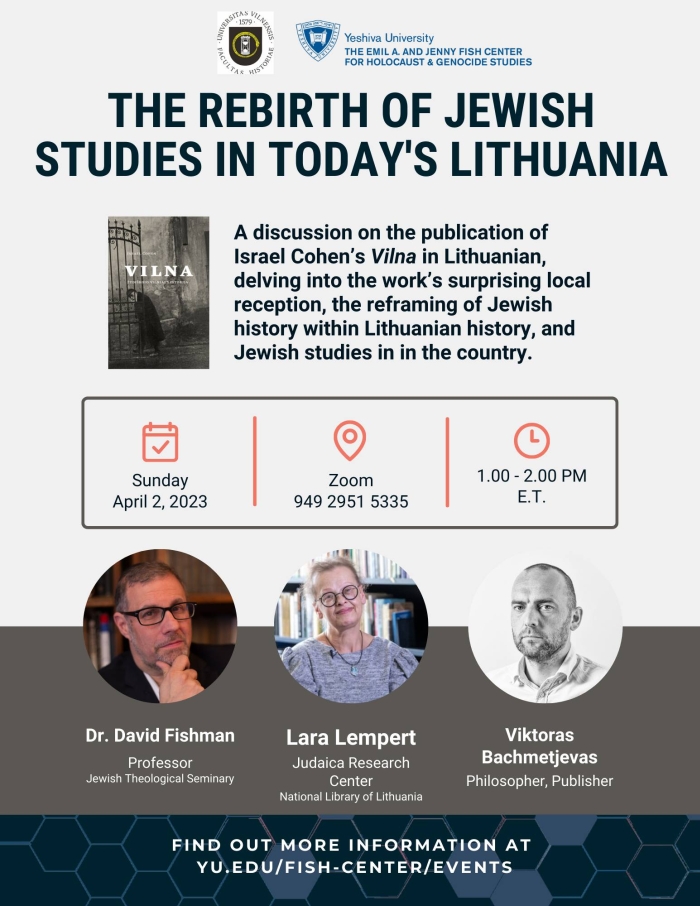
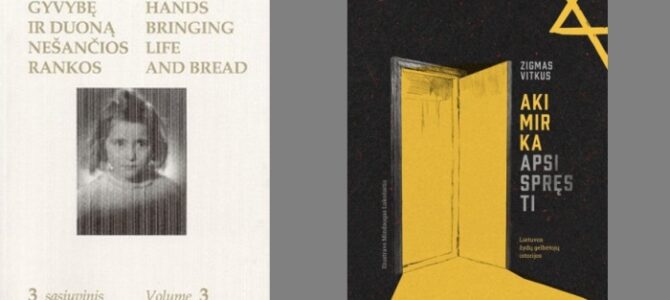
Vilna. Žydiškojo Vilniaus istorija” [Vilna: The History of Jewish Vilnius] by Israel Cohen, 2nd edition, 2023, translated by Miglė Anušauskaitė, 384 pages.

The Vilnius publishing house Hubris has published a Lithuanian translation of British writer and early proponent of Zionism Israel Cohen’s book “Vilna: A History of Jewish Vilnius.” The author was born in London to a family of Jewish immigrants from Poland. He worked as a correspondent for the Times of London, the Manchester Guardian, Manchester Evening Chronicle and Jewish World. The book was first published in 1943 by the Jewish Publication Society as part of a series showcasing Jewish communities in various countries for English speakers.

More information in Lithuanian here. See below for an excerpt from the original English edition.

§§§

Slaptoji Kauno žydų geto policijos istorija” [Secret History of the Kaunas Ghetto Police] by anonymous Kaunas ghetto police officers, published 2021, translated by Aistis Žekevičius from the English edition edited by Samuel Schalkowsky, 504 pages.

A unique document written in Yiddish by Kaunas ghetto police between 1942 and 1943. It lay buried in Slobodka for years and was discovered in 1964 when construction was underway at the site, and turned over to the Soviet KGB. It was translated to English and published in the USA in 2014.

Three Groups Found Worthy of “Legitimate” Derision in Lithuania: The Circus, Homosexuals and Jews

Three Groups Found Worthy of “Legitimate” Derision in Lithuania: The Circus, Homosexuals and Jews

by Arkadijus Vinokuras

Conservative Party candidate for Vilnius mayor Valdas Benkunskas yells in his political advertisements: “A mayor without circuses!” Kaunas mayor Visvaldas Matijošaitis, frightened by public debate, echoes the sentiment: “Kaunas doesn’t need a circus!” The press frequently carries headlines such as “Politics Is Not a Circus,” “Circus in the Political Arena,” and so on. It’s horrifying, wherever you look, there’s that damned circus again. Really?

Let me first take care of the myth the circus is worthy of derision. First, for example, the flying trapezist: if he were to act like the MP Petras Gražulis, Ramūnas Karbauskis, Visvaldis Matijošaitis or Valdas Benkunskas, he’d kill himself after attempting his first salto mortale. The flame appearing in the hands of the circus magician would burn him up immediately, and the trick of sawing the young female assistant in half would result in her real dissection. In other words, the professional circus has nothing in common with the political balagan.

This is also proven by the fact the largest American circus, Ringling Brothers and Barnum and Baily Circus, has revenues reaching $98 million annually. Another US circus, Circus Circus, has annual revenue of $160 million and employs 1,500 people. There are around 300 circuses operating in the United States. Cirque du Soleil, Inc. pays a circus actor from $6,000 to $10,000 per month. (The largest circus in Scandinavia is the Cirkus Scott, to the premieres of which the entire ruling elite of Sweden turn out. King Carl XVI Gustaf often attends with the royal family. In the 1989-1990 period this circus paid me €6,000 per month. How long did my performance take? Ten minutes. This was a gigantic sum back in those days, even in Sweden.)

Dubi Mishpocha Club Open for Children Aged 0 to 3

Dubi Mishpocha Club Open for Children Aged 0 to 3

Traditions are a treasure we pass on from generation to generation. We are glad to be able to share that treasure with others and to see how children grow up and take their children to the Lithuanian Jewish Community youth clubs.

It is so important for the younger generation of Jews to learn and practice our traditions from a very early age, so the Dubi Mishpocha Club welcomes you and your children aged 0 to 3 every Wednesday from 10:30 A.M. The club is located inside the LJC.

For more information, contact LJC programs director Žana Skudovičienė by e-mail at zanas@sc.lzb.lt.

Jews, Hungarians, Beggars and Blockheads: Trakai Shrovetide Invitation Still Full of Stereotypes

Jews, Hungarians, Beggars and Blockheads: Trakai Shrovetide Invitation Still Full of Stereotypes

by Olga Ugriumova

The municipality of Trakai invited the public to a Shrovetide ball in the town, including pupils of local schools and community members. The poster announcing the event calls it a winter fair in the charming town with a “Svetelių eisena marga.” This can be translated as a “gaudy procession of strangers or foreigners.” The poster continues to the effect that Jews, Hungarians, beggars, doctors, cranes, bears, roosters, Gypsies and all sorts of blockheads and horrific monsters will turn out for the winter festival and see the sun.

Full article in Russian here.

Eliyahu David Rabinowitz-Teomim Descendant Visits Panevėžys

Eliyahu David Rabinowitz-Teomim Descendant Visits Panevėžys

In the 19th century there were five working synagogues in Panevėžys and a strong and widely-celebrated Jewish community. The Rabbi Eliyahu David Rabinowitz-Teomim, also known by the acronym ADeReT, lived and worked in Panevėžys from 1871 to 1891 and was the head of the community. He later served as the rabbi of Mir in what is now Belarus, and went on to lead the Ashkenazi community in Jerusalem.

His great-grandson Rabbi Reuven Yeshua Koehn paid a visit to the Panevėžys last week and presented a portrait of his famous great-grandfather as a gift to the Panevėžys Jewish Community. He also met with the mayor of the city and presented a project currently being conducted in Israel to build a Litvak Heritage Center. The Center’s displays will include various Lithuanian shtetls and cities including Panevėžys.

Rabbi Koehn also visited the local regional history museum. Students from his yeshiva are expected to visit Panevėžys in late April.

Knafaim Club Open Again

Knafaim Club Open Again

After a short vacation, the Knafaim Club for youth aged 13 to 17 has reopened, ready to receive members and friends every Friday at 6:00 P.M., with different games and activities to improve Jewish and general knowledge, followed by a ceremony to greet the Sabbath. For more information, contact programs director Žana Skudovičienė at zanas@sc.lzb.lt or call+370 678 81514.

Happy February 16

Happy February 16

The Lithuanian Jewish Community wishes you a very happy February 16, the traditional Lithuanian day of independence celebrated by citizens of all ethnic backgrounds in the period between the two world wars.

First Quiz Held

First Quiz Held

The Bagel Shop Café hosted the first quiz in what is to become a regular event. Last Sunday’s topic was Jewish Music. Participants didn’t just squeeze their brains, they also sang, trying to recall the tops songs from various historical eras. It’s safe to say most of the participants learned some new facts along the way. The moderator, writer Arkadijus Vinokuras, was accompanied by son Saulius, with help formulating questions from Sholem Aleichem music teacher Ūla Marija Barbora Zemeckytė. While the initial plan was to hold the quizzes every Sunday, the plan now is hold one per month on a Sunday, so stay tuned for the next round. You can check here or consult the Lithuanian Jewish Community’s facebook page.

Kaunas Isn’t a Lithuanian City, Despite Long-Standing Claims to the Contrary

Kaunas Isn’t a Lithuanian City, Despite Long-Standing Claims to the Contrary

A Lithuanian translation of interwar Jewish author Kalmen Zingman’s book “On the Spiral Staircase” was recently published by the Hubris publishing house. Goda Volbikaitė translated it.

What can this novel written in 1925 and only now available in Lithuanian tell today’s readers? First of all, it talks about Kaunas. The translation of this book is also a kind of proof Kaunas wasn’t just a Lithuanian city. People of other ethnicities also lived there whose works can (and should) be listed in our literary canon. We spoke with the translator of this book about the little-known figure of Kalmen Zingman, spiral staircases, the Aleksotas aerodrome, Slobodka and Yiddish literature.

Just three years before his death, Zingman wrote in his diary: “I feel like that wonderful time when I will be recognized and famous isn’t far off.” Unfortunately his dream was not to come true. Why do you think Zingman wasn’t successful in literature and recognition?

For truth’s sake, it has to be said that no Yiddish writer working in Kaunas in the period between the two world wars got famous. We are talking about around 30 authors in total who lived in Kaunas for a shorter or longer time.

It’s very clear why they didn’t become famous in the Lithuanian context: there was a lack of interwar translations from the Yiddish language into Lithuanian, just as there is in our time. I should say Lithuania is still just in the early stages of discovering Yiddish literature. Sutzkever and Kulbak are better known now, and some rarer names such as Matilda Olkin and Yitzhak Rudashevski. But basically whole strata of Yiddish literature made in Lithuania are still unknown to the Lithuanian reader.