History of the Jews in Lithuania

Goodbye Culture Protest

Goodbye Culture Protest

The following protest is being called by people who describe themselves as the cultural community of Lithuanian for tomorrow, September 25, to protest the minister of culture proposed and delgated by the Nemuno Aušra party. Details and petition link below.

Dear people of culture,

We are protesting. We categorically oppose the Government’s shocking decision to hand the post of minister of culture over to the Nemuno Aušra party.

We believe that:

Culture cannot be used a tool for political deal-making. The Lithuanian Culture Ministry is not a token which can be exchanged for short-term political gain;

Culture is our memory, the foundation of democratic values, society’s guarantor of resilience to propaganda;

To give this ministry over to a political force characterized by populism, anti-Semitic and pro-Russian rhetoric is dangerous, both to the cultural sector and to society as a whole.

We urge:

Lost Shtetl Museum Opens

Lost Shtetl Museum Opens

The Lost Shtetl Museum, after several years of construction and preparation and missed opening dates, finally opened its doors to the public in Šeduva, Kithuania on September 20.

According to visitors and experts, the museum is unlike any other in Lithuania. A large collection of authentic objects tells the story of the Jewish shtetl Šeduva, but also of all shtetls in Lithuania and the region. Some of the texts and exhibits are funny, and portray situations, trials and tribulations from daily life, love letters, immigration plans and excitement for upcoming holidays.

The museums thematic sections and exhibit items are complemented by tactile and olfactory details which might be ignored at first but provide an overall impression, according to one visitor.

Marker Commemorates Lost Synagogues in Baisogala

Marker Commemorates Lost Synagogues in Baisogala

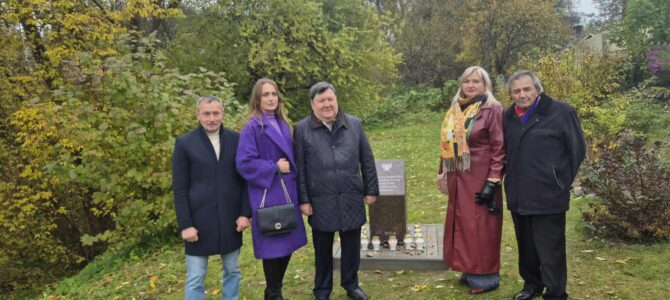
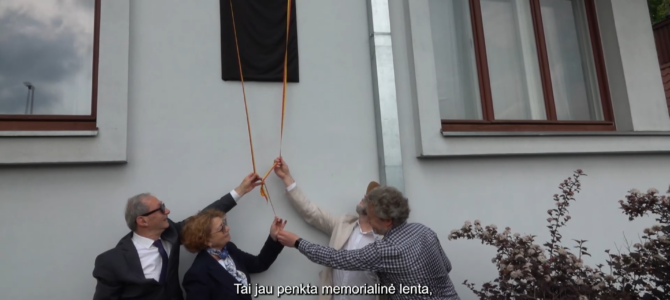
This week a stone marker was unveiled in Baisogala, Lithuania, to commemorate synagogues which once stood there.

Jewish settlement began there in the early 19th century and by the 20th century more than half the town was Jewish. The shtetl had a number of synagogues, a Jewish primary school and Jewish workshops. All signs of Jewish life were destroyed by the Nazis and Soviets.

Lithuanian Jewish Community chairwoman Faina Kukliansky unveiled the stone marker and Choral Synagogue cantor Shmuel Yaatom performed kaddish.

Ponar Commemoration on Thursday, September 25

Ponar Commemoration on Thursday, September 25

The Lithuanian Jewish Community invites you to come honor the approximately 200,000 :Lithuanian Holocaust victims at Ponar on the outskirts of Vilnius this Thursday, September 25. Transportation to and from Ponar is available, register by sending an email to info@lzb.lt.The bus will leace from the Lithuanian Jewish Community at Pylimo street no. 4 in Vilnius at 12:45 {.M. sharp, and will not wait for latecomers.

Time: ~1:00 P.M., Thursday, September 25
Place: Ponar Memorial Complex, Agrastų street no. 15A, Vilnius

New Israeli Ambassador Visits Kaunas Jewish Community

New Israeli Ambassador Visits Kaunas Jewish Community

Israel’s new amvassador to Lithuania Shelly Hugler-Livne and deputy ambassador Shimon Pesach visited the Kaunas Jewish Community last week and met with chairman Gercas Žakas. They also visited Sugihara House, the Ninth Fort Museum, the Beit Israel community center abd took in the wall painting of Leya Goldberg. The new amvassador and deputy visited the Lithuanian Health Sciences University as well.

They met the mayor of Kaunas and visited the Čiurlionis National Art Museum in Kaunas.

Information Stands Show the Way to Ponar

Information Stands Show the Way to Ponar

The city of Vilnius, the Jewish Culture and Information Center and the Vilnius Museum have set up 7 stands marking the path along which Jews were marched to their murder at Ponar. The project is meant to commemorate Lithuania’s Day of Remembrance of Jewish Victims of Genocide on September 23. The stands contain photographs by Holocaust survivor Akiva Gershater with texts by historian Zigmas Vitkus.

Jews were taken to be shot at Ponar, either marched or driven in trucks, along what is now Savanorių prospect. up the hill to Ponar and then along what was then the Grodno highway.

The organizers invite the public to march this route, starting at the Hyacinth Chapel at the intersection of Konarskio street and Jovaro sreet, where boundary markers marking the city limits once stood, and where now the first stand is located.

The march will conclude at the Ponar Memorial Complex where historian and Holocaust researcher Milda Jakulytė-Vasil will conclude with a speech about the mass murder site.

THe march begins at the aforementioned intersection at 10:00 A.M. on Sunday, September čą. The route is about 10 or 7 miles long and should take from 2.5 to 3 hours to complete. A portion of the trek is through forest. Milda Jakulytė-Vasil will speak at Ponar for 30 to 45 minutes. The return trip can be made by train at the Ponar train station or by city bus.

Marchers should wear comfortable walking shoes and are asked to register here.

Remembering the Jewish Community in Čekiškė

Remembering the Jewish Community in Čekiškė

To mark Lithuania’s Jewish Victims of Genocide Remembrance Day, Audra Girijotė will give a presentation about Dovydas Matishohu Lipmanas at the synagogue in Čekiškė, Lithuania (Tsaykishok in Yiddish). Lipman was perhaps the most famous writer from the small town, and focused on the history of the Jewish community there, in Kaunas, Žemaitija and in Lithuania in general. He also wrote about the Vilna Gaon and was a frequent contributor to Yiddish periodicals. Born in 1888 in the village of Nemakščiai in the Raseiniai district, Lipman lived in and around Čekiškė from 1925 to his murder. He bought and ran a pharmacy there while writing a number of books. He was a qualified pharmacist with a degree from Dorpat (Tartu). He was murdered just outside the village in late July, 1941, by Stanislovas Gudavičius, a commander of local Lithuanian white-armbanders, according to Lithuanian historian Alfredas Rukšėnas.

Audra Girijotė is a writer and journalist who has been researching the life and death of Dovydas Lipmanas over the last several years.

Time: 1:00 P.M., September 23
Place: Čekiškė synagogue, Lašišos street no. 21, Čekiškė, Kaunas district

JewishGen yizkor for Tsaykishok here.

More biographical information in Lithuanian and English here.

European Day of Jewish Culture in Vilnius

European Day of Jewish Culture in Vilnius

The 21st annual European Day of Jewish Culture held on the first Sunday in September had the theme People of the Book this year. The Lithuanian Jewish Community celebrated in Vilnius with learning as well as song, dance and food during a day-long program that went well into the late evening.

The main venues were the Choral Synagogue with basic Yiddish and Hebrew lessons and a tour, and the Cvi Park Israeli street food kiosk and performance space at Petras Cvirka Park across the street from the LJC. Tours, sampling of food, Jewish Vilna toursm concerts by Fayerlakh and klezmer groups, entertainment by writer, thinker and self-professed professonial clown Arkadijus Vinokuras and a concert by the Kiryat Ono youth quartet were just some of the activities that day.

Photographs follow.

Remembering Holocaust Victims in Kupiškis and Subačius

Remembering Holocaust Victims in Kupiškis and Subačius

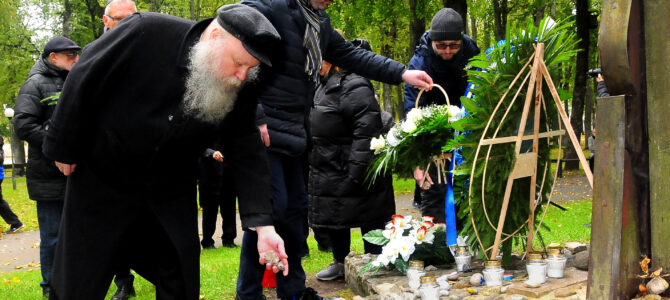
September 23 is a national day of mourning, marking the significance of the loss of Lithuanian Jewry in the Holocaust and the loss to Lithuanian society.

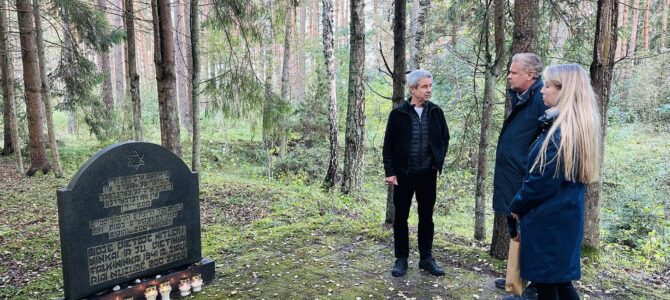
The village of Subačius, the shtetl Subotch, had a large Jewish population engaged in wholesale, shopkeeping, running bars and taverns and all sorts of other business endeavors. Almost all the Jews there were exterminated in 1941 in the Ilčiūnai Forest, also known as Lapkalnis, two kilometers from Subačius. From 80 to 300 Jews from Kupiškis andr Subačius were murdered there, according to different sources. A monument marks their mass grave. There were Righteous Gentiles there as well who saved Jews.

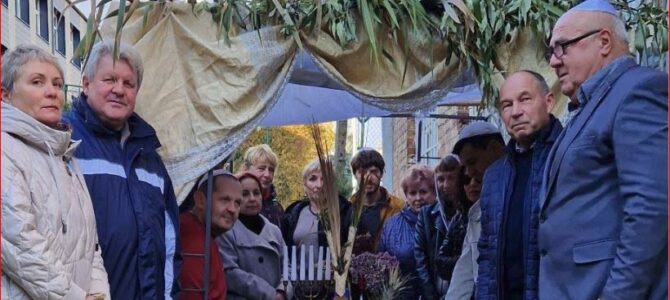
The ceremony to mark Jewish Genocide Remembrance Day in Subačius will include a descendamt of one family who rescued Jews, the Markevičiuses. The ceremony includes a presentation of the book “Kupiškėnai – žydų gelbėtojai” [Kupiškis Residents Who Rescued Jews] put together by historian and Kupiškis Museum specialist Aušra Jonušytė. Students from the Kupiškis Art School will provide a musical component.

Time: 11:00 A.M., September 23
Place: Subačius House of Culture, Aukštaičių street no. 14, Subačius

New Documentary on Irena Veisaitė

New Documentary on Irena Veisaitė

A new documentary on Litvak, Holocuast survivor and life-long Holocaust educator, the late Irena Veisaitė is scheduled for release in late October.

Variously titled “A Goodnight Kiss,” “Irena” and “For Irena” the Lithuanian Catalog of Cinema describes the film this way:

The film chronicles the incredible life of professor Irena Veisaite, a survivor of the murderous Holocaust and Stalinist reign in Lithuania. She is today a cultural icon, uniting people of different ages, religions, nationalities from all over the world. As she approaches her 93th birthday and shows no signs of slowing down, we follow Irena as she addresses our contemporary issues and revisits her painful past. A film that shows that the power of love can overcome trauma, and transform it into the art of living.

Irena Veisaitė passed away December 11, 2020.

Lithuanian state radio and television and the news website 15min.lt report the film will premiere October 24 in Lithuania. The Kino Pavasaris film festival and movie theater association announced the premiere of the documentary in a press release last week.

Description and more information here.

Interviews with director in Lithuanian here and here.

Day of Remembrance of Lithuanian Jewish Victims of Genocide in Panevėžys

Day of Remembrance of Lithuanian Jewish Victims of Genocide in Panevėžys

The Panevėžys Jewish Community invites you to mark the Day of Remembrance of Lithuanian Jewish Victims of Genocide on September 23. The commemoration begins at 2″00 P.M. at the Sad Jewish Mother statue in Memory Square on Vasario 16 strret in Panevėžys.

The commemorative date was adopted by the Lithuanian parliament in 1994 based on the nominal date for the liquidation of the Vilnius ghetto in 1943. The Panevėžys ghetto was liquidated in mid-August, 1941, meaning the 13,500 Jews there were murdered ib the immediate area.

Program:

Lost Shtetl Museum in Šeduva to Open to Public September 20

Lost Shtetl Museum in Šeduva to Open to Public September 20

by Anthea Gerrie, Hewish Chronicle, August 24

The Jews of Šeduva were murdered 84 years ago. Now a new museum will commemorate their shtetl way of life

Eighty-four years ago more than 600 Jews, men, women and children, of the shtetl of Šeduva in rural Lithuania were executed in the forest outside the town. Now the finishing touches are being made to a museum which will commemorate the shtetl way of life which was extinguished in the Holocaust, not just in Seduva or Lithuania, but all over Eastern Europe.

The Lost Shtetl Museum will use cutting-edge technology to recreate the sights and sounds of everyday pre-war Jewish life, based on the history of Šeduva and more than 200 similar small Lithuanian towns, and the thousands more communities in neighboring Latvia, Belarus, Poland and Ukraine which were wiped off the map forever.

Natalja Cheifec on Misnagidim and Hassidim

Natalja Cheifec on Misnagidim and Hassidim

Natalja Cheifec carries on her internet lecture series and discussion club this Thursday with a lesson on Litvaks and Hassidim.

The concept of Litvak today isn’t just Jews from Lithuania and the lands of the Grand Duchy of Lithuania, but for centuires now has included the idea of Litvaks as the Misnagidim (mitnagidim) who fiercely oppose the Hassidim. How do these two currents of Judaism differ? WHere does the opposition of these two groups originate? Tune in Thursday to hear the full story, from centuries ago to the present time.

Everyone is welcome to participate. To receive zoom credentials, click here.

Time: 6:00 P.M., Thursday, September 11
Place: internet

Pivonija Massacres Eighty-Four Years Later

Pivonija Massacres Eighty-Four Years Later

The 84th anniversary of the mass murder of the Jews of Vilkomir (Ukmergė) in the Pivonija Forest jut outside the town was commemorated on the first Sunday in September, the traditional date selected for honoring these victims of the Holocaust.

The entire Jewish population of Vilkomir and surrounding villages was exterminated ruing three mass murder operations in 1941. A sole survivor hid in the forest and later told the tale to the world.

Pivonija is the third-largest Jewish mass murder site in Lithuania after Ponar and the Ninth Fort.

Lithuanian and Jewish Communities Meet in Los Angeles County

Lithuanian and Jewish Communities Meet in Los Angeles County

The Lithuanian Consulate and Lithuanian consul Sandra Brikaitė hosted an evening called “History, Heritage and Diplomacy” earlier this mont, bringing together the Lithuanian-American community, the Lithuanian Jewish Community, the local Valley Outreach Synagogue, diplomats and other interested parties.

The Lithuanian Consulate is located in Calabasas in the southwestern end of the San Fernando Valley in Los Angeles County.

Consul Sandra Brikaitė, Valley Outreach Synagogue Rabbi Ron Li-Paz and Lithuanian Jewish Community chairwoman Faina Kukliansky all spoke at the event and all three discussed together the deep roots of Litvak culture, the Holocaust and Righteous Gentiles, among other things.

“The Jewish heritage is part of the soul of Lithuania,” Brikaitė said.

Come Celebrate European Day of Jewish Culture with the LJC

Come Celebrate European Day of Jewish Culture with the LJC

Sunday is the annual European Day of Jewish Culture. This year the theme is People of the Book. The Lithuanian Jewish Community has a full day of events planned starting in the morning. Some events require prior registration, see below. Unless otherwise noted, events will take place at the Lithuanian Jewish Community at Pylimo street no. 4. The outdoor Cvi Park space is across the street from there. The Choral Synagogue is located about 300 meters away on Pylimo street as you go towards the train and bus station.

Program:

10:30 A.M. Beginner’s Hebrew lesson with Ruth Reches at the Choral Synagogue in Vilnius. Register here.

YIVO Centennial Exhibit at National Library

YIVO Centennial Exhibit at National Library

Marking 100 years since the YIVO was founded in Vilnius, the Martynas Mažxydas National Library in Vilnius will open an exhibit at 5:00 P.M. on Thursday, September 4, and running till the end of the year entitled “YIVO Centennial: Origins, Journey, Legacy.”

The opening ceremony with keynote speech and a musical performance takes place on the third floor at 5:00 P.M. The action then moves to the 5th floor with a presentation and tasting of Litvak cuisine, culminating in a guided tour by National Library Judaica Center director and exhibit curator Lara Lempertienę.

The event is free and open to everyone.

French Documentary on the Great Synagogue

French Documentary on the Great Synagogue

The French Institute will show a documentary film by Loïc Salfat on the history of the Great Synagogue of Vilnius at 5:30 P.M. on September 10. The French Institute is located at Didžioji street no. 1 in Vilnius.

The film includes ancient lore regarding the synagogue complex and the Vilna Gaon, damage from bombs during WWII, removal by Soviet authorities after the war and archaeological digs over the last several decades there. The French film has English and Lithuanian subtitles.

The event is free but registration is required by filling out the form here.

The screening of the documentary is part of an educational program called “Make No Idols,” For more information about that program in Lithuanian, click here.

Remembering the Unknown, Experiencing the Non-Existent

Remembering the Unknown, Experiencing the Non-Existent

The Vilnius Picture Gallery and the Lithuanian National Art Museum invite the public to a lecture by Giedrė Mickūnaitė called “risiminti nežinomą, patirti nesantį–keli žydiškojo Vilniaus maršrutai” [Remembering the Unknown, Experiencing the Non-Existent: Several Tracks in Jewish Vilnius] at the Vilnius Picture Gallery at 5:30 P.M.om September 9. The galLery is located at Didžioji street no. 4 in Vilnius.

According to the hallery’s announcement of the public lecture:

“Historical knowledge and making it topical, urban planning not just as space and architecture, but as a way of life–these are the questions confronting Vilnius. The lecture invites you to an indirect tour of the current city and provides a glimpse of the Jewish past, asking you to experience that loss in the present.”

The lecture is free, open to the public and registration is not required.

Akvilė Grigoravičiūtė on Early 20th Century Litvak Identity in Yiddish Literature

Akvilė Grigoravičiūtė on Early 20th Century Litvak Identity in Yiddish Literature

The Ieva Simonaitytė Public Library in Klaipėda is pleased to host a presentation by Akvilė Grigoravičiūtė, Yiddish literary researcher and translator, on changes to Litvak identity in the early 20th century as illustrated in Yiddish literary works.

The event is scheduled from 5:30 to 6:30 P.M. on Wednesday, September 10.

Called “Yiddish Literature in Interwar Lithuania,” the author discusses the evacuation of Jews from the borderlands in Tsarist Russia during the First World War and the lasting effects that had on Jewish identity. She characterizes Lithuanian Yiddish literature in the 1920s as showcasing separation, alienation and solitude. In the 1930s, she says, a new Jewish identity began to coalesce, tied organically to the culture and society of the Republic of Lithuania. Her presentation will include passages from Yiddish writers, literary clubs and publications from 1918 to 1940

The library is located at Herkaus Manto street no. 25 in Klaipeda. For those unable to attend, the lecture will be live-streamed via the internet, register here.

For more information in Lithuanian, click here.