
Heritage

Pakruojis Wooden Synagogue Restored

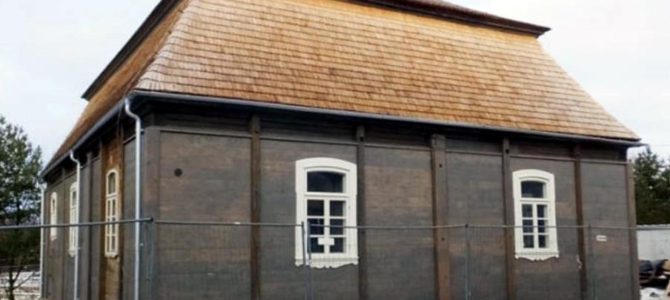
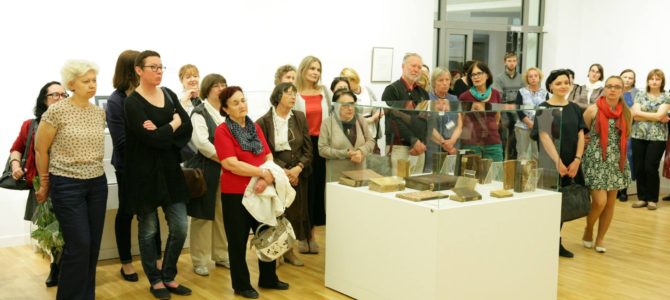
Following renovation, the wooden synagogue in Pakruojis, Lithuania, is to open its doors to the public Friday. The synagogue is to house the Pakruojis Regional Juozas Paukštelis Library. The women’s gallery and a permanent exhibition will remind visitors of Jewish life and history in the region. The Pakruojis synagogue was built in 1801 and is believed to be the oldest surviving wooden synagogue in Lithuania. It was renovated and painted in 1885.

Full story in Lithuanian here.

LitvakSIG Delegation Visits Lithuania


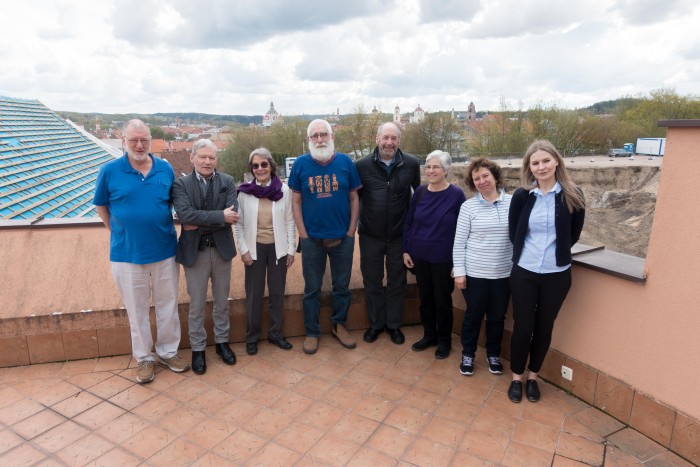
LitvakSIG delegation visit Tolerance Center, Vilna Gaon Museum, Carol Hoffman third from left

The Litvak genealogical web site LitvakSIG‘s board of directors have recently been travelling around Lithuania as part of their important work. The board currently includes nine members: Amy Wachs, Barry Halpern, Carol Hoffman, Dorothy Leivers, Garri Regev, Jill Anderson, Phil Shapiro, Ralph Salinger and Russ Maurer. Six of the nine board members visited Lithuania this past week to meet with archivists and members of the Vilnius and regional Jewish communities. We managed to interview Carol Hoffman at the Bagel Shop Café in Vilnius last Sunday.

§§§

Tell us something about yourself.

My names is Carol Hoffman. I was born and raised in the United States. My father was born here in Lithuania in 1892 in Kapčiamiestis, in Yiddish it’s Kopcheve. My mother was born in the United States but her mother was born in Kapčiamiestis, in Kopcheve, in about 1858. So my entire family from my mother’s side and from my father’s side are Litvaks.

So, my entire family are Litvaks, they’re from the same place, from the same shtetl, and I was raised with a strong sense of being my brother’s keeper. I came to Israel in 1972 with three young children and a husband and we settled in the northern part of Israel. I worked as a librarian and a teacher of computer science in the university for many, many years, and I retired seven years ago when began working full-time as a volunteer for LitvakSIG. This is my seventh or eighth or ninth trip to Lithuania, I’m not sure. My first trip was in 2000. I had never been here. I met Regina Kopelevich on the border and we went to … Kopcheve and then to Vilnius. So I feel the strong sense of roots.

Maceva Litvak Cemetery Catalogue

Maceva Litvak Cemetery Catalogue

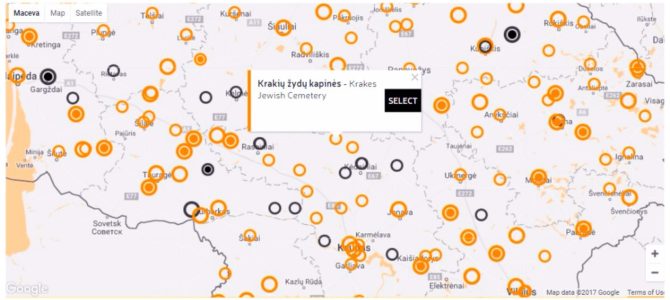
Litvak Cemetery Catalogue MACEVA 2016.

This Newsletter contains an overview of activities of Litvak Cemetery Catalogue MACEVA in 2016.

Švenčionys (Svintsyán). It is believed that this cemetery was established during the 15th century. This is one of the oldest and largest cemeteries of Lithuanian Jewry, encompassing an area of 39670.00m2. We had expected to find approximately 2000 graves. Our work with students has found closer to 3,000 surviving graves. Approximately 1200 tombstones still have full, or partially legible inscriptions.

Prior to World War II, the cemetery was larger, it was devastated during the war and beginning in 1941, locals began to plunder stone monuments for construction material. Many tombstones were damaged and uprooted, black marble tombstones were considered particularly desirable.

The current condition of the cemetery is mediocre.

Many of the gravestones are fully, or partially buried, giving us limited ability to access the inscriptions. Many gravestones are leaning or have already collapsed.

The city of Svencionys has no directional signs indicating the location of the cemetery.

Full catalog here.

Birthday Evening with Dr. Leonidas Melnikas at the Lithuanian Jewish Community

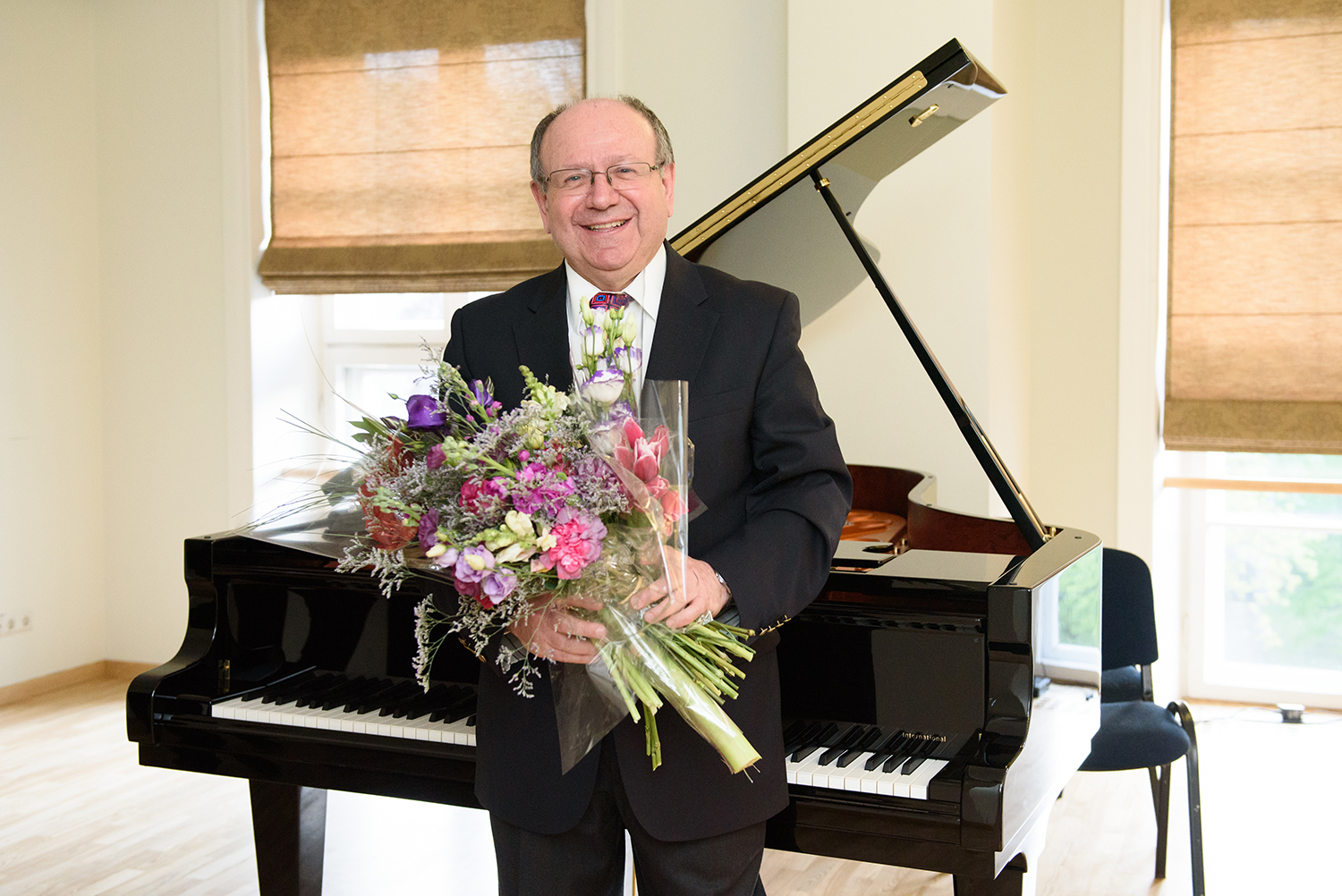
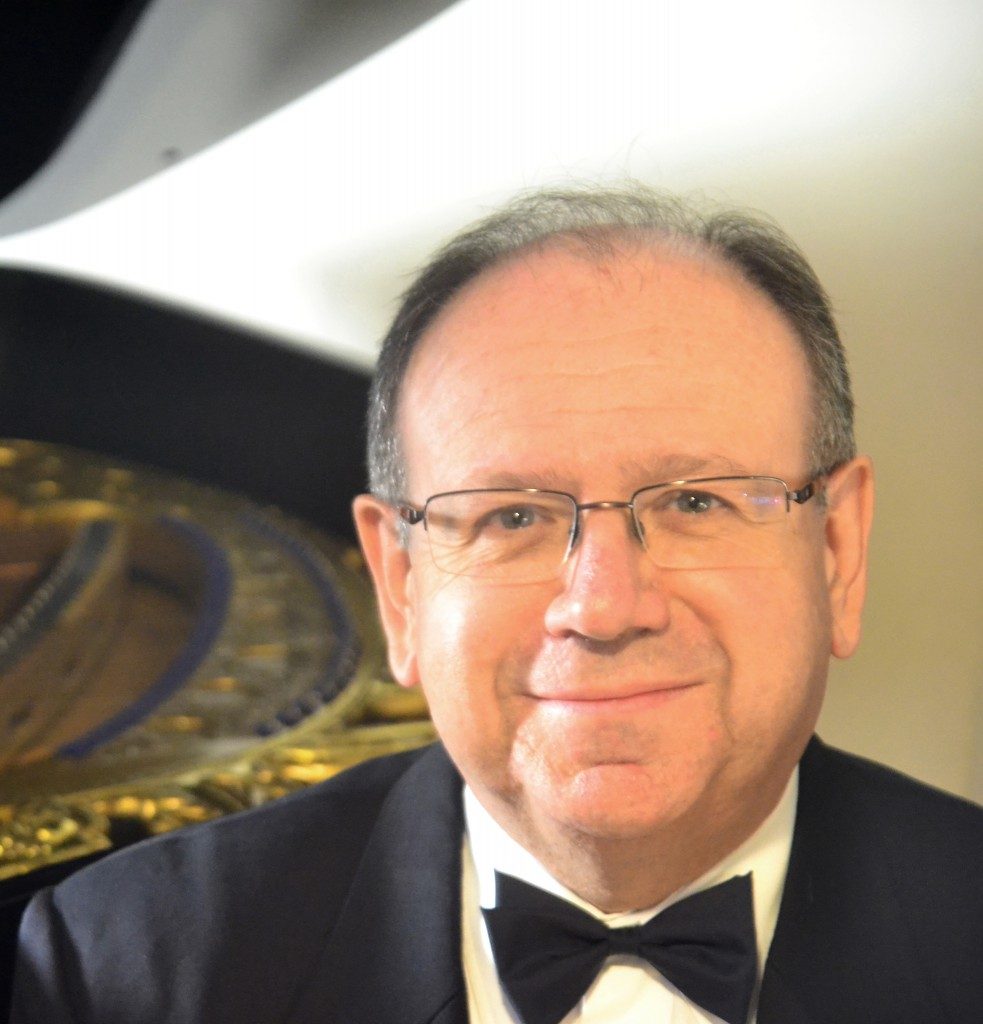
The organizers of the Destinies series of evening events are pleased to invite you to come celebrate the birthday of professor Leonidas Melnikas at the Lithuanian Jewish Community.

Program:

Dr. Leonidas Melnikas on piano, Boris Traub on violin, Valentinas Kaplūnas on cello, Gennady Savkov on accordion

Participating:

Silvija Sondeckienė and composer Audronė Nekrošienė-Žigaitytė, president of the Union of Lithuanian Musicians.

Time: 6:00 P.M., Thursday, May 11
Location: Third floor, Lithuanian Jewish Community, Pylimo street no. 4, Vilnius

Event planned and moderated by Maša Grodnikienė, deputy chairwoman, Lithuanian Jewish Community.

A New Litvak Logo

We have a new Litvak logo designed by Viktorija Sideraitė-Alon.

The Lithuanian Justice Ministry has granted permission to use the national Lithuanian symbol of the pillars of Gediminas as part of a Lithuanian Jewish Community logo trademark. The patent process for making the Litvak symbol a Lithuanian Jewish Community trademark is being completed right now.

The posts, pillars of columns of Gediminas was used as a coat of arms or insignia by Lithuanian grand duke Vytautas the Great beginning in 1397, following its use by his father grand duke Kęstutis, and has been employed by many other Lithuanian and Polish leaders since then. The Jewish community, living in Lithuania for approximately 700 years no, is an indivisible part of Lithuanian society in the political and historical sense. Many peoples have called Lithuania home over the centuries and the Jewish community has also made significant contributions to the state, the culture and the economy. Incorporating the pillars of Gediminas into a Litvak logo makes perfect sense and corresponds to what the current Lithuanian state openly declares, namely, pride that Lithuania has been open, tolerant and diverse over the centuries.

Presentation of Jews of Vilkaviškis at Lithuanian National Library

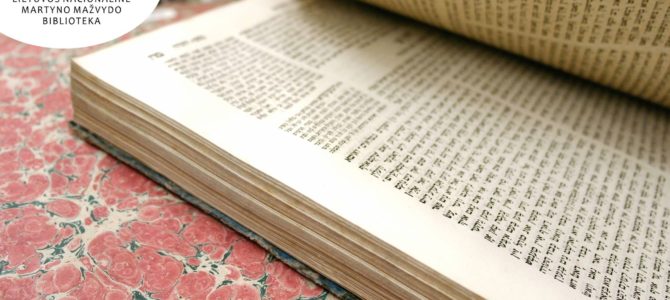
The Lithuanian National Martynas Mažvydas Library is hosting a presentation of the book “Dingusios tautos pėdsakais’ [Traces of a Lost People] by Antanas Žilinskas, the long-serving director of the Vilkaviškis Regional History Museum who has collected material about the Jews once resident in Vilkaviškis over many years, the contents of the book published in 2015. The event will also feature a meeting with Ralph Salinger, an Israeli historian specializing in the history of the Jews of Vilkaviškis. The public event is to be held in Lithuanian and English at 4:00 P.M. on May 12 at the library in Vilnius.

Jews were living in Vilkaviškis in the 16th century when queen Bona Sforza allotted a forest for the Jews to construct a synagogue. The Vilkaviškis synagogue appeared in 1623. There was a Jewish gymnasium in Vilkaviškis from 1919 to 1940. There were around 150 shops in the town, of which about 130 were Jewish. In 1939 there were officially 3,609 Jews living in and around the town, constituting 45 percent of the population.

Misha Breakfast Program at Choral Synagogue

Dear Community members,

Before his death, long-time client of the LJC Social Programs Department Avishalom Moishe Fishman left a last will and testament donating his savings to the Lithuanian Jewish Community who had cared for him in his latter years.

To honor Moishe Fishman’s wishes, LJC chairwoman Faina Kukliansky proposed using the funds for the needs of the Choral Synagogue in Vilnius.

In furthering Jewish traditions of charity, it was decided with Vilnius Jewish Religious Community chairman Simas Levinas to use the funds received to set up a free-breakfast program in the cafeteria on the second floor of the Choral Synagogue, Pylimo street no. 39, Vilnius.

Moishe lived alone and was a client of the Social Programs Department for about 18 years.

The Community and its members, and especially members of the seniors club, became his second home and family.

Let’s remember together this enlightened man beloved and honored by all who knew him.

For the first time a plaque will be placed on the wall of the synagogue to thank and remember a local philanthropist, rather than a donor from abroad.

Everyone knew him as Misha, so this has been dubbed “Misha’s Breakfast Project.” It will begin Monday, May 15. The breakfast program will take place at the synagogue from 9:00 to 10:00 A.M., Monday to Friday.

Abi Men Zet Zich Club Celebrates Victory Day

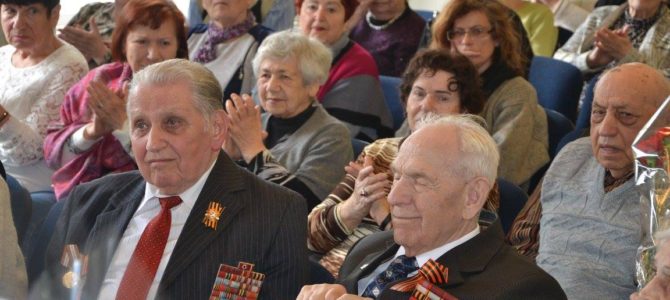
The Lithuanian Jewish Community celebrated Victory Day 2017 inviting the public to the Abi Men Zet Zich Club at the Community. The event included a ceremony to honor the heroes of World War II, our veterans and Community members.

An overflow crowd of about 140 people crammed into the hall and foyer to honor the memory of the fallen and to celebrate humanity’s victory over the Nazi death machine. Time has taken its toll on our veterans and now there are only 14 Jewish WWII veterans still living in Vilnius.

The event was organized by LJC Social Programs Department coordinator Žana Skudovičienė with the aid of volunteers and colleagues, with musical performances by Michailas Filipovas ( Jablonskis), Vadim Volkov and Rita Alterman. The Bagel Shop Café and Natali Restaurant catered the event and Arikas Krupas provided special beverages to the veterans as he has for many years now.

Our thanks go to everyone who took part and especially to the students in the woodwind orchestra of the Santara Gymnasium and Pre-Gymnasium in Vilnius and orchestra conductor Linas Avižienis.

Thank You

LJC Social Programs Department coordinator Žana Skudovičienė thanks everyone who helped make this year’s Victory Day celebrations at the Community such a success for our members and veterans. About 140 people attended Community events for VIctory Day on May 8. A big “thank you!” goes out to the singers Michailas Filipovas ( Jablonskis), Vadim Volkov and Rita Alterman, and to the Bagel Shop Café and Natali Restaurant for the wonderful treats, and to Arikas Krupas who has provided and paid for special beverages for the veterans for many years now. Thank you!

South African Couple Visits Panevėžys Jewish Community

Panevėžio žydų bendruomenėje svečiai iš Pietų Afrikos Respublikos

South African attorneys Jonathan and Sheli Schlosberg visited the Panevėžys Jewish Community where chairman Gennady Kofman told them about the history of the Jews in the Panevėžys region, community events to teach Jewish history and other social, educational and cultural activities.

There are over 30 mass murder sites where Jews were shot and mass graves in the Panevėžys district. The guests were interested in the history of the Jewish graveyard in the city of Panevėžys. They made use of the opportunity to visit the cemetery site and learned in 1966 the cemetery was destroyed and the headstones used to decorate the walls of the Juozas Miltinis Drama Theater there.

Panevėžys Jewish Community chairman Gennady Kofman presented small token gifts to the guests including Jewish calendars and star of David ornaments. The guests expressed gratitude for the comprehensive survey he provided and wished success to the Panevėžys Jewish Community.

Israeli Independence Day Celebration at Sholem Aleichem Gymnasium

“I thank God He has sent us the sun. And I thank God we will be celebrating the 70th birthday of the State of Israel next year,” Miša Jakobas, principal of the Sholem Aleichem ORT Gymnasium told a large crowd of students, teachers, parents, prominent members of the Jewish community and well-wishers on Tuesday at a celebration of Yom haAtzmaut, Israeli independence day, in the athletics field behind the school.

Children assembled well before the official start of the celebration to practice singing and dance moves, and slowly the crowd coalesced into a ring around pupils performing songs in Hebrew, including haTikvah, the Israeli national anthem, and Yerushalayim shel zahav, Jerusalem the Gold, as a warm golden sun promised the belated onset of spring. Small plastic Israeli flags were distributed to everyone who wanted one. On the track field a group of primary-grade students performed a flag marching ceremony, followed by a group of speakers on the opposite side of the crowd where the children had sung.

Principal Miša Jakobas was followed by Lithuanian Jewish Community chairwoman Faina Kukliansky who asked some of the wilder children to settle down, joking such behavior didn’t belong on the playground, although it is acceptable at synagogue. She pointed to a building in the back corner of the school yard and said if things go to plan, this would be a new Jewish kindergarten in Vilnius where Jewish children would receive priority of place. Currently the Jewish kindergarten in Vilnius, Salvija, just across the river from Sholem Aleichem, accepts a large number of non-Jewish children as well and promotes itself as a inclusive multicultural environment, although it emphasizes Jewish holidays and culture.

US Public Television Airs Documentary on Jewish Vilna


Photo courtesy PBS

by Geoff Vasil

Owen Palmquist’s documentary on two sites in Jewish Vilna aired last week on the US public television network PBS’s NOVA program. According to the director, there are rumblings of a broadcast in Lithuania, but so far there are no concrete plans to show it here.

The documentary is called Holocaust Escape Tunnel and focuses on two sites in and near Vilnius: the former Great Synagogue, which was damaged in World War II and torn down by the Soviets in the early 1950s, and the Ponar mass murder site outside Vilnius, where more than 70,000 people were murdered during the Holocaust.

Obviously Ponar got top billing. Last summer as director Owen Palmquist was shooting the footage with his crew, he said they hadn’t settled on any definite title and hadn’t decided what to feature yet, but he had the idea he wanted to talk about the rich Litvak Jewish culture of Vilnius. Focusing on the Holocaust actually makes more sense within the American context, since Lithuania is generally seen as one of the more enthusiastic societies to take up arms and murder Jews during World War II. It’s an easier sell to media managers. Litvak history is complicated and spans centuries; the Holocaust is immediate and “in your face.”

Goodwill Foundation Project: Jews of the Vilna Guberniya

Jews of Vilna Guberniya: Recruits of the Tsar, Cantonists, Conscripts of World War I

The project contains a rich collection of early 20th-century photographs conserved by the Lithuanian State Central Archive. These are photographs of Jewish young people and conscripts to the Russian army from the Vilna guberniya from 1900 to 1915 with authentic inscriptions identifying the subjects, with surnames written on the photographs and confirmed by stamp and seal. The reverse sides of the photographs contain the signature of a Vilna guberniya police official confirming identity, and an oath to the that effect is sometimes attached to certain photographs.

The collection is comprised of 1,222 portrait photographs. This is the largest portrait-photo collection preserved in the archive and is important part of the historical legacy of the Jews who lived in Vilna guberniya. The photographs are very expressive, young men dressed in their finest clothes, looking with hope and aspiration to the future. The fate of many is unknown: did they serve in the Russian army, were they cantonists, or did they manage to avoid serving? This unique period of Jewish history has been little studied and very few publications about it exist. Research on the origins and fates of the people in the photographs is a subject for a separate historical study.

Most of the portraits were taken in Vilna, but others were done in Warsaw, Minsk, Kiev and St. Petersburg. These century-old photographs taken in the salons of famous photographers of the period (Rembrandt, E. Binkovich, A. Straus, S. Fleri and others) are both cultural and historical treasures and an important part of the history of photography about which the general public knows very little at the present time.

Lithuanian Jewish Community Appeal on UNESCO Resolution

Lithuanian Jewish Community
Pylimo street no. 4, Vilnius

To: His excellency, the minister Linas Linkevičius,
Lithuanian Foreign Ministry

APPEAL

May 2, 2017

Honorable minister,

The Lithuanian Jewish Community and world Jewish organizations please ask you to consider new draft proposals for the United Nations Educational, Scientific and Cultural Organization’s (UNESCO’s) resolution “On Occupied Palestine,” which condemn the State of Israel for “military operations taking the lives of civilian victims in the Gaza Strip” and proclaiming that historical holy sites of the Jewish people, Rachel’s Tomb and the Cave of the Patriarchs, belong to Palestine.

The content of the resolution, in opposition to UNESCO’s mission, displays a specific political tone, is extremely unfair to Israel and serves the interests of only one set of the parties, closing the door on bilateral negotiations between the State of Israel and Palestine. UNESCO is being exploited as a political instrument, exacerbating already strained relations between the states involved.

We ask you please in casting the vote of the Republic of Lithuania at the meeting of the UNESCO executive board to make a decision not opposed to the most progressive democracy in the Near East and the cultural, scientific and educational partner of the Republic of Lithuania.

Respectfully,
Faina Kukliansky, chairwoman

Old Jewish Cemetery in Šeduva Receives Special Mention in Europa Nostra Heritage Protection Awards

Šeduvos žydų kapinių įamžinimą įvertino Europos Komsijos įkurta Europa Nostra!

Work in Šeduva, or more precisely work already completed, hasn’t gone unnoticed by Europa Nostra, the heritage protection organization established by the European Commission.

Europa Nostra under a jury selected by the European Commission awarded the Lost Shtetl Project special mention.

Special mentions in the EU Prize for Cultural Heritage/Europa Nostra Awards 2017 were made public today by Europa Nostra and the European Commission. This year the jury granted special mention to 13 heritage achievements from 11 European countries taking part in the EU Creative Europe program.

Special mention goes to outstanding contributions in the conservation and enhancement of European cultural heritage which are particularly appreciated by the jury but did not make it into the final selection to receive an award.

Old Jewish cemetery in Šeduva, Lithuania

In restoring and maintaining the Jewish cemetery in the town of Šeduva, the local community has succeeded in its efforts to restore, commemorate and respectfully maintain the memory of members of their community who, since the Holocaust, no longer live in the town.

For more information, see:
http://www.europanostra.org/2017-eu-prize-cultural-heritage-europa-nostra-awards-special-mentions/

High Accolades from EU for Project to Restore Old Jewish Cemetery in Šeduva

Lithuania was mentioned at the 2017 European Union awards ceremony for cultural heritage protection. The Lost Shtetl Project was one of three restoration projects in Europe to receive honorable mention. The Lost Shtetl Project has restored the old Jewish cemetery in Šeduva, Lithuania.

Jews of Šeduva were interred there until World War II and about 1,300 headstones and fragments were discovered there, following restoration of about 800 grave stones, of which 400 have been identified, the oldest going back to 1812 and the newest 1936.

Full story in Lithuanian here.

Veisiejai Commemorates Jewish Resident and Inventor of Esperanto

At the invitation of his old soccer friends from Veisiejai (Vishai, Vishey), Lithuania–Viesiejai alderman Zenonas Sbaliauskas and true Veisiejai patriot Linas Masys–Kaunas Jewish Community chairman Gercas Žakas personally visited this once predominantly-Jewish town. Žakas said he was impressed by how well the town is kept up and by its silence and romance, provided by Lake Ančia, which divides the town into two parts. He was also pleasantly surprised by how seriously the small town takes the commemoration of its one-time resident, Dr. Ludowik Lejzer Zamenhof, the Jewish doctor and linguist who gave birth to the artificial language of Esperanto. The town is also taking excellent care of the Jewish cemetery, although its appearance has changed, and the Jewish homes still standing there, Žakas reported.

Kaunas Community Marks One Year since Death of Yudel Ronder

A year has passed since the Kaunas Jewish Community lost one of our most senior and most honored members, Yudel Ronder. His memory was honored with a prayer before Sabbath began, and later over dinner many shared their memories of the extraordinary man. Highly intelligent, cultured, warm, sincere and honest, his bright wit and wisdom accompanied him even during grave illness at hospital until the last moment of his life. He was extremely active and interested in a broad range of subjects. He began many projects and activities. Even in the dark Soviet era, he sought out rescuers, told their stories and concerned himself with making sure they were honored and taken care of. He also looked for Holocaust perpetrators and without fear met with them, trying to get inside their consciences and disturb their peaceful sleep. He was one of the first Jews involved in volunteer club activities during the Soviet era, the enthusiastic director of a drama group whose performances attracted scads of viewers. The performances were in Yiddish and he sought out actors fluent in the language. The current chairman of the Kaunas Jewish Community, Gercas Žakas, who knows Yiddish well, was invited to join the troupe and became one of main actors there. Ronder took care of his people and organized welfare for the poor. He made contact with German welfare organizations, earned their highest respect and received funding for material aid for members of the Kaunas Jewish Community.

Originally from Kėdainiai (Keydan), he lost his family and relatives in the Holocaust. He survived by being evacuated to the Soviet Union and served in the 16th Division. Ronder dedicated all his energies and devoted his heart to others. People who had the opportunity to make his acquaintance have never forgotten him and his warm stories about his grandfather. Yudel’s grandson Dovydas remembers them well and he came from Germany especially to mark the one-year anniversary of Yudel’s death. Kristina, the daughter of Yudel’s long-time care-giver Stefa Ancevičienė who became very close to him, also remembers his stories well.

The Roma Trail of Tears

Romų kančių keliai

The historian Ilja Lempertas said: “There was not a Jewish Holocaust and there was not a Roma Holocaust. There was one Holocaust. It began when back before the war all the efforts of one country were concentrated for exterminating people of other ethnicities.”

There is an abundant literature testifying to the Jewish experience of the Holocaust, but much less about the Roma experience. Materials collected by V. Beinortienė ir D. Tumasonytė from Roma survivors of the concentration camps and their families, including photographs and archival documents, will fill that gap partially.

With permission of the authors, we present some excerpts from Beinortienė and Tumasonytė’s book “Exploring the Untold Suffering of the Roma People of Panevėžys: 1941–1945.”