Heritage

School House on Great Synagogue Site to be Demolished

School House on Great Synagogue Site to be Demolished

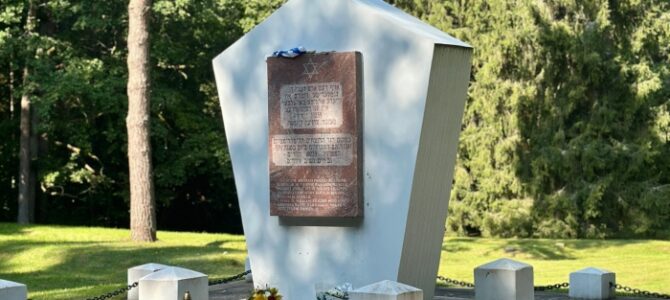
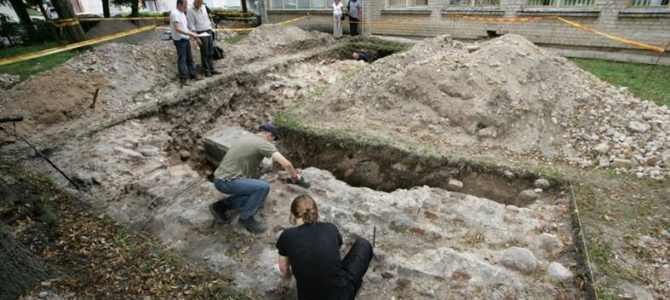
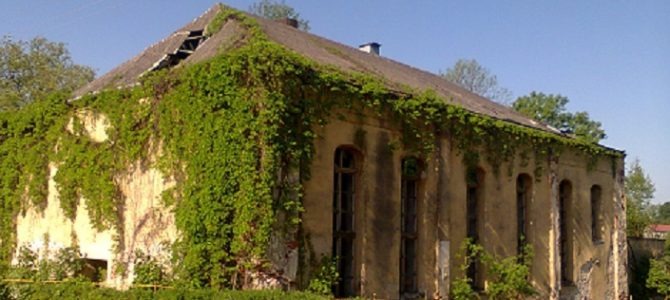
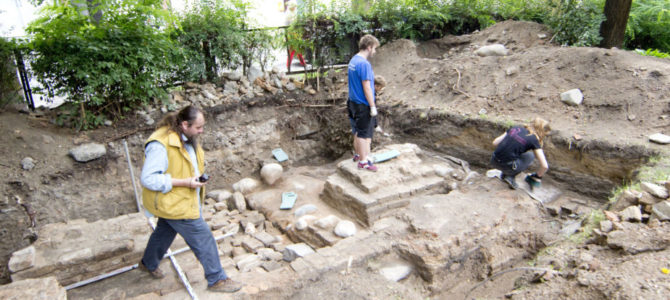
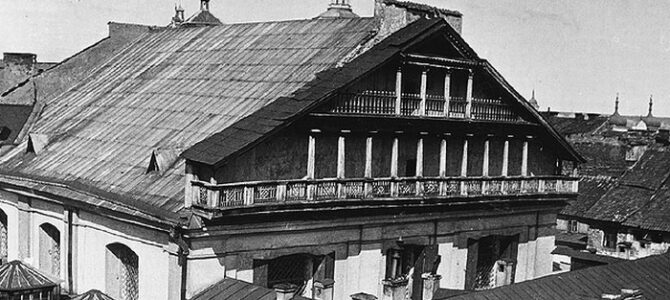
The Vilnius news website madeinvilnius.lt reports work to remove a brick building, a former school, above the subterranean remains of the Great Synagogue in Vilnius is set to begin August 18. The city municipality says the removal is necessary to both provide access to and protect the archaeological site which includes the Great Synagogue and adjacent mikvot.

Full story in Lithuanian here.

The Enemy Within: The Treacherous “As a Jew” Jews

The Enemy Within: The Treacherous “As a Jew” Jews

by Grant Gochin, August 11, 2025

For three decades, my soul has roared with an unquenchable fire, forged in the crucible of my family’s slaughter in Lithuania. No polished diploma adorns my walls–my education was ripped from the smoldering ruins of personal tragedy and honed in the blood-soaked trenches of diplomacy across Africa’s most perilous corners. This is no academic sermon; it’s a primal scream, carved from scars, seething rage and an ironclad vow to never let genocide’s shadow fall on my people again. The ancient blood libel–that vile lie blaming all Jews for the crimes of none, or sometimes, possibly, a few, a grotesque slander conjured from thin air to vilify our people without a shred of truth–has been resurrected by traitors who wield their Jewish identity like a blade to disembowel our nation. These are the “As a Jew” Jews, a festering betrayal we must rip out root and branch.

Israeli President and Wife Visit Lithuanian Jewish Community

Israeli President and Wife Visit Lithuanian Jewish Community

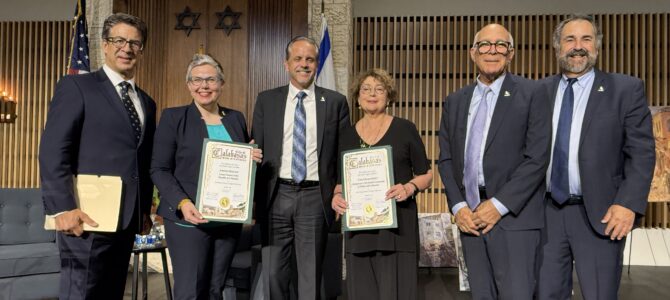
“I am a proud Litvak,” Israeli president Isaac Herzog told an audience of LJC members and students from the Sholem Aleichem ORT Gymnasium at the Choral Synagogue in Vilnius Monday last week.

He and wife Michal watched a performance by younger students from the school and the president fielded questions from students afterwards.

“Jews have been living in Lithuania 600 years now. This is our home, our gomeland, while Israel is our historical homeland which we support and always weill,” Lithuanian Jewish Community chairwoman Faina Kukliansky told the assembly.

LJC on Government Plan to Change Old Šnipiškės Jewish Cemetery Memorial

LJC on Government Plan to Change Old Šnipiškės Jewish Cemetery Memorial

The Lithuanian Jewish Community, uniting 32 organizations across Lithuania and abroad, is deeply surprised by the unilateral decision made by the Government under the leadership of Gintautas Paluckas to disregard a project previously approved back in 2024 for the memorialization of the old Šnipiškės (Shnipishok, formerly Piromont neighborhood) Jewish cemetery and the existing commemorative site at the Palace of Sports. This project has been under development for several years and was carefully coordinated by a working group composed of representatives from the Lithuanian Jewish Community, the European Jewish Cemetery Preservation Committee, the American Jewish Committee’s Department of International Affairs and other organizations dedicated to preserving Jewish heritage.

The solutions proposed so far have ensured appropriate respect for the Jews buried in the cemetery as well as historical events related to Lithuania’s struggle for independence and the victims of the tragic events of January 13, 1991, at the Vilnius television tower.

We emphasize the decision to alter the intentand content of the memorial was made without prior consultation with the Lithuanian Jewish Community or any other Jewish organizations anywhere. We were not informed of any changes to the original plans.

The Lithuanian Jewish Community will refrain from further commenting on this decision for now because we have not received confirmed information regarding the content of this new plan nor the reasons behind this change in course.
Nevertheless, we wish to note that such actions undermine trust in our state and damage Lithuania’s reputation in the eyes of strategic partners.

Faina Kukliansky, chairwoman
Lithuanian Jewish Community

Embattled PM Has Big Plans for Old Jewish Cemetery

Embattled PM Has Big Plans for Old Jewish Cemetery

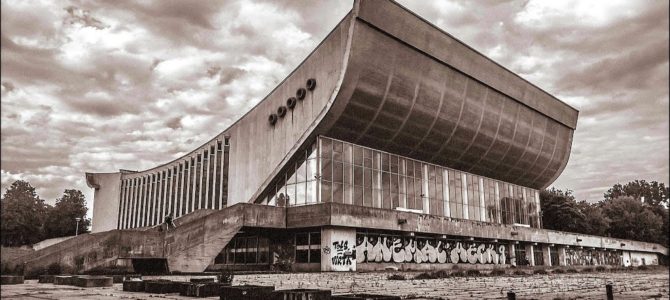
The Lithuanian and Russian news portals madeinvilnius.lt and ru.delfi.lt are reporting Lithuanian prime minister Gintautas Paluckas (Social Democratic Party) has renewed government plans to refurbish the former Palace of Sports complex in central Vilnius and to renovate the Jewish cemetery where it was built and which surrounds the building.

Paluckas is facing calls to stand a confidence vote in parliament following revelations of sweet-heart loan deals and large discounts for real estate purchases.

According to both news sites, Paluckas wants to renovate the large but decrepit building for use as a conference center, the same plan floated by earlier governments. This iteration of the on-going talk of renovation now includes plans by the PM to install a museum within that space for commemorating the first meeting of Sąjūdis there, and victims of the January 13, 1991, Vilnius television tower massacre. Sąjūdis officially became a political party there and went on to contest elections to the Lithuanian Supreme Soviet against the Lithuanian Communist Party led by Algirdas Brazauskas. Original member of Sąjūdis and later Brazauskas supporter Arvydas Juozaitis is currently completing a boom on the history of the early Lithuanian independence movement which includes a detailed description of that founding meeting, according to pre-publiicty from the author himself.

North Americans Visit Ukmergė

North Americans Visit Ukmergė

Natania Ramba visited Ukmergė this week with her film crew. She’s filming a documentary about Jews from Ukmergė, or Vilkomir in Yiddish.

Her grandfather also came from Vilkomir.

Ukmergė Jewish Community chairman Artūras Taicas was interviewed for the film.

The Jewish population was almost entirely murdered during the Holocaust.

Taicas showed Ramba around the city just a short drive north of Vilnius, including Jewish heritage sites.

They plan to show the film to descendants of Jews from Vilkomir and to Litvals in general in Mexico and the United States.

Tisha b’Av and the Ongoing Struggle against Lithuanian Holocaust Revisionism

Tisha b’Av and the Ongoing Struggle against Lithuanian Holocaust Revisionism

by Grant Gochin, July 18, 2025

Tisha b’Av, observed annually on the ninth day of the Jewish month of Av, is a solemn day of mourning in Judaism, commemorating a series of tragedies that have befallen the Jewish people, most notably the destruction of the First and Second Temples in Jerusalem. Over time, this day has also become a time to reflect on other catastrophic events in Jewish history, including the Holocaust, which saw the systematic murder of approximately six million Jews by Nazi Germany and its collaborators between 1941 and 1945. For many Jewish communities, Tisha b’Av serves as a moment to mourn the six million victims of the Holocaust, often through the recitation of kinnot, liturgical dirges that lament historical persecutions, including those of the 20th century. As we commemorate these profound losses, however, a troubling issue persists in Lithuania: the government’s ongoing efforts to revise and deny its historical role in the Holocaust, a matter I have confronted through extensive legal action. This article explores the intersection of Tisha b’Av’s remembrance, Lithuania’s Holocaust revisionism and my legal battles to expose this distortion, drawing on insights from my work and the broader discourse on antisemitism.

Tisha b’Av: A Day of Collective Mourning

Tisha b’Av is marked by a 25-hour fast and the recitation of the Book of Lamentations, which mourns the destruction of Jerusalem. Over centuries the day has evolved to encompass additional tragedies, such as the expulsion of Jews from Spain in 1492 and the Holocaust. Religious communities often incorporate special kinnot composed after the Holocaust, such as those by Rabbi Shimon Schwab in 1959 and Rabbi Solomon Halberstam in 1984, to honor the six million Jewish victims. This practice underscores the day’s role as a time to reflect on the enduring impact of antisemitism and the importance of historical truth. The Holocaust as a pinnacle of antisemitic violence is a focal point of this commemoration, making Lithuania’s revisionist policies particularly jarring in the context of Tisha b’Av.

Šiauliai Jewish Community Celebrates 100th Birthday of Leiba Lipshitz

Šiauliai Jewish Community Celebrates 100th Birthday of Leiba Lipshitz

from the newspaper Šiaulių kraštas

The Chaim Frenkl Villa of the Aušra Museum in Šiauliai hosted a celebration of the 100th anniversary of the birth of Leiba Lipshitz on July 16. Lipshitz chronicled Jewish life in Šiauliai, researched regional history and was a well-known publix figure. People called him a walking encyclopedia. He survived the Stuthoff and Dachau concentration camps but lost his entire family in the Holocaust. He went back to his hometown and dedicated the rest of his life to documenting Jewish history and life in Šiauliai.

Historian Jonas Kiriliauskas delivered a presentation of Lipshitz and his views on life at the ceremony.

Natalja Cheifec on Vegetarianism and Judaism

Natalja Cheifec on Vegetarianism and Judaism

Natalja Cheifec continues her lecture and discussion series on Jewish tradition. The next internet zoom meeting on Thursday will focus on vegetarianism in Jewish life. From the story of Cain and Abel in biblical history, Nazi theories about subhumans to the 21st century controversial ad campaign “Holocaust on your plate,” she’ll cover the gamut of issues from the micro to the macro view on diet, including:

• When the dinner table transforms into a “sacred altar;”
• Joy from meat and wine: myth or truth? {from Maimonides);
• Jewish principles regarding meat consumption;
• The heirarcyh of all God’s creatures;
• Sympathy for animals in Jewish tradition, why people were given dominion over the animals, and the contradiction of pity for animals and meat consumption.

To receive zoom credentials, click here.

Time: 6:00 P.M., Thursday, July 17
Place: zoom vidphone app, internet

Kaunas Jewish Community Celebrates Volf Kagan’s 125th Birthday with Concert

Kaunas Jewish Community Celebrates Volf Kagan’s 125th Birthday with Concert

The Kaunas Jewish Community has the pleasure of inviting you to a celebration of the 125th anniversary of the birthday of Volf Kagan with a concert performed by the Kiryat Ono youth orchestra from Israel.

Kagan came from Balbirishok and served in the volunteer army in the first Lithuanian republic. He fought in the early battles for independence and was awarded the medal Knight of the Order of the Cross of Vytis twice.

The Kiryat Ono youth orchestra’s program includes works by Lithuanian composer Čiurlionis, traditional European and Near Eastern melodies contemporary Israeli music and some excursions into jazz and pop arrangements.

The concert is free and open to the public.

Time: 5:00 P.M., Monday, July 21
Place: Great Hall, Vytautas Magnus University, Gimnazijos street no. 71, Kaunas

LJC Forges Agreement on Judaica Research with Vilnius University

LJC Forges Agreement on Judaica Research with Vilnius University

The Lithuanian Jewish Community has signed a cooperation agreement with Vilnius University for closer collabaoration in Jewish studies and Judaica research, including joint efforts initiating new educational and cultural projects.

LJC chairwoman Faina Kukliansky said: “This is a great honor and very useful for us … especially with Vilnius University with its centuries of learning and research. Jewish history and culture doesn’t start and end with the Holocaust. There is a millennium of the Yiddish language, a rich history and an abundance of deep and significant traditions which we want to pass on to future generations.”

Vilnius University rector and professor Rimvydas Petrauskas commented: “The Lithuanian Jewish Community is an important partner for us. This agreement is an opportunity to stimulate knowledge of the history and even the present-day of the Jewish community.”

Pro-rector for partnerships professor Artūras Vasiliauskas and organization contact coordinator Daniel Šematovič were also present at the signing of the historic agreement.

Lithuanian Jewish Community Condemns Desecration of Ponar Memorial Complex

Lithuanian Jewish Community Condemns Desecration of Ponar Memorial Complex

The anti-Semitic attack on the Paneriai (Ponar) Memorial Complex commemorating the victims of the Holocaust there victims there is an act of vandalism equivalent to the desecration of graves.

During World War II 96% of Lithuania’s Jewish population, more than 200,000 people, were murdered. Nearly half were killed in Paneriai. There is no Litvak family untouched by the Holocaust, which is why Paneriai is not merely a place where we lay flowers and light candles several times a year. It is a sacred site where every patch of soil covers the bones of the murdered. Here we mourn our loved ones, reliving their terror and suffering each time we visit. It is cowardly and despicable to fight the dead, yet such is the tactic of terrorists, to rape women, to kidnap and torture the elderly, to murder children in front of their mothers. And to smash windows, attack synagogues which also house schools and shoot diplomats. This attack at the Paneriai Memorial Complex is part of a global wave of rising anti-Semitism.

Regrettably the number of anti-Semitic acts of vandalism in Lithuania continues to increase. But no matter what the terrorists do, the Lithuanian Jewish Community will continue to stand firm with Israel in its struggle for survival and its right to self-defense.

We thank everyone who has condemned this attack and we call upon Lithuanian law enforcement and state institutions to take action and identify those responsible for this anti-Semitic offense.

Garage

Garage

Members of the Kaunas Jewish Community and the public commemorated the Garage massacre last Friday at the location where it happened in Kaunas.

On June 27, 1941, Lithuanians murdered about 50 Jews at the Lietūkis automobile service garage in Kaynas as onlookers watched. They tortured the men by beating them with crowbars and forcing high-pressure water from fire hose down their throats. The victims were pulled off the streets at random for being Jewish. When they had killed all the Jews, they placed the corpses in a pile and one man climbed on top and performed a Lithuanian song on accordion. Some eye-witnesses claimed it was the Lithuanian anthem, other sources indicate it was a different song. Photographs were taken of the massacre as it was carried out. The infamous Garage massacre was one of many pogroms carried out in Kaunas during the last two weeks of June and into July and August..

After the commemoration in situ, kaddish was said for victims of the pogroms and Holocaust at the Jewish cemeteries in the Slobodka and Žaliakalnis neighborhoods in Kaunas.

Kaunas Jewish Community chairman Gercas Žakas thanked everyone for participating and the Kaunas municipality for their support.

Vilna Gaon Museum Presents Samuel Bak Catalog

Vilna Gaon Museum Presents Samuel Bak Catalog

The Samuel Bak Museum at the Vilna Gaon Jewish History Museum’s Tolerance Center will host a presentation of a catalog of works of art by Samuel Bak. There will be a number of speakers including Bak himself.

Time: 6:00 P.M., July 2
Place: Samuel Bak Museum, Naugarduko street no. 10, Vilnius

Hundredth Anniversary of Birth of Leiba Lipshitz in Šiauliai

Hundredth Anniversary of Birth of Leiba Lipshitz in Šiauliai

The Šiauliai District Jewish Community invites you to come celebrate the 100th anniversary of the birth of Leiba Lipshitz. The Community and the Aušra Museum in Šiauliai will mark the date with an event commemorating this chronicler of the Šiauliai Jewish community in the 20th century and well-known personality with a presentation by historian Jonas Kiriliauskas.

Time: 4:00 P.M., Wednesday, July 16
Place: The Chaim Frenkl Villa and Museum, Vilnius street no. 74, Šiauliai

Hundredth Anniversary of the YIVO in Vilnius

Hundredth Anniversary of the YIVO in Vilnius

An international seminar for Lithuanian teachers dedicated to the 100th anniversary of the founding of the YIVO Institute (Jewish Research Institute) in Vilnius was held at the Martynas Mažvydas National Library, and a virtual museum was presented with a prepared methodological manual entitled “Beba’s Story,” based on the story of Beba Epstein, a girl who lived in Vilnius.

The opening of the seminar was attended by library director Aušrinė Žilinskienė, Israeli ambassador Hadas Wittenberg Silverstein, Lithuanian Jewish Community chairwoman Faina Kukliansky, MP Emanuelis Zingeris, diplomats from the USA and Germany and deputy Vilnius mayor Vytautas Mitalas.

The seminar was attended by 40 teachers from different locations in Lithuania who are interested in the history of Lithuanian Jews and the possibilities of using various historical sources in their curricula.

Speakers included Egidijus Aleksandravičius of Vytautas Magnus University, YIVO sirector Jonathan Brent, director of the National Library’s Judaica Center Lara Lempertienė and historian Saulius Sužedelis.

The seminar was organized by the YIVO Institute (USA) in cooperation with the International Commission for the Evaluation of the Crimes of the Nazi and Soviet Occupation Regimes in Lithuania, the Martynas Mažvydas National Library, the city of Vilnius, the Goodwill Foundation and the Lithuanian Jewish Community.

Brothers and Sisters in Arms in the Service of Remembrance

Brothers and Sisters in Arms in the Service of Remembrance

by Sergėjus Kanovičius, www.lrt.lt

When a half year ago German ambassador to Lithuania Cornelius Zimmermann asked me whether I’d object to an initiative by which soldiers from a Germany armored brigade would help document Jewish cemeteries in Lithuania, I was at a loss for words. The first thought which occurred to me was, why now Lithuanian soldiers?

But as I sat in the waiting room of the German embassy… Over 14 years in the life of Maceva (Matseva, Hebrew for monument), there’s been a bit of everything–Austrian and German volunteers, Christian, Lithuanian high school students, US embassy staff, visitors from Israel. But Bundeswehr soldiers maintaing Jewish cemeteries and documenting grave monuments? Why?

Journey to Agartha Scouting Jamboree in Panevėžys

Journey to Agartha Scouting Jamboree in Panevėžys

A jamboree of scouts from across the Panevėžys district including a contingent of Jewish scouts met in the Žalioji Forest and camped there from May 31 to June 1.

Almost 150 scouts already on scene greeted a minbus full of Jewish scouts just before the opening ceremony for the campsite.

The scouts were divided into age groups and activities for the youngest included handicrafts and botanical identification. Scouts aged 10-14 played games to increase vigilance, leadership and strategic thinking. Scouts 14-18 honed their skills in constructing shelters (knots, wooden construction, tool safety), built a dug-out bunker and cooked for themselves.

This was the first time Jewish scouts appeared with their new official troop title, the Yitzhak Meir Jewish Scouting Club.

The jamboree was called A Journey to Agartha, the mythical subterranean kingdom popularized in Europe by Ferdynand Ossendowski and René Guénon.

Bundeswehr, Maceva Clean Up Old Jewish Cemetery in Merkinė

Bundeswehr, Maceva Clean Up Old Jewish Cemetery in Merkinė

Soldiers from the German Bubdeswehr’s 45th armored brrigade and members of the Maceva Jewish cemetery preservation group spent four days last week cleaning up the old Jewish cemetery and Holocaust monument in Merkinė in southeast Lithuania.

Merkinė is the site of early if not the earliest Jewish settlement in Lithuania.

Brigade commander Christoph Huber, German ambassador to Lithuania Cornelius Zimmermann and Lithuanian Jewish Community chairwoman Faina Kukliansky visited the cemetery to see the soldiers’ work at a special ceremony for concluding the upkeep mission.

About 130 soldienrs working with people from Lithuania’s Maceva Jewish cemeteries initiative removed moss, polished headstones and cleared brush from the site. Members of Maceva photographed the markers and cemetery as well.

One German soldier stationed in Lithuania since April said: “It’s not an obvious thing to me that I as a German soldier can contribute to the meaningful work by Maceva at Jewish cemeteries. This was an especially moving experience for me, to look at our complicated page of history in Lithuania.”

From Lithuania to Israel via Siberia

From Lithuania to Israel via Siberia

The Vilnius Jewish Public Library is pleased to announce a presentation of a  translation of Shmaryahu Pustopetsky’s book From Lithuania to Israel via Siberia on Monday, June 16.

Translators Regina Kopilevich, an accomplished genealogist and tourist guide for Jewish Vilna, and historian and author Dalia Epšteinaitė will discuss the book with sociologist and historian Violeta Davoliūtė who specializes in family studies as moderator.

Pustopetsjy was a military officer in pre-World War II independent Lithuania, and was deported to Siberia, He was an active member of the Beitar movement before the Holocaust. In the book, he discusses both world wars, Litvak culture in the 1930s, the story of the so-called prisoners of Zion and the brutal prison camps under Stalin.

Time: 6:00 P.M., Monday, June 16
Place: Vilnius Jewish Public Library, Gedimino prospect no. 24, Vilnius