Greetings

LJC Birthdays in January

Happy birthday to all members of the communities celebrating their birthdays in January!

Vilnius Jewish Community

Nina Dubrovskaja (January 22)
Ninel Efros (January 15)
Malka Fišer (January 9)
Borisas Kacas (January 5)
Galina Matskevitch (January 19)
Judif Rozina (January 8)
Ilana Rozentalienė (January 16)
Mira Bloch (January 15)
Ela Kruglova (January 12)
Zinaida Vinickaja (January 12)
Zofija Tunkel (1942 01 10)
Jurij Riabov (January 13)
Jakovas Bumšteinas (January 26)
Polina Kurbanova (January 5)
Michail Safjan (January 26)
Dina Ščerbinkina (January 23)

Kaunas Jewish Community

Civa Čereškienė (January 13)

Panevėžys Jewish Community

Valentina Darinceva (January 28)

Vilnius Metropolitan Gintaras Grušas’s Hanukkah Greetings

grusas

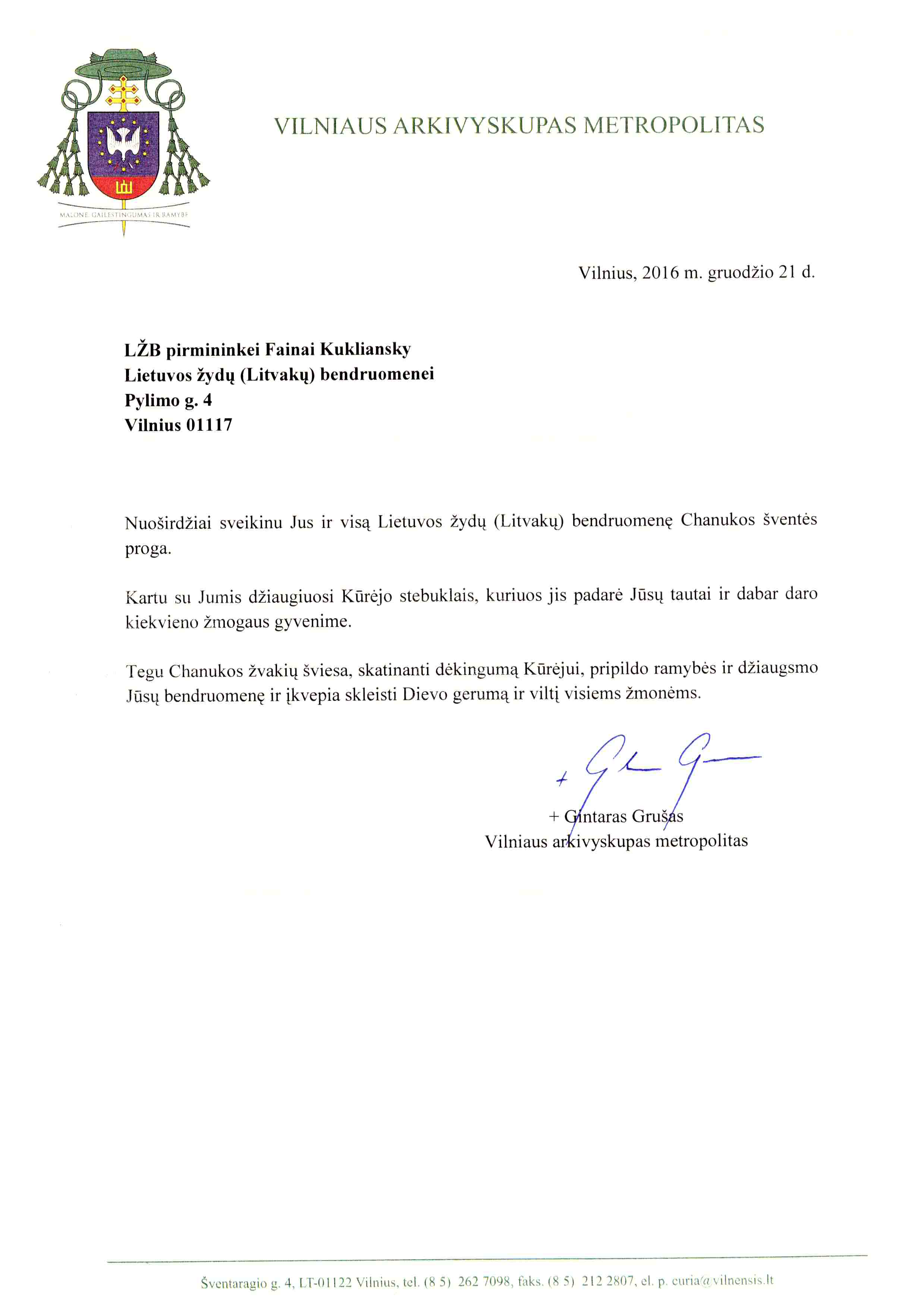
December 21, 2016

To Faina Kukliansky, chairwoman
Lithuanian Jewish Community

I sincerely congratulate you and the entire Lithuanian Jewish (Litvak) Community on the holiday of Hanukkah.

Together with you I take joy in the miracles of the Creator, which He has done for your people and is now effecting in the life of every human being.

May the light of the Hanukkah candles, enjoining us to give thanks to our Creator, fill your community to overflowing with peace and joy, and encourage all of us to spread the goodness and hope of God to all people.

[signed]
+ Gintaras Grušas
Vilnius metropolitan archbishop

Kaunas Jewish Community Celebration

The Kaunas Jewish Community send their greetings for the New Year and Hanukkah, both of which members celebrated at a number of locations in Kaunas.

kaunm21

Festivities included lighting candles together, a violin and saxophone concert, a pancake-eating contest and potato pancakes and doughnuts for all.

Holiday celebrations were organized using Goodwill Foundation and LJC Social Program funds.

Challenges of History after the Hanukkah Miracle

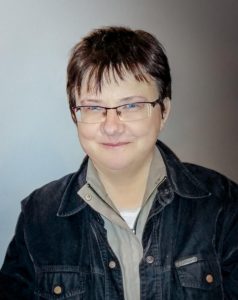
ausra-pozeraite

Dr. Aušra Pažėraitė

The discussion rages on on the social networks about the wisdom or folly of lighting large menorah displays in non-Jewish cities, whether or not to say the blessing, and how much authentically Jewish is really left in the holiday of Christmukkah, as images of square and overturned Christmas trees with branches forming menorahs are exchanged. In respect to all this, we could turn back again to the historical opposition between Greek and Jew and the Jewish victory. The more salient aspect today, though, having in mind the different possible interactions of a religious or ethnic minority with the dominant host culture, is the history of what happened “Post-Hanukkah.”

It’s ironic that, as researcher Erich Gruen points out, after the Hasmoneans won the independence of the state of Judea and established a royal dynasty, and after they established the Torah as the law of the land (or constitution), the Hellenization of the country only increased, and accelerated throughout the period of the kingdom. Martin Hengel also believes the Judaism of Judea in the period was highly Hellenized, although he tries to frame it within “the conflict between the Judaism of Palestine and the spirit of the age of Hellenism” and is forced to explain the crisis of the Maccabee era did lead to a reaction in Judea which put a halt to syncretism, channeled intellectual activities to Torah study and blocked any criticism of the cult and the law. As many authors note, the influence of Hellenism in Judea is obvious, while literature written in the Land of Israel clearly differs from that written in the Diaspora. There Hellenistic literature was neither completely assimilated, nor was it entirely rejected. (As an analogue one might think about contemporary Israel which includes a completely modern secularism differing in none of its essentials from that of the West, and also extremely segregated religious communities.)

Historian Louis H. Feldman presents different artifacts discovered by archaeologists in the Land of Israel from Hellenistic times. Among them are representations of different Greek gods and figures in synagogues, private homes and other locations. Feldman says, based on Rab Gamaliel (first century CE) in the mishnah tractate Avoda Zara, the rabbis of the period weren’t frightened of the pagan deities and didn’t believe they could somehow engage Jews in the pagan cults. Gamaliel says the bath h went to was not the ornament of Aphrodite, but on the contrary, Aphrodite was the ornament of the bath, a mere decoration. This view might have been the one prevailing among the sages of Judea at the time, namely, that the use of Greek gods and other Greek elements in daily life was a degradation of these gods, in modern terms perhaps their “commodification,” and in no way their worship. Feldman shows third-century rabbi Yohan was likewise unopposed to mosaics portraying Aphrodite.

Holiday Greetings from Gediminas Kirkilas

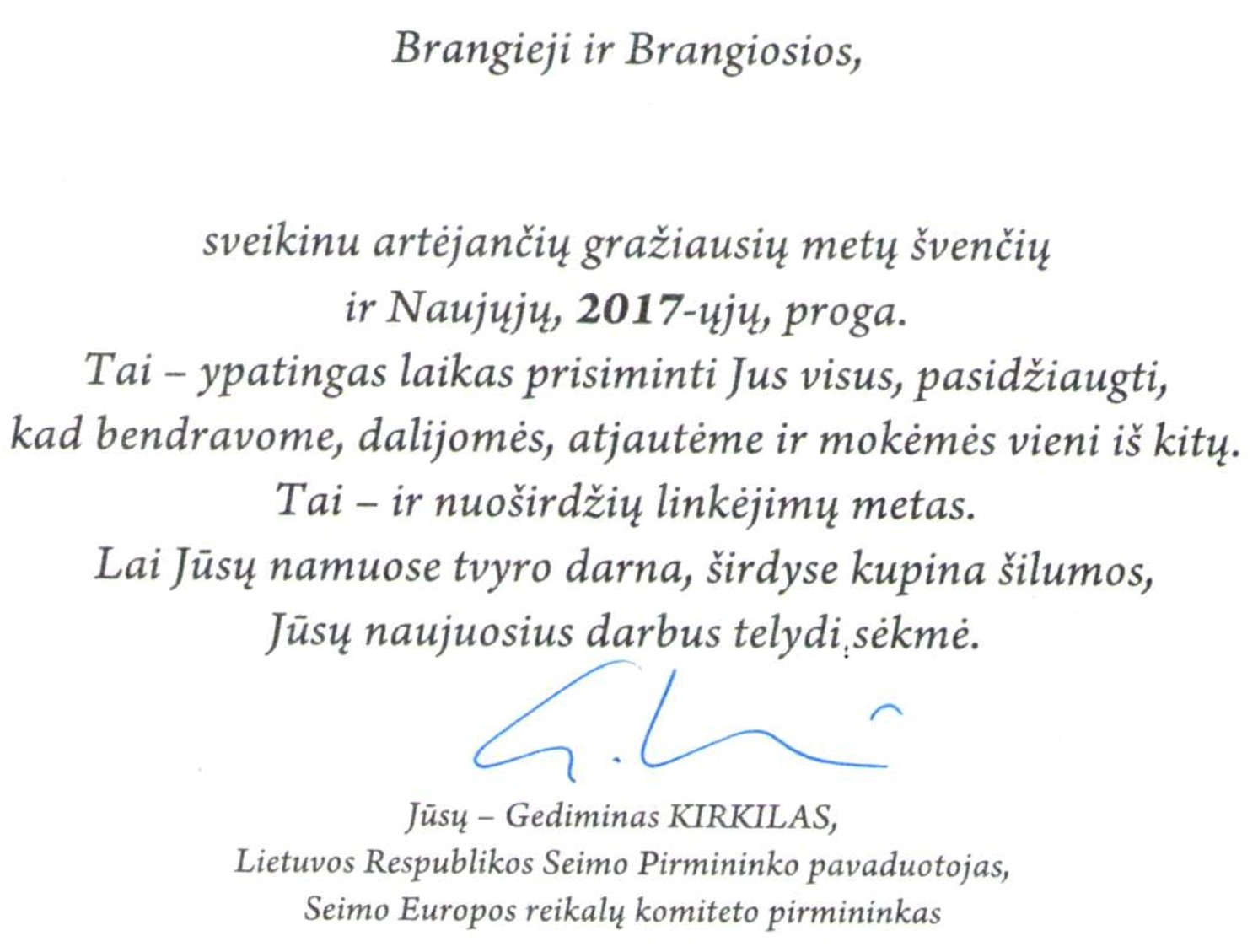
kirkilas-page-0-1

Deputy speaker of parliament and former prime minister Gediminas Kirkilas sends holiday greetings to the Lithuanian Jewish Community. Unofficial translation:

Dear ladies and gentlemen,

I greet you on the occasion of the coming holiday, the most beautiful holiday of the year and the coming New Year, 2017. This is a special time to remember all of you, to take joy in our having spoken, shared, sympathized and learned from one another. This is a time for sincere and heartfelt greetings. May harmony prevail in your home, may your hearts be filled with warmth and may success follow upon your new endeavors.

Yours,

[signed]
Gediminas Kirkilas,
deputy speaker,
chairman of the European Affairs Committee
Lithuanian Parliament

Panevėžys and Ukmergė Jewish Communities Celebrate Hanukkah

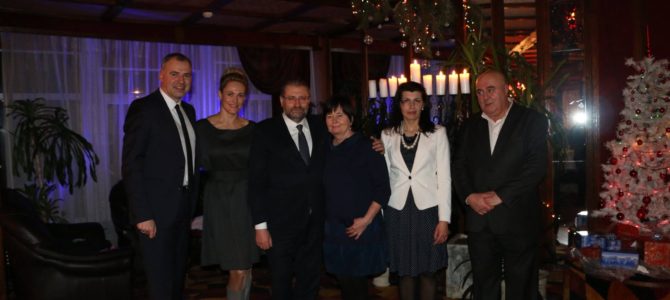
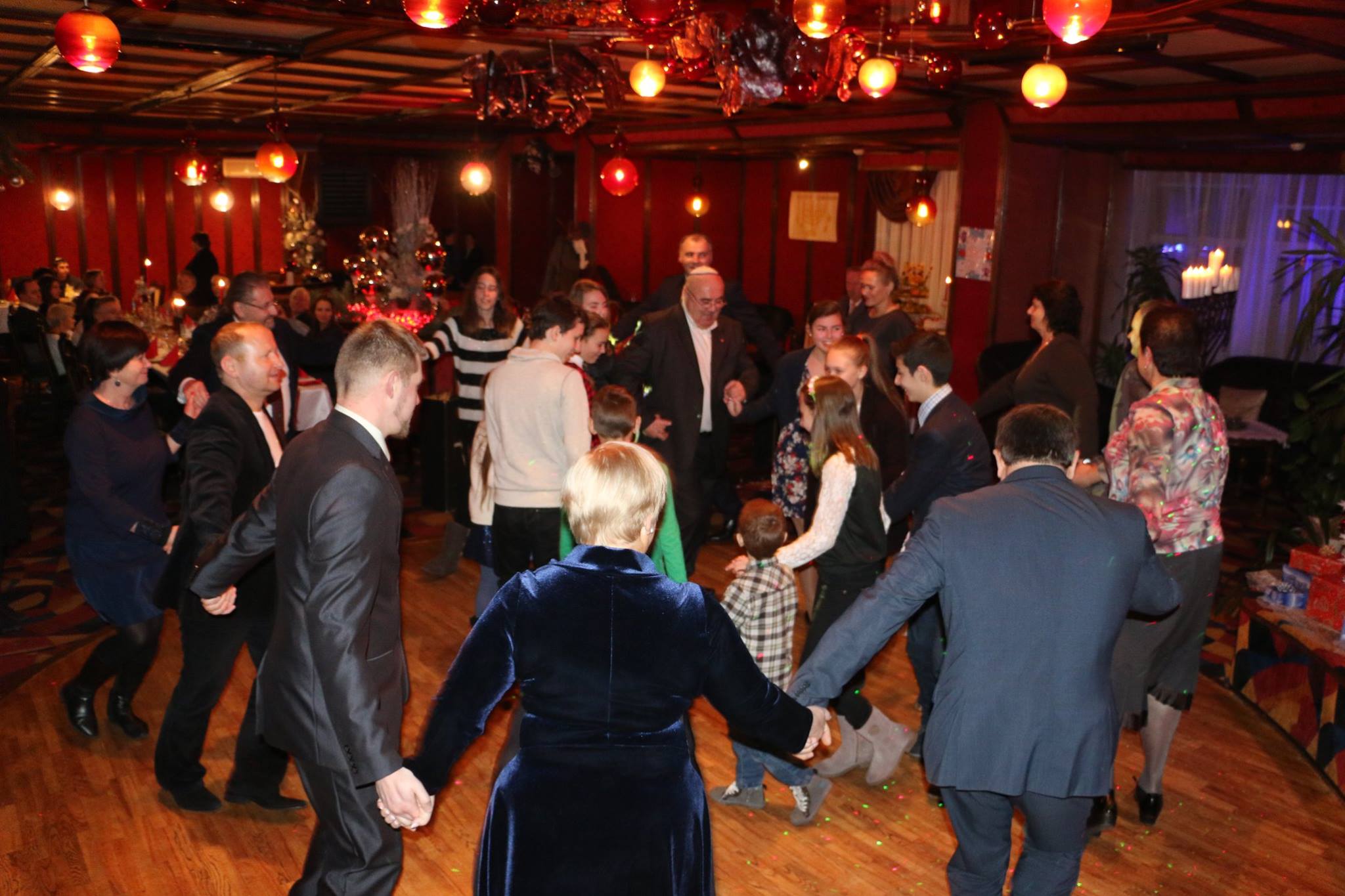
On December 30 the Panevėžys City and Ukmergė Regional Jewish Communities celebrated Hanukkah together at the restaurant Vakarinė žara, where they have held such celebrations for several years now. The event was heavily attended by members of both communities, their families and honored guests, including Panevėžys mayor Rytis Račkauskas, Panevėžys Jewish Community patron Yuri Grafman, the historian Vidmantas Janukonis and city council members Galina Kuzmienė and Alfonsas Petrauskas, among others. Attendees appeared to have a wonderful time and there was much conversation and many greetings. Participants enjoyed traditional Hanukkah treats including latkes and doughnuts.

ukmcha7

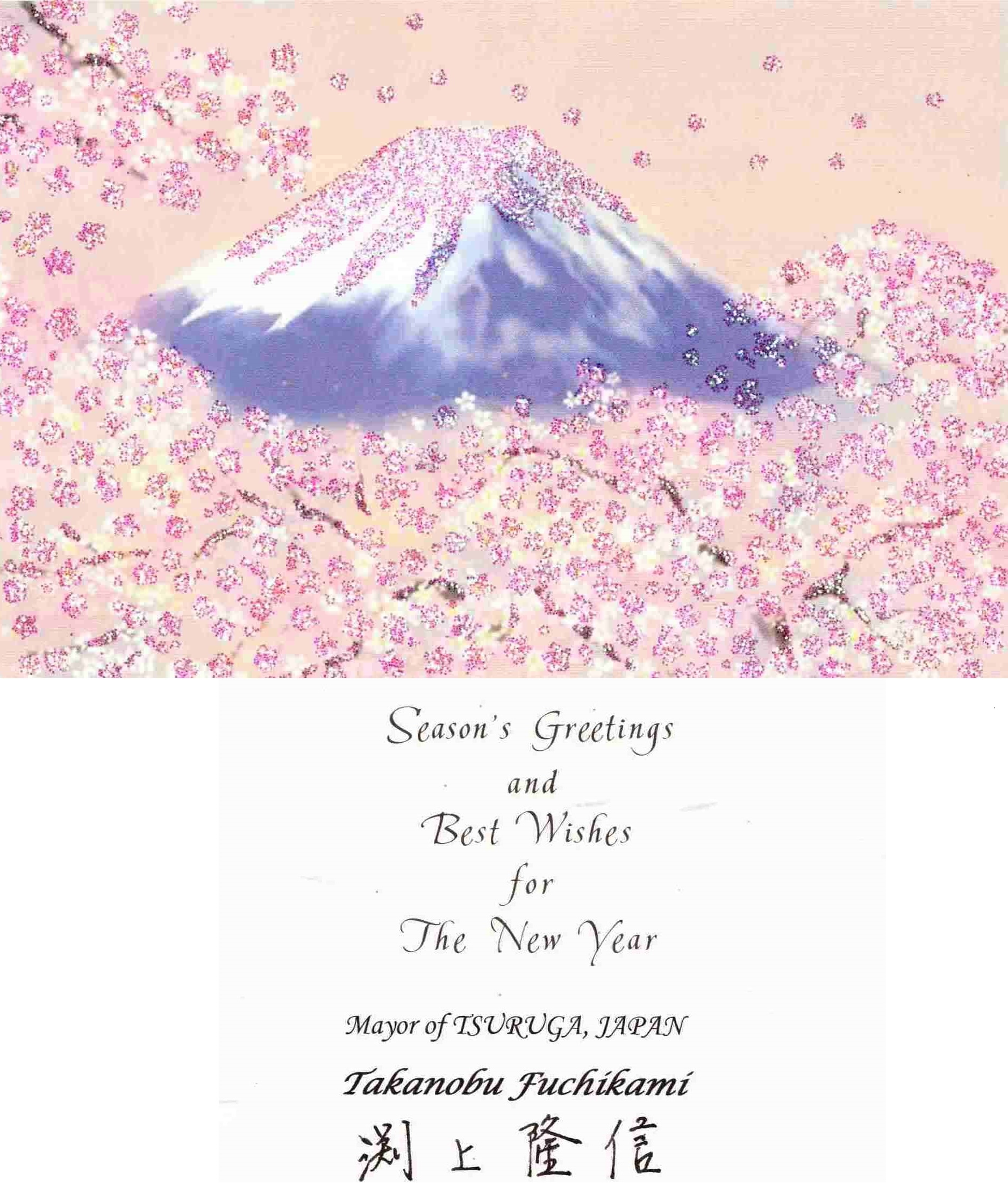
Greetings from Japan

Mr. Takanobu Fuchikami, the mayor of Tsuruga, Japan, sends holiday and New Year’s greetings to the Lithuanian Jewish Community. Tsuruga is a Japanese port city which received Jewish refugees issued transit visas by Japan’s consul in Kaunas, Lithuania, Righteous Gentile Chiune Sugihara.

scan_20161230_095844435_001

Hanukkah at Choral Synagogue

Chanukos šventė Vilniaus Choralinėje sinagogoje 2016

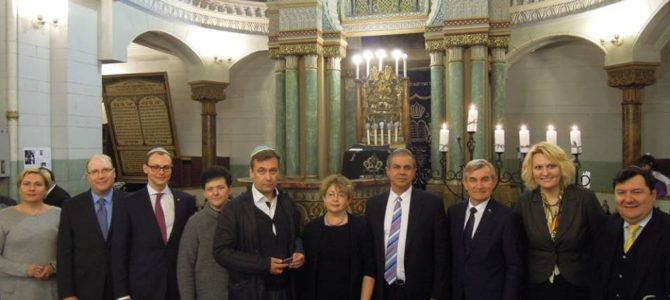
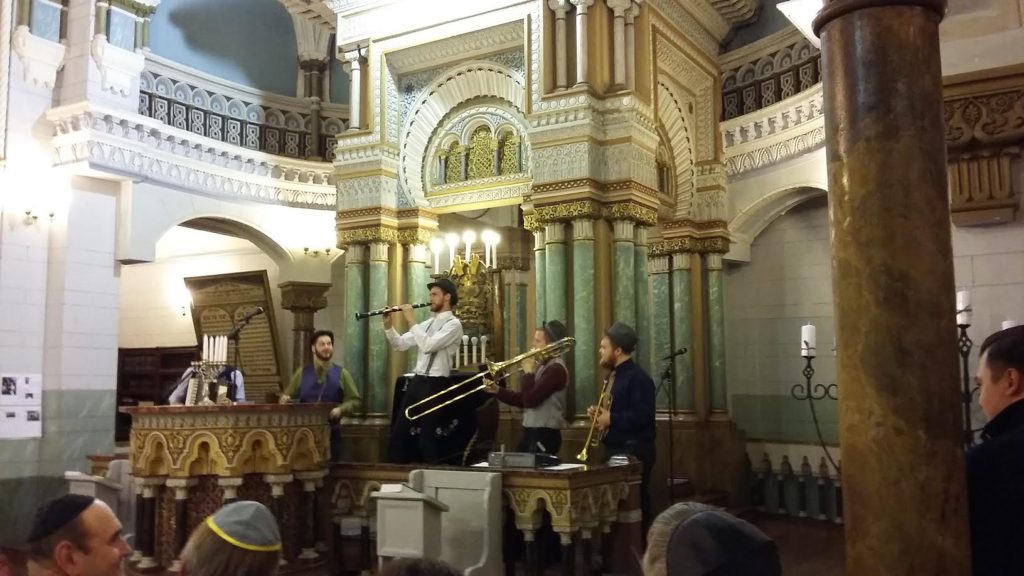
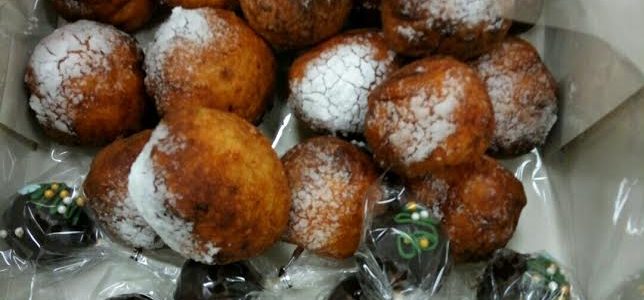
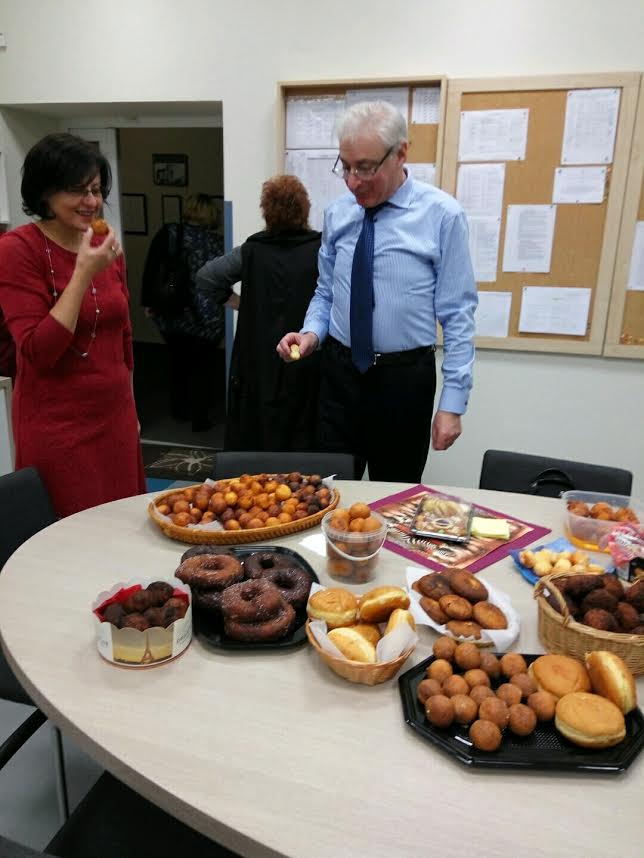
The Hanukkah celebration at the Choral Synagogue in Vilnius yesterday was both moving and fun with many esteemed guests and traditional Hanukkah foods including latkes and doughnuts. A warm and happy atmosphere prevailed and the klezmer group Rakija Klezmer Orkestar contributed to the festive mood with great performances of Jewish song. Lithuanian Jewish Community chairwoman Faina Kukliansky greeted celebrants of the Hanukkah miracle. The miracle of this year’s Hanukkah, she said, was Lithuanians celebrating the Jewish holiday with Jews at the synagogue and Lithuanians and people of other ethnicities performing Jewish music there. It is a blessing to be able to celebrate together with the Jewish community in one’s own land, she said.

Lithuanian parliamentary speaker Pranckietis, Israeli ambassador Amir Maimon, Lithuanian ambassador to Israel Bagdonas and US embassy deputy chief of mission Solomon attended.

chanukas3

Snapshots available here.

Video footage available here and here courtesy of Amit Belaitė.

Happy Birthday to Basia Šragienė!

Kauno žydų bendruomenė sveikina savo narę Basią Šragienę su gimtadieniu

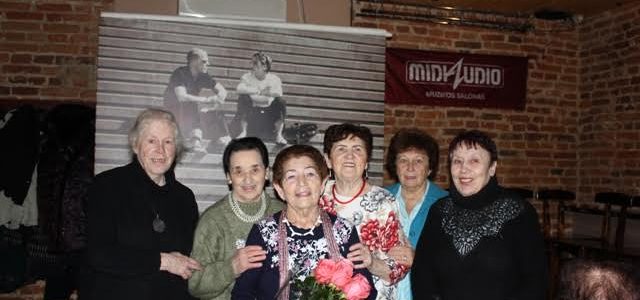
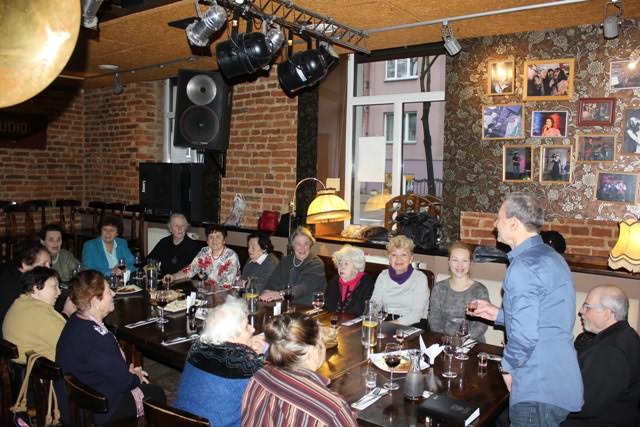
Members of the Hesed Club of the Kaunas Jewish Community celebrated Basia Šragienė’s birthday last week and everyone had a great time. The always youthful and energetic Šragienė is one of the Kaunas Jewish Community’s longest-standing members. For many she sets an example with her energy, resolution, selflessness, caring and warm conversation.

kaunas-sveikina

Over the years she has participated in and even organized many Kaunas Jewish Community events and activities including people from across the age spectrum and with different interests. As a former medical doctor she also provides useful advice to those who seek it. Those who gathered to celebrate her birthday remembered these and all her other wonderful features in their greetings to the birthday girl. Everyone was pleasantly surprised as well at the event by Kaunas Jewish Community member Stasys Makštutis, who arrived suddenly and unexpectedly from Lyons where he studies and gave a moving and tantalizing concert on clarinet.

Mazel tov!

Greetings from Lithuanian Jewish Community Chairwoman Faina Kukliansky

unnamed

Dear members of the Jewish community, greetings to all on this holiday of Hanukkah!

I hope good feelings and warm and pleasant moments with loved ones will accompany you as you light the first Hanukkah candle. I wish you health and concord in your family, and that our children would grow up safe, dignified and happy and be proud of their parents and their roots.

It is a happy thing that there is ever-growing interest in the rich history of the Jews, and I probably won’t be making a mistake to say that there was never so much interest in the Jewish community as there is now, although so few Jews are left in Lithuania. The Jewish Community works actively to insure the rights and freedoms of our members and to promote Jewish interests. Unfortunately we weren’t able to achieve all our goals in 2016, but we will continue to strive after them in the coming year: monuments to those who shot Jews need to be removed, and Vilnius needs to have a monument commemorating those who rescued Jews from the Holocaust. We will continue to work on the issue of restitution of private property.

The Jewish Community is investing in the future, issuing scholarships and stipends for Jewish students and accomplished athletes. Plans for a new kindergarten have been completed, a kindergarten which will insure Jewish values are passed down to the youngest members of our community and prepare them for further education at the Jewish school.

One of the Lithuanian Jewish Community’s top priorities is to improve the living conditions of clients in our Social Programs Department. We help when emergencies and misfortune occur. This will remain our priority in 2017. We also help rescuers of Jews, whose humility and sincere gratitude encourage us to grow and improve. I would like to thank Jewish rescuer Regina for the gloves and socks she knitted.

The Community building itself has become lighter and cozier. We have new audio-visual equipment in the Community concert hall and there are always new and different exhibitions on display. It’s a great joy that there is cultural life, ferment and creativity in the community, and that performers from Lithuania, Israel, the USA, the Netherlands, Romania and other countries perform concerts here. It is also a happy occasion that we have deepened our contacts with the foreign embassies, other countries, municipal institutions and NGOs. Thanks to this cooperation legal amendments were finally adopted to make it easier for Litvaks to restore Lithuanian citizenship. We signed an agreement on cooperation with the American Jewish Committee, we are enjoying wonderful relations with other world Jewish organizations and we are expanding contacts in the West as well as in the East, with the Jewish communities in India and Japan.

Interest in religion is reviving as well. We have two rabbis working at the Community who give lessons educating young and old on various topics in Judaism.

In cooperation with international Jewish organizations and based on their recommendations, we have increased security at the Community and synagogue buildings, and are approaching western standards of security.

We have the only kosher café in Vilnius. The Bagel Shop has attracted significant attention and television crews from Canada, Germany and of course Lithuania, too, have featured the café. It has become a place where not only Jews gather, but also aficionados of Jewish cuisine and culture. Our challa-baking event was a good time for all, and US ambassador Anne Hall was enchanted by the experience. The Jewish languages project carried out with the Cultural Heritage Department attracted much attention by many residents of the Lithuanian capital and visitors from elsewhere. In greeting you all, I invite Community members to show even greater initiative and self-confidence in proposing ways to make their hopes and dreams come true, because the Community exists to benefit its members.

My holiday greetings go out as well to Israeli ambassador Amir Maimon and the chairmen of the regional communities: Gennady Kofman, Gercas Žakas, Artūras Taicas, Feliksas Puzemskis, Moisej Šapiro and Josifas Buršteinas. Thank you all for the active roles you play and for working together.

Khag Khanuka Sameakh!

Lithuanian National Radio and Television Names Marius Ivaškevičius Man of the Year

lrtradijas-1

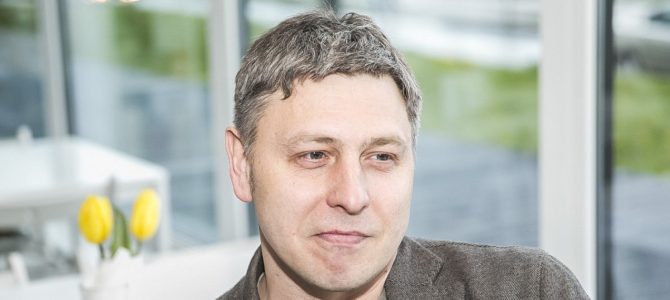
Marius Ivaškevičius, the writer and organizer of a Holocaust commemoration march in Molėtai, Lithuania, has been named Man of the Year for 2016 by Lithuanian National Radio and Television.

Last May Ivaškevičius published an internet appeal for the public to attend a march in his hometown along the route Jews were taken to their deaths in 1941. He followed this appeal with an essay called “I’m Not Jewish,” a translation of which attracted the most visitors to any single item on the Lithuanian Jewish Community web site ever.

Ivaškevičius’s march in Molėtai attracted international attention and dominated the Lithuanian media on August 29, 2016. About 3,000 people from Lithuania and abroad marched from the town square to the mass grave site, the same route about 2,000 Jews marched to their deaths 75 years earlier.

First Hanukkah Light Lit at Lithuanian Jewish Community

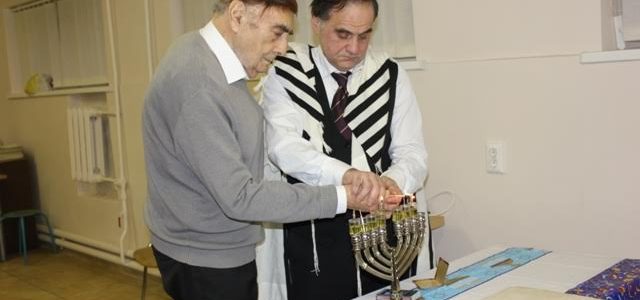
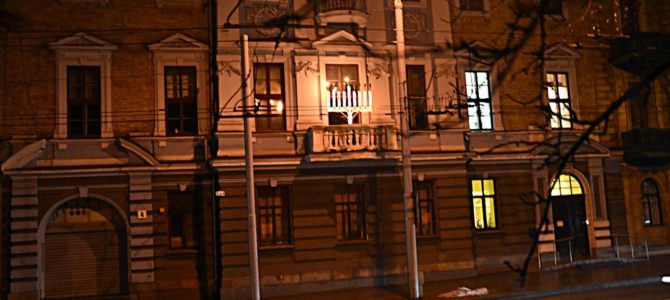
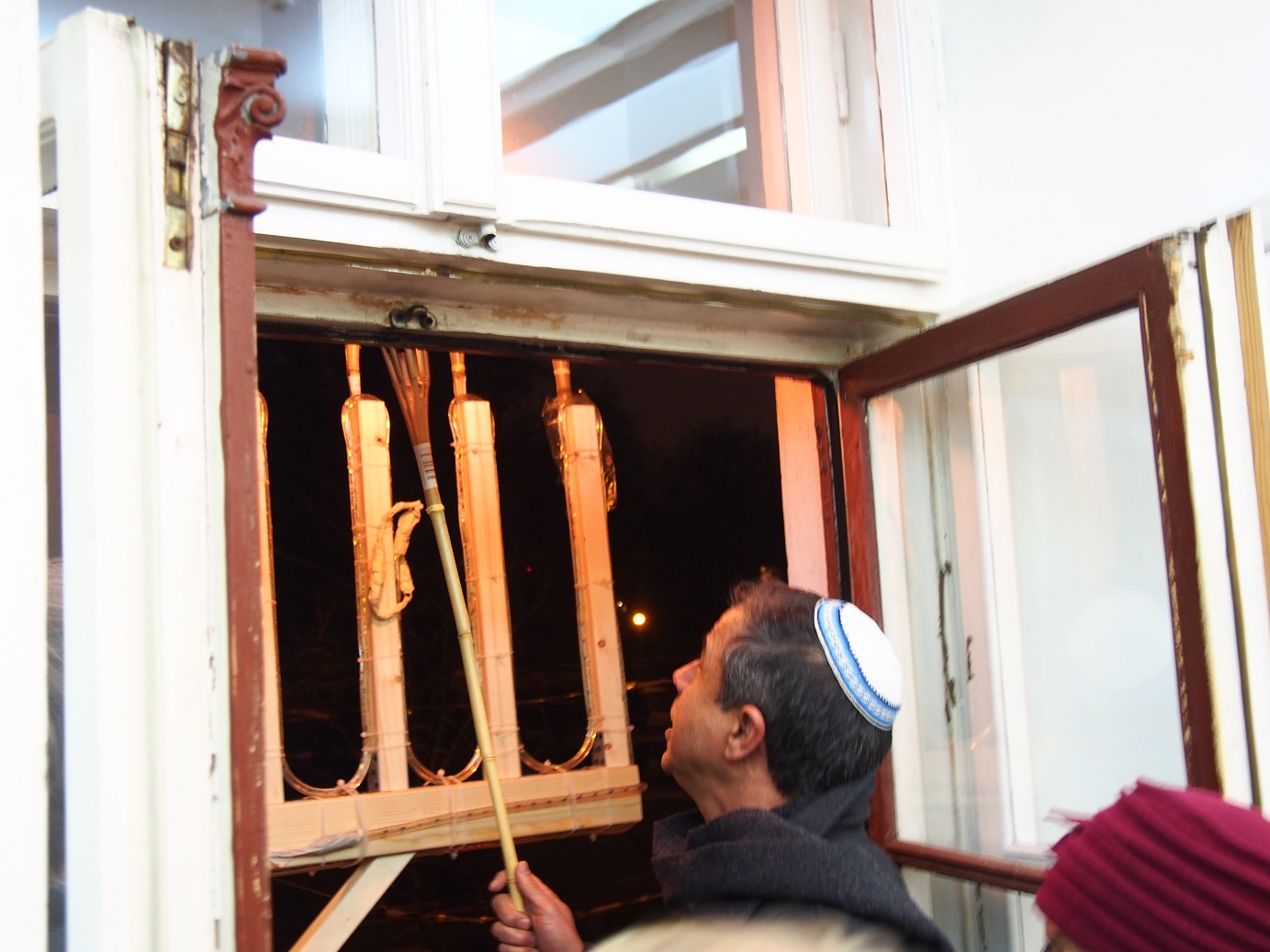
Israel’s ambassador to Lithuania Amir Maimon and Lithuanian Jewish Community chairwoman Faina Kukliansky lit the first Hanukkah candle on a menorah on the balcony of the Community building in Vilnius Saturday night. Vilnius Choral Synagogue cantor Shmuel Yatom added to the beauty and dignity of the ceremony with his performance of a hymn.

OLYMPUS DIGITAL CAMERA

Saturday evening, December 24, marked the beginning of the Hanukkah holiday. Hanukkah is always celebrated for eight days, beginning on the 25th day of Kislev on the Jewish calendar. The word itself is often explained as coming from a root for inauguration, consecration and dedication.

Sholem Aleichem Students Celebrate Hanukkah

Vilniaus Šolomo Aleichemo ORT gimnazijos vaikai švenčia Chanuką

Gymnasium director for informal education Ela Pavinskienė said students in a volunteer group had learned how to make decorative garlands which were hung up around the school. The teacher taught students in grades 1 to 5 about the holiday, story and meaning of Hanukkah, and about kosher food rules. The students learned how to make traditional Hanukkah doughnuts.

Pavinskienė said students from grades 1 to 4 held a concert directed by third-graders, with each grade contributing a song, dance or skit. All participants received a doughnut and a small gift. The children came to the concert in their holiday best and in a festive mood. There was a contest for best homemade menorah. The menorahs are now on display on windowsills on the second floor. Each grade also held a light-show with music.

Children were asked to make doughnuts at home with their parents, and so many delicious doughnuts were brought in. A lottery was held for those who had contributed doughnuts with the winner selected at random who received a special prize.

ort-spurgu-ragavimas

Hanukkah Greetings from Jewish Telegraphic Agency

jta

Friends,

JTA was founded in 1917 to inform the world about the plight of Jewish refugees after World War I.

As we get set to turn 100, more than 1 million Jews still live in Europe. They aren’t refugees, but they face alarming developments — including anti-Jewish violence from jihadist terrorists and spikes in anti-Semitism, anti-Israel activism and political extremism. The post-Holocaust framework that has kept the peace in Europe for 70 years is teetering.

One thing that hasn’t changed and won’t change: JTA is paying attention — and keeping you informed about the lives of our brothers and sisters in Europe.

We are on the ground with a full-time reporter and a network of correspondents.

To continue and even expand our reporting efforts, we need your help.

Your financial support is critical to our efforts. Please make a tax-deductible gift today. Join our community of supporters who believes that keeping everyone informed and connected helps Jewish communities throughout the world remain safe and strong.

May the Hanukkah lights bring much warmth and joy to your home.

Sincerely,

Ami Eden,
CEO and executive editor
newsdesk@jta.org

P.S. A generous donor will match all new and increased gifts to JTA. Thank you in advance for your support. Should you wish, mail your check to JTA, 24 W. 30th St., 4th Floor, New York, NY 10001.

If you have already made you year-end gift, you have my heartfelt thanks.

Fayerlakh 45th Birthday Concert: No Signs of Old Age Yet

A concert to celebrate the 45th anniversary of the founding of the Fayerlakh Jewish song and dance ensemble took place December 18 with an overflow crowd of well-wishers and fans. A large screen projection by the stage relayed images to those in the very back of the hall, and Jews from the regional communities as well as the Lithuanian capital turned out in abundance. The group performed some songs in Yiddish and the birthday coincided with the issuing of a new CD by the collective which includes qualified musicians from across the generations, from children to the elderly.

Of the ensembles 40 or so members, the youngest is just five and the most senior about to turn 70. The little flame which sprang up in 1971 burns on, and the audience on December 18 included more non-Jews than Jews, including a delegation from the Association of Disabled Poles who attended in wheelchairs.

The entire year has been a celebration of the collective’s birthday and in March Lithuanian prime minister Butkevičius sent warm wishes for their continued success. The ensemble was presented with a large cake with small flames at the mid-December celebration, and Lithuanian parliamentary speaker Pranckietis hailed the longest-surviving musical group in Lithuanian history as well.

Klaipėda Jewish Community Hold Charity Action at Klaipėda Children’s Hospital

For the fifth year in a row the Klaipėda Jewish Community has carried out a charity campaign to help the patients at the Klaipėda Children’s Hospital. According to Jewish custom, children receive a bit of money and gifts during Hanukkah which they must share. Children donated gifts to children being treated at the trauma unit of the hospital. Children’s Hospital chief physician Klaudija Bobianskienė told children and parents about the Children’s Hospital and showed them the latest diagnostic equipment. Diapers were donated to the newborns’ unit during the charity event as well.

Let’s Honor Our Hanukkah Traditions

Lithuania is a country with roots in the Litvak (mitnagdic, Jewish Orthodox) tradition. Our community is the direct inheritor of more than 600 years of Jewish history and the successor to the traditions of the Vilna Gaon, and we keep our traditions.

When the Jewish museum chose the Gaon’s name for their title, we understood it as a sign of respect for mitnagdic tradition. Has someone proposed changing that name? Let’s honor our traditions during Hanukkah as well. Lighting a menorah in a city square is a Chabad tradition, and Litvaks do not encourage that sort of celebration of Hanukkah, instead, everyone is invited to Vilnius’s only working synagogue.

Electric lights are most often used in huge Hanukkah candelabra displays in central squares or other prominent areas of cities. Chabad reports this “tradition” began with the seventh Chabad rebbe, Rabbi Menachem Shneerson, who ordered these types of Hanukkah menorah displays in public spaces, the first having been set up in Philadelphia in 1974. Chabad Hassidim then began to carry out these sorts of campaigns around the world. These campaigns have not always and not everywhere met with support and approval. Besides different anti-Semitic attacks, there are on-going discussions even now, at least in the USA and other countries which adhere to the principle of the separation of church and state, which precludes displays of religious symbols in public spaces, a ban which is now and again in places applied to Christian symbols, and therefore should be applied to other religious symbols as well. Different municipalities, however, find a way around this ban, adopting decisions which, for example, state that neither Christmas trees nor gigantic menorahs erected in public spaces are religious. We could probably agree with that belief, having in mind these huge menorahs are not traditional in public spaces. All the more so since they employ electric lights rather than wax candles or oil. But the diverse politicians who participate in these lighting ceremonies likely participate viewing them as a cultural rather than religious holiday, seeking to demonstrate their tolerance towards ethnic minorities living in their countries.

For a number of years there has been a giant menorah set up in Vilnius at the initiative of Chabad, and politicians and diplomats like to attend the lighting ceremonies, thinking they have found an opportunity to express solidarity with the Jews of Lithuania, while the more ancient tradition of lighting the Hanukkah candles in private homes and at their entrances goes largely unnoticed. It is these lights which are supported to perform the role of testimony, the most important religious meaning: the lights should be lit at the entrance to the home or on window sills, so they can be seen from outside, as a testimony, according to the Talmudic sages. Although Chabad Hassidim are historically inseparable from the Jews of Lithuania (their communities in Vilnius date back to the time of the Russian Empire), they do not represent all Jews of Lithuania, and especially not those who consider themselves misnagdim, often referred to simply as Litvaks. Perhaps the city of Vilnius this year could look for some sort of Solomonic solution which wouldn’t preclude the Litvak community and would respect their traditions. Or simply point out that the erection of gigantic menorahs is not automatically perceived as a universal Jewish tradition.