Announcements

Attend Opening Ceremonies for New Judaica Studies Center

The Judaica Studies Center of the Lithuanian National Martynas Mažvydas Library was officially established May 3, 2017, but will only open to the public May 22 and May 23 with several events and exhibitions.

The Center’s main function is to further research on the Jewish documentary heritage, carrying out educational and informational projects and publicizing the results. The Center is an open enterprise and aimed at educational cooperation. According to its mission statement, the Center actively publicizes information about the Jewish textual heritage at its events, in the national and international media and on the internet, and also conserves collections of modern Judaica publications.

Program:

May 22

1:00 P.M. Opening ceremony (foyer, fifth floor)
2:00 P.M. Launch of exhibit People and Books of the Strashun Library (exhibit hall, third floor)

May 23

1:00 P.M. Samuel Kassow (USA) lecture Uniqueness of Jewish Vilna (conference hall, fifth floor)
2:30 P.M. Presentation The Vilnius YIVO Project (conference hall, fifth floor)

Full announcement in Lithuanian at the Lithuanian National Martynas Mažvydas Library web page here.

The Origin of the Idea of Innate Rights

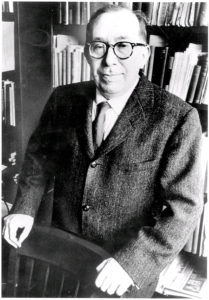
Leo Strauss (1899–1973) was a [Jewish] German and American political philosopher and political philosophy historian. He was born in Germany and served as a translator for the German army during World War I. In 1932 he moved to Paris and in 1934 to Great Britain where he worked at Cambridge. From 1937 to his death he lived and worked in the USA, teaching political science and philosophy at New York City, Chicago and Annapolis.

He developed the idea of what was called natural right, claiming human rights and freedoms are inherent and independent of citizenship and other external factors. …

[Strauss’s Natural Right and History] is being published for the first time in Lithuania…

Full story in Lithuanian here.

Maceva Litvak Cemetery Catalogue

Maceva Litvak Cemetery Catalogue

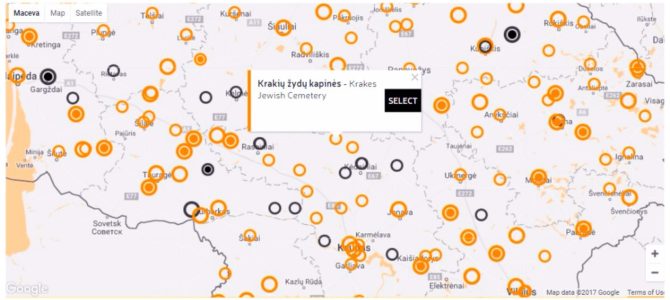
Litvak Cemetery Catalogue MACEVA 2016.

This Newsletter contains an overview of activities of Litvak Cemetery Catalogue MACEVA in 2016.

Švenčionys (Svintsyán). It is believed that this cemetery was established during the 15th century. This is one of the oldest and largest cemeteries of Lithuanian Jewry, encompassing an area of 39670.00m2. We had expected to find approximately 2000 graves. Our work with students has found closer to 3,000 surviving graves. Approximately 1200 tombstones still have full, or partially legible inscriptions.

Prior to World War II, the cemetery was larger, it was devastated during the war and beginning in 1941, locals began to plunder stone monuments for construction material. Many tombstones were damaged and uprooted, black marble tombstones were considered particularly desirable.

The current condition of the cemetery is mediocre.

Many of the gravestones are fully, or partially buried, giving us limited ability to access the inscriptions. Many gravestones are leaning or have already collapsed.

The city of Svencionys has no directional signs indicating the location of the cemetery.

Full catalog here.

Birthday Evening with Dr. Leonidas Melnikas at the Lithuanian Jewish Community

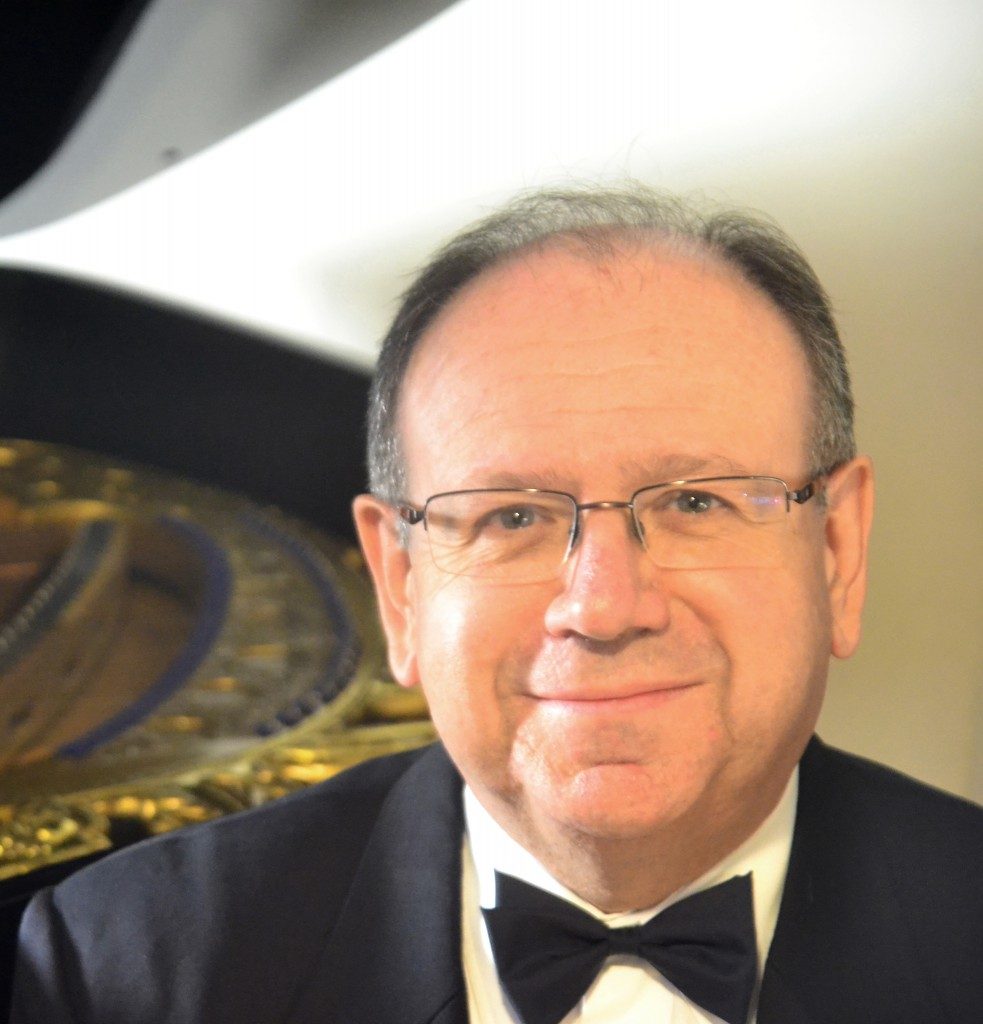
The organizers of the Destinies series of evening events are pleased to invite you to come celebrate the birthday of professor Leonidas Melnikas at the Lithuanian Jewish Community.

Program:

Dr. Leonidas Melnikas on piano, Boris Traub on violin, Valentinas Kaplūnas on cello, Gennady Savkov on accordion

Participating:

Silvija Sondeckienė and composer Audronė Nekrošienė-Žigaitytė, president of the Union of Lithuanian Musicians.

Time: 6:00 P.M., Thursday, May 11
Location: Third floor, Lithuanian Jewish Community, Pylimo street no. 4, Vilnius

Event planned and moderated by Maša Grodnikienė, deputy chairwoman, Lithuanian Jewish Community.

A New Litvak Logo

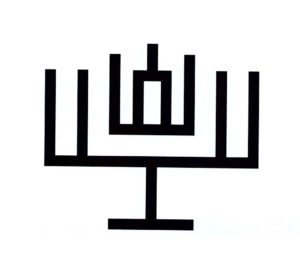
We have a new Litvak logo designed by Viktorija Sideraitė-Alon.

The Lithuanian Justice Ministry has granted permission to use the national Lithuanian symbol of the pillars of Gediminas as part of a Lithuanian Jewish Community logo trademark. The patent process for making the Litvak symbol a Lithuanian Jewish Community trademark is being completed right now.

The posts, pillars of columns of Gediminas was used as a coat of arms or insignia by Lithuanian grand duke Vytautas the Great beginning in 1397, following its use by his father grand duke Kęstutis, and has been employed by many other Lithuanian and Polish leaders since then. The Jewish community, living in Lithuania for approximately 700 years no, is an indivisible part of Lithuanian society in the political and historical sense. Many peoples have called Lithuania home over the centuries and the Jewish community has also made significant contributions to the state, the culture and the economy. Incorporating the pillars of Gediminas into a Litvak logo makes perfect sense and corresponds to what the current Lithuanian state openly declares, namely, pride that Lithuania has been open, tolerant and diverse over the centuries.

Let’s Draw Jerusalem

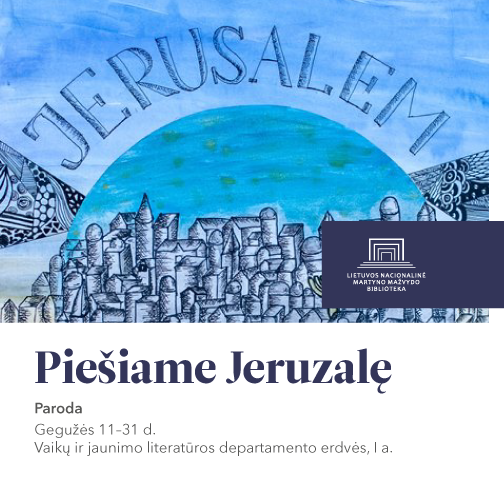
Let’s Draw Jerusalem, an exhibit running from May 11 to May 31 in the children’s and young adult literature section of the the Lithuanian National Martynas Mažvydas Library.

From May 11 to 31 the Lithuanian National Martynas Mažvydas Library’s children’s and young adult literature department space will host a national exhibition of drawings by Lithuanian students called “Let’s Draw Jerusalem,” marking the 25th anniversary of the opening of diplomatic relations between the State of Israel and the Republic of Lithuania.

Over 80 drawings in the exhibit come from nine municipalities around the country, including Elektrėnai, Rokiškis, Birštonas, Jurbarkas, Kretinga, Kėdainiai, Molėtai, Utena and Alytus, the result of contests sponsored by the Israeli embassy in 2016 and 2017 also called “Let’s Draw Jerusalem.” In one location the contest was changed to “The Bridge of Friendship between Israel and Lithuania,” since that contest began just as the two countries were celebrating the 25th anniversary of the opening of diplomatic relations this year. Winning drawings in the 6 to 10, 11 to 14 and 15 to 18 age groups have been put on public display at the national library, portraying how the children and young people creatively visualize Jerusalem and friendship between the two states. More than 800 students from 59 schools took part under the direction of over 90 teachers, with help from teachers in other disciplines including history, ethics and geography.

Presentation of Jews of Vilkaviškis at Lithuanian National Library

The Lithuanian National Martynas Mažvydas Library is hosting a presentation of the book “Dingusios tautos pėdsakais’ [Traces of a Lost People] by Antanas Žilinskas, the long-serving director of the Vilkaviškis Regional History Museum who has collected material about the Jews once resident in Vilkaviškis over many years, the contents of the book published in 2015. The event will also feature a meeting with Ralph Salinger, an Israeli historian specializing in the history of the Jews of Vilkaviškis. The public event is to be held in Lithuanian and English at 4:00 P.M. on May 12 at the library in Vilnius.

Jews were living in Vilkaviškis in the 16th century when queen Bona Sforza allotted a forest for the Jews to construct a synagogue. The Vilkaviškis synagogue appeared in 1623. There was a Jewish gymnasium in Vilkaviškis from 1919 to 1940. There were around 150 shops in the town, of which about 130 were Jewish. In 1939 there were officially 3,609 Jews living in and around the town, constituting 45 percent of the population.

Misha Breakfast Program at Choral Synagogue

Dear Community members,

Before his death, long-time client of the LJC Social Programs Department Avishalom Moishe Fishman left a last will and testament donating his savings to the Lithuanian Jewish Community who had cared for him in his latter years.

To honor Moishe Fishman’s wishes, LJC chairwoman Faina Kukliansky proposed using the funds for the needs of the Choral Synagogue in Vilnius.

In furthering Jewish traditions of charity, it was decided with Vilnius Jewish Religious Community chairman Simas Levinas to use the funds received to set up a free-breakfast program in the cafeteria on the second floor of the Choral Synagogue, Pylimo street no. 39, Vilnius.

Moishe lived alone and was a client of the Social Programs Department for about 18 years.

The Community and its members, and especially members of the seniors club, became his second home and family.

Let’s remember together this enlightened man beloved and honored by all who knew him.

For the first time a plaque will be placed on the wall of the synagogue to thank and remember a local philanthropist, rather than a donor from abroad.

Everyone knew him as Misha, so this has been dubbed “Misha’s Breakfast Project.” It will begin Monday, May 15. The breakfast program will take place at the synagogue from 9:00 to 10:00 A.M., Monday to Friday.

Makabi Members Invited to Doubles Tennis Match

Dear Makabi members,

There will be doubles tennis matches held at 11:00 A.M., May 14, at the SEB Arena in Vilnius. We invite men and women to take part. Regulations for the competition will be set after total number of participants is known. Please register before 10:00 P.M. on May 11.

Registration: makabilita.duskes@gmail.com , telephone 8 698 19999

Michailas Duškesas, senior referee

Yom haZikaron

Dear Community members,

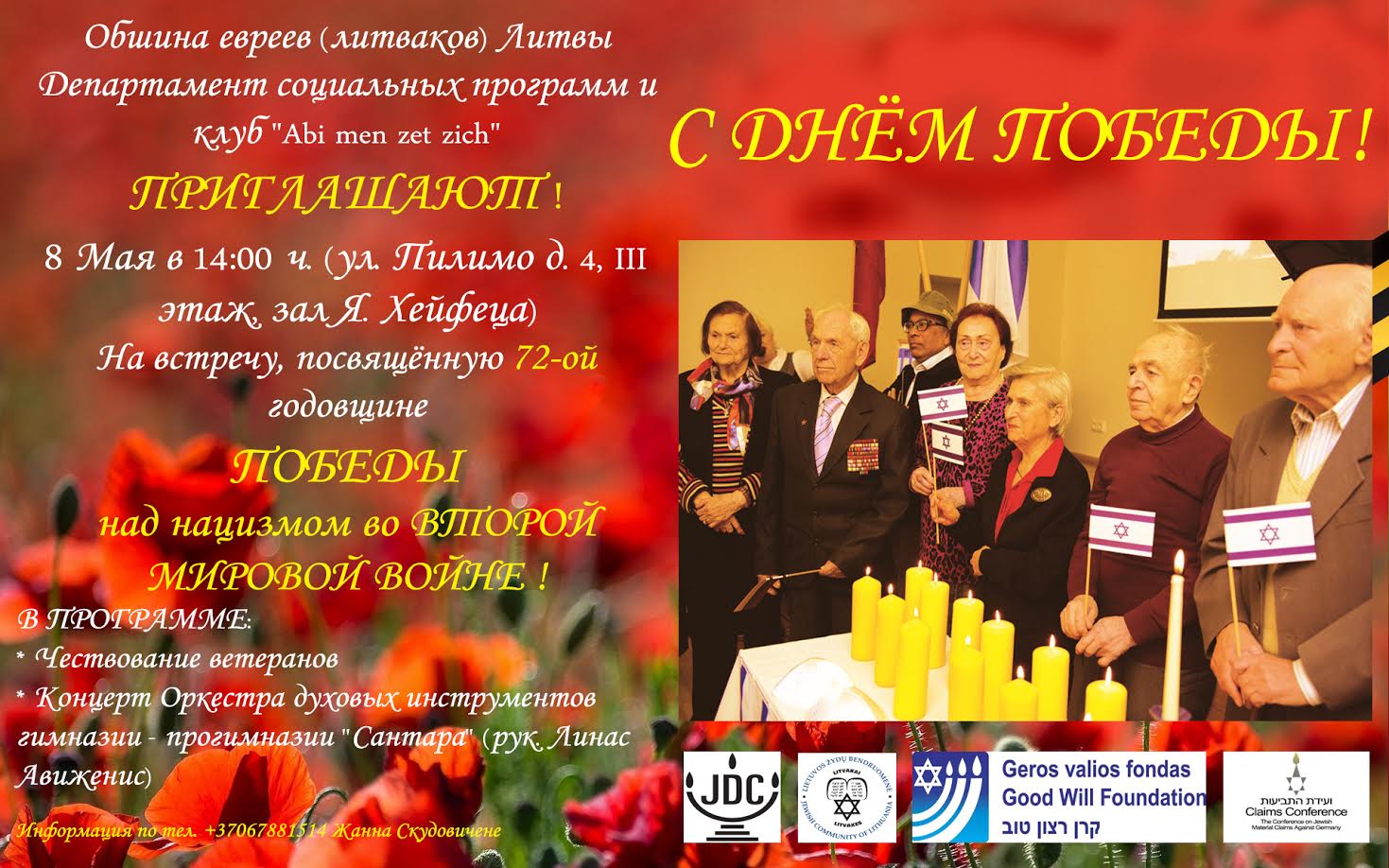
The embassy of the State of Israel and the Lithuanian Jewish Community invite you to come mark Yom haZikaron at the Lithuanian Jewish Community, Pylimo street no. 4, at 7:30 P.M. this Sunday, April 30.

Please DO NOT share this invitation on social media. Please DO bring identification.

To register, contact: +370 672 40942, info@lzb.lt

Goodwill Foundation Press Conference

Media are invited to a press conference following the April 27 meeting of the executive board of the Goodwill Foundation. The press conference will be held at 2:00 P.M. at the Narutis Hotel, Pilies street no. 24, Vilnius. Foundation chairs and other members of the executive board will attend.

March of the Living

Lietuvos žydų (litvakų) bendruomenės pranešimas spaudai apie Gyvųjų maršą

The 10th March of the Living will take place at 4:00 P.M. on Wednesday, April 26, 2017, at the Ponar Memorial Complex outside Vilnius. The march is intended to commemorate Holocaust victims.

The procession will make its way from the Ponar railroad tracks down the road Jews were marched during the Holocaust to their deaths in the pits of Ponar. The ceremony will culminate with the Partisan Anthem, created by Vilnius ghetto inmate and Holocaust victim Hirsh Glik, performed by Fayerlakh vocalist Michailis Jablonskis with Boris Kirzner accompanying on violin.

Buses will be provided for members of the Vilnius and other Jewish communities to make the trip to Ponar just outside Vilnius, and will return passengers to the city after the ceremony. Please register for the bus ride by sending an email to info@lzb.lt with your name or by calling +370 672 40942. The buses will leave with registered passengers from the Lithuanian Jewish Community at Pylimo street no. 4 at 2:35 P.M.

Meeting of Executive Board of Goodwill Foundation

Press Release

A meeting of the executive board of the Goodwill Disbursement Foundation for Compensation for Jewish Religious Communal Property, or Goodwill Foundation, will be held April 27, 2017.

The formation of the Goodwill Foundation was an important step for Lithuanian Jews as well as the Lithuanian state, representing the first successful attempt to compensate at least partially the losses of fellow Jewish citizens during the Holocaust. Based on the law adopted, by 2023 the Lithuanian state budget is to transfer 37 million euros in compensation to the Goodwill Foundation to be disbursed for financing Lithuanian Jewish religious, cultural, health-care, athletic, educational and academic projects in Lithuania. The Lithuanian Government annually allocates approximately 3.6 million euros for purposes defined in the law on goodwill compensation. From its inception the Goodwill Foundation has expanded and become an organization striving for the sensible and appropriate use of funding for Lithuania’s Jews.

In 2014 the Goodwill Foundation began financing projects adhering to the prescribed goals laid out in law. Each year the Foundation has disbursed about half of the monies received from the Lithuanian Government, or about 1.6 million euros, setting aside the remainder for future projects. The chairs of the Goodwill Foundation, Rabbi Andrew Baker and Faina Kukliansky, have insured the efficacy of the Foundation’s work, as demonstrated by the conclusion of the 2016 audit by the Lithuanian State Auditor’s Office.

One of the top agenda items for the April 27, 2017, meeting of the executive board of the Goodwill Foundation is executing allocation of annual monetary compensation according to project applications received. The allocation of Goodwill Foundation monies for projects follows established criteria. The Goodwill Foundation’s executive board will also consider issues concerning investment of deferred funds, maintenance and acquisition of buildings in support of the activities of the Jewish communities, preservation of surviving portions of the Great Synagogue of Vilnius, plans for establishing Litvak museums and commemoration of and insuring due respect for the mass murder site at Ponar.

The Goodwill Foundation operates according to legal acts of the Republic of Lithuania and the findings and recommendations of international audit bodies, assuring the appropriate acceptance, assessment and approval of applications and the appropriate administration of the Goodwill Foundation itself. Our hope is the recommendations from the audits conducted will become an important tool helping the Foundation to achieve our goal of becoming an example of best practices for organizations disbursing funds for implementing projects.

Members of the media are invited to a press conference following the meeting of the executive board of the Goodwill Foundation on the ground floor of the Narutis Hotel, Pilies street no. 24, Vilnius, beginning at 2:00 P.M. The chairs and members of the executive board of the Goodwill Foundation will be at the press conference.


ORT and Non-ORT Schools Join in Partisan Anthem Project

With each Yom haShoah the number of Survivors dwindles making the challenge of engaging new generations more difficult and more urgent. We have found a way to involve ORT students across the former Soviet Union.

We have started an international push to popularise the partisan song Zog Nit Keynmol by linking ORT and non-ORT schools in an online programme to not only learn its Yiddish – and Hebrew – words but also to delve into its meaning and historical significance and to share what they learn.

The result has moved groups of students at World ORT schools in Kiev, Odessa, Kishinev, Vilnius, Chernivtsi, Tallinn, Moscow, Kazan and Samara to prepare videos for Yom haShoah singing the anthem written by the Vilna poet Hirsh Glik to a melody by the Soviet-Jewish composers Dmitri and Daniel Pokrass.

This is a powerful statement and shows that we can link the generations this way and honour the legacy of the Survivors.

World ORT has added a new video: A Song for Yom haShoah:

The next stage will evolve into a program in which our youth learn about their family histories within the context of our Jewish cultural history.

Find out more about my project here:
http://elirab.me/teaching-the-partisan-song-to-a-new-generation/

Best regards,
Eli Rabinowitz

Mark Zingeris’s New Novel “I Sat in Stalin’s Lap”

The most important circumstance in the writing of “I Sat in Stalin’s Lap” was that I had a close encounter with death at the hospital and it illuminated the drama of life happening outside my hospital window in a more significant light. I began to think constantly about history and the fate of man. I can’t say how many telephones, umbrellas and bank cards I misplaced. I was closed up in myself then and probably barely sufferable to my family. These attacks of individualism and egocentricity continued for perhaps six years. If my wife had found herself a lover during that time, I would find it justifiable psychologically.

Full story in Lithuanian here.

Zog Nit Keynmol: The Partisan Song Project

Imagine a high school student in 2017, singing a Yiddish song with confidence and understanding. It may seem like an impossible dream, but Eli Rabinowitz is making it a reality.

Rabinowitz, who is ex-South African and resides in Perth, is passionate about Jewish education, genealogy and history. On a recent trip to South Africa, he was asked by Rabbi Craig Kacev (Head of Jewish Life at King David Schools) to address over 1000 students on the meaning of ‘Zog Nit Keynmol’ (‘Never say this is the final road …’) – known as the Partisan Song or the Holocaust Survivors Anthem or Hymn.

The words may be familiar to an older generation as they are often recited at Yom Hashoah ceremonies, but Rabbi Kacev felt that young Jewish students had no understanding of the meaning or inspiration of the song. By teaching them the words and their meaning, a legacy and a link could be created between young Jews and Holocaust survivors.

Indeed, when Eli Rabinowitz presented this to a group of Holocaust survivors in Johannesburg, they were thrilled and very moved. Inspired by their enthusiasm, he decided to encourage organisations and schools around the world to teach the song to students, in the hope that they will perform it at Yom Hashoah ceremonies across the globe on 23/24 April.

Rabinowitz took the initiative one step further in Cape Town, where he hosted a live ‘online classroom’ with six schools. These included Herzlia High School and a range of schools in Lithuania, Moldova and the Ukraine. This technological feat was achieved using ‘Google Hangouts’ and YouTube, with the expertise of Steve Sherman of Living Maths.

The Silenced Muses

Event: performance of the play Nutildytos Mūzos [The Silenced Muses]
Time: 5:30 P.M., April 21
Location: Juozas Miltinas Gymnasium, Aukštaičių street no. 1, Panevėžys, Lithuania

The Panevėžys Jewish Community invites you to a play by the Rokiškio teatras association called the Silenced Muses. The play was written based on real events recorded in the diary of the young Jewish girl Matilda Olkinaitė and the memories of her contemporaries.

Entrance is free upon presentation of an invitation (you may print this announcement and present it at the door).