

Executive Summary
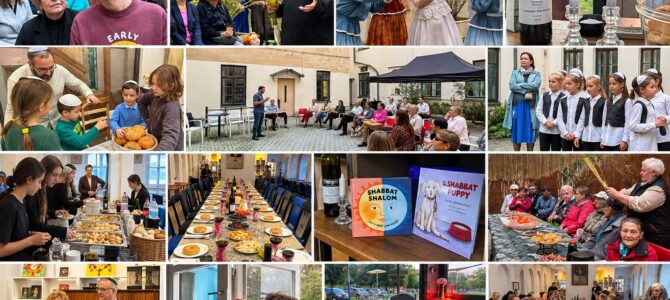
Over recent months, significant progress has been made in strengthening Jewish religious, educational, cultural and communal life in Vilnius. What began as a project to establish a sustainable kosher food operation at Pylimo 4, known as Kosher Kesher, has developed into a broader initiative supporting Jewish observance, education, community engagement and international cooperation.
The successful implementation of the kosher food project has provided a foundation for Challah baking, kosher catering, rabbinical cooperation and a welcoming Jewish social and cultural space. Relationships with Rabbanut Tzohar, Dirshu, Rabbi Eliyahu Birnbaum, Rabbi Eliyohu Krumer, Rabbi Moshe Sheinfield and ICE (Israeli Community Abroad) offer further opportunities.
Current priorities include kosher food at the Jewish school and kindergarten, expanded Friday and Sunday operations, cooperation with the Jewish Museum, permanent rabbinical leadership and urgently needed security arrangements.
Part I. Kashrut Supervision and Religious Infrastructure
1. Kashrut Supervision and Rabbanut Tzohar
The visit of Rabbanut Tzohar to Vilnius provided an opportunity to assess existing Kashrut arrangements and identify areas requiring improvement. Following their assessment, they concluded that the existing Mashgiach, Dimitri, was no longer suitable for the position, primarily due to his age and health. This required reconsidering supervision arrangements and establishing a more sustainable solution.
2. Development of a New Kashrut Team
Following the departure of the previous chef, who had worked for almost a year, a qualified Jewish chef was appointed as her replacement on the same day. He is Shomer Shabbat and an active member of the Jewish Community of Lithuania. In addition to his responsibilities as chef, he now serves as the Mashgiach. Shmuel Yatom is available to provide additional support when needed.
These arrangements provide a stronger foundation for reliable Kashrut supervision and for expanding kosher food production, catering and religious activities.
3. Challah Baking and Cooperation with Kantor Shmuel
Initially, Kantor Shmuel was not supportive of the Kashrut initiative following the involvement of Rabbanut Tzohar. His position has since changed considerably, and he has become an active supporter, assisting with Hafrashat Challah every Friday morning.
- Challah donated to the Synagogue.
- Challah distributed to elderly community members.
- Challah sold to interested customers.
Although commercial demand remains relatively modest, regular baking has become a meaningful religious and communal activity. We intend to expand it through planned Friday operations.
4. Mezuzot and Religious Infrastructure
Work is ongoing to install Mezuzot in appropriate locations throughout the premises, taking account of the different buildings and operational areas. Through Rabbi Eliyohu Krumer, we were connected with Rabbi Shaul, who will assist in supplying Litvak-style Mezuzot for the Jewish school and kindergarten.
Part II. Rabbinical Cooperation and International Relationships
5. Cooperation with Dirshu
We helped organise a major Dirshu congress in Vilnius, attended by more than 90 prominent rabbis from around the world. The delegation visited the Jewish cemetery and prayed at the graves of the Vilna Gaon and other prominent Litvak figures. We hosted a large dinner for distinguished guests, including ambassadors of Israel, and joined a tour of Vilnius with the delegation.
This cooperation introduced us to Dirshu’s Polish catering company, described to us as the largest kosher catering operation in Europe. It also established valuable connections with an international network of Orthodox rabbis and organisations, opening possibilities for future cooperation and support.
6. Cooperation with Rabbi Eliyahu Birnbaum
- Rabbi Birnbaum is arranging for a rabbi to visit Vilnius for Chanukah, free of charge.
- He plans to visit the community himself in December, after Chanukah.
- Initial discussions have begun about several candidates for a permanent rabbinical position in Vilnius.
These discussions may help establish more consistent rabbinical leadership and strengthen local religious life.
7. Cooperation with Rabbi Eliyohu Krumer – Jewish Education and Religious Programming
7.1. Hebrew Studies and Sunday School
Following a visit to the Jewish school, Rabbi Krumer suggested bringing Hebrew teachers through his programme. These teachers would also have religious backgrounds and could contribute to Hebrew studies, Jewish religious education and cultural activities at the school and kindergarten. An agreement has also been reached regarding cooperation on Sunday School activities.
7.2. Visit of 8–9 November 2026
Rabbi Eliyohu Krumer of the Riga Jewish Religious Community (RERO) visited Vilnius on 8–9 November to explore cooperation with the Lithuanian Jewish Community. He met local community representatives and Moishe House residents; visited the Jewish school, where he met primary pupils, and the kindergarten; visited a kosher vegan restaurant; and met community leaders and senior management.
The meetings identified potential joint initiatives. Rabbi Krumer is expected to visit Vilnius regularly to develop the relationships and gradually implement projects. Through his assistance, Rabbi Shaul will also help supply Litvak-style Mezuzot for the educational institutions.
8. Cooperation with Rabbi Moshe Sheinfield – Connecting Lithuanian Jewish Communities
We are developing cooperation with Rabbi Moshe Sheinfield to bring the Jewish communities of Vilnius and Kaunas closer together.
- Connect Israeli students with local Litvak communities.
- Explore purchasing kosher products and supplies from his kosher restaurant.
- Collaborate on larger community events and religious initiatives.
- Strengthen Jewish identity and awareness of Lithuania’s Jewish heritage.
9. Cooperation with ICE – Israeli Community Abroad
We have recently established cooperation with ICE (Israeli Community Abroad). We plan to expand activities through the existing Art of Shabbat project, using it as a platform for cultural, religious and social engagement.
- Organise additional Shabbat gatherings, communal dinners and cultural events.
- Connect Israelis living in Lithuania with the local Litvak community.
- Encourage participation across Jewish groups and generations.
- Develop Kosher Kesher as a welcoming meeting place and expand communal kosher dining.
Combining ICE’s community network with Kosher Kesher and Art of Shabbat may support a more regular programme of inclusive Jewish events.
Part III. Kosher Kesher – Community Services and Future Development
10. Pylimo 4 (Kosher Kesher) – Contribution to Community Life
Kosher Kesher is developing its menu and establishing itself as a provider of kosher food for Jewish community activities and events in Vilnius. Catering has already supported:
- Jewish community gatherings and progressive rabbinical events.
- Moishe House activities.
- Jewish holidays, including Sukkot, and several Shabbat dinners.
- Shalom Aleichem ORT events and other religious and community celebrations.
The operation enables other organisations to hold events in accordance with Jewish dietary requirements and provides a foundation for wider access to kosher food and Jewish communal activities.
11. Expansion of Operations – Friday and Sunday Activities
11.1. Friday Operations – Shabbat Preparations
We are preparing to operate on Fridays, supplying the Jewish community with fresh Challah, kosher wines, other kosher food products and religious supplies, as well as pre-ordered Shabbat food and catering. The aim is to improve access to essential kosher products and continue Challah donations to the Synagogue and elderly community members.
11.2. Sunday Operations – Jewish Museum Cooperation
Sunday operations will focus on cooperation with the Jewish Museum and on connecting Jewish heritage tourism with contemporary Jewish community life. We plan to welcome museum guests at Kosher Kesher, recommend museum visits to our customers, encourage reciprocal referrals and explore coordinated educational and cultural activities.
These expanded operations would make Fridays a practical resource for Shabbat preparation and Sundays a meeting point between Jewish heritage, tourism and community life.
12. Future Initiative – Kosher Food at the Jewish School and Kindergarten
Building on the successful execution of Kosher Kesher, we aim to support the Jewish school and kindergarten in Vilnius by exploring two models:
- Kosher food alternatives for children and staff who want them, alongside existing food arrangements.
- A transition to fully kosher food service at both educational institutions.
Either model would require dedicated funding, serious project management and close cooperation with school leadership, parents and rabbinical authorities.
- Assess kitchen facilities, catering arrangements and operational requirements.
- Compare costs and financial sustainability of both models.
- Secure funding from community sources, donors, foundations or international organisations.
- Establish Kashrut supervision, food supply, staffing and operating procedures.
- Prepare a phased implementation plan with clear responsibilities.
Our experience coordinating Kashrut supervision, suppliers and kosher food operations provides a strong starting point for this larger institutional project. The long-term ambition is to make kosher food accessible to every child in Vilnius Jewish educational institutions.
Part IV. Rabbinical Leadership and Community Development
13. Permanent Rabbinical Leadership and the Future of Jewish Community Life
We strongly believe that appointing a permanent rabbi in Vilnius would strengthen and unite the Jewish community, bringing greater continuity to religious activities, education, Kashrut and community engagement.
For Kosher Kesher, permanent rabbinical leadership could encourage participation, increase confidence in kosher services, support kosher food at the school and kindergarten, facilitate Shabbat meals and holiday celebrations, and help develop the restaurant into a welcoming Jewish social and cultural space.
Our vision is a sustainable space where people gather, celebrate traditions, learn and strengthen their connection to Jewish life. A permanent rabbi could play an important role in realising this vision.
Part V. Security and Community Safety
14. Security Concerns and the Need for Protective Measures
One of our most serious concerns is the safety of Kosher Kesher, its employees, visitors and the wider Jewish community. As a publicly identifiable Jewish establishment and growing venue for religious, cultural and social activities, it may face antisemitic threats, including vandalism, harassment, hate-motivated violence, terrorism and other targeted incidents.
14.1. Current Security Situation
While other prominent Jewish institutions and gathering places in Vilnius have strengthened security arrangements, we are concerned that Kosher Kesher has not received comparable attention. At present, the premises have no dedicated protective security arrangements in place. This raises serious concerns for employees, visitors, community members and event participants.
14.2. Security as a Community Responsibility
Safety must be treated as a fundamental responsibility, not a secondary operational matter. Jewish families, children, elderly members, visiting rabbis and international guests should be able to participate in community life without fear of intimidation or violence.
14.3. Proposed Security Measures
- Commission a professional security and risk assessment.
- Consult Lithuanian Jewish Community leadership and relevant security professionals.
- Establish procedures for daily operations and community events.
- Identify appropriate physical and technical improvements.
- Seek dedicated funding from community, public and international sources.
- Develop a sustainable security plan suited to both restaurant and community activities.
We consider the absence of dedicated protection an urgent issue requiring attention, funding and practical action. Security should be integral to future expansion, not postponed.
Part VI. European Jewish Heritage Cooperation
15. EPJ Conference in Bratislava and Prospects for Vilnius 2028
A major EPJ conference took place in Bratislava, bringing together representatives of Jewish institutions from across Europe in a Council of Europe-related setting.
At the conference, Ekaterina Falkova delivered a presentation on Jewish life in Vilnius and the contribution of our project to the revival of Jewish communal and cultural life. The presentation highlighted Kosher Kesher as an important point of attraction and meeting place, connecting kosher food, Jewish traditions, social activities and cultural institutions.
The presentation also emphasised the wider European relevance of the initiative: its potential to enrich Jewish heritage programming, support cooperation between cultural institutions and make Jewish life more accessible to residents and visitors.
Prospects for a 2028 Conference in Vilnius
Following the presentation and discussions in Bratislava, an intention was established to work towards hosting a similar conference in Vilnius in 2028. This remains a proposed initiative rather than a confirmed event and will require coordination with EPJ and relevant partners.
Hosting such a gathering would offer an opportunity to present Vilnius’s Jewish heritage alongside contemporary Jewish community life, strengthen international institutional partnerships and showcase the contribution of local projects such as Kosher Kesher.
Next steps would include discussing the proposed conference with the organisers, defining institutional responsibilities, assessing venue and logistical requirements, and preparing a funding and project management plan.
Part VII. Overall Assessment and Strategic Priorities
16. Overall Assessment
The initiative has developed well beyond the original objective of establishing a kosher restaurant. Achievements include stronger Kashrut supervision, regular Challah baking, Mezuzot projects, international rabbinical relationships, education initiatives, regional and Israeli community cooperation, kosher supplier networks and catering for Jewish events.
17. Strategic Priorities and Future Direction
Priority 1 – Security and protection
Address the urgent need for professional assessment, funding and protective measures.
Priority 2 – Permanent rabbinical leadership
Continue discussions regarding the appointment of a permanent rabbi in Vilnius.
Priority 3 – Kosher food in educational institutions
Prepare a feasibility study, funding strategy and professionally managed implementation plan.
Priority 4 – Friday and Sunday operations
Launch Shabbat supply services and develop reciprocal visitor engagement with the Jewish Museum.
Priority 5 – Jewish education
Advance Hebrew studies, religious programming, Sunday School and regular rabbinical visits.
Priority 6 – Community and cultural activities
Expand cooperation with ICE through Art of Shabbat and additional gatherings.
Priority 7 – International and regional cooperation
Develop relationships with Dirshu, Rabbanut Tzohar and communities in Lithuania and neighbouring countries.
Priority 8 – Sustainable development of Kosher Kesher
Expand catering, supplier partnerships and the role of the venue as a Jewish social space.
Priority 9 – EPJ cooperation and proposed 2028 Vilnius conference
Follow up on the Bratislava discussions, develop institutional partnerships and assess the feasibility, funding and organisation of a potential EPJ conference in Vilnius in 2028.
18. Conclusion
Although several initiatives remain in development, meaningful progress has been achieved. New relationships have been established, practical solutions implemented and opportunities for long-term cooperation identified. Kosher Kesher demonstrates that a well-managed kosher food operation can support Jewish education, religious observance, cultural preservation and community engagement.
We believe permanent rabbinical leadership, expanded kosher food services for educational institutions and stronger partnerships could significantly enhance Jewish life in Vilnius. Appropriate security and sustainable funding must accompany this growth.
Our long-term vision is to help build a stronger, safer, more connected and more active Jewish community in Vilnius, with Kosher Kesher serving as an important centre for Jewish food, culture, tradition and social life.