
Photo: Getty images, via the Forward
by Geoff Vasil
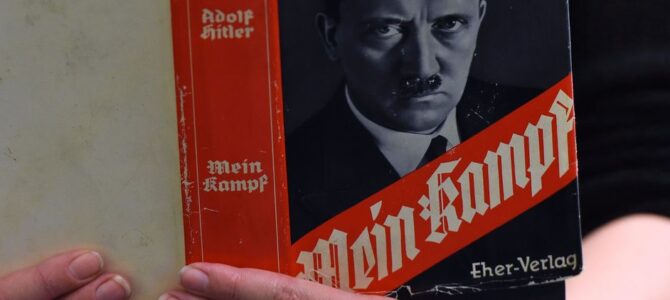
The Israeli embassy to Lithuania issued a statement last week warning against the planned publication of a Lithuanian translation of Adolf Hitler’s autobiogaphy Mein Kampf, or My Struggle, by the publishing house Obuolys.
The statement posted on social media reads:
The Embassy of Israel in Lithuania expresses its deep shock and dismay at the intention to publish and distribute Lithuanian translation of Adolf Hitler’s Mein Kampf –the toxic manifesto that laid the ideological foundation for the systematic annihilation of millions of people, including approximately 95% of Lithuanian Jewry.
At this particular moment, as the world witnesses an alarming and unprecedented surge in antisemitism, Holocaust distortion, hate speech, and extremism, a fundamental question must be asked: Is making the Nazi manifesto even more accessible to the general public truly what society needs right now?
While we recognize the importance of academic and historical research, there is a profound difference between controlled scholarly study and the commercial distribution of a hateful manifesto on bookstore shelves. For the Jewish community in Lithuania, which still bears the deep scars of the Holocaust, this book is not merely a theoretical historical artifact–it is the ultimate symbol of genocidal hatred.
The Embassy of Israel calls upon the publishing house and all relevant stakeholders to demonstrate historical sensitivity and public responsibility, and to reconsider a step that deeply offends the memory of the victims and undermines our shared commitment to combating antisemitism and intolerance.
Hitler wrote the book in Landsberg prison where he was serving a sentence for the infamous Beer Hall Putsch, a street battle against Bavarian authorities. He dictated the book to fellow prisoner Rudolph Hess, also convicted of attempting to overthrow the Bavarian government. The first volume of Mein Kampf on July 18, 1925, and sold 9,473 copies in its first year of publication, according to history.com. Hitler was 36 at the time of publication of the book which detailed his plans for exterminating European Jews.
Germany banned publication of the book from 1945 to 2016. On New Year’s Day, 2016, the legal ban was lifted.
Vilna Gaon Jewish History Museum director Sergey Kanovich commented on social media about the planned publication in Lithuania and the embassy’s reaction (in loose translation):
On the new publication from the Obuolys publishing house, I’ll just say this: six million Jews already “read” this book a long time ago. Including almost all Lithuanian Jews.
This act by the publisher demands public discussion. It will happen at the Vilna Gaon Museum of Jewish History. We will invite to the discussion Holocaust historians and politicians. Professors Gintautas Mazeikis and Nerijus Šepetys, culture minister Lukas Alsys and Lithuanian Jewish Community chairwoman Faina Kukliansky have already agreed to participate. We will also invite the publishers.
I feel society has the right to know the publishing house’s motives and intentions.
We will announce a time for this discussion separately.