
Information from Mindaugas Surblys, Palanga Jewish Community
When fire ran rampant in Palanga in 1830, old burial pinkhas were destroyed, dating back to 1487. Beginning in 1831 burial records were kept for the new Jewish cemetery at the edge of town. For a time two Jewish cemeteries operated in tandem in Palanga, the old one since 1487 till 1892, located inside Birutė Park. The new cemetery was instituted near Naglys Hill.
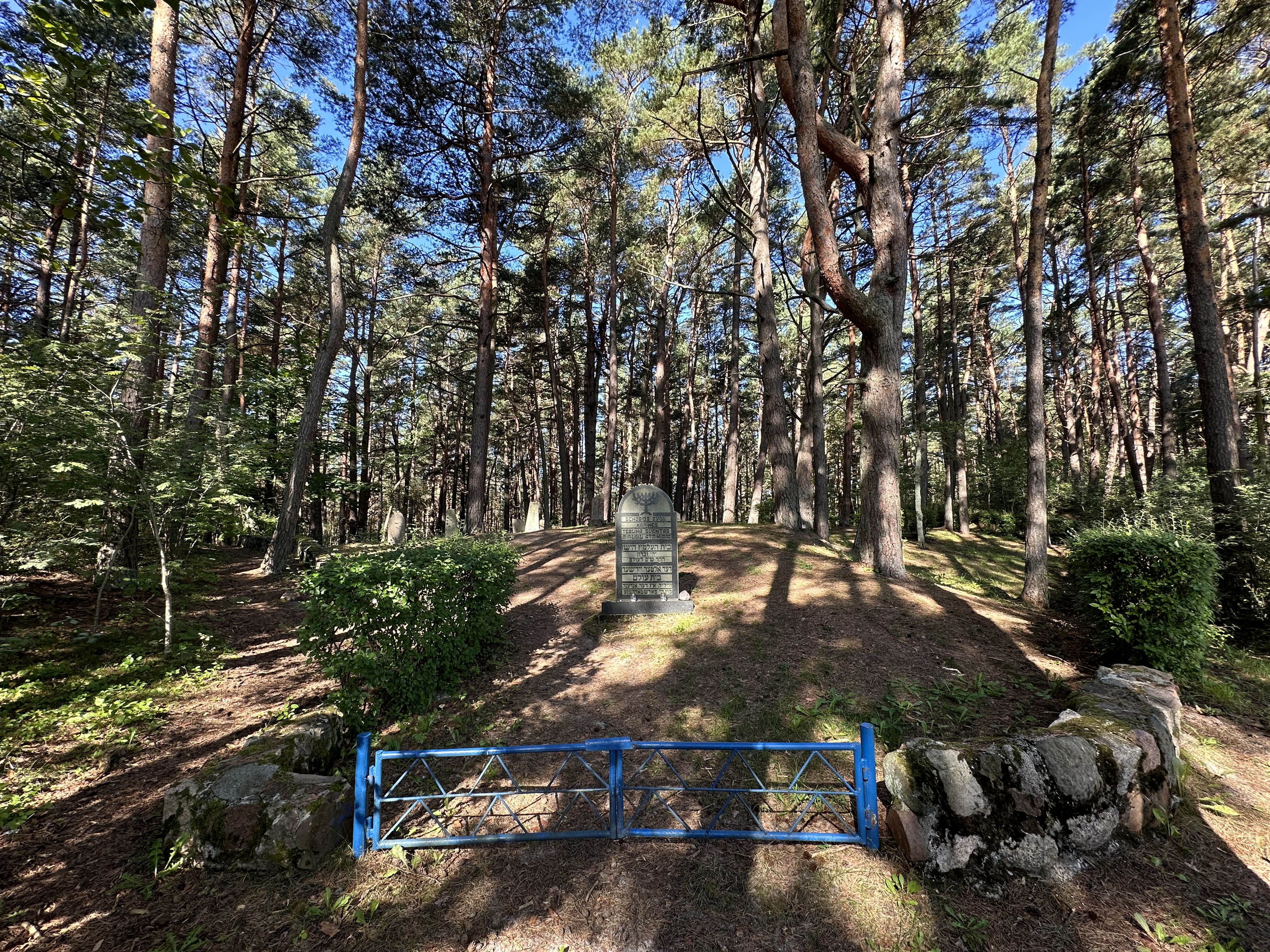
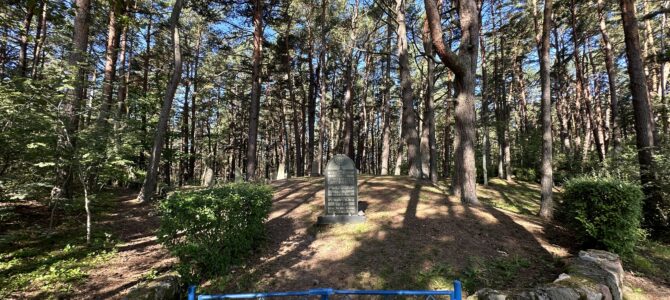
There are ten remaining headstones (matsevot) of different sizes made from granite and cement with inscriptions in Hebrew letters. Three headstones are broken in their upper sections. One is splintered with fragments lying on the ground. Many of the surviving monuments are difficult to read.
Several inscriptions are legible and correspond to the burial records of the Palanga Jewish community. The inscriptions match the information in the pinkhas, for example, “Here lies our dear and honored father who was famous for his charity work and high moral character, Natan Frank, son of Hirsh (Tzvi), deceased on Rosh Hashanah, 1935” (partial translation).
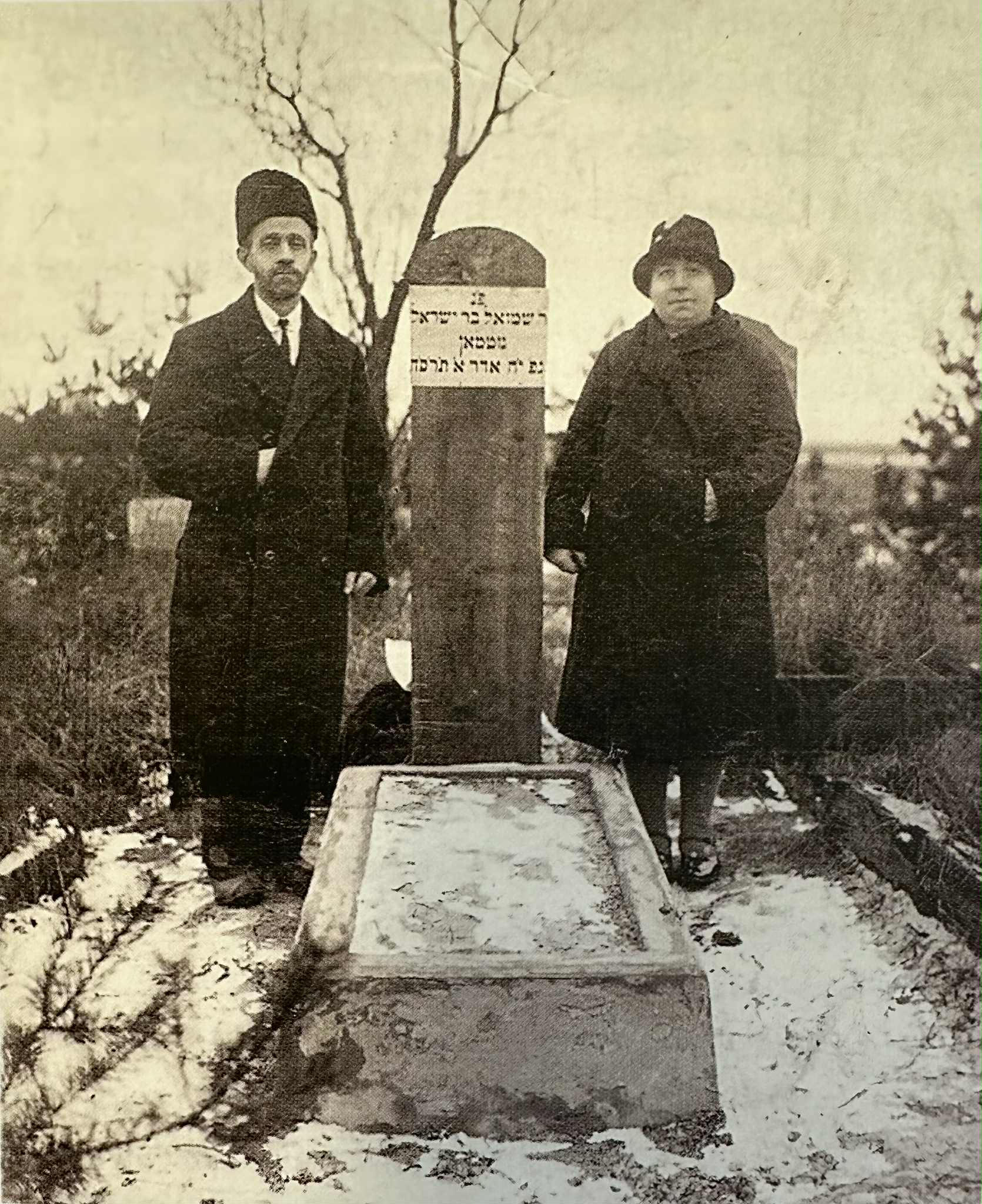
Photo: Baruchas and Malka Gutmanai at grave of grandfather Shmuel Gutman in the old Jewish cemetery, 1935. From the family collection of Baruchas Gutmanas.
The death records for the Palanga Jewish community in 1935 completely confirm this information. They say Natan Funk died on September 28, 1935, during Rosh Hashanah, and was buried the next day. The records show he was born in 1875 and died at the age of 60. The records show his parents were Hirsh Funk and Khana Funk.
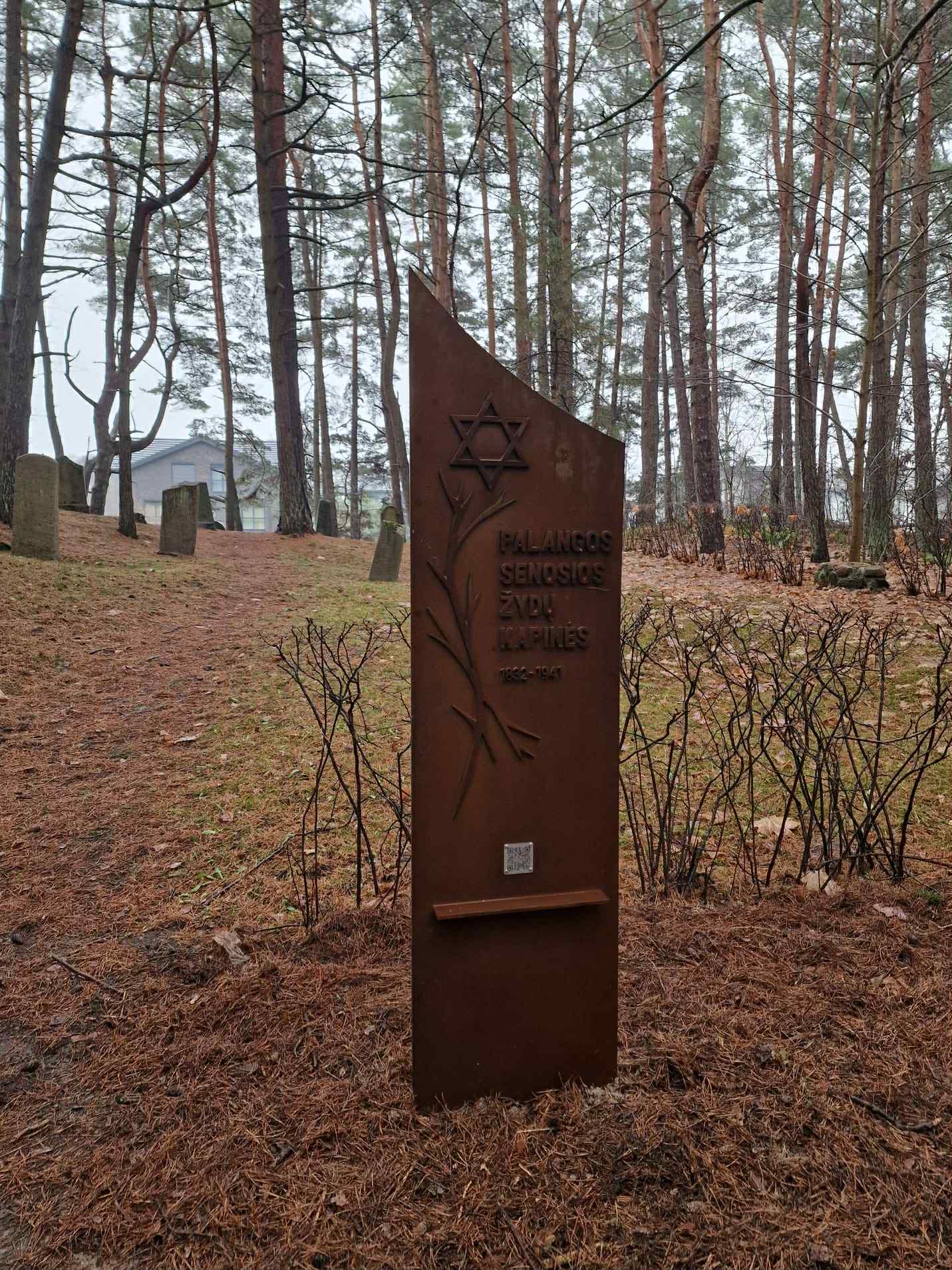
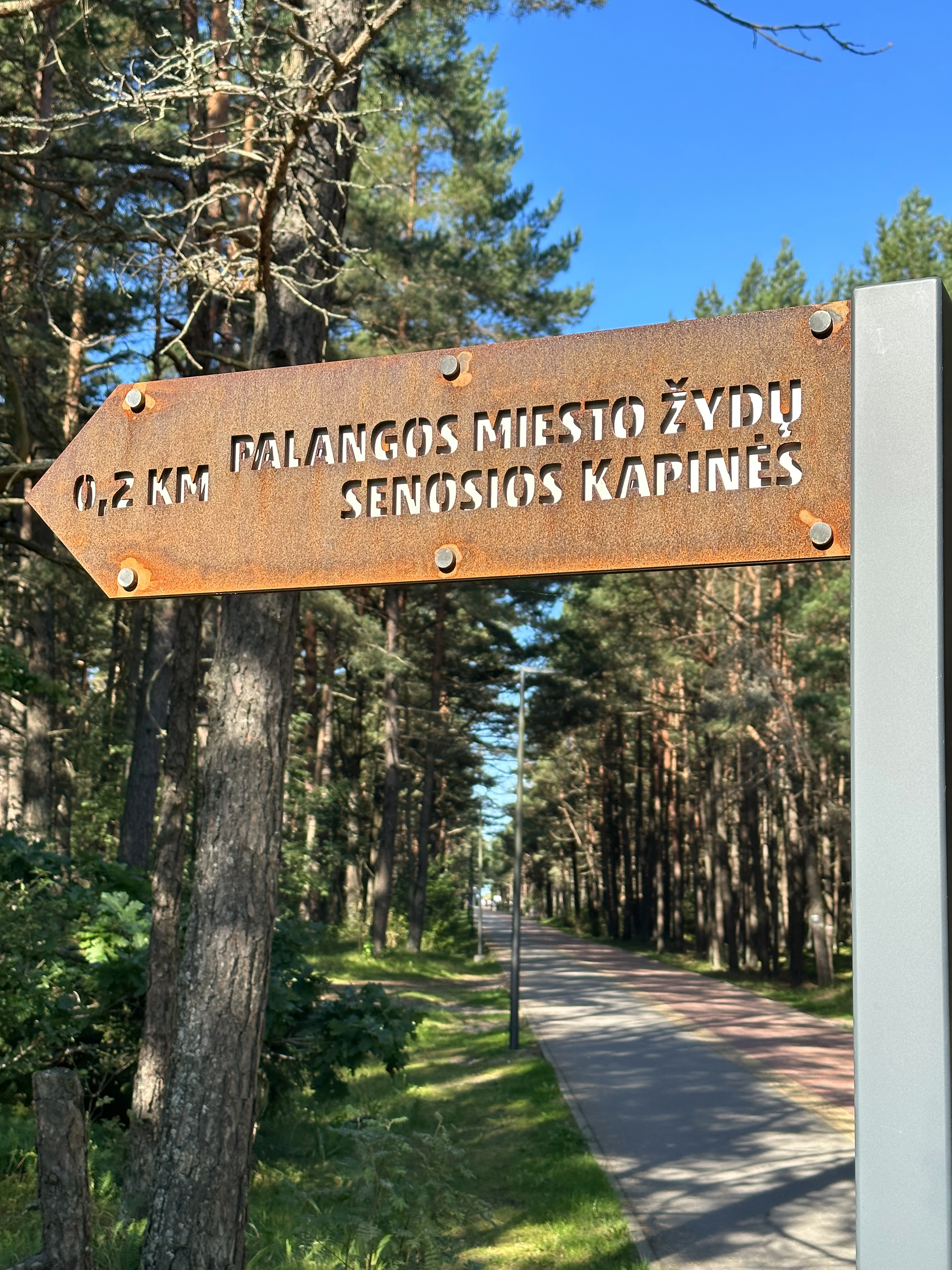
Photo: Information stand with QR code, photographed by Mindaugas Surblys.
Other surviving grave markers show these approximate years of burial: 1897, 1903, 1904, 1906, 1908, 1912, 1917, 1921, 1935. Aria Hillel died in 1897, son of Moshe Klampus . In 1903 Mara Krein died, daughter of Leib Treib. Rabbi Natan Faytal, son of Rabbi Shlomo Hyman, died in 1904. In 1912 Ze’ev Klapmus’s daugher Feiga, wife of Hillel Gumtan, died. Mordechai Shmuel Gutman died in 1917. In 1921 Esther Brutzkas, daughter of Haim, died.
The Palanga Jewish Community only has precise records dating back to 1922, meaning older dates are approximate based on grave inscriptions which are often difficult to decipher.
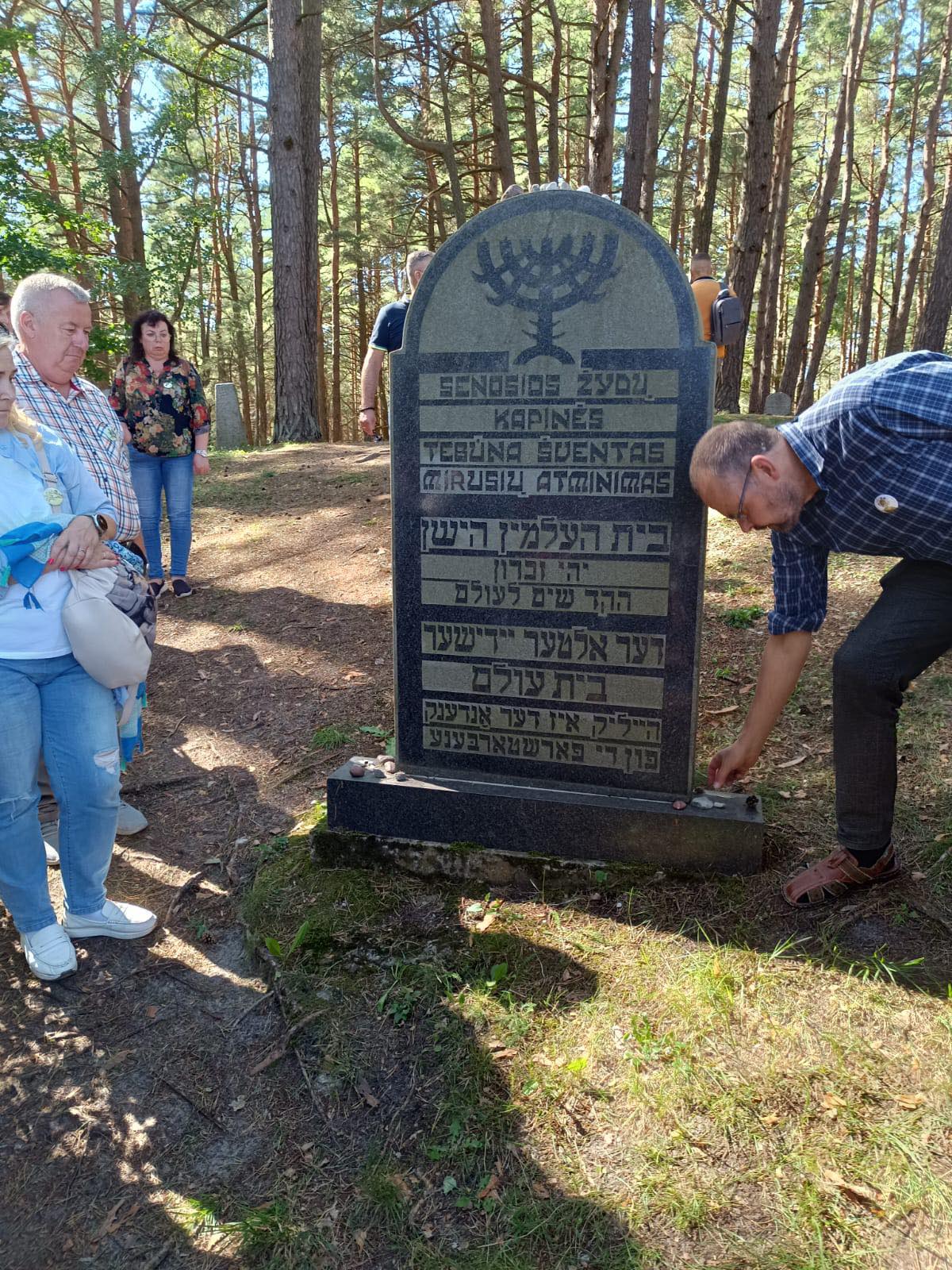
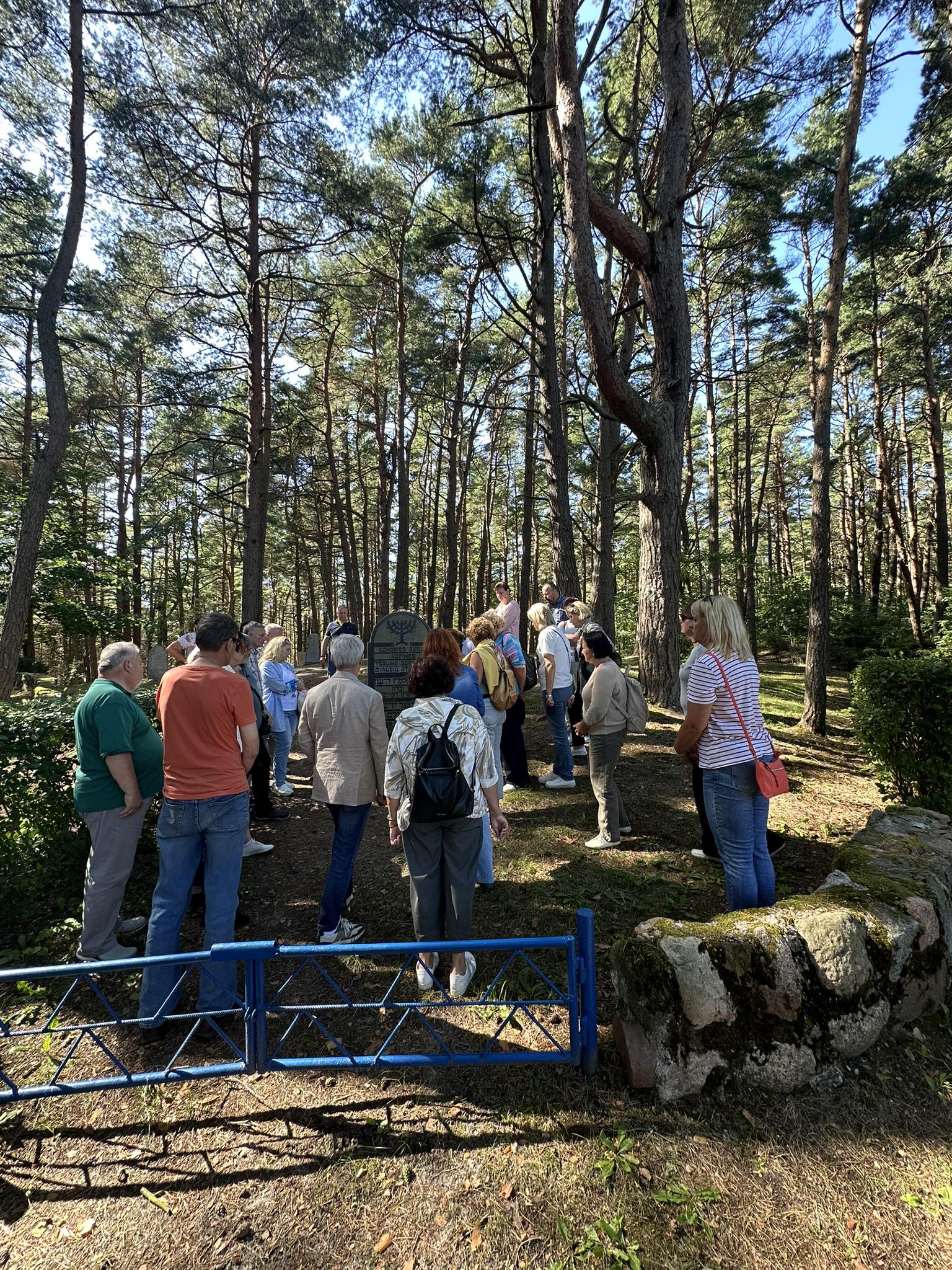
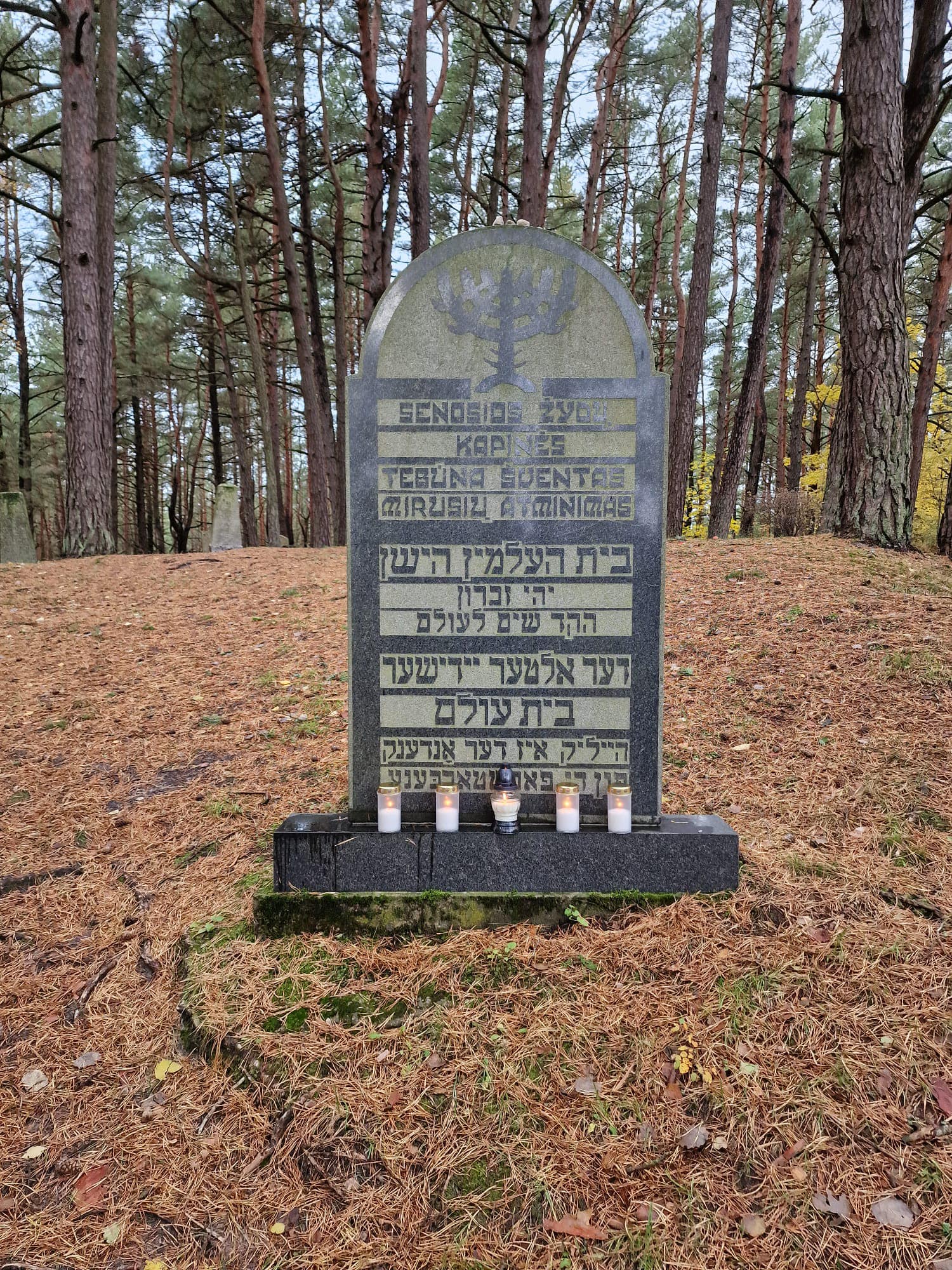
In 1991 a granite marker was erected showing the location of the old Jewish cemetery and describing its importance. The inscription in Lithuania, Hebrew and Yiddish reads: “The Old Jewish Cemetery. May the memory of our dead be a blessing.”
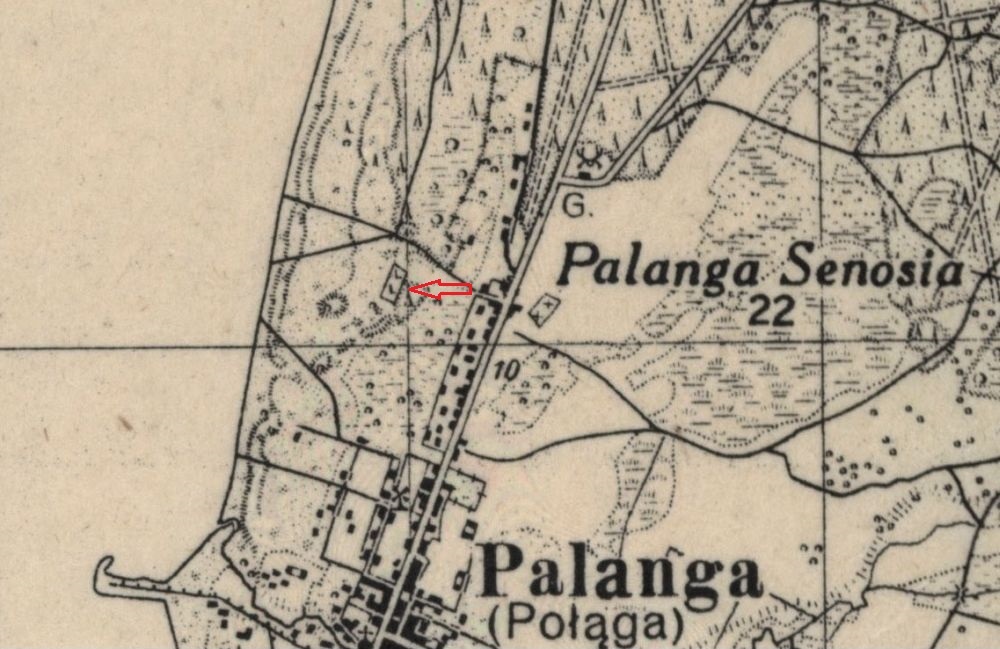
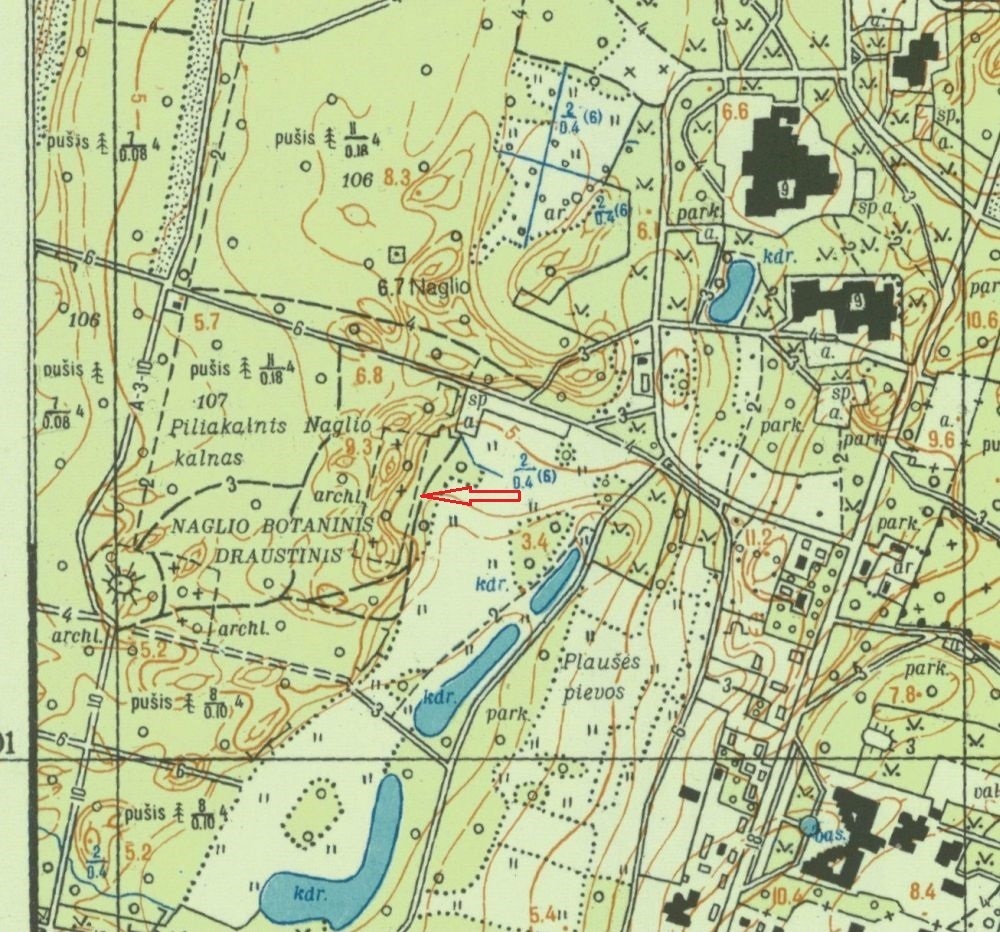
Photo: Part of a map from 1935 delineating the Jewish cemetery in Palanga.
On September 4, 2008, the cemetery [old cemetery?] was registered on Lithuania’s list of cultural heritage sites (unique site code 32235). The listing says the cemetery occupied 1,085 square meters or about 10.85 ares (0.25 acres). Later research showed this area was too small and didn’t include all of the historical cemetery. Cemetery boundaries were assessed anew in 2024 and found to be 7,670 square meters, or 76.7 ares (about 2 acres).
In 2025 signage with a QR code for further information was erected in the old Jewish cemetery, by the initiative of and with financing from the Palanga city municipality.
Palanga Jewish Community chairman Vilius Gutmanas said: “The Jewish cemeteries are physical artifacts of actual people and their lives, reflections of family histories and the symbol of continuity of a living community. Every surviving epithet, every meter of cemetery territory confirmed by archival research witness to our responsibility to historical truth and to our respect for those whose lives and destinies are connected with this site.”
More information can be found at the Palanga Jewish Community’s social media pages here and here.