

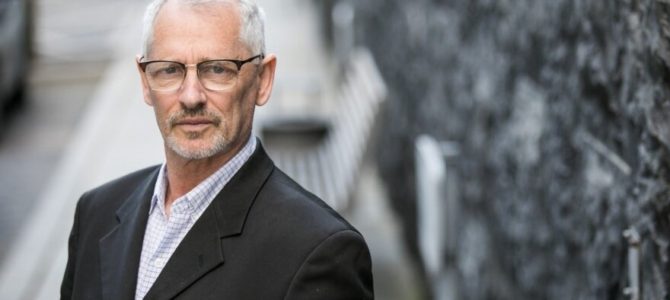
by Arkadijus Vinokuras
The events shaking the Genocide Center in the last few days are the logical result of several years of flawed policy. This is what happens when responsibility for research into and assessment of historical events is passed into the hands of politically-agitated profaners. According to the professional historians who are finally quitting the Genocide Center, this leads to: “the disappearance of the distinction between the work of professional specialists and amateurish initiatives. In terms of both historical research and the field of commemoration and the authoring and publication of documents, there is a danger that this will become an imitation of academic and expert work and a profanation of academic research.”
So, the honorable historians of the Genocide Center confirmed in a statement they released what I have been repeating for several years now: there simply cannot be a state institution whose task it is to perform objective studies in connection with the history of our country, if it is led by radicals appointed by politicians rather than professional historians. All these sorts of self-declared historians–geologists, philologists and mechanics–cannot prepare properly findings of history for the courts and other important institutions. All the more so if they don’t even consult with professional historians.
The result of this dishonest and likely criminal activity (when history is written based not on facts but on politically-motivated interpretations and myths) are findings of history, binding legally. Thus Kazys Škirpa, who collaborated with the Nazis, dreamt of a Nazi Lithuania and drove the Jews out, is proclaimed a Lithuanian hero. The same goes for Jonas Noreika, who for two years acted as a Holocaust perpetrator, and if his heroization isn’t enough, now he has become “a rescuer of Jews.” And those Jews, allegedly, “themselves, of their own volition, barricaded themselves in ghettos.” So did other Lithuanians as well “themselves, of their own will, yearned to leave for Siberia?” Isn’t it pathetically funny, the Genocide Center’s self-justification is “our Holocaust was different, and collaboration with the Nazis was also different than in other places?” Another example: Juozas Ambrazevičius-Brazaitis, who was, it seems, “vindicated and rehabilitated by US institutions.” This is how the brains of Lithuanian people with no connection are washed, people who find it very difficult to determine where the truth lies, and where the lie does.
Reading the letter by the researchers, I saw a macabre image of a Soviet institution. The academics are forced to create history according to someone’s imagination. To engage in the defense of history and join in the fray of memory wars. Brutal is the war waged on historians by the nationalist politruks, who supposedly love Lithuania and who have usurped the Genocide Center. After hearing the speculations which share nothing with common sense by members of the Genocide Center Commission on the topic of “The Jews in corpore are themselves guilty that they were exterminated,” MP Rakutis in the parliament, a cut-out and bulwark of the radical right, fell on his sword. Rakutis, who for unknown deeds was awarded the Knight’s Cross medal, will probably reap more political hay because of it, and perhaps earn another medal.
But whatever you say, we really do know how to “fabricate” heroes. After all, captain Jonas Noreika, who never fired a shot against the Soviets or the Nazis and who was not a partisan, was turned into a general. This is like a wet rag slapped across the vivid memory of Juozas Lukša-Daumantas, a real soldier. It appears the profaners in charge of the Genocide Center really don’t care about source documents or facts. They couldn’t care less that all three of my aforementioned cult personalities violated the 1920 Provisional Constitution of Lithuania which enshrined the protection of the individual and property and freedom of belief, worship, conscience, speech and assembly. Even the authoritarian constitutions of 1928 and 1938 (which appeared following the coup d’etat of 1926) didn’t abolish protection of private property and freedom of worship, and neither did they abolish the concept of treason against the homeland.
For the newly-appointed leadership of the Genocide Center (as with the earlier leadership, incidentally) doesn’t recognize the existence of such trifles as the Lithuanian constitution or violations of it. After all, everything is done out of love of Lithuania, right? And when the real historians, who have academic credentials, working at the Genocide Center began to oppose the demagogy and began to protest, the nationalist politruks demonstrated very clearly who was in charge. The great “fighter for truth” Vidmantas Valiušaitis (a philologist by profession) together with the director of the Genocide Center who is still in his post, the political scientist Adas Jakubauskas, apparently decided to utilize Communist methods of terror: censorship and grotesque pressure. We need to shut the mouths of those who are dissatisfied, even get rid of them. And this is exactly what happened to the researcher Vida Komičienė whose labor contract was not extended. She become unemployed because the profaners of history at the Genocide Center didn’t like her work addressing damages done by the USSR to Lithuania.
Psychological terror or mobbing into compliance is a criminal act. A letter signed by 17 academics said the Genocide Center is carrying out a real internal genocide of the truth and the political pressuring and control of disobedient scholars, “restricting academic autonomy and eroding the quality of academic research” (Delfi.lt., January, 2021: https://www.delfi.lt/news/daily/lithuania/lggrtc-mokslininkai-kelia-susirupinima-del-susidariusios-padeties-centre-kreipiasi-i-seima.d?id=86358121). A legal reaction was to be expected following such serious testimony, but perhaps the law does not apply to the radical right within the Genocide Center, or not in the same way it applies to all others.
It’s also worth looking at how Valiušaitis became general director Adas Jakubauskas’s advisor. A special post was created for him, the philologist: advisor to the director of the Genocide Center. So what can a philologist do at the Genocide Center? It turned out he was needed to “supervise” the quality of work by the scholars. According to the protesting historians, “this job has wide authority to consult and judge the work of history professionals, to set the direction of research at the Center and to control the work of the Center’s publishing operation, with authority over department and section directors and administrators.” Get it? Amateurs in charge of the work of professionals… So much for Valiušaitis’s love of the truth which he claims to defend in his books “Kalbėkime patys, girdėkime kitus” [Let’s Speak Ourselves and Hear Others] and “Istorikai nenaudoja dalies šaltinių” [Historians Don’t Use Some Sources].
The reality, sadly, is that the professional historians there began demanding the use of sources and to be heard, and got the finger instead. Valiušaitis forbade one scholar in a letter from speaking with the media, and issued a workplace warning to another for the same reason. Thus, the authors of the letter say, “the destruction of the prestige of the Center as a competent expert institution domestically and internationally” is happening. The historians’ accusation were serious enough that Valiušaitis decided to resign after all. He might have taken his entire crew with him as he left, with Jakubauskas in the vanguard. Meanwhile Jakubauskas took to Lithuanian Public Radio insulting the professional scholars who had criticized him, unrepentantly claiming he had nothing to do with any of it, and the people around him were guilty (LRT Lithuanian Public Radio program “Aktualijų laida,” February, 2021).
OK, let’s put irony aside. The fact is neither the leadership of the Genocide Center nor the party and MPs who support the political wantonness of the Genocide Center directors have felt any respect for the Lithuanian constitution for many years now. Even at the expense of objective studies. The idea of “history wars” was released upon the radical rightists long ago. The statement by the scholars at the Genocide Center re-opened a wound and confirmed the fact that the politicization and ideologization of academic research paralyzes the work of professionals, but also prevents the healing of psychological trauma in the older generation, and prevents the younger generation from making an objective judgment regarding the actions of their parents and grandparents. Our youth had been done a great harm, with facts suppressed, a distorted view inculcated of elementary sympathy for others and the infusion of disrespect for the state’s democratic institutions. The youth constantly have an amoral political culture pounded into their brains which claims personal responsibility doesn’t exist and cooperation with the occupier is a normal thing. It seems any crime can be vindicated, you just have to find the right arguments. Because “both sides were guilty.” Isn’t this what Putin and other dictatorial regimes are trying to introduce into the Western democracies? Keep in mind: some of the dishonest findings of history fabricated by the Genocide Center not only have significant consequences within state institutions, but also have significant consequences among the public, and we often fall into the trap of distorted historical facts because of them.
How much longer will the Lithuanian parliament, I wonder, pretend that everything is fine within this important Lithuanian institution? What do the speaker of parliament, the Human Rights Committee and the Education and Science Committee think about this? What do the Social Democrats in parliament, who have raised the serious problem of work-place harassment, think about this? Clearly it is time to operate on this abscess and not allow research into historical events to become the prerogative of one party or one political ideology. It’s time for Genocide Center to halt mob rule and Communist censorship.
Public statement and measures for basic reforms to the Genocide Center by Center scholars:
We are concerned by:
1. The devaluation of the discipline of history through the distortion of history research in an ideologized and politicized direction (encouragement to undertake “the defense of history” and “memory wars,” the public announcement of irresponsible and unobjective statements and interviews in the Center’s name, for example, URL; the halting of research for calculating damages to Lithuania incurred by the occupation by the USSR, and so on);
the devaluation throughout the Center’s activities of the status and significance of fundamental historical research, the flawed idea of the adaptation of research and results sought (for example, commemorative programs being drafted without consulting history and heritage protection experts, without regard to current academic research);
2. Genocide and Resistance Research Department (GRRD) staff and directors are only invited to a portion of meetings which consider strategic plans and other important issues of Center activity. Without the knowledge and consent of historians, without the participation or knowledge of the GRRD director and department heads, structural reforms and changes of leadership are planned. The parliamentary Committee on Battles for Freedom and State Historical Memory is being informed of planned changes circumventing the leadership of the GRRD which only learns of these plans from open sources [media] (see the minutes of the meeting of the Committee on Battles for Freedom and State Historical Memory for January 6, 2021, at 1:34:22, https://www.youtube.com/watch?v=e_adAN5Mu44 )
3. The appointment to senior advisor to the general director through the creation of a new post and the introduction of new job requirements tailored especially to fit this person, introducing the requirement of a degree (philology) which has nothing to do with the work of the Center. This post has been given wide authority to consult and judge the work of history professionals, to set the direction of the Center’s research, and to oversee the work of the Center’s publications department with power over the department directors and the heads of subsections (http://www.genocid.lt/UserFiles/File/Pareiginiai/Direkcija/Vidmantas_Valiusaitis.pdf);
4. Due to the devaluation of professional competence, the strained and emotional work environment and pressure from the Center’s leadership, qualified, experienced history and other professionals continue to leave or be pressured by the Center, employees who have contributed significantly to the Center’s activities over many years. Monika Kareniauskaitė and architect professor Algis Vyšniūnas have quit their jobs because of the threat of work-place sanctions and their experiences in raising the issue of problems at the Center; Mingailė Jurkutė has been issued a stark warning for violating workplace rules in expressing very well her professional opinion to the media regarding the status of freedom fighter issued to a certain person (and this is why the staff who have signed this appeal are concerned that constructive criticism will be equated with disloyalty). The lack of foundation for that warning is also demonstrated by the fact new internal rules of order were adopted hastily by the Center following the appearance of her comments (XIII Part 2 Provision of Public Information) which, post factum, introduced the duty upon academics working at the Center to seek and receive permission to speak with reporters. These sorts of restrictions violate the right to criticize the activities of state institutions and agencies (Lithuanian Law on the Provision of Public Information, article 9), academic freedom (Lithuanian Law on Science and Research, article 53, section 2, points 1 and 3) and principle of openness of academic research (Lithuanian Law on Science and Research, article 3, section 1, points 1 and 4) (http://genocid.lt/UserFiles/File/dokumentai/2020_vidaus_tvarkos_taisykles.pdf);
This situation hinders the successful implementation of the functions assigned to the Center, and without remedying them, there is the threat of the following:
1. The disappearance of the line between expert professional work and amateur initiatives, both in history research as well as in the field of commemoration and the drafting and publishing of documents, with the risk of it becoming an imitation of expert work and a profaning of academic research. This situation is useful to forces inimical to Lithuania who question the legitimacy of research into the past.
2. A further strengthening of political control, restricting independence of academic inquiry and lowering the quality of academic research.
3. The disappearance of the Center’s reputation as a competent expert agency in the national and international realm.
4. The appearance of alternative expert agencies in Lithuania providing expert professionals (including a large number of qualified staff who have quit the Center) who can carry out the functions which the Center finds too burdensome, or the removal of research problems from the Center to other institutions.
In light of the above-described complicated and multifaceted situation and the dangers posed, it is necessary to take steps to initiate needed administrative reforms which would return to the institution its reputation for research and expertise. We recommend:
1. Forming a working group of history specialists which would include historians working at the Center and other Lithuanian historians and memorial policy experts, which would engage in renewing the direction of the Center’s research, discuss urgent methodological problems and approaches and create new and confirm existing research programs (Mingailė Jurkutė made this suggestion at a teaching seminar for staff in the fall of 2020). We recommend adding to this working group foreign specialists (this suggestion was made by Monika Kareniauskaitė, proposing to add colleagues from the European Memory and Conscience Platform, Yale University, and memory centers in Germany, Hungary and Estonia).
2. To set up a Research Council under the Center which would invite in academic authorities who understand the field (this recommendation was expressed at a meeting of GRRD staff and the Center’s general director previously).
3. To return to full meetings of the Board of Executives of the Center (this suggestion was made numerous times by GRRD director Arūnas Bubnys).
4. To review the job description for the post of senior advisor to the general director and to re-assess the need for this post and its usefulness to the Center’s activities. If this post is nonetheless necessary, we believe qualification requirements for it should include things such as professional competency and authority in the field in which the Center operates, and that the authorizations granted to this post would insure the participation of department heads in adopting decisions which affect those departments.
[Signed:] Historians of the Genocide and Resistance Research Department of the Center for the Study of the Genocide and Resistance of Residents of Lithuania:
Dr. Arūnas Bubnys, GRRD director; Dr. Kristina Burinskaitė, GRRD senior advisor; Rytas Narvydas, director of GRRD special research department; Ramona Staveckaitė-Notari, director of GRRD department of historical research programs; Dr. Juozas Banionis, senior historian; Tadas Jaskelevičius, senior historian; Dr. Mingailė Jurkutė, senior historian; Dr. Valdemaras Klumbys, senior historian; Doktorantė Enrika Kripienė, senior historian; Gintautas Miknevičius, senior historian; Sakalas Natkevičius, senior historian; Dr. Mindaugas Pocius, senior historian; Dr. Alfredas Rukšėnas, senior historian; Irena Šutinienė, senior historian; Olegas Usačiovas, senior historian; Dr. Rimantas Zizas, senior historian; Rimantas Zagreckas, senior historian
Full text in Lithuanian here.