
Religion

Gešer Club Sabbath Celebration and Quiz

Dear friends,

The Gešer Club invites you to greet the Sabbath and take part in our quiz game “Who? What? Where? Why?” at 7:00 P.M. on Friday, March 10. Teams will be formed when we meet. Moderator: Irina Slucker.

We’ll meet on the third floor of the Lithuanian Jewish Community at Pylimo street no. 4 in Vilnius.

For more information, contact Žana Skudovičienė by telephone at 8 678 81514 or by email at zanas@sc.lzb.lt

LJC Youth Clubs Celebrate Purim

Dear Community members,

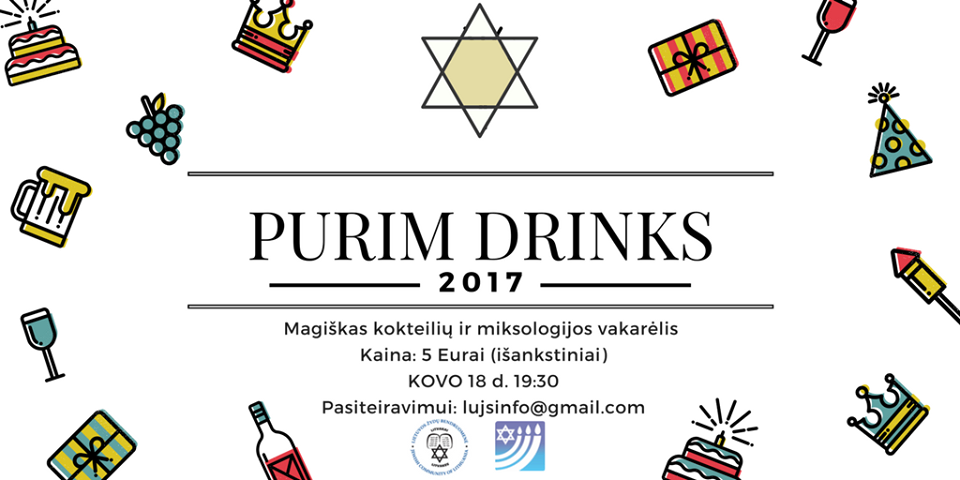
The Lithuanian Jewish Community and the Vilnius Religious Jewish Community greet you on the upcoming holiday of Purim and invite you holiday celebrations on March 12.

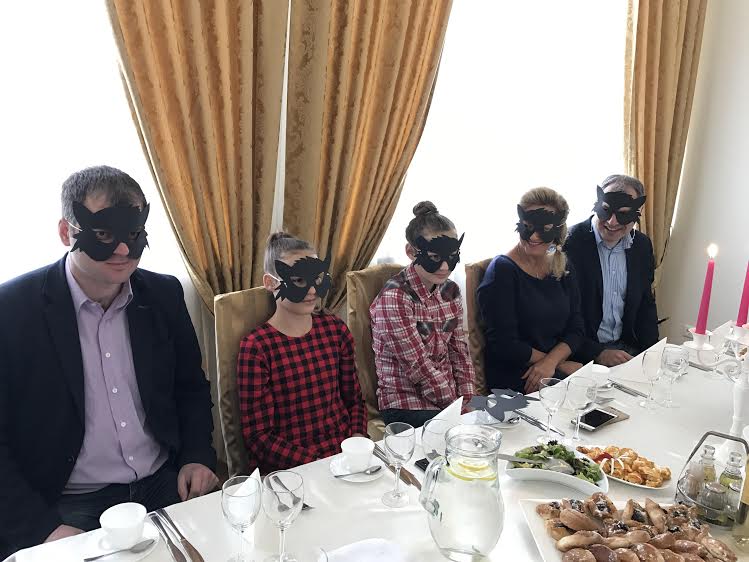
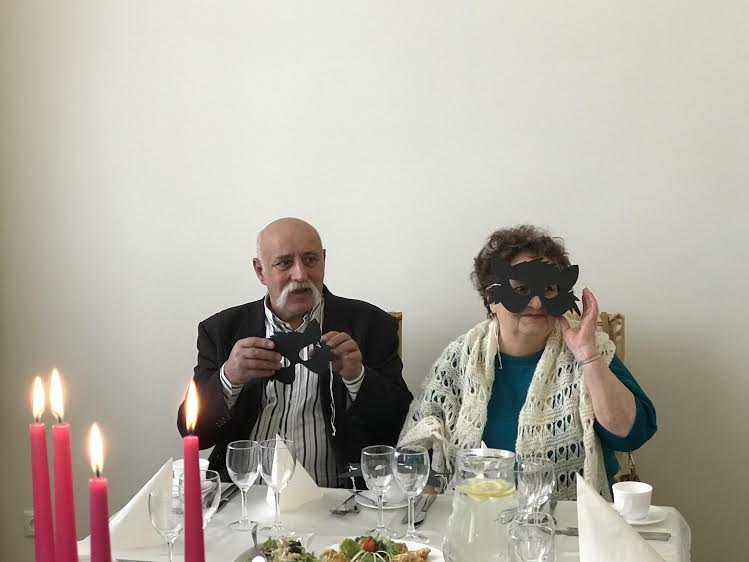
The LJC youth clubs Ilan, Dubi and Dubi Mishpaha will hold a Purim celebration at 1:00 P.M. on March 12 on the third floor of the Lithuanian Jewish Community. Entrance is free but only those in costume and/or masks will be allowed in!

For more information contact Jelizaveta Šapiro at +370 65527411 or Pavel Guliakov at +370 68542463.

Pre-Purim Table Tennis Tourney

The New Stars Club and the Lithuanian Jewish Community in anticipation of Purim invite you to a ping-pong tournament this Sunday, March 5, at 3:00 P.M. at the Simonas Daukantas Pre-Gymnasium, Naugarduko street no. 7, Vilnius.

Registration begins at 2:30 P.M. and group competition at 3.

All are invited.

Participation is free for Jewish Community members.

Prizes:
first place winners to receive trophy cups
second, third and fourth place winners to receive medallions
all participants to receive a diploma for playing

For more information and early registration, call +370 6137124
or email stalotenisoklubas@yahoo.com

Project supported by the Goodwill Foundation

Were We Not Strangers in the Land of Lithuania?

by Geoff Vasil

Shrovetide is the Catholic period of confession and repentance marking the transition from winter to spring in the calendar year. In Lithuanian it’s called Užgavėnės, which is how the Lithuanian language used to indicate the period before Gavėnia, or Lent, the period leading up to Easter. Both the English and Lithuanian names are rather obscure—the English name almost sounds like “shroud” and to shrive is an archaic verb for confession and absolution by the Catholic priest—but the holiday is immediately recognizable to people around the world in its more popular names Carnival, Mardi Gras and Fat Tuesday.

Tuesday is really the last day of the Shrovetide period and represents European pagan/Catholic syncretism, the mixture of pagan bachanalia and saturnalia-type celebrations with the Christianity emanating out of Rome. The excesses and parties of Carnival have always been condemned by ecclesiastical authorities and yet have continued to the present. Carnival in many ways mirrors Halloween, which precedes All Saints’ Day, and in Lithuania there is a tradition of Shrovetide “trick-or-treaters,” children in costume going door to door seeking pancakes.

These costumed characters are a reflection of earlier and larger Shrovetide processions in Lithuania. In the post-1990 period of Lithuanian independence great efforts have been made to revive what was for all intents and purposes a dead tradition, public Shrove Tuesday events. The Soviet regime consciously sought to extinguish the tradition as a religious manifestation, but doing away with the traditional holiday was accomplished in different ways in different locations. The most effective manner of getting rid of the holiday was co-opting it in a more general Soviet “Ushering-out of Winter” holiday using a cast of costumed characters slightly more acceptable in Soviet society, but even the best-laid plans of the Soviet methodologists never really did away with the mischief inherent in the celebration and against which the Catholic Church had fought unsuccessfully for centuries.

Jewish Character in Lithuanian Shrovetide Processions an Example of Stereotypes

MG_0191ktoM2
photo: Vytautas Daraškevičius

15min.lt

by Paulius Gritėnas

Israel’s ambassador to Lithuania Amir Maimon Wednesday issued a brief press release saying the long history of the Jews of Lithuania, destroyed monuments, names and works are only now being restored.

“We are moving ahead slowly to lead Jewish history out of the dark. And there’s a long road ahead of us… So far Jews in Lithuania are remembered mostly in a different way, as grotesque Shrovetide masks,” the statement read [in paraphrased translation from Lithuanian], going on to pose the rhetorical question of whether it isn’t time to adapt traditions in such a way they don’t offend the ethnic minorities of Lithuania.

Shrovetide is one of the oldest holidays in Lithuania and once upon a time was called Ragutis. It’s not surprising it contains an abundance of stereotypical thinking and visual codes demonstrating the simplified way we perceive our environment and people who are different in that environment.

Full story in Lithuanian here.

Lesson by Rabbi Isaacson

blues brothers

Dear friends,

You’re invited to Rabbi Shimshon Daniel Isaacson’s lesson

Secrets in the Jewish Family

at 6:35 PM. at the Choral Synagogue in Vilnius on Thursday, March 2.

Confronting Anti-Semitism in America

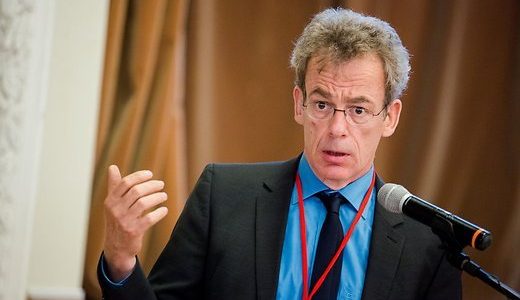
by David Harris
David-Harris-medium
No one is born hating, but, tragically, some are taught to hate, whether in the name of racial purity, religious doctrine, political dogma, ethnic stereotyping, sheer jealousy—you name it.

To state the obvious, Jews have never been immune from these age-old cancers. Nor is it the case today.

In the last few weeks alone, there have been bomb threats by the dozens against Jewish community centers across the country. Other Jewish institutions – organizations, synagogues, schools – have been on the receiving end of menacing calls and messages. Cemetery desecrations of Jewish headstones in St. Louis and Philadelphia have occurred. Nazi graffiti and slurs have been encountered in Buffalo. Swastikas have been burned into the hallway carpeting in front of Jewish students’ rooms in a school dormitory. The list goes on.

Yes, they coexist with another reality, namely, that most American Jews live comfortable and secure lives in a land where pretty much every door is now wide open to them, and where a recent survey, conducted by the Pew Research Center, showed that Jews are the most positively viewed religious group in the United States. But that’s of little solace to those who have experienced, directly or indirectly, the impact of this wave of bigotry and viciousness.

Who exactly is behind this remains to be seen. Are they lone individuals? Are they many or few? Are they connected to one another by shared ideology and allegiance, or are they more amorphous and atomized? Is a copycat phenomenon also at work?

Statement by Lithuanian Jewish Community Chairwoman Faina Kukliansky on Shrovetide

Parliamentary Culture Committee chairman Ramūnas Karbauskis on his social media page invites everyone to celebrate Užgavėnės [Lithuanian Shrovetide, or Carnival] in Naisiai, Lithuania. Event organizers used illustrations reminiscent of anti-Semitic propaganda used by the Nazis. This was reported on the internet site of the newspaper Lietuvos žinios on February 24, 2017.

“At the invitation of the most influential member of parliament R Karbauskis [Karbauskis is the chairman of the ruling Peasants and Greens Union party], the public is called upon to celebrate Shrovetide at the Naisiai location, associated with the politician, where, it seems, anti-Semitic ideas not only thrive, but are a part of everyday communication. Under the header of “Big Shrovetide in Naisiai” on social media, the invitation and publicity for the event provides more than just an events program, it also includes [anti-Semitic] sayings…”

It didn’t take long for the Lithuanian public to react. A wave of outrage appeared, as did anti-Semitic comments on the internet. One of the leaders of the governing coalition of the nation, after all, presented an invitation to celebrate Shrovetide using fascist propaganda from 1939. “Lithuanians know the Holocaust began soon after that,” LJC chairwoman Faina Kukliansky commented.

“Following the February 16 march in Kaunas where it was hard to tell the ultra-nationalists from the patriots, this is continuing now into Shrovetide,” chairwoman Kukliansky said. “Is this the policy of the new ruling party? How are we to understand this? An innocent holiday celebration is transformed in the Naisiai announcement into clearly anti-Semitic jingoism, a return to the pre-World War II era. How should Lithuanian Jews feel? The Shrovetide celebration is a holiday, we understand ethnology, but this is beyond Shrovetide and even its masks, these are anti-Semitic Nazi masks which arrived in Lithuania from Hitler’s Germany. We would like to hear from Mr. Karbauskis’s lips whether he is or is not an anti-Semite. I am the chairwoman of the Lithuanian Jewish Community and I am requesting an answer to the question about what his views are regarding Jews, if he has the courage to display such masks in public. Existing Lithuanian laws criminalize the spreading of fascist propaganda,” Kukliansky said.

Bravery of a Japanese Diplomat on Exhibit in Cape Town

moirashanghairefugees
“Sugihara didn’t only save my grandfather, he also saved me. Because if not for Sugihara I may very well not be standing here today.” These were the words of Rebbetzen Sarah Feldman of the Gardens Synagogue in Cape Town, speaking on Monday at the opening of the Jewish Refugees in Shanghai exhibition at the South African Jewish Museum. Her grandfather, Rabbi Shimon Goldman, hailed from the city of Shedlitz in Poland.

by MOIRA SCHNEIDER | Feb 02, 2017

When Hitler invaded Poland, signalling the start of the Second World War, Rabbi Goldman, then a teenager, escaped to Lithuania and was fortunate to have been issued a visa by the Japanese consul there, Chiune Sugihara, acting contrary to his government’s express instructions.

“Sugihara was faced with a huge moral dilemma,” Rebbetzen Feldman related.

“His humanity won. Together with his brave wife Yukiko, this righteous couple worked non-stop issuing 300 visas a day – the amount that would usually take a month to issue.” In so doing, the couple saved 6,000 Jewish lives.

Full story here.

About Jews and a Dream

[Note: The proposal Mr. Ivaškevičius makes in the following opinion piece in no way reflects the position of the Lithuanian Jewish Community. In fact, on several points it contradicts the positions of the LJC stated publicly in the past, namely, regarding the rebuilding of the Great Synagogue in Vilnius. Also, at least three Litvak museums, much like the one he proposes, are currently in the planning stage, two in Vilnius, and one scheduled to open in the shtetl of Šeduva in late 2017 or early 2018. The following translation is presented to our readers merely for the sake of information and the interest of our readers.]

by Marius Ivaškevičius
www.DELFI.lt

Yes, again, about Jews. Although, not really, this is perhaps more about us. About Vilnius, really, of which they were a part, and now we are. And this time not about repentance, guilt or about what we’ve lost, on the contrary, about what we can still get back. I want to propose a plan for how our dead Jews could still serve us.

About Vilnius

I love this city and I always tell my foreign friends it is a hidden pearl. When you need peace, it is peaceful. When you want noise and excitement, it has something to offer. The beauty here is obvious, brick-and-mortar and alive, the old architecture, the beautiful men and women, in a word, something to look at. For a long time my stories hit a polite wall of promises: “yes, of course, we will have to go there someday.” Someday, never. But suddenly it began to work. As if my foreign friends had made an agreement among themselves, they began to flood into Vilnius, asking what they should see first in this city.

So I got the opportunity to look at Vilnius not through the eyes of an insider living here, but through the eyes of someone who had just arrived. And I realized Vilnius doesn’t have anything to offer them. The Old Town, sure, it’s charming. But that charm wears off after a half day. You can spend the evening and night on the weekends in the bars. Then what? Then they want museums, but here these, it turns out, are each more boring than the last. Old armor, weapons and glazed tiles they have already seen, the picture galleries are only of local significance, there are no masterpieces and it takes a real fanatic, a tourist dedicated to art, to “consume” what is on offer.

The only thing which is truly not disappointing is the theater. The theaters of Vilnius are world-class and many drama enthusiasts come just for this, to see Nekrošius, Tuminas and Koršunovas in their hometown. Perhaps sometimes they murmur after the show about a lack of subtitles or translation, but essentially they’re satisfied. The plays fill their evenings, and during the day, seeking new experiences, they visit the Museum of Lithuanian Theater and Cinema, certain that it will be of the same high caliber as our theater which it represents. But they find that same museum boredom instead. A stoppage of time and museum women knitting.

Pope Says Anti-Semitism Opposite of Christian Values

“Unfortunately, anti-Semitism, which I reject in all forms of thinking which are the antithesis of Christian principles, is still very common in our time”, Pope Francis said in a meeting with representatives of the Anti-Defamation League, reports the website regions.ru.

The Pope also cited a document published 50 years ago, Nostra Aetate, which identified approaches to solving the problem of anti-Semitism. It specifically states that the Church “feels obliged to do everything possible to help our Jewish friends to overcome anti-Semitic tendencies.” Head of the Anti-Defamation League Jonathan Greenblatt called meeting fruitful.

The Anti-Defamation League is an American Jewish NGO and is considered one of the leaders in combating anti-Semitism.

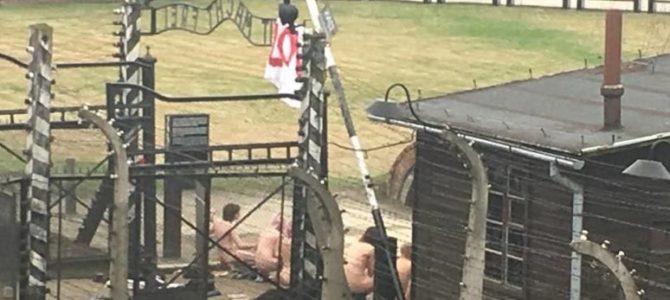
Pope Francis also recalled his visit to Auschwitz last year, saying: “There are no adequate words to describe the horror and cruelty of sin that was going on there. I pray the Lord have mercy, and such tragedies are never repeated.”

Lesson by Rebbetzin Esther Isaacson

nitilat

Dear women and girls,

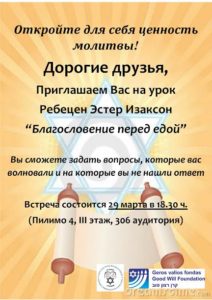
You are invited to a lesson by Rebbetzin Esther Isaacson called

The Laws of Washing Hands

at 6:30 P.M. on February 22 on the third floor of the Lithuanian Jewish Community, Pylimo street no. 4, Vilnius.

Portrayal of Other Ethnicities in Shrovetide Traditions

In the run-up to the Lithuanian holiday of Užgavėnės (Shrovetide), the Vilna Gaon State Jewish Museum’s Tolerance Center will hold a discussion called Portrayal of Other Ethnicities in Shrovetide Traditions. The traditional holiday features people dressed up as Jews with masks with hooked noses. Speakers are to include Dr. Laima Anglickienė, the head of the cathedral of ethnology and folklore studies at Vytautas Magnus University in Kaunas; Libertas Klimka, an ethnologist and professor at the Lithuanian Educology University; the writer Dainius Razauskas and representatives from the Lithuanian Human Rights Center and the Equal Opportunities Ombudsman Service.

The discussion is open to the public and is to take place at 4:30 P.M. on February 21. The Tolerance Center is located at Naugarduko street no. 10/2 in Vilnius.

Agreement with Jurbarkas on Synagogue Square Memorial

On February 9 the Lithuanian Jewish Community signed an agreement with the Jurbarkas regional administration and the New Artists College CAN of Israel on a projected called “Synagogue Square Memorial.” The memorial is dedicated to remembering the Jews of the shtetl (formerly known as Yurburg or Jurburg in Yiddish and Georgenburg in German) and is to be located on Kauno street in Jurbarkas where one of the most beautiful wooden synagogues in Europe once stood. The memorial is being created by Israeli sculptor David Zundelovich, who comes from Lithuania. It is to portray the waves of the Nemunas River and the wooden synagogue and is to be made of gray and black basalt. It is to include the names of Jews who lived in Jurbarkas and the names of people who rescued them during the Holocaust, with inscriptions in English and Hebrew.

Jurbarkas regional administration head Skirmantas Mockevičius said the group is looking for funding for the memorial. “Jews lived in Jurbarkas for a long time and there is no monument, so sign, even though they were the majority of the community,” Mockevičius told BNS. From three to four thousand Jews called Jurbarkas home before the Holocaust. The head of the regional administration said residents weren’t interested in a graveyard memorial and wanted the memorial to appeal to the people, including the youth. Under the plan the memorial is to be built within 8 months from the signing of the agreement. Mockevičius expected it to be in place in Jurbarkas by the fall.

A Tale of Two Synagogues in Vilnius: Both Survived the Meat Grinder of History

geliu-kaireje-ir-vilniaus-choraline-sinagogos-589c865b874a9

… If you call the Choral Synagogue the fortunate daughter, then another surviving synagogue near the bus station and train station could be called the poor stepdaughter in terms of appearance and visitors. The building located at Gelių street no. 6 only bears slight resemblance to a house of prayer. Restoration of the abandoned building began recently, in 2015.

Using several sources of financing, this synagogue has been slowly getting back on its feet over the last two years to become what it once was, a house of prayer. It’s said that it was the first stop for Jews arriving in Vilnius by train from all points in Lithuania. That’s hardly surprising, since the synagogue is right next to the railroad tracks!

This synagogue was in a state of imminent collapse until 2014 and its rebirth began with a “STOP” ribbon put up around it, followed by work to strengthen the roof. Over the three years since repairs began, great progress has been made. But it probably won’t be completed in 2017, it will take years longer.

State-of-the-Art Jewish Museum Planned in Šeduva

Seduva-museum1
Preliminary design concept for the Lost Shtetl Museum

Plans have been announced for a state-of-the-art Jewish museum scheduled to open in 2019 as part of the Lost Shtetl memorial complex in Šeduva, Lithuania.

The museum complex is to be designed by the Finnish company Lahdelma & Mahlamäki Architects who also designed the POLIN Museum of the History of Polish Jews in Warsaw. POLIN won the 2016 European Museum of the Year Award. They are towork together with local partner Studia2A established in 1994 and headed by Vilnius Art Academy dean of architecture Jonas Audejaitis.

The museum is to be located next to the sprawling Šeduva Jewish cemetery, completely restored and opened in 2015 as part of the memorial complex. The complex includes memorials at three sites of Holocaust mass murders and mass grave sites and a symbolic sculpture in the middle of the town. A study of the Jews of Šeduva was conducted as part of the project and is to result in a documentary film called Petrified Time by film director Saulius Beržinis.

Seduva6
Memorial statue in Šeduva. Photo © Ruth Ellen Gruber

Sergey Kanovich, founder of the Šeduva Jewish Memorial Fund, said the Lost Shtetl Museum will employ advanced technologies to teach visitors the history and culture of Šeduva and similar Litvak shtetls. It is expected to serve as an educational and cultural center.

“Visiting the Lost Shtetl will be a history lesson which will allow national and international visitors to learn about the lost Litvak shtetl history and culture,” he said.

“Lifestyle, customs, religion, social, professional, and family life of Šeduva Jews will serve a center point of the Museum exhibition,” he said. Visitors to museum will learn “the tragedy of Šeduva Jewish history which in the early days of World War II ended in three pits near the shtetl.”

About Sheryl Sandberg’s Parents, the Sandberg Family

A few days ago we learned the great-grandmother of the world-famous woman Sheryl Sandberg lived in Vilnius. After looking into Sheryl’s family history, it turned out her parents were active participants in the battle for the right of Jews to emigrate from the Soviet Union.

Sheryl Sandberg was born in Washington, D. C., in 1969 and was the eldest of three children. Her parents were English teacher Adele Einhorn and famous ophthalmologist Joel Sandberg. In 1970 there were active in fighting for the right of Soviet Jews to emigrate to Israel. In 1975 the married couple were arrested in Kishniev, the capital of Soviet Moldova where they had to come to meet with those who wanted to leave the Soviet Union, and both were expelled from the country.

Not many people remember the anti-Zionist booklets the Soviet Union published in the millions of copies, condemning “foreign emissaries” sent by the West into the USSR, who actually sought to make contact with Jews in their struggle for their human rights, to provide moral support and aid to them. The Israeli press has written of Joel Sandberg who helped Soviet Jews from 1970 to 1980. The well-known ophthalmologist Joel Sandberg of Miami is one of a number of activists in the American Jewish community who fought the battle for the right of Soviet Jews to emigrate.

Sandberg Joel

An attempt to protest by a group of 16 refuseniks (otkazniki) in Leningrad by hijacking a plane in 1970 was a major event at the time. The ringleaders were sentenced to death, but following protests from the international community, the Soviets reduced it to long terms of imprisonment. This encouraged American Jews to support more strongly Jews living in the Soviet Union. In an interview Joel Sandberg, recalling those times, said the main goal of the Americans was to help those protesting against the emigration ban and those wishing to exit the USSR. Out of the thousands refuseniks in Kiev in 1979, only 70 people were granted exit visas a year later, while requests by 3,000 more were rejected.

Lithuanian State Auditors Find Compensation for Jewish Property Used Appropriately

BNS_logotipas

Vilnius, February 9, BNS–The Lithuanian State Auditor has no complaints on the use of compensation for Jewish religious communal property this year, although they found irregularities last year.

The State Auditor’s Office reported finding no violations in the 2016 audit of the use of such funds.

The year prior to that auditors said the foundation dispensing the funds had used some monies from the state allocated under the Lithuanian law on goodwill compensation for pre-Holocaust Jewish real estate had been used in the 2012-2015 period for matters not defined in the law, namely, to pay for administrative expnses of the disbursing foundation. In 2016 the Lithuanian parliament amended the law to allow for the Goodwill Foundation to pay its own administrative costs.

Some Features of the Jewish Calendar

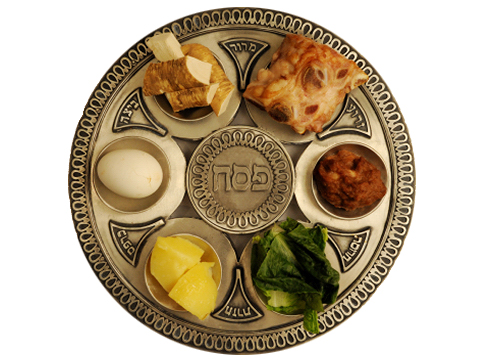
Jewish-calendar-plate

Aušra Požėraitė

by Dr. Aušra Pažeraitė

The Mekhilta d’Rabbi Ishmael in the Midrash details a discussion by Talmudic sages regarding a line from the Bo portion of the readings for the last Sabbath (Exodus 12:2): “This month shall be for you…” Rabbi Ishmael says: Moses showed the new moon to Israel and said to them: In this way shall you see and fix the new moon for the generations. Rabbi Akiva says: This is one of the three things that were difficult for Moses to understand and all of which God pointed out to him with His finger. And thus you say: “And these are they which are unclean for you” (Leviticus 11:29). And thus: “And this is the work of the candelabrum” (Numbers 8:4). Some say it was also difficult for Moses to understand ritual slaughter, it being written: “Now this is that which thou shalt offer upon the altar; two lambs of the first year day by day continually.” (Exodus 29:38).

Modern scholar of Jewish philosophy David Boyarin says this midrash is one of many examples which plainly, almost spelling it out, show how St. Augustine was correct in saying Jews read Holy Scripture “erotically” [erotically charged by ocular desire]. But here “eros” doesn’t mean imprisonment to the material or carnal for its own sake. It is, rather, a certain method or way to understand the life of the spirit, the religious life, based on what is here and now, on the concrete physical world. Rav Moshe Rosenstein of Kelm (Kelmė) in his explanation of the way in which the wisdom of the world differ from the wisdom of the Talmudic sages gave as an example a small bird which once flew through a window into a home and couldn’t not find the path to fly back out because by nature it sought the way on high, whereas in this case it only needed to look downward. In this way the worldly-wise can exalt their wisdom so much that that which is “low,” the simple truths which aid in finding the answers, may be hidden (Basics of Knowledge, I, 24).

An Exhibit Leading to Love and Understanding between People and Nations

by Galina Romanova

On January 31 the cozy hall of the Nalšia Museum was packed to the gills for the ceremonial opening of an exhibit of interest to the whole world, and especially Catholics called “Pope Francis’s Visit to Israel.” Israeli embassy deputy chief of mission Efrat Hochstetler, Švenčionys regional administration head Rimantas Klipčius, regional administration council members, other public figures and locals from the town and region of Švenčionys attended the opening.

Nalsia6

Israeli embassy press attaché Liana Jagniatinskytė recalled how the embassy came up with the idea of this exhibit and “released it into the wild,” sending the exhibit to small towns and larger cities throughout Lithuania.

Klipčius said he was glad friendship between Israel and the Švenčionys region keeps growing, thanking Israeli ambassador and frequent guest to the region Amir Maimon. The director of the regional administration spoke about the Pope’s trip to Israel and recalled Pope John Paul II’s visit to Lithuania just as the country broke free from the Soviet Union. He finished his optimistic speech with a nice gesture, presenting flowers and souvenirs to Hochstetler, who was in the region for the first time.