
Religion

AICE Update: Rosh HaShanah Fundraiser

The Jewish Virtual Library is the go-to source my students use for fact-based research pertaining to Judaism, Israel and the Holocaust.

We hear this all the time from teachers because the American-Israeli Cooperative Enterprise (AICE) is at the forefront of online Jewish/Israel education. We have worked hard to build the Jewish Virtual Library to include nearly 25,000 entries covering everything from anti-Semitism to Zionism. We are also proud to have reached more than 30 million visitors from more than 200 countries in the last three years.

In January, we gave the JVL a new look. We’ve made it easier to navigate and to find the information you need. We’ve also optimized the library so it is compatible with your smartphone and tablet. We have much more planned, including an App and material packaged for high school educators.

We need your help!

Happy (Jewish) New Year: L’Shana Tova U’Metuka

by Barb @ 1 Sentence Diary

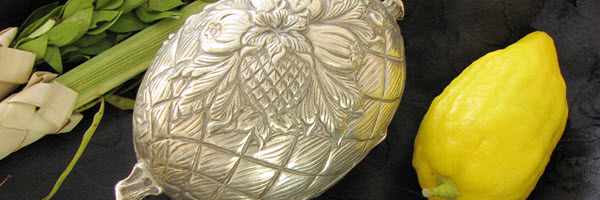
The photo above is my shofar, an instrument made out of a ram’s horn, which is a traditional part of the Rosh HaShanah ceremony. Personally, I am unable to make any sound come out of the shofar, but both of my kids are quite adept at it. Don’t ask me how they learned it–I have no idea!

Today is the Jewish holiday of Rosh HaShanah, which is the Jewish New Year. According to Jewish tradition, Rosh HaShanah is the anniversary of the creation of the world. In Hebrew, we say L’shana Tova U’metuka (שנה טובה ומתוקה), meaning, for a sweet new year.

As the New Year, Rosh HaShana is a celebratory holiday, but there are deeper meanings as well.

The New Year for Globalists and Nationalists

Dear friends,

Georg Friedrich Hegel was to modern thought what Plato was to Greek philosophy. Most of the ideological movements of the 19th and 20th century see themselves as his heirs: from Marxists to nationalists and from existentialists to psychoanalysts, they all imbibed Hegel’s philosophy and methodology, especially the “dialectic”: thesis, antithesis, synthesis.

But we Jews were, as usual, a thorn in Hegel’s side.

Hegel developed, among many other things, a neat model of the life cycle of peoples. A group–say, the ancient Greeks–will develop its particular spirit (volkgeist) until they make their unique contribution to the universal spirit (weltgeist). Then they will fall into decadence, fade into history, and disappear. Jews, mused Hegel, had made their unique contribution, monotheism, but they stubbornly refuse to disappear.

LJC EVENTS CALENDAR SEPTEMBER 19-27, 2017

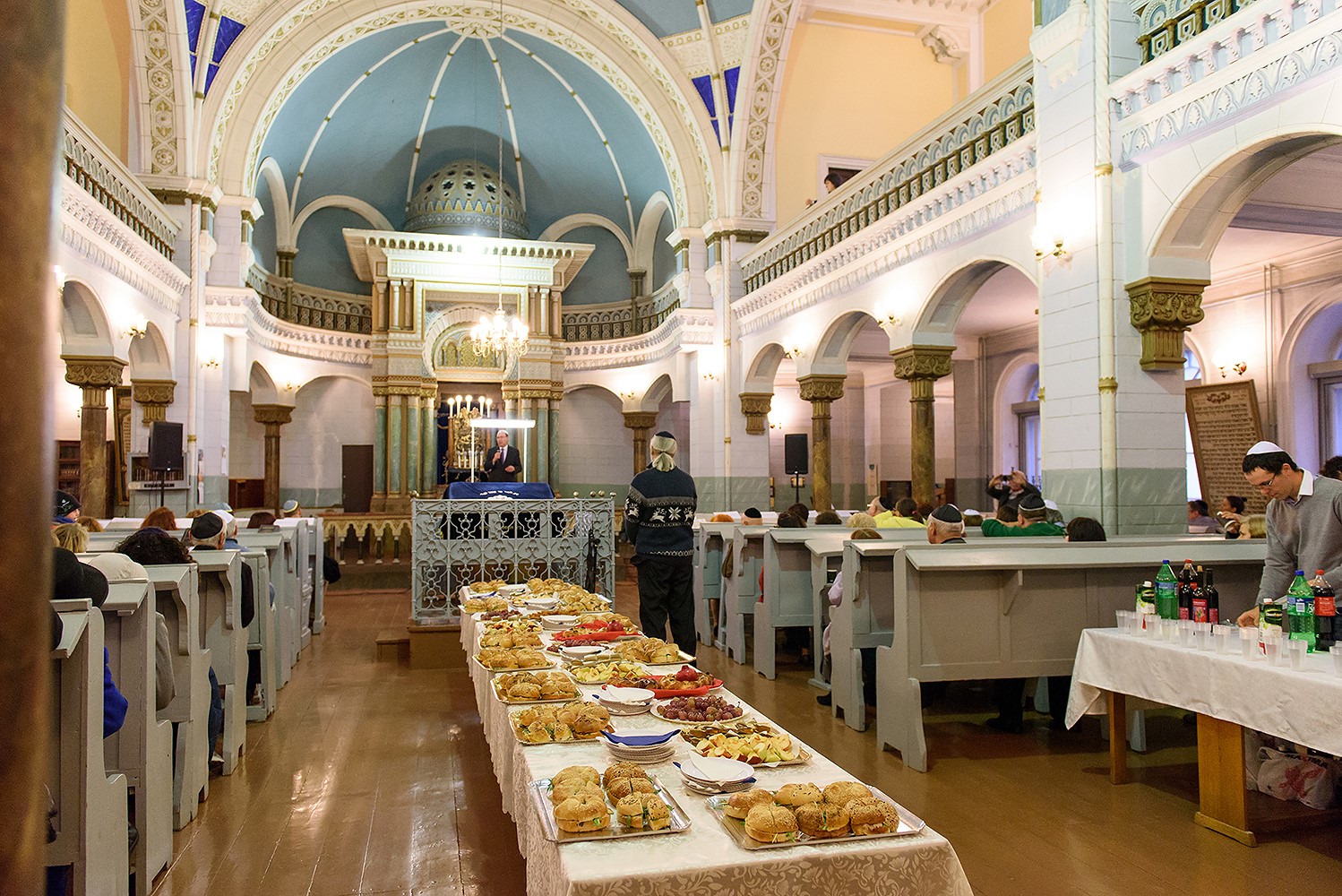
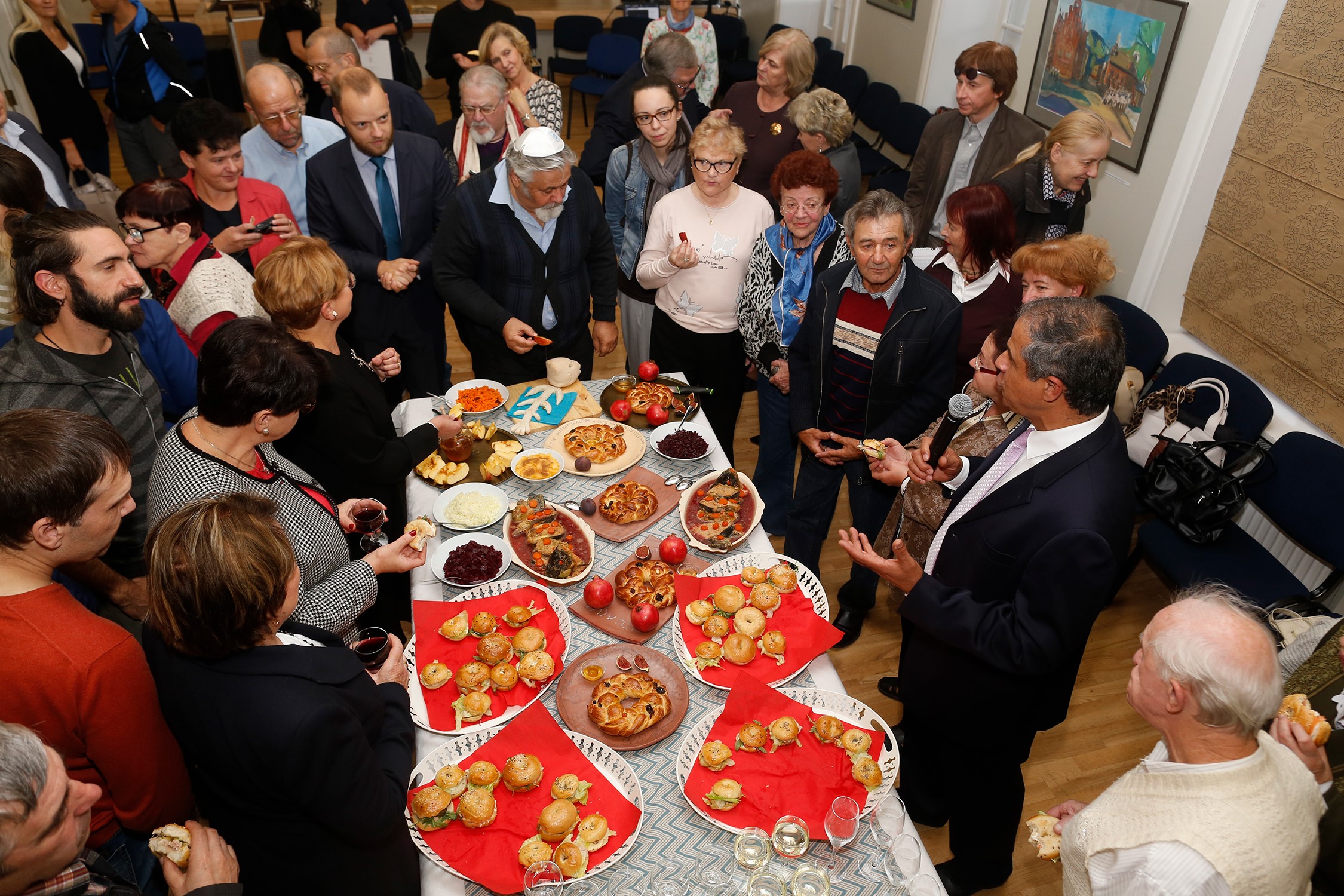
September 19, 6:00 P.M., Jascha Heifetz Hall, LJC, Pylimo street no. 4, Vilnius. Educational Rosh Hashanah evening. Besides having a good time, sampling foods and seeing the new calendar for 5778, we’ll also renew our knowledge of this sweetest of Jewish holidays.

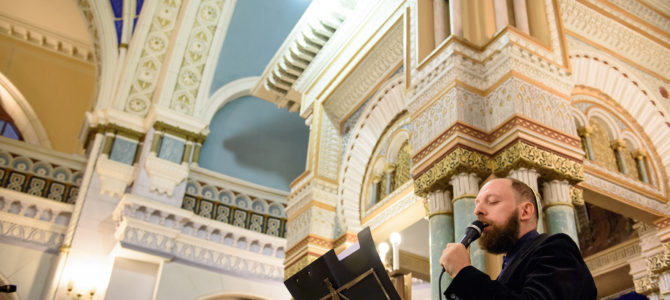
September 20, 5:00 P.M. Traditional Rosh Hashanah celebration at the Choral Synagogue. Service begins at 6:30 P.M., with services on September 21 and 22 at 9:30 A.M.

September 22, 5:00 P.M. Art & Weisen concert in Heifetz Hall, LJC. The German quartet will perform subtle and enchanting interpretations of Eastern European and klezmer tunes.

Important note to members and visitors: on September 21 and 22 the Community administration and Social Programs Department will be on holiday.

September 24, 12 noon, Choral Synagogue. St. Christopher chamber orchestra concert “From a Forgotten Book.” For an invitation, call (8 5) 2613 003 or 867881514

September 24, 2:00 P.M. Rosh Hashanah for kids and young people at the Community.

September 25, 8:30 A.M. International conference “Diaspora and Heritage: The Shtetl,” building III, Lithuanian parliament. Registration required and identification required for entry. Registration open till September 21. Conference program here.

“Diaspora and Heritage: The Shtetl,” an International Conference at the Lithuanian Parliament September 25

An international conference called Diaspora and Heritage: The Shtetl will be held at the Lithuanian parliament September 25 dedicated to the Day of Remembrance of the Genocide of the Jews of Lithuania and the European Day of Jewish Culture.

Representatives of the Lithuanian and foreign Jewish community, scholars and heritage protection experts will give presentations and discuss Litvak history, memory and heritage. Conference participants and guests will have the opportunity to view a new exhibit financed by the Lithuanian Foreign Ministry called “One Century from Seven: Lithuania, Lite, Lita,” which will later travel to Lithuanian embassies. The new Lithuanian Jewish Community calendar for the year 5778 will also be presented. This year’s calendar features the wooden synagogues of Lithuania.

The Lithuanian Jewish Community and the Cultural Heritage Department under the Lithuanian Ministry of Culture are organizing the conference. The event is jointly financed by the Goodwill Foundation and the Cultural Heritage Department.

You are invited to attend. Please find the program for the conference and register at the following internet address:

https://www.lzb.lt/registracija-i-zydu-paveldo-konferencija/

Program in English also available here.

Volunteers Clean Up Sudervės Road Jewish Cemetery in Vilnius

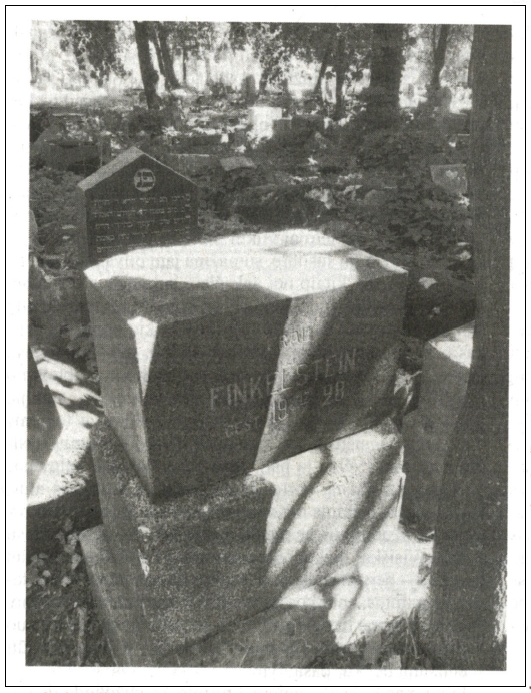
Lithuanian Jewish Community members and staff gathered to clean up the Jewish cemetery on Sudervės road in Vilnius on Sunday, September 10.

Israeli ambassador Amir Maimon pitched in, as did LJC chairwoman Faina Kukliansky with her grandchildren. Community members, administrative staff and rabbis all came out to perform a small mitzvah in the run-up to Rosh Hashanah and Yom Kippur. They raked up leaves, gathered garbage and sorted it for recycling, tended abandoned graves and cleaned and beautified the only working Jewish cemetery in Vilnius.

Thank you to all the volunteers for your good work!

Great Synagogue Listed on Cultural Treasures Registry


information from the Cultural Heritage Department under the Ministry of Culture of the Republic of Lithuania and other sources

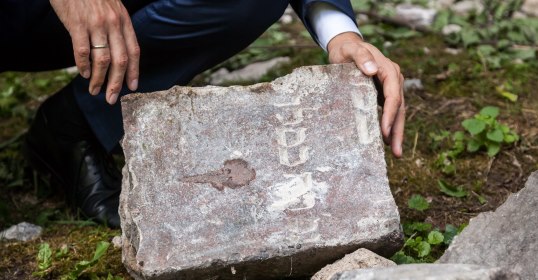
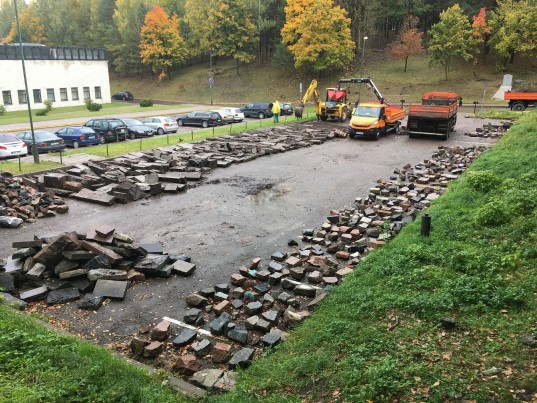
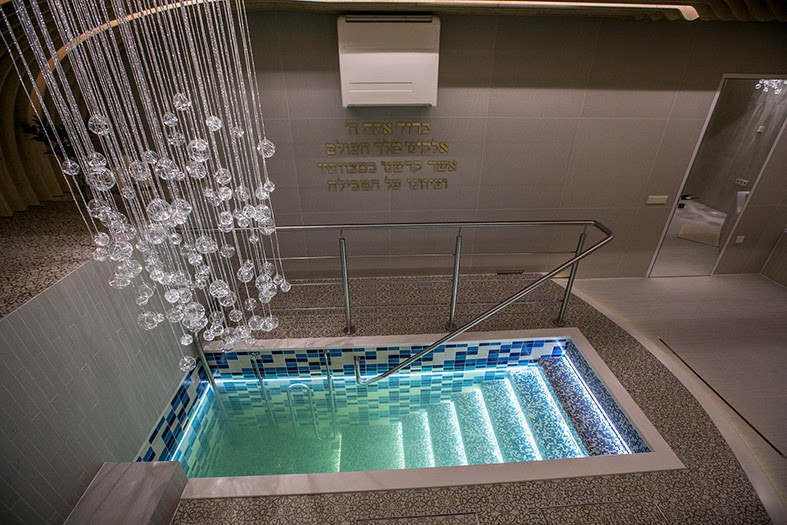
A commission for assessing cultural heritage real estate from the Cultural Heritage Department has provided legal protection to the remains of the Great Synagogue in Vilnius. The Great Synagogue of Vilnius was one of the largest religious institutions in Eastern Europe. It was renowned as an important Jewish spiritual and educational center and put Vilnius on the map as a center of Jewish scholarship. The Cultural Treasures Registry lists the construction (fragments of brick wall dating from the 18th century and entrance to the synagogue, southwest wall fragment with niche for the aron kodesh and eastern wall fragment), architectural features, remains of the former building complex including mikvehs dating from the late 19th century, a utility trench on Žydų street and cultural strata as valuable and protected features of the synagogue complex.

Originally the site hosted a wooden synagogue, believed to have been built around 1573. It burned down and was replaced at least once. In 1630 and 1633 royal grant was issued to allow a brick and mortar synagogue to be built there.

Monument Commemorates Jewish Community of Žagarė, Lithuania

Paminklas Žagarės žydų bendruomenės atminimui

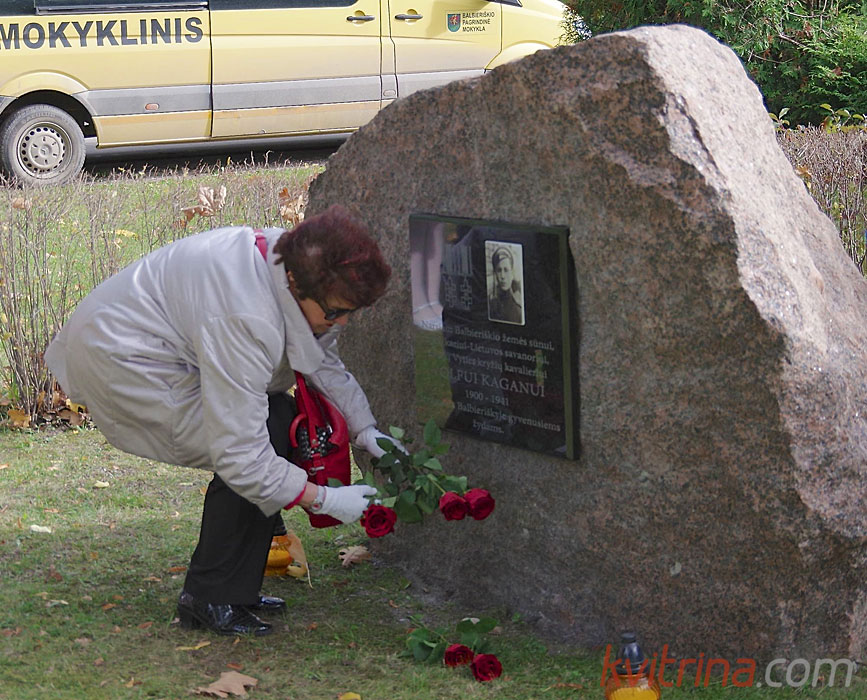
A metal apple tree was “planted” at the Litvak Commemorative Garden in the Žemaitija National Park by the Jakovas Bunka Charity and Sponsorship Fund to commemorate the former Jewish community of Žagarė, Lithuania. The metal sculpture was made by Artūras Platakis. Rabbi Kalev Krelin, Jewish rescuer family member Leonas Levinskas and Israeli ambassador to Lithuania Amir Maimon attended the ceremony in mid-August in Medsėdžiai village near Plungė, Lithuania.

Events for September at the Panevėžys Jewish Community

September 20

Competition “Who? What? Where?” for students at the Panevėžys Jewish Community, Ramygalos street no. 18, Panevėžys. The theme of the contest is Holocaust events in Lithuania. The competition starts at 2:00 P.M. There will be six teams from schools and gymnasia in the area. Each team will have 5 members and 1-2 teachers from each educational institution. In total 35 participants will compete.

September 22

Rosh Hashanah celebration at the Rojaus paukštė café, Respublikos street no. 4a. Starts at 6:00 P.M. Please register by September 12 with Zinaida Zaprudskaja to attend this event.

September 23

Commemoration of Jewish Genocide Day: at 1:00 P.M. there will be a commemoration at the statue of the Jewish mother on Atminites square; at 1:30 P.M. there will be an excursion to the Holocaust mass murder site in the Kurganava forest; at 2:00 P.M. there will be an excursion to the Holocaust mass murder site in the Žalioji forest; at 2:30 P.M. there will be a screening of a documentary film about Auschwitz at the Panevėžys Jewish Community, Ramygalos street no. 18, Panevėžys.

Please register with Zinaida Zaprudskaja by September 12.

A bus will carry visitors to the sites, departing from Atminities square at 1:30 P.M.

All events are supported by the Goodwill Foundation.

Map Reveals Most Racist Countries in EU

As the European migrant crisis surges on, the attitudes of EU citizens towards ethnic minorities continue to shift and evolve. But just how comfortable would they be with their child pursuing a romantic relationship with someone from a different cultural group?

In 2015 the European Commission asked people from all 28 EU member-states this very question, among others, and compiled the resulting data to produce a surprisingly damning report. On August 12th, 2017, a Reddit user named Bezzleford, well-known for creating statistical (and sometimes humorous) maps, decided to draft up a visual component to the report, and now it’s going viral, attracting over 18 thousand upvotes after it was re-posted by Latvian user blueeyedblonde69.

Lithuanian Jewish Community Chairwoman Faina Kukliansky’s Address to Conference on Commemorating Great Synagogue of Vilnius

Executive director of the Lithuanian Jewish Community Renaldas Vaisbrodas delivered the following address by chairwoman Faina Kukliansky to a conference called “How Should We Commemorate the Site of the Great Synagogue of VIlnius?” on August 4, 2017:

Dear participants of the international conference How Should We Commemorate the Site of the Great Synagogue of VIlnius?”,

Thank you to the organizers for the opportunity to deliver a keynote speech in the name of the chairwoman of the Lithuanian Jewish Community.

I’d like to use this opportunity to address the conference and ask: who could answer the question posed by this conference better than the Jews of Lithuania? Thanks to the initiative and active efforts of the Lithuanian Jewish Community recently, important Litvak heritage monuments and symbols of culture again enjoy the possibility of being restored in our country, recalling the great past of the Jerusalem of Lithuania and preserving it for future generations.

Two Lessons by Rabbi Mordechai Weits

Rabbi Mordechai Weits will hold two lectures at the Choral Synagogue in Vilnius on August 29 and 31.

The first lesson is a discussion of the weekly readings from the Torah. The second lesson is about preparing for the Jewish Holy Days​ in the fall. The teachings will be held in the classroom on the second floor of the synagogue at 6:00 P.M. on August 29 and 31, respectively.

UPDATE: A third lesson by the rabbi, a discussion of weekly Torah readings, will be held at 6:00 P.M. on September 4 as well, at the same location.

Lithuanian Shtetlakh: European Day of Jewish Culture Celebration September 3 at LJC

Press release

The Lithuanian Jewish Community invites the public to attend an event dedicated to the Jewish shtetls of Lithuania to commemorate and remember together this period of Lithuanian history, interesting and dear to us but cut short by the Holocaust and which has become a subject of academic interest and heritage protection.

The theme of this year’s European Day of Jewish Culture on September 3 as confirmed by the Cultural Heritage Department to the Lithuanian Ministry of Culture is “The Diaspora and Heritage: The Shtetl.” This is an intentional, mature and topical choice for a country where the life of the largest ethnic and confessional minority, of the Jews, thrived namely in the Lithuanian shtetlakh until 1941.

The Lithuanian Jewish Community will host an event called “Shtetlakh of Lithuania” on the third floor of the community building at Pylimo street no. 4 on September 3 to celebrate the European Day of Jewish Culture in 2017.

The event will kick off with a bagel breakfast and a presentation and tasting of authentic Jewish recipes at the Bagel Shop Café on the first floor at 9:00 A.M. Following that everyone is invited to attend a short Yiddish language lesson. A brunch awaits the graduates at the Bagel Shop Café. At 2:00 P.M. guest speakers will begin delivering free public lectures on the shtetlakh of Aniksht (Anykščiai), Eishishyok (Eišiškės), Sheduva (Šeduva) and Vilkovishk (Vilkaviškis) and what remains of them. A challa-baking lesson and presentation of the Bagel Shop Café’s new ceramics collection begins at 4:00 P.M. The Jewish song and dance ensemble Fayerlakh will perform a concert at 6:00 P.M.

The Rakija Klezmer Orkestar will also perform a concert at 3:00 P.M. in the Šnipiškės neighborhood of Vilnius.

More information available here.

“The reality in Lithuania is that If you want to learn more about the material and immaterial cultural heritage of a given town in Lithuanian (including the architectural features and aura of buildings, demographic changes and consequent changes in the structure of the town, changes in political structure and the ensuing canonization of ideologized development patterns), you will, unavoidably, run into the word ‘shtetl.’ You will find no better opportunity to understand what this is and to discover the shtetl in the features of buildings still standing in the towns than the events for the European Day of Jewish Culture on September 3,” director of the Cultural Heritage Department Diana Varnaitė said.

The word shtetl is an old Yiddish diminutive for shtot, city, meaning town. The towns of Lithuania where Jews comprised half or the majority of the population, characterized by Litvak energy and the bustle of commercial activity, are often called shtetlakh, the plural of shtetl. It’s thought shtetls evolved into their modern form in the 18th century. Malat, Kupeshok, Zosle, Olkenik, Svintsyan, Vilkomir, Gruzd, Eishyshok, Utyan–these are just a few of the surviving Lithuanian towns.

Lithuanian Jewish Community chairwoman Faina Kukliansky recalls her parents’ shtetl:

“We didn’t travel to my grandparents’ village in the summer. We didn’t have any ebcause they were murdered in the Holocaust, or had moved from their shtetlakh to Vilnius or Kaunas because they could no longer live there without their loved ones and friends lying in the pits together with the bodies and souls of the other unfortunates.

“The Kuklianskys who survived, however, my father, my uncle who hid in trenches from the Nazis near the shtetl of Sventiyansk, were rescued by local village people, but for their entire lives longed for their home on the banks of the Ančia River in Veisiejai, Lithuania. There was no place happier or more beautiful than their native shtetl. Perhaps because their mother hadn’t been murdered yet.

“The eyes of my mother, who was born in Keydan (Kėdainiai) and spent her childhood in Shavl (Šiauliai), her eyes used to just shine when she remembered how they used to go to the ‘spa town’ of Pagelava near Shavl in horse-drawn cart.

“The shtetls… are no more. Now there are cities and towns, but they have no rabbis, no yeshivas, synagogues or Jews… all that remains is love for the place of one’s birth, but love is stronger than hate. The memories remain, too, and without them we wouldn’t be commemorating the shtetls and their inhabitants.”

Those who seek to find the traces of the lost and concealed presence of the Jews only have to find their way to the center of a Lithuanian town, to the old town, where the red-brick buildings still stand. All of the old towns of the small towns were built by Jews. The same goes for the former synagogues, schools, pharmacies and hospitals.

Cultural heritage experts tell us market day and the Sabbath were the main events of the week in the Lithuanian towns. Both were observed. After the Holocaust the shtetlakh were empty, the Jewish homes stood empty even if they still contained family heirlooms and the items acquired over lifetimes. Non-Jewish neighbors often moved into these houses and took over the property. Now no one uses the word štetlas in Lithuanian, it sounds exotic and needs to be translated to miestelis.

On the Competition Which Took Place in 1990 for Commemorating the Great Synagogue

I report the information about the international tender held in 1990 for rebuilding the Great Synagogue, the architect Tzila Zak’s project being recognized the best and her winning the tender is false.

Honorary Lithuanian Jewish Community chairman Grigory Kanovich (the following document incorrectly spells his surname Konovich), Grigorijus Alpernas and I did not participate as judges in the commission and the use of our names is wrong.

It is possible other alleged members of the jury commission have been listed without their knowledge as well.

Daumantas Levas Todesas

0 monument competition announcement

Kaunas Jewish Community Marks 76th Anniversary of Mass Murder of Jews of Petrašiūnai and the Intellectuals Aktion at the Fourth Fort

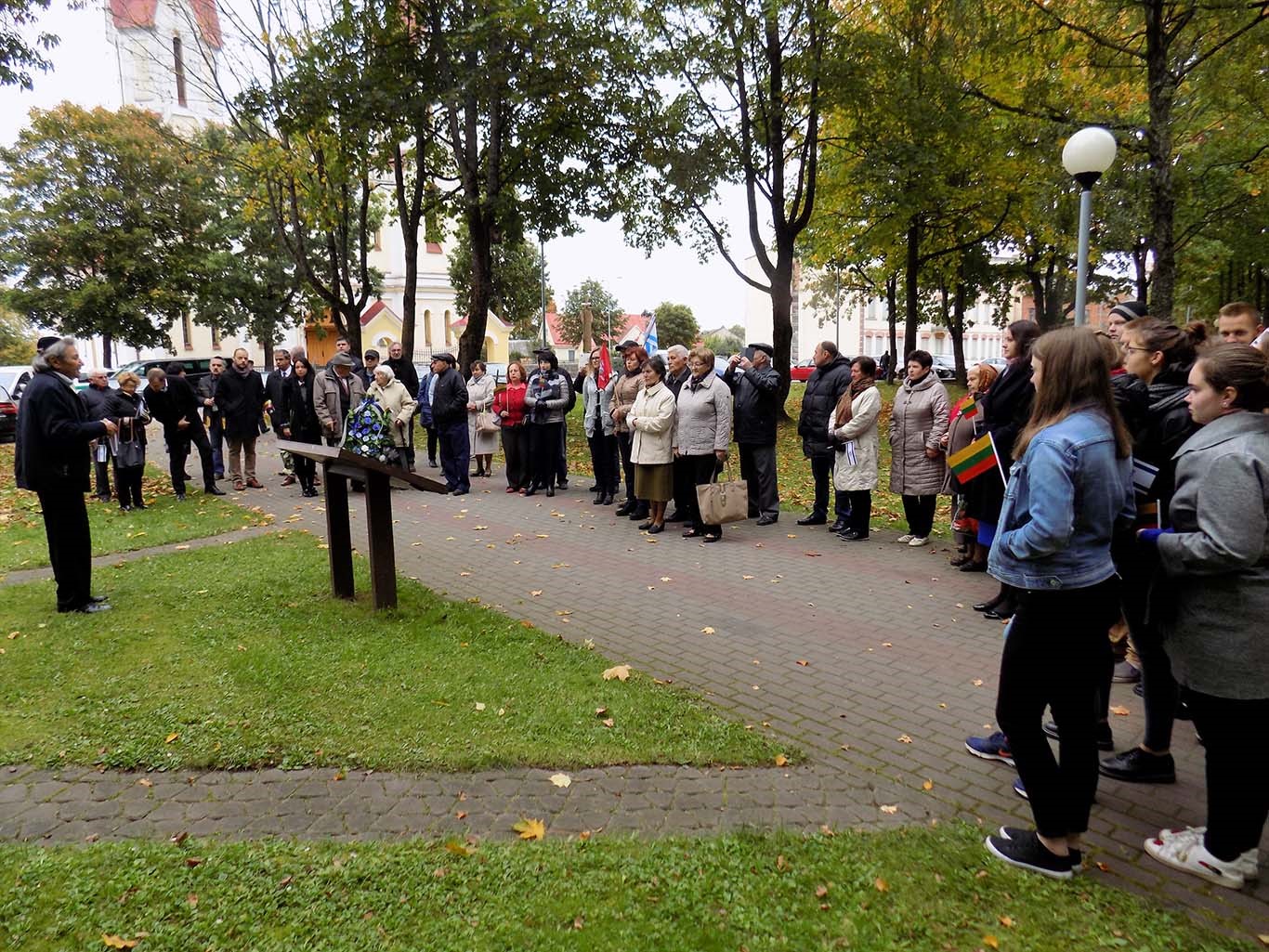
The Kaunas Jewish Community marked the mass murder of the Jews of Petrašiūnai and the Kaunas ghetto intellectuals’ aktion/mass murder at the Fourth Fort in Kaunas August 28. Members of the KJC, residents of Petrašiūnai, including some living eye-witnesses, and deputy Israeli ambassador to Lithuania Efrat Hochstetler, US assistant ambassador Howard Solomon and other US embassy staff, director of the Cultural Heritage Department of the City of Kaunas Saulius Rimas and representatives of the Kaunas Forts associations assembled to honor the victims of the Holocaust.

KJC chairman Gercas Žakas and embassy staff spoke of our duty to remember the Holocaust and the great loss not just to Jews but all Lithuanian citizens, the loss of possibilities and of people who might have achieved much in their home country and the need to remember the victims by name, not as statistics.

Death of a Friend

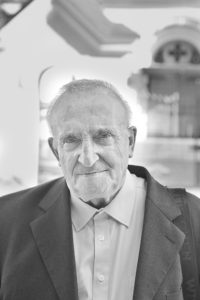
Learning the lesson of respect and Jewish unity from my dear friend Yechezkel Fox, of blessed memory

by Rabbi Yonason Goldson

Half a century ago, kosher matzah was not something the Jews of England took for granted. In fact, every year the London Beis Din took out a full page ad in the London Times warning that Rakusen’s matzah, the most widely distributed in the country, was not kosher for Passover.

Then Leslie Fox bought the company.

With the ink barely dry on the contract, Mr. Fox called up the London Beis Din. “Send over a rabbi,” he said, promising to do whatever was necessary to make his product kosher. The next Passover, the ad appearing in the London Times trumpeted: This year you can eat Rakusen’s matzah!


Yechezkel at author’s wedding.

How many thousands of people ended up eating kosher matzah because of one man? And what kind of son grows up in the house of such a father?

The Price of Disunity


Insights into the destruction of the Second Temple
by Rabbi Yonason Goldson

It was in the year 3826 (66 CE) that the excesses of Roman governance over the Land of Israel finally drove the inhabitants of Jerusalem to the breaking point. On the 17th day of the month of Iyar, the taunts and jeers of Roman soldiers provoked an uprising by the city’s populace more violent than either Jew nor Roman could have imagined. By the end of the day the Jews had retaken control of their capital. The Great Revolt had begun.

The victory in Jerusalem came at a painfully high price. Thousands of Jews across the region were massacred or sold into slavery as citizens in Hellenized cities of Caesaria, Alexandria, and Damascus responded to the Jewish uprising with riots and pogroms. But the official response from Rome was more calculated. To impress upon other nationalities throughout its empire the folly of rebellion, the Roman Senate dispatched a massive army to crush the revolution in Judea.

Faced with the approach of four Roman legions led by Vespasian, one of Rome’s most successful generals, it seems unimaginable that the Jews could have held out any hope of victory. But unlike secular history, the Talmudic record incorporates spiritual, as well as political, cause and effect. Just as the Roman occupation of Israel had been decreed on High in response to the Jews’ spiritual shortcomings, so too did the fate of the Jerusalem ultimately rest in the Jews’ own hands. Spiritually, as well as militarily, it was the Jewish people’s internal divisiveness that left them vulnerable to the power of Rome.

Jewish Solidarity

by Rabbi Berel Wein

One of the hallmarks of the story of the Jewish people over the millennia of our existence has been the fact that Jews, no matter what their political persuasion or level of religious belief and observance, always seem to care for one another. Though there always were divergent interests and different agendas present in the Jewish world, when Jews were in mortal danger the Jewish world somehow rose to attempt to help and defend our brethren who were threatened.

Many times our efforts were too little and too late. That certainly was the case regarding European Jewry during World War II. Till today, there is much controversy and bitterness, academic dispute and political debate regarding what was done and what more could have been done to rescue Jews from the jaws of the Holocaust.

It is a topic that gives us no rest and provides no proper solution. I remember how my own family personally anguished over the destruction of my uncles, aunts and cousins. They always asked themselves if more could have been done to somehow extricate them from Lithuania before 1940.

Jewish Hairdresser Fired over Sabbath Spat Wins Legal Case

by Vicky Fragasso-Marquis, Canadian Press

Rule forbidding Richard Zilberg from working on the Sabbath found to violate freedom of conscience and religion

Hired in 2011, hairdresser Richard Zilberg worked six days a week, including Saturday, the busiest day of the week. (The Canadian Press/Graham Hughes)

A Jewish hairdresser in Montreal who was not allowed to work on Saturdays and was eventually fired has won a discrimination case against his former employer.

A Quebec judge has ordered Iris Gressy, who is also Jewish, as well as a numbered company to pay Richard Zilberg a total of $12,500.

He said the decision to forbid Zilberg to work on the Sabbath because he is Jewish violates his right to freedom of conscience and religion.

Zilberg, who is now 54, was hired at the Spa Orazen salon in October 2011 and worked six days a week, including Saturday, the busiest day of the week.

Accused of breaching confidentiality

Court documents state Gressy told Zilberg in July 2012 he would no longer come in on Saturdays, in accordance with her new policy of not allowing her Jewish employees to work that day. She also told him to not tell clients why he was no longer available Saturdays.

Gressy fired Zilberg the following month after she learned he had told a client of the salon that his employer had prohibited him from coming in on Saturdays because of his faith.