Religion

Bagel Shop and Israeli Embassy at Charity Christmas Fair in Vilnius


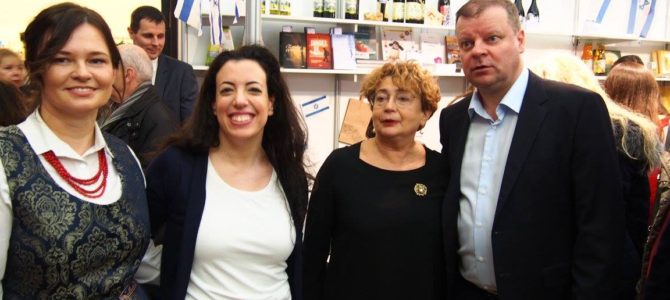
Photo, from right: Prime minister Saulius Skvernelis, LJC chairwoman Faina Kukliansky, Israeli embassy deputy chief of mission Efrat Hochstetler, PM’s wife Silvija Skvernelė

An international Christmas fair fundraiser was held again this year at the Old Town Square in Vilnius. Visitors were invited to purchase handicrafts, Christmas decorations, sweets and other knick-knacks made and sold by the spouses of foreign ambassadors resident in Vilnius, embassy personnel, social welfare organizations.

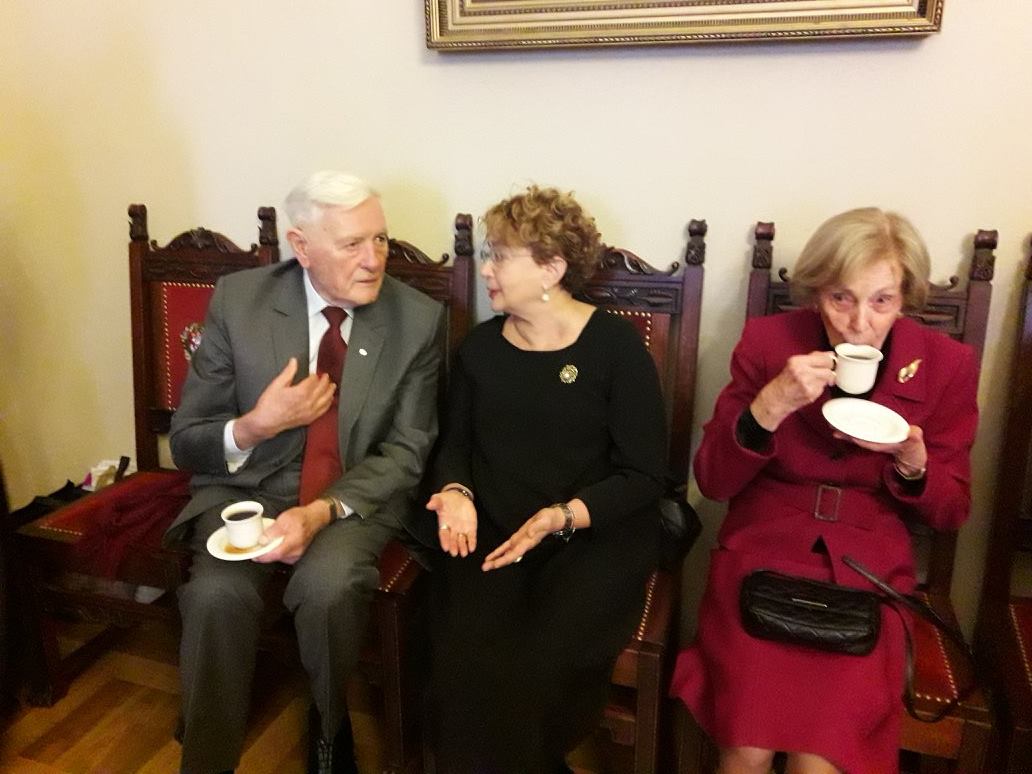
Photo: President Valdas Adamkus, Faina Kukliansky, former first lady Alma Adamkienė

The international Christmas fair is an annual initiative by the International Women’s Association of Vilnius, which includes women from Lithuania and foreign women temporarily living and working in Lithuania as members.

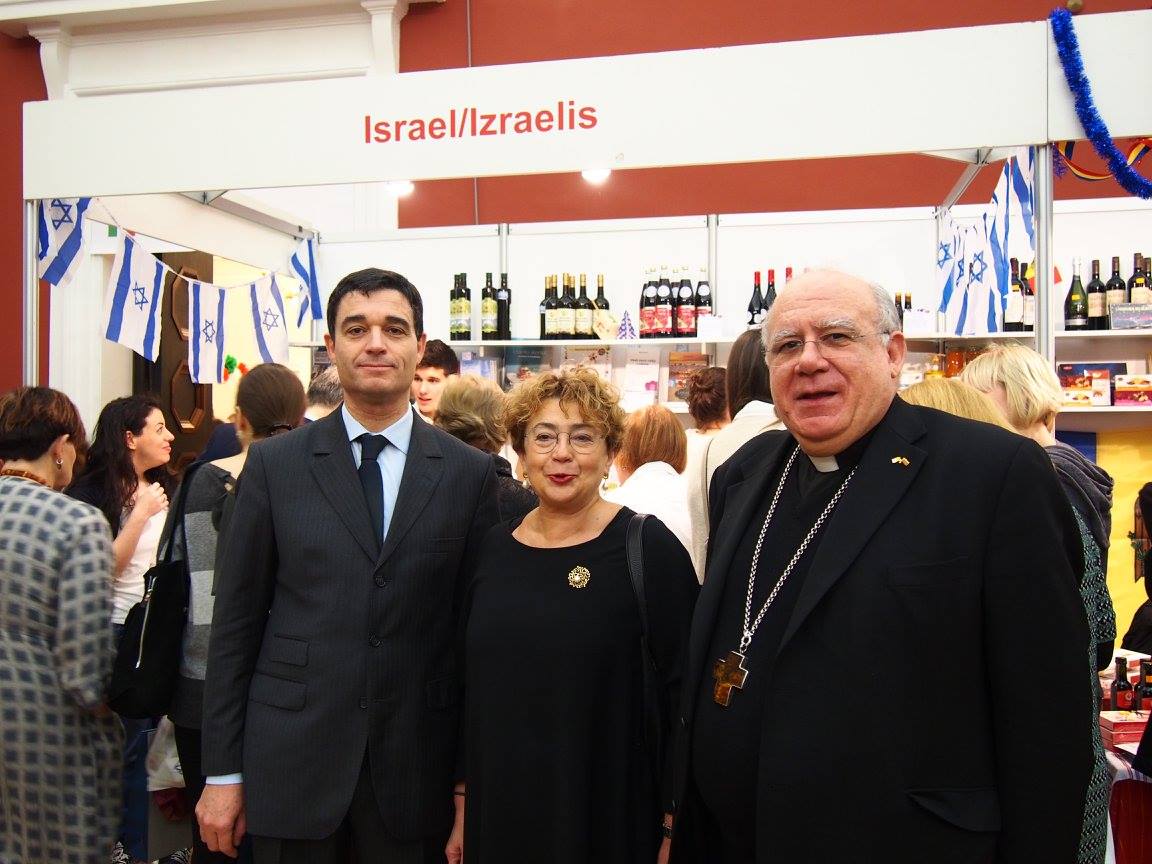
Photo: Apostolic nuncio archbishop Pedro Quintana

Lithuanian Jewish Community and Bagel Shop volunteers went all out this year to make this event a success. The Israeli embassy’s booth sold Lithuanian and Israeli products and collected almost 4,500 euros for charity, three times more than last year’s amount.

More photos here.

The Litvaks: 900 Years of History

You are invited to a multimedia presentation called “Litvaks: 900 Years of History” by the students of the Saulėtekis school in Vilnius. The Saulėtekis school has presented a number of plays on Litvak culture and the Holocaust. The school has a strong Holocaust education component. In addition, student choirs often perform songs in Yiddish and Hebrew, most recently at the Holocaust commemoration at Ponar at the end of September where they performed the Vilnius ghetto anthem, Zog Nit Keynmol.

The presentation will take place at the Russian Drama Theater at Basanavičiaus street no. 13 in Vilnius at 6:00 P.M. on Wednesday, November 29.

Admission is free.

Japanese Volunteer Teacher Visits Panevėžys Jewish Community

Svečio iš Japonijos Susumu Nakagawa vizitas Panevėžio miesto žydų bendruomenėje

Last week Susumu Nakagawa from Japan visited the Panevėžys Jewish Community. Mr. Nakagawa is visiting Panevėžys for the second time as a volunteer teacher, teaching beginning Japanese at the Panevėžys Technology and Business Faculty of Kaunas Technology University. Mr. Nakagawa is building a bridge of friendship between the two countries, he says. He’s interested in Litvak history and culture, and when he learned there is a living Jewish community in the Lithuanian city, he decided to visit. He was accompanied by art teacher Loreta Januškienė.

Mr. Nakagawa and his family are Christians and interesting in the Old Testament and Jewish history and traditions. Panevėžys Jewish Community chairman Gennady Kofman told Mr. Nakagawa about the history of the Panevėžys Jewish community over tea, and showed him documents and photographs. Mr. Nakagawa posed a number of questions to the chairman, and they touched upon the legacy of Chiune Sugihara, the Japanese diplomat who rescued Jews in Kaunas during the first stages of the Holocaust.

Happy 50th Birthday to Rabbi Krinsky

Happy 50th birthday to Rabbi Krinsky! Mazl tov!

The Lithuanian Jewish Community congratulates Rabbi Sholom Ber Krinsky on his birthday and thanks him for his efforts and sincere work over many years for the good of our community. A young Jewish generation has grown up in Lithuania accompanied by your teaching and good works. Rabbi, the Jewish community wishes you and your family strength and health and that the Light of the Torah would illuminate all your future work.

Mazl tov. May you live to 120!

Tens of Thousands of Jewish Documents Lost during Holocaust Discovered in Vilnius


YIVO announces the discovery of 170,000 Jewish documents thought to have been destroyed by the Nazis. Photo: Thos Robinson/Getty Images for YIVO

NEW YORK (JTA)–A trove of 170,000 Jewish documents thought to have been destroyed by the Nazis during World War II has been found.

On Tuesday the New York-based YIVO Institute for Jewish Research announced the find which contains unpublished manuscripts by famous Yiddish writers as well as religious and community documents. Among the finds are letters written by Sholem Aleichem, a postcard by Marc Chagall and poems and manuscripts by Chaim Grade.

YIVO, founded in Vilnius in what is now Lithuania, hid the documents, but the organization moved its headquarters to New York during World War II. The documents were later preserved by Lithuanian librarian Antanas Ulpis who kept them in the basement of the church where he worked.

Most of the documents are currently in Lithuania but 10 items are being displayed through January at YIVO, which is working with Lithuania to archive and digitize the collection.

“These newly discovered documents will allow that memory of Eastern European Jews to live on, while enabling us to have a true accounting of the past that breaks through stereotypes and clichéd ways of thinking,” YIVO executive director Jonathan Brent said Tuesday in a statement.

United States Senate minority leader Charles Schumer, democrat from New York state, praised the discovery.

“Displaying this collection will teach our children what happened to the Jews of the Holocaust so that we are never witnesses to such darkness in the world again,” Schumer, who is Jewish, said in a statement.

Israeli consul general in New York Dani Dayan compared the documents to “priceless family heirlooms.”

“The most valuable treasures of the Jewish people are the traditions, experiences and culture that have shaped our history. So to us, the documents uncovered in this discovery are nothing less than priceless family heirlooms, concealed like precious gems from Nazi storm troopers and Soviet grave robbers,” he said.

Full story here.

LRT TV Program Author Vitalijus Karakorskis Wins Prize for Intercultural Communication

November 16 is UNESCO’s International Day of Tolerance. Under the UNESCO definition in its Declaration of the Principles of Tolerance, tolerance doesn’t mean a tolerant attitude towards social injustice, nor the renunciation of one’s principles and their replacement with someone else’s. It means everyone is free to hold their own convictions and recognizes the right of others to do the same. It means recognizing people are born with different appearances into different social conditions, learn different languages, behavior and values, and have the right to live in peace and preserve their individuality.

The Ethnic Minorities Department under the Government of Lithuania named winners of its prize for intercultural communication November 13. There were 37 separate works in the running this year, including television programs, articles and interviews.

The judges’ panel awarded the prize to journalist, editor and filmmaker Vitalijus Karakorskis for originality and for discovering incredible connections between the ethnic communities resident in Lithuania in his making of an episode of the Lithuanian public television (LRT) program Menora on the topic of Dr. Jonas Basanavičius and Lithuanian Jews, on the 90th anniversary of the death of the patriarch of the Lithuanian state. They also awarded the prize to Siarhey Haurylenka for exceptional treatment of the cultures of Lithuanian ethnic minorities and the Belarusian language in the LRT television series about culture and history called “Cultural Crossroads: The Vilnius Notebook.”

New Fall Issue of the Bagel Shop Newsletter

After skipping a beat this summer, the newest Bagel Shop newsletter has hit the stands. The fall issue includes a complete news round-up from spring to the present, the usual sections and articles about the history of the Bund, efforts to restore Jewish headstones removed from Soviet-era public works projects around Vilnius to their rightful locations and the history of the Jews of Skuodas. The Jewish Book Corner this issue features a book about the tractate Nazir from the Babylonian Talmud and the Telšiai Yeshiva.

Look for the newest issue at the Bagel Shop Café, available for free, or download the electronic version below:

Bagel Shop Newsletter No. 2, 2017

Unique Jewish Archive Emerges in Vilnius

Vilnius, November 3, BNS–As Judaica studies intensify in Vilnius, scholars have identified thousands of important Jewish manuscripts this year which had laid forgotten in a church basement during the Soviet years and were scattered to separate archives for two decades following Lithuanian independence.

Some of the newly identified documents are currently on display in New York City and there are plans to exhibit some of the collection in Lithuania in the near future as well.

Lithuanian National Martynas Mažvydas Library director Renaldas Gudauskas said the identification of ever more documents makes him confident the library currently conserves one of the most significant collections of Judaica in the world.

Hidden at a Church

Vilnius had hundreds of Jewish communal, religious, cultural and education organizations before World War II. YIVO, the Jewish research institute founded in 1925, was an important member of that group. YIVO did work on Jewish life throughout Eastern Europe, from Germany to Russia and from the Baltic to the Balkans, collecting Jewish folklore, memoirs, books, publications and local Jewish community documents, and published dictionaries, brochures and monographs.

New Calls for Jewish Restitution


by Vytautas Bruveris, www.lrytas.lt

After adopting a law on compensating Jewish religious communities, Lithuania should go further and compensate Holocaust survivors for their private property. Both US officials and the Lithuanian Jewish Community are calling for this.

The Lithuanian prime minister’s advisor on foreign policy Deividas Matulionis said: “The issue of returning Jewish private property was raised earlier, but it’s being discussed more frequently now. I wouldn’t say there’s pressure, but the Americans have let us know return of Jewish property remains on the agenda.”

Matulionis was government chancellor in the earlier Government led by Andrius Kubilius when the law creating the Goodwill Foundation was adopted. Under that law the state pays out compensation for Jewish religious community property lost during the war, financing Jewish cultural, religious, educational and other socially useful activities.

The Lithuanian Government is obligated to pay 37 million euros in total to the foundation.

US Diplomat Visits

Matulionis recently spoke with Thomas Yazdgerdi, the US State Department’s special envoy for Holocaust issues, in Vilnius.

The American diplomat also met MPs and leaders of the Lithuanian Jewish Community.

One of the Yazdgerdi’s main topics of discussion was the continuing return of Jewish property.

He said Lithuania following the examples of other Central and Eastern European countries should keep moving forward by returning private property to Holocaust survivors and their descendants or by paying out compensation.

US Officials Urge Lithuania to Return Jewish Property

Vilnius, November 8, BNS–US officials and the Lithuanian Jewish Community are calling upon the Lithuanian Government to return private property to Holocaust survivors and their descendants, the daily Lietuvos Rytas reported Wednesday.

“The issue of restitution of private Jewish property has been raised in the past, but it is being increasingly discussed lately,” Deividas Matulionis, foreign policy adviser to prime minister Saulius Skvernelis, told the paper.

Matulionis recently discussed the issue with US State Department special envoy for Holocaust issues Thomas Yazdgerdi in Vilnius. The Lithuanian prime minister’s advisor told Lietuvos Rytas they hadn’t discussed any specific measures for restitution or numbers.

Matulionis said they talked about possibly compensating Jews for a portion of the value of their property and said that would be more of a symbolic gesture.

Six years ago Lithuania committed to paying 37 million euros compensation for Jewish religious communal property by 2023.

Public Relations Horoscope


by Sergejus Kanovičius

The weighing ritual from the Soviet era has impressed itself deeply in memory: a plump woman standing behind the counter in a store with a white apron, the apron is somewhat wrinkled and with grease stains, the scales have larger and smaller weights, and she stands and watches, if she has something to way. One weight, and another, then another is needed to reach complete balance, placed on the right-hand plate of the scales, always a deficit, whose weight is measured by this very important woman. The woman is all-powerful. Usually she set some fifty or more grams aside, she also had to supplement her salary. Why do I remember this? I see how today the PR masters and the politicians who have taken up their ideas are joyfully weighing and trying to place a weight or two on a much emptier plate of the scales of historical truth. But one gets the impression that they, just as the woman in the Soviet store did, are setting a bit aside. Sometimes more, sometimes less. Usually more, unfortunately.

You leave their store and unwrap the purchase and hey, either it’s just paper, or else they’ve taken a bit for themselves again. And then you wait again until they decide the time has come to mete out some sort of historical deficit.

As I understand it, the quota for naming the year of the coming 100th anniversary of the state has been used up. Other years are being suggested, maybe the year of the bear on the Chinese calendar, or perhaps the year of the dragon or the cat on the Japanese, one year under the Jewish calendar and a different one according to Christ. Well anyway, we like to baptize, to be baptized and to attend baptisms, it’s fun. Even if there is no baby, we’ll make one up.

LJC Challa-Making Event Big Success

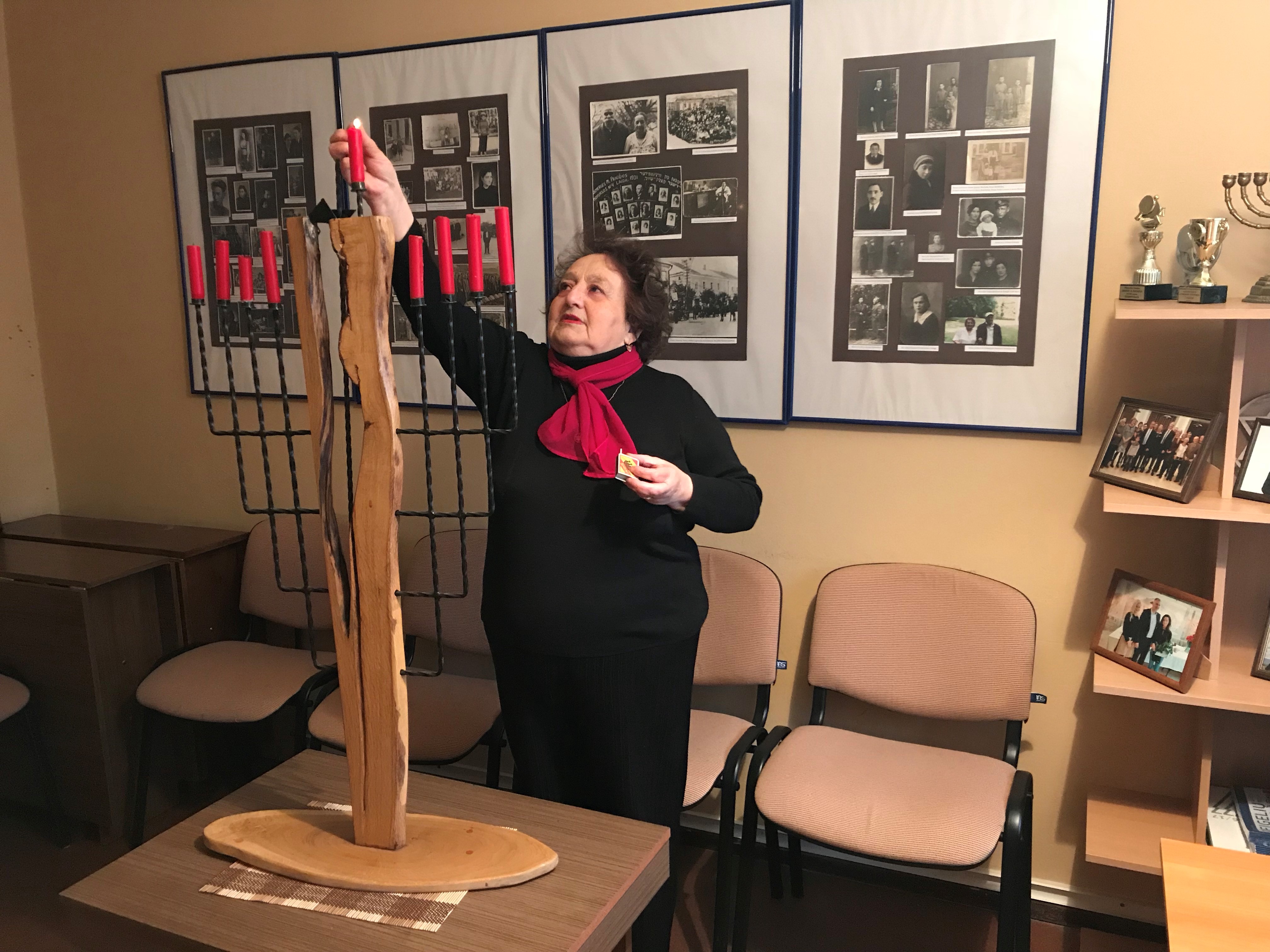
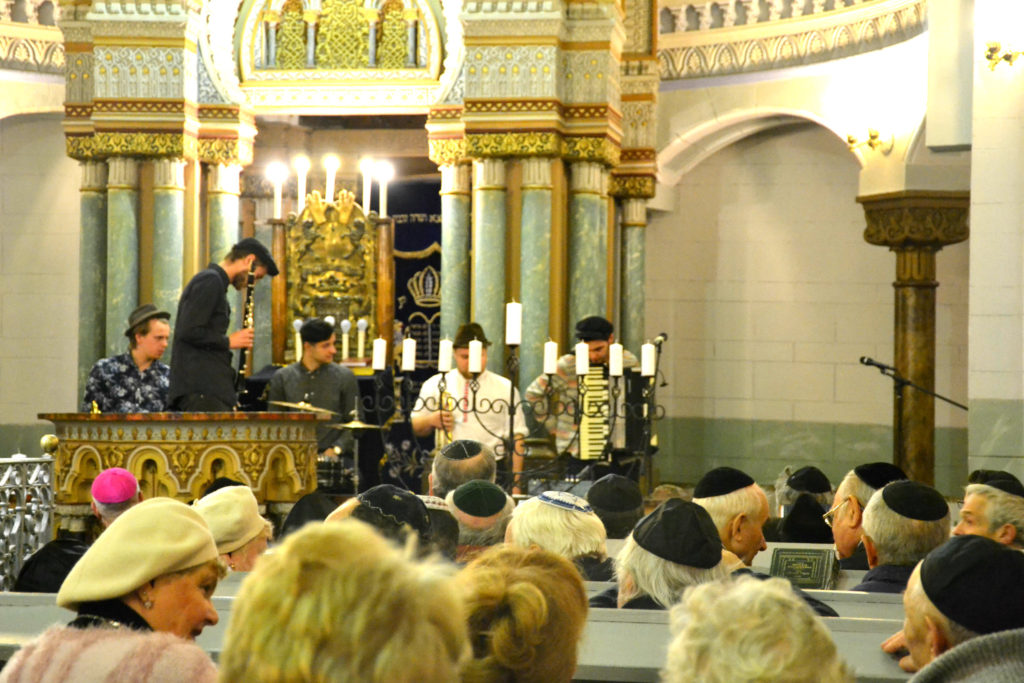
The challa-making event at the Lithuanian Jewish Community on October 26 was a fun-filled evening with klezmer music and treats from the Bagel Shop Café. Four generations of women participated, some with their children and grand-children, others with friends, kneading and braiding the dough which was then baked and taken home.

The event was in solidarity with the annual Shabbos Project, now in its fourth year.

More photos here.

First Plaque Commemorating Rescuers in Lithuania

Panevėžys Is the First to Thank Jewish Rescuers
www.sekundė.lt

The first plaque commemorating those who rescued Jews during the Holocaust has been unveiled in Panevėžys, Lithuania. It honors nun, activist, nurse and teacher Marija Rusteikaitė of the Congregation of the Sisters of the Love of God and her fellow nuns. The stone plaque was unveiled at a ceremony at the intersection of J. Tilvyčio and Krekenavos streets in the Lithuanian city, close to where the Sisters of the Love of God monastery and hospital were located, according to historical documents.

“It was namely this spot, a few dozen meters away, which is the most important historical site of the monastery for us, because this is where Marija Rusteikaitė brought together the nuns, the first sisters of the Love of God, between 1925 and 1936. As soon as she completed the university of medicine in St. Petersburg, the mother superior from Žemaitija joined the St. Vincent de Paul society in order to help the poor people of the city of Panevėžys and surrounding areas. Before that she taught mathematics and geography at the Kražiai pre-gymnasium and Polish at another location,” sister Leonora Kasiulytė, who has long taken an interest in the historical figure, said of the founder of her monastery.

Yuri Tabak to Address Gešer Club

Yuri Tabak, the religious studies scholar, author of numerous books, one of the favorite speakers at Limmud and a wonderful storyteller from Moscow, will visit the Gešer Club of the Lithuanian Jewish Community to speak at 7:00 P.M. on Friday, October 27. Space is limited and registration is required by sending an email or calling Žana Skudovičienė at zanas@scb.lzb.lt or 8 678 815 14.

Righteous Gentile Marija Rusteikaitė to Be Commemorated in Panevėžys

Dear members,

A ceremony to unveil a stele honoring Marija Rusteikaitė, rescuer of Jews, teacher, nurse, public figure and founder of the Congregation of the Sisters of the Love of God, will be held at 1:00 P.M. on Friday, October 27.

The ceremony will be held at the intersection of Tilvyčio and Krekenavos streets in Panevėžys. Bus transportation from Vilnius will be provided from the Lithuanian Jewish Community at Pylimo street no. 4 in Vilnius at 10:45 A.M. There are ten seats left at the time of this writing. Those wishing to take the bus should send an email to info@lzb.lt

Those riding by bus will be delivered back in Vilnius in time for the special Sabbath at the Choral Synagogue in Vilnius.

One People, One Sabbath

For the fourth time in as many years, Jews around the world will meet in their communities for an evening of making challa and greeting the Sabbath. The point of the international Shabbos Project is to unite Jews at least once a year wherever they may be around the world and to celebrate Sabbath together. This time, October 26 to 28, over a million Jews in 96 countries and 1,357 are expected to take part.

Last year 6,000 volunteers in 95 countries and 1,152 cities organized challa-making events during a single Sabbath, events which included over 8,000 women and participants speaking more than 10 different languages in Buenos Aires, and five city blocks in Los Angeles were closed to traffic for setting up cooking tables in the streets. In Melbourne 10,000 people attended the havdala concert and the event generated 61,884,223 images posted on the internet.

The Shabbos Project has been called the Jewish spring, a global social phenomenon and an incredible experience.

We’re inviting everyone to the Lithuanian Jewish Community at 6:00 P.M. on October 26 for an evening of challa-making and baking. The program includes kneading and baking, a contest for the best braided loaf, a presentation of women’s obligations on Sabbath and song and dance with the Rakja Klezmer Orekstar. So far over 100 Community members and friends have signed up, spanning four generations. Riva Portnaja, the senior chef at the Bagel Shop Café, will be showing her one-year-old great-granddaughter how challa is made at the event.

Everyone is welcome. We begin activating the yeast at 6:00 P.M. on October 26 at the Bagel Shop Café inside the Lithuanian Jewish Community at Pylimo street no. 4 in Vilnius.

For more information, contact Dovilė Rūkaitė at projects@lzb.lt

LJC Calendar for 5777 Wins Prize at Unusual Ceremony

A Jewish calendar published by the Lithuanian Jewish Community last year took first place in an annual Lithuanian calendar contest October 20.

The 28th annual Laurynas Ivinskis Prize ceremony was held in Kuršėnai, Lithuania with live Lithuanian folk music and a performance by the Fayerlakh ensemble.

The theme of the LJC calendar for 5777 was Lithuanian rescuers of Jews. It featured interwar president Kazys Grinius and wife Kristina on the cover, both Righteous Gentiles. Each month featured more than one story of rescue.

Laurynas Ivinskis (1810-1881) was a 19th century calendar maker whose agricultural calendars were also more text than calendar, and were for a period of time forbidden by Russian authorities because they were written in Lithuanian using the Latin rather than Cyrillic alphabet. His almanachs included stories and parables in pre-standard Lithuanian.

Jewish Gravestone Fragments to be Used in Memorial


by Monika Petrulienė, LRT TV News Service, LRT.lt

Jewish headstones used during the Soviet era for construction in Vilnius are being returned to the Jewish cemetery on Olandų street. Fragments of grave markers were removed from buildings and stairwells in the capital. A memorial will be made from the remains of headstones at the cemetery.

More than 1,000 metric tons of grave stones are being transported to the old Jewish cemetery on Olandų street. Less than half have been brought there so far. They are to be examined by experts to determine to which cemetery they will be returned ultimately. The Jewish cemetery on Olandų street covers almost 12 hectares and is roughly equal to the Rasos cemetery in Vilnius in size and number of burials.

“The first decision made was that the stones should be arrayed somewhere in what we might call an open working area, so that project authors, architects and landscape artists can learn about and get a feel for them, and so that they can be used directly from that area for certain compositions,” Martynas Užpelkis, heritage protection specialist for the Lithuanian Jewish Community, said.

Heritage protection experts say the majority of the Jewish grave markers were used in building stairs on Tauro hill in Vilnius. Many were also used in constructing electrical transformer substations and support walls in the city. Historians have examined about 2,500 pieces so far. The majority of inscriptions have been in Hebrew, but there are also inscriptions in Yiddish, Polish and Russian. The plan is for most of the stone fragments to stay at Olandų street, with the remainder going to the old Jewish cemetery in the Šnipiškės neighborhood.