
Religion

Vilnius Returns Jewish Headstones to Cemetery


photo: S. Žiūra

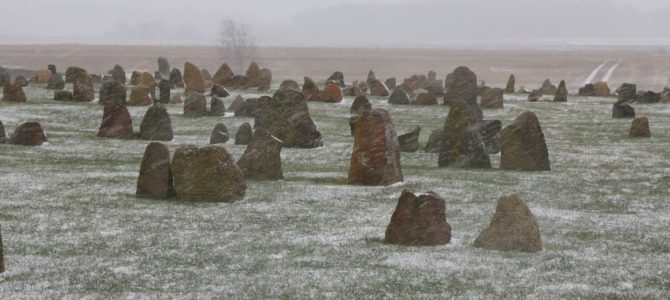
This week the Vilnius municipality is sending all known fragments of Jewish gravestones from different Soviet-era sites around the city to the old Jewish cemetery on Olandų street. The headstone fragments mainly came from the historic Olandų and Šnipiškės Jewish cemeteries and were used as construction material during Soviet times. More than 1,000 metric tons of grave marker stone were sent to the Olandų cemetery. All fragments will undergo examination to determine their final destination, either the Olandų or the Šnipiškės cemetery.

Vilnius mayor Remigijus Šimašius said: “Modern Vilnius must assess, remember and honor appropriately the history of the city and its residents. The return of a huge number of headstones to their historic and sacred sites demonstrates the respect Vilnius residents have for the Jewish community and the commemoration of the dead. Stones from the disassembled transformer station and other sites in the city where the Soviets used Jewish headstones for construction have already been returned to the Olandų cemetery. Our goal is for all gravestones to be returned to the location where they belong.”

About 1,000 metric tons of Jewish cemetery marker stones have been collected and stored at the Vilniaus žaluma company so far.

Full story in Lithuanian here.

Cipla’s Journey: How a Muslim-Jewish Romance Shaped One of India’s Biggest Pharma Firms

by Kenneth X. Robbins and John Mcleod

In 1992, the editor of the Times of India telephoned one of Mumbai’s most prominent businessmen–Yusuf K Hamied. The editor asked Yusuf “as a Muslim leader” his opinion on communal riots that were taking place in the city. “Why aren’t you asking me as an Indian Jew? Because my name is Hamied? My mother was Jewish,” Yusuf replied. His maternal grandparents perished in the Holocaust.

Yusuf, chairman of one of India’s largest pharmaceutical firms, is the son of an aristocratic Muslim scientist from India and a Jewish Communist from what is now Lithuania. Defined by his parents’ extraordinary marriage, he unites his father’s scientific skills, business acumen, and Indian patriotism with his mother’s compassion for the less fortunate. He charges the Western pharmaceutical industry with “holding three billion people in the Third World to ransom by using their monopoly status to charge higher prices.” And he has devoted himself to making life-saving inexpensive generic medications for the inhabitants of poorer countries.

LJC Hosts “Person with a Backbone” Discussion on Public Holocaust Awareness

The Lithuanian Jewish Community together with the Polish Institute in Vilnius, the Goodwill Foundation and the Czarne publishing house hosted a discussion September 27 called “Person with a Strong Backbone” on public awareness of the Holocaust and of Polish and Lithuanian Righteous Gentiles who rescued Jews from death. The guest of honor was Romuald Weksler-Waszkinel who was born in Švenčionys and escaped death due to the efforts of Righteous Gentiles.

The discussion was based on the book of the same name by Polish radio journalist Dariusz Rosiak who discovered a hero in Waszkinel (Człowiek o twardym karku. Historia księdza Romualda Jakuba Wekslera-Waszkinela, Wydawnictwo Czarne, Wołowiec 2013). The author and his book’s main character shared with the audience memories and reflections of Polish and Lithuanian Righteous Gentiles against the backdrop of Waszkinel’s moving story of his salvation by Polish rescuers and how they raised him as one of the family.

Vilnius Polish Institute director Marcin Łapczyński said: “The Holocaust is one of the greatest and most horrific tragedies in the history of humanity. Millions of Jews lost their lives because of the crime planned by the Germans. About half of Poland’s 6 million citizens who died during World War II were Jews. It’s worth recalling Poles constitute about 25 percent of all people awarded the title of Righteous among the Nations for the heroic rescue of Jews. They are in first place in the awards list. Likewise, Polish families in Lithuania helped Jews. Examples include Katarzyna and Ignacy Bujel from Vaidotai, Maria and Antoni Kruminis-Łozowski from i Jašiūnai and of course Emilia and Piotr Waszkinel from Švenčionys. Among the almost 900 Lithuanian citizens who are Righteous Gentiles, Poles form the majority.”

Well-known Vilnius teacher, bibliophile and proponent of multiculturalism Vytautas Toleikis led the discussion, after which Grzegorz Lindowski’s documentary film “Embedded in David’s Star, the Cross” (“…wpisany w gwiazdę Dawida – krzyżm,” 1997) was shown, in which Romuald Waszkinel shares his dramatic story, his dilemmas and thoughts which led him to inner peace and certainty.

Žiežmariai Synagogue One of a Handful of Surviving Wooden Synagogues in Europe

LRT TV News Service LRT.lt

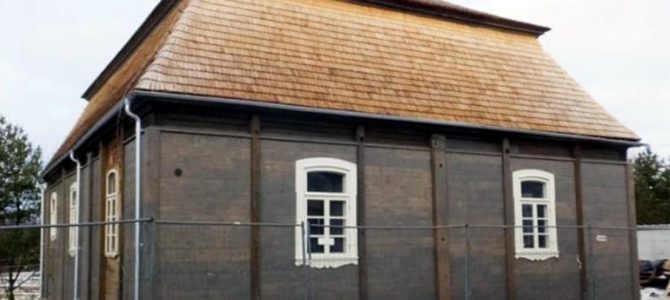
When Lithuania joined the European Route of Jewish Cultural Heritage, the synagogue in Žiežmariai was chosen as the symbolic first site. The wooden house of prayer is a rare surviving example of wooden synagogues in Europe. Even so, it took more than a decade for reconstruction to begin. After work is done, the plan is for the small building located in a town along Lithuania’s main highway to host a museum.

About 500 Jews lived in Žiežmariai when the synagogue was built in the 19th century. Before the war there were up to a thousand. Now the synagogue is getting back its former face, with work on the façade, windows, walls and the already-finished roof.

Restoration experts working on the building say the synagogue succeeded in surviving because of daily care by local residents. They boarded up windows and removed garbage dating back to Soviet times, when the building was used as storage. Neighbor Liudvikas Markuntavičius said the synagogue serves more than just to remind the small town of a glorious past. During World War II the synagogue territory was used as a ghetto and the Jews of Žasliai and Kaišiadorys were imprisoned there.

Mikveh Opens in Kaunas

After a break of more than 70 years a mikveh, or Jewish ritual bath, was recently built and opened in the Old Town of Kaunas, thanks to the Kaunas Jewish Center. Mikveh construction was supervised by Rabbi Gedalia Olshtein, a leading world expert in the field. The luxurious mikveh is intended mainly for Israeli students studying in Kaunas, bet all female Lithuanian Jews are welcome to use it as well. William Stern, founder and patron of the Kaunas Jewish Center, hung a mezzuzah, a sort of Jewish good-luck charm, on the door frame at the opening ceremony. Rabbis and guests from around the world and representatives of the Kaunas Jewish Community attended the opening ceremony. Rabbi Moshe Sheinfeld, who has lived in Kaunas for six years, was responsible for all the work setting up the mikveh, with help from his wife Racheli. The rabbi said he had several choices for where to put the mikveh, but one abandoned building had a mezzuzah on its door-frame, which apparently made up his mind. The building was purchased from Lithuanians and no one now knows who the Jewish owners might have been.

Sukkot Celebration in Panevėžys

The Panevėžys Jewish Community set up the traditional sukka for celebrating Sukkot, the harvest festival and recollection of the flight of the Jews through the Sinai living in tents. Each family and community makes a sukka according to their means. This time there was a special celebration in which children were explained the meaning of Sukkot, and they had the chance to “dwell” in the temporary shelter, playing, having fun and eating. There were also photo sessions held in the sukka, photographs being sent to parents and kept in the Community archives. All Community members contributed by bringing in the fruits of their harvests, including apples, watermelons, pumpkins and grapes.

Lithuanian Jewish Community executive director Renaldas Vaisbrodas participated at the celebration, greeted everyone in the name of the LJC and wished everyone a happy and full new year, health, joy and mutual goodwill.

Later a prayer was read, the blessing of the Most High. Holiday greetings from Israel, the USA and LJC chairwoman Faina Kukliansky were read out.

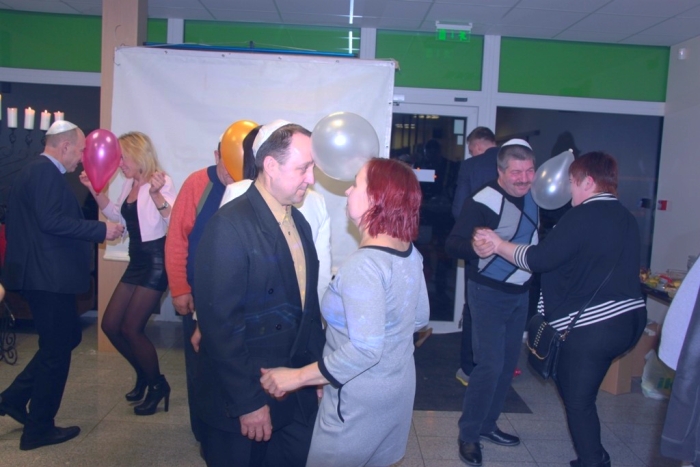
After a sumptuous dinner made by the women of the Community and café staff, games and dances were held. Children gave improvised performances and were rewarded with small gifts. The celebration carried on long into the evening.

Chabad Feuds with Jewish Leaders over Cozy Ties to Eastern European Autocrats


by Lili Bayer and Larry Cohler-Esses

In the former Communist states of Central and Eastern Europe, established mainstream Jewish groups are increasingly worried that Chabad, the international Hasidic movement, is allying itself with authoritarian governments.

In countries from Hungary to Russia, they say, Chabad is at times playing down anti-Semitism in a bid to compete with local Jewish groups and win access to financial resources and political influence.

Chabad, in turn, says that mainstream groups are too embroiled in secular and political issues, including polarizing disputes about democracy and civil liberties, at the expense of guarding core communal Jewish interests of physical security and Jewish religious freedom. In some cases, Chabad officials say, these establishment groups are also corrupt.

The increasing tensions between Chabad and more established Jewish groups are playing out in different ways in different countries. Each case is unique:

Jewish Lithuanian Soldier Volf Kagan Remembered in Balbirishok

A commemorative plaque was unveiled on October 5 to honor the memory of Volf Kagan, Jewish Lithuanian soldier and two-time recipient of the order of the Cross of Vytis, in the town square of Balbieriškis (Balbirishok) next to the local government building in the Prienai region of Lithuania. Volf Kagan (1900-1941) came from this town.

According to Balbieriškis Tolerance Center director Vitas Rymantas Sidaravičius, the plaque honors both Kagan and the former Jewish community of Balbieriškis. The plaque was the brain-child of Lithuanian journalist Vilius Kavaliauskas, author and editor of articles and the book “Pažadėtoji žemė – Lietuva” [Lithuania: The Promised Land] about Litvaks, and was financed by the Prienai regional administration. Lithuanian Jewish MP Emanuelis Zingeris attended the unveiling ceremony as did Prienai regional administration head Alvydas Vaicekauskas, deputy regional administration head Algis Marcinkevičius, representatives of the Kaunas Jewish Community, Vilius Kavaliauskas, Prienai regional culture, sports and youth department director Rimantas Šiugždinis, Išlaužo žuvis company director Rimantas Jurgelionis, Balbieriškiis parish head priest father Remigijus Veprauskas, head town doctor Angelė Sidaravičienė, Balbieriškis alderwoman Sigita Ražanskienė, members of the aldermanship council, Balbieriškis primary school students and teachers, Culture and Leisure Center staff and local residents.

Shmini Atzeres and Simchat Torah Holidays at Choral Synagogue

Šmini Aceret ir Simchat Tora šventės Vilniaus choralinėje sinagogoje

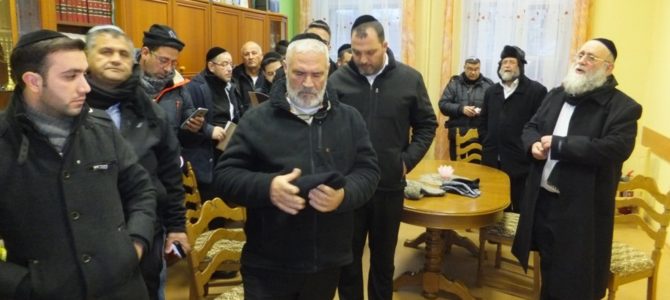
Shemini Atzeret and Simchat Torah (or Shmini Atzeres and Simchas Torah in Ashkenazic Hebrew) conclude the fall cycle of Jewish holy days.

There are 54 weekly readings of Torah read over the course of the Jewish calendar year. The Shmini Atzeres holiday marks the end of the annual reading and the beginning of the next year of readings at synagogue.

The Torah scroll is removed from the aron kodesh and members of the congregation dance with the Torah around the bimah, where the readings take place, seven times. It is one of the most fun Jewish holidays with singing and dancing.

Simchat Torah will be celebrated at the Choral Synagogue in Vilnius at 7:30 P.M. on October 12, 2017.

We’ll sing and dance, and food and treats will be provided.

Everyone is welcome to attend.

Vilnius Jewish Religious Community

Tale of a Man with Two Names, One Life

by Algis Jakštas

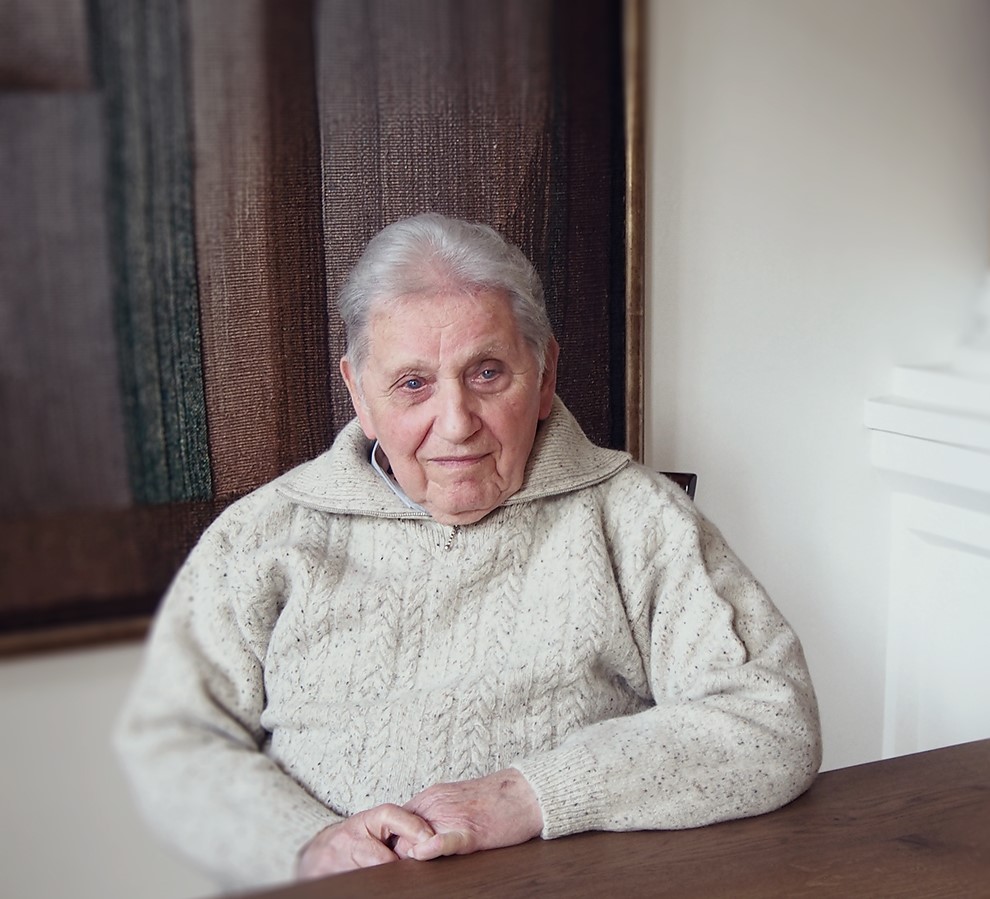
I first wrote several years ago about a man with an exceptional story, a man with two names and two surnames, Romuald Jabuk Weksler-Waszkinel, who was born in Švenčionys during the war and by some miracle became the only survivor from among all his family and relatives who once lived there. That miracle was the work of Piotr and Emilia Waszkinel. Jakub and Batia Veksler handed their son born February 28, 1943, over into their care and Piotr and Emilia had him baptized as a Christian.

Romuald Jakub Weksler-Waszkinel now lives in Israel and has come to Lithuania at the invitation of the Polish Institute in Vilnius. He also found time to visit his native Švenčionys. He visited the Menorah statue which recalls the former ghetto gate and other sites. As I said, none of his relatives who lived in Švenčionys survived. Some were killed in the forest near Švenčionėliai, others at concentration camps. His parents died at a concentration camp.

Barbara Orszewska, project coordination for the Polish Institute in Vilnius, accompanied Weksler to Švenčionys and was happy to translate for him. Švenčionys Jewish Community chairman Moisej Šapiro also accompanied him. I spoke with him by the Menorah monument there. My first question, or more precisely request, was for him to talk about his life, worthy of a movie or book.

“My story is, that until I was 35 I didn’t know I was Jewish. I was always unsure about ethnicity when I tried to compare my features and appearance with those around me. I didn’t look like a Pole, and Poles lived around, or like my Polish parents. When I turned 35 my mother told me I had other parents, Jews, who were murdered during the war. She didn’t know my original name. For 14 years I sought my true roots until I found my Jewish surname, Weksler. Now I have two first names and two surnames. And this is my greatest treasure. The Jews Jakub and Batia Weksler gave me life, and without the Poles Piotr and Emilia I wouldn’t have survived. In 2009 I went to live in Israel. There I found relatives of my mother and father, there I felt as if I had come home. I am very grateful to people and God.”

What feelings overtook you when you discovered you were Jewish instead of Polish?

Švenčionys Jewish Community Chairman Moisej Šapiro Speaks in Former Ghetto


by Galina Romanova

It almost seems as if nothing new can be said about a long-standing Jewish tradition to meet on the first Sunday in October by the Menorah sculpture in the central park in Švenčionys, Lithuania and at the obelisk people call the Polygon in the forest between Platumai village and Šalnaitis Lake, where 8,000 Jews from the entire Vilnius region were brutally murdered and buried. It almost seems that way, but every meeting is different in its own way. This year, on October 1, there was a prevailing spirit of real and sincere communication, just as there is every year, and the people who come here often end up becoming long-term friends, or at least get to know one another much better. Those who come bring with them photographs and souvenirs from different times.

Sukkot: Don’t Read This–It’s Utterly Futile

Dear Friend,

Here is a dismal, if anecdotal, indicator of the state of Jewish education: whenever I have asked, I have found that the overwhelming majority of Jews don’t know the phrase “nothing new under the sun” comes from the Bible.

In fact, it’s a central motif in the book of Kohelet, or Ecclesiastes, an enigmatic megillah we read during the forthcoming holiday of Sukkot.

The choice of Kohelet for Sukkot is a curious one. Sukkot is supposed to be the most joyous festival in our calendar, and yet, on it we read a book that starts with this uplifting phrase: “Utter futility, utter futility, everything is futile.” Gulp. Chew on that, shiny happy people. Solomon, to whom Kohelet is traditionally attributed, must be Judaism’s most infamous party-pooper.

Commemoration of Šeduva Shtetl in Lithuania and Abroad

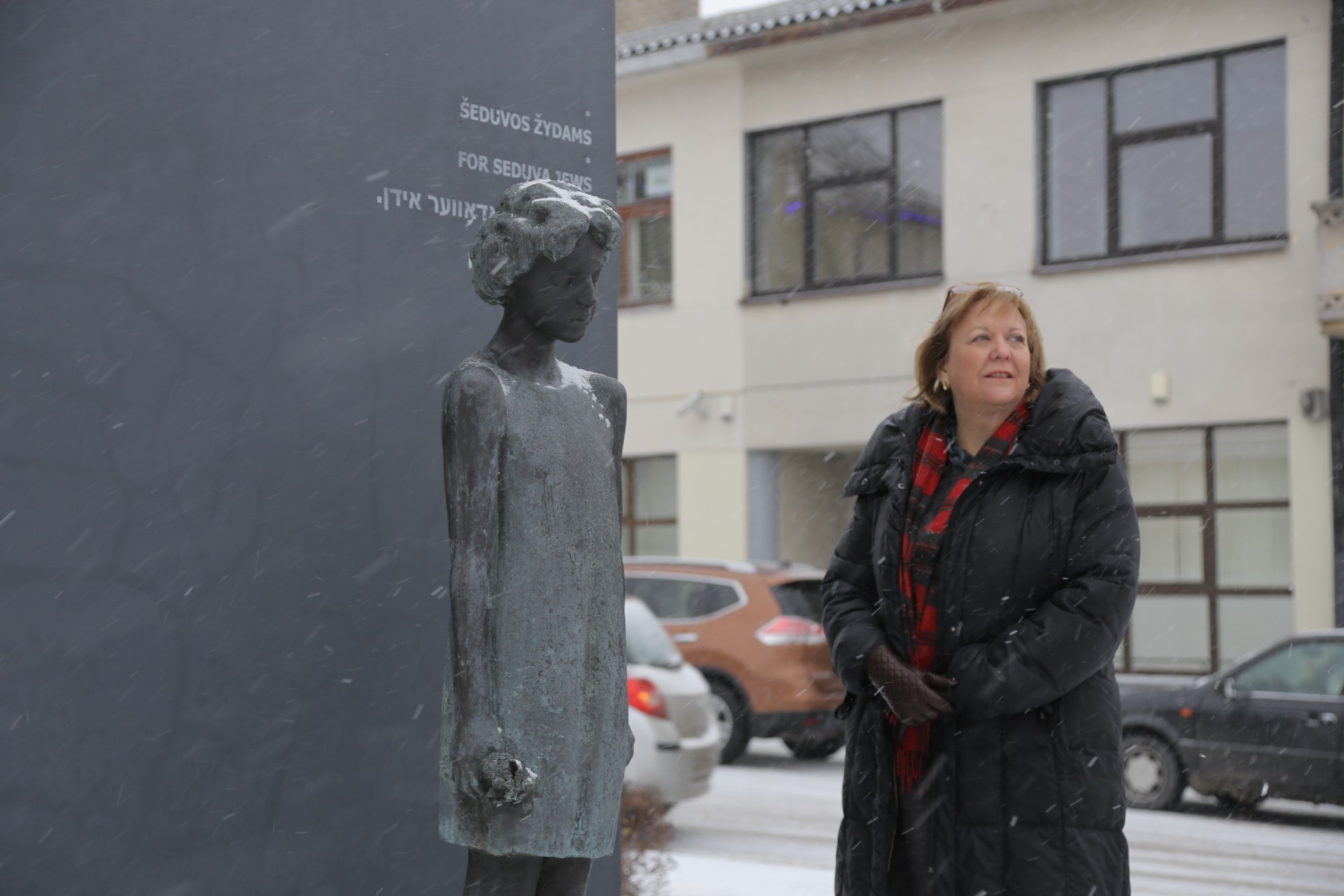
Milda Jakulytė-Vasil,
museum curator,
Šeduva Jewish Memorial Fund

The beginning of the Šeduva Jewish community should be dated to the first half of the 18th century when Šeduva, having received Magdeburg charter self-government rights and after becoming a city, underwent rapid development the Jewish population grew remarkably. In 1793 the writer Fridrich Schulz (1762-1798) in his description of his impressions of visits to Poland (Fridrich Schulz “Reise eines Livländers durch Polen,” 1793) described Šeduva as a small town very similar to many he’d seen along the way. The traveller’s eyes didn’t miss the fact that almost none of the homes in the town had chimneys. Of course this sort of observation in a travelogue probably wasn’t intended to kindle the interest of readers and get them to visit the location, and beyond being an observation by the writer and traveller probably only meant that fires could and often did ravage these sorts of towns and cities.

In essence Šeduva wasn’t especially known for anything in the 18th, 19th and 20th centuries. We can say Šeduva was a typical town where Jews formed a significant part of economically active residents, and if their activities didn’t cause urban development, they at least had an influence over it. There were many such shtetlakh/towns in Lithuania, but upon closer inspection each has surprising and interesting events and stories, and the descendants of these towns are found now around the world.

In the shtetl of Šeduva in the period between the wars, constituted of about 900 Jews, the residents knew (or at least recognized) each other. The historian Saulius Kaubrys found the entire Jewish population Šeduva fit more or less along three streets, and this dense residency led to more intimate mutual interaction. There’s a story which illustrates the maxim that there are no secrets in a small town: “Shlomo had a brother named Nisan, an old man, about 60, but in his father’s eyes he was still ‘the kid,’ so he took him to buy a pair of shoes once. The two entered the shop and the father told the shopkeeper: ‘Give me some kid shoes.’ The shopkeeper looked around, but where was the child? At that point the father pointed to his 60-year-old son, ‘the child.’ Of course the entire shtetl knew about ‘the kid’ (that’s how it is in the shtetlakh)… They also lived in Šeduva.”

Come Learn about Jewish Fall Holidays

Žydų rudens šventės – kviečiame į paskaitą

Sukkot, or Sukkos, is the feast of tabernacles, meaning tents.
Simchat Torah, or Simkhas Torah, is a celebration of the Torah.

Description:
The Lithuanian Jewish Community and educator Natalja Cheifec invite you to a lesson where you’ll learn:

Why Jews must dwell in these booths made especially for Sukkot
When sins become good deeds
What the requirement of the four species means
Why Simchat Torah is the holiday of rejoicing in the Torah
Why Jews are not only allowed but required to drink during Simchat Torah

and many additional interesting facts. Students will also receive a small gift.

Register here:
https://docs.google.com/forms/d/1oN-Nj3-EYpdg2xFAl82GJPeWLxqhzyomQ6e6JdEZ9OQ/edit

We meet at 2:00 P.M. on October 8 at the entrance to the Bagel Shop Café located at Pylimo street no. 4 in Vilnius.

Zavl Shul Opens Doors to Public Briefly

The historic Zavl synagogue near the Vilnius train station opened its doors to visitors briefly Sunday, October 1.

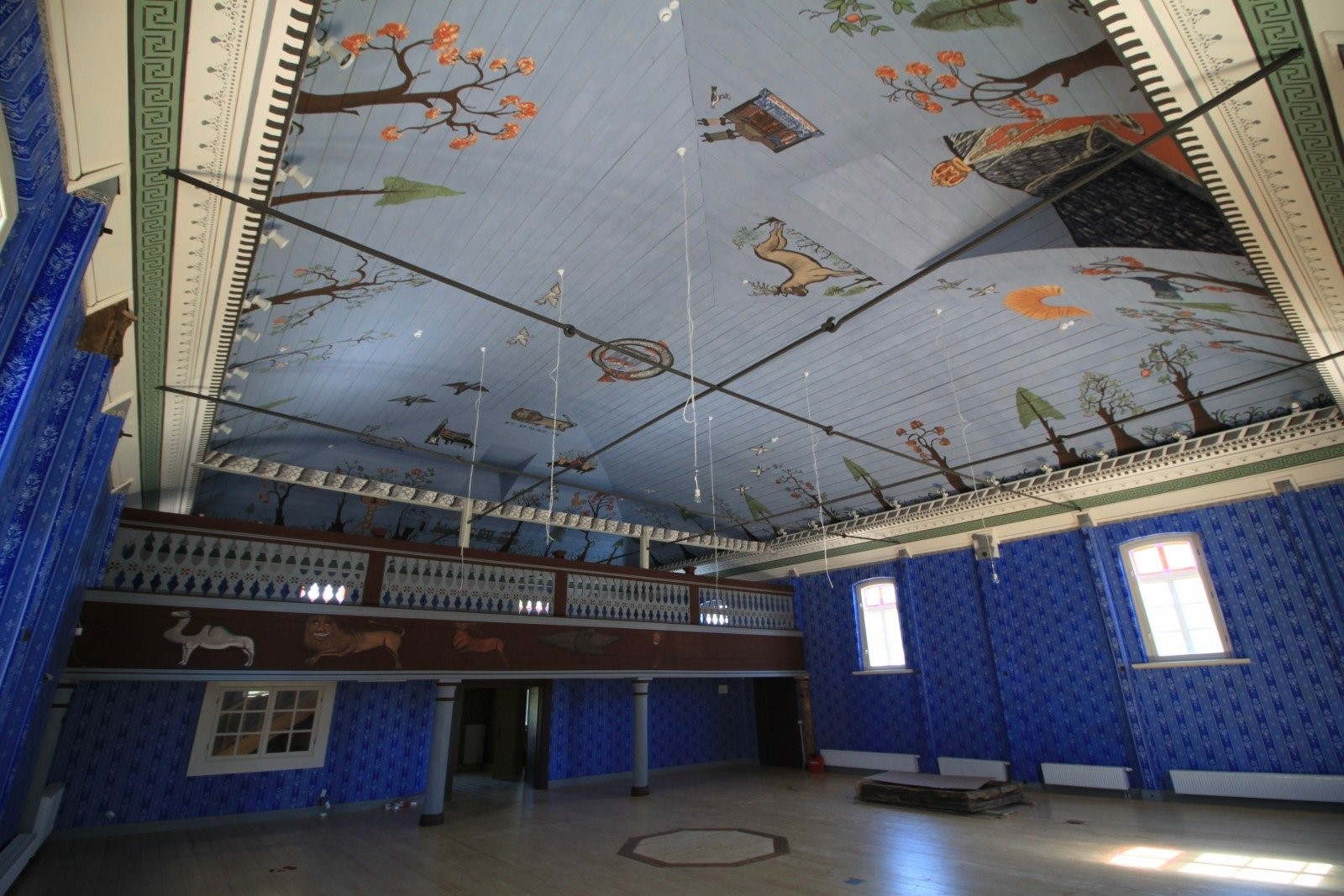
The building has been undergoing extensive repairs and a full restoration over the last several years after it was returned to the Lithuanian Jewish Community. Initially the LJC undertood emergency measures to fix the roof after a wind storm displaced shingles and a gaping hole appeared. Several years on now the entire external façade including walls, windows, cupola and roof have been restored to something approximating its authentic appearance before the Holocaust.

The public event featured a series of humble and eclectic art installations by a group of designers located in the women’s gallery and on the main floor.

Sukkot at the Choral Synagogue in Vilnius

SUKKOT šventės Vilniaus Choralinėje sinagogoje

October 4: Service at 6:30 P.M., followed by treats in Sukkot tent at Bokšto street no. 19.

October 5: Service at 9:30 A.M., followed by treats in the Sukkot tent at the synagogue.

October 6: Service at 9:30 A.M., followed by treats in the Sukkot tent at the synagogue.

October 7: Service at 9:00 A.M., followed by treats in the Sukkot tent at the synagogue.

October 8: Service at 8:30 A.M., followed by treats in the Sukkot tent at the synagogue.

October 9: Service at 8:30 A.M., followed by treats in the Sukkot tent at the synagogue.

October 10: Service at 8:30 A.M., followed by treats in the Sukkot tent at the synagogue.

October 11: Service at 8:30 A.M., followed by treats in the Sukkot tent at the synagogue.

Shmini Atzeres

October 12: Service at 9:30 A.M., followed by treats in the Sukkot tent at the synagogue.

Simchat Torah

October 12: Service at 7:21 P.M., dancing with Torah, followed by sushi at the synagogue.

October 13: Service at 9:30 A.M., followed by treats at synagogue

October 12 and 13 are non-working days.

Vilnius Jewish Religious Community

Frau Finkelstein

Hello, Frau Finkelstein. You’ll forgive me if I continue to call you that, the way it’s written here, Frau Finkelstein? Thank you.

Don’t be angry, Frau Finkelstein, that it’s happening like this. It just turned out that way. By the way, why did they record you this way here, in the Jewish cemetery in Kaunas, not in Hebrew but in Roman characters, and as if that weren’t enough, why did they add “frau?” Was your husband German, Frau Finkelstein? Well, OK, fine, I know it’s none of my business. It’s just interesting, you know–you don’t even meet such a frau in the Jewish cemeteries in Lithuania. It’s too bad there’s no photograph of you. I guess there probably used to be. All that remains of you, Frau Finkelstein, is part of a headstone, the top portion of which is probably now part of some stairway or maybe a card table–black marble, candle flame, a glass of red wine, a deck of cards and the queen of spades, instead of your photograph, and they are playing poker there, which is at least an intellectual game, not some kind of “go fish.” … What? You say that’s cynical? Do you really believe so, Frau Finkelstein? God protect us, this is no cynicism, Frau Finkelstein. What does it say here on your remains–October 17, 1928. Hold on for a second, Frau Finkelstein, I want to check my mobile to see which day of the week that was.

Rosh Hashana at the Choral Synagogue

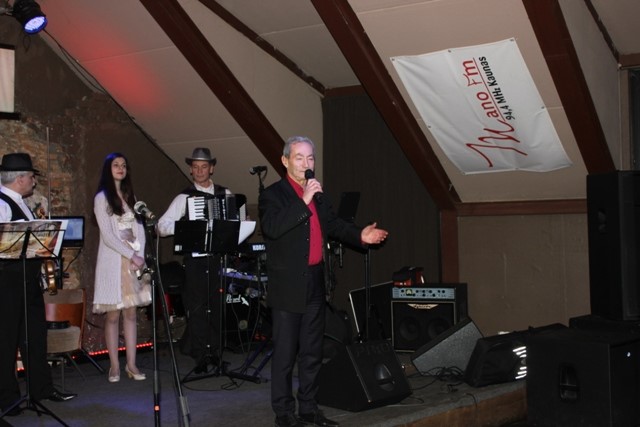
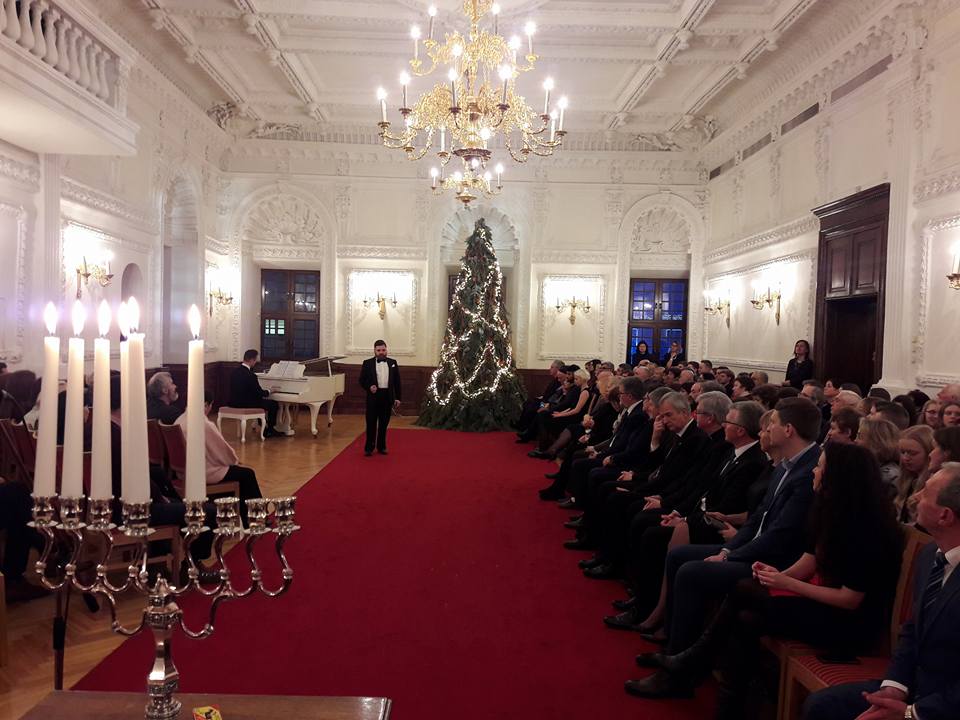
LJC members and guests gathered to celebrate the eve of Rosh Hashana at the Choral Synagogue in Vilnius Wednesday, September 20. The celebration kicked off with Yiddish songs. Famous Lithuanian musician, organ player, pianist and vocalist Vitalijus Neugasimovas sang. Lithuanian Jewish Community chairwoman Faina Kukliansky and Vilnius Jewish Religious Community chairman Simas Levinas delivered New Year’s greetings.

LJC calendars for 5778 were passed out and celebrants sampled traditional Rosh Hashana foods from the Bagel Shop Café. Services began after the sumptuous treats.

LJC Rosh Hashana with Community and Guests

The Lithuanian Jewish Community celebrated the eve of Rosh Hashana with traditional dishes and a party at the Community. Community members and guests were feted with delicacies supplied by the chefs at the Bagel Shop Café and were given new calendars for 5778 featuring the synagogues and especially historic wooden synagogues of Lithuania.

LJC chairwoman Faina Kukliansky welcomed audience and expressed good wishes for the coming year, and Israel’s ambassador to Lithuania Amir Maimon spoke about Rosh Hashana traditions unchanged over centuries. Israeli honorary consul in Lithuania professor Vladas Bumelis, Lithuanian MPs Rimantė Šalaševičiūtė and Irena Šiaulienė and guests from Israel celebrated together. Natalija Heifetz, a guide at the Choral Synagogue, delivered a family heirloom, the shofar horn, blown on Rosh Hashana.

New LJC Calendar for 5778 Features Lithuanian Synagogues

The new calendar for the Jewish year 5778 published by the Lithuanian Jewish Community features graphic representations of the synagogues of Lithuania in the drawings by Gerardas Bagdonavičius.

Bagdonavičius (1901-1986) was an artist working in drawing and painting, an illustrator, a theater designer and teacher. His legacy, a corpus of more than 4,000 works, is preserved at 11 Lithuanian museums, with the majority at the Aušra Museum in Šiauliai, the collection to which the illustrations in the new calendar belong.

Of the hundreds of synagogues once gracing the Lithuanian landscape, only several dozen remain. There were more than one hundred synagogues in Vilnius alone before the Holocaust. Currently 44 synagogues and synagogue complexes are listed on the registry of Lithuanian cultural treasures. The majority have disappeared forever, in many cases leaving us no picture of how they looked. The Bagdonavičius drawings of synagogues featured in the calendar are a rich source of information, drawings he made during different ethnographic expeditions in the period between the two world wars.

Only two of the synagogues portrayed in the calendar are still standing: the synagogue of the Chaim Frankl leather factory in Šiauliai and the synagogue in Pakruojis. The latter belongs to the LJC with whom the Pakruojis regional administration has a use agreement. It was only reopened to the public in the spring of 2017 after extensive renovation over several years. It is the first wooden synagogue restored after the Holocaust in Lithuania.

Renovation work is being performed on three more synagogues which belong to the LJC: the Choral Synagogue in Vilnius, the Zavl kloyz on Gėlių street in Vilnius and the wooden synagogue in Žiežmariai.