

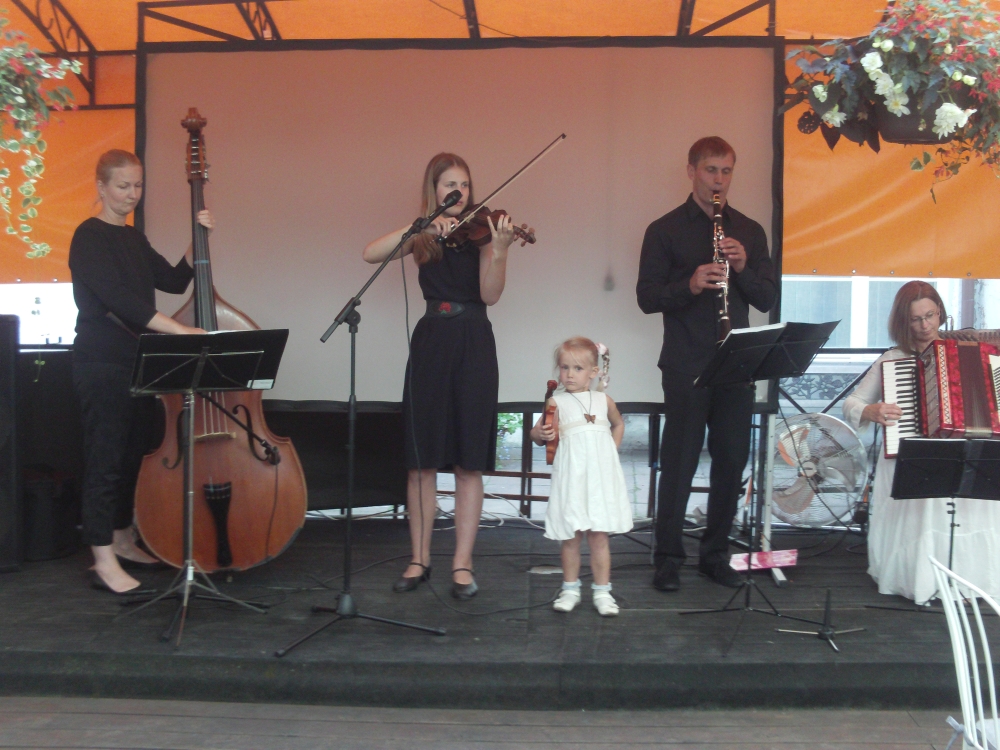
The 2015 Yiddish summer course at the Vilnius Yiddish Institute of Vilnius University concluded at the usual location, the courtyard of a restaurant adjacent to the university in the Old Town, with music, a theatrical presentation, the issuance of diplomas and plenty of food to go around. An addition this year was a sort of daycare center-corner for small children with toys and books.
Šarūnas Liekis, the head of the institute, served as MC and addressed the audience in Yiddish.
This summer’s crop of students included a Japanese individual, an American contingent, a Polish contingent, ethnic Lithuanians and people hailing from other parts of the world.
Arkady Vinokur presented a preview of the New Yiddish Theater project he is working on.
The audience included all the faculty and staff of the summer course, former students, Lithuanian Jewish Community chairwoman Faina Kukliansky and LJC deputy chairwoman Maša Grodnikienė, local Jewish and Jewish-friendly residents and what seemed like an unusal number of primary-school-age children who left before the event was over.
Pictures:
The Lithuanian Jewish Community would like to inform you that the Jewish organization Yachad is not connected with the Lithuanian Jewish Community, the Vilnius Jewish Religious Community of the Lithuanian Jewish Religious Association. On the organization’s webpage, they say they invited everyone who so desires, without regard to ethnicity, belief or place of residence, to become members and participate in Jewish religious life. The Lithuanian Jewish Community does not support this invitation and does not support the establishment of this organization because we believe it violates the principles of Judaism. This organization seeks to establish itself in the Choral Synagogue in Vilnius, although no permission has been given for this.
We would like to remind them the synagogue is the property of the Vilnius Religious Jewish Community.
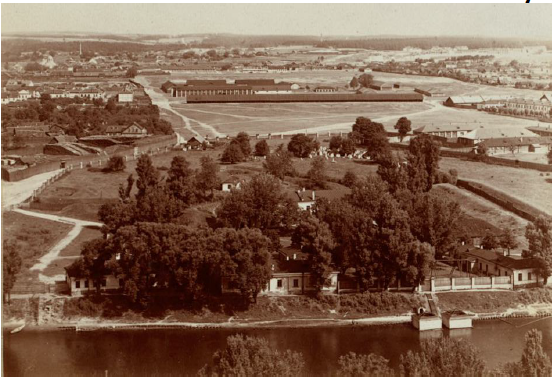
Despite a Jerusalem Post story that would suggest otherwise (“Anger flares over Lithuanian Sports Palace” Sam Sokol, 8/11/2015) there is today a remarkable consensus in Vilnius that the site of the former Snipiskes Cemetery and the graves beneath must be protected. On this matter, the government of Lithuania, the Lithuanian Jewish Community which I chair, and the Committee for the Preservation of Jewish Cemeteries in Europe (CPJCE) which is Europe’s foremost halachic authority on cemeteries all agree.
Attention is now focused on the abandoned former Soviet Sports Palace, which partially sits on the cemetery grounds and in its current condition is mostly a gathering place for graffiti artists and alcoholics. The government rightly wants to renovate the building and turn it into a center for conferences and cultural events. Because the building itself has been designated an architectural heritage site, no significant structural changes are possible, but the interior will be renovated. The surrounding area will be maintained as a memorial park with inscriptions that describe some of the famous people who were buried here.
We would like to inform you that an extraordinary general meeting of the Vilnius Jewish Religious Community was held today, August 14, 2015. The Vilnius Jewish Religious Community resolved that since now the term of the contract with Chaim Burstein has passed, not to renew the contract and to appoint Shmuel Yatom to serve the function of rabbi in the interim while a new rabbi is found.
Shmuel Levin
Vilnius Jewish Religious Community

The Vilna Gaon State Jewish Museum and the Embassy of the United Kingdom to Lithuania
kindly invites you to the opening of the exhibition
„Scots Jews: Identity, Belonging and the Future“,
photographs by J u d a h P a s s o w.
The opening reception will take place on the 25th of August, 2015, at 5.30 p.m.,
at the Tolerance Center (Naugarduko Str.10/2, Vilnius).
A unique and contemporary photography exhibition on Scottish Jewish life from world-renowned documentary photographer Judah Passow, brought for the first time to Lithuania. The exhibition, from 2013, captures the complexity and diversity of Scottish Jews at the beginning of the 21st century. The Scottish Jewish community dates back to at least the 1700s and has produced scientists and doctors, judges and Members of Parliament, artists and writers, farmers and foresters, kilt makers and whisky distillers! The story of this community and how it maintains its traditions, while fully embracing Scottish culture is a fascinating one.
Come and see for yourself this fascinating and powerful exhibition at the Tolerance Centre in Vilnius from 25 August until the 5th of October, 2015.
Producer of the Exhibition Michael Mail.
Why is there so much anger and such a lack of truth emanating from an article by the well known and much respected Israeli newspaper Jerusalem Post regarding the former Jewish cemetery in the neighborhood of Šnipiškės (Shnipishyok, aka Piramont) in Vilnius, demolished by the Soviets in 1950 to make way for the Palace of Sports, which is now the subject of plans to renovate as a conference center? The Government of Lithuania is only planning to renovate existing buildings to serve as a conference center and for other cultural events while at the same time cleaning up and commemorating the territory of the former Jewish cemetery. This decision is being implemented in cooperation with members of the Committee for the Preservation of Jewish Cemeteries in Europe who are to be included as supervisors over all work there. The Government’s actions regarding the project are being coordinated fully with the Committee for the Preservation of Jewish Cemeteries in Europe.
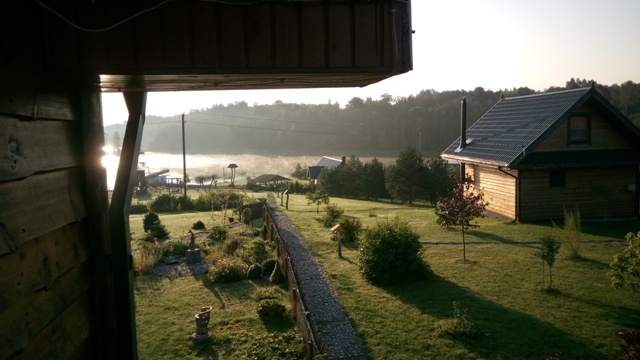
The first day of the LJC “en plein air” arts workshop opened at the Įlanka farm in the Molėtai region of Lithuania with 40 people gathering to spend 5 creative days together. Some said this was their first attempt at painting and ceramics, while more experienced artists called it an opportunity to share their skills as well as to do a few paintings in this corner of paradise on the shore of Lake Bebrusai. The first paintings and first pottery works have already emerged. Everyone assembled for the official opening of the Plein Air together with some of the community’s favorite violinists.
For the second year now the Lithuanian Jewish Community has been administering a program called “Support for Jewish Rescuers during World War II.” LJC chair Faina Kukliansky is the curator of the program and it is implemented by the LJC Social Center team: Social Center director Alan Levin and coordinators Ema Jakobienė and Mikhail Segal.
Jewish rescuers live throughout Lithuania and it hasn’t been an easy assignment for the Social Center to track them all down and inform them of the support program, get their consent and organizing record-keeping, logistics and other matters necessary for implementation. Many people have moved and many letters are returned to sender. In some cases we had to begin the search for a given person from scratch, follow up bad leads and then start over again. Meanwhile time has been ruthless: of the 110 rescuers who were sent a letter with information about the program, 96 turned out to be still alive…
Now we can announce with joy that support has reached 96 rescuers. The support to each rescuer totals 250 euros. The total sum of support is 24,000 euros.

The Israeli Embassy in Vilnius and the Šarūnas Marčiulionis Basketball Academy invite you to attend the International Youth Basketball Tournament taking place now in Vilnius. Teams participating are Tel Aviv Maccabi, the Šarūnas Marčiulionis Basketball Academy team from Vilnius, the team Perkūnas from Kaunas and Saulės from Šiauliai, Lithuania.
Schedule:
August 11:
4:00 P.M. first semifinal
6:00 P.M. second semifinal
August 12:
2:00 P.M. bronze
4:00 P.M. final match
Spectators are welcome and entry is free. Venue: the Šarūnas Marčiulionis Basketball Academy at Raitininkų street No. 4A in Vilnius. Romualdas Brazauskas will referee. See you there!
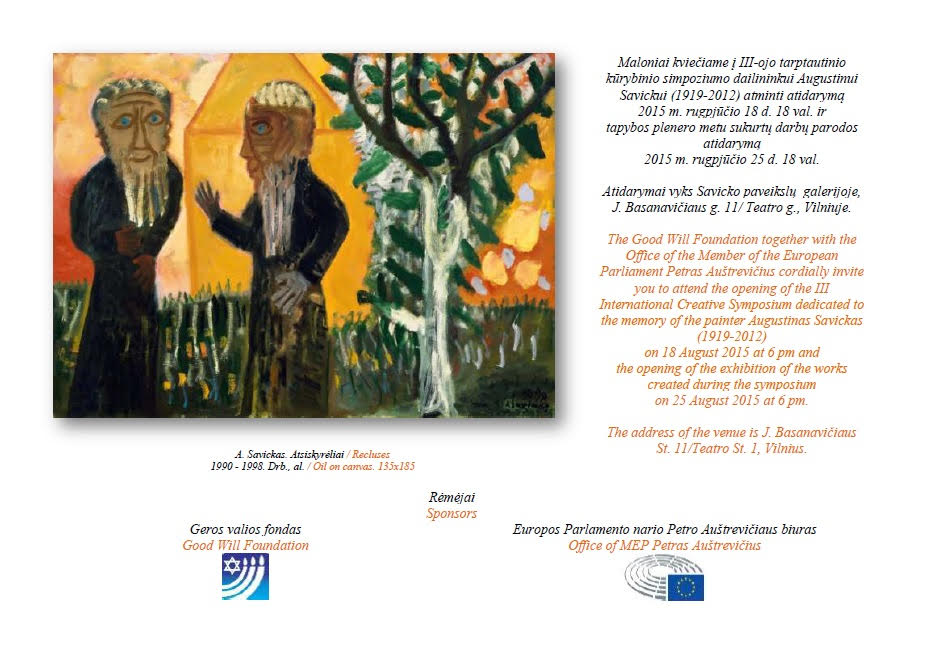
Augustinas Savickas, a Lithuanian painter, researcher in fine arts and professor, was born on 12 May 1919 in Copenhagen, Denmark. His father Jurgis Savickis was a Lithuanian writer and diplomat and his mother Ida Trakiner – a medical practitioner born in St Petersburg, in a Jewish family.
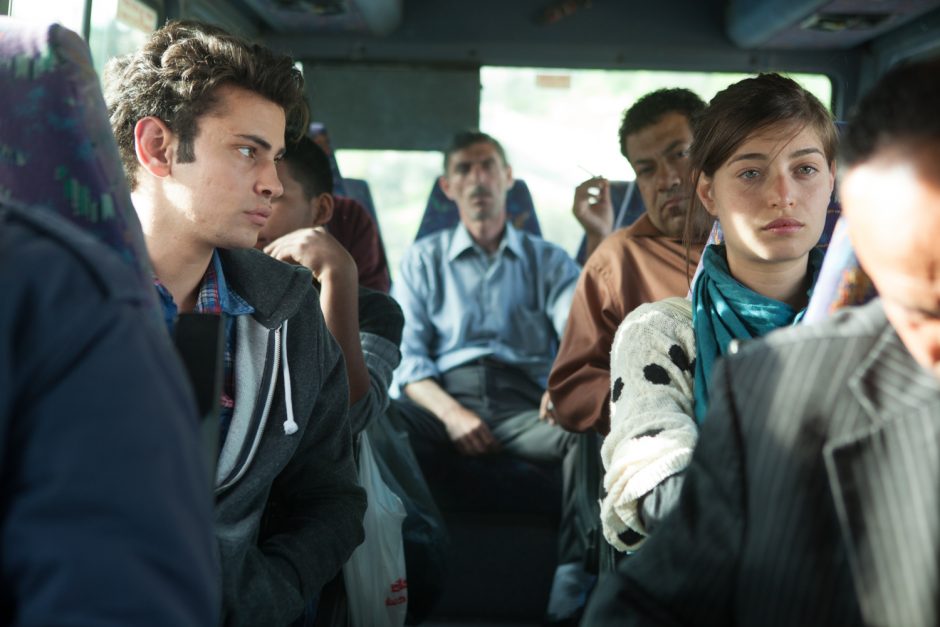
Two popular Israeli films are to be screened at the annual Kino pavasaris [Spring Film] festival from August 6-13: the comedy Zero Motivation (2014) directed by Talya Lavie and the drama Dancing Arabs, aka A Borrowed Identity (2014), directed by Eran Riklis.
Dangerous Paperclips
Zero Motivation director Talya Lavie has been watching war films were the main focus is on fighting since childhood. After she was graduated from the Sam Spiegel Film and Television School in 2005, the idea occurred to her to make a film about the other side of war, the administrative apparatus, whose most dangerous weapon is the paperclip. What came forth is a comedy portraying mainly female officers at desks, but one that cuts deep to the heart of the country’s problems. Beyond the office jobs of the female conscripts in the Human Resources Office at a remote desert base there is a war going on in which people are dying, throwing in sharp contrast the rivalries and intrigues among the young girls which seem petty in comparison. By showing the consequences of the Israeli war machine against the background of a comedy, these consequences also seem all the more disturbing.
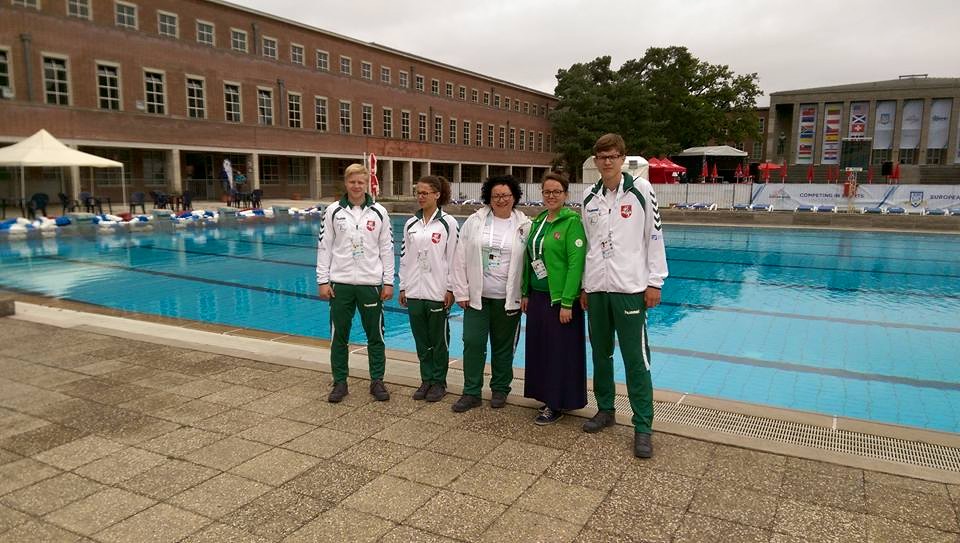
In total 2,340 athletes from 38 countries competed in 19 different sports. The twenty-six members of Lithuania’s Makabi team delegation competed in five sports in the young, adult and veterans groups. The young athletes did extremely well. Swimmer Jekaterina Gamper took three bronze medals for various strokes and distances and another two medals as well: a gold and a silver in one-on-one swim-offs with swimmers from other countries. Swimmer Artiomas Perepelica is taking home two bronze medals in singles competitions and another silver in a one-on-one swim-off. Young table-tennis player Vanessa Ražinskytė won two silvers, one individually and another together with an English table-tennis player. In total Lithuania’s young Mabaki team members take home 10 medals.
Among the adults the most successful was our swimmer Andrej Fadejev who earned 8 medals, 3 of them golden; badminton player Alanas Plavinas with 2 gold medals (1 individually, 1 as a pair with an Estonian player) and the swimmer Ela Pavinskienė who hauls home with her 3 bronzes.
The U.S. Commission for the Preservation of America’s Heritage Abroad has thanked the mayor of Šiauliai, Lithuania, for the city’s decision to shelve plans to exhume human remains discovered during highway construction.
Lesley Weiss, chairperson of the U.S. Commission for the Preservation of America’s Heritage Abroad, noted in her letter to mayor Artūras Visockas that Jewish religious law bans exhumations of human remains. “Exhumation would have been a violation of human dignity. Thank you that you took timely and resolute action to ensure that did not happen. … We hold in high esteem your leadership and understanding of this important issue of human rights and values,” she continued.
The chairperson of this government commission, appointed by U.S. president Barack Obama in 2011, said the U.S. is concerned and involved with Jewish heritage protection abroad.
“We are a nation of immigrants, including Lithuanian Jewish émigrés and their offspring, so the US cares about the protection of sites located in foreign countries which are connected with the heritage of our citizens,” Weiss wrote.

The program, as currently implemented, violates various agreements between the Jewish Agency and the government, Sharansky wrote in a Thursday letter to the premier that was obtained by The Jerusalem Post.
“Any and all meaningful dialogue with the organized Jewish community, as represented by the Jewish Federations of North America, Keren Hayesod, the World Zionist Organization and the Jewish Agency for Israel, has been eliminated. Rather, this undertaking has transformed simply into a funding framework for programs to be conducted by a single government ministry,” Sharansky alleged, referring to increasing control of the government undertaking by the Diaspora Affairs Ministry headed by Bayit Yehudi leader Naftali Bennett.
Lithuania’s interior ministry denied claims by the country’s chief rabbi that he was threatened with deportation over his objection to construction atop a Jewish cemetery.
Rabbi Chaim Burshtein, an Israeli citizen who divides his time between that country and Lithuania, told JTA Thursday that he was detained at Vilnius airport’s passport control while leaving the country a day earlier. He said a border police officer informed him he would not be allowed to return for overstaying his visa.
“They changed their minds when I threatened to turn this into an international scandal,” Burshtein said. He added the border police officer told him he had been flagged in her computer system, and advised him to “sort out the problem with the person who ordered the flag,” Burshtein said.
Recently there has appeared in the world press an article and information that a rabbi has been deported from Lithuania and that this event is connected with plans by the Government to construct new buildings in the old Jewish cemetery in Shnipishok (Piramont) in Vilnius. The Lithuania Jewish Community denies these rumors.
According to LJC chair Faina Kukliansky, no one has deported Rabbi Chaim Buršein from Lithuania.
“He lives in Israel, not Lithuania. After purchasing a ticket Chaim Buršein left Lithuania for Israel for his own reasons. We have no information that his departure was connected in any way with the Congress Center project which the Government plans to implement to both refurbish and commemorate the territory of the Jewish cemetery in Snipishnok. This project has the blessings of members of the Committee for the Preservation of Jewish Cemeteries in Europe and all of the Lithuanian Government’s actions concerning this project are coordinated with it. No construction at all is taking place and the project is still under consideration. Rabbi Chaim Buršein is not a citizen of Lithuania and it is possible he does not have permanent residence in Lithuania. His family lives in Israel and therefore it is natural that the head of a family of many children spends the majority of his time there, with the performance of the duties of Rabbi in Lithuania taking second place and being somewhat sporadic.
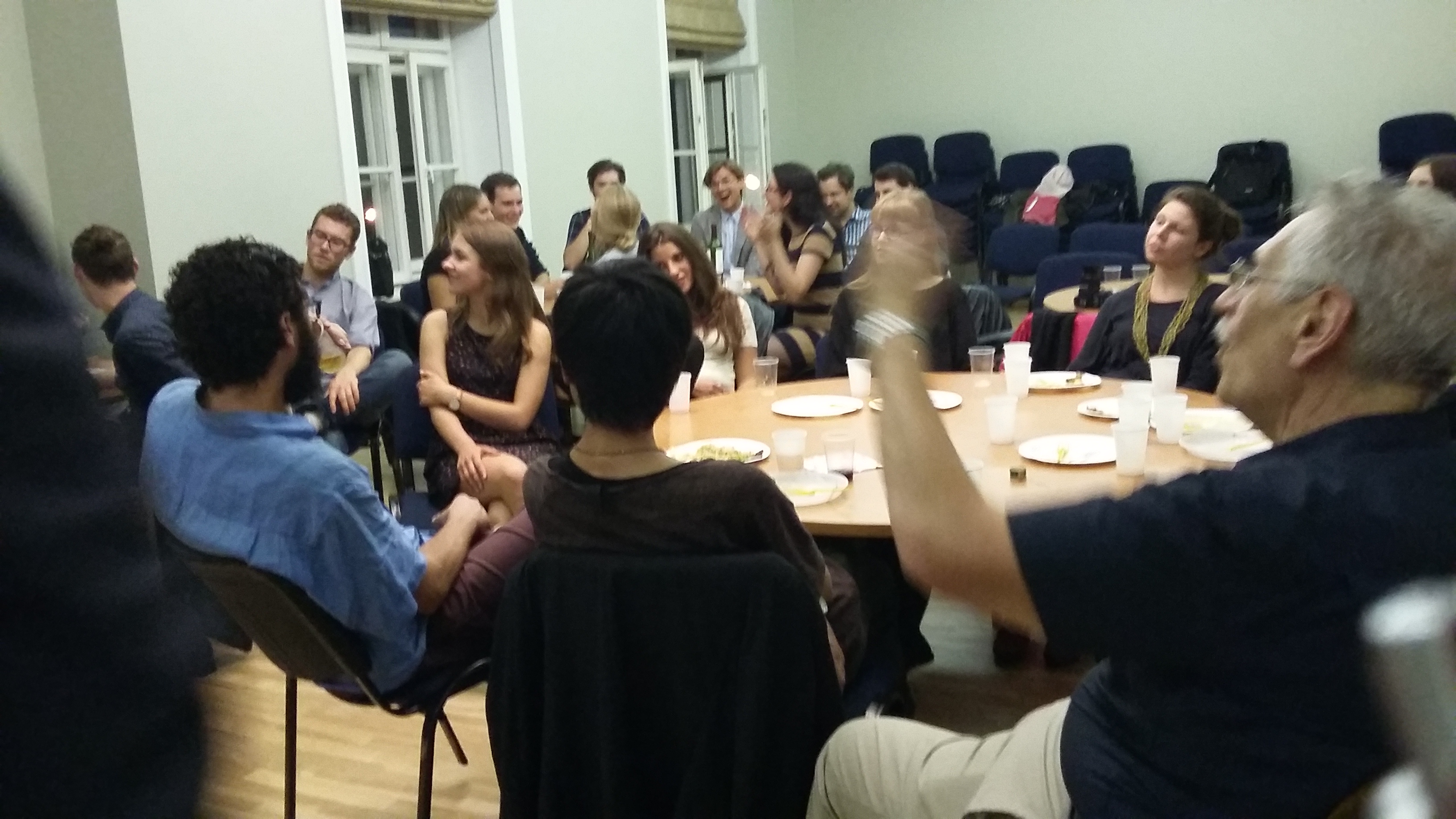
As in earlier years, this year’s crop of Yiddish summer course students were invited to celebrate Sabbath at the Lithuanian Jewish Community. The event scheduled for the Friday of July 31 was joined by the Union of Lithuanian Jewish Students and became a potluck rather than a hosted dinner.
A Lithuanian girl named Aistė served as greeter and hostess, directing people with dishes, tupperware and bottles of wine to the tables in front of the stage in the White Hall on the third floor of the Community building. Aistė said she was taking the summer course even though she had no Jewish heritage at all in her family, but is simply fascinated with the language and culture of Yiddish. There was some confusion as to the scheduled start of the evening, either 8:30 P.M. or 9, but in the end that lent to the informality of the evening.
The traditional Sabbath blessing was given by VYI summer course teacher professor Abraham Lichtenbaum from Argentina with program head professor Dov-Ber Kerler lending assistance, after which the traditional challa bread was broken and passed around.

The Great Synagogue in Vilnius, Lithuania was demolished by Russian troops just 55 years ago, but a local researcher from Duquesne University is already working on preserving its legacy.
Despite the synagogue’s relatively recent destruction, it is nonetheless the subject of an archeological project headed by a worldwide team of experts, including Philip Reeder, dean and professor of the Bayer School of Natural and Environmental Sciences at Duquesne.
Archaeological work undertaken to preserve or reconstruct history does not necessarily have to focus on ancient structures dating back thousands or even hundreds of years, according to Reeder. Rather, he said, archaeology is about “uncovering any history that is potentially lost, even if it 55 years old.”
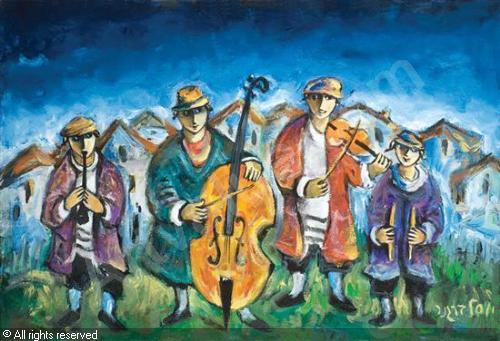
You are invited to attend a concert by klezmer musicians to take place at 5:30 P.M., Thursday, August 6.
Klezmer Klangen is a group performing traditional Jewish klezmer music and songs in Yiddish inspired by the ineffable beauty of Jewish ethnic music. Professional musicians who make a living from their musical performances and teaching activities make up the band, a group united by more than just music: in real life they’re a family:
Dainius the father on clarinet;
Rasa the mother, vocals, contrabass, piano;
Saulė, daughter, violin, vocals;
Ramunė, daughter, violin, vocals;
Dovydas, son, vocals, percussion;
Jovita, aunt, accordion, vocals