

by Jūratė Juškaitė
manoteises.lt
Historians reckon about 17,000 people were deported from Lithuania during the first Soviet occupation. Cattle cars were sent deep into Russia from June 14 to June 18, 1941, and many of the deportees didn’t survive the first winter. Most people in Lithuania know these facts well, but June of 1941, often called the tragedy of the Lithuanian people, isn’t all that Lithuanian.
Research recently performed by cultural historian Violeta Davoliūtė soon to appear in the book “Population Displacement in Lithuania in the Twentieth Century” (Brill, 2016) attempts to bring the experiences of deported Lithuanian Jews back into collective memory regarding those days in June. The researcher says the narrative of deportations formed during the push for Lithuanian independence in the late 80s and early 90s contained ethnocentric elements and was often too “Catholicized.” Although the official politics of memory seem complicated if only for the widespread “Jewish Communist” stereotype, Davoliūtė says these and similar stereotypes have failed to divide this group of deportees, which is a tight-knit community based on shared experience.
In a recent discussion historian Dr. Arvydas Anušauskas was the first to call the 1941 deportations multiethnic. Why are they called this?



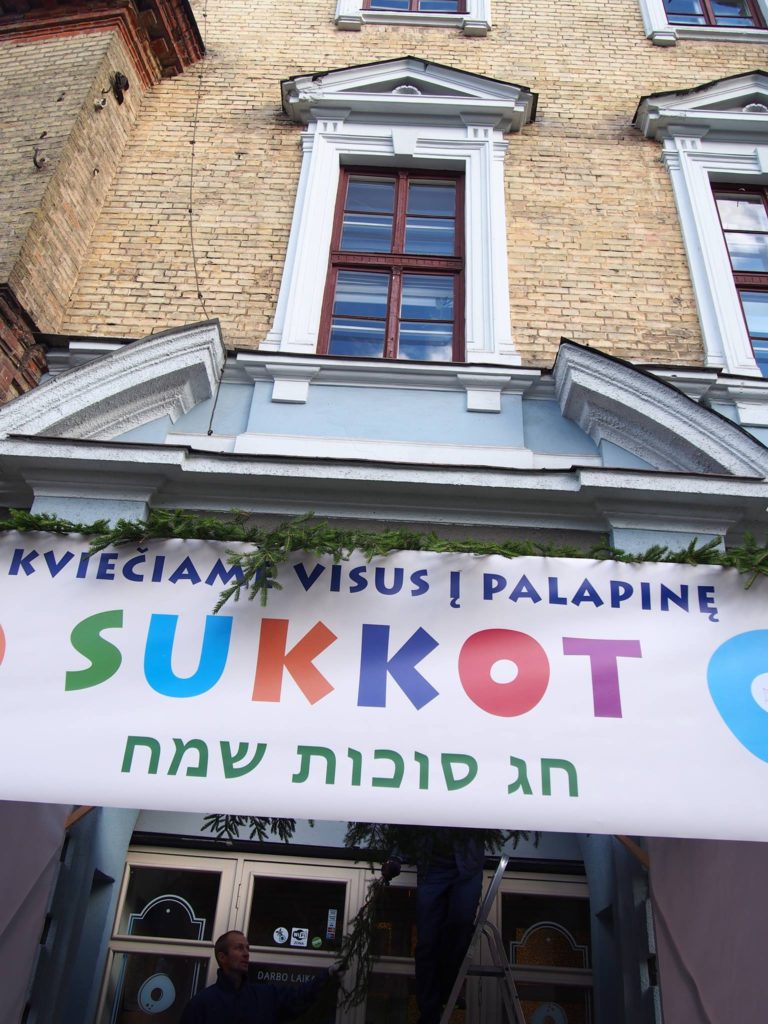 Sukkah at Bagel Shop Café on central Pylimo street in Vilnius