News

Lithuanian Public Figures Oppose UN Vote against US Embassy in Jerusalem

A group of intellectuals, politicians, public figures and journalists from the Lithuanian-American Association have expressed their opposition to Lithuania’s vote at the United Nations General Assembly on December 21 in favor of a non-binding resolution rejecting the decision by US president Donald Trump to move the US embassy to Israel from Tel Aviv to Jerusalem. They said Lithuania’s vote against the US position went against Lithuania’s national interests.

“It doesn’t really matter what the subject of the vote was. What’s important is that the US publicly and officially asked not to vote against them, and Lithuania voted against them. In this case it would have been possible to balance both the interests of the US and the European Union, as Latvia and Poland did. They abstained in the vote. If we want to believe a US soldier is prepared to die for Lithuania’s freedom, then we must take US positions into greater consideration. We all aspire to a unified Lithuanian foreign policy, but in this case this vote seemed unfair to one part of society. For that reason we are expressing a different opinion,” Lithuanian-American Association president professor Raimundas Lopata told Delfi.

Statement

Taking into consideration that on December 21, 2017, Lithuania voted in favor of the United Nations resolution on Jerusalem, that is, against the position of the United States and without regard to the clear request by the US not to vote against them;

That Lithuania’s neighbors Poland and Latvia did take this request into consideration and abstained in the vote;

That US ambassador to the UN Nikki Haley said after the vote that “the US will remember this day in which it was singled out for attack in this assembly;”

Šiauliai Jewish Community Celebrates 30th Birthday

An exhibit of artwork by the students of the Savickas Art School opened at the Povilas Višinskis Public Library in Šiauliai Sunday celebrating the 30th anniversary of the restoration of the Šiauliai Jewish Community. The exhibit is open to the public till January 28.

Accomplished painter and teacher Raimondas Savickas began offering classes at the Lithuanian Jewish Community in the summer of 2015. The classes and the outdoor painting and drawing workshops in natural settings were so successful led to the formal creation of the Savickas Art School at the LJC in the fall of 2015. The outdoor plein air workshops have become a summer tradition and regular classes are held for beginners and more advanced artists. Currently there are about 20 students, Savickas said. The program includes theory and practice, and Savickas said they are learning about more than just technique, with students learning about Gothic, Renaissance, Baroque and Classic styles and Judaica in general. Students paint synagogues and have the opportunity to meet and learn from accomplished Litvak artists.

“We have been noticed,” Savickas said, “and have been invited to show our work in Vilnius, Kaunas, Klaipėda and Šiauliai,” Savickas said.

Japanese PM Abe to Visit Sugihara House in Kaunas


Photo of Japanese diplomat Chiune Sugihara and an old Japanese flag on display at the Sugihara House Museum in Kaunas which housed the Japanese Consulate from 1939 to 1940. Photo: AFP-JIJI

KAUNAS, LITHUANIA–A Japanese diplomat who saved 6,000 European Jews from the Holocaust by issuing visas so they could escape war-torn Lithuania will be hailed by Japan’s prime minister decades after defying Tokyo to help the refugees.

Prime minister Shinzo Abe will pay tribute to Chiune Sugihara on Sunday when he visits the two-story building that housed the consulate where he worked in the Baltic state’s second city Kaunas.

Sugihara is thought to be among around 15 diplomats who issued visas to European Jews during World War II and is often called “Japan’s Schindler”–a reference to German industrialist Oskar Schindler, who is credited with saving 1,200 Jews during the Holocaust.

Launch of Lithuanian Book about Israel

Thursday evening the Lithuanian Jewish Community hosted the launch of Živilė Juonytė’s new book “Izraelis ir jo žmonės. Viena šalis. Daug veidų” [Israel and Its People: One Country, Many Faces]. Juonytė and the LJC’s new liaison for social media Viktorija Pajarskė formed a small panel for a brief Q&A session after the author described her experience of Israel as an exchange student there for one year and in trips made after that. Juonytė said she wanted to portray Israel differently from that of the media, which paint a picture of conflict. Juonytė was the editor of the Bagel Shop Newsletter before her trip to Israel and now works for the Vilna Gaon State Jewish Museum. The softcover 200-page octavo, A5 book (ISBN 978-6098-105-41-4) is full of color photographs on glossy paper and costs 12 euros from the publisher, Aukso pieva.

Lithuanian Limmud, February 9-11, 2018

Dear friends,

Limmud is back and better than ever. Register early this year so you don’t miss your place!

The educational Judaism conference will be held at the Vilnius Grand Resort hotel this year from February 9 to 11. Three days of meaningful meetings with friends and fellow travellers, great speakers from the Baltics, Israel, Russia and other countries, and a special program for young Limmud participants–what could be better?

The cost is 100 euros.

Registration via internet: https://www.lzb.lt/limmud-lietuva-2018/
For further information contact limmudlietuva@lzb.lt

Happy Birthday to Irena Veisaitė

Lithuanian Jewish teacher, scholar and theater expert Irena Veisaitė is not just a legend among students. Elegant, with an inherent sense of communicability, a woman of broad erudition, at home in any number of languages and filled with an inner inspiration, Irena is able to engage in warm conversation in any circle.

Her biography is full of the experience of tragedy, which she survived unbroken. The entire Jewish community remembers her words as a kind of mantra: “While even one anti-Semite still lives, I will be a Jew.” As a child during World War II imprisoned in the Kaunas ghetto, she lost her mother. Stefanija Ladigienė became her adoptive mother, rescuing Irena and raising her in her own home as her own daughter. Irena still calls all rescuers holy people, to whom Lithuania has still not erected a single monument.

Dear Irena, the Lithuanian Jewish Community wishes you a very happy birthday. May you always enjoy strong health, much joy and days of happiness! May your heart never age. Mazl tov! May you live to 120!

Police Called to Choral Synagogue in Disturbance

Monday during morning prayers police officers were called to the Choral Synagogue in Vilnius during a disturbance. Vilnius mayoral advisor Daniel Lupshitz allegedly disturbed the peace of worshipers during prayers and Torah reading through the issuance of insults and profanities. It was reportedly not the first time security had to be increased and police help sought because of this individual’s behavior.

The Lithuanian Jewish Community categorically rejects and condemns intentional provocations aimed at members of the religious congregation.

This sort of behavior is unacceptable and demonstrates gigantic disrespect towards all visitors. The incident will be investigated by law enforcement and appropriate measures will be taken.

We apologize for the disruption of the service to those who were affected by the incident.

Positive Factors in Holocaust Survival

by Izabelė Švaraitė
manoteisės.lt


Ruth Reches, photo: Jonas Kliučius

An understanding of the Holocaust is incomplete without the psychological point of view. So says Ruth Reches, doctoral candidate at Mykolas Romeris University, who is researching the experience of Jewish genocide by survivors. While most researchers stress the negative consequences of this historical trauma, Reches is also researching positive aspects, those which allowed survivors to carry on.

The Holocaust Isn’t One Person’s Trauma

In Lithuania psychologists do investigate historical trauma such as deportation, Soviet oppression and war, but Reches is one of the first in the country to research the experience and survival of the Holocaust. She has interviewed Jews in Israel and Lithuania who managed to survive. The long-term study of trauma has led to a basic assessment of the consequences of the Holocaust, and Reches’s interviews with some of the subjects have had a therapeutic effect on the latter, who have opened up and talked about their childhoods during the war for the first time ever.

Grief Support for Families of Holocaust Survivors

Miami, January 7, 2018–While all grieving is individual, there are grief issues surrounding the loss of Holocaust survivors that are unique to the families of survivors. Until now, however, there has not been a dedicated approach to grief support for this population. Metropolitan Jewish Health System (MJHS) Hospice and Palliative Care based in New York is working to develop a grief support group to support families impacted by Holocaust trauma, and Targum Shlishi is supporting this much-needed initiative.

The Need

“We have found that the children of Holocaust survivors ask for grief support that is specific to their experience as members of the second generation. There are aspects of the grieving process that are uniquely different among family members of Holocaust survivors due to lifelong patterns of communication and behaviors in families of survivors,” explains Toby Weiss, MJHS’s director of cultural diversity and Jewish programming.

MJHS cares for a large number of Holocaust survivors at the end of life, and, by extension, it cares for the family members. As a hospice with a focus on family-centered and holistic care, MJHS also provides pre- and post-bereavement support for thirteen months. Although MJHS has long offered support groups, before now none have been tailored specifically to families of survivors. But as more people began asking for this service, MJHS researched the topic and found a marked lack of grief support groups dedicated to this population.

“This is a very real and unfortunately unmet need until now,” says Aryeh Rubin, director of Targum Shlishi. “We applaud MJHS for recognizing this problem and for taking the initiative to address it. These are the types of projects that, as a foundation, we are honored to support. People need this service and MJHS has the wherewithal not only to provide it to its constituents, but to create a model that it will share with others.”

Condolences

Užuojauta, netekus Pasaulio Teisuolės Lilijanos Binkytės

Righteous gentile Lilijana Binkytė has passed away. Our sincere condolences to her entire family and to daughter Sofija Ligija “Iga” Makutėnienė. The Binka family name will be forever associated with bravery and the triumph human decency.

Advanced Hebrew Classes

Classes begin January 7. Second level (advanced) classes will be held at 5:30 P.M. on Tuesday and 9:30 A.M. on Sunday. Third level (more advanced) classes will be held at 11:15 A.M. on Sunday. The teachers is Ruth Reches, who teaches Hebrew at the Sholem Aleichem Gymnasium. Cost is 2 euros for 2 academic hours. To register, write: ruthreches@gmail.com

Delegation Visits Alanta Wooden Synagogue

A delegation including Israeli ambassador Amir Maimon, US ambassador Anne Hall, Lithuanian Jewish Community chairwoman Faina Kukliansky, deputy Lithuanian foreign minister Darius Skusevičius, Cultural Heritage Department heritage expert Alfredas Jomantas and Molėtai regional administration head Stasys Žvinys visited the Alanta wooden synagogue near Molėtai, Lithuania, on December 3. The synagogue is listed on the Lithuanian registry of cultural treasures and is in dire need of restoration, according to members of the delegation. The Molėtai regional administration webpage carried details of that discussion:

Israeli ambassador to Lithuania Amir Maimon said: “It is important to all of us that history is remembered and all sites important and significant for history are restored. We’re talking today about Lithuanian heritage, not Jewish heritage. This is your history, this is my history.”

US ambassador to Lithuania Anne Hall said: “In recent times the Lithuanian Cultural Heritage Department has done great work in initiating the restoration of synagogues, churches and other important historical buildings. It is really impressive. This is one of the buildings whose restoration we look forward to, and I know many Americans are looking for a way back to Lithuania, Lithuanian and Jewish émigrés.”

Molėtai regional administration head Stasys Žvinys said the administration lacks funding for the synagogue’s restoration, although it is the only synagogue still standing in the entire region. He asked the Israeli ambassador to take the lead in solving the problem. “Although this is our shared responsibility, unfortunately the administration cannot at this time allocate from its budget the resources appropriate for restoring this synagogue. The synagogue is maintained to the extent the community is able to maintain it,” he said.

Faina Kukliansky, chairwoman of the Lithuanian Jewish Community, said: “Even if monies were found for putting the synagogue in order, there has to be content for this synagogue. Logically, if the building is restored but not used, not heated, not used for some purpose, then the money is wasted,” she commented.

The LJC has approached the Cultural Heritage Department about the wooden synagogue and applied for financing for restoration, but cultural heritage conservation specialists say there are many abandoned historical buildings in Lithuania and priority is given sites which have a foreseen use and function.

US Ambassador Anne Hall Continues Tour of Lithuania Visiting Sites of Jewish Life and Death

US ambassador to Lithuania Anne Hall continued her tour of Lithuania in late December with a stop at Šeduva where she met with people from the Šeduva Jewish Memorial Foundation and learned about their Lost Shtetl project, which has invested more than 3 million euros so far in restoring the old Jewish cemetery on Žvejų street there. Project director Sergejus Kanovičius recalled how they cleared the 1.3-hectare territory of weeds and bushes before cataloging and restoring headstones.

Lithuanian sculptor Romualdas Kvintas’s work commemorates the lost Jewish community and mass murder sites. There are three Holocaust mass murder sites around the town.

The cemetery restoration was just the first phase of the project and was completed in 2014. The project received honorable mention in European Union heritage preservation awards. A museum celebrating Lithuanian Jewish life is planned for 2018.

US Ambassador Anne Hall Visits Oldest Wooden Synagogue in Pakruojis

Seniausią Lietuvoje medinę Pakruojo sinagogą aplankė JAV ambasadorė Anne Hall

US ambassador Anne Hall with Lithuanian Jewish Community chairwoman Faina Kukliansky and the chairmen of the Panevžys and Šiauliai Jewish Communities toured the renovated Pakruojis wooden synagogue in late December. The oldest wooden synagogue in Lithuania was restored using period photography. The synagogue features unique paintings on the ceiling and wall paper. The interior and primitive paintings have been the subject of much interest. The restored synagogue has become a draw for Jews, Lithuanians and tourists from different countries.

The small synagogue on the banks of the Kruoja River was built in 1801 and operated as a synagogue until the Holocaust when the Pakruojis Jewish community was murdered. After the war it was used a recreation center and then as a movie theater. At some point it was used a gym. It caught fire several times, doing great damage. The Pakruojis regional administration and the Lithuanian Cultural Heritage Department went to great efforts to save the building.

The Pakruojis regional administration and the Lithuanian Jewish Community signed a 99-year use agreement on January 21, 2011, on the synagogue’s administration and adaptation for cultural use.

The Pakruojis Jewish community formed in the early 18th century. Most of the resident Jews were merchants who contributed to the economic development of the town. The growing Jewish population also influenced the overall development of the town and its public life.

There are no Jews living in Pakruojis now.

Little Jewish Streets


Little Jewish Streets
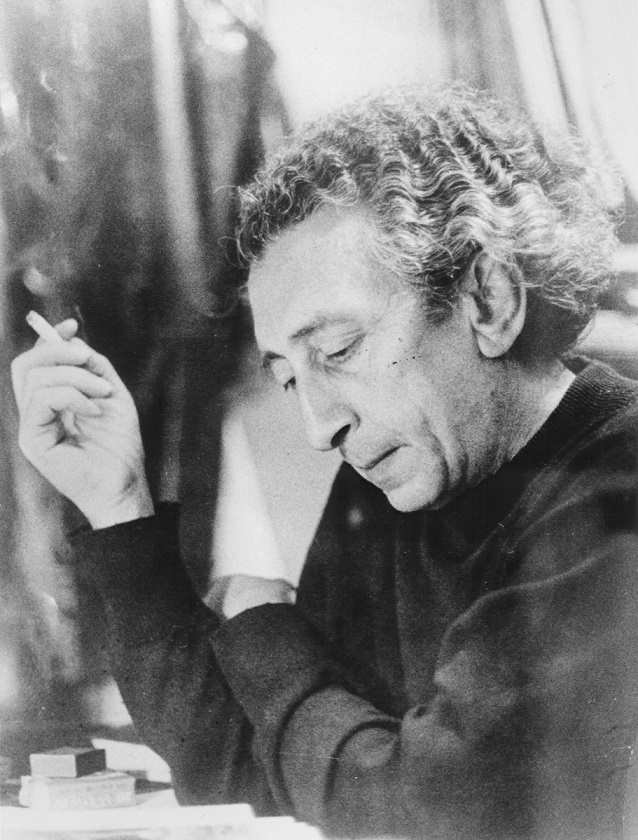
by Leyb Stotsky (Leib Stocki) [לייב סטאָצקי]

(Vilna, 1902-Vilnius, 1967)

[ יידישע געסלעך / Yidishe geslakh]


Read by Pinchos Fridberg

Raya Shapiro and Howard Jarvis translated the poem for those who don’t know Yiddish from a translation into Russian by Polina Pailis and Pinchos Fridberg.

Lithuanian Jewish Community Chairwoman Faina Kukliansky on the Vilnius District Court Decision

Lithuanian Jewish Community chairwoman Faina Kukliansky has issued a statement regarding the Vilnius District Court decisions of November 22 and December 21, 2017:

Two contradictory findings have been made by the same court regarding the Lithuanian Jewish Community.

The legal format of the Lithuanian Jewish Community is that of an association, and the corresponding principles and means of operations are regulated by the Constitution of the Republic of Lithuania and the Lithuanian Law on Associations. On December 21, 2017, the court issued a finding without regard to the imperative of law guaranteeing the right of every association member to vote and each member’s equality of rights, and without regard to the articles of incorporation and regulations of the Association providing for discretion of action by its board of directors.

Likewise, on November 22, 2017, the court based its findings on a resolution of the Government of the Republic of Lithuania on proposed amendments to section 4 of article 8 of the Law on Associations rather than on existing law. Basic principles of law were ignored, and therefore the LJC plans to utilize its right to appeal this decision through the appeals process in the immediate future.

Furthermore, the court finding of December 21 contradicts a finding by the same Vilnius District Court on November 22, which determined the section of LJC regulations regarding differentiated numbers of votes by members at a Conference is in violation of existing and binding Lithuanian law and was therefore found to be null and void.

On April 19, 2017, the board of directors of the LJC initiated an annual report and elections conferences following the letter of the law and correspondingly seeking to insure the equal representation of the rights of all members of the LJC. At that time it was regretfully impossible to find agreement on this issue based on dialogue and negotiation, and it had to go to court.

This in itself is a defeat, not of the organization, but of all of us, all Jews. The internal disagreements made public will not bring greater honor to anyone, will not quell expressions of anti-Semitism, will not help tear down stereotypes and will not contribute to consolidating energies for meaningful in service of the members of the community. It is regretable that this small Jewish community has been divided when it would be possible to consolidate efforts for achieving greater things, including battling anti-Semitism, caring and providing for the needs of community members, promoting Jewish culture and history and preserving Jewish heritage. In November of 2017 the Lithuanian Jewish Community proposed to the Vilnius Jewish Community we disengage from legal battles through a peace treaty or through mediation. We do not withdraw this offer even now, but to date the Vilnius Jewish Community has ignored the proposal to solve disagreements through negotiation.