Holocaust

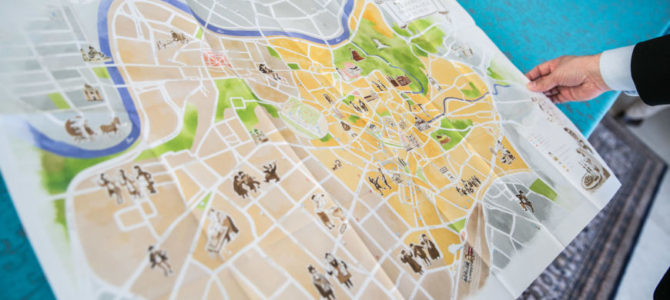
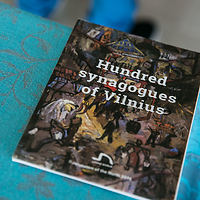
Vilnius Synagogue Map Launched

“When we speak of Jewish cultural heritage, we don’t mean a foreign people who lived apart from everything and one day decided to move. We’re talking about what was in Lithuania, about the Lithuanian nation’s heritage, not just of the Jews,” Israeli ambassador to Lithuania Amir Maimon said Friday at the launch of map of the synagogues of Vilnius held at the ambassadorial residence. One of the goals of the map project was to show just how interconnected Jewish and Lithuanian history is.

Of 135 Synagogues, Only One Remains

The map contains a total of 135 sites of synagogues which operated before the Holocaust. Most of the synagogues were located in the Vilnius Old Town, around the Jewish area of the city centering on the Great Synagogue and spreading along Vokiečių, Gaono and Stiklių streets. There were more than 30 synagogues located in that compact area, but none of them remain. The synagogues were razed and other buildings built in their place, or the sites were used as public spaces.

Full story in Lithuanian here.

Vilna Gaon Museum on New Jewish Museum Proposal

The Vilna Gaon State Jewish Museum has issued a statement via press release about a recent proposal by Lithuanian officials to set up a Holocaust-free new Jewish museum in the Palace of Sports or next to it on land which contains the centuries-old historic Jewish graveyard of Vilnius.

Let’s Create a Strategic Strategy for Jewish Heritage, Not Disneyland

The Vilna Gaon State Jewish Museum was disappointed by information appearing in the press last week about plans by government institutions to establish another Jewish museum in the Lithuanian capital instead of assuring support for existing projects.

The Vilna Gaon State Jewish Museum, whose sections are housed in authentic buildings closely connected with the Jewish history of Vilnius, has recently been undergoing an intense and productive period. We host international events at the highest level, for example, the International Holocaust Remembrance Alliance conference held on March 22 and 23, and the number of visitors is constantly growing. New permanent exhibitions are being created for installation in our historic buildings, including the opening this fall of a new Samuel Bak Museum, showcasing the Litvak painter’s life and works, and in the near future we also intend to open the Museum of Lithuanian Jewish Culture, aka the Litvak Center and a dedicated Lithuanian Holocaust and Vilnius ghetto memorial museum, which has attracted the attention of international museum organizations including ICOM.

The latter museum is to be housed in the historical building on Žemaitijos street (former Strashun street) which was listed as a cultural treasure last month. This is the building which housed the Mefitsei Haskalah library before World War II and the Vilnius ghetto library during the war. which organized cultural events inside the ghetto and served as a secret meeting place for members of the ghetto resistance organization. In 1945 Holocaust survivors established the short-lived Jewish Museum in the building, quickly shut down by the Soviet government. The Vilna Gaon State Jewish Museum intends to reutilize the building for Holocaust education. After the museum has these additional sections, a unique route will be created for the visitor to explore Jewish Vilna.

Recovering Memory: Vilnius University Memory Diploma Graduation Ceremony

Event at 3:00 P.M. on April 3, 2017

Vilnius University will host a Memory Diploma Graduation Ceremony in the small auditorium at Universiteto street no. 3, Vilnius. The ceremony is intended to honor students, staff and members of the university community who were marginalized, thrown out, not allowed to finish their education or academic work and otherwise repressed because of the actions of the totalitarian regimes or local collaborators.

The university was compelled to rethink its relation with the past after receiving a letter from Israeli professor of medicine Moshe Lapidoth in the summer of 2016, requesting a symbolic commemoration of his uncle Khlaune Meishtovski who was a student at the Mathematics and Natural Sciences Faculty of Vilnius University before the war. After eight successful semesters studying chemistry and physics, he was expelled July 1, 1941 because he was a Jew.

In 2016 the university formed a commission to do a historical study and decide selection criteria for people who were unfairly deprived of an education there. A symbolic Memory Diploma was established to remember these people. It is hoped the graduation ceremony will become a university tradition.

After preliminary study, the university determined about 650 Jews and 80 Poles were forced out as well as a professor whose wife was Jewish during the beginning of the Nazi occupation. Several hundred Lithuanians were also deprived of university study and employment.

There will be a live-stream on facebook:

https://www.facebook.com/events/898366480305748/

LJC Chairwoman Faina Kukliansky Speaks at National Equality and Diversity Awards Ceremony

The Lithuanian Jewish Community and other ethnic communities and public organizations appreciate the National Equality and Diversity Awards includes a nomination for “Dialogue between Peoples.”

As a member of an ethnic minority, I feel a more enlightened view in society on topics such as the Holocaust and xenophobia. People are slowly coming around to asking questions, engaging in discussions and thinking about the issues. Four years ago the Lithuanian Jewish Community began the Bagel Shop tolerance campaign which opened the Community’s doors to the public and made Jewish culture and history more accessible and, of course, more attractive. When the Community opened its doors, the public opened their hearts to the Community. I would like to thank everyone who took an interest and participated in this tolerance initiative which I believe marked the beginning of a small “dialogue between peoples” revolution. I present the highly esteemed candidates for the “Dialogue between Peoples” award:

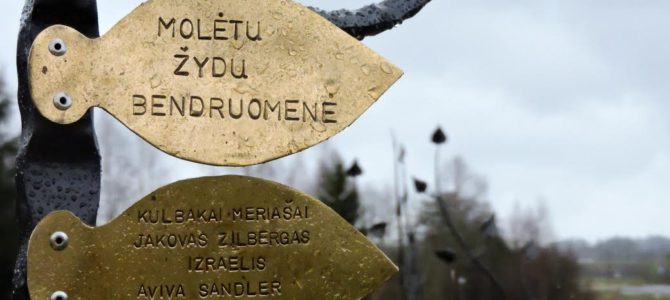
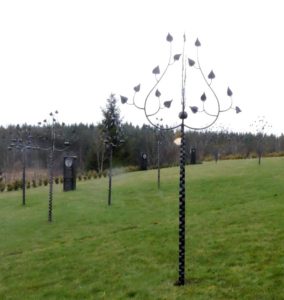
Marius Ivaškevičius, the force behind the March of Memory dedicated to the murdered Jewish community of Molėtai. A record number of people turned out to remember and honor those killed, up to 3,000 participants marched along the last route taken by the victims of genocide perpetrated by Lithuanian hands.

Lithuania’s Shoah Whitewash Project

Efraim Zuroff of the Simon Wiesenthal Centre in Jerusalem has said the Lithuanian authorities were “very culpable.”


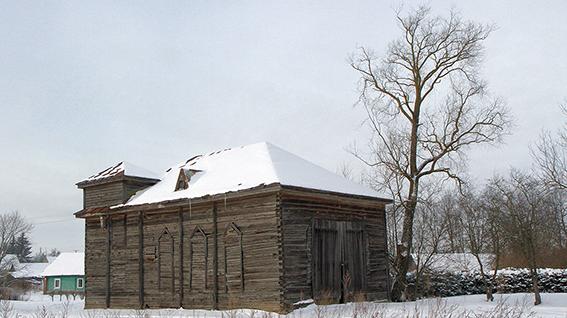
A derelict shul in Vilnius (Getty Images)

Lithuanian parliamentary ombudsman Augustinas Normantas has refused to open an investigation into a complaint that his country’s Genocide and Resistance Center presents a revisionist version of wartime history.

Instead, the ombudsman said that the center itself must address the issue first, and “if its answer is disputed, then in a court of law.”

The complainant, Grant Gochin, has challenged the Genocide Center’s description of Lithuania’s wartime treatment of its Jews, calling it “a distortion of history and an insult to the Jewish citizens of Lithuania.”

Ponar Mass Murder Site Three Times Larger than Memorial Complex

Paneriuose nacių įkurta žudymo bazė buvo tris kartus didesnė nei dabartinis memorialas
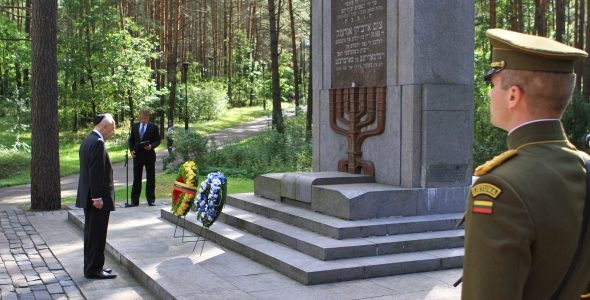
Then-president of Israel Shimon Peres at Ponar in 2013. Photo: AFP/Scanpix

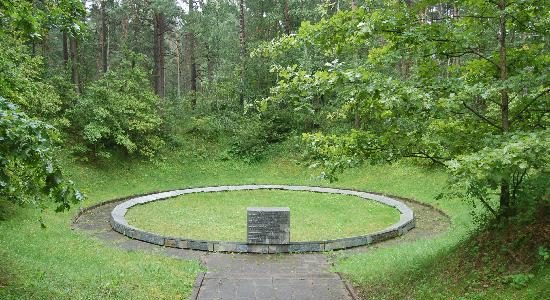
Vilnius, March 27, BNS–The mass murder site established by Nazi Germany in Ponar outside Vilnius during World War II was three times larger than the memorial complex there now, Lithuanian historians have discovered.

“The memorial is only a small part of the Ponar murder operation site. It might have covered 65 hectares, but the memorial complex/museum there occupies 19 hectares,” Lithuanian History Institute researcher Saulius Sarcevičius told BNS Monday. He said researchers working at the site since last year have discovered five new mass murder pits and additional research is being carried out on two of them.

German Historian Raises Painful Question of Lithuanian Collaboration


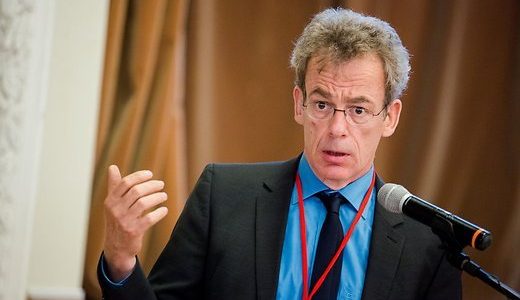
Dr. Christoph Dieckmann. Photo by Karolina Pansevič, © 2017 Delfi.lt

Effective cooperation between Germans and Lithuanians became a fatal trap for Lithuanian Jews. It was patriots–ethnic nationalists–who murdered the Jews in Lithuania, hoping to form a strong nation-state without Jews, Russians and Poles.

So German historian Christoph Dieckmann said in an exclusive interview with Delfi.lt. Dieckmann, who works at the Fritz Bauer Institute in Frankfurt, is the author of the two-volume Deutsche Besatzungspolitik in Litauen 1941-44 published in 2011. As a member of the Lithuanian International Commission to Assess the Crimes of the Nazi and Soviet Occupational Regimes, Dieckmann raises a painful moral question: why didn’t the Lithuanian people, seeing and hearing the Jews being murdered around them, protest? He believes it’s largely due to the position of the Church, which he believes was only concerned with what to do with the property of Jewish converts to Catholicism.

Full story in Lithuanian here.

Ponar a Precisely Built Efficient Murder Factory

Three years ago archaeological digs began and are on-going at the Ponar Memorial Complex, and in 2015 two more killing pits were discovered, previously unknown, and a more-accurate perimeter of the mass murder site was determined. Saulius Sarcevičius, director of the Urban Research Department at the Lithuanian History Institute, says these discoveries are not only new, they’re unique. “Ponar, established as a so-called base, was not just any mass murder site, but was a precisely planned–down to the finest details–and built and continuously improved murder factory. The incomprehensible action of this mechanism has literally gone to ground and the traces discovered in the reconstruction relief map makes us living witnesses to these crimes which the Nazis tried so hard to hide,” the Lithuanian History Institute historian told the audience at the first International Holocaust Remembrance Alliance conference held in Vilnius.

The Lithuanian Special Unit, or Ypatingasis būrys, subordinate to the Nazi security service, murdered around 100,000 residents of Vilnius and Eastern Lithuania based on racial considerations from 1941 to 1944, most of them Jews. The Ponar site on the edge of Vilnius is the largest Holocaust mass murder site in Lithuania and is well known internationally.

Full story in Lithuanian here.

Strange Protest at Auschwitz in the Nude

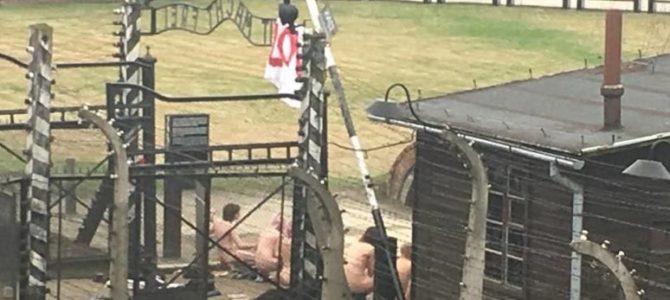
Friday 14 men and women slaughtered a lamb and disrobed at the Auschwitz-Birkenau death camp in Poland, according to the museum there. The group, ranging in age from approximately 20 to 27 and whose identities, citizenship and motivations haven’t been determined, chained themselves to the front gate with the infamous inscription Arbeit Macht Frei, or Works Sets You Free, according to the report. Local media reported the group filmed their actions from a drone. The police reported all participants were detained.

Story in Lithuanian here.

New LJC Project to Make Recommendations on Anti-Semitism at EU Level

Remembrance. Responsibility. The Future. These are the sequential steps leading to real changes in society. The future of democracy and tolerance depends on memory and responsibility assumed, allowing for moving forward. A step towards the future–after surveying, judging and adopting expertise from the best initiatives aimed at fighting discrimination–this is the goal of this new start-up project.

The new project is called Development and Publication of Recommendations for Actions to Fight Anti-Semitism and Romophobia in Lithuania.

The project is supported by the Erinnerung, Verantwortung und Zukunft foundation or EVZ in Germany. This foundation supports systematic and long-term studies of discrimination against and marginalization of Jews and Roma in Europe.

The Lithuanian Jewish Community has brought together a group of leading experts from among Lithuanian human rights organizations, community activists, academics and specialists from abroad. This group is undertaking to come up with effective and valuable recommendations on actions for fighting anti-Semitism and Romophobia in Lithuania.

Frankfurt Jewish Community Looks Forward to Passover

Frankfurto žydų bendruomenė taip pat laukia Pesacho šventės

Employees of the Lithuanian Jewish Community’s Social Programs Department are currently visiting the Frankfurt Jewish Community in Germany. Under the EU’s ERASMUS program, ten center employees will learn from colleagues in Germany, Poland and France this year how best to expand the care and services network for the elderly and how to provide higher-quality services to our clientele.

Our employees studying practices in Germany are being hosted by our partner-organization Zentralwohlfahrtsstelle der Juden in Deutschland or ZWST. This is one of the organizations with the longest experience serving the elderly. Their main clients are Jews and their families who have immigrated from Eastern Europe. The LJC Social Programs Department wants to learn more about the standards of services provided, European perspectives and how to apply them in dealing with the problem of aging in the Community.

Below you will find some pictures and descriptions of the Frankfurt Jewish Community, the second-largest Jewish community in Germany about 60% of whose members hail from Russia, Ukraine and other countries. Members pay a membership fee based on their income tax.

f33

Former Vilnius Ghetto Library Receives Protected Status

bns_logo_v2

Vilnius, March 22, BNS–The building of a former Jewish library in Vilnius has been entered on the registry of cultural treasures and there are plans to house a Vilnius ghetto museum there.

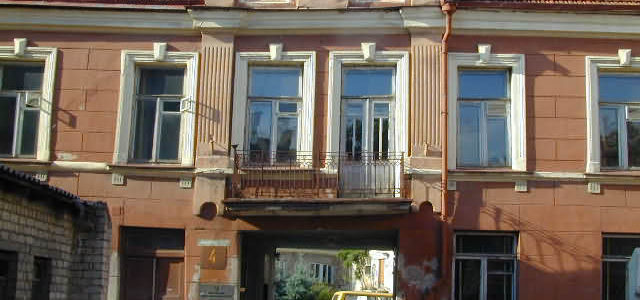
The Cultural Heritage Department announced the building with a commemorative plaque at Žemaitijos street no. 4 is being provided legal protection for its valuable archaeological, architectural and historical characteristics. The first council for assessing real estate cultural heritage at the department made the decision.

Cultural Heritage Department director Diana Varnaitė the surviving building which was part of the Vilnius ghetto and where the Mefitsei Haskalah library operated and later the Vilnius ghetto library is not currently being used and belongs to the Vilna Gaon State Jewish Museum.

“At [the museum’s] initiative there are plants to set up a museum commemorating the Holocaust in Lithuania and the Vilnius ghetto which will exhibit the vast Jewish cultural heritage and the history of the Holocaust in Lithuania. The names of Holocaust victims are read out there annually to mark the day of Jewish genocide,” director Diana Varnaitė said.

Žemaitijos 4 250px-Vilna1

Insults to Jews under the Sponsorship of Ramūnas Karbauskis

Lzinios.lt

The newspaper Ūkininko patarėjas [Farmer’s Helper], 30% of whose stock is owned by Union of Peasants and Greens [ruling] party leader Ramūnas Karbauskis, is printing articles raising doubt and uncertainty concerning the conferring of a state award to former ghetto inmate and Soviet partisan Fania Brancovskaja, articles which are insulting to the Lithuanian Jewish community. Historian and MP Arvydas Anušauskas says he thinks these sorts of publications bring to mind Nazi propaganda and contribute to the sowing of ethnic discord.

“The Lithuanian Jewish Community strives to base its words on facts, documents checked a hundred times before making a statement. These sort of accusations and this kind of rhetoric being published by Ūkininko patarėjas is, in my understanding, at the very least unethical,” Lithuanian Jewish Community chairwoman Faina Kukliansky told [the newspaper] Lietuvos žinios.

She was talking about publications in Ūkininko patarėjas which raise doubts concerning the actions during World War II of Fania Brancovskaja. Brancovskaja was conferred the Order of the Cross of the Knight “For Merit to Lithuania” on February 16 this year. Some publications have claimed Brancovskaja, who fled the Vilnius ghetto and joined the Soviet partisans, is complicit in the mass murder of residents of the village of Kaniūkai [Lithuania] carried out in January of 1944, although research by experts from the Center for the Study of the Genocide and Resistance of Residents of Lithuania found she had not taken part in that operation.

Going on Speculation

The March 14 issue of Ūkininko patarėjas contained an article stating: “On February 21 Ūkininko patarėjas was the first media organ in Lithuania to report to the public the President’s Office on the occasion of February 16 [Lithuanian Independence Day], by awarding the ‘knightess’s’ cross to a Soviet agent of diversion, to member of the Jewish gang which exterminated the village of Kaniūkai in Eastern Lithuania Fania Brancovskaja, in truth awarded and rehabilitated all the perpetrators of the genocide of the Lithuanian nation.”

Full story in Lithuanian here.

Holocaust Researchers Meeting in Vilnius

Vilniuje susitinka Holokausto tyrėjai

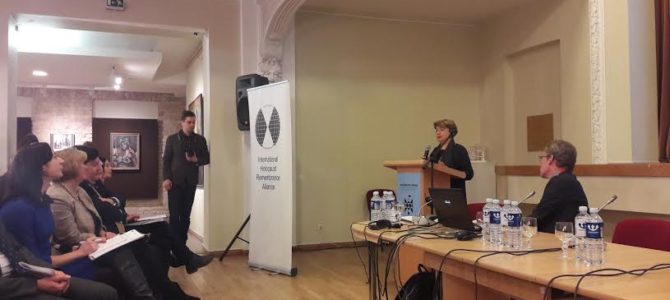
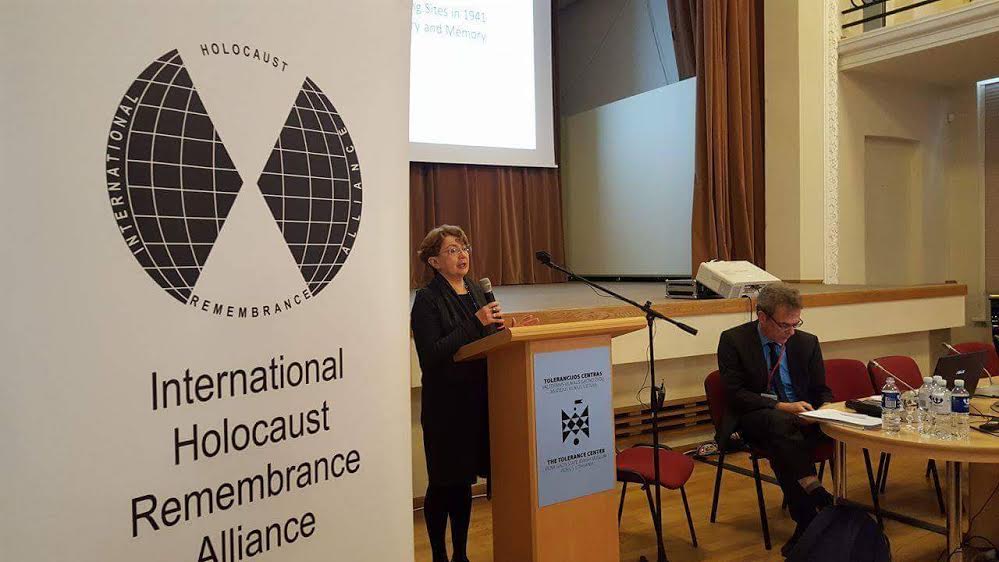
Vilnius, March 22, BNS–The two-day conference “The Beginning of Mass Murder: Identification and Remembrance of Mass Murder Sites from Summer and Fall of 1941” began at the Vilna Gaon State Jewish Museum in Vilnius Wednesday. Lithuanian Jewish Community chairwoman Faina Kukliansky was a speaker.

IHRA3

The International Holocaust Remembrance Alliance with 31 member-states and a number of historians, educators, museum specialists and other Holocaust researchers from around the world organized the conference. Lithuania acceded to IHRA membership in 2003 but this is the first time an international IHRA conference has been held in Vilnius, a museum representative said.

The two-day conference is being hosted by the Tolerance Center of the museum and is dedicated to identifying, marking and commemorating mass murder sites in the Baltic states, Romania, Ukraine and Belarus.

Remembering the Children’s Aktion in Kaunas

The Kaunas Jewish Community invites you to come and remember the victims of the Children’s Aktion in the Kaunas ghetto during the Holocaust. Approximately 2,000 children were murdered during the mass murder operation. This will be the 73rd anniversary of that tragic day. The event will be held at 4:00 P.M. on March 24 at E. Ožeškienės street no. 13 in Kaunas.

South African Visitor at Panevėžys Jewish Community

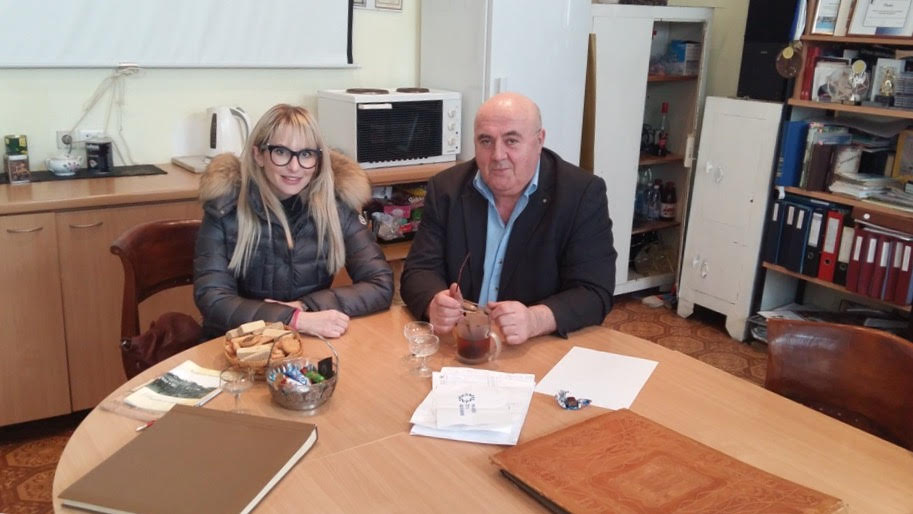
Psychiatrist Danella Eliasov from the Republic of South Africa visited the Panevėžys Jewish Community March 16. Her grandparents, great-parents and relatives lived in Kupiškis where there was a large Jewish population before the Holocaust. Danella talked about her family and wanted to learn more about the fate of the Jews in Lithuania during the Holocaust. After a fruitful discussion she thanked Panevėžys Jewish Community chairman Gennady Kofman for the warm reception.

Department of Ethnic Minorities to Launch DVD on Polish, Jewish Minorities in Lithuania

The Department of Ethnic Minorities to the Government of the Republic of Lithuania invites the public to attend the launch of a multimedia DVD on Polish and Jewish heritage in Lithuania.

The event is scheduled for 2:00 P.M. March 16, 2017, at the Department of Ethnic Minorities building at Raugyklos no. 25 in Vilnius.

For more information and the register, please email informacija@tmde.lt

Lithuanian Jewish Community Chairwoman Faina Kukliansky’s Greetings on March 11, Day of Restoration of Lithuanian Independence.

I wish all members of the community a happy holiday!

For Litvaks Lithuania is the land of our ancestors, and March 11, the day 27 years ago when Lithuanian independence was restored, is an important holiday for us, marking as well the beginning of the rebirth of the surviving Jewish community. March 11 is for each of us an exceptional and dear day, and we cannot allow ourselves to forget how important the state where we live and where our children grow is to us. In 1918 as the first Republic of Lithuania was being born her Jewish citizens volunteered to fight for Lithuanian freedom, and went on to foster the economic and social welfare of this state.

In the run-up to March 11, significant activity by the Lithuanian Jewish initiative group took place in 1988 dedicated to the rebirth of Jewish culture. After the Lithuanian independence movement Sąjūdis was established, Lithuanian Jews were faced with the dilemma of how Jewish relations with the Lithuanian national movement would develop as the wounds of the Holocaust remained painful, recalling the tragedy which took place in this country.

Along side the rebirth of Lithuanian independence, first came the rebirth of Jewish cultural activity, and the Jewish Cultural Association was the first to hold a congress, beginning the conversation about the destruction of the Jewish community during the Holocaust in 1989, for the first time since the decline of the Soviet era in Lithuania. I have to say Jewish-Lithuanian relations in the historical context, their evaluation and research began exactly with the rebirth of independence when there had to be an assessment of the Holocaust and the active role played by Lithuanians in it had to be admitted. There were also efforts made to help Jews restore their Jewish identity.

The Jewish communities in the shtetls were exterminated in the Holocaust, the shtetls are gone and Yiddish is no longer spoken in Lithuania. Currently the Jewish communities in Vilnius, Kaunas, Klaipėda, Šiauliai, Panevėžys and Švenčionys have been re-formed. We still dream of a revival of the Yiddish language.

In the recent past we have sensed the emergence of a new generation in Lithuanian society who are interested in Jewish history and the life of the Jews in Lithuania, and slowly but surely stereotypical thinking is fading away.

When we speak of the values of March 11, we underline human rights and freedoms and their necessary consolidation and growth. We hope for the generation who understand their importance and who cherish and protect these rights and freedoms, and who connect love for their native land with self-respect and respect for all of its citizens.


Separate Program for Jewish Heritage Proposed


Diana Varnaitė. Photo courtesy Lithuanian Parliament

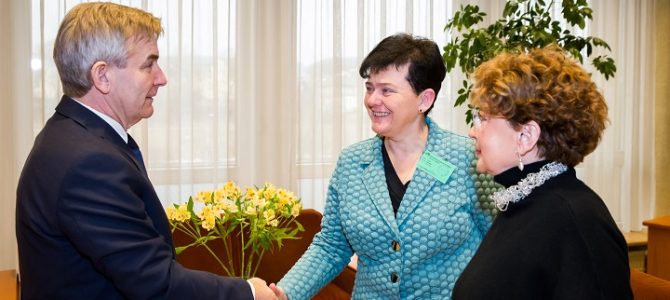
BNS–Director of Lithuania’s Cultural Heritage Department Diana Varnaitė is proposing separate financing for preservation of Jewish heritage. Lithuanian parliamentary speaker Viktoras Pranckietis approves the idea.

“We would think it would be appropriate to increase financing, and I told the speaker of parliament about our hope that it would be worthwhile for all of us together, with the leadership of the Ministry of Culture, to discuss … a separate line for Jewish heritage, not just for synagogues, because we have some [other] unique monuments, for example, the former religious school, the yeshiva building in Telšiai. These are sites in which we should take pride, as our own heritage, and which would make our [rural] regions more attractive and draws for tourists,” Varnaitė told BNS Wednesday after a meeting with the parliamentary chairman.

Parliamentary speaker press representative Dalia Vencevičienė said speaker Pranckietis expressed approval for the idea. “We have a policy direction on heritage and its preservation. The chairman would welcome the idea if the Ministry of Culture adopted a decision on a separate line in the budget,” she told BNS.