History of the Jews in Lithuania

Genovaitė Gustaitė Has Died

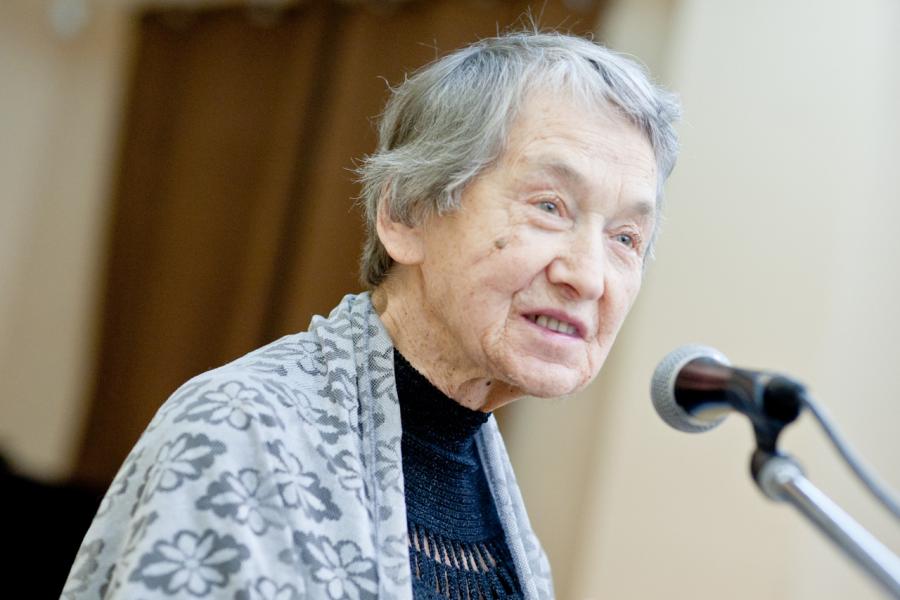
Following sudden illness noted historian, long-time editor at the Mokslas publishing house and biographer of historical Lithuanian figures Genovaitė Gustaitė passed away on Tuesday, August 15.

Over the last several decades Genovaitė Gustaitė has dedicated her work to the life and deeds of beatified Roman Catholic priest Jurgis Matulaitis-Matulevičius who served as the bishop of Vilnius from late 1918 till his resignation in 1925 and who rescued Jews from the Holocaust.

Genovaitė Gustaitė helped prepare commemorations of Matulaitis and his work at the Lithuanian Jewish Community and the Community held the highest opinion of her work. We are deeply saddened by her passing and extend out condolences to her many friends and family members. She was a sincere and profound person and an outstandingly good and wise woman.

Rest in peace, Genovaitė.

Radio Interview on Palace of Sports Reconstruction Project

On Monday the daily news talk and interview program Sixty Minutes hosted by radio journalist Deividas Jursevičius on Lithuanian Public Radio discussed a letter sent by 12 members of the US House of Representatives to Lithuania president Dalia Grybauskaitė. The following is an unofficial translation of the program.

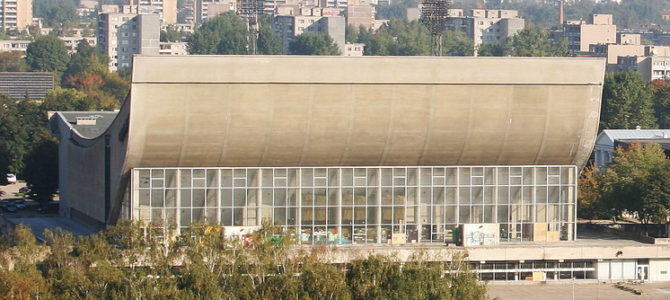
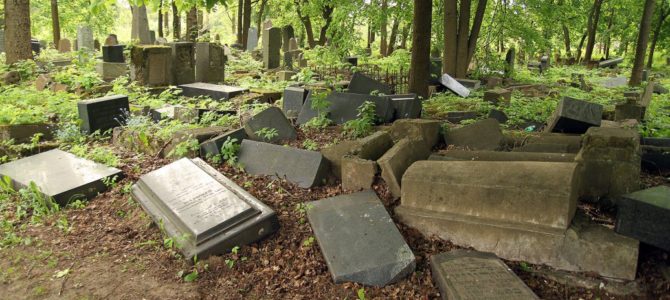
US congressmen call for a halt to the project for the reconstruction of the Palace of Sports in Vilnius and not to disturb the graves of the old Jewish Šnipiškės cemetery. Lithuanian leaders are rejecting these complaints. Prime minister advisor Deividas Matulionis said the letter from the congressmen was a surprise to him because there was already agreement with Jewish organizations on the territory of the Šnipiškės cemetery back in 2009.

“We are taking this letter seriously, but I think some sort of misunderstanding has happened. Actually that problem no longer exists. Back in 2010 we, together with the Lithuanian Jewish Community and the Committee for the Preservation of Jewish Cemeteries in Europe, reached an agreement, the essence of which was that we identified the territory where there is no disagreement that there were Jewish graves, the parking lot was removed and a monument was erected, and it was resolved to plant grass there and that no work can take place there. But around, and the Palace of Sports itself falls into it, is the so-called gray zone, or disputed zone, where we agreed there will be, from beginning to end if such work takes place or if we reconstruct the Palace of Sports, there will be consultation and discussion with the same Committee for the Preservation of Jewish Cemeteries in Europe and the Lithuanian Jewish Community. So we have adhered to that position and will continue to adhere to it. So I’m not sure why this problem has come up now and why it is being treated so emotionally, but really we haven’t done any such thing. We really need to talk with the Jewish Community and with Jewish organizations to make it clearer what we actually want and what the Jewish organizations want, and to find a solution. We made an agreement then we would coordinate with the Committee for the Preservation of Jewish Cemeteries in Europe and we truly haven’t rejected that idea. If it turns out it’s unacceptable and graves are discovered in the Palace of Sports site, then we could say yes, we need to go over everything again and come up with different solutions. We truly want to find a way forward in the spirit of good will, and not at any cost, either, let’s say, if there is a problem we will not ignore that problem. We really will not do anything to violate the essential, fundamental Jewish religious interests and our historical legacy,” advisor to the prime minister Deividas Matulionis said.

Lithuanian Leaders Dismiss US Congressmen’s Fears about Snipiskes Cemetery

Lithuanian Leaders Dismiss US Congressmen’s Fears about Snipiskes Cemetery

VILNIUS, Aug 14, BNS – Lithuania’s leaders say that Snipiskiu Jewish cemetery would not be affected by the reconstruction of the derelict Sports and Concert Palace in central Vilnius, dismissing the fears voiced by a group of US Congressmen as ungrounded.

The country’s leaders say that the reconstruction project would be further coordinated with the Jewish community of Lithuania and the London-based Committee for the Preservation of Jewish Cemeteries in Europe, which both have given their approval to the reconstruction.

“All Jewish cemeteries should be preserved properly, therefore, the decisions on their preservation are made in cooperation with the Jewish Community of Lithuania and the Committee for the Preservation of Jewish Cemeteries in Europe,” Lithuania’s President Dalia Grybauskaite said in a comment provided to BNS by her press service.

On the Radvilėnai Cemetery in Kaunas

Yesterday was a strange day. As if by prior agreement, Jewish residents of Kaunas and Vilnius called to ask the opinion of the largest Jewish religious community in Lithuania, the Vilnius religious community about “a botanical garden being built” in the Radvilėnai Cemetery in Kaunas.

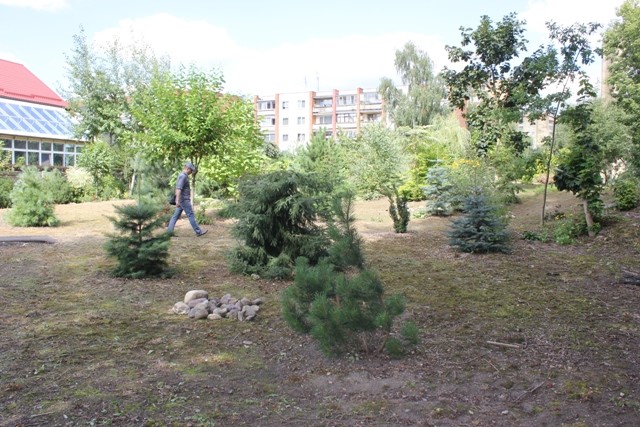
I was caught by surprise and took a look on the all-powerful facebook. Actually, saplings and flowers are being planted in the cemetery, a sprinkler system has been set up and there is even a garbage dumpster on site.

For Jews cemeteries are a place of extraordinary respect and commemoration. This Jewish ethical position has been followed for centuries. This reminded me of the spiritual Holocaust which came in Soviet times, when Jewish, Christian and Orthodox cemeteries were “beautified” and “put to cultural use” as parks with fountains and benches for relaxing and reading Pravda.

Will Kaunas, which today is known for its innovative solutions and beautiful reconstruction, really let this happen? Will the city famous for its cultural traditions remain apathetic in the face of this malicious vandalism? It’s time to answer that question. Since my opinion was asked, I give it here.

The Kaunas city landscape is not a matter for the Jewish religious communities. We the living say: we are responsible for the memory of our dead and martyred brothers and sisters, for their rest and respect. Even a crooked, toppled, broken matseva (headstone) is extremely dear to us.

If someone is bothered by the view onto “unaesthetic Jewish graves” from the window of their home, let them install frosted windows. Or they should demonstrate civic pride, invite friends, invite the Jewish community, grab some brooms and rakes and clean up the cemetery. The unborn children and grandchildren of the victims of the Ninth Fort and the Lietūkis Garage in Kaunas have no opportunity to tend the graves of their relatives, no way to insure their eternal rest. Only we can do that now. Jews and Lithuanians. Citizens of the Republic of Lithuania.

Shmuel (Simas) Levinas, chairman
Vilnius Jewish Religious Community

Golda Vainberg-Tatz Concert

The accomplished pianist Gold Vainber-Tatz is returning to Vilnius and will perform at 6:00 P.M. on August 10 at the Lithuanian Jewish Community. Her performance is to include works by Bach (Busoni editions), Beethoven, Ravel, Debussy, Chopin and others.

LJC and Israeli Embassy Thank Makabi Athletes

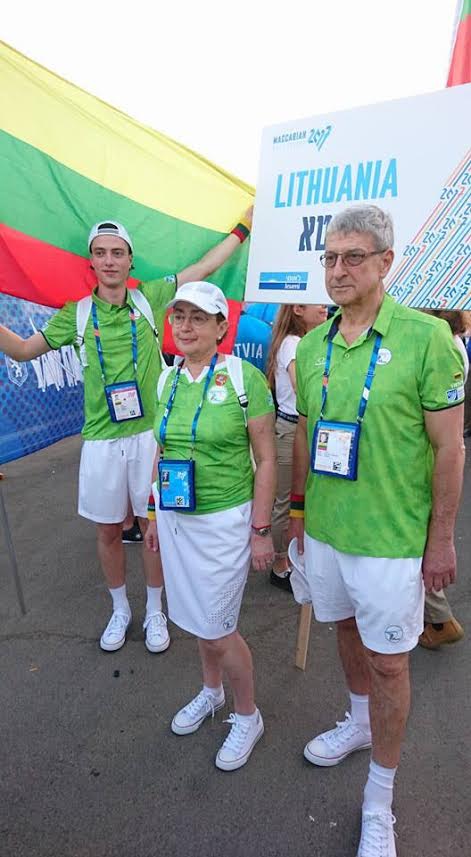
On August 4 the Lithuanian Jewish Community and the Israeli embassy to Lithuania held a special thanksgiving event to thank Makabi athletes who competed so well at the Maccabiah Games in Israel from July 4 to 8. The Lithuanian Jewish delegation won six medals at the so-called Jewish Olympics this summer.

Maceva Summer Camp to Study Kaunas Jewish Cemetery

This year Maceva has been invited to join the international project Oppression and Opposition: Opportunities of Civic movements in Europe’s Past and Present. Lithuania is one country along with three others–Greece, Italy, Hungry–who are hosting a special kind of summer camp this year. From the 6th to the 20th of August, 25 international volunteers from Germany, Austria, Ukraine and Lithuania and including Maceva representatives will be participating in various activities in Kaunas and Vilnius. The main activities of this summer camp will be complete documentation of the Žaliakalnis Jewish cemetery–who exactly was buried where and when–and the elaboration of all findings.

Maceva’s main partner in the summer camp project is Germany’s Action Reconciliation Service for Peace and this will be the third such summer camp organized by Maceva (www.litvak-cemetery.info) in Lithuania. Results from all four countries participating this year will be presented in Germany this November.

After successful participation last year, students from Vytautas Magnus University will be joining the summer camp again to help preserve the historical cemetery. We have and are receiving significant support from the Kaunas municipality who are paying close attention to the cemetery and doing their best to bring it back to a respectable state.

The Jewish cemetery in the Žaliakalnis district of Kaunas was established in 1861 and closed in 1952. It is listed on the registry of cultural treasures and is protected by the Lithuanian state as a cultural heritage site. Many famous and notable figures are buried there, including politicians, scholars, religious leaders and cultural figures such as the writer Jacques Lipchitz and the vocalist Daniel Dolski. The graves of more historical personalities will likely come to light after successful inventory and documentation this summer.

Besides the work in the cemetery, volunteers will have an opportunity to get to know more about Lithuanian Jewish history and culture. We look forward to meeting people from the Judaica Research Center, the International Center for Litvak Photography and Bella Shirin.

Maceva is an associated member of the Lithuanian Jewish Community.

International Communications Specialist Appointed Executive Director

At a meeting of the Lithuanian Jewish Community executive board August 3, chairwoman Faina Kukliansky appointed Renaldas Vaisbrodas exectuvie director. The board approved the appointment.

Vaisbrodas, 36, earned a master’s degree in international communications at Vilnius University. He served as foreign policy advisor to Lithuanian president Dalia Grybauskaitė and was senior secretary for the Liberal Union party. He began his political career as foreign policy advisor to Guy Verhofstadt, chairman of the European Alliance of Liberals and Democrats faction in the European Parliament.

Vaisbrodas comes from a mixed Jewish and Lithuanian background.

Call for Information

The Lithuanian Jewish Community received a letter from Kaunas with a request for information about former Kaunas resident Piotr Šoichet Haimovič (Pyotr Shokhet Haimovich, Chaimowicz or possibly Ben-Haim now). The request came from people now resident in the man’s former apartment.

“We acquired space at Gedimino street no. 48-5 in Kaunas. Until 1989 Piotr Šoichet Haimovič lived in this apartment, according to the former owner, who bought the apartment when Haimovič and his family left to settle in Israel. His profession was doctor and military officer.

“The building and the apartment are heritage sites, meaning the façade and interior details are protected. We are hoping Piotr Šoichet Haimovič or members of his family have photographs of the building or the apartment interior and can tell us more in order to help us recreate the original interior and provide historicity to the building. We want the building to be entered on the list of European cultural heritage treasures, and the stories of all the residents of the building are very important.”

The authors of the letter were Karolis Banys and Petras Gaidamavičius and they can be reached by telephone at +370 640 23 677 and by email at banys.karolis@gmail.com and gaidamavicius.petras@gmail.com

Keen Interest Surrounds Archaeological Work at Kaunas Mass Murder Sites

The archaeological research being conducted by an international team led by Hartford professor Richard Freund in Kaunas is getting wide coverage in the Lithuanian press. The team studying the Holocaust sites at the Fourth, Seventh and Ninth Forts and the Žaliakalnis Jewish cemetery in Kaunas has been visited by US embassy staff and is working closing with different departments in the Kaunas city government and the Kaunas Jewish Community. They plan to announce their finds in fall and to present a comprehensive study to Klaipėda University archaeologist Dr. Gintautas Zabiela, who is accompanying the group and whose certification will be required for the discoveries to be recognized officially in Lithuania. Dr. Zabiela promised to present his report to the Kaunas Jewish Community as well.

Kaunas Jewish Community chairman Gercas Žakas showed the team an area in the Žaliakalnis Jewish cemetery where an Israeli archaeologist five years ago determined there was a mass grave. This could be the place where the victims of the Lietūkis garage massacre were buried. Residents in the buildings around the cemetery gave testimony they witnessed trucks arriving with corpses who were buried there in late June of 1941.

Many of the team members have Jewish and Litvak roots. Professor Freund is in communication with Avraham Gol, who has roots in Kaunas. Gol’s father Shloma Gol was one of the eleven prisoners who successfully escaped Ponar by digging an escape tunnel and testified at Nuremberg.

More about Gol’s testimony here.

International Roma Holocaust Day Marked in Lithuania

Paminėta Tarptautinė romų Holokausto aukų atminimo diena

Solemn ceremonies marked International Roma Holocaust Day commemorations August 2 in Ponar and at the Old Town Hall in Vilnius. A wreath-laying ceremony was conducted for the victims at the Ponar mass murder site and a new exhibition called Traditions, Customs and History of the Romani of Poland opened at the Old Town Hall.

  • Rom1
  • Rom2
  • Rom4

Image of Roma and Jews: Brighter or Darker?

Romų ir žydų paveikslas: šviesiau ar tamsiau?
by Ieva Elenbergienė

Few Lithuanian people personally know real Jews or Roma, so their image is painted for us by the most accessible sources of information. This is an interview with Monika Frėjute-Rakauskiene who has researched how ethnic communities are portrayed in the Lithuanian media and on the internet. The interview is about the power of the media to paint their subject in a brighter or darker light.

Full story in Lithuanian here.

New Jacques Lipchitz Museum to Open in Druskininkai


photo by Romas Sadauskas-Kvietkevičius, courtesy DELFI

Vilna Gaon State Jewish Museum museum specialist Aušra Rožankevičiūtė speaking Tuesday at the exhibition by SPA Vilnius in Druskininkai, Lithuania, called “From Druskininkai to Jerusalem: Moments in the Life and Work of Jacques Lipchitz” announced a new Lipchitz memorial museum could open in the Lithuanian spa town within two years.

Rožankevičiūtė, who hopes to exhibit Lipchitz’s work in Druskininkai, noted the Vilna Gaon Museum had managed to accomplish an ambitious plan last year on the 125th anniversary of Lipchitz’s birth to bring his work to Vilnius.

“Of course the works worth millions can’t be brought to Lipchitz’s hometown Druskininkai because there is no where to show them. Our goal now is to, within two years, although the legal issues involved are moving ahead slowly, open a Jacques Lipchitz memorial museum on Šv. Jokūbo street in Druskininkai,” she said.

Full story in Lithuanian here.

American Team Examining Mass Murder Sites in Kaunas

A group of researchers led by Hartford professor Richard Freund are scanning the ground in Kaunas to determine the exact extent of Jewish mass murder sites recorded in testimonies and historical accounts. They are checking the ground around the Fourth, Seventh and Ninth Forts in Kaunas and the Jewish grave site on the Radvilėnai highway. Freund’s team includes specialists from a number of fields.

Litvaks in Love

Professor David Roskies delivered an interesting lecture to a medium-sized audience at the new Judaica Center at the Lithuanian National Library Thursday evening.

“Using the tools of a cultural historian, drawing upon my Litvak identity and turning feminism into a source of knowledge, I think I have successfully cracked the DNA of Jewish collective memory. I know what it is, and I know how it works. Jewish collective memory is organized around saints, sanctuaries and sacred times. In this way, each generation of Jews shape a model life, the model community and the model time. You don’t have to be a Litvak to unlock the DNA of Jewish collective memory, but it certainly helps, because Lite [Lithuania] is where this triple axis, this three-pronged model, emerged in bold relief. The model was so stable that it remained in place even when the world began to change. In Lite things really began to change with the rise of religious revival movement called Hassidism at the end of the 18th century. So long as the hassidim were limited to Podolia and Volhynia which, after all, are located south of the gefilte fish line, and where people spoke a different Yiddish, there wasn’t much to worry about. So there was talk about a new cultural hero named Yisroel Ba’al Shem-Tov, better known as Besht. He was a faith healer, a tzadik or saintly person, a righteous person, who engaged in all manner of non-Litvak behavior. He was an effective preacher and teacher, but he came into conflict with renowned Torah scholars, who were the elite of traditional society. Worse yet, he popularized the study of Kabbalah–Jewish mysticism–, he claimed to have paid periodic visits to Heaven and he encouraged mystical prayer performed with bizarre and ecstatic song and dance at all hours. Then, before you knew it, hassidic prayer houses were beginning to appear in Lite, too. The time had come for the rabbinic establishment to take action,” Rosskies said in a lecture which ranged seamlessly from the drier facts of cultural history to his own personal experiences and thoughts, employing moving Yiddish lullabies to make certain points.

US Embassy Staff Visit Kaunas Jewish Community

The US embassy to Lithuania paid a visit to the Kaunas Jewish Community. Ted Janis, adviser on policy and economics (on left in photo), and US embassy representative Renata Dromantaitė met KJC chairman Gercas Žakas and asked about daily life in the Community, its activities, relations with the municipality, Jewish cemeteries, projects planned and opportunities for working together more closely. The time allotted for the meeting passed very quickly and there wasn’t time to express many thoughts and address many issues, which will be part of the agenda for a future planned meeting. Embassy staff said they would like to and plan to participate in commemorations of the mass murder of the Jews of Petrašiūnai and the mass murder of intellectuals in the Kaunas ghetto at the Fourth Fort in Kaunas at the end of August.

Darius Udrys Uncovered How Unprepared We Are to Discuss Morality without Outrage


Darius Udrys. Photo by Kiril Čachovskij, DELFI, © 2017

by Andrei Khrapavitski

I have written a short facebook comment in Lithuanian regarding the latest meltdown within the local liberal circles, but this story is worth expanding on. The gist of the matter is that Remigijus Šimašius, the liberal mayor of Vilnius, fired Darius Udrys, the head of Go Vilnius development agency and my former colleague at the European Humanities University.

A formal reason for dismissal was lack of results, but this reason looks very improbable, given the short time both Darius and the agency had worked and could achieve those results. A more probable one is the scandal Darius provoked after posting a facebook comment in which he asked whether it was moral for forest brothers (Lithuanian partisans who waged guerrilla war against Soviet rule during the Soviet occupation during and after World War II) to kill organizers of kolkhozes, collective farms put in place by the Soviets on the occupied lands.

Darius raised a lot of eyebrows by simply asking on what moral grounds it was OK to kill the civilians who were organizing those kolkhozes. A group of conservatives immediately demanded his dismissal and put a lot of pressure on the mayor of the Lithuanian capital to do so. It seems quite likely that the liberal mayor gave in to the demands of the conservative members within the coalition and let Darius go. Apparently you can be fired in 21st-century Lithuania for asking a question about the morality of killing. The liberal mayor found neither the courage to stand for freedom of speech nor to acknowledge the real reason for the dismissal. As mentioned above, Remigijus tried to spin it by claiming that Darius lost his job for not demonstrating results.

Full text in English available here.

Summer Dig Ends at the Groyse Shul in Vilnius

by Geoff Vasil

This summer’s archaeological dig at the Great Synagogue site in Vilnius wrapped up in the early evening of Friday, July 21, with volunteers working right up to the last minute.

This summer’s dig is the second by an international team led by the Israeli Antiquities Authority’s Dr. Jon Seligman and Hartford professor of Jewish history Richard Freund. The composition of workers and volunteers was significantly different this summer; only Shuli of Israeli Antiquities appeared again amid a group of others from Canada, Israel and the United States. Mantas Daubaras remained the chief Lithuanian archaeologist at the site and this year there were significant numbers of Lithuanian volunteers, almost all of them apparently university students. This year the focus was exclusively on the Groyse Shul or Great Synagogue site, whereas last year the Ponar Holocaust mass murder site was also part of the project, as documented recently in Owen Palmquist’s good documentary Holocaust Escape Tunnel, which aired on the PBS program NOVA earlier this spring. The lead archaeologists attended a Lithuanian screening of the documentary at the Tolerance Center a week before the end of their work at the Shulhoyf in Vilnius.

When Was Lithuanian Citizenship Rescinded for Jews and Never Reinstated?

According to the Lithuanian Migration Department, Jews with Lithuanian roots are making active use of the opportunity to restore Lithuanian citizenship following amendment to the law on citizenship adopted in July of 2016 to streamline the process. Following the changes, the number of Litvaks restoring citizenship has grown dramatically. The amendment was adopted by the Lithuanian parliament and signed into law by president Dalia Grybauskaitė, and Lithuanian Jewish Community chairwoman Faina Kukliansky contributed much to the initiative and lobbied heavily for it. The legislation now safeguards the right of Jews who left Lithuania during the period between the two world wars–and their descendants–to restore Lithuanian citizenship.

Many Litvaks died in the Holocaust and others are now spread around the world. Many of them identify themselves with Lithuania, but no longer have Lithuanian citizenship. The issue is not just one of morality, it’s also a legal issue. When we are speaking of Jews who survived the Holocaust and the war, they weren’t deprived of their citizenship in the concentration camps. They were deported, isolated and murdered not as citizens of Lithuania, but as Jews. People were exiled to Siberia because they owned property, or were lawyers, fire-fighters or volunteer soldiers. So the well-founded question arises: when exactly did they lose citizenship?

LJC chairwoman Faina Kukliansky says: “The doctrine of the Lithuanian law on citizenship remains unclear to this day. State leaders and politicians associate citizenship with restitution. There is a wide-spread but incorrect belief that after granting citizenship or making that process easier, under some sort of reverse discrimination making it easier for Jews, there will be a flood of applications from people of other ethnicities for restoration of citizenship. The fact is often ignored that Polish citizens, arrivals from Poland, were never Lithuanian citizens, because they lived in a territory which at that time belonged to Poland, after Poland occupied Lithuania. Likewise, Germans from the German lands were never Lithuanian citizens because they lived in territories which were occupied by Germany.

“Speaking of restitution, we are talking about a very small portion of Lithuanian Jews who survived the war, who were deported violently and lost all their rights in Lithuania following the occupation. If we base our thinking on legality, then they were deprived of citizenship under the occupational regime and never got it back, or got it back after the deadlines for submitting property claims. This is equally urgent for Jews who left after 1990, they were included the newly drafted law on citizenship presented in parliament. Are they somehow opposed to the Lithuanian state because they live in Israel, which is neither a NATO nor an EU member? Is Israel really considered an enemy of the Lithuanian state?

“So I again ask, when were Jews deprived of certain rights and property by the laws and bylaws of the local or occupational government, and when did they lose Lithuanian citizenship? If they didn’t lose it, because the occupational regimes and the actions they carried out were illegal, then when should these people be issued documents testifying to their citizenship in Lithuania, and when should their illegally seized property be returned? The Lithuanian law on citizenship doesn’t address these issues.

“Reviewing the history of the first independent Republic of Lithuania and its sad fate, we find a lack of legal judgment regarding the occupational Soviet government, the Lithuanian Provisional Government, that of Nazi Germany, the second Soviet occupation and finally of the current independent Republic of Lithuania. So it remains who deprived Jews of citizenship, property and other civil rights, and when they did this, and whether these have been restored. I don’t deny there are a number of studies on this issue, but how do they affect the legal verdicts being issued now or those which will be issued in the future? I’d like to remind everyone we are not talking those who perished in the war, but about the Jewish citizens of Lithuania who were persecuted and murdered in the territory of the state of Lithuania.

“So far the state hasn’t been able to solve issues surrounding Jewish history and culture as well as legal status. Perhaps these matters need to solved serially, one after another: the problem of education, of Jewish history and issues around restoring rights violated. These matters are not for NGOs such as the LJC to solve, but for the state. The issues enumerated were solved long ago throughout Western Europe. They remain unsolved only in the former Soviet Union. We cannot forget Lithuania is in the lead among all former republics in the Soviet Union–the issue of restitution for Jewish communal property has been solved–but the cynical view of the individual’s civic, political and social rights as being of secondary importance remains more what it was in the USSR than anything else.

“I have heard rebuttals that Russia has also failed to make restitution with Lithuania, but this point of view and social attitude can hardly be expected to lead to further progress not just in restitution, but in a host of economic, social and other issues.

“The Lithuanian Jewish Community is concerned with all issues surrounding citizenship and restitution. This is a problem and a great injustice of urgency for Litvaks living abroad. The European Commission recently adopted a declaration again emphasizing remembrance and justice, which is what we seek and invite all Lithuanians to pursue with us.”