Learning

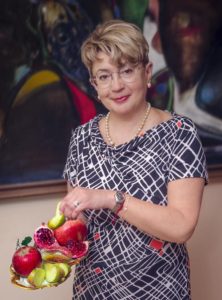
Greetings from LJC Chairwoman Faina Kukliansky for New Jewish Year 5777

faina-ros-hasana2

Happy New Year to all members of the Community, young and old! We are ushering out what was a successful year, and we have reason to be happy and proud of it, and now we look forward to an even better year. I wish everyone strong health and a sweet and successful year ahead for you and your families. I invite everyone to do at least on good deed for the community over the coming year, and I especially invite those to do this who believe there are things that aren’t right within the community. Do what you think is right, don’t be afraid to do good deeds and let’s not fear the consequences. I wish you love of the country in which you live, to love Israel, and to raise your children as Jews, the future members of our community.

שנה טובה ומתוקה

How Much Can Happen in Seven Seconds: Rosh Hashana 5777

portrait_of_determinism_by_relaxeder
by Andrés Spokoiny

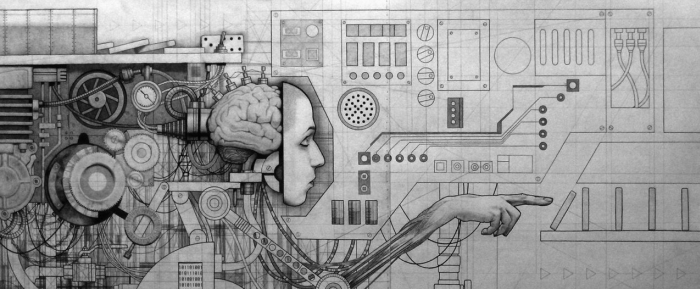
In 2007, at Bernstein Center for Computational Neuroscience in Berlin, scientists conducted a troubling experiment. They put people into an MRI machine and asked them to press one of two buttons in front of them. The subjects were told to do this several times, and to choose freely which button to press.

One part of the results was nothing new: around a second before the button was pressed, the parts of the brain associated with conscious decision-making lit up. But looking more carefully, the scientists noted that there was a pattern of neural activities around six or seven seconds before the decision was actually taken. That pattern predicted with great accuracy the decision that the person ended up taking.

The researchers were shocked, because these findings suggest that decisions are not really conscious. Rather, they are subconscious neural processes that are complete before our “command and control” functions ever activate. We may think that we’re about to consciously decide something, but in fact, our subconscious has already (and irrevocably) decided.

Fifteen Ways Being Jewish Is Meaningful

by David Harris

Surveys reveal a disturbingly large number of American Jews who feel disconnected from their Jewish identity. How painfully sad! In response, and with the High Holy Days just around the corner, let me share, as I have on occasion in the past, what being Jewish means to me.

1. It means championing what is arguably the single most revolutionary concept in the annals of human civilization—monotheism—introduced to the world by the Jews, and its corollary, the inherent belief that we are all created in the image of God (in Hebrew, B’tzelem Elohim).

2. It means embracing the deep symbolic meaning the rabbis gave to the story of Adam and Eve. Since all of humanity descend from the “original” couple, each of us, whatever our race, religion, or ethnicity, shares the same family tree. No one can claim superiority over anyone else.

3. It means entering into a partnership with the Divine for the repair of our broken world (in Hebrew, Tikkun Olam), and recognizing that this work is not to be outsourced to a higher authority, or to “fate,” or to other people, but that it’s my responsibility during my lifetime.

4. It means affirming life – “I have set before you life and death, blessing and curse, therefore choose life, that both you and your descendants may live” (Hebrew Bible) – and the moral choice that lies in the hands of each of us to bring a little closer the Jewish prophetic vision of a world at peace and in harmony.

5. It means celebrating the fact that Jews were early dissidents, among the very first to challenge the status quo and insist on the right to worship differently than the majority. Today, we call this pluralism, and it is a bedrock principle of democratic societies. It also ought to be an essential component of Jewish communities everywhere.

6. It means welcoming the pioneering Jewish effort to establish a universal moral code of conduct and seeking to act as if that code of conduct were my daily GPS—to pursue justice, to treat my neighbor as I would wish to be treated, to welcome the stranger in our midst (and, I might add, the newcomer to the Jewish people), to be sensitive to the environment, and to seek peace. It’s not by accident that America’s Founding Fathers chose words from the Hebrew Bible for our nation’s Liberty Bell: “Proclaim liberty throughout all the land and unto all the inhabitants thereof.” Or that the Ten Commandments continue to be an ethical guidepost for so many around the world.

LJC Youth Programs in September

Ilan Club and their youngest group leaders opened the club for fall. Children returning from the summer camps were full of emotion, and the counselors were filled just as much with enthusiasm and new ideas.

On September 18 the Ilan club officially opened for the fall and about 30 of our youngest friends turned out for the event. The first activity was getting to know the new club members and the counselors. During the activities session the children participated in skits where children’s favorite things were showcased–cartoons, music, games, etc. During play the children had the chance to introduce themselves to the group and to play as teams. After the skit there was our weekend ceremony and a symbolic dinner with many delicious items.

Lithuanian Jewish Community Chairwoman Pays Last Respects to Shimon Peres in Jerusalem

VILNIUS, September 30, BNS – Lithuania on Friday is paying last respects to late Israeli president Shimon Peres.

Lithuanian president Dalia Grybauskaitė and foreign minister Linas Linkevičius attended his funeral in Jerusalem, and Vilnius residents and guests can express their condolences at the Israeli embassy.

“We bid farewell to a great man of the world, a man of peace, an example of tolerance, a man important to all, including Lithuania, because he considered Lithuania, this region, his birthplace and called himself a Litvak,” Grybauskaitė said.

“His visit several years ago marked a significant improvement in the relationship between our states, which is very important for us not only as we look to the future, but also as we reflect on our painful past,” she said.

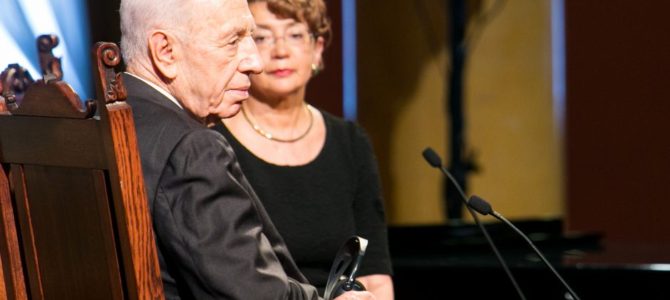
Lithuanian Jewish Community chairwoman Faina Kukliansky also attended his funeral in Jerusalem.

Peres was born only 100 kilometers from Vilnius in a small town in what then was Poland in 1923.

Lithuanian Jewish Community Position on the Reconstruction of the Great Synagogue in Vilnius

The following is an official letter sent by the Lithuanian Jewish Community to concerned government agencies.

September 27, 2016

To:
Remigijus Šimašius
mayor, city of Vilnius

Alminas Mačiulis
Government chancellor

Šarūnas Birutis
minister of culture

Linas Linkevičius
minister of foreign affairs

Diana Varnaitė
director, Cultural Heritage Department under the Ministry of Culture

On the Reconstruction of the Great Synagogue

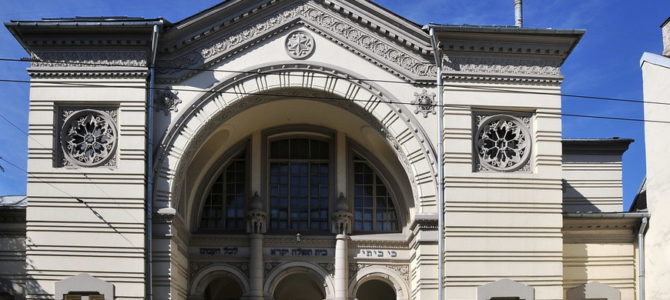
As public interest has grown recently in the history and cultural legacy of Lithuanian Jews (Litvaks) and specifically regarding artifacts uncovered at the site of the Great Synagogue in Vilnius, we feel it our duty to again present our view, that of the Lithuanian Jewish Community, regarding the issue of the conservation of surviving parts and the possible reconstruction of the Great Synagogue, a building with extraordinary significance to the Lithuanian and the global Jewish community.

As we have said before many times, we support all meaningful initiatives to preserve, protect and commemorate the legacy and heritage of the Jews of Lithuania, but we do not support unreasonable projects to rebuild non-existing buildings which are carried out in the name of Jews. It seems that is what we are facing again in the idea developing over many years by certain government institutions and possibly including hidden business structures to rebuild the Great Synagogue complex in Vilnius.

In 2015 the municipal government enterprise Vilniaus Planas was commissioned by the municipality’s Urban Development Department to prepare draft construction proposals for a memorial to the Great Synagogue under pre-project proposals submitted by the architect Tzila Zak. The terms of reference of the planning task itself revealed the client’s attitude towards the rebuilding of the Great Synagogue as an attractve real estate development project: the primary task presented to planners was to submit a list of the buildings proposed for rebuilding, to name the rooms and premises slated for reconstruction and to calculate floor space.

Israeli Dance Lessons

Israeli dance lessons with Karina and Valerija, beginners’ group from 11:00 A.M. to 12 on Sundays, advanced group Sunday from 12:15 P.M. to 1:15 and Wednesdays 6:00 P.M. to 7:30 P.M. at the Lithuanian Jewish Community, Pylimo street no. 4, Vilnius.

For more information write karina.semionova@gmail.com

News from the Interwar Period in Jewish Lithuanian Newspapers

lit060

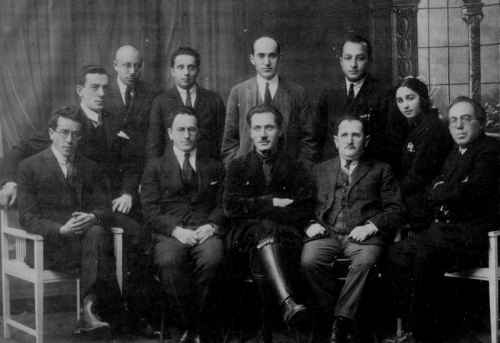
Editorial board of Di Yiddishe Stime, 1924. Sitting, right to left: Nathan Goren, Roza Khazan-Feigin, Moshe Cohen, David Cohen, Reuven Rubinstein, Moritz Helman, Rafael Khasman. Standing, right to left: Ya’akov Feigin, Israel Zhufer, Moshe Rabinowitz, Eliezer Shibolet. Photo courtesy jewishgen.com

Jews were the largest ethnic and religious minority in Lithuania in the period between the two world wars. The Jewish culture of Lithuania, just like that of Eastern Europe as a whole, was multifaceted and diverse, and the Yiddish language was an important vehicle of communication. When Isaac Bashevis Singer received the Nobel Prize for Literature in December of 1978, he wasn’t just speaking in vain when he said: “There are some who call Yiddish a dead language, but so was Hebrew called for two thousand years. It has been revived in our time in a most remarkable, almost miraculous way. … It is a fact that the classics of Yiddish literature are also the classics of the modern Hebrew literature. Yiddish has not yet said its last word. It contains treasures that have not been revealed to the eyes of the world. It was the tongue of martyrs and saints, of dreamers and Cabbalists—rich in humor and in memories that mankind may never forget.

Shimon Peres: An Exceptional Intellect and a True Litvak

Sh.Peresas buvo išskirtinio intelekto žmogus ir tikras litvakas – F.Kukliansky

Lithuanian Jewish Community chairwoman Faina Kukliansky says late Israeli president Shimon Peres was a person of exceptional intellect and always stressed his ties with Lithuania.

“It’s important for us, for Lithuanian Jews, that he was one of our own, we always considered him a Litvak and he considered himself a Litvak. After all, he came from Vishnev, a village 70 kilometers from Vilnius in what is now Belarus but which was Lithuanian territory then. It was so nice for us that our countryman was so intelligent, so educated, such an erudite, and could speak on any and every topic even at a venerable age. Our entire community is in mourning. We know human life has an end, but when you encounter death, great sadness overtakes you,” Kukliansky said.

Peres visited Lithuania three years ago and Lithuanian president Dalia Grybauskaitė met him when she visited Israel last year. This last spring he was decorated with the Lithuanian order of the Great Cross “For Contributions to Lithuania.”

Jewish Holocaust Victims Were Neighbors and Fellow Citizens

img_1142_700_700

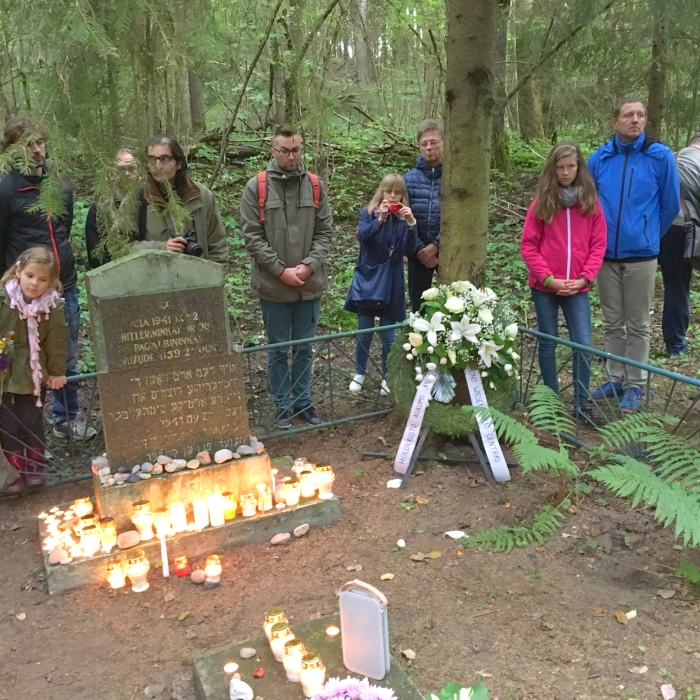
The project is based on the fact that there are 227 Holocaust mass murder sites in Lithuania scattered all across the country.

I had never heard of Vėliučionys, a small village on the outskirts of Vilna (Vilnius) before Lithuanian author Rūta Vanagaitė and I set out in the summer of 2015 to visit sites of Holocaust mass murders for a book we wrote on Lithuanian complicity in Shoa crimes.

Our original list of destinations was compiled based on our biographies.

I chose the birthplaces of my maternal grandparents Samuel and Bertha Sar, and the towns in which they had grown up and studied, as well as the presumed site of the murder of my great-uncle Rabbi Efraim Zar, for whom I am named, his wife and two sons. Rūta chose the places where her grandfather Jonas Vanagas and her aunt’s husband Antanas Stapiulionis had played a role in the murder of Jews.

Yiddish for Pirates

barw_yiddish_comp-r6-1_500_739

No, it’s not the latest whacky facebook language option to spice up your social media experience, but a novel by Litvak Canadian author Gary Barwin which is up for the prestigious Scotiabank Giller Prize for best new novel or short story in English authored by a Canadian.

Yiddish for Pirates is one of six candidates for the annual prize, vying for the prestigious award with Do Not Say We Have Nothing by Madeleine Thien, Wonder by Emma Donoghue, Best Kind of People by Zoe Whittal, Party Wall by Catherine Leroux translated from French and Thirteen Ways of Looking at a Fat Girl by Mona Awad.

Every year the Giller Prize looks back at the previous year’s fiction and presents a winner from their shortlist. This year’s awards ceremony will take place in Canada on November 7.

Lithuanian Jewish Partisan Joseph Harmatz, “The Avenger,” Has Died

Mirė Lietuvoje gimęs ir Holokaustą išgyvenęs žydų „keršytojas“ J. Harmatzas

BNS and others

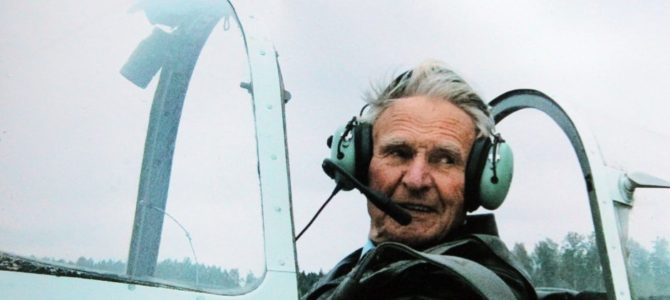
Jospeh Harmatz who led a Jewish attempt to take revenge on the Nazis has died at the age of 91. Harmatz’s son Ronel confirmed he had died Monday.

Harmatz was one of a handful of Jewish “avengers” who plotted to poison many SS officers held at an American POW camp in 1946. More than 2,200 Germans were poisoned during the operation, but none of them died from it as far as anyone knows.

Nonetheless the act took on symbolic meaning for the newly forming State of Israel: the day when attacks against Jews went unanswered had ended.

Harmatz was born in Lithuania and lost most of his family to the Holocaust. He gave an interview to AP shortly before his death in which he said he did not regret his actions or those of others in the Revenge brigade.

“We couldn’t understand why there shouldn’t be payback for that,” he said.

Leonidas Donskis Dead at Age 54

Netekome Leonido Donskio

Leonidas Donskis, a Lithuanian philosopher, scholar and former member of the European Parliament, deputy chairman of the Lithuanian Jewish Community, political activist, author and notable figure in Lithuanian society and academic and political life, died Wednesday morning.

He reportedly died at Vilnius International Airport from a heart attack.

Prize Recipients Chosen for Best Final Academic Work on Ethnic Minorities in 2016

Išrinkti 2016 m. Premijos už geriausią baigiamąjį mokslo darbą tautinių mažumų tematika laimėtojai

On September 14 the Academic Council of the Lithuanian Department of Ethnic Minorities selected the winners of a new prize created this year for best final academic work on ethnic minorities.

Department of Ethnic Minorities director Dr. Vida Montvydaitė made the final decision on recommendations from her Academic Council and selected Julijana Leganovič in the first nomination category for her bachelor’s work “Comparative View of the Development of the Vilnius and the Kaunas Jewish Communities in the Interwar Period.”

The second category was for master’s work and the winners were Rūta Anulytė with her “Heritage Protection and Maintenance of Historical Jewish Cemeteries in Lithuania: Practice and Recommendations” and Mantas Šikšnianas with his “Jews of Švenčionys from the mid-18th Century to the mid-20th Century: Shtetl, Sabbath, Shoah.”

Full story in Lithuanian here.

The Bloody Stones of the Towns

by Aras Lukšas
lzinios.lt

On September 23, 1943, the Nazis and collaborators concluded the liquidation of the Vilnius ghetto. Twenty-two years ago this date was officially made the Day of Remembrance of the Lithuanian Jewish Victims of Genocide. Now let’s remember the Jews of the rural towns and villages whose entire communities were destroyed during the first four months of war. Keydan, Yaneve, Vilkomir, Zager, Shadeve, Nayshtot-Tavrig… What do these strange words mean? Most likely not everyone would know these are the names of Lithuanian towns: Kėdainiai, Jonava, Ukmergė, Žagarė, Šeduva, Žemaičių Naumiestis. This was how the Jews who lived here for centuries called their homes in their native Yiddish language. In many of the locations just mentioned, they constituted half or even the majority of the population. For instance, before the war half the population of Ukmergė was Jewish, and Jonava’s was 80% Jewish, including traders, craftsmen, artisans, butchers and dairymen, attorneys and doctors…

Full story in Lithuanian here.

Israeli President Sends Condolences over Death of Leonidas Donskis

VILNIUS, September 26, BNS – Israeli president Reuven Rivlin has expressed his condolences to Jolanta Donskienė, the wife of Lithuania’s late philosopher Leonidas Donskis.

“We grieve together with you and all people of Lithuania as the world has lost a remarkable man, a prominent philosopher, a devoted defender of human rights and civil liberties, a true humanitarian and an outstanding political figure, a great person, who always opposed violence in all its forms,” the president said in his letter to Donskienė, a copy of which was shared by the Israeli embassy with BNS.

Rivlin said that as a deputy chairman of the Lithuanian Jewish Community, Donskis “greatly contributed to preserving the country’s Jewish culture and heritage and promoted the highest human values of tolerance, love and respect toward every individual”.

“Professor Donskis was a great friend of Israel, who has never hesitated to stand together with our country. He will always remain in hour hearts,” he said.

Vilnius Mayors Change, But None Can Find Suitable Place for Monument to Rescuers

cc1c
photo courtesy BNS

An interview by Nemira Pumprickaitė on the Lithuanian state television program Savaitė, www.LRT.lt

The Day of the Genocide of the Jews of Lithuania is marked on September 23. For long years there was silence on the topic of the Holocaust in Lithuania, and when [former late] Lithuanian president Algirdas Brazauskas apologized to the Jewish people, there was hardly unanimous support. Now even Germans are saying Lithuania is the first country in Eastern Europe to openly raise the question of its own citizens’ complicity. About a month ago the respected Frankfurter Allgemeine Zeitung published a feature on Lithuania’s efforts to address the history of the Holocaust. Lithuanians didn’t earn condemnation alone during the Holocaust; there were those who risked their lives of those of the families to save Jews. The appellation Righteous Gentile has been awarded to 889 Lithuanian citizens. Experts say proportionally, according to population size, Lithuania has the most rescuers among the countries of Eastern and Central Europe. Lithuanian Jewish Community chairwoman Faina Kukliansky on the Lithuanian state television program Savaitė…

Full interview in Lithuanian here.

Lithuanian Parliaments Hosts Conference “They Rescued Jews, They Rescued Lithuania’s Honor”

Seime organizuota konferencija „Gelbėję Lietuvos žydus, gelbėję Lietuvos garbę“

Vilnius, September 25, BNS– The Lithuanian Seimas Sunday hosted a conference to mark the Jewish Genocide Memorial Day.

The conference called “They Rescued Jews, They Rescued Lithuania’s Honor” was organized by the Lithuanian Jewish Community, the parliament’s press service said.

Those taking part in the conference included Faina Kukliansky, chairwoman of the Lithuanian Jewish Community, Andrew Baker, director of International Jewish Affairs for the American Jewish Committee, and Howard Solomon, chargé d’affaires ad interim at the US embassy in Vilnius.

The program includes presentations by historian Alvydas Nikzentaitis on the life of Jews in Lithuania, Joachim Tauber of the University of Hamburg on “Hitler, Stalin and Anti-Semitism in Lithuania in 1939-1940” and historian Algimantas Kasparavicius on “Lithuanian Political Illusions, the ‘Policy’ of the Provisional Government of Lithuania and the Beginning of the Holocaust in Lithuania.”

Holocaust Commemoration at Ninth Fort in Kaunas

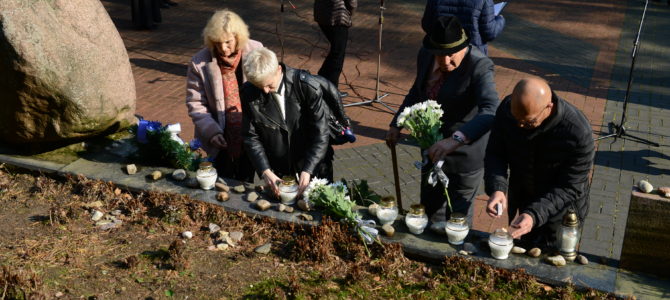
Students from the Lithuanian Health Sciences University Gymnasium displayed a sensitive and moving artistic composition called Memory Road at the mass murder site. Kaunas deputy mayor Vasilijus Popovas, Ninth Fort Museum director Jūratė Zakaitė and deputy museum director Marius Pečiulis spoke of the need to remember and never forget painful and even shameful parts of history. Kaunas Jewish Community chairman Gercas Žakas said it’s important for young people to get to know a different culture and a different ethnic group personally, because this sort of knowledge allows them to understand someone from a different ethnicity is still a person just like they are. Chairman Žakas thanked the students and teachers of the Health Sciences University Gymnasium and other Kaunas schools as well as school Tolerance Center directors for teaching pupils respect, tolerance, sympathy and historical memory.

Later there was a screening introduced by director of the Polish Institute in Vilnius Marcin Łapczyński of director M. T. Pawłowski’s film Touch of an Angel (2015) which is movingly narrated by a Jewish child in Auschwitz who survived the Holocaust with his family. In the film Polish Jew Henryk Schoenker revisits his childhood where the specter of war still lives, and talks about his family, hiding and tremendous efforts made to survive. Many members of the audience cried.

World Litvak Museum, Return of YIVO Proposed for Vilnius

Vilnius, September 25, BNS–A proposal has been made to establish a World Litvak Museum and reopen the Jewish research institute YIVO in Vilnius, and to commemorate Jews who contributed to the restoration of Lithuanian statehood at the Government, to pay homage to Jewish heritage.

The proposal was made at a conference at the Lithuanian parliament Sunday by the historian Alvydas Nikžentaitis. He said it would make sense to put the museum presenting the history of the Jews of Lithuania at the site of the former Great Synagogue in the center of Vilnius. “The most important goal of all would be to restore the Great Synagogue, the place where Jews, without regard to viewpoints, all gathered, where the most import things were deliberated. This is the place, I think, where the World Litvak Museum should be built,” the professor said at parliament.