Learning

En Plein Air Outdoor Painting Workshop at Įlanka Farm in Šaukšteliškiai Village

Plenerassu R.Savick2

Another outdoor painting workshop, or “plein air,” took place from August 8 to 14 at the Įlanka farmstead in Šaukšteliškiai village in the Molėtai region of Lithuania, organized by the Lithuanian Jewish Community. Participants stayed in and painted a scenic natural location where the surrounding lake, skies and fresh air inspired creativity. The program included ceramics as well as painting and featured professional teachers and lecturers and a significant recreational component. Participants included two recognized Lithuanian folk artists.

Lithuanian and Japanese Cities Join in Commemorating Righteous Gentile

Pasaulio tautų teisuolio atminimas sujungė Japonijos ir Lietuvos miestus ir žmones

Events to commemorate Chiune Sugihara, Japanese WWII-era consul in Kaunas and a Lithuanian festival were held in Sugihara’s hometown of Yaotsu, Japan, from July 31 to August 7.

Sugihara rescued thousands of Lithuanian Jews from the Holocaust and has been recognized as a Righteous Gentile and awarded the status of Righteous among the Nations by the Yad Vashem Holocaust memorial authority in Israel.

The week of commemorations was opened by the signing of a memorandum of cooperation by Yaotsu mayor Masanori Kaneko and Kaunas municipality representative Inga Pukelytė.

Acting Lithuanian ambassador to Japan Violeta Gaižauskaitė noted the events came on the 25th anniversary of the restoration of diplomatic ties between Japan and Lithuania and characterized ties between the people of Japan and Lithuania as sincere, and relations btween the two nations friendly. She also said both countries were dedicated to preserving the memory of the noble Japanese diplomat for future generations.

Vladimir Lazerson: Army Medic, Peace Psychologist

Vladimiras Lazersonas: karo medikas ir taikos psichologas
Valdimir and Regina Lazerson

by Jūratė Vaižgauskaitė
manoteises.lt

“We used to drink tea using the ‘look’ method: a lump of sugar was tied to a string and we’d look at it while we sipped tea. The tea wasn’t any sweeter for that, but we all had a good time,” Vladimir Lazerson’s daughter Tamara wrote in her memoirs. Lazerson was a professor and early practitioner of clinical psychology. They drank that imagined sweet tea in the Kaunas ghetto where they were imprisoned in June of 1941.

First professor Lazerson was thrown out of university. Then his house was taken away, his books burned and he was sent to Dachau. There he died. He had dozens of articles published and was the founder in Lithuania of several branches of psychology, and practiced clinical psychology as a military medic.

Army Medic, Peace Psychologist

Born in Moscow, Lazerson began his scholastic career at German and Swiss universities. He defended a dissertation thesis in psychology in 1911 and then went on to study medicine in Germany and Russia. His path to Lithuania was a winding one. Working as a military medic and associate professor in Kiev, he left when pogroms began and chose newly independent Lithuania as a destination.

Full story in Lithuanian here.

Commemoration of the Holocaust in Šeduva, Lithuania

UPDATE: Event organizers are providing transport from Vilnius and several free seats are left! Please register for a place before August 23 by sending an email to info@lostshtetl.com

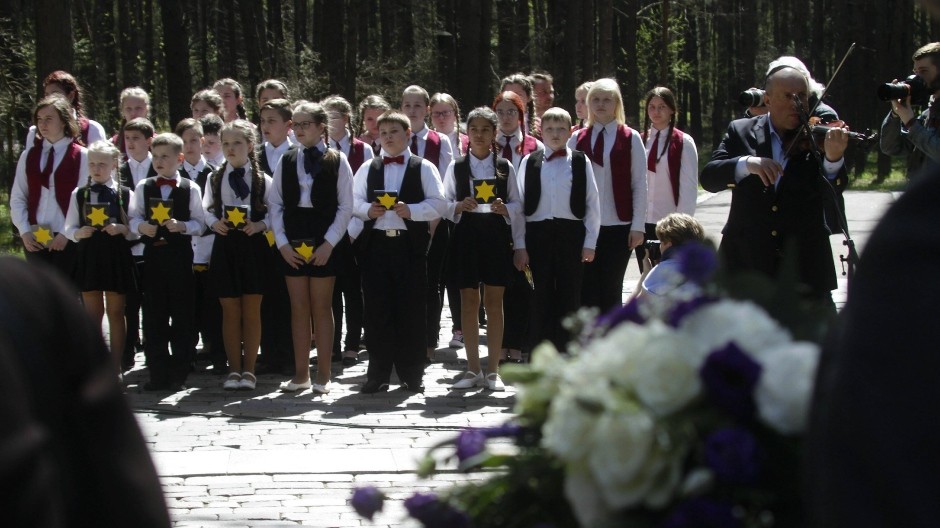
You are invited to an event to commemorate the Šeduva Jewish community murdered in the Holocaust. The event is on on August 30 and will be a kaddish at the 3 mass murder sites and the old Šeduva Jewish cemetery.

Commemorative program

9:00–9:30 Kaddish at the Jewish mass murder site in Pakuteniai forest
https://goo.gl/maps/tdN5Y3mrWJw

9:45–10:15 Kaddish at Liaudiškiai Jewish mass murder site I
https://goo.gl/maps/fhjnq5ubSfk

10:30–11:00 Kaddish at Liaudiškiai Jewish mass murder site II
https://goo.gl/maps/mYLnGLUmVuK2

11:15–11:45 Kaddish at the Šeduva Jewish cemetery
https://goo.gl/maps/ZuHGdK9EHvF2

12:00–12:30 Coffee break at the Šeduva Culture and Crafts Center

12:45-1:30 Mass at the Holy Apparition of the Cross Church in Šeduva

1:30–2:15 Yiddish song concert by Rafailas Karpis and Darius Mažintas at the church in Šeduva

Download PDF format event program

More here.

Lithuanian Debut at the Olympics: The Isaac Anolik Story

by D. Baranauskaitė
manoteises.lt

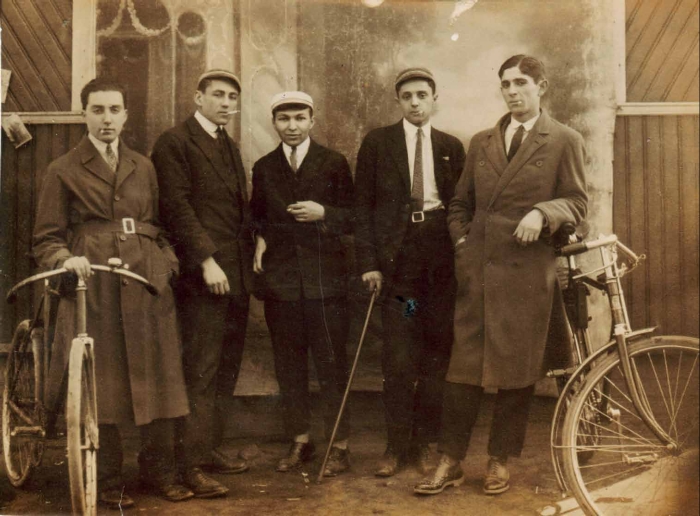
“All riders have reached the finish line and the injured have been brought by automobile, but we haven’t seen Mr. Anolik and he isn’t found among the injured. Everyone has left. The stadium is empty, but he’s still not here. Asked by telephone, all the checkpoints reported they didn’t know and that there was not a single cyclist left on the route. He only came back at 11 at night, cold and hungry.”

This is how the newspaper Sportas reported the debut of the Lithuanian state at the Olympic Games in 1924. The subject of the report, Isaac Anolik, was a Lithuanian athlete of Jewish origins and the country’s cycling champion many times over. His accomplishments didn’t matter during the Holocaust. The leading Lithuanian cyclist was shot at the Ninth Fort.

isakas-anolikas-395x480

Full story in Lithuanian here.

Tel Aviv Art Exhibit My Selife and I

Tel Avivo Šiuolaikinio meno muziejus -interaktyvi paroda „Asmenukė ir aš“

15min.lt

The Tel Aviv Museum of Art is inviting visitors to a provocative interactive exhibit called My Selfie and I. Visitors can photograph themselves as much as they like with special equipment and their images are immediately projected on a large screen. Initially it appeared as if the museum were trying to appeal to the lowest common denominator among visitors, but actually the exhibit subtly reveals the absurdity of the selfie phenomenon.

Full story in Lithuanian here.

Plaque to Honor Union of Jewish Soldiers in Kaunas

Kaune atsiras atminimo lenta, skirta Žydų karių sąjungai

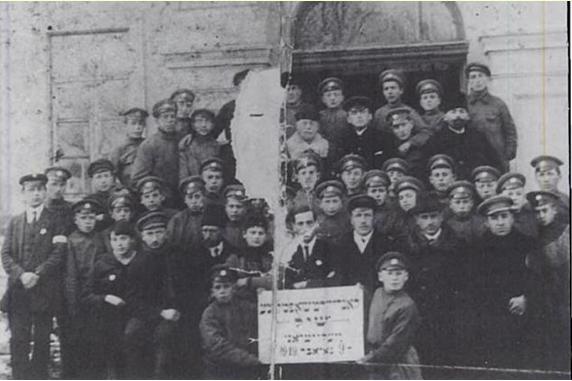
Work has begun to produce a memorial plaque to commemorate the pre-WWII Union of Jewish Soldiers Who Fought for Lithuanian Independence. The project was initiated by the Kaunas Jewish Community with support from Lithuanian Jewish Community chairwoman Faina Kukliansky, LJC cultural heritage expert Martynas Užpelkis and sculptor Gediminas Pašvenskas, who designed the plaque. The plaque is to be placed on the building formerly housing the Union at A. Mapu street no. 10 in Lithuania’s interwar capital.

Established in 1933, the Union of Jewish Soldiers Who Fought for Lithuanian Independence was originally based in Joniškis and moved to Kaunas in 1934. Besides fostering patriotism and loyalty to the state, the union also encouraged cultural cooperation between Lithuanians and Jews and operated throughout the country, with about 3,000 members in total. Twenty Jewish soldiers were decorated with the Order of the Cross of Vytis for bravery in battle and other orders and decorations were also bestowed on the veterans of the early Lithuanian struggle for independence following World War I. The union participated with its regalia at official events and ceremonies and publicly displayed their devotion and loyalty to Lithuania.

In Memoriam Fira Bramson

In an article published on the website of the literary and arts magazine Literatura ir Menas, Mindaugas Kvietkauskas shares his memories of the late Fira Bramson.

Esther’s Scissors
by Mindaugas Kvietkauskas

Nuotrauka iš asmeninio archyvo

I will call her by a biblical name, Esther. Now I may. That was how the rabbi called her to eternity so recently his prayer uttered before the first three handfuls of earth were sprinkled on her shrunken body, cut off from the world of the living.

In life it was different: she was Fira, sometimes Firochka. I smile when I think how unrecognizably the name of the queen of Persia, meaning morning star, has changed in our lands, in the daily language of the Yiddish dialect washed by the great Slavic languages. But now that she has entered a time of more perfect reckoning, Fira has again become Esther, the daughter of Israel, the morning star, Ester bat Israel.

Bramson Esfira Fira Bramson in 1949

Full piece in Lithuanian here.

Jewish Family Service Goes to the Movies

received_1369574516390431

On August 14 the Jewish Family Service of the Lithuanian Jewish Community hosted a wonderful outing for children. The Forum Cinema of Vilnius has been showing different animated films for children with discounted prices for groups of children. The Jewish Family Service decided to make use of the opportunity and Sunday morning parents and children attended a showing of the Little Prince. Although it is an animated film based on moral values for children, the parents were also able to take some real insights away from the experience. Twenty-eight program participants took part and the program coordinator said it was a great success.

“This is a way to spend some very meaningful time and it also compels thinking and discussing the film viewed,” one mother who took part said.

The program coordinator plans more such trips to movies, selected by hand and heart.

Clarification

To whom it may concern,

In light of Mr. Gary Eisenberg’s recent article about Lithuanian citizenship for Litvaks published in Israel and South Africa, the Lithuanian Jewish Community states for the record:

1. There is no special legislation or program for recruiting Litvaks for Lithuanian citizenship. This is disinformation. The existing legislation on applications for Lithuanian citizenship by prewar citizens of Lithuania and their offspring was only reworded slightly to prevent misinterpretations of the intent of legislators by public servants to the detriment of Jewish applicants and applicants of other ethnicities. As far as we are aware, there is no “Lithuanian Citizenship Programme” for Litvaks in Lithuania or anywhere else, despite what was written in Mr. Eisenberg’s article.

2. The Lithuanian Jewish Community and the Choral Synagogue in Vilnius with the Vilnius Religious Jewish Community are firm followers of the traditions of the Vilna Gaon and have nothing to do with Chabad Lubavitch or their rabbi. We have a rabbinate of two rabbis who are firmly within the mitnagedic tradition. Mr. Eisenberg’s statements he celebrated Sabbath with Chabad Lubavitch Rabbi Krinsky, followed by the statement he visited the Choral Synagogue, could mislead some readers into thinking the Choral Synagogue in Vilnius is a Chabad Lubavitch center, which it is not.

Sincerely,

Faina Kuklianskay, attorney,
chairwoman,
Lithuanian Jewish Community

Yiddish Vegetarian Potluck

head

As another successful summer program of the Vilnius Yiddish Institute at Vilnius University wound down, writer Ellen Cassedy and the students, faculty and staff held a vegetarian potluck August 10.

Cassedy gave a brief presentation in Yiddish about the remarkable prewar vegetarian cookbook by Fania Lewando and spoke about her life and her vegetarian restaurant which was located on what is now Vokiečių street in Vilnius. Using slides Cassedy showed period photographs and pictures of foods featured at the restaurant, occasionally clarifying her remarks in English.

A full classroom of perhaps 30 people listened intently as latecomers filtered in, some bearing plates and bowls of food. A long table in front of the podium enticed the eye with a variety of dishes made by the students and staff themselves.

Summer Camp in Švenčionys

IMG_4003

This summer in August, a two-week international camp is being organised in Švenčionys. Our goal is to clean the old Jewish Švenčionys cemetery, remove trash, document gravestones and discover what we are able about Švenčionys Jewish history. We will be teaching our volunteers about Litvak culture, history and Jewish burial traditions in general.

The old Jewish Švenčionys cemetery is one of the oldest Jewish burial places in Lithuania, dating back to the 17th century. The cemetery covers approximately 39,670 sq. meters (47,445 square yards) with existing gravestones estimated to number in the thousands. The number was higher prior to the Holocaust when gravestones were stolen for use in local construction, including for the construction of a horse stable. Much of the remaining cemetery was desecrated. In 1993, the stables were taken apart and many stones returned to the cemetery, and a remembrance monument was built.

Many ornate gravestones survive from the period 1900- 1930, and their condition varies. Many, if not most, are in fragile condition and need urgent repair and restoration.
We do not have data defining dates for the cemetery, we hope to discover that during our work.

The camp is organised in partnership with Action Reconciliation Service for Peace

http://www.actionreconciliation.org/

and will be our second joint project in consecutive years. We expect between 10-15 youngsters will visit Lithuania from Germany and other countries, to volunteer in this effort. More information can be found at https://www.asf-ev.de/en/summer-camps/activities/lithuania.html

If you are interested in the project and/or have any questions, please contact us via info@litvak-cemetery.info or sandra@litvak-cemetery.info

From http://www.litvak-cemetery.info/events/summer-camp-in-svencionys

Note: although the camp started today, there are still free spaces for interested volunteers, with housing and three meals per day provided. Please contact the email addresses above for more information.

Maya Pennington Concert

Mayos Pennington koncertas Vilniuje, Lietuvos žydų (litvakų) bendruomenėje

Maya Pennington’s concert at the Lithuanian Jewish Community August 4 drew a large crowd.

Maya spoke about her Litvak roots, her tender feelings for Vilnius which she is visiting for the second time to study Yiddish and her love of music.

Maya said music is the best international language.

Event in Dieveniškės to Commemorate Regional Jewish History

Dieveniškėse vyko renginiai, skirti regiono žydų istorijai

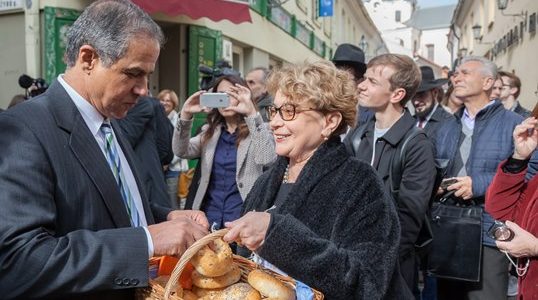
On August 4 Lithuanian Jewish Community representatives sold traditional Litvak bagels and sweets and spoke about Jewish tradition under the aegis of the LJC Bagel Shop Café at the Dieveniškės town square. The bagels quickly disappeared but local residents stuck around for the events to commemorate regional Jewish history.

The Dieveniškės Technological and Business School hosted the lectures “Jewish Funeral and Cemetery Traditions” and “Synagogues: How They’re Built, What Happens in Them and Why.” Participants manufactured models of synagogues from cardboard and other materials, and bricks made of clay to mark the locations of former Jewish buildings.

Lithuanian Media on Children’s Experiences of the Ghetto: to Live to Tell the Story

Vaikiškos geto istorijos – išgyventi ir pasakoti

Children’s Experiences of the Ghetto: to Live to Tell the Story
by Jūratė Važgauskaitė
manoteises.lt

“Wednesday the 10th of December. It dawned on me that today is my birthday. Today I became 15 years old. You hardly realize how time flies. It, the time, runs ahead unnoticed and presently we realize, as I did today, for example, and discover that days and months go by, that the ghetto is not a painful, squirming moment of a dream which constantly disappears, but is a large swamp in which we lose our days and weeks…In my daily ghetto life it seems to me that I live normally but often I have deep qualms. Surely I could have lived better. Must I day in day out see the walled-up ghetto gate, must I in my best years see only the one little street, the few stuffy courtyards?” So wrote Yitzchak Rudashevski, a student at the Real Gymnasium in Vilnius, a talented writer and a prisoner of the Vilnius ghetto.

Rudaševskio dienoraštis

The ghetto swallowed up the life of this young man, leaving us only his diary. A diary which reveals the personal world of a young man who grew up too soon and experienced terrible experiences.

Full treatment in Lithuanian here.

Lithuanian Citizenship for Litvaks

According to various reports in the Israeli media, there has been a sharp increase in South African Litvak applications for Lithuanian citizenship.

Some authors have even mentioned some sort of “Lithuanian Citizenship Programme,” whose existence is unknown to the Lithuanian Jewish Community.

Because of the seemingly increased interest, we are placing some of our earlier reporting back at the top of page one of the English version of the webpage.

We would like to take this opportunity to remind readers the amendment to the Lithuanian law on citizenship, the initiative of both the Lithuanian Jewish Community and the Lithuanian parliament, only removed and changed language which might have led to discrimination against Jews and Litvaks by individual public servants. There is no language about welcoming Litvaks with open arms, unfortunately. The amended law only levels the playing field to make sure Litvaks are treated equally with ethnic Lithuanians and others in the application process.

While the law doesn’t express welcoming Litvaks with open arms, the Lithuanian Jewish Community does welcome Litvaks from around the world, including South Africa, to become members, and does support Litvaks’ bids for Lithuanian citizenship. It has been our honor to have played a part in the amended legislation signed into law by the president of Lithuania last month.

LJC Chairwoman on Lithuanian Citizenship Law: Why Is It So Important to Livaks?

F.Kukliansky apie pilietybės įstatymą. Kodėl jis litvakams toks svarbus?

Articles on this web page and the Lithuanian Jewish Community’s facebook section about citizenship for Litvaks have been the subject of great interest. Thousands of people around the world are reading everything written about citizenship. Lithuanian Jewish Community chairwoman Faina Kukliansky therefore would like to talk about why this issue is of such tremendous importance to Litvaks.

Many Litvaks died during the Holocaust and they are now scattered around the world. These people identify themselves with Lithuania, but have lost Lithuanian citizenship. Truly this is not just a moral issue, but also a legal one. We are talking about Jews who survived the Holocaust, and truly no one rescinded their citizenship in the concentration camps. No one sent them to the concentration camps with their passports. They were deported, isolated and murdered as Jews, not as citizens of Lithuania. Of those who were deported to Siberia, likewise no one asked for their Lithuanian citizenship, but deported them because they owned property, or were firefighters or volunteer soldiers. Thus arises the legitimate question: when did these people lose Lithuanian citizenship, when was it taken away from them?

Reading the laws of restored Independent Lithuania, we see Jews were deprived of Lithuanian citizenship during in already independent Lithuania, when the law on citizenship was adopted. Many Jews who survived the war and the Holocaust went to their ethnic homeland, Israel, Jews who consider themselves citizens of Lithuania but who, when the Republic of Lithuania law on citizenship was adopted in 1991, which clearly states Lithuanian citizenship is lost upon acquisition of citizenship of another state, lost that citizenship.

President Signs Citizenship Amendment for Litvaks into Law

grybauskaite

Lithuanian president Dalia Grybauskaitė signed into law amendments to the country’s citizenship law on June 6, 2016. The parliament adopted the amendment to impose stricter language to insure Litvaks and others are able to obtain Lithuanian citizenship without greater bureaucratic obstacles. A copy of the act of law is provided below in Lithuanian.

Lithuanian Parliament Passes Amendment to Ensure Citizenship for Litvaks

The Lithuanian parliament Thursday adopted amendments to Lithuania’s citizenship law to ensure the rights to citizenship of Jews who left Lithuania between the two world wars and their descendants. The vote was 98 for, none against and four abstentions. The amendments will come into force after president Dalia Grybauskaitė signs them into law. The new legislation was introduced to parliament this week and were scheduled for fast-track consideration and debate. The new language specifies citizenship is restored to an individual who left Lithuania before March 11, 1990, the date Lithuania formally declared independence from the Soviet Union, except for cases where the individual left Lithuania to live in another part of the Soviet Union after June 15, 1940, the date the Soviet Union occupied Lithuania. The current law on citizenship allows those who left Lithuania before March 11, 1990, to hold dual citizenship.

“I very much welcome the change in the law, and I am certain the Lithuanian state has lost nothing at all, and on the contrary, has received much more, a good name and living potential,” Lithuanian Jewish Community chairwoman Faina Kukliansky told BNS.

One of the authors of the new language, conservative opposition leader MP Andrius Kubilius, noted the current regulations needed to be better defined because Migration Department staff and the courts had begun to demand Litvaks provide proof they or their ancestors were persecuted in Lithuania between the wars. The new language makes it explicit that “withdrawal” or “flight” from Lithuania and “leaving the country” are all used synonymously and people in both alleged categories are included in the right to restoration of citizenship.