
Jewish Cuisine

Yiddish Vegetarian Potluck

head

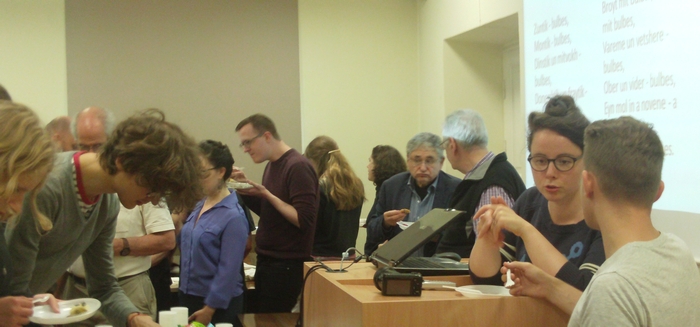
As another successful summer program of the Vilnius Yiddish Institute at Vilnius University wound down, writer Ellen Cassedy and the students, faculty and staff held a vegetarian potluck August 10.

Cassedy gave a brief presentation in Yiddish about the remarkable prewar vegetarian cookbook by Fania Lewando and spoke about her life and her vegetarian restaurant which was located on what is now Vokiečių street in Vilnius. Using slides Cassedy showed period photographs and pictures of foods featured at the restaurant, occasionally clarifying her remarks in English.

A full classroom of perhaps 30 people listened intently as latecomers filtered in, some bearing plates and bowls of food. A long table in front of the podium enticed the eye with a variety of dishes made by the students and staff themselves.
Event in Dieveniškės to Commemorate Regional Jewish History

Dieveniškėse vyko renginiai, skirti regiono žydų istorijai

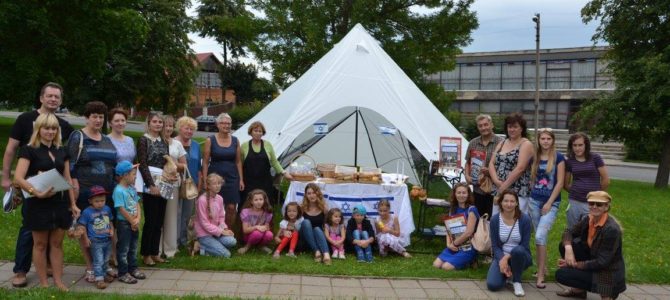
On August 4 Lithuanian Jewish Community representatives sold traditional Litvak bagels and sweets and spoke about Jewish tradition under the aegis of the LJC Bagel Shop Café at the Dieveniškės town square. The bagels quickly disappeared but local residents stuck around for the events to commemorate regional Jewish history.

The Dieveniškės Technological and Business School hosted the lectures “Jewish Funeral and Cemetery Traditions” and “Synagogues: How They’re Built, What Happens in Them and Why.” Participants manufactured models of synagogues from cardboard and other materials, and bricks made of clay to mark the locations of former Jewish buildings.

A Jewish Culinary Legend Reborn: Fania Lewando’s Vilnius

Lewando Fania2
by Jūratė Važgauskaitė Šaltinis, manoteises.lt

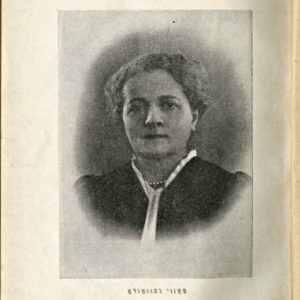
If you happened to be walking on Vokiečių street in Vilnius eighty years ago, you would surely have noticed the sign for the Dieto-Yarska Yadlodaynia restaurant, and if you stepped inside you would probably have bumped into Marc Chagall, the famous artist, as well as discovering good food. The vegetarian restaurant beloved of connoisseurs belonged to Faina Lewando-Fiszelewicz aand her husband Lazar Lewando. These members of the Vilnius Jewish community established their Dieto-Yarska Yadlodaynia (“Dietary/Vegetarian Cafeteria”) in the building that was marked no. 14 on Vokiečių street then and created a food revolution in Vilnius at that time, then called Wilno.

A vegetarian restaurant in the 1930s was a big sensation. Although vegetarian dishes were nothing new in the Jewish culinary traditions of Eastern Europe, they were often eaten by solitary diners or if no other kosher food choice was available. A vegetarian restaurant was extraordinary.

Ashkenazi food traditions, named after the word for Jews living in Eastern and Northern Europe, dominated the city and entire region when Faina Lewando opened her vegetarian restaurant and a culinary school right next to it in Vilnius. These traditions made much use of meat products and fat and heart meat dishes for holidays and to warm up during winter, without which the Jewish dinner table was inconceivable. It was to be expected that a luxury vegetarian restaurant in interwar Vilnius would create so much wonder and interest among the public.

Full story in Lithuanian here.

Bagel Shop Café Draws Attention of ARD-1 German Public TV Crew

Vokietijos Visuomeninės televizijos ARD-1 kūrybinės grupės ypatingas dėmesys LŽB „Beigelių krautuvėlei“

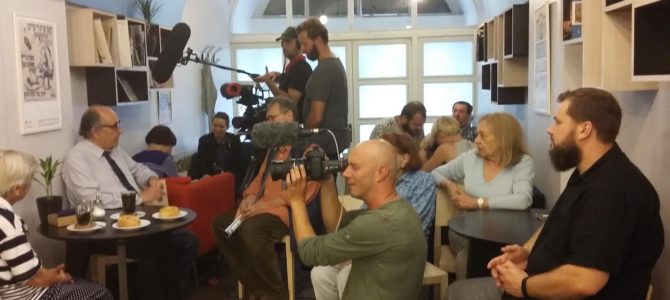
German public television channel ARD-1 filmed footage at the Lithuanian Jewish Community on July 13 with a focus on the Bagel Shop Café for a program to be called “Berlin-St. Petersburg,” according to director Christian Klemke.

He said although the itinerary for the film crew had been decided carefully prior to their trip through Poland, Lithuania, Latvia, Estonia and Russia, they had encountered interesting sites along the way which they will include in the final production.

When they were considering what to film in Vilnius, they discovered Vilnius’s rich pre-war Jewish cultural and spiritual life. “I wanted to know what there is now, so many years after the Holocaust,” Klemke said. Local producer Karolis Pilipauskas told him about the Bagel Shop Café. The Lithuanian Jewish Community facilitated meetings with members of the older generation, including Holocaust survivors. “I was very interested to hear their stories. Young members of the Jewish community also came to the café,” Klemke said.

Call for Recipes

Dear members,

This year the Lithuanian Jewish Community will be actively involved in the European Jewish Culture Day program and is organizing different events to present the Jewish languages and Jewish cultural heritage to the public. European Jewish Culture Day will happen September 4, 2016.

The Bagel Shop Café will have on offer Jewish culinary heritage and is asking you to recall dishes made by your parents and grandparents, to find handwritten recipes (including in Yiddish) and to share them. We will prepare the best examples and offer them to the public during the event, and publish the recipes and descriptions.

Israeli Ambassador Enchanted by Legendary Lithuanian Pastry

am
lr

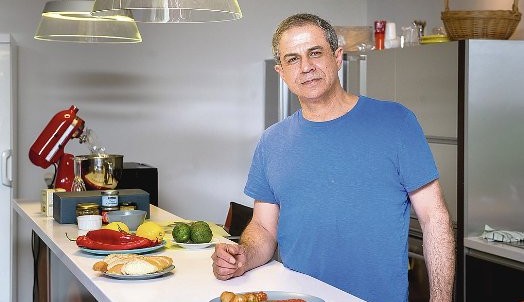
Not just family and military service, but also cooking and olive oil–these values have clearly insinuated themselves in the life of Israeli ambassador to Lithuania, Amir Maimon, 57. Despite the hectic daily schedule of colonel Maimon, who began his diplomatic service in Lithuania about one year ago, he still finds time for his favorite pastime, cooking. The Lifestyle section of the newspaper Lietuvos rytas reports ambassador Maimon’s family lives in Israel, but isn’t complaining about a lack of food. Instead, he spends his free time cooking all sorts of dishes.

Full story in Lithuanian here.

Litvak Won’t Give Grandchildren Pancake Recipe

pp

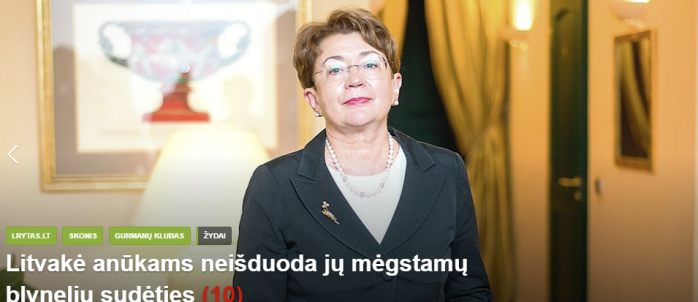
As kosher cafés open around Vilnius and it’s possible to eat kosher food and bagels, Lithuanians are rediscovering Jewish culture with an emphasis on cuisine. That pleases the chairwoman of the Lithuanian Jewish Community, attorney Faina Kukliansky, 61.

Jewish cuisine has always been popular in Lithuania. And it’s no wonder, since many Jews have lived in our country from ancient times, the Lifestyle Section of the Lietuvos rytas newspaper writes.

Some dishes which everyone thinks are traditional Lithuania are actually borrowings from Jews.

One such is potato pancakes, called latkes in Jewish cuisine. Kugel is also of Jewish origin.

Many are shocked to discover that even zeppelins, of which we are so proud, are also somewhat connected with Jews. They travelled to our country about 100 to 150 years ago from northern Germany together with Jews.

Read the entire article in Lithuanian here.
img class=”alignnone wp-image-9629″ src=”http://www.lzb.lt/wp-content/uploads/2015/07/lr.png” alt=”lr” width=”83″ height=”26″ />

Israeli Business Community Tells Lithuanians to Enter Kosher Food Market

It’s said Jews are most interested in organic, ecological, vegetarian food products with a long shelf-life and unique items such as different flavors of honey. The public organization Versli Lietuva organized meetings between a delegation of Israeli food producers and about 150 Lithuanian businesses. The delegation representing 13 Israeli businesses met with Lithuanian businesses, taste-tested products and considered prospects for cooperation. The Lithuanian Government has named Israel as one of 14 priority Lithuanian export markets. At present about 40% of Lithuanian exports to Israel are food products and mainly milk products. Ze’ev Lavie, chairman of the Israeli Chamber of Commerce’s International Relations Division, told Verslo Žinios Lithuanian food products enterprises could better exploit the global popularity of kosher food.

Full story in Lithuanian here.

Challa at the Bagel Shop Café

chala1

The Bagel Shop Café has begun making challa bread for Sabbath the way it should be. Besides bagels, visitors can now purchase authentic challa bread, not too sweet but very delicious. A good Sabbath to all.

chala3

Matzo to be Given to Members

Dear members of the Vilnius Jewish Community,

Greetings on the upcoming holiday of Passover!

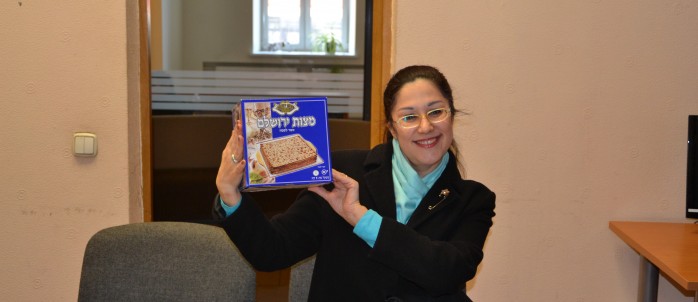
We are distributing matzo to VJC members again this year free of charge. Please pick up your matzo package from 10:00 A.M. to 7:00 P.M. on workdays from April 4 to April 11 at room no. 201 at the Lithuanian Jewish Community.

Each member is to receive one 1 kilogram package. You must provide identification or a VJC member’s card to receive the package.

Members of the Social Club are receiving matzo separately from 11:00 A.M. to 3:00 P.M. in the computer room on the first floor from April 4 to 15.

This is also a good time for those who need to pay their membership dues to do so, from 9:00 A.M. to 6:00 P.M. in room 209, or by transferring funds to the Vilnius Jewish Community, institutional code 291199610, bank account LT137044060000908075, bank code 70440. Please indicate for whom the membership fees are being paid.

Lox on Bagels: An Answer to Eggs Benedict?

OLYMPUS DIGITAL CAMERA

A Bit about Bagels

The history of the bagel is surrounded by myth and legend but seems to begin in the 12th century. One version has it that a Church ban on commercial Jewish bakeries was responsible for its appearance. In 1264 Polish grand duke Bolesław the Pious issued his Statute of Kalisz or Charter for Jews of Grand Poland which allowed Jews to freely by, sell and touch bread in common with Christians. In response a group of Polish bishops forbade Christians from buying any food at all from Jews, as it were anathema. As Moses ben Israel Isserles put it in the 16th century” “it is preferable to live on dry bread and in peace in Poland” than to remain in better conditions in lands more dangerous for Jews. At some point Jews were allowed to work with bread which was boiled, and they created the bagel to comply with his ruling, according to this version. In 1610 the first mention appears of the word “bagel” in Yiddish in the written sources, in regulations issued by the Jewish council of Kraków, which stated that bagels were to be given as a gift to women in childbirth.

Whatever the case, the bagel was popular among Jews in Eastern Europe, and came with them to America in the 19th and 20th centuries.

Businessman with Litvak Roots Has Successful Chain of Restaurants

Brozinas PA

The first time South African Litvak Robert Brozin came to Lithuania, he was most surprised by the fact it was in color. It sounds funny, one of the creators of the large restaurant chain Nando’s says, but that his first impression of the land of all four of his grandparents because he’d only seen Lithuania in black and white photographs before. When he cam back again for the fifth time in late March, he already had a number of interests going here, both business and representing the Litvak community in South Africa.

“Most Jews in South Africa have roots in Lithuania. There is a total of about 80,000 Jews here and I think about 95 percent have Lithuanian roots. It’s an interesting fact that the Jewish community in South Africa is very tight-knit, and the majority of Jews who have remained living in South Africa marry Jews from the community. My son is also married to a Litvak girl. We still maintain many Litvak traditions in the family and even have dishes from Lithuania…”

Read more in Lithuanian here.

Purim in Panevėžys

pan1purim

The Panevėžys Jewish Community kicked off their Purim celebrations in the events hall of the Panevėžys Community Center March 20. Panevėžys Jewish Community chairman Gennady Kofman greeted a large party of guests from Vilnius, Ukmergė, Šiauliai and Panevežys and read an excerpt from Magilat Ester.

Artūras Taicas, deputy chairman of the Lithuanian Jewish Community and chairman of the Ukmergė Jewish Community, greeted guests as well and passed on the good wishes of LJC chairwoman Faina Kukliansky. Panevėžys city deputy mayor Petras Luomanas and city council member Alfonsas Petrauskas also gave wonderful addresses.

pan6purim

Bagel Shop Café Purim Holiday Schedule

purim3

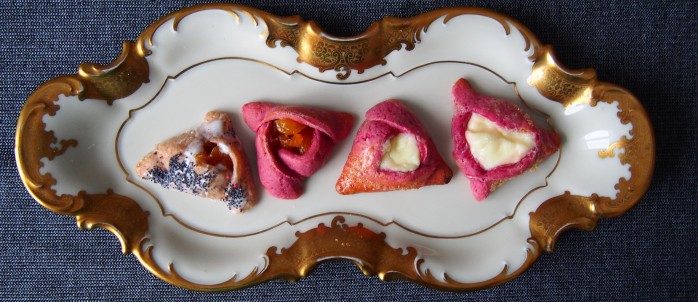
The kosher Bagel Shop Café of the Lithuanian Jewish Community is in full gear getting ready for the Purim holiday. There are several new pastry items the chefs there have cooked up, including the “red velvet” pastry taking the Jewish culinary internet by storm. Their special hamantashen recipe passed down through the generations uses yeast as well.

Senior chef Riva Portnaja says her family calls hamantashen “omentashen,” and that her mother always put yeast in the dough. According to her, Litvak hamantashen only contain poppy-seed fillings, and the triangular pastry is made so that is almost closed.

What Would Queen Esther Eat Today?

Esther, the star of the Purim story, is one of the bravest heroines for so many reasons–she not only strategized to save the Persian Jews from certain death (breaking social norms in doing so), but she also maintained a kosher diet as an undercover Jew in the Persian palace. Wait, what?

Legend has it that like many Jews today, Esther kept kosher by avoiding things like non-kosher meat, and instead enjoyed a plant-based diet full of fresh produce, grains, legumes, nuts, and seeds. For those of you with eating restrictions, you know how hard it is to turn down foods that everyone else is noshing!

In the story of Purim, food and celebration are central to her strategic success. In order to earn the favor of her husband, King Ahasuerus, she hosted two impressive (and probably extremely delicious!) banquets that set the stage for her requests of the King to save the Jews of Persia.

After all these years, delicious food and drink–like hamantaschen, Haman’s fingers, and plenty of wine–are essential parts of the celebration of Queen Esther and Purim.

If you’d like to party like Esther this Purim, click here for recipes.

Hag Purim Sameach!

OLYMPUS DIGITAL CAMERA

Purim is a happy time when sorrow, worry and fear take a vacation as the holiday of delicious food and jokes arrives. Purim is one of the most-anticipated and interesting of holidays on the Jewish calendar. It’s a celebration harkening back to the time when the Jews living in Persia were saved from destruction.

Book of Esther

The Purim story is contained in the Book of Esther in the Old Testament of the Bible. The heroine of the story is Ester, a beautiful young woman who lived in Persia, and the hero is her brother Mordecai. Ester was taken into the harem of king Ahasuerus and became queen, but the king didn’t know Ester was a Jew because she hid this from him. The villain of the story is Haman, the arrogant, egotistical vizier to the king. Haman hated Mordecai because he wouldn’t bow down and serve him, so Haman decided to destroy the Jewish people. In his well-known speech to the king, Haman said:

Bagel Shop Café on Television

bern

The Catholic newspaper and website bernardai.lt now has a video outlet as well and has presented a feature on the new Bagel Shop Café located at the Lithuanian Jewish Community in Vilnius. The video presentation in Lithuanian, Hebrew and English features short conversations with Lithuania’s two new rabbis on the meaning of kosher food and cooking, as well as a brief interview with Smhuel Levin, the chairman of the Lithuanian Jewish Religious Community, among others.

To view the interview, please direct your browser here.

bbb

Fayerlakh Concert and Bagel Shop at the Kaziukas Fair in Vilnius

Kaziukas2

The opening of Vilnius’s annual street fair will feature a concert by the Jewish song and dance ensemble Fayerlakh, at 5:00 P.M. at the Vilnius Old Town Hall square. The group is promising a whole range of music and performances, including a traditional Sabbath prayer and song.

Don’t forget, the Bagel Shop Café will also be at the fair on Friday, Saturday and Sunday. LJC staff, members and volunteers are all invited to come and help sell Jewish bagels during the fair. It should be a lot of fun and this year the annual street fair will include a Jewish shtetl section.

New Bagel Shop Opens with Great Expectations

beigel8
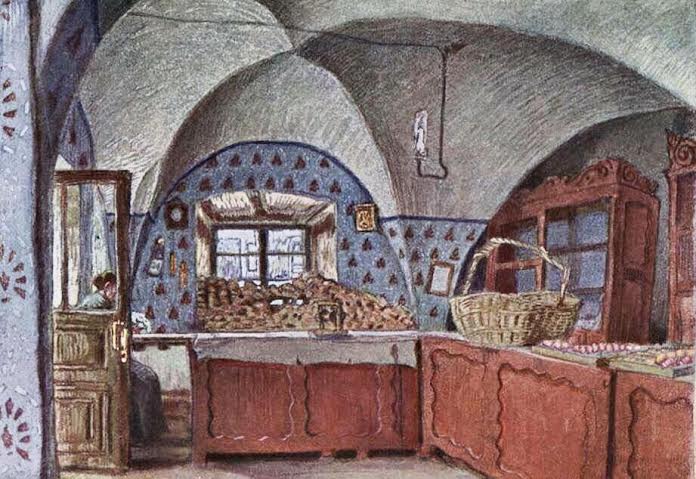
Bagel shop, Vilnius, 1910, by Mstislav Dobuzhinsky.

A new kosher café in Vilnius, Lithuania, had its grand opening Thursday with an overflow crowd spilling into the street.

The Bagel Shop café is housed on the first floor of the Lithuanian Jewish Community, which some visitors still refer to as the Kahilla, in a mostly neglected and empty cafeteria hall.

Guests and LJC staff began filtering in well before the scheduled 3 P.M. start and four cheerful women behind the counter began placing bagel sandwiches cut into quarters on plates on the café’s six small tables.

LJC chairwoman Faina Kukliansky addressed the small packed room and said the Bagel Shop Café is an important part of the Bagel Shop tolerance program the LJC has been carrying out for the last year or so with funding from Norway and the EEA Grants program. She said the project was supposed to end earlier but had been continued into the next year.