Children from the LJC children’s clubs came in costume with their parents to celebrate Purim at the Lithuanian Jewish Community. There was dancing, playing and sampling of the delicious hamantashen baked by the Bagel Shop Café. A great time was had by all.
Purim at the Panevėžys Jewish Community
Purim is the spring holiday when we celebrate the rescue of the Jews from death in Babylon. On March 12 the Panevėžys Jewish Community began the celebration with chairman Gennady Kofman reading the Purim story out loud, the Book of Esther from the Bible which tells of the destruction facing the Jews living in Babylon and the miracle of their rescue due to the efforts of queen Esther, the Jewish wife of the Persian king. Not only were the Jews saved, they defeated the king’s evil vizier Haman who chose the day for the destruction of the Jews by casting lots, but who was himself punished. Many children attended the Panevėžys Jewish Community’s Purim celebration. There was a dining table for children, the children put on plays and watched films and concerts in connection with Jewish history. Purim is the happiest Jewish holiday and there was much song and much laughter. Everyone received a small gift as well.
Bagel Shop Café Wishes You a Happy Purim and Offers Traditional Holiday Foods
Hag Purim sameakh!
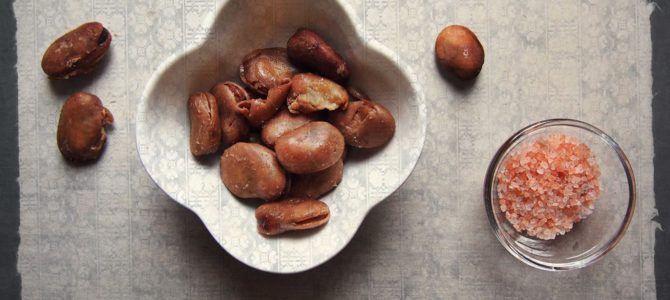
The Bagel Shop this week offers vegetarian bebelakh. During the Purim holiday period we are also making a variety of delicious treats including hamentashen and serving wine. We are making vegetarian dishes in honor of Queen Esther, who was a vegetarian. The Bagel Shop is located at Pylimo street no. 4 at street level in Vilnius.
Bean bebelakh, a recipe from Riva Portnaja’s mother Sara Berienė
Sara always made this dish for the Purim holiday where all dishes were vegetarian in honor of Queen Esther.
Soak a liter of large beans overnight, boil in salted water for a long time until they go soft. Served cold sprinkled with salt. Simple and delicious!
Free Hamentashen for Kids!
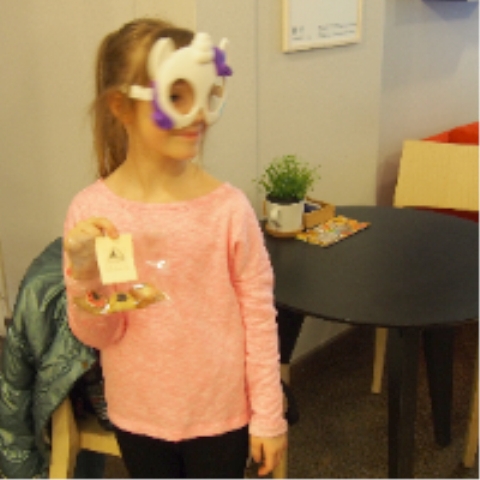
Children who come into the Bagel Shop Café in Purim masks or who say the secret code phrase–Hag Purim sameakh!–will receive a small gift.
This week Jews in Vilnius and around the world are baking the pastry called hamentashen, aka Haman’s ears, engage in an exchange of gift bags or Purim baskets of food and drink called mishloakh manot and put on the best parties of the year. Purim is the one holiday where adult Jews are allowed to get drunk and it considered customary to do so.
Our Litvak hamentashen are made with yeast according to recipes from families of Lithuanian Jewish Community members. Head baker Riva Portnaja tells how in her family they called hamantashen “ormentashen,” and her mother always added yeast to the dough. Classical Litvak hamantashen only used poppy seeds for filling and the triangles forming the base and top of the pastry are almost sealed close.
For more, see this facebook page.
A Big Thank-You for Making Kaziukas Fair Such a Success
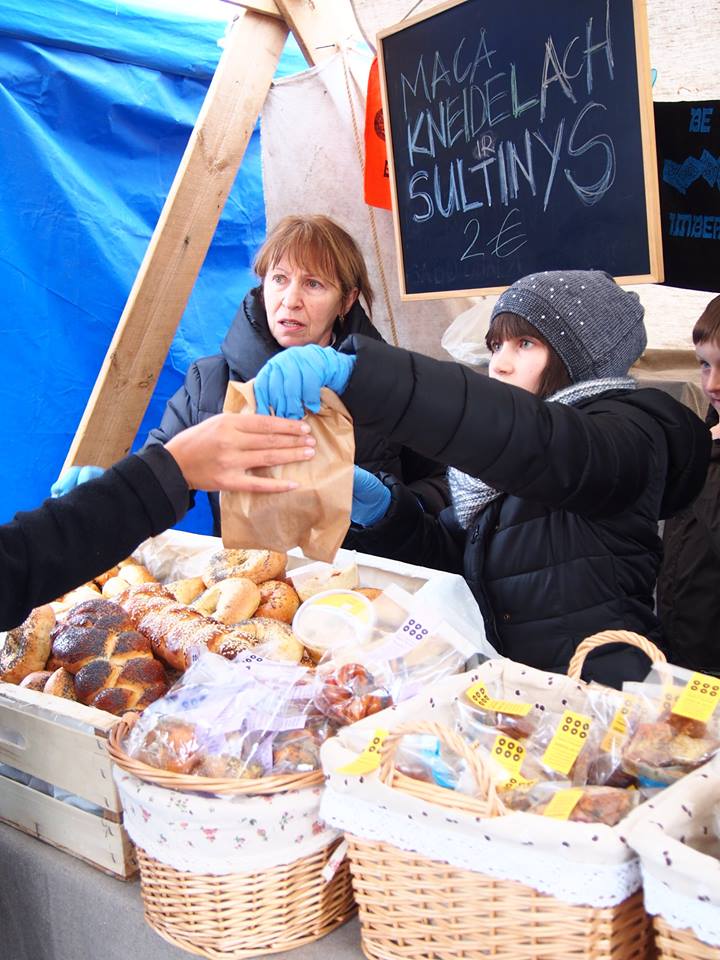
Lithuanian Jewish Community chairwoman Faina Kukliansky thanks everyone who helped make the Bagel Shop stand such a success at the annual Vilnius event this year, the Kaziukas Fair which began way back in the 17th century.
For their help, a big thank-you goes to Dovilė Rūkaitė, Rokas Dobrovolskisi, Riva Portnaja, Valentina Kot-Osipian, Gražina Pečkuvienė, Michailas Tarasovas and all the volunteers, including Simona Glazkova, Neta and Naomi Alon, Estera Reches, Vincentas Dobrovolskis, Asta Rainytė and her daughter, Elzė Rasimavičiūtė, Justė Čeičytė, Elena Grašytė, Daniela Mendelevič, Akvilė Ferguson and Geoff.
Kaziukas Fairgoers Sample Matzo Kneydlakh Soup at the Bagel Shop Stand
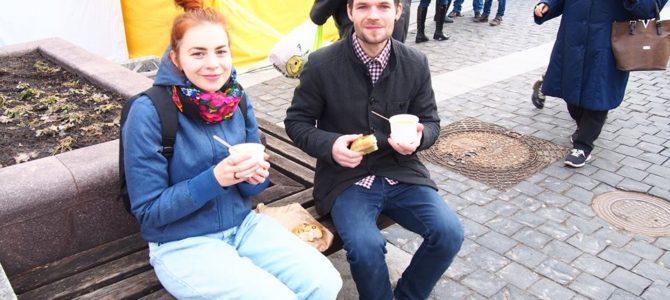
The Bagel Shop Café stand at the annual three-day Kaziukas Fair in Vilnius saw a brisk business in aromatic and delicious matzo-ball and chicken soup Sunday. Vilnius residents who tried it said it was great, so we plan to make it more often.
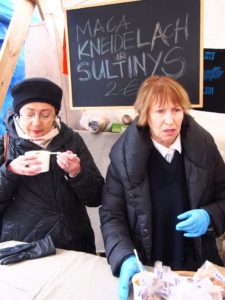
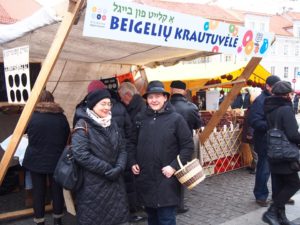
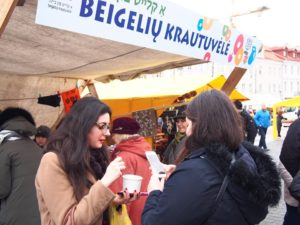
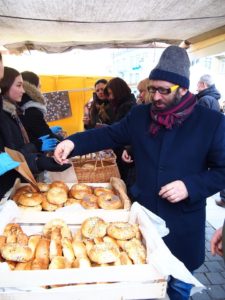
Bagel Shop Offers Fairgoers Matzo Kneydlakh

The Bagel Shop Café will be on site again this year for the annual Kaziukas (St. Casimir) Fair in Vilnius March 3-5 with a new menu item rarely seen in Lithuania but an old Jewish favorite: matzo ball soup!
Besides matzo kneydlakh (matzo-ball dumpling) soup, visitors to the Bagel Shop Café stand will also be served fresh bagels with a variety of spreads. If you’re in the area, be sure to stop by and support the team!
Matzo-ball soup recipe from Nina Sondakaitė-Mandelshtam, originally from Vilnius now living in Israel:
½ cup matzo flour (or ground matzo bread crumbs)
½ cup boiled water
1 egg
1 tablespoon rapeseed oil or chicken fat
salt, pepper to taste
Mix the matzo flour or crumbs with the water. Pour in beaten egg, mix, add oil or fat. Boil chicken broth. With moistened hands form matzo balls about 5 cm in diameter, boil in the broth. If you want the broth to be clear, boil the balls in water and then place in a bowl and cover with broth. If there are left-over matzo balls, cut them in half the next day and cook, eat with sour cream.
Bagel Shop’s First Customer Still Loves It
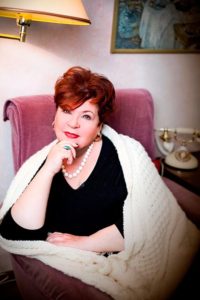
The Bagel Shop Café is celebrating its first birthday and asked its most loyal customer who came in the very first day and still visits often for her thoughts. Violeta Palčinskaitė is a poet, playwright, scene designer and translator, but is perhaps best known as a writer of children’s books. Several generations have grown up loving her poems and stories.
“Of course I have been visiting the Bagel Shop from the first day. It’s comfortable and feels like home, and the bagels really remind me of the baronkos of my childhood, which mother used to coat in half and spread with butter. Memories gently returned when I tasted that first bagel. The important thing is that you will something here which you will nowhere else! I like spending time here because all other cafés are more or less the same, but here you make real Jewish treats thanks to the creative women in charge who have inherited the food-making methods and can pass it on from generation to generation, and without whom that legacy would perish. I remember how I searched for the treat of my childhood, unsweetened baronkos, but it was never the same. Traveling in foreign countries, I once discovered the bagel in America, then in Israel, and I was overjoyed. That’s why I find it a very happy thing to come to the Bagel Shop in the center of Vilnius, besides which, it has the very best coffee which I have ever had in the city.
“I like the atmosphere, the café is cozy, it feels like being at home. I come often, whenever I can, and it doesn’t matter if beigalakh were supposed to be for breakfast or lunch. I can eat bagels day and night. My favorite is the bagel and lox, and with sprat, another smoked fish. I like the teiglakh the most, and I bring friends from Vilnius and foreign visitors in. They are very satisfied. I told my friend about the best coffee just last night. So let them all come and sample, and not just the coffee,” Palčinskaitė said, asked what draws her to the Bagel Shop.
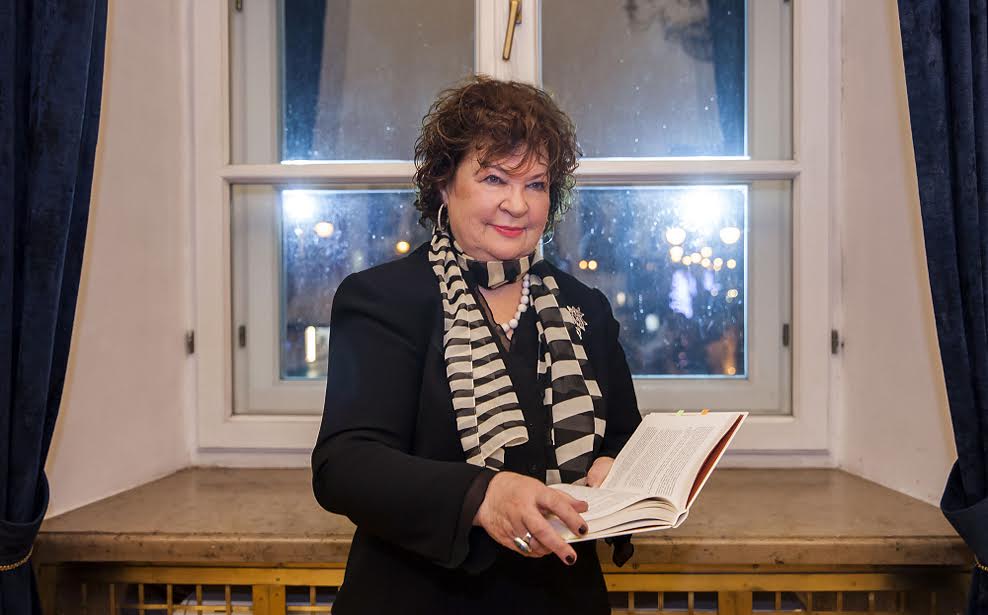
Currently she has many meetings with her readers. Her book “Atminties babilonai, arba aš vejuos vasarą” is one of the selections for Book of the Year. It’s a collection of memories from her happy childhood home in Kalvarija. It’s a complex testimony of the Soviet era and self-deprecating look at her own daily life as a writer, and stories about important Lithuanian cultural figures.
Palčinskaitė says it’s difficult to find time for all the meetings with readers. “Readers who would vote for my book are waiting for me. And the Book Fair is coming soon, the meetings are increasing, and there isn’t enough time to go to the Bagel Shop today,” she told us.
State-of-the-Art Jewish Museum Planned in Šeduva
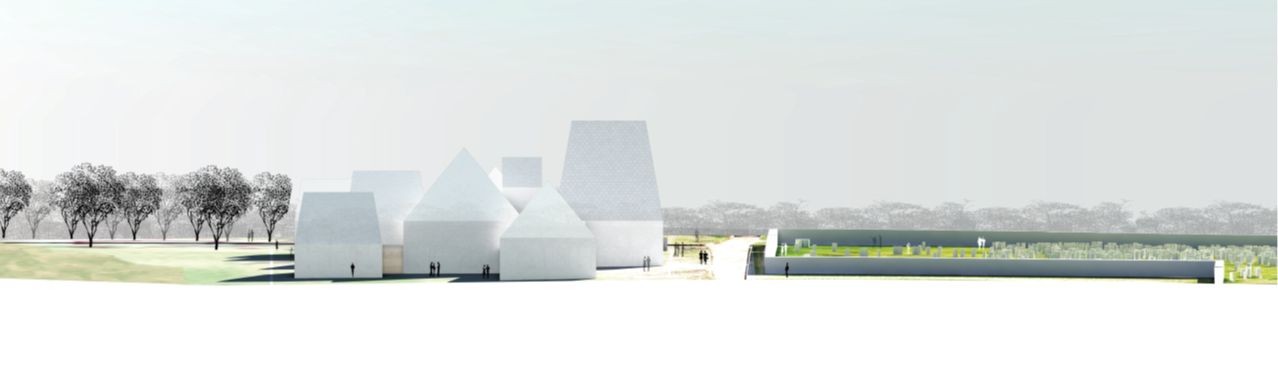
Preliminary design concept for the Lost Shtetl Museum
Plans have been announced for a state-of-the-art Jewish museum scheduled to open in 2019 as part of the Lost Shtetl memorial complex in Šeduva, Lithuania.
The museum complex is to be designed by the Finnish company Lahdelma & Mahlamäki Architects who also designed the POLIN Museum of the History of Polish Jews in Warsaw. POLIN won the 2016 European Museum of the Year Award. They are towork together with local partner Studia2A established in 1994 and headed by Vilnius Art Academy dean of architecture Jonas Audejaitis.
The museum is to be located next to the sprawling Šeduva Jewish cemetery, completely restored and opened in 2015 as part of the memorial complex. The complex includes memorials at three sites of Holocaust mass murders and mass grave sites and a symbolic sculpture in the middle of the town. A study of the Jews of Šeduva was conducted as part of the project and is to result in a documentary film called Petrified Time by film director Saulius Beržinis.
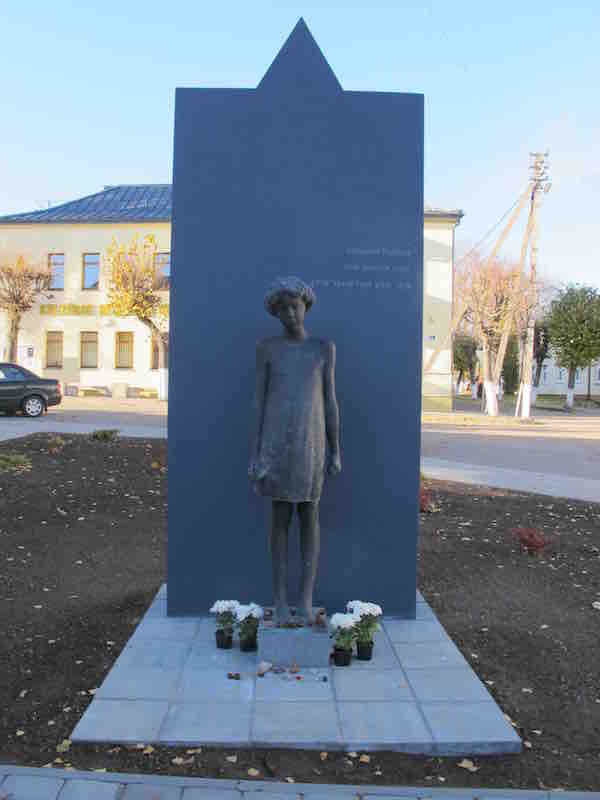
Memorial statue in Šeduva. Photo © Ruth Ellen Gruber
Sergey Kanovich, founder of the Šeduva Jewish Memorial Fund, said the Lost Shtetl Museum will employ advanced technologies to teach visitors the history and culture of Šeduva and similar Litvak shtetls. It is expected to serve as an educational and cultural center.
“Visiting the Lost Shtetl will be a history lesson which will allow national and international visitors to learn about the lost Litvak shtetl history and culture,” he said.
“Lifestyle, customs, religion, social, professional, and family life of Šeduva Jews will serve a center point of the Museum exhibition,” he said. Visitors to museum will learn “the tragedy of Šeduva Jewish history which in the early days of World War II ended in three pits near the shtetl.”
Sole Jewish Survivor of Holocaust in Šilalė Says Old Jewish Cemetery Cattle Pasture Now
Until World War II, the majority of the residents of the western Lithuanian town of Šilalė were Jews. The brick synagogue was built sometime around 1910 to 1914 at what is now the corner of V. Kudirkos street and Maironio street. There is a hardware store there now. The old Jewish cemetery is now pasture for livestock, with just the Holocaust mass murder site next to it fenced off.
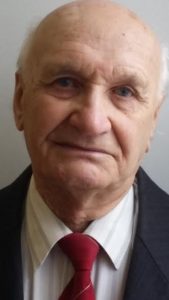
Lithuanian Jewish Community member Ruvin Zeligman is the sole survivor of approximately 1,500 Šilalė Jews murdered in the Holocaust. He was 10 when World War II began in Lithuania in 1941.
Although he hasn’t lived in Šilalė for many years now, when he speaks he still falls into the western Lithuanian dialect. His wife also comes from the region and they speak in dialect at home.
Zeligman remembers the great fire which ravaged the town in 1939, burning down his family home and the entire street, taking a terrible toll on the town’s mainly wooden buildings.
How do you remember Šilalė when you lived there with your parents and family?
At that time about 60% of Šilalė’s population was Jewish. My father was a religious figure: the cantor, mohel [performer of circumcision], a religious teacher and a reznik [a man educated in the rules of kosher slaughter]. My father graduated from the famous Telz yeshiva. He was a respected man and he helped the local residents of Šilalė with his knowledge of medicine, healing the sick. There were four of us children in the family. Mother took care of the home and the children. We lived well, back then each of us, the four children, had a golden goblet at home and mother used to bring out a silver candleholder for holidays.
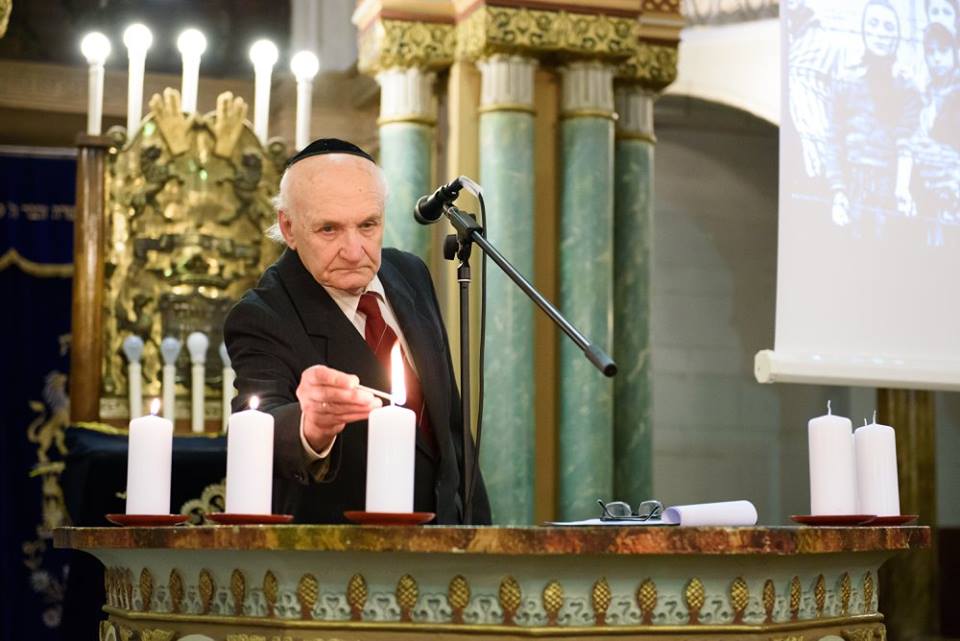
Zeligman lights candles for the murdered Jews of Šilalė at the Choral Synagogue in Vilnius
Looking Forward to the Bagel Shop Café’s First Birthday
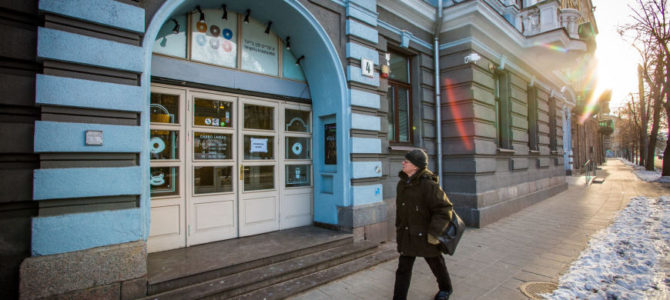
photo: Vidmantas Balkūnas / 15min.lt
The Bagel Shop Café is gradually becoming an unofficial Lithuanian Jewish Community tourism center. Although there is an official tourism center in Vilnius, it’s not as successful. So if you want to get the newest information about what to see, what to taste and with whom to speak, you’ll likely find it at the shop at Pylimo street no. 4. It should be noted it wasn’t supposed to serve this function. In 2014 the project, still in draft form, was born as a tolerance campaign against public expressions of anti-Semitism and hate. But in the end it became a real, cozy place.
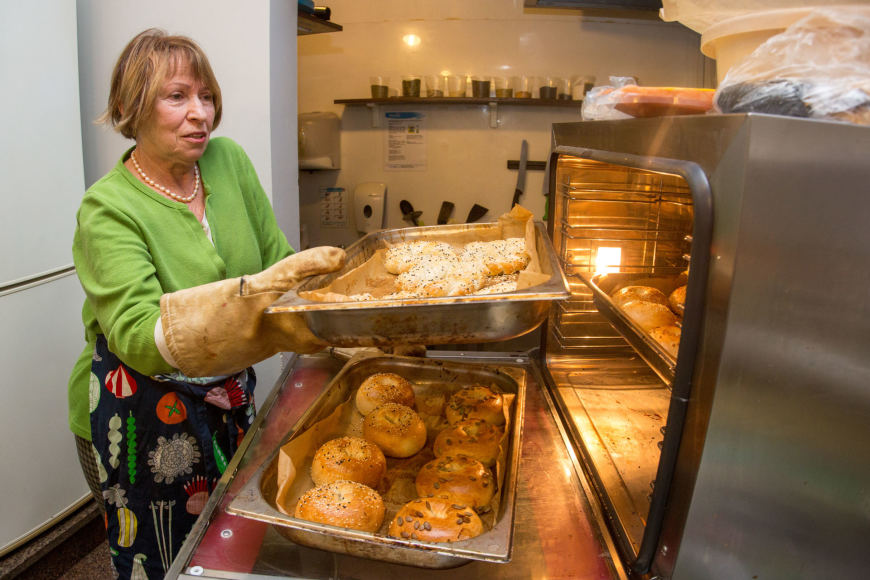
Full story in Lithuanian here.
Kaunas Jewish Community Celebration
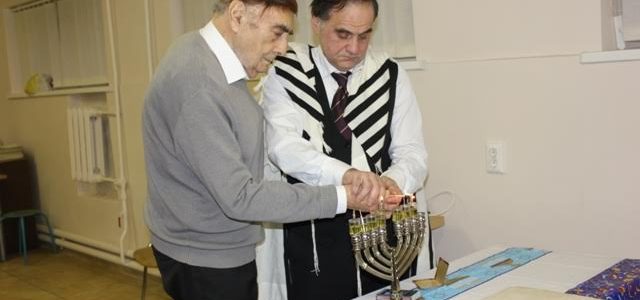
The Kaunas Jewish Community send their greetings for the New Year and Hanukkah, both of which members celebrated at a number of locations in Kaunas.
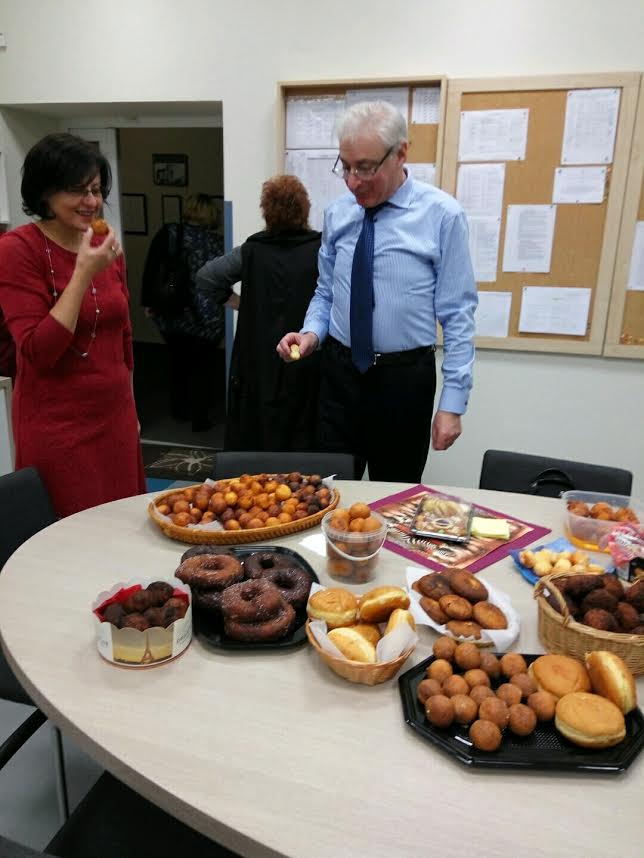
Festivities included lighting candles together, a violin and saxophone concert, a pancake-eating contest and potato pancakes and doughnuts for all.
Holiday celebrations were organized using Goodwill Foundation and LJC Social Program funds.
Greetings from Lithuanian Jewish Community Chairwoman Faina Kukliansky
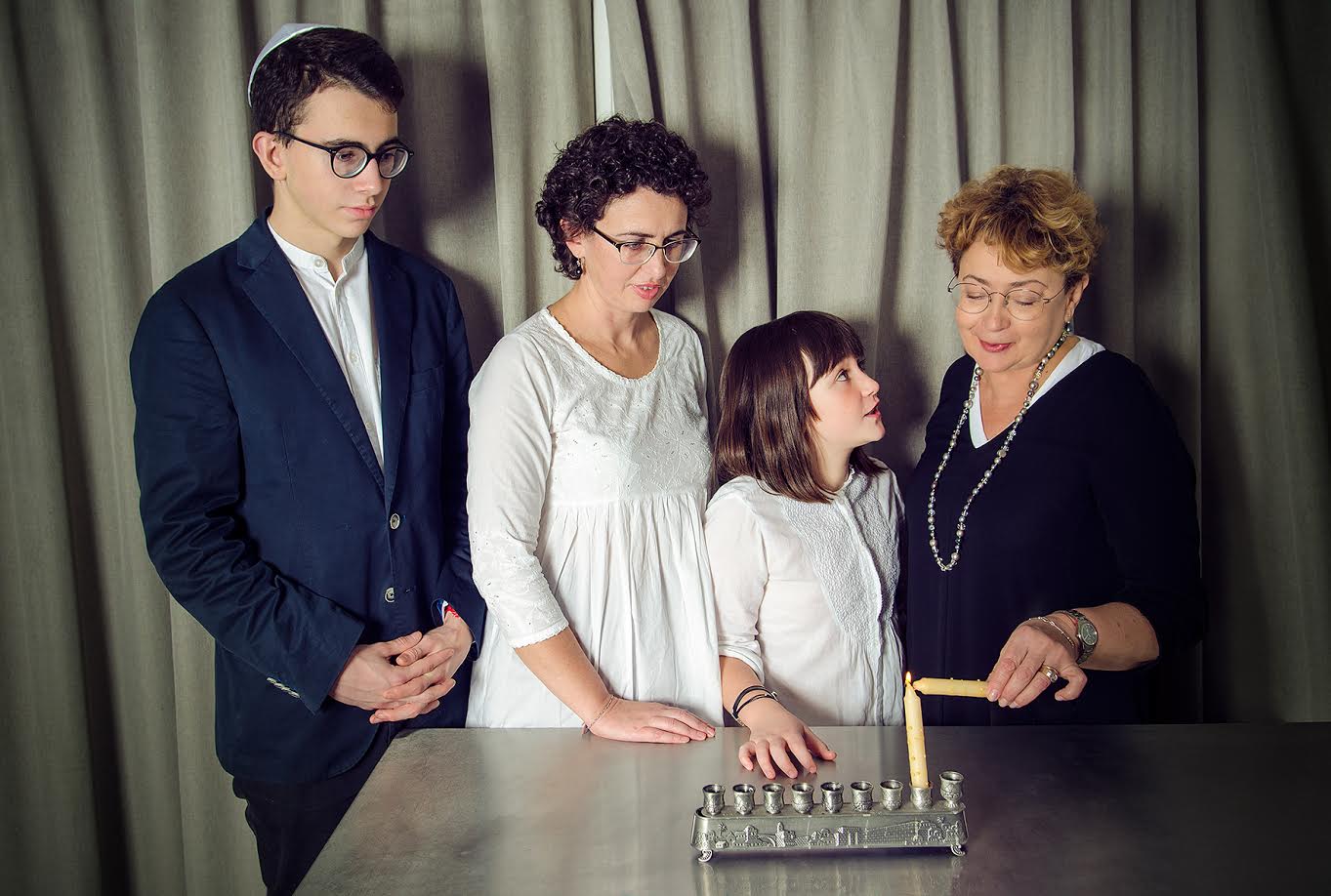
Dear members of the Jewish community, greetings to all on this holiday of Hanukkah!
I hope good feelings and warm and pleasant moments with loved ones will accompany you as you light the first Hanukkah candle. I wish you health and concord in your family, and that our children would grow up safe, dignified and happy and be proud of their parents and their roots.
It is a happy thing that there is ever-growing interest in the rich history of the Jews, and I probably won’t be making a mistake to say that there was never so much interest in the Jewish community as there is now, although so few Jews are left in Lithuania. The Jewish Community works actively to insure the rights and freedoms of our members and to promote Jewish interests. Unfortunately we weren’t able to achieve all our goals in 2016, but we will continue to strive after them in the coming year: monuments to those who shot Jews need to be removed, and Vilnius needs to have a monument commemorating those who rescued Jews from the Holocaust. We will continue to work on the issue of restitution of private property.
The Jewish Community is investing in the future, issuing scholarships and stipends for Jewish students and accomplished athletes. Plans for a new kindergarten have been completed, a kindergarten which will insure Jewish values are passed down to the youngest members of our community and prepare them for further education at the Jewish school.
One of the Lithuanian Jewish Community’s top priorities is to improve the living conditions of clients in our Social Programs Department. We help when emergencies and misfortune occur. This will remain our priority in 2017. We also help rescuers of Jews, whose humility and sincere gratitude encourage us to grow and improve. I would like to thank Jewish rescuer Regina for the gloves and socks she knitted.
The Community building itself has become lighter and cozier. We have new audio-visual equipment in the Community concert hall and there are always new and different exhibitions on display. It’s a great joy that there is cultural life, ferment and creativity in the community, and that performers from Lithuania, Israel, the USA, the Netherlands, Romania and other countries perform concerts here. It is also a happy occasion that we have deepened our contacts with the foreign embassies, other countries, municipal institutions and NGOs. Thanks to this cooperation legal amendments were finally adopted to make it easier for Litvaks to restore Lithuanian citizenship. We signed an agreement on cooperation with the American Jewish Committee, we are enjoying wonderful relations with other world Jewish organizations and we are expanding contacts in the West as well as in the East, with the Jewish communities in India and Japan.
Interest in religion is reviving as well. We have two rabbis working at the Community who give lessons educating young and old on various topics in Judaism.
In cooperation with international Jewish organizations and based on their recommendations, we have increased security at the Community and synagogue buildings, and are approaching western standards of security.
We have the only kosher café in Vilnius. The Bagel Shop has attracted significant attention and television crews from Canada, Germany and of course Lithuania, too, have featured the café. It has become a place where not only Jews gather, but also aficionados of Jewish cuisine and culture. Our challa-baking event was a good time for all, and US ambassador Anne Hall was enchanted by the experience. The Jewish languages project carried out with the Cultural Heritage Department attracted much attention by many residents of the Lithuanian capital and visitors from elsewhere. In greeting you all, I invite Community members to show even greater initiative and self-confidence in proposing ways to make their hopes and dreams come true, because the Community exists to benefit its members.
My holiday greetings go out as well to Israeli ambassador Amir Maimon and the chairmen of the regional communities: Gennady Kofman, Gercas Žakas, Artūras Taicas, Feliksas Puzemskis, Moisej Šapiro and Josifas Buršteinas. Thank you all for the active roles you play and for working together.
Khag Khanuka Sameakh!
Sholem Aleichem Students Celebrate Hanukkah
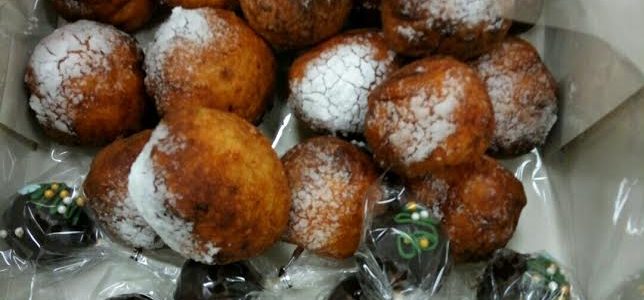
Gymnasium director for informal education Ela Pavinskienė said students in a volunteer group had learned how to make decorative garlands which were hung up around the school. The teacher taught students in grades 1 to 5 about the holiday, story and meaning of Hanukkah, and about kosher food rules. The students learned how to make traditional Hanukkah doughnuts.
Pavinskienė said students from grades 1 to 4 held a concert directed by third-graders, with each grade contributing a song, dance or skit. All participants received a doughnut and a small gift. The children came to the concert in their holiday best and in a festive mood. There was a contest for best homemade menorah. The menorahs are now on display on windowsills on the second floor. Each grade also held a light-show with music.
Children were asked to make doughnuts at home with their parents, and so many delicious doughnuts were brought in. A lottery was held for those who had contributed doughnuts with the winner selected at random who received a special prize.
Come Celebrate Hanukkah at the Choral Synagogue of Vilnius
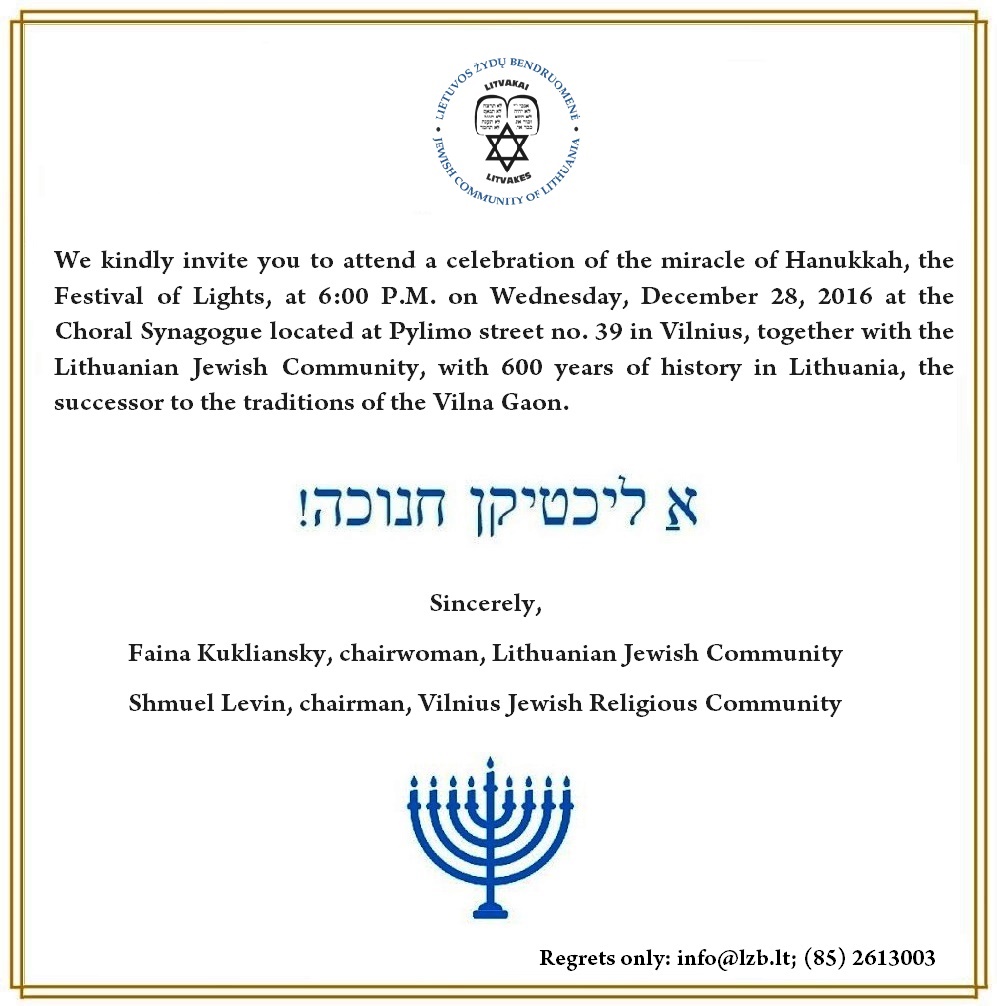 Program:
Klezmer music
Story of Hanukkah by Rabbi Kalev Krelin
Candle-lighting ceremony
Holiday statements and wishes
Traditional Hanukkah treats
The Secret’s Out: Bagel Shop Featured on Russian Travel Site
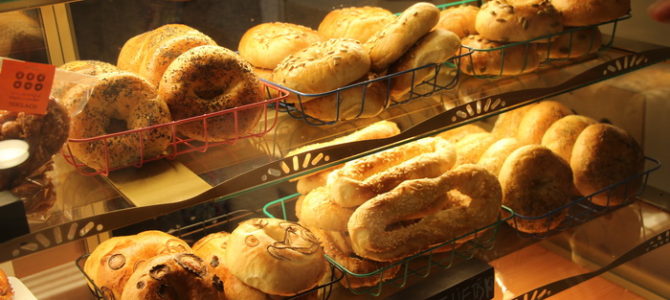
Travel journalist and photographer Evgenii Golomolzin from St. Petersburg, Russia, has written a long piece about the culinary experiences available in Vilnius, with the Bagel Shop featured prominently.
Vilnius is a cosmopolitan city where all sorts of ethnic dishes are on offer, he writes. As a heavily Jewish city of many centuries, it has preserved Jewish traditions even after the Holocaust. There is an old Jewish quarter. A year ago the Bagel Shop Café appeared as well. The kosher café the Bagel Shop is an exotic attraction. The Bagel Shop is located at Pylimo street no. 4. The café is not large and is very simple, but original. It feels like a small apartment with the books and knickknacks on the shelves. You can read the books as you sip coffee, you can buy a Hebrew dictionary or a Jewish calendar. But people come here not for the books, but for the real Jewish treats and the bagels (€0.85 apiece). Five kinds are sold at the café.
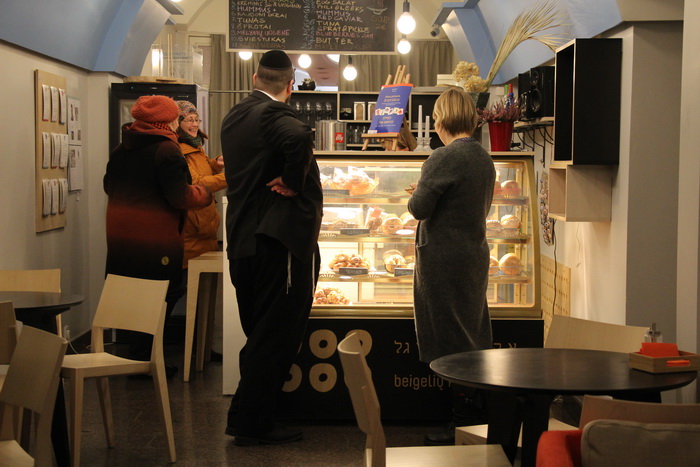
The display case also has lekakh, a Jewish sweet-cake; imberlakh, a pastry made of carrots, ginger and orange; and teiglakh, small cakes cooked in honey. You can order something more filling, for example, soup with dumplings (€2.00), an egg-salad sandwich (€3.60), tuna sandwich (€3.60) or hummus sandwich (€3.60). It’s all delicious. The café opened just recently—in 2016—but has already become a tourist attraction, the St. Petersburg-based travel publication writes.
Full story in Russian with very nice photographs here.
Canadian Celebrity Chef Chuck Hughes Visits Bagel Shop Café

Chuck Hughes, the Canadian celebrity chief who has an entire collection of series on Canada’s Food Network cable channel and the owner of two renowned restaurants in Montréal, visited the Bagel Shop Café last week.
Best known for his show Chuck’s Day Off, now carried by the Cooking Network on cable networks in the United States as well, Hughes has a special place in his heart and his kitchen for seafood.
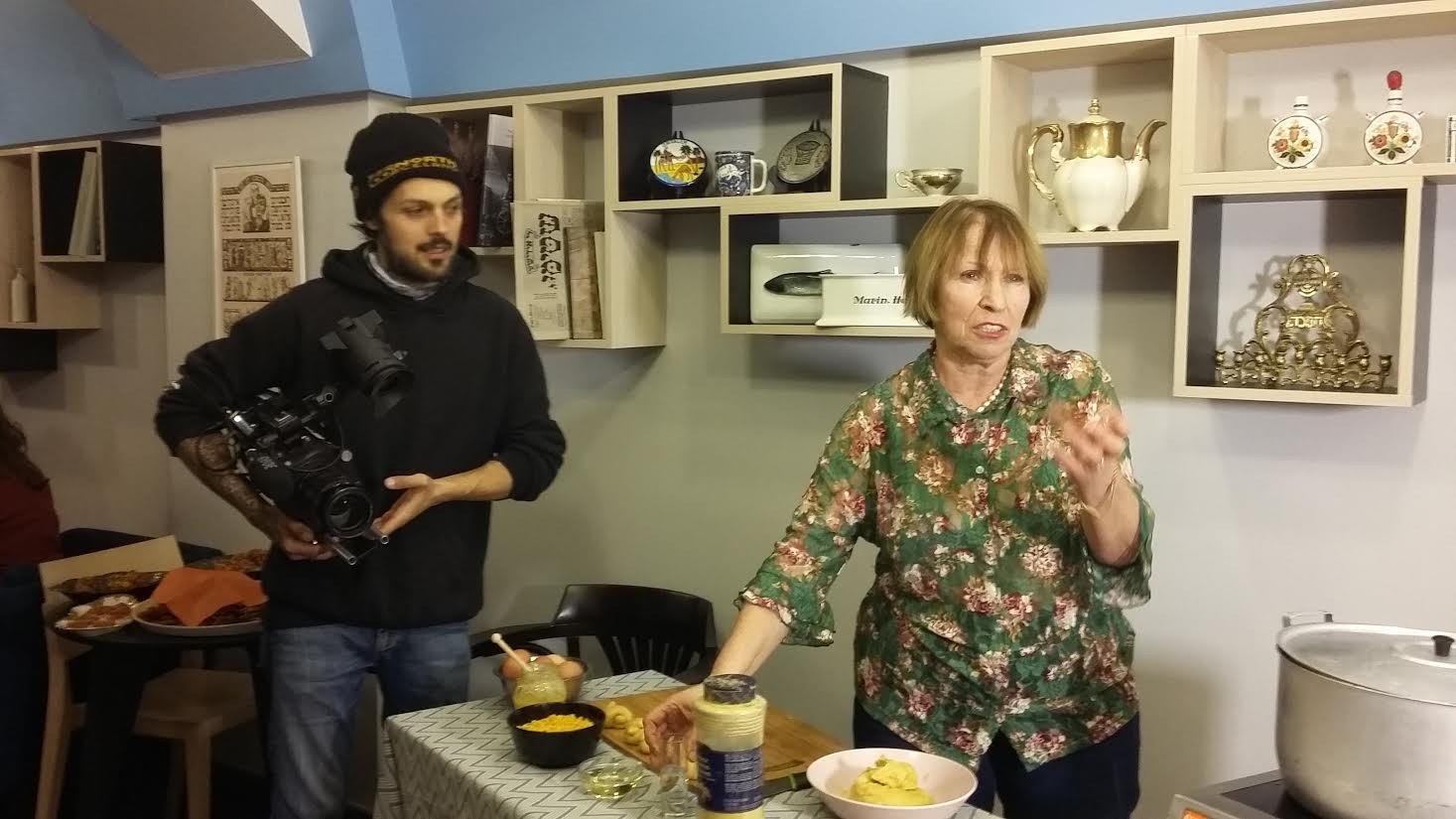
The LJC’s Ilona Rūkienė caught up with Chuck last week and asked him a few questions.
Israeli Booth at Annual Charity Fair in Vilnius
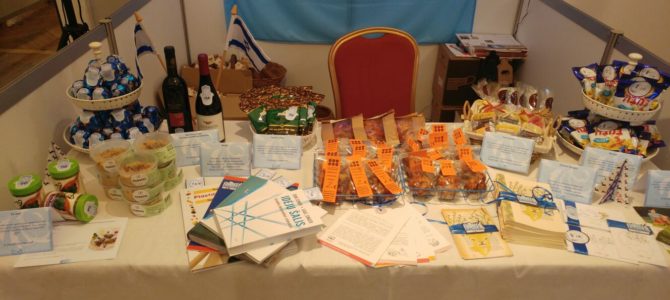
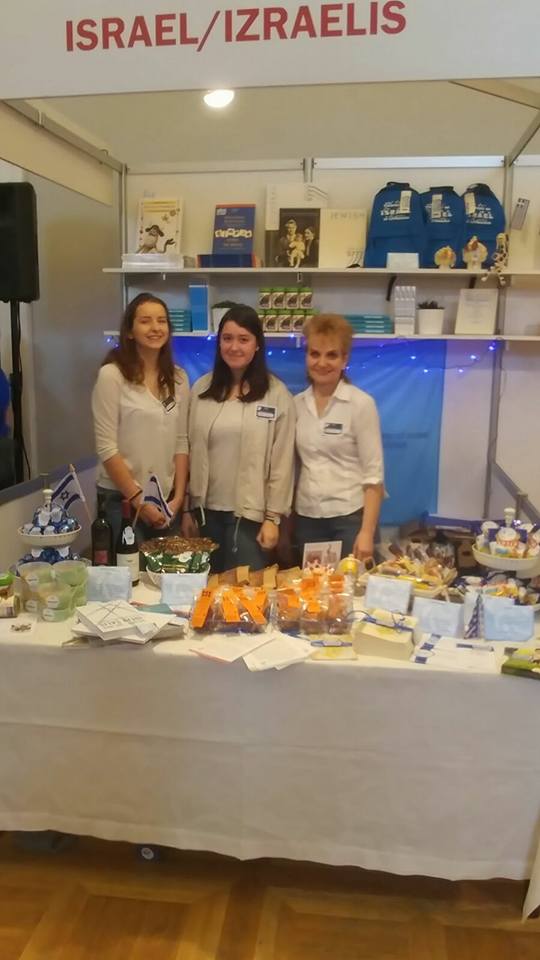
The Israeli booth at the annual International Christmas Fair on December 4 at Old Town Hall Square in Vilnius, set up jointly with the Bagel Shop of the Lithuanian Jewish Community, offered passer-by kosher snacks and kosher wine and all types of souvenirs. Young female volunteers from the Bagel Shop Café “manned” the booth and cheerfully explained every item on offer to visitors. The embassy of the State of Israel and the Lithuanian Jewish Community were both very happy with the success of the joint venture and with having the opportunity to contribute to the noble goal of the fair. The Israeli embassy booth took in 1,310.80 euros during the event.
Our deepest gratitude goes out to the volunteers:
Eglė Rimkevičiūtė, Unė Kormilcevaitė, Agota Laurinavičiūtė and Naomi Alon
This fair brings together for charity work annually representatives of the different embassies in Vilnius who present hand-made items for sale to city residents and guests. Thirty-four different countries and a number of communities as well as five international schools in Vilnius are represented traditionally at the winter holiday fair. Income from the Christmas charity fair goes to the coffers of a charity fund which currently supports 10 organizations: The Raseiniai Special-Needs School, the Way of Hope Raseiniai day center, the Vilijampolė social welfare home, the Visaginas social services center, the Overcoming Crises Center, a home for the elderly in Alanta in the Molėtai region, the hospital of the Lithuanian Health Sciences University, the Tautmilės Globa animal shelter, the Family Home of Mother Teresa and the Vilties Namai charity and welfare fund. The International Women’s Association of Vilnius of women from Lithuania and foreign countries who are temporarily living and working in Vilnius stages the International Christmas Charity Fair annually.
Thank You for the Wonderful Organization of Events

Recently events held by the Lithuanian Jewish Community have surpassed one another in the quality of organization and the positive emotional interest and participation by Community members have been a source of joy. LJC chairwoman Faina Kukliansky would like to thank organizers and participants:
“All of your contributions have made the life of Community members more interesting and diverse. We will remember the warm and moving moments we spent together when we all kneaded dough together with our daughters and grand-daughters, with our friends and guests during Sabbath challa-making events at all the communities in Vilnius, Kaunas, Klaipėda, Panevėžys, Ukmergė and Šiauliai, all of us joining together for the first time in the global Jewish Shabbos Project. I thank project coordinator Dovilė Rūkaitė, all the heads of the regional Lithuanian Jewish communities and the Bagel Shop cooks who participated together. I also thank the Lithuanian Cultural Council who supported the project.
I would also like to thank the organizers of the Mini-Limmud conference and its main supporters, the European Jewish Fund and the Goodwill Foundation, who supported the preparation of the program and the organization of interesting meetings. The traditional Limmud conference never fails to attract a group of concerned and engaged members of the LJC and their families to its ceremonial Sabbath dinner. It is important for us to come together and talk, to spend time in a pleasant environment, so we always strive to gather on weekends, in a beautiful natural setting at a good hotel, and to invite interesting guests to take part in a meaningful program, see famliar faces and discuss current events. Mini-Limud coordinator Žana Skudovičienė, who fields all preferences and ideas for the conference and balances different interests, insured that this year’s Limmud was memorable and event which provided good emotions and rest and recreation.
Thank you, all of you!
Faina Kukliansky, chairwoman
Lithuanian Jewish Community
Challa Event at the Kaunas Jewish Community
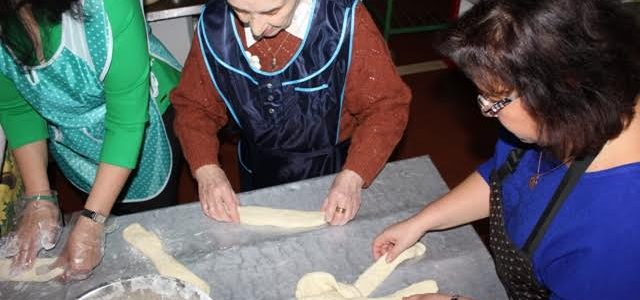
The Lithuanian Cultural Service supports the Lithuanian Jewish Community’s campaign to revive the baking of challa in the different regions of Lithuania.
On November 11 members of the Kaunas Jewish Community met together and separately to bake challa, and there was a strong sense of concentration and responsibility but also a lot of positive emotions. The fresh-baked challa adorned the Sabbath table within hours. Iser Shreiberg, the chairman of the Kaunas Hassidic religious community, gave an interesting presentation o the symbolism and traditions of making challa. Guests included former Kaunas ghetto prisoner Asia who came all the way from New York with her husband and son these many years later to her hometown to see her memories of early childhood again and to look for traces of the stories her mother told her.