Holocaust

Condolences

Sara Ginaitė-Rubinson died April 2. She was born March 17, 1924. She joined the underground resistance in the Kaunas ghetto, fought as a Jewish partisan, married a fellow partisan and was a professor of political science at Vilnius University after the war. She moved to Canada with her two daughters in 1983 following the death of her husband. She was the author of numerous books and was an outspoken proponent of Holocaust education in Lithuania. Her book “Resistance and Survival: The Jewish Community in Kaunas, 1941–1944” was published in Canada and won the Canadian Jewish Book Award for Holocaust History in 2008. She wrote several books about the Holocaust and lost Lithuanian Jewish communities in Lithuanian, including “Žydų tautos tragedijos Lietuvoje pradžia” [The Beginning of the Tragedy of the Jewish People in Lithuania].

The Lithuanian Jewish Community sends its deepest condolences to Sara’s entire family in Canada and her many friends in Lithuania. Her deep commitment to the memory of those murdered lives on.

Kalvarija Municipality to Renovate Synagogue Complex

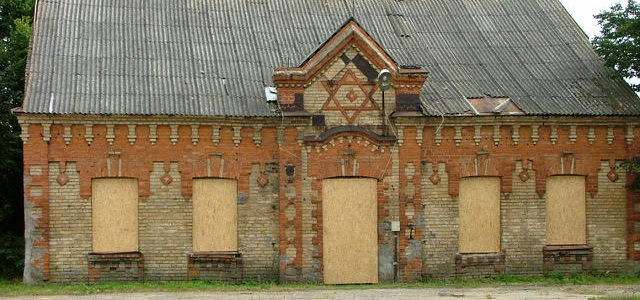
Vilnius, April 2, BNS–Leaders from the Lithuanian municipality of Kalvarija have decided not to break off an agreement on the utilization of the synagogue complex there as they had planned and are considering how to continue with renovation, following a meeting with the Lithuanian Jewish Community and the Lithuanian Cultural Heritage Department.

Financing pathways using EU structural funds were presented to municipal leaders at the meeting with discussion of financing from the Cultural Heritage Department as well.

Under the project drafted by the LJC several years ago, the total cost of work to fix the synagogue complex came to just under 2 million euros, but no funding was found.

The municipality and the LJC signed a use agreement in 2014, under which the municipality pledged to protect and utilize appropriately the buildings until financing was found to begin restoration to adapt the complex for public cultural, educational and academic use, for tourism and other uses.

“We really don’t have this kind of money, this is a small municipality and we can’t save up such sums or spend that much on synagogues,” Kalvarija mayor Vincas Plikaitis told BNS.

Lithuanian Jewish Community Responds to Proposed Legislation to Censor “Goods”

The Lithuanian Government has sent proposed amendments on the consumer-protection law to parliament for consideration which would ban sales of goods which “distort the historical facts of Lithuania or belittle Lithuania’s history, independence, territorial integrity and constitutional order.”

Proponents of the amendments say they’re needed to stop sales of toys which allegedly commemorate the incorporation of the Crimean Peninsula into the Russian Federation. Lithuanian legal, trade and consumer experts say the amendments aren’t specific and that anything which is sold is a “good,” meaning the law could be used to censor books.

Lithuanian Jewish Community chairwoman Faina Kukliansky has made the following statement regarding the matter:

“These kinds of amendments without precise explanation raise well-founded concerns and recall the dark times of government censorship. History and the writing of annual chronicles are two different things. Historical memory, especially concerning our country’s greatest historical tragedy, the Holocaust, is still in its beginning stages and probably won’t ever be final. These sorts of foolish, misguided attempts by the Government to protect consumer rights have given rise to anger, with foundation, in the international Jewish community. In Europe, where anti-Semitism is on the rise, and especially in Central and Eastern Europe, where laws are being passed on the ‘appropriate’ interpretation of history, Lithuania must remain open and democratic. Freedom of speech and human rights must be insured in our country just as actively as the calls to fight for the protection of consumer rights through these amendments.”

Tolreance Center Holocaust Commemoration Event

Dear friends of the Museum,

We kindly invite you to an event for Holocaust Remembrance Day (Yom ha-Shoah), a screening of the documentary film “The Story of Irena Sendler” and to meet historian Dr. Marcin Urynowicz on April 11 at 5.30 P.M. at the Tolerance Center (Naugarduko street no. 10/2, Vilnius). The event is being organized together with the embassy of the Republic of Poland and the Polish Institute in Vilnius.

Discovering Jewish Roots in Panevėžys

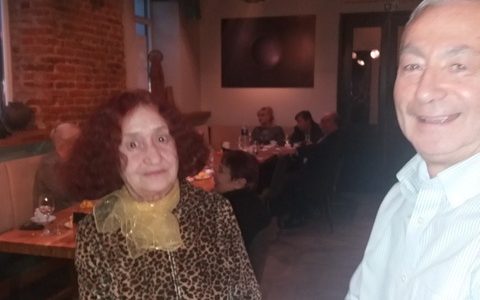
20180326_134846

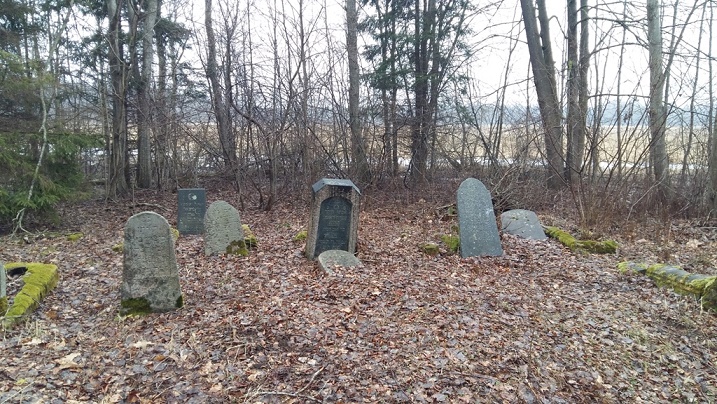
For the second time a group of 18-and-under young people from Odessa, Kiev, Minsk, Gomel, Moscow, St. Petersburg, Kherson and Krasnoyarsk–85 people in all–have visited Panevėžys as part of a project called Return to Roots. The goal of the journey was to learn about the culture, heritage and history of Litvaks in Panevėžys and Lithuania. Visiting surviving cemeteries, the synagogue and the school, the students witnessed Jewish heritage with their own eyes. Panevėžys Jewish Community chairman Gennady Kofman told the story of the destruction of a Jewish cemetery in 1966 to exploit the headstones as construction material. He said the local Jewish community had gone to great efforts to have the stones returned to the cemetery where the “Sad Jewish Mother” monument now stands. The students showed keen interest in the history of the Jews in the city and World War II. The delegation visited the former Ponevezh yeshiva established by the famous rabbi, Josef Kahaneman. After touring the city the students visited the town of Subačius and the Jewish cemetery there, where rainfall prevented any clean-up work. Alderman Vidmantas Paliulis came to meet the students there. Paliulis has exerted enormous efforts to clean up and maintain the Subačius Jewish cemetery, nicknamed “Paris.” He explained it was called that because of the name of the small neighboring village Paryžius.

The students were then received warmly and fed at the Panevėžys Jewish Community.

Jewish Theater in Inter-War Lithuania

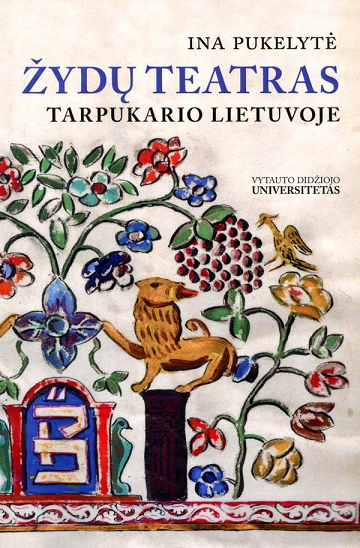
An event to launch the new book “Žydų teatras tarpukario Lietuvoje” [Jewish Theater in Inter-War Lithuania] by Dr. Ina Pukelytė will be held at 6:00 P.M. on the second floor of the Grand Dukes Hall in Kaunas on Wednesday, April 4.

All theater and book lovers are invited to attend to learn more about Jewish activities in Lithuania and other countries in the period between the two world wars, the place Lithuanian Jewish theater holds abroad and about the evolution of Lithuanian theater after the war.

Head of Vytautas Magnus University’s Theater Studies Cathedral Dr. Edgaras Klivis is to moderate the event.

Public Launch of Rudashevski Vilnius Ghetto Diary at LJC

The Lithuanian Jewish Community hosted a second, more public launch of the new Lithuanian translation of the Yitzhak Rudashevski Vilnius ghetto diary Tuesday, following last month’s and exclusive initial presentation at the Vilnius Book Fair.

Rudashevski was 14 when he and his parents were imprisoned in the Vilnius ghetto. He celebrated his 15th birthday there. The family hid during the ghetto liquidation, were discovered and then murdered, presumably at Ponar outside Vilnius. Over the last two decades Rudashevski’s diary has emerged as one of a handful of testimonies by children. It was initially published in extracts in the original Yiddish in Israel, and then in English in 1973. An older and newer French translation ha4xandra Zapruder’s books about children in the Holocaust and in a documentary on the same topic aired on MTV.

Kaunas Jewish Community Honors Most Active Members

The Kaunas Jewish Community has been honoring its most active members for over two decades now. This year KJC chairman Gercas Žakas invited such members to an evening party to thank them for their sincerity, presence, communication and individual contributions of the most varied sort, including contributing homemade pastry for the Hesed Club, cakes cooked with love for various occasions, furthering traditions and the Yiddish language, honoring Holocaust victims, broadening individual horizons through excursions and cultural events, sharing memories and experience, participating at sporting events and extending a helping hand to other members of the community.

Live musical performances contributed to the fun with performances by the collective including Mihail Javič on saxophone, Arvydas Joffė on percussion, Rolandas Babraitis on keyboard and the young vocalist Viktorija. We all know small gifts can cement friendships and everyone who attended received valuable books.

Rudashevski Vilnius Ghetto Diary Presentation March 27

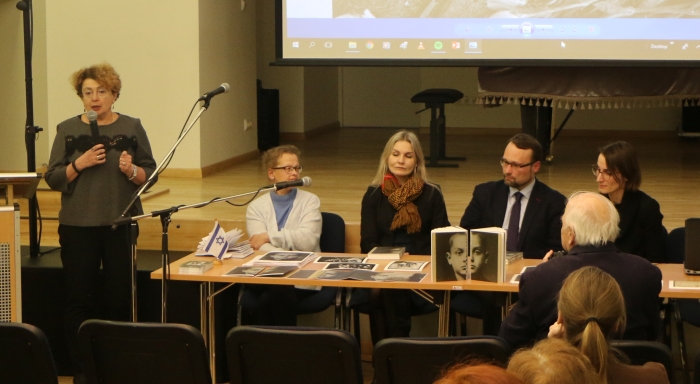
The literary monument of a fifteen-year-old chronicler of the Jewish ghetto to the suffering of the Holocaust, Yiddish culture, the will to survive and hope. For those who haven’t yet had a chance to learn about the Vilnius ghetto diary of Yitzhak Rudashevski, we invite you to come to the Lithuanian Jewish Community at 6:00 P.M. on March 27, 2018, for a public books launch. Participants: LJC chairwoman Faina Kukliansky, translator Dr. Mindaugas Kvietkauskas, designer Sigutė Chlebinskaitė, Holocaust historian Neringa Latvytė-Gustatienė. Dr. Lara Lempert will serve as moderator.

Zionist Political Aspirations

Sionistų politiniai lūkesčiai
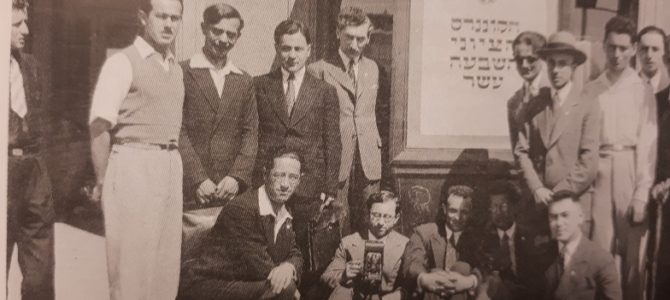
Photo: Students and reporters from Lithuania at the 17th World Zionist Congress, Berlin, 1931

The LJC webpage is publishing a series of articles by Dr. Eglė Bendikaitė called “Zionist Priorities in the Struggle for Lite (1916-1918)” dedicated to marking the 100th anniversary of union of Zionist organizations in Lithuania. The first part was published here February 15 here.

The World Zionist Organization was established at the August, 1897, meeting of the First World Zionist Congress in Basel. Lithuanian Zionism disappeared as a subject of inquiry along with the Lithuanian Jewish community slaughtered in the Holocaust. Following Lithuanian independence more scholarly attention is being paid to the movement.

The word Zionism comes from Mount Zion, where the original Temple was built in Jerusalem. Early in Jewish history it came to serve as a synonym for Jerusalem and the Land of Israel. As a symbol of the desire to return to the Promised Land, it was an element of Jewish prayers for centuries. It was only towards the end of the 19th century it acquired a political meaning and began to stand for a social movement whose goal was to create a political home for the Jewish people in their historical homeland, in other words, to reestablish a Jewish state.

Condolences

Edmundas Ruvinas Zeligmanas passed away March 22. He was born February 25, 1931. He was a member of the Vilnius Jewish Community and the Union of Concentration Camp and Ghetto Prisoners. Our deepest condolences to his widow Janina, his daughter and all his many friends and family.

Zeligmanas was the sole survivor of the mass murder of the Jews of Šilalė. He was 10 when war broke out in Lithuania. He came from a religious family; his father was a cantor and studied at the Telzh yeshiva. Zeligmanas attended a religious school at the synagogue as a child. After losing his entire family in the Holocaust, he went on to study physics, taught physics, worked as an engineer at a counting machine factory and taught electronics at the Construction Technicum. He lived to have great-grandchildren. A frequent face at the synagogue in Vilnius while his health allowed, he was a regular member of the minyan there. May he rest in peace.

Invitation

A ceremony to unveil a memorial plaque commemorating German Jews sent to the Ninth Fort in Lithuania and murdered on November 25, 1941, will be held at 11:30 A.M. on April 13, 2018, at the Ninth Fort Memorial Complex, Žemaičių highway no. 75, Kaunas. You are invited.

Sabbath Celebration

The Lithuanian Jewish Community invites you to a Sabbath celebration with Righteous Gentile Ona Landsbergienė’s great-grandson Gabrielius Landsbergis. LJC executive director Renaldas Vaisbrodas will moderate.

The Sabbath ceremony will be held on the second floor of the LJC at 6:30 P.M. on Friday, March 23. The number of seats is limited and registration is required. Call 8 678 81514

Lithuanian Public Television Begins Righteous Gentiles Series

Lithuanian public broadcaster LRT has begun airing a series called “Righteous Gentiles,” presenting the stories of Lithuanians who rescued Jews from the Holocaust. Almost a thousand Lithuanians have now been officially recognized as Righteous Gentiles, per capita the largest percentage in any country. According to the national television broadcaster’s site, the series will tell hitherto unknown stories of Lithuanian heroism during the Holocaust.

Video and more information in Lithuanian available here and here.

Academic Ethics Ombudsman Fired for Anti-Semitism

Virgilius Sadauskas has been fired at academic ethnics ombudsman.

The Lithuanian Jewish Community welcomes this win for common sense and is grateful to the 29 MPs from the Liberal, Conservative, Social Democratic and Peasants factions for initiating a vote of confidence in Sadauskas.

The LJC feels the actions by this public servant, offering a monetary reward for collecting information “about people of Jewish ethnicity who contributed to deportations and torture,” incited ethnic discord and fall under the IHRA definition of anti-Semitism adopted by the European Parliament on July 1, 2017.

We hope this decision becomes an example of best practices in the continuing fight against anti-Semitism and other forms of hatred in our country at the national and community level.

In a secret poll, 77 MPs voted in favor of firing Sadauskas, 17 voted against and 13 abstained. Three ballots were ruined.

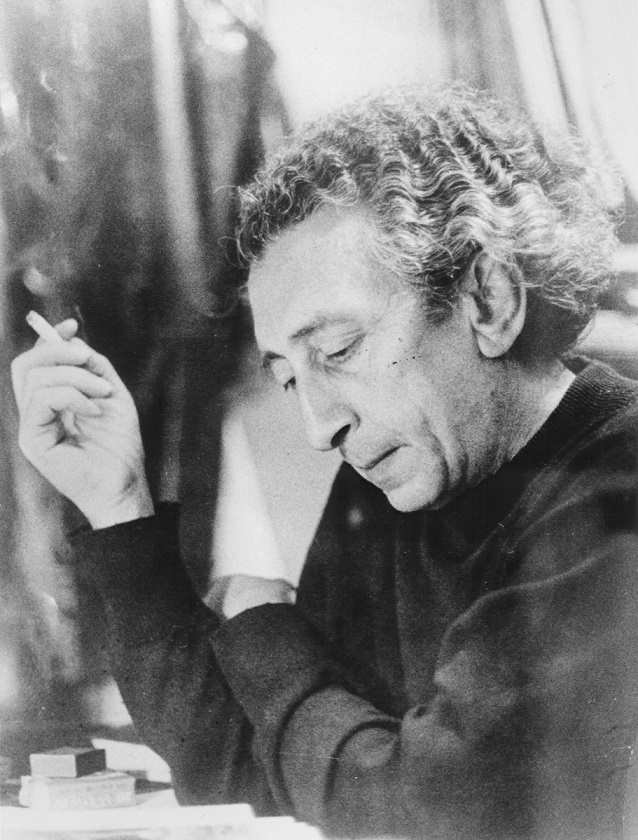
Abba Kovner’s 100th Birthday

Loss and renewal, the lot of victim and resistance, extermination and rebirth: these are the themes the writer Abba Kovner (1918-1987) wrote about from his own experience.

The first biography of the poet and partisan leader written by Dina Porat won the National Jewish Book Award for explaining history and bringing it to life.

Kovner was born in Oshmyani on March 14, 1918, a Lithuanian town in Belarus about 50 kilometers from Vilnius. After making aliyah to Israel following the war, he was often presented as a poet and prose writer, but Litvaks remember Kovner as a partisan leader who went on to help found the modern state of Israel.

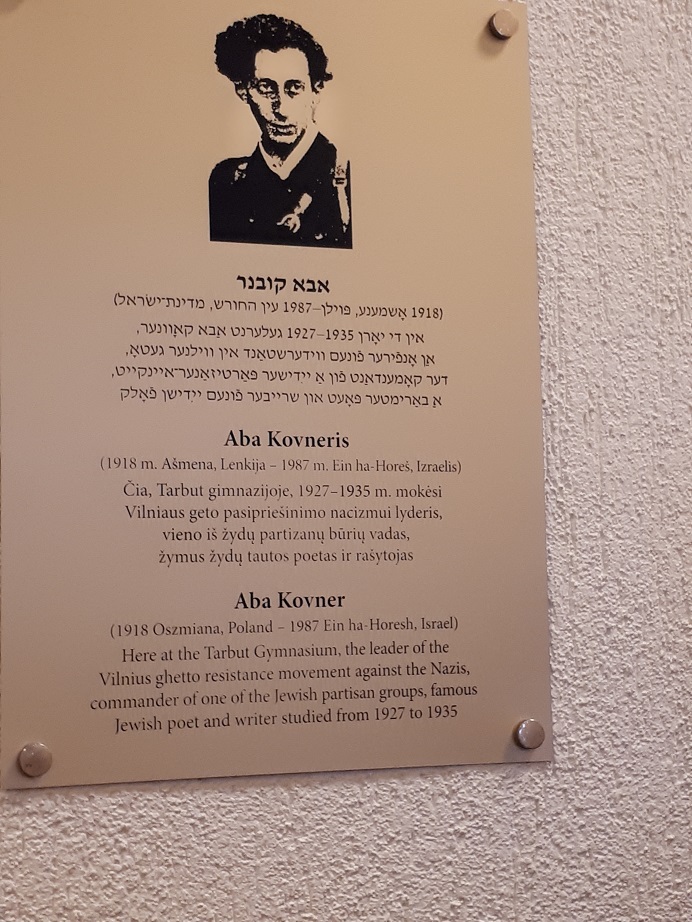
In 1927 his parents moved the family to Vilnius and Kovner attended the Tarbut Gymansium. This building now houses the Lithuanian Jewish Community. He received a Jewish education there, including Hebrew and exposure to modern literature, and began to write poetry while in high school. In 1939 he was admitted as an auditor of classes at the Arts Faculty of Vilnius University. He engaged in illegal Zionist activities during the Soviet occupation of 1940. He became leader of the Ha-Shomer Ha-Tzair Zionist youth movement.

Plaque Commemorating Abba Kovner Unveiled at LJC

To mark the 100th anniversary of the birth of poet and Jewish partisan Abba Kovner, the Lithuanian Jewish Community March 14 unveiled a memorial plaque in his honor. The LJC is housed in the same building where Kovner attended high school until 1935, the former Tarbut Hebrew Gymnasium. The ceremony was attended by chairwoman Faina Kukliansky, fellow Jewish partisan Fania Brancovskaja and Israeli ambassador to Lithuania Amir Maimon, among others. Brancovskaja told the small gathering her memories of the Jewish leader.

A Year of the Jews without Jews?

Position of the Lithuanian Jewish Community
March 13, 2018

Today the parliament of the Republic of Lithuania is scheduled to consider announcing 2019 the Year of the Jews. What the Lithuanian Jewish Community thinks about this is apparently of interest only to members of the media, not the initiators of the Year of the Jews measure.

The writers of the measure have not consulted with the LJC, the largest Jewish organization in Lithuania, at any stage of their initiative, which compels us to question the contents of the proposed resolution and its sincerity. The laconic legislation contains nothing that doesn’t happen every other year, except for, one supposes, allocation of funding for a special commission or commissions. We hope if the measure is adopted it won’t turn into the formation of yet another commission which takes students on Holocaust “excursions” through mass graves during Sabbath.

With no prospect of learning the plans and intentions of the authors of the idea first-hand, this strange initiative looks like some sort of atavism of former times, as when Thursdays were fish day. On other days the people were not provided fish, but on the 100th anniversary of the founding of the Republic of Lithuania, is the issue of Jews really so uncomfortable and uninteresting? A whole slew of important dates for Lithuania and the Lithuanian Jewish Community are yet to come this year, including the 30th anniversary of the reestablishment of the Community; the 100th anniversary of the unification of Lithuanian Zionists, who supported Lithuanian statehood; the 75th anniversary of the liquidation of the Vilnius ghetto and the 115th anniversary of the founding of what is now Vilnius’s only working synagogue. We therefore call upon the authors of this Year of the Jews to begin that year this year, to celebrate 100th anniversary of the modern Lithuanian state together with the Lithuanian Jewish Community.

The Lithuanian Jewish Community esteems the progress of the state in solving issues topical for all of us, but political games using the Jews but not including the Jewish community are not an appropriate way to insure effective dialogue between ethnic Lithuanians and Jews.

Lithuanian Jewish Community

Pylimo g. 4
LT-01117 Vilnius
T:+370 5 261 3003
info@lzb.lt
www.lzb.lt