Holocaust

Seeking Todes Family Roots in Panevėžys

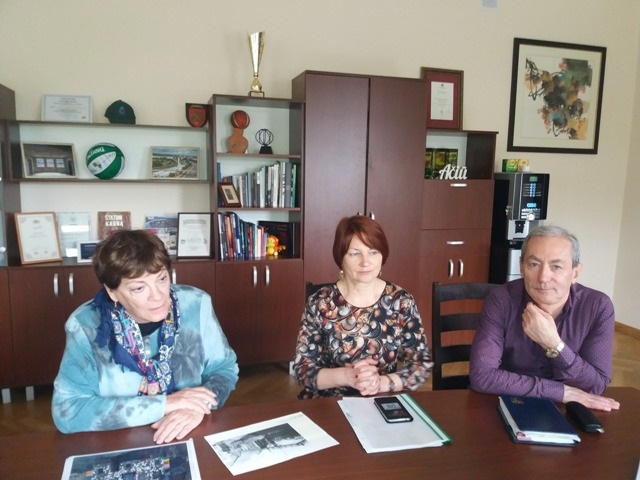
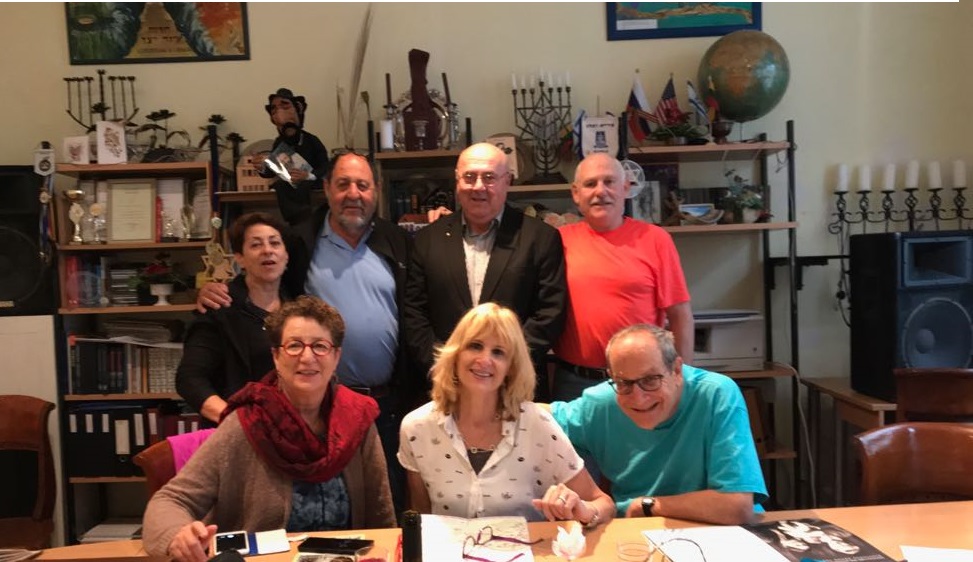
Two families from the United States and Israel visited the Panevėžys Jewish Community May 15. Jack and Rose Todes came from Philadelphia and his sister Phillipa and husband Benjamin Segan arrived from Israel. Their ancestors lived on Ukmergės street in Panevėžys. Grandfather Todes was a member of the Panevėžys city council in 1890. The family owned real estate, shops and factories.

Phillipa Segan was greatly interested in archival photographs of the city and promised to keep in touch.

Following the visit, Panevėžys Jewish Community chairman Gennady Kofman took the guests to the Holocaust mass murder site in Kurganava Forest where 24 members of the Todes family were murdered in the early days of World War II in Lithuania.

Europe Day Celebration in Kalvarija, Lithuania

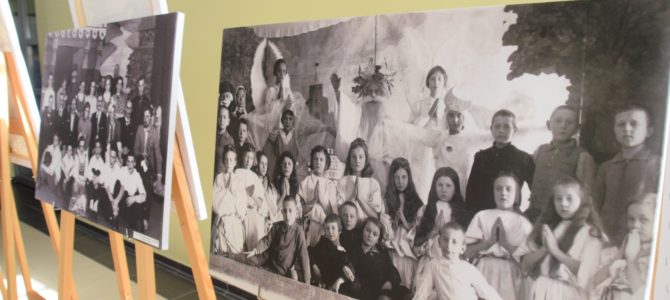
The Kalvarija Public Library held events to celebrate Europe Day on May 9, 2018. Historian Alvydas Totoris led a large group on a tour of Jewish features surviving in the small Lithuanian town. The walking tour concluded at the large synagogue complex in Kalvarija where there was an exhibit of old photographs of the city.

More information in Lithuanian here.

Lithuanian Translation of Rudashevski Diary Presented in Tel Aviv


Photo: Milda Rūkaitė

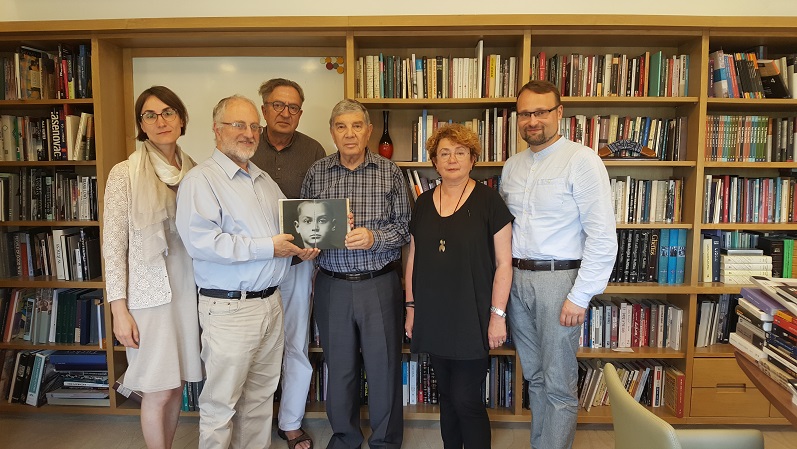
The Beit Vilna association of Litvak survivors from Vilnius hosted a presentation of the new Lithuanian translation of Yitzhak Rudashevski’s Vilnius ghetto diary in Tel Aviv May 16. Rudashevski’s two surviving cousins Sora Voloshin and Golda Rudashevsky attended the event. Voloshin escaped while her family and Ytizhak and his parents was being sent to Ponar to be executed. She later found the diary written in school notebooks in the ruins of a location where the Rudashevski family hid.

The Lithuanian translation was the initiative of the Lithuanian Jewish Community. LJC chairwoman Faina Kukliansky and Lithuanian ambassador to Israel Edminas Bagdonas attended the event in Tel Aviv, as did Beit Vilna director Miki Kantor and Arie Ben-Ari Grozdensky, the chairman of the executive board of the Association of Lithuanian Jews in Isrsael.

Rudashevski’s diary is one of only a few Holocaust chronicles recorded as events happened, and one of even fewer such diaries written by children. He wrote the diary in Yiddish. The Lithuanian edition contains the same Yiddish text in the second half of the book.

March of the Living 2018

At 12 noon, Wednesday, May 23, 2018, we will march with Litvaks from Israel on the path 70,000 Jews walked to their mass murder from the Ponar railroad station to the Ponar Memorial Complex.

We invite you to come and remember what happened.

This year we ask those wishing to make use of transportation provided by the Lithuanian Jewish Community to register beforehand by sending your name and surname by email to info@lzb.lt or to call +370 672 40942. A bus will depart from Pylimo street no. 4 at 10:50 A.M. on March 23 to carry registered participants to the event.

High-Profile Ceremony for New Museum in Lithuania

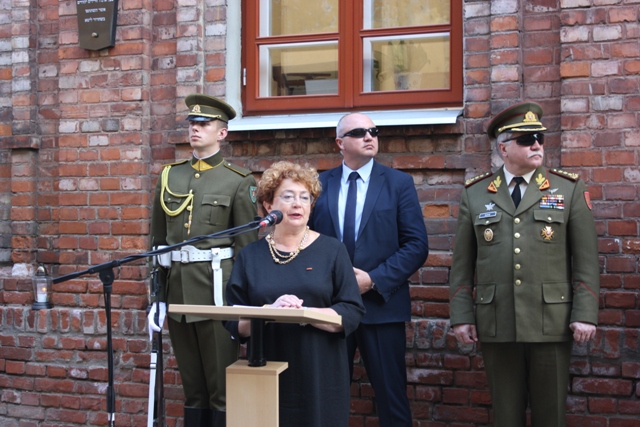
On May 4, 2018, a ground-breaking ceremony for the Lost Shtetl Museum and Memorial Complex took place in the middle of Lithuania, in Šeduva. The project is designed by professor Rainer Mahlamäki and Lahdelma & Mahlamäki Architects, Finland. Professor Mahlamäki attended the ceremony, as did Dr Inna Rogatchi, the author of a forthcoming film and book on Rainer Mahlamäki’s memorial architecture projects.

The ceremony was attended by the entire leadership of Lithuania and a large group of the diplomatic corps. President of Lithuania Dalia Grybauskaitė sent a letter of greetings to the ceremony which was read by the president’s special adviser.

The president of Lithuania said in her address: “Today this symbolic capsule marks not only the start of the construction of this unique museum. It also heralds the reconstruction of an important part of Lithuanian history closely interlinked with the history of Lithuania’s large Jewish community and its tragic fate. The Lost Shtetl Museum will bring back from oblivion the names and faces of many families, friends and neighbors, as well as their customs and traditions.”

Full text here.

Victory Day 2018 in Panevėžys

Members of the Panevėžys Jewish Community together with Panevėžys city residents came to the memorial to the unknown solider on the warm and sunny morning of May 9. The memorial contains the mortal remains of soldiers who fell in the city and region of Panevėžys from 1941 to 1945. They came to mark Victory Day, when Nazi Germany capitulated to the Allies 73 years ago, celebrated in the West on May 8 as Victory in Europe Day because of time-zone differences.

People of all ethnicities suffered during World War II, but as a percentage the Jewish people lost the most members of their population. Panevėžys residents and members of the Jewish community laid wreaths and lit candles at the monument marking the location of the Panevėžys ghetto gates. Everyone observed a minute of silence for the victims of the Holocaust in the city and region, where more than 13,000 Jews were murdered. Also attending were Russian embassy advisor L. Nikolai Yurevich and Belarusian embassy advisor Aleksandr Ignatenko. Both wished everyone present peace.

Panevėžys Jewish Community chairman Gennady Kofman welcomed and greeted everyone on the occasion of Victory Day, and noted next to the monument where everyone had gathered once existed the Panevėžys ghetto, where more than 10,000 people were held before being murdered in surrounding forests.

The chairman also spoke about Lithuanians who had risked everything to save Jews from death. He also noted the Panevėžys Jewish Community has a member, Yefim Grafman, who survived the Nazi blockade of Leningrad, and that Yuri Smirnov had cheated death and survived the Holocaust through a miracle. The chairman thanked all present for not forgetting the holiday and for remembering the soldiers who fell fighting for our lives. He wished everyone peace, good health and success.

Later members gathered at the Jewish community building and recalled the fates and heroism of their fathers, grandfathers and great-grandfathers who fought the Nazis and died during World War II. Members took away memories of the dead and the undying hope such things will never happen again.

Searching for Jewish Roots in Panevėžys

Descendants of the Navias and Frame families led by the guide Viljamas Žitkauskas visited the Panevėžys Jewish Community to find out more about their genealogies and great-grandparents.

They told their family histories over tea. Their Litvak roots go back to the town of Raguva where their great-grandfather Isaak Frame was born in 1894 and where he then lived, eventually owning a leather workshop. Their great-grandmother came from Pašventinys in the Šiauliai region.

Isaak Frame and the Navias families emigrated to South Africa in the early 20th century. Sometime between 1900 and 1910 many members of the family emigrated separately to Canada, England, Palestine and China.

Panevėžys Jewish Community chairman Gennady Kofman told the visitors about the Jewish history of Panevėžys in the interwar period, screened a documentary film for them and answered their questions. The guests were keenly interested in the photographs in the series “Fragments of the Jewish History of Panevėžys” from the Panevėžys Jewish Community’s history museum.

The visitors thanked the chairman for his hospitality and historical information.

Zenowiusz Ponarski Book Presentation

The Lithuanian National Martynas Mažvydas Library will host the Vilnius Polish Institute’s presentation of Zenowiusz Ponarski’s book “Friend of Lithuania and the Birds. On Oskar Miłosz” and discussion called “Czesław Miłosz and Oskar Miłosz: Diplomats in the Service of Poland and Lithuania” at 6:00 P.M. on Monday, May 14, at the library located at Gedimino prospect no. 51, Vilnius.

The event is being co-organized by the Polish Institute, the library and Znad Wilii magazine. The author, Zenowiusz Ponarski, was born in Vilnius in 1921 and lived in Szczecin in Poland after World War II. He currently resides in Toronto, Canada. The author of many books about notable 20th century Polish and Lithuanian people, in this book he goes beyond the facts of the lives and work of Oskar Miłosz as known from his cousin Czesław and provides completely new and hitherto unknown material. Oskar Miłosz was an ardent proponent of Lithuanian independence during World War I, acquired Lithuanian citizenship and served as a member of the first Lithuanian legation to the League of Nations. The discussion following the book presentation is intended to reveal both Miłoszes’ contributions to Poland and Lithuania. Panelists are to include poet, writer and publisher of this book Romuald Mieczkowski, Naujoji Romuva magazine editor Andrius Konickis, VU lecturer Dr. Darius Kuolys, Dr. Józef Szostakowski representing the Władysław Syrokomla museum in Bareikiškės, Lithuania, and others. The event and discussion will be held in Polish with synchronous translation to Lithuanian. The event is free and open to the public.

More information in Polish here.

The Silenced Muse: The Life of a Murdered Jewish Lithuanian Poet

by Laima Vincė

On a beautiful hot day in the summer of 1941, at a bend in the road that leads out of the village of Panemunėlis towards Kavoliškės, a group of men, known to local people as baltaraiščiai or “those who wear white armbands,” essentially local Lithuanians who collaborated with the occupying Nazi forces, arrived on bicycles. They left the bicycles in the forest across the road from an isolated farmstead that belonged to the farmer, Petras Šarkauskas.

They began to dig ditches in the forest. They did not have much success because tree roots prevented them from digging very deep. So they gave it up and took their shovels to the other side of the road and began digging in the boggy land that belonged to the Kavoliškis manor.

Full text here.

VE Day at the Jewish Cemetery in Vilnius

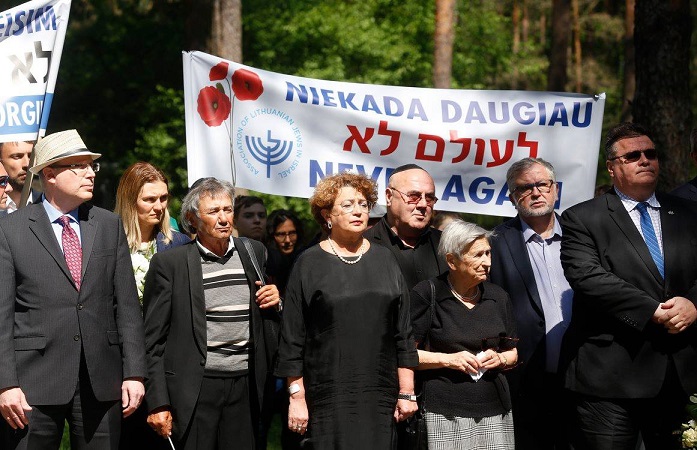
May 8 is VE Day, marking the victory of the Allies against the Nazis in Europe. At a monument to Vilnius ghetto underground resistance leader Yitzhak Vitenberg and partisan Sheina Madeisker in the Jewish cemetery on Sudervės road in Vilnius, veterans and members of the Jewish community gathered Tuesday to pay their respects to those who fought and died, and the victims of the war.

Lithuanian Jewish Community chairwoman Faina Kukliansky said it was difficult for Jews to call the day a holiday. “Is it a holiday when you have lost most of the members of your family?” she asked in her brief speech at the monument. “Those who survived carry within the pain of loss. The only thing which can be called a holiday is the end of the horror of war, and to thank Almighty God for that,” she added.

Shmuel Yatom, cantor at the Choral Synagogue, performed kaddish.

Kaunas Jewish Community Honors Rescuers

Kauno žydų bendruomenė pagerbė gelbėtojus

It is the duty of the Kaunas Jewish Community to remember the rescuers of Jews as well as the victims of the Holocaust, the quiet heroes and true apostles of humanity who risked life and family to help.

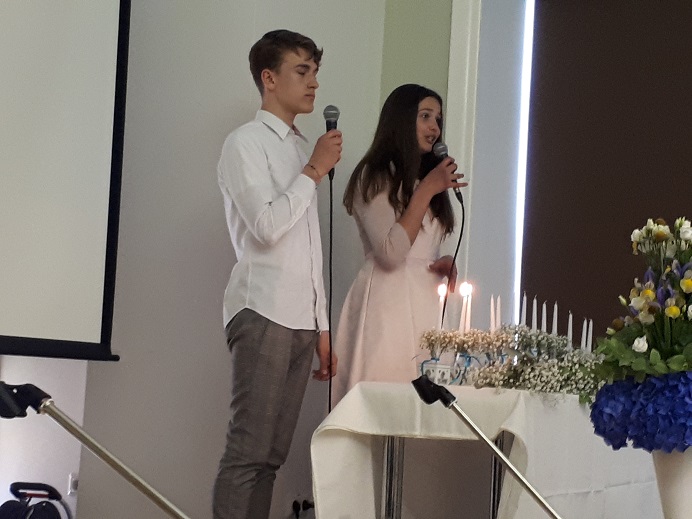
For more than two decades now the KJC has attempted to thank these Righteous Gentiles by inviting them to an annual event among friends. Of course it is inadequate and there is no way to truly thank them. As these heroes slowly fall to the attrition of age, their places among the ranks are assumed by their children and grandchildren in this gathering which has become a large family. The heads of school tolerance centers are also invited to attend and this year 8th graders Diana and Barbora performed dances and songs from the ghetto in Yiddish. The KJC thanks everyone for making this year’s event a success, including the great organizational work by KJC Rescuers Committee chairwoman Judita Mackevičienė.

Lost Shtetl Museum Construction Begins


Photo: Gintaras Šiuparys

A ceremony was held Friday to mark the beginning of construction work on the Lost Shtetl museum in Šeduva, Lithuania. The museum will be a completely new kind of experience using modern technology to present the history and culture of and to commemorate the former Litvak shtetl.

Marija Dautartaitė delivered a welcome on behalf of Lithuanian president Dalia Grybauskaitė, followed by speeches by speaker of the Lithuanian parliament Viktoras Pranckietis, prime minister Saulius Skvernelis, foreign minister Linas Linkevičius, Lithuanian Jewish Community chairwoman Faina Kukliansky, Vilna Gaon State Jewish Museum director Markas Zingeris, US ambassador to Lithuania Anne Hall, Finnish ambassador to Lithuania Christer Michelson, genealogist and education Eli Rabinowitz from South Africa and Australia, Holocaust film director Saulius Beržinis and Šeduva Jewish Memorial Fund founder and museum project manager Sergey Kanovich.

Also attending were ambassadors and heads of mission from the embassies of the United Kingdom, Ireland, Sweden, France, Germany, Russia and Romania, as well as members of the municipal and regional governments and interested citizens from all parts of Lithuania.

Site Selected in Vilnius for Commemorating Righteous Gentiles

In a letter to the Lithuanian Jewish Community dated April 28, 2018, Vilnius mayor Remigijus Šimašius agreed to a 2016 proposal by the LJC to erect a statue to honor rescuers of Jews from the Holocaust in the garden of the Church of the Missionaries near Ona Šimaitė street, renamed after the prolific rescuer several years ago. The walled-in garden area of the church was the site of the final selection of Jews for life and death after the liquidation of the Vilnius ghetto. Šimašius said an alternate site, Rūdninkų square inside the former ghetto, was no longer a fruitful option.

The Lithuanian Jewish Community thanks all parties for inter-agency cooperation in solving an issue of national importance, commemorating those who risked life and family to rescue Jews.

Lithuanian Economics Minister Meets with Chairwoman of the Lithuanian Jewish Community

Lithuanian economics minister Virginijus Sinkevičius met with Lithuanian Jewish Community chairwoman Faina Kukliansky and discussed the function, content and language of amendments to the law on the protection of consumer rights. The minister said more precise amendments would be tabled in the near future in order to avoid misinterpretations and in light of suggestions made.

“I am encouraged by the frank and constructive conversation with the chairwoman of the Lithuanian Jewish Community. I believe this legislative package needs to be corrected so that no one has doubts about it, so that it wouldn’t be misinterpreted and wouldn’t become a means for distorting historical truth. In consideration of that, I will register [for consideration at parliament] the amendments needed in the very near future,” minister Sinkevičius said.

At a plenary session of parliament in late March, 93 MPs voted in favor of amendments proposed by the Government, 11 abstained and none voted against. The final version of the proposed amendments were drafted before the current leadership of the Economics Ministry took the post.

The Lithuanian Jewish Community expressed concerns over the amendments which would ban retail sales of goods which “distort the historical facts of Lithuania, belittle Lithuania’s history, independence, territorial integrity or constitutional order.” The Community pointed out this would serve as stimulus for the adoption at the national level of one official and “acceptable” version of Lithuanian historical events, which wouldn’t serve in the teaching of actual history but rather would become a censored interpretation of history.

To mark Victory Day we invite you to come honor those who fought fascism and the victims of World War II at 12 noon on May 8 at the Sudervės road Jewish cemetery in Vilnius. A bus will carry passengers there from Pylimo street no. 4 in Vilnius and departs at 11:10 A.M. For more information and to register call (8 5) 2613 003 or email info@lzb.lt

Vilnius U Rector Presents Holocaust Survivor “Return of Memory” Diploma in Israel

Vilnius University rector professor Artūras Žukauskas presented Estera Klabinaitė Grobman (98) a “return of memory” diploma May 1 in Arad, Israel. Grobman is a Holocaust survivor who was imprisoned in the Kaunas ghetto and the Stutthof concentration camp. She is the only surviving member of a group of students who experienced the Holocaust. In her youth she dreamt of being a chemist, matriculated at university, but only studied one year. In 1941, when WWII and the Holocaust began in Lithuania, she was removed from the student rolls because of her Jewish ethnicity.

Vilnius Ghetto Diary makes Top 7 List of Lithuanian Books for April

The Vilnius Ghetto Diary of Yitzhak Rudashevski was named as one of the top 7 books for April on the 15min.lt website’s monthly list. The diary was recently published in Lithuanian translation with the original Yiddish provided as the second half of the book. Other works recommended on the list included Lithuanian translations of Abraham B. Yehoshua’s Mar Mani [Mr. Mani], Isabel Allende’s Más allá del invierno [In the midst of Winter] and others, and original Lithuanian works such as Marius Burokas’s latest book of poetry Švarus buvimas [Clean Existence].

Monument to Jan Zwartendijk in Kaunas

Kaunas deputy mayor Simonas Kairys Thursday announced the plan to commemorate Dutch consul Jan Zwartendijk who rescued Jews during World War II.

Following four years of work between partners in Lithuania and the Netherlands, the deputy mayor said: “This day is truly extraordinary. Kaunas is like an outdoor museum city with many strata and signs testifying to different time periods. I think Kaunas has demonstrated many times over the city is strong when its content is strong and when the city is able to show that content to others.

Honorable Dutch consul Jan Zwartendijk issued so-called Curaçao end-visas to complement Japanese transit visas Chiune Sugihara issued Jews in Kaunas during the early days of World War II.

Full story in Lithuanian here.

Press Release

LITHUANIAN CENTER FOR HUMAN RIGHTS
PRESS RELEASE
FOR IMMEDIATE RELEASE

April 25, 2018, Lithuania

Personal Stories from the Holocaust Told in New Website

“’We drank tea using the observational method: we would hang a sugar cube by a string and sip tea while looking at it. This didn’t make the tea taste any sweeter, but it cheered us up,’ wrote Tamara Lazersonaite in her memoirs. She was the daughter of professor Vladimir Lazersonas, the pioneer of clinical psychology in Lithuania. Professor Lazersonas and his family drank their ostensibly sweetened tea in the Kovno Ghetto.” This is how the Lazersonas family, who were part of Kaunas intelligentsia before the start of World War II, are introduced in the new website stumblingstones.lt.

The pioneer of clinical psychology in Lithuania and his wife, doctor Regina Lazersoniene-Safochinskaite were incarcerated in the Kovno Ghetto. They both later died in concentration camps. Only two of the three Lazersonas children survived the Holocaust.

Lithuanian National Library Hosts Lecture “The Problem of Holocaust Memory in Current Lithuanian Historiography”

The Lithuanian National Martynas Mažvydas invites the public to a lecture in Lithuanian called “The Problem of Holocaust Memory in Current Lithuanian Historiography” by Klaipėda University professor Hektoras Vitkus at 5:30 P.M. on April 26.

Holocaust studies are expanding constantly at academic institutions in different countries. This topic has also received attention from scholars working in different disciplines in Lithuania and sometimes becomes the topic of public discussion. Even so, the question remains of how much scholarly attention is being devoted to the problem of Holocaust memory in Lithuania. This lecture will discuss the specific and topical issue of the place Holocaust memory occupies in current-day Lithuanian historiography.

Dr. Vitkus will examine the following questions: what concepts of Holocaust memory exist in contemporary Lithuanian historiography and what are their connection to global theoretical approaches to Holocaust memory? Has Holocaust memory research become an integral part of Holocaust historiography in Lithuania? Is there firm foundation for claiming Holocaust research and methodologies for such research are not yet being taken seriously by Lithuanian historians and at the current time independent studies remain exclusively in the scholarly fields of sociology and psychology?

Everyone is invited to the lecture which will be held in Lithuanian.