Holocaust

Righteous Gentile Vladas Drupas Has Died

Righteous Gentile Vladas Drupas Has Died

Photo: Drupas in his Zlin 326A airplane, 2015.

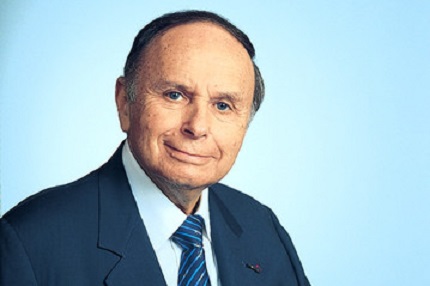
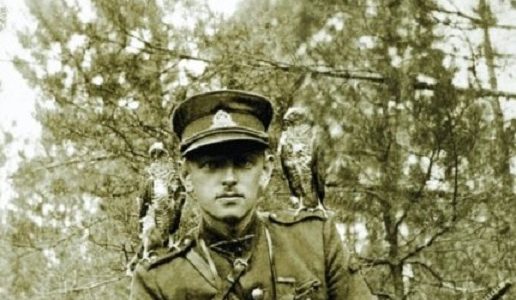
With deep sadness we report the death of Righteous Gentile Vladas Drupas who rescued Jews as a young man. He was a rescuer and a pilot who flew up until his last breath. Let him go to his reward together with the other Righteous Gentiles who have passed on.

Drupas never considered himself a hero for rescuing Jews during the Holocaust. It was like pulling teeth to get him to even talk about the events of 1943 and 1944 in Šiauliai and environs where a silent battled against the Nazis took place in hiding individual Jews and Jewish families.

Virginija Skučaitė wrote about Drupas in the Kauno Diena newspaper in 2016. It was one of the last publications about the courageous man:

§§§

Winged Senior Saved Jewish Lives in Youth
by Virginija Skučaitė
October 3, 2016

It’s Easier to Rig a Memorial Plaque Than to Fix Lithuania’s Broken Reputation

It’s Easier to Rig a Memorial Plaque Than to Fix Lithuania’s Broken Reputation

by Markas Zingeris

In the last few days the restored memorial plaque was quietly replaced on the outer wall of the Lithuanian Academy of Sciences dedicated to Jonas Noreika. The mayor of Vilnius kept his promise. It’s not so simple, however, to piece back together the shards of memory about our complex past. I will admit that Noreika both repulses me and attracts me. Like a riddle which will never be solved. Such a mess has arisen over him between historians and journalists that it’s spilled over into the largest newspapers in the world (and also, by the way, as grist in the mill of the Kremlin’s propaganda machine; in March the Eurasia Daily reported on Stanislovas Tomas’s attach with a sledgehammer, claiming the alleged “law professor” lost his patience because a war criminal was being worshiped and grabbed a hammer). And I’m also left with a conflicted impression from that discussion between the blind and the deaf which in Lithuania is called a discussion by historians of our most painful issues of the past.

Full story in Lithuanian here.

Harbinger of the Holocaust: The Jewish Pogrom in Vilnius 100 Years Ago

Harbinger of the Holocaust: The Jewish Pogrom in Vilnius 100 Years Ago

When we speak of the suffering of Jews from Vilnius, we usually remember the Holocaust, the mass murders in Ponar, the Vilnius ghetto and so on. But the first pogrom in Vilnius happened much earlier. It began April 19, 1919, exactly 100 years ago. According to different sources about 60 Jews were murdered, and the perpetrators were never punished.

15min.lt

Full story in Lithuanian here.

Jews Confronted with Resurrection of Monument to Holocaust Perp on Passover

Jews Confronted with Resurrection of Monument to Holocaust Perp on Passover

The Lithuanian Jewish Community, honoring the rule of law, has condemned the wanton vandalism which destroyed a memorial plaque owned by the Vilnius municipality honoring Holocaust perpetrator Jonas Noreika.

Despite our condemnation of violence and vandalism, we are left wondering by what system of values Liberal Party Vilnius mayor Remigijus Šimašius on the day before the Jewish holiday of liberation, Passover, has “greeted” Lithuanian Jews with an order to create a facsimile plaque honoring the man who established the Šiauliai ghetto and to place it at the same location.

It seems the placement of memorial plaques in the Lithuanian capital corresponds to Šimašius’s personal likes and dislikes. In February of 2018 Šimašius criticized a commemoration of interwar pro-Zionist Lithuanian president Antanas Smetona, saying: “Vilnius is a cosmopolitan and open city and must symbolize these ideas. I am truly not a fan of the Smetona statue.” Apparently mayor Šimašius believes the multicultural legacy of Vilnius is much better symbolized by honoring a Lithuanian Nazi.

The Referendum and Legal Certitude: Vote on Preserving Citizenship Won’t Solve Deep Flaws in Existing Institution of Citizenship

The Referendum and Legal Certitude: Vote on Preserving Citizenship Won’t Solve Deep Flaws in Existing Institution of Citizenship

In a referendum this May, Lithuanian citizens will vote on amendments to article 12 of the Lithuanian constitution, the highest law in the land, to allow for the preservation of Lithuanian citizenship:

“Citizenship in the Republic of Lithuania is acquired through birth and other paths laid down in constitutional law. A natural-born citizen of the Lithuanian Republic who acquires citizenship of a country meeting the European and trans-Atlantic criteria chosen and defined by the Republic of Lithuania does not lose citizenship in the Republic of Lithuania. In other cases a citizen of the Republic of Lithuania cannot at the same time be a citizen of a different country, except through exceptions laid down in constitutional law. Constitutional law determines the procedure for the acquisition and loss of citizenship.”

Was There a Different Kind of Holocaust in Lithuania?

Was There a Different Kind of Holocaust in Lithuania?

Photo: Šiauliai Jews lined up before being taken to Kužiai to be shot, July, 1941. About 8,000 Jews from the Šiauliai ghetto were murdered in the Luponiai Forest near the village of Kužiai.

[Note: Lithuanian Jewish Community member Geršonas Taicas responds here to an “explanation” by the Lithuanian Genocide Center issued several weeks ago which claimed the Holocaust was different, the ghettos were different and the Nazi regime was different in Lithuania than they were in other European countries. That controversial “explanation” has been criticized by the LJC, the World Jewish Congress and the Association of Lithuanian Jews in Israel, among others. Presumably Genocide Center director Teresė Birutė Burauskaitė makes the claim–we don’t know, the “explanation” is unsigned–in the official apologetica for Lithuania’s native Nazis that Lithuania was the only country which pinned its hopes on independence on a Nazi invasion, among other falsifications of history (see Slovakia, Croatia, Estonia et al.). –translator]

by Geršonas Taicas, member, Lithuanian Jewish Community

Rudashevski Diary Now Accessible for the Visually Impaired

Rudashevski Diary Now Accessible for the Visually Impaired

The Vilnius ghetto diary of Yitzhak Rudashevski is now available as an audiobook in Lithuanian, read by Justinas Gapšys. According to the card catalog of the Lithuanian Library for the Blind in Vilnius, the insert in the CD includes a text in braille. The very limited-edition CD is available at 5 branches of the Lithuanian Library for the Blind around the country. The book itself is bilingual with excerpts from the diary in Yiddish starting from the back cover and moving inward. The audiobook does not contain a reading of the Yiddish section.

More information available in Lithuanian here.

David Irving Not Welcome in Lithuania

David Irving Not Welcome in Lithuania

Friends abroad have contacted the LJC regarding a visit planned by Holocaust revisionist David Irving to Lithuania, Poland and Latvia from September 1 to 9.

Irving is a notorious and convicted Holocaust denier, and the LJC would like to thank Lithuanian foreign minister Linas Linkevičius for his firm statement against Irving’s visit. Linkevičius said he had asked the Lithuanian Migration Department to add the British resident to the list of personae non gratae for whom entry to Lithuania is barred.

Poland’s foreign minister Jacek Czaputowicz said Poland would also bar Irving. ““Negation of the Holocaust is not allowed by Polish law, therefore he will not be welcome here in Poland if he wants to come and present his opinions,” the minister said Friday according to the Times of Israel and Reuters.

Full story in Lithuanian here.

Response to Statement by Genocide Center “On Accusations against Jonas Noreika”

Response to Statement by Genocide Center “On Accusations against Jonas Noreika”

A response to the statement of the Genocide and Resistance Research Centrer of Lithuania of March 27, 2019, “On Accusations against Jonas Noreika (General Vėtra)”

THE INTERNATIONAL COMMISSION FOR THE EVALUATION OF THE CRIMES OF THE NAZI AND SOVIET OCCUPATION REGIMES IN LITHUANIA

The Sub-commission for Evaluation of the Crimes of the Nazi Occupation Regime and the Holocaust

April 10, 2019

A RESPONSE TO THE STATEMENT OF THE GENOCIDE AND RESISTANCE RESEARCH CENTER OF LITHUANIA OF MARCH 27, 2019, “ON THE ACCUSATIONS AGAINST JONAS NOREIKA (GENERAL VĖTRA)

Lithuanian Jewish Community Chairwoman Visits South African Litvak Community

Lithuanian Jewish Community Chairwoman Visits South African Litvak Community

Photo: Lithuanian Jewish Community chairwoman Faina Kukliansky visits the South African Jewish Museum in Cape Town

Lithuanian Jewish Community chairwoman Faina Kukliansky is currently visiting the largest Litvak community in exile, the South African Jewish community, from April 8 to 13.

Although the Community and chairwoman Kukliansky have long maintained close ties with Litvaks in the Republic of South Africa, this is the first official visit by the LJC.

In meetings with South African Litvaks scheduled for the morning of April 10 at the Johannesburg Holocaust and Genocide Centre, Kukliansky planned to discuss issues surrounding historical justice, restoration of Lithuanian citizenship and possible joint projects to celebrate 2020 as the Year of the Vilna Gaon and Jewish History in Lithuania.

On Historical Begging

On Historical Begging

by Segejus Kanovičius

Beggars ask for all sorts of things–money, drugs, clothes. The average passer-by looks at the beggar trying to determine if he really is in need, and often passers-by pretend they haven’t seen him.

There is a category of beggar in Lithuania which everyone seems to see, and everyone seems to agree they are truly unfortunate, but these beggars only receive donations a few times during the year. From the microphone. And they get wreaths. These are the murdered Jews of Lithuania.

They have been asking for donations for a long time but they don’t ask for much, just historical justice. And it’s not they who should be ashamed, but those who are reluctant to offer historical justice. And stingily keep it from Jews and the public. When the living [Holocaust survivors] remind them the historical truth must be restored, they, those who keep the historical truth away from our eyes, immediately turn wild, and call the beggars, the living and the dead together, agents of the Kremlin. Even though no one serves the Kremlin better than in this way, by attempting to portray a lie as the truth, through avoidance and by presenting public arguments which don’t stand up to any criticism.

On Tragic Characters and Armchair Murderers

On Tragic Characters and Armchair Murderers

by Sergei Kanovich, poet and essayist

I began to write about General Vėtra and collect signatures regarding him with 16 other people who were not reactionary and did not seek to annoy Lithuania about four years ago. As I attempted then to warn high-ranking Lithuanian officials (as did the late Leonidas Donskis), the little songs sung by the Genocide Center and their rewriting of history hands all the aces over to the Dugins of the Kremlin.

Therefore the preamble to the article about reactionary figures who are annoying Lithuania is not acceptable to me, because the causal relationship is being confused, since nothing compromises Lithuania more than the anonymous finding issued by the Genocide Center which basically denies the Holocaust.

About the title: let’s imagine a title in which some Soviet NKVD or MGB agent who has compiled a list of people to be deported is portrayed in this way: “Comrade X Was Not an Executioner, but Siberia Wasn’t a Health Resort.” It doesn’t really work.

Vilnius University Recovering Memory Diplomas Presented

Vilnius University Recovering Memory Diplomas Presented


Vilnius University is continuing its Recovering Memory program to remember and honor members of the university community, both students and staff, who were driven out of the university because of actions by totalitarian regimes and local collaborators and who were prevented from receiving an education, from carrying out academic work and from teaching.

On April 2 memory diplomas were issued to 85 former VU students and staff who were forced out of the university by the Nazis or Soviets.

This included 47 Jews who were removed from the university because of their ethnicity in 1941.

More in Lithuanian here.

Statement Regarding Destruction of Noreika Plaque

Statement Regarding Destruction of Noreika Plaque

The Lithuanian Jewish Community, based on the principle that justice does not flow from injustice, favors constructive methods for the solution of problems and outstanding issues, and therefore does not condone the wanton and perhaps even criminal destruction of the plaque commemorating Jonas Noreika in Vilnius.

This act, perhaps criminal, does not solve the underlying problems concerning the recognition of historical truth and insuring the respect due Holocaust victims. The LJC completely rejects any connection to this event and will refrain from further comment upon it.

Lithuanian Attorney Smashes Noreika Plaque

Lithuanian Attorney Smashes Noreika Plaque

At just after 10:00 A.M. on the morning of Monday, April 8, Lithuanian attorney and human rights activist Stanislovas Tomas and a camera operator filmed Tomas smashing the marble plaque commemorating Jonas Noreika on the façade of the Lithuanian Academy of Sciences in Vilnius using a sledgehammer. Tomas then turned himself in to police. The event was live-streamed on facebook. In his live-streamed video, Tomas said in English he was proud to fight Naziism and would smash any replacement plaque erected at the same site again.

Tomas reportedly earned a doctorate in law at the Sorbonne. He is reportedly not an attorney at bar in Lithuania, but has pursued cases against the Lithuanian state at the European Court of Human Rights and at the United Nations.

Noreika is considered by some a Lithuanian hero, but others claim he was directly involved in the pillage and murder of Lithuanian Jews during World War II. A recent case involving his legacy filed by Grant Gochin was dismissed by the Vilnius District Administrative Court who claimed Gochin had no standing. Gochin, a member of the Lithuanian Jewish Community, says upwards of one hundred of his relatives were murdered in part because of Noreika’s actions. In a posting in response to Tomas’s action on facebook, Gochin expressed surprise and said this wasn’t how he had envisioned the removal of the commemorative plaque.

Gochin, the LJC and numerous other parties have been seeking the removal of the Noreika plaque for many years, appealing to the courts, the Vilnius city council and others. It has been known for some time the plaque was erected illegally, without the required permission from city authorities.

Victims of Children’s Aktion Remembered in Kaunas

Victims of Children’s Aktion Remembered in Kaunas

This year marked the 75th anniversary of the horrific Children’s Aktion [mass murder operation] in the Kaunas ghetto. This year as in past years the event was commemorated at Robertas Antinis’s statue Torah of the Children, with an expanded commemoration to mark the milestone date at the J. Gruodis Concert Hall.

Lithuanian actor Aleksandras Rubinovas read excerpts from eye-witnesses and historians about what happened on March 27, 1944: “The aktion commanded by oberfuehrer Fuchs and oberscharfuehrer Kittel, was conducted in order to transform the ghetto into a concentration camp where only those fit for work would be held; the children and elderly were supposed to be liquidated.”

A passage from the book “Išgelbėti bulvių maišuose” [Rescued in Potato Sacks], a collection of memoirs by survivors rescued as children from the Kaunas ghetto: “We saw a bus. There was loud music coming from it which was supposed to drown out the children’s screams, the begging of the mothers and the barking of the dogs. Drunken berserk Ukrainians wielding axes and crowbars hunted the children and elderly out of their hiding places. The atrocities ended at about sunset.

Association of Lithuanian Jews in Israel Responds to Noreika Case Dismissal

Association of Lithuanian Jews in Israel Responds to Noreika Case Dismissal

The court’s decision on March 27 in Vilnius to leave intact the “national hero” status of Noreika, the murderer of Jews in World War II, is not just a miserable decision but also negates all Lithuanian government efforts over the last 25 years to fight anti-Semitism and to build better relations with Israel, and represents the desire to rewrite the truth of history. There is no doubt the court judges knew perfectly well Noreika shot and murdered infants, children, women and elderly Jews, those unable to protect themselves, surrounded by his supporters. The murderers, many of the same type as Noreika, can now proclaim themselves “heroes.”

Any murderer of Jews who wants to receive the title “national hero of Lithuania” need only apply at a Lithuanian court.

This is not the way to build new bridges with Israel, world Jewry and the world at large.

Wake up.

Arie Ben-Ari, chairman
Association of Lithuanian Jews in Israel

Amendments to Constitution Could Discriminate against Litvaks

Amendments to Constitution Could Discriminate against Litvaks

A group of Lithuanian parliamentarians initiated draft amendments to the Lithuanian constitution on September 20, 2018, under which a natural-born citizen of the Republic of Lithuania who acquires citizenship of another country which meets the criteria of European and trans-Atlantic integration to be defined in law does not lose Lithuanian citizenship.

Adoption of the amendments would take place in May during the upcoming referendum if voters approve of the measure for dual citizenship, with the constitutional amendments coming into effect in 2020, which the Lithuanian parliament has named the Year of the Vilna Gaon and the Year of Litvak History.

The Lithuanian Jewish Community is concerned the privilege of acquiring dual citizenship according to geographical location reflected in the draft legislation contains indirect discrimination against citizens of countries which might not be included in the criteria for European and trans-Atlantic integrations, countries such as South Africa, Australia, Israel, Argentina and others.

Who Sanctioned Institutional Anti-Semitism in Lithuania? (updated)

Who Sanctioned Institutional Anti-Semitism in Lithuania? (updated)

The Lithuanian Jewish Community was shocked by an unsigned “explanation” published by the Center for the Study of the Genocide and Resistance of Residents of Lithuania (hereinafter Center) on March 27, the day before the anniversary of the horrific Children’s Aktion (mass murder operation) in the Kaunas ghetto, a text which, apparently seeking to avoid responsibility, not only seeks to justify actions by Jonas Noreika during World War II but also contains features which are crimes under the Lithuanian criminal code, namely, denial or gross belittlement of the Holocaust. Note that article 170(2) of the Lithuanian criminal code (public approval of crimes against humanity and crimes by committed by the USSR and Nazi Germany against Lithuania or her residents, their denial or grossly diminishing their scope) also applies to corporate entities.

It is unacceptable to the LJC that there might be a collective condemnation of ethnic Lithuanians or any other ethnic group for perpetrating the Holocaust, and therefore it is equally incomprehensible to us on what basis the Center tried to convince Lithuanians, writing in the name of all Lithuanians, of Holocaust revisionist ideas.

This “explanation” is full of factual and logical errors, for example, one sentence claims “the Lithuanians worked operated against the will of the Germans” while another says “Germany was seen as an ally.” Also, based on a single source, the claim is made that the number of Lithuanians who shot Jews was “lower than in other nations.” The text fails to explain why the greatest percentage of Jews were murdered in Lithuania when compared to the other states of Europe, including Germany, and thus clearly seeks to diminish the fact of Lithuanians’ contribution to the murder of the Jews. The Center text claims “the residents of occupied Lithuania in 1941 didn’t understand ghettos as part of the Holocaust,” not just heaping scorn on the pain of ghetto inmates but also belittling those Lithuanian heroes who rescued Jews at the risk of their own lives and those of their families. The Center’s Noreika apologetica is based on the testimony of his fellow Lithuanian Activists Front members. Note the LAF call to free Lithuania by ridding the country of “the yoke of Jewry” in 1941.

It is the LJC’s opinion that the Center as a state institution founded in law by distorting historical facts, grossly diminishing the scope of the Holocaust and creating a fictional narrative of history is incompetent to fulfill its main task as defined in Lithuanian law, namely, the restoration of historical truth and justice.

Therefore, the LJC asks:

-representatives of the Lithuanian executive and legislative branches to respond appropriately and in a timely manner by condemning this incident of institutional anti-Semitism;

-that the Center take responsibility and retract publicly the above-discussed text, apologize to the LJC for the gross belittlement of the scope of the Holocaust and apologize to the Lithuanian public for misinforming the public.

If within a reasonable time an amicable solution is not found, the LJC, in defense of its interest protected by law but now violated, reserves the right to make sue of the defensive measures and remedies provided in Lithuanian law.

Faina Kukliansky, chairwoman
Lithuanian Jewish Community