Holocaust

Shot: A Decade of Yahad-In Unum Holcaust Studies

Picture for flyer

Exhibit opening ceremony 5:00 P.M., Thursday, October 1, at the Tolerance Center of the Vilna Gaon State Jewish Museum (Naugarduko street No. 10/2, Vilnius)

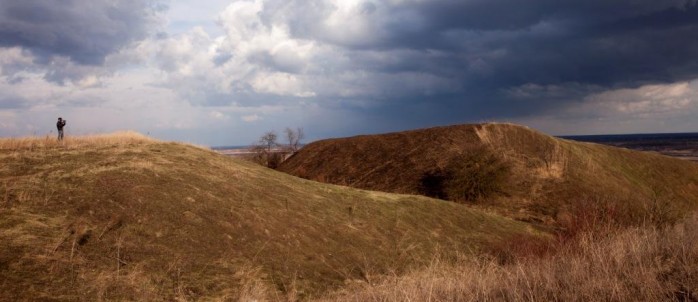
The Tolerance Center will host a mobile exhibition from the French-based Yahad-In Unum organization called “Shot: A Decade of Yahad-In Unum Studies” from October 1 to November 22, 2015. The exhibit presents material from comprehensive historical research based on testimony by eye-witnesses, photographs and maps to reveal the lesser-known side of the Holocaust in the East, “The Holocaust by Shooting.” This refers to the systematic extermination of Jews and Roma in the Soviet Union starting with the establishment of ghettos and camps and culminating in the end of the war.

Yahad-In Unum, Hebrew and Latin for “together,” is a humanitarian organization founded by French Catholic priest Patrick Desbois in 2004 whose goal is to identify, document and systematize information about sites in Eastern Europe where the Nazi einsatzgruppen carried out the mass murder of Jews during World War II.

The ten-year study by the organization uncovered the Nazis’ main plan for extermination. Over 79 field studies researchers discovered 1,700 mass murder sites and collected testimony from over 4,000 non-Jewish locals in Belarus, Ukraine, Russia, Moldova, Romania, Makedonia and Poland. In 2013 the organization began studies in Lithuania. Over 2 years Yahad-In Unum recorded testimony from 243 witnesses who identified 131 mass murder sites.

Unlike at the concentration camps, many victims of the “Shooting Holocaust” survived to tell the world what happened. It is believed that five years from now very few of those who witnessed but didn’t personally experience the crimes committed will be left among the living. Researchers at the organization say they want to investigate the evidence for every mass shooting in order to present undisputable proof to Holocaust deniers, to commemorate the victims and to protect the mass grave sites, and also to prevent genocide and mass violence in the future.

Marco Gonzalez, the director of Yahad-In Unum in Paris, said: “The Nazis used a special method of killing Jews in Eastern Europe, leaving their corpses in mass graves dug deep in the forest. Each murderer saw his victim, and each victim saw his murderer.” The exhibit presents a five-tier plan used for almost all the mass murder operations in Eastern Europe: collecting the victims, marching them to their deaths, disrobing, mass shooting and then expropriations of property following the murders.

Father Desbois said the massacres which the Nazis and their collaborators carried out village by village in Eastern Europe have become the archetypal model for mass murder in the present time in countries such as Cambodia, Rwanda, the Balkan states and Syria. “As a wave of anti-Semitism and hate rises, Yahad-In Unum’s work is more important than ever before. … This exhibit was first shown at UNESCO headquarters in Paris in January of 2015, and this will be its second showing in Europe, in Lithuania, where more than ninety percent of Jews were murdered during the Holocaust,’ Father Desbois said.

The Vilna Gaon State Jewish Museum and the International Commission for the Assessment of the Crimes of the Nazi and Soviet Occupational Regimes in Lithuania together with the exhibit organizers will hold a seminar for teachers the same day the new exhibit is unveiled to the public.

Entry is free of charge.

Those wanting to attend the seminar are asked to register by September 28 by sending an email to: rasa.ziburyte@leu.lt

For more information, please see:
www.jmuseum.lt
http://www.yahadinunum.org/

Press contacts:
Julijanas Galisanskis, Yahad-In Unum representative
telephone: +32 25137713
email: j.galisanskis@yahadinunum.org

Ieva Šadzevičienė, director of Tolerance Center, Vilna Gaon State Jewish Museum
telephone: (8 5) 262 9666
email: ieva.sadzeviciene@jmuseum.lt
THE NAMES. A person is not a number.

THE NAMES. A person is not a number.

Names of Holocaust Victims to be Read for Fifth Time in Lithuania

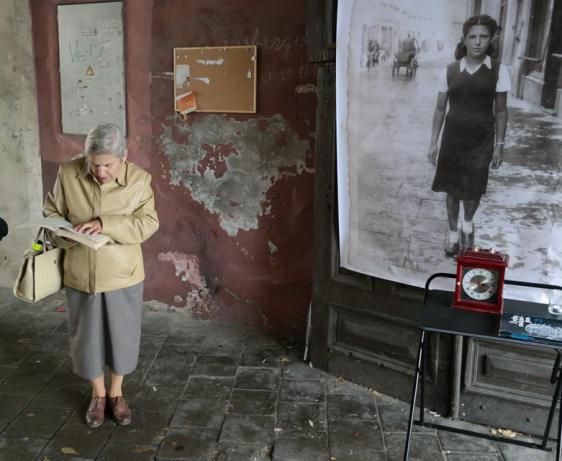
The names of Holocaust victims will be read publicly in several Lithuanian cities and towns on Tuesday, September 22, on the eve of the Lithuanian Holocaust Remembrance Day. The Names initiative is being held in Vilnius for the fifth time now and this will be the first time when lists of Vilnius ghetto prisoners will be read at two locations: in the courtyard of the ghetto library and at the Skalvija movie theater. Residents of Jonava, Molėtai, Švėkšna and Jurbarkas will take turns reading the names of Jews murdered in their towns.

Double Genocide

Double Genocide

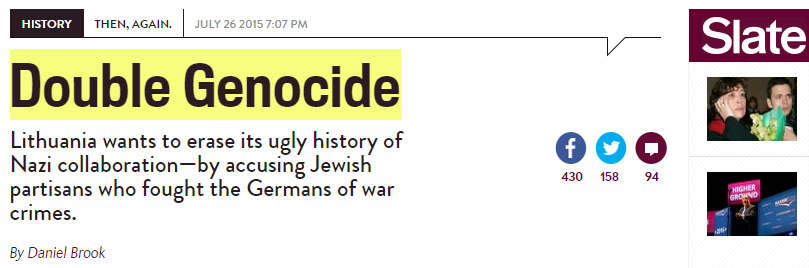
I met Yitzhak Arad in the cafeteria of his upscale retirement home outside Tel Aviv. To his enemies, this short man, softened by age and bundled in long sleeves against the facility’s overzealous air conditioning, is a kind of Jewish Kurt Waldheim: a brutal war criminal who deftly covered his tracks and went on to run one of the world’s leading human rights institutions. Waldheim, a former Nazi officer, famously became secretary-general of the United Nations before the truth came out. Arad allegedly committed atrocities against Lithuanian anti-Communists on behalf of Stalin’s secret police, the NKVD, before moving to Israel and becoming the director of Yad Vashem, the nation’s holocaust museum.

Read more

Dita Shperling: Germans Did Not Distinguish Lithuanians from Jews

“During the first days of the war the Germans who came to Kaunas couldn’t tell the difference between Jews and Lithuanians, but Lithuanians helped them to do,” Kaunas ghetto prisoner Dita Shperling recalled, citing the words of the German soldiers themselves.

09223

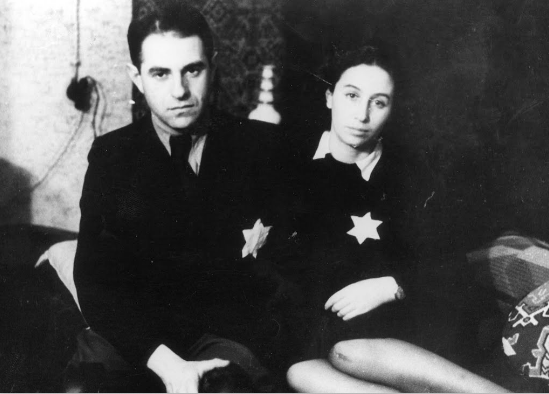
Dita (Yehudit) Schperling and her husband Yuda Zupowitch

Dita Schperling tries to travel every summer to Vilnius from Israel where she lives. She agreed to discuss her experience in the ghetto with staff from the LJC webpage.

Children raised in Nazi period carried forward anti-Semitism, study says

Children raised in Nazi period carried forward anti-Semitism, study says

The 12 years of Nazism (1933-1945) inculcated young Germans with anti-Jewish ideas that continued after the defeat of Hitler, according to a new study on anti-Semitism.

The study, which American and Swiss researchers released Monday, found that Germans who grew up during the 1930s were far more likely than their younger countrymen to have negative attitudes about Jews. It reported that anti-Semitic views were particularly strong among Germans raised in regions of the country that were known for anti-Semitism even before Hitler came to power.

According to the researchers, who analyzed surveys conducted in 1996 and 2006, the findings indicated that Nazi propaganda was highly effective, especially when it confirmed existing beliefs.

Read more

They Come Back

Geoff Vasil

Over the years they come back. Just a handful, to be sure, but they come. They come to find the site of the most confused chapter in the Lithuanian Holocaust. The Church of the Missionaries in Vilnius, where the Final Selection took place.

For the children and grandchildren of the few survivors, the very small group of witnesses who saw what happened there and lived to tell anyone, the site is Rosa. The name has been lost to modern residents of the city, many decades ago. The city itself has changed, not just the names. Once there was a courtyard behind the gate of the Church of the Missionaries on Subačius street just a block or two out of the Old Town. There was a railroad spur right there which connected with the central Vilnius train station, somewhat more distant than the Old Town and in a different direction. The square was called Rosa. There was a nunnery adjacent, and apparently a small jail called the Rosa Street Jail which the Nazis used, implying there was also a Rosa street. If you continue down Subačius or Subocz street past the church, you reach the two large apartment complexes where the Jews enslaved to the HKP, essentially the local automobile workshop for the Wehrmacht, were kept, just a hop, skip and a jump away from Rosa Square.

From Holocaust envy to Holocaust theft

From Holocaust envy to Holocaust theft

VILNIUS — This month, on the seventieth anniversary of the defeat of Hitler’s Nazi regime and the end of World War II — ipso facto the end of the Holocaust — Western leaders have been faced with a symbological conundrum. How might they square honest commemoration of this major anniversary with Russian president Vladimir Putin’s record of progressively more arrogant dictatorship at home and cynical mischief in his near abroad?

Once Moscow made clear that the May 9th parade in the Russian capital would feature his latest tanks and planes, it became certain that most Western leaders would not feel comfortable being there. They do not want to become props for Putin’s attempts to use (as it happens, accurate) World War II history as cover for his indefensible policies and ethos. But in statecraft as in life, there is always an alternative danger that lurks: Do they want to become props for Nazi-apologists’ far-right elements in today’s anti-Russia East European states’ attempts to use (as it happens, inaccurate) World War II history as cover for denial of massive, lethal wartime collaboration, denial of the Soviet peoples’ role in defeating Hitler, and, along the same road, extreme nationalism, racism and a frenzy against Russian-speakers everywhere. Then, add into the unstable mix the American neocon obsession with stoking trouble far and wide to project American power and weapon systems, even where that means violating core American and Western values.

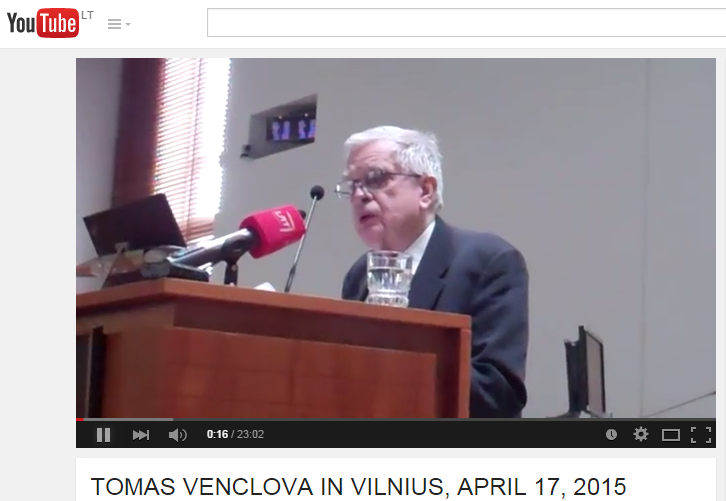
Jerusalem of the North is Already Lithuania’s “Brand,” Tomas Venclova Says

A day-long conference April 17 capped efforts in Lithuania’s capital city this year to mark Yom haShoah, Holocaust Day, appropriately, and featured speakers as diverse as Vilnius’s mayor, esteemed writer and thinker Tomas Venclova and Efraim Zuroff, director of the Simon Wiesenthal Center in Jerusalem and now director for Eastern Europe as well, who is often referred to as “the last Nazi hunter.”

The Lithuanian Jewish Community was also amply represented there, with a keynote speech by LJC chair Faina Kukliansky and outgoing LJC executive director Simonas Gurevičius acting as moderator.

Other speakers included Pavel Tychtl from the European Commission, Dovid Katz of DefendingHistory.com, Piotr Kowalik of the Polish Jewish Museum in Warsaw, the historian and writer Saulius Sužiedelis and others. 

LJC Chair Faina Kukliansky addresses March of the Living at Ponar

The annual March of the Living procession assembled in Ponar (Paneriai) outside Vilnius last Thursday to walk the final mile many Jews walked from the railroad station to the killing pits from 1941 to 1944. Lithuanian Jewish Community chair Faina Kukliansky spoke to those who gathered at the main memorial there. Her speech is available here, in Lithuanian with synchronous translation to English:

fk

March of the Living honours Holocaust victims in Paneriai, Lithuania

Hundreds of people attended the traditional March of the Living on the Holocaust Memorial Day from a railway station to the memorial where 70,000 Jews were massacred during World War Two.

Under flying Lithuanian and Israeli flags, the rally included Jews living in Lithuania, people from Israel and a few hundred young people who formed a human David’s Star in front of the Vilnius Town Hall before the march.

“If we’re talking about Paneriai, it is a factory of death. The only word I can think of is horrible. I am here at this rally because I owe my family – I need to preserve their memory,” Fania Brancovskaja, 93-year-old survivor of the Holocaust in Vilnius, told BNS.

The article

Origins of the Holocaust in Lithuania

Discussion published by Andrius Kulikauskas on Monday, April 13, 2015 0 Replies
Greetings from Lithuania!

I share an article which I published at Dovid Katz’s website DefendingHistory.com, “How Did Lithuanians Wrong Litvaks?”
http://defendinghistory.com/how-did-lithuanians-wrong-litvaks-by-andrius…

It’s my English translation of an extended version of a talk that I gave in Lithuanian at the conference “Litvak Culture in Lithuania and Beyond” on December 11, 2014 at the Lithuanian Culture Research Institute in Vilnius.

I investigate the extent of Lithuanian responsibility for the Holocaust, but especially, the indiscriminate murder of roughly 80,000 Jews in Kaunas and the shtetls of Lithuania in 1941 as documented by the Jaeger report. The murder of women, children and the elderly was well under way even before September 1941, when Hitler made his decision to annihilate the Jews in his dominion, according to Christopher Browning.

After the Ceremony to Commemorate International Holocaust Day at Auschwitz

After the Ceremony to Commemorate International Holocaust Day at Auschwitz

Commentary by Faina Kukliansky, chair of the Lithuanian Jewish Community

Auschwitz in the winter, during International Holocaust Day, was as moving as the Holocaust survivors who met here. My thoughts swirled around the people who are still alive. In Lithuania the only still living survivor is Meyshe Preis, who through some sort of miracle survived the Auschwitz, Stutthoff and Dachau concentration camps. His poor health didn’t allow him to attend the commemoration of Auschwitz victims on January 27. Kings, queens and heads of state did attend. I want the people of Lithuania, her politicians and high-ranking civil servants, and especially her decision makers, to understood that a trip to Auschwitz is not the same thing as travelling to Brussels for the usual meeting.

Seventy years ago the Jew were liberated, but they were persecuted en masse from 1939. Lithuanian president Dalia Grybauskaitė, foreign minister Linas Linkevičius and the chair of the Lithuanian Jewish Community travelled to the ceremony and were deeply affected by it. I believe their attitude is that of the state regarding Holocaust survivors, whose children and grandchildren now form the basis of our community. I will interject here that representing the community doesn’t mean that some high institutions choose a certain Jew for the post according to merit. That’s how it was for many years. If there’s a Jewish community which elects its chairperson democratically, then the chairperson must represent the community and Lithuania as well, if the community is loyal to the state and sees itself as a part of the country.

70th Anniversary Commemoration of the Liberation of Auschwitz

70th Anniversary Commemoration of the Liberation of Auschwitz

Dear Friends,

I have just arrived in Israel from Krakow where we commemorated the 70th Anniversary of the Liberation of Auschwitz.

As I am sure many of you will have seen this historic event was extremely symbolic and significant and it received unprecedented media coverage worldwide. The eyes of the world, this week, were on Auschwitz.

WJC, in partnership with the USC Shoah Foundation, brought 101 survivors of Auschwitz, from 21 countries, together with members of their families, to participate in this auspicious event. Their presence — surely the last time such a large number will be able to gather there — made this commemoration particularly meaningful.

Litvak Victim Marks 70 Year Anniversary of Liberation of Auschwitz by Red Army and of Dachau by American Army

Picture 012

Meyshe Preis, prisoner of three concentration camps

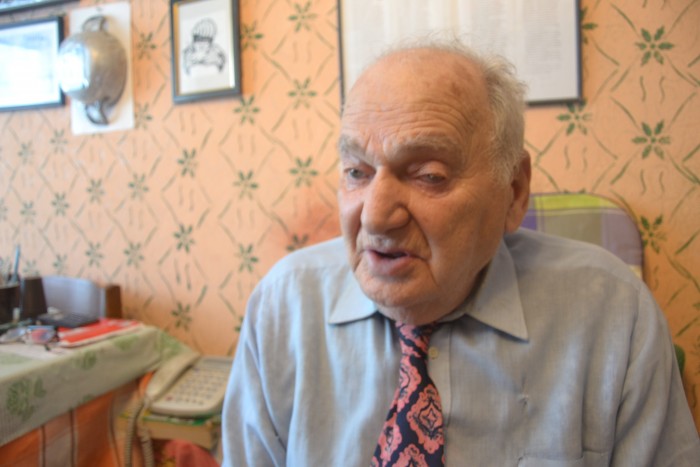
Lithuanian Jewish Community member Meyshe Preis (or Moisiejus Preisas, as his Lithuanian passport calls him) was imprisoned at three concentration camps: sent from the Kovna ghetto to Stuffhof, then to Auschwitz, then to Dachau. He’s alive and living in Sventsyan (Švenčionys), Lithuania, and still speaks about the horrors he survived in the ghetto and at the concentration and death camps. His apartment, where he now lives alone since the death of his beloved wife, has a wall dedicated to memorabilia from hell, including photographs and a small bowl he took with him to all the camps until his liberation by American troops from a forced march of prisoners from Dachau into the neighboring mountains in May of 1945. His wall museum, collected over many years, includes newspaper articles and written memoirs as well as photos. Currently the LJC Social Center is helping Meyshe Preis out around the house and with the simple chores of life.

A blueprint to combat anti-Semitism in Europe

A blueprint to combat anti-Semitism in Europe

On January 27th the world will come together to observe International Holocaust Remembrance Day, marking 70 years since the liberation of Auschwitz-Birkenau.

Yet 70 years since end of the most horrific chapter in Europe’s history, anti-Semitism has once again surged to levels unprecedented since the end of the Holocaust, with virtually no part of Europe free from this oldest and most enduring form of hatred.

Whether it is the kosher supermarket attack in Paris this January, the shooting in the Brussels Jewish Museum last year, or frequent assaults against Jews and vandalism of synagogues and Jewish stores, there is an increasingly palpable sense of fear and insecurity among many Jewish communities in Europe.

Read more

New Monument Unveiled to Commemorate Rescuer of Jews Polina Tarasewicz

New Monument Unveiled to Commemorate Rescuer of Jews Polina Tarasewicz

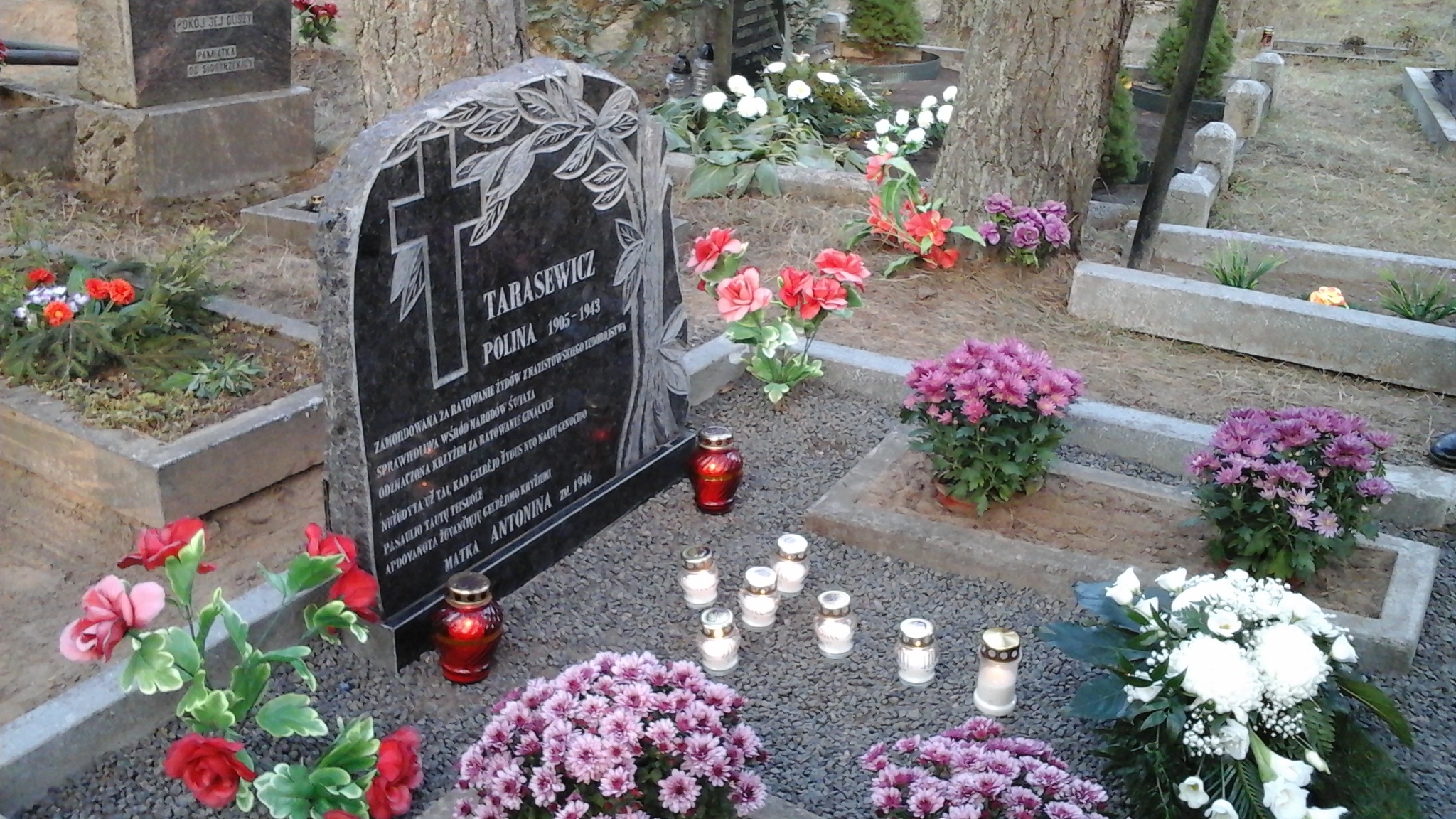
A new commemorative stone erected in honor of Righteous Gentile Polina Tarasewicz (born 1905, murdered 1943) was consecrated at the cemetery in Parudaminis village in the Marijampolis aldermanship in the Vilnius region on October 30, 2014. Anatoliy Kasinski, formerly Kazriel Bernan, provided testimony on how Polina Tarasewicz took in and hid him, his brother and his mother at Predtechenka village (now known as Biržiškės) in the Vilnius region. A local turned Tarasewicz in and Nazis and local collaborators set up an ambush at night.

Tarasewicz had time to tell Anatoliy to run to the forest, which is the reason he survived. The murderers took Tarasewicz and the survivor’s mother and brother to a wooded area and shot them, then they burned down her house and farm. The next day Tarasewicz’s relatives secretly dug up her body and reburied her next to her mother’s grave at the Parudaminis cemetery. At an awards ceremony at the Lithuanian Government House on April 28 of 2014, Polina Tarasewicz along with 20 other people who saved Jews during World War II at risk to their lives and those of their families were honored.