

Holocaust

Litvaks in Love

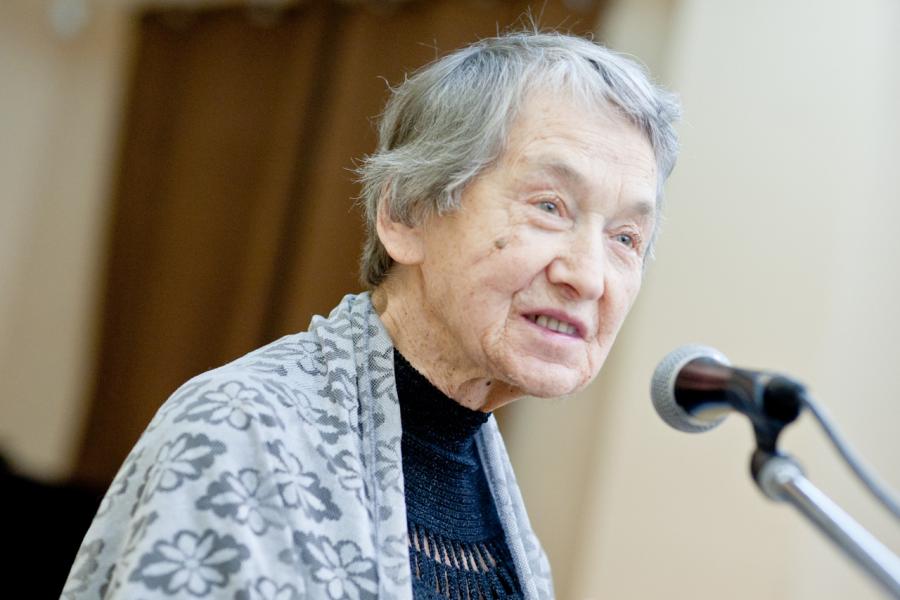
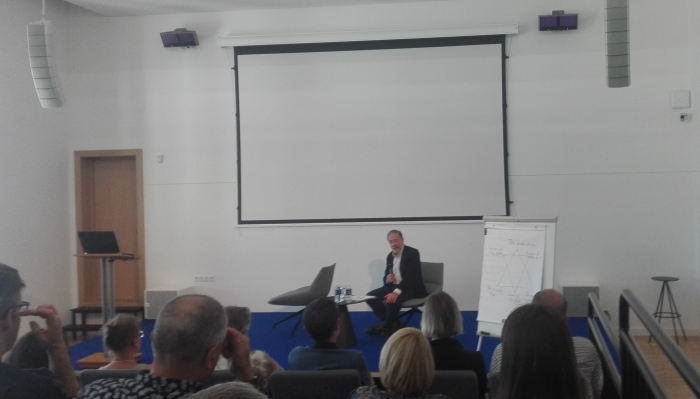
Professor David Roskies delivered an interesting lecture to a medium-sized audience at the new Judaica Center at the Lithuanian National Library Thursday evening.

“Using the tools of a cultural historian, drawing upon my Litvak identity and turning feminism into a source of knowledge, I think I have successfully cracked the DNA of Jewish collective memory. I know what it is, and I know how it works. Jewish collective memory is organized around saints, sanctuaries and sacred times. In this way, each generation of Jews shape a model life, the model community and the model time. You don’t have to be a Litvak to unlock the DNA of Jewish collective memory, but it certainly helps, because Lite [Lithuania] is where this triple axis, this three-pronged model, emerged in bold relief. The model was so stable that it remained in place even when the world began to change. In Lite things really began to change with the rise of religious revival movement called Hassidism at the end of the 18th century. So long as the hassidim were limited to Podolia and Volhynia which, after all, are located south of the gefilte fish line, and where people spoke a different Yiddish, there wasn’t much to worry about. So there was talk about a new cultural hero named Yisroel Ba’al Shem-Tov, better known as Besht. He was a faith healer, a tzadik or saintly person, a righteous person, who engaged in all manner of non-Litvak behavior. He was an effective preacher and teacher, but he came into conflict with renowned Torah scholars, who were the elite of traditional society. Worse yet, he popularized the study of Kabbalah–Jewish mysticism–, he claimed to have paid periodic visits to Heaven and he encouraged mystical prayer performed with bizarre and ecstatic song and dance at all hours. Then, before you knew it, hassidic prayer houses were beginning to appear in Lite, too. The time had come for the rabbinic establishment to take action,” Rosskies said in a lecture which ranged seamlessly from the drier facts of cultural history to his own personal experiences and thoughts, employing moving Yiddish lullabies to make certain points.

US Embassy Staff Visit Kaunas Jewish Community

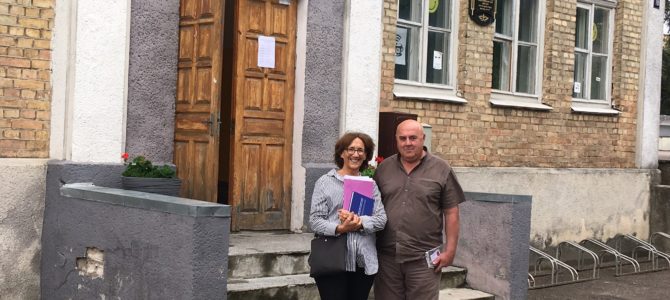
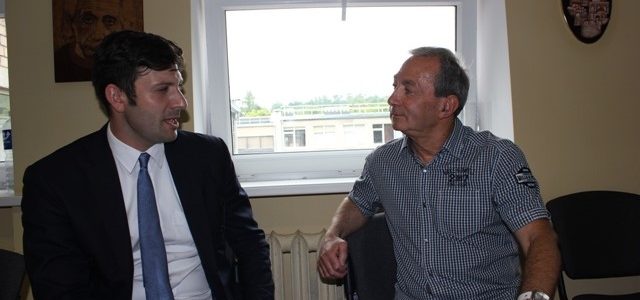
The US embassy to Lithuania paid a visit to the Kaunas Jewish Community. Ted Janis, adviser on policy and economics (on left in photo), and US embassy representative Renata Dromantaitė met KJC chairman Gercas Žakas and asked about daily life in the Community, its activities, relations with the municipality, Jewish cemeteries, projects planned and opportunities for working together more closely. The time allotted for the meeting passed very quickly and there wasn’t time to express many thoughts and address many issues, which will be part of the agenda for a future planned meeting. Embassy staff said they would like to and plan to participate in commemorations of the mass murder of the Jews of Petrašiūnai and the mass murder of intellectuals in the Kaunas ghetto at the Fourth Fort in Kaunas at the end of August.

Darius Udrys Uncovered How Unprepared We Are to Discuss Morality without Outrage


Darius Udrys. Photo by Kiril Čachovskij, DELFI, © 2017

by Andrei Khrapavitski

I have written a short facebook comment in Lithuanian regarding the latest meltdown within the local liberal circles, but this story is worth expanding on. The gist of the matter is that Remigijus Šimašius, the liberal mayor of Vilnius, fired Darius Udrys, the head of Go Vilnius development agency and my former colleague at the European Humanities University.

A formal reason for dismissal was lack of results, but this reason looks very improbable, given the short time both Darius and the agency had worked and could achieve those results. A more probable one is the scandal Darius provoked after posting a facebook comment in which he asked whether it was moral for forest brothers (Lithuanian partisans who waged guerrilla war against Soviet rule during the Soviet occupation during and after World War II) to kill organizers of kolkhozes, collective farms put in place by the Soviets on the occupied lands.

Darius raised a lot of eyebrows by simply asking on what moral grounds it was OK to kill the civilians who were organizing those kolkhozes. A group of conservatives immediately demanded his dismissal and put a lot of pressure on the mayor of the Lithuanian capital to do so. It seems quite likely that the liberal mayor gave in to the demands of the conservative members within the coalition and let Darius go. Apparently you can be fired in 21st-century Lithuania for asking a question about the morality of killing. The liberal mayor found neither the courage to stand for freedom of speech nor to acknowledge the real reason for the dismissal. As mentioned above, Remigijus tried to spin it by claiming that Darius lost his job for not demonstrating results.

Full text in English available here.

Summer Dig Ends at the Groyse Shul in Vilnius

by Geoff Vasil

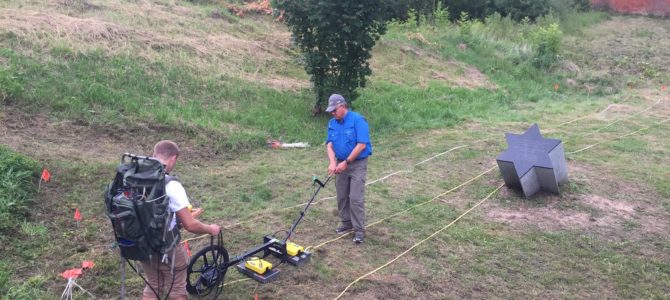
This summer’s archaeological dig at the Great Synagogue site in Vilnius wrapped up in the early evening of Friday, July 21, with volunteers working right up to the last minute.

This summer’s dig is the second by an international team led by the Israeli Antiquities Authority’s Dr. Jon Seligman and Hartford professor of Jewish history Richard Freund. The composition of workers and volunteers was significantly different this summer; only Shuli of Israeli Antiquities appeared again amid a group of others from Canada, Israel and the United States. Mantas Daubaras remained the chief Lithuanian archaeologist at the site and this year there were significant numbers of Lithuanian volunteers, almost all of them apparently university students. This year the focus was exclusively on the Groyse Shul or Great Synagogue site, whereas last year the Ponar Holocaust mass murder site was also part of the project, as documented recently in Owen Palmquist’s good documentary Holocaust Escape Tunnel, which aired on the PBS program NOVA earlier this spring. The lead archaeologists attended a Lithuanian screening of the documentary at the Tolerance Center a week before the end of their work at the Shulhoyf in Vilnius.

When Was Lithuanian Citizenship Rescinded for Jews and Never Reinstated?

According to the Lithuanian Migration Department, Jews with Lithuanian roots are making active use of the opportunity to restore Lithuanian citizenship following amendment to the law on citizenship adopted in July of 2016 to streamline the process. Following the changes, the number of Litvaks restoring citizenship has grown dramatically. The amendment was adopted by the Lithuanian parliament and signed into law by president Dalia Grybauskaitė, and Lithuanian Jewish Community chairwoman Faina Kukliansky contributed much to the initiative and lobbied heavily for it. The legislation now safeguards the right of Jews who left Lithuania during the period between the two world wars–and their descendants–to restore Lithuanian citizenship.

Many Litvaks died in the Holocaust and others are now spread around the world. Many of them identify themselves with Lithuania, but no longer have Lithuanian citizenship. The issue is not just one of morality, it’s also a legal issue. When we are speaking of Jews who survived the Holocaust and the war, they weren’t deprived of their citizenship in the concentration camps. They were deported, isolated and murdered not as citizens of Lithuania, but as Jews. People were exiled to Siberia because they owned property, or were lawyers, fire-fighters or volunteer soldiers. So the well-founded question arises: when exactly did they lose citizenship?

LJC chairwoman Faina Kukliansky says: “The doctrine of the Lithuanian law on citizenship remains unclear to this day. State leaders and politicians associate citizenship with restitution. There is a wide-spread but incorrect belief that after granting citizenship or making that process easier, under some sort of reverse discrimination making it easier for Jews, there will be a flood of applications from people of other ethnicities for restoration of citizenship. The fact is often ignored that Polish citizens, arrivals from Poland, were never Lithuanian citizens, because they lived in a territory which at that time belonged to Poland, after Poland occupied Lithuania. Likewise, Germans from the German lands were never Lithuanian citizens because they lived in territories which were occupied by Germany.

“Speaking of restitution, we are talking about a very small portion of Lithuanian Jews who survived the war, who were deported violently and lost all their rights in Lithuania following the occupation. If we base our thinking on legality, then they were deprived of citizenship under the occupational regime and never got it back, or got it back after the deadlines for submitting property claims. This is equally urgent for Jews who left after 1990, they were included the newly drafted law on citizenship presented in parliament. Are they somehow opposed to the Lithuanian state because they live in Israel, which is neither a NATO nor an EU member? Is Israel really considered an enemy of the Lithuanian state?

“So I again ask, when were Jews deprived of certain rights and property by the laws and bylaws of the local or occupational government, and when did they lose Lithuanian citizenship? If they didn’t lose it, because the occupational regimes and the actions they carried out were illegal, then when should these people be issued documents testifying to their citizenship in Lithuania, and when should their illegally seized property be returned? The Lithuanian law on citizenship doesn’t address these issues.

“Reviewing the history of the first independent Republic of Lithuania and its sad fate, we find a lack of legal judgment regarding the occupational Soviet government, the Lithuanian Provisional Government, that of Nazi Germany, the second Soviet occupation and finally of the current independent Republic of Lithuania. So it remains who deprived Jews of citizenship, property and other civil rights, and when they did this, and whether these have been restored. I don’t deny there are a number of studies on this issue, but how do they affect the legal verdicts being issued now or those which will be issued in the future? I’d like to remind everyone we are not talking those who perished in the war, but about the Jewish citizens of Lithuania who were persecuted and murdered in the territory of the state of Lithuania.

“So far the state hasn’t been able to solve issues surrounding Jewish history and culture as well as legal status. Perhaps these matters need to solved serially, one after another: the problem of education, of Jewish history and issues around restoring rights violated. These matters are not for NGOs such as the LJC to solve, but for the state. The issues enumerated were solved long ago throughout Western Europe. They remain unsolved only in the former Soviet Union. We cannot forget Lithuania is in the lead among all former republics in the Soviet Union–the issue of restitution for Jewish communal property has been solved–but the cynical view of the individual’s civic, political and social rights as being of secondary importance remains more what it was in the USSR than anything else.

“I have heard rebuttals that Russia has also failed to make restitution with Lithuania, but this point of view and social attitude can hardly be expected to lead to further progress not just in restitution, but in a host of economic, social and other issues.

“The Lithuanian Jewish Community is concerned with all issues surrounding citizenship and restitution. This is a problem and a great injustice of urgency for Litvaks living abroad. The European Commission recently adopted a declaration again emphasizing remembrance and justice, which is what we seek and invite all Lithuanians to pursue with us.”

Panevėžys Jewish Community Youth Meet

Susibūrė Panevėžio m. žydų bendruomenės jaunimas

Children of members of the Panevėžys Jewish Community and their parents gathered July 12 to consider the formation of a Panevėžys Jewish Community youth organization. They discussed how to stimulate organizational, cultural and athletic activities among youth. The goal of the meeting was to encourage more Community youth to learn Jewish traditions. The Community building includes a room with religious regalia, literature, albums, magazines and multimedia equipment for screening films and holding lectures. The proposal was made to use the room for youth activities, specifically for personal study of Judaism.

The meeting made plans to travel to Ventspils in Latvia on August 5 and 6 and learn about the former Jewish community there. The trip would include an excursion into Joniškis, Lithuania, to view the newly restored Red and White Synagogues there. The trip to Ventspils is to include meetings with the surviving Jewish community there and the conclusion of a cooperation agreement between the two communities. The trip is supported by the Goodwill Foundation and members of the Panevėžys Jewish Community. Members are invited to participate.

Israeli Choirs Big Hit

Izraelio chorų koncertas

The concert by choirs from Israel in Vilnius July 24 was a great hit. The Vilnius Old Town Hall was full to overflowing for the concert mainly in Hebrew but with some Yiddish and even a Yemeni song.

The Israeli embassy to Lithuania sponsored the free public event and ambassador Amir Maimon reminded the audience the Old Town Hall stood right next to the big and small Vilnius ghettos where almost all prisoners were murdered during the Holocaust.

Jewish Unity: Call Me Naïve

Blogger and CEO of the American Jewish Committee David Harris explores the tortured route many Jewish couples are forced to take towards marriage.

Jewish Unity: Call Me Naïve
by David Harris

When I was growing up on the West Side of Manhattan, I recall elderly men from Jerusalem ringing our doorbell a couple of times per year. They were pious, and they were raising money for their institutions in Israel.

My mother and I lived alone, and, as a working woman, she had very limited disposable income, but she never let them leave empty-handed.

When I asked her why she would give money to people who, it was obvious, lived a very different lifestyle than ours, and why she never asked probing questions about the organizations they represented, she would simply say, in effect: “They’re Jews. We’re Jews. We need to support one another. Hitler made no distinction among Jews. We all were targeted for annihilation, irrespective of our beliefs, clothing, dietary habits, whatever. Why should I make a distinction?”

My mother survived the Holocaust. I took her words seriously. Indeed, I took them to heart and have sought to put them into practice on a daily basis. If we really are one people, then, whatever our differences, we need to act as one people.

Forty-two years ago, I joined the Jewish communal world, getting started in Rome and Vienna, the two transit points in Europe for Jews able to leave the Soviet Union and plan new lives beyond the grasp of the communist world.

Full text here.

International Roma Holocaust Remembrance Day

The Roma Community Center, the Polish Institute and the Vilnius Old Town Hall invite you to come commemorate together the International Day of Commemorating Roma Victims of the Holocaust on August 2.

Planned events:

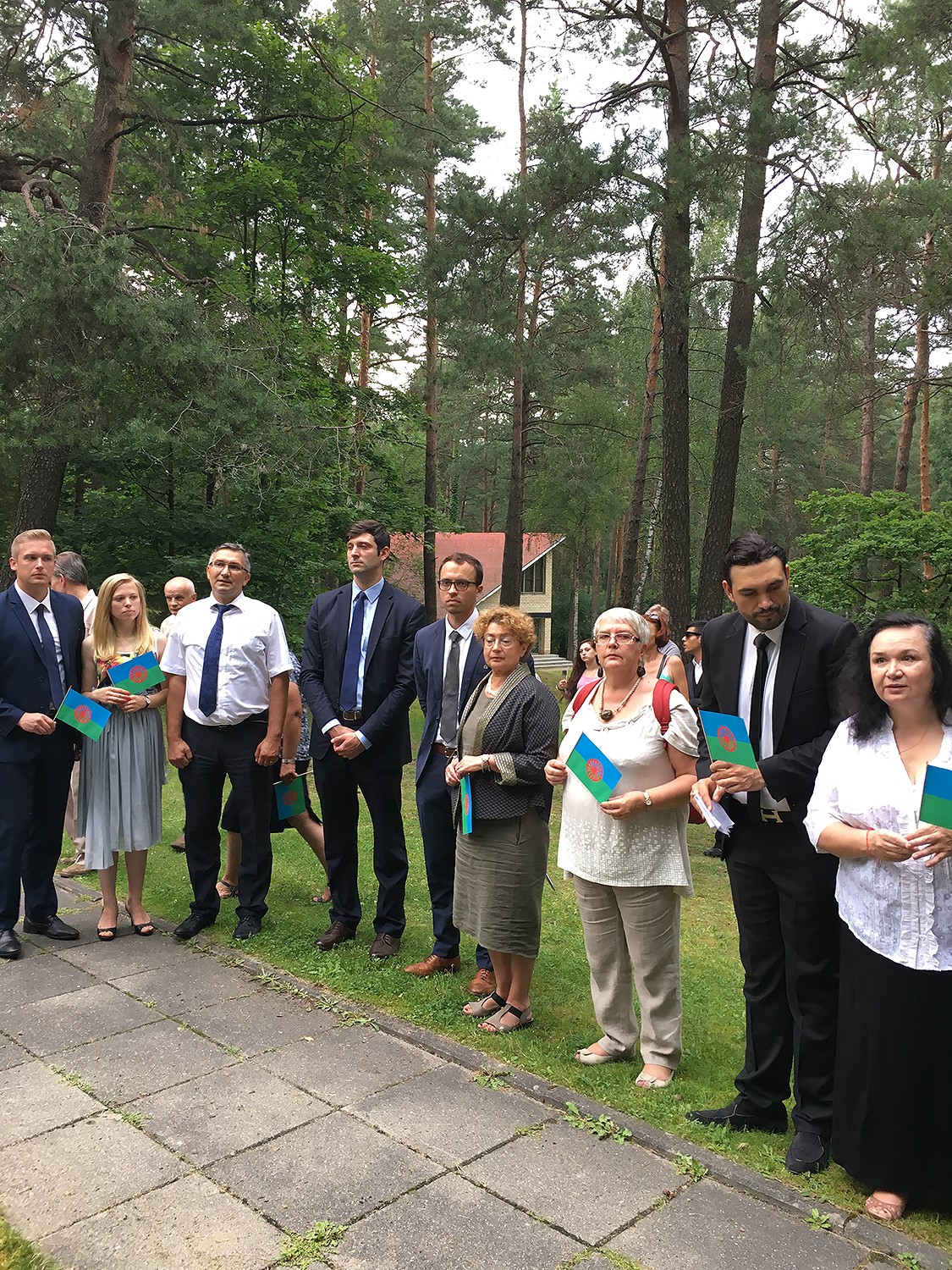
12:00 noon laying of wreaths at Ponar Memorial Complex

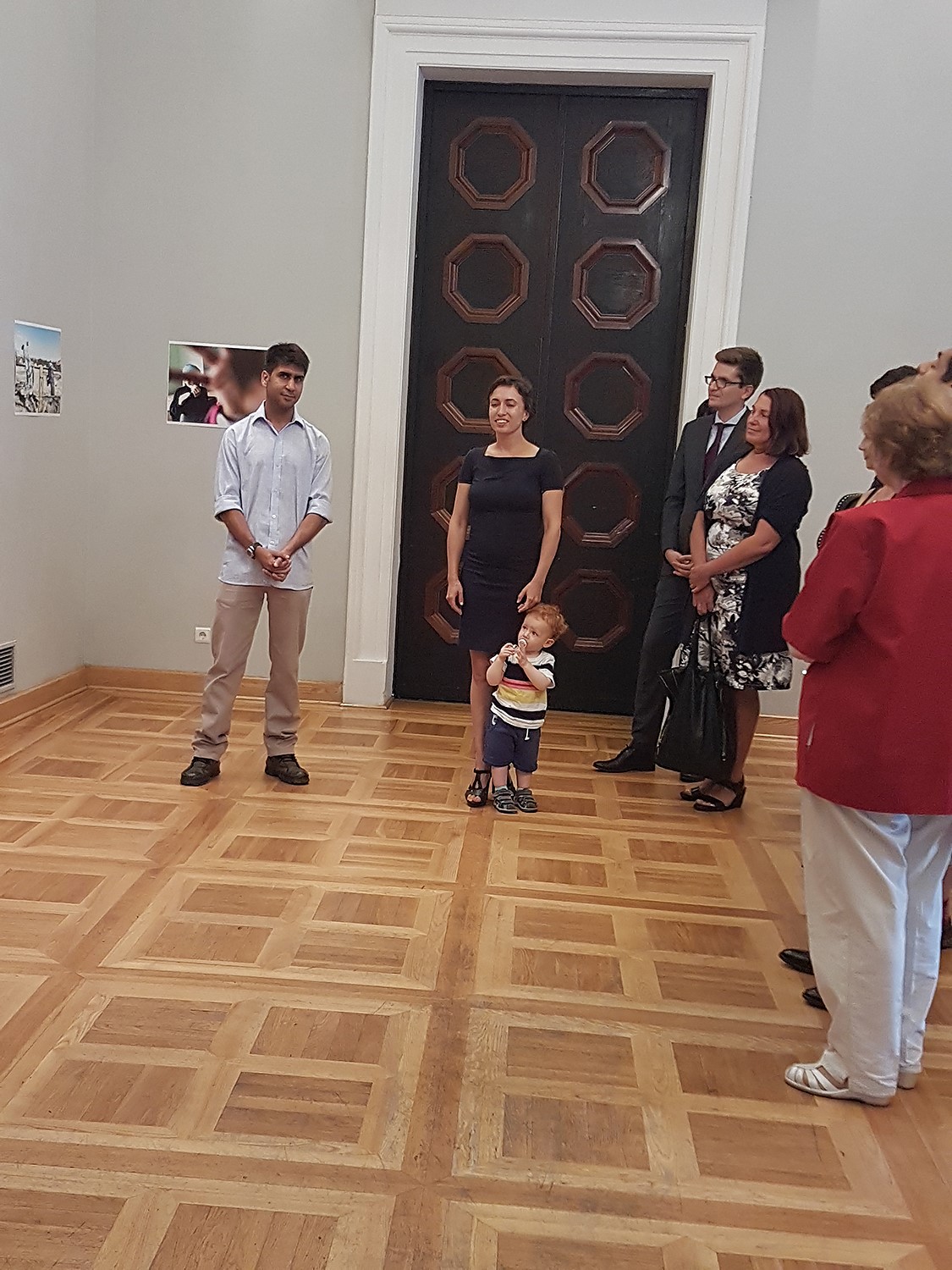
3:00 P.M. Preview of exhibits for International Roma Holocaust Remembrance Day in the Grey Hall of the Vilnius Old Town Hall, Didžioji street no. 31:

Traditions, Customs and History of the Roma of Poland exhibition
Nomads of the Future exhibit of photography by Prashant Rana from Sweden

For more information, contact the organizers at +370 682 41218

Litvaks Abroad Using Opportunity to Restore Lithuanian Citizenship

Užsienyje gyvenantys litvakai aktyviai naudojasi galimybe atkurti pilietybę

Vilnius, July 20, BNS–Jews with Lithuanian origins are actively making use of the opportunity to restore Lithuanian citizenship following amendments which came into effect in July last year making the process easier, officials reported Thursday.

The Lithuanian Migration Department announced 1,131 people restored Lithuanian citizenship in the first half of this year. In the second half of last year the number was 912.

Director Evelina Gudzinskaitė said the majority were Litvaks.

“After the law on citizenship was changed last year, the numbers are really growing. Litvaks from Israel and the Republic of South Africa are the majority, and people who left for the United States are also making active use of the opportunity,” Gudzinskaitė told BNS.

In the first half of last year Lithuanian citizenship was restored to 481 people. In July of 2016 amendments came into effect allowing people who left the country in the interwar period and their descendants to receive Lithuanian citizenship.

The law was changed after Migration Department officials and courts began refusing to restore citizenship to certain Litvaks who failed to provide proof they were persecuted in independent Lithuania between the two world wars. Lithuanian officials calculate there are about 200,000 Jews living in Israel with Lithuanian roots, and more than 70,000 Jews with Litvak roots in South Africa.

People and Books of the Strashun Library Exhibit to Close July 28

Paroda „Strašuno bibliotekos žmonės ir knygos“ veiks iki liepos 28

For those who haven’t seen the exhibition at the Lithuanian National Martynas Mažvydas Library, People and Books of the Strashun Library will close July 28. Judaica Center director Dr. Lara Lempertienė is planning to lead a tour July 28 for those interesting in learning why the Strashun Library looms so large on the Litvak cultural horizon, to be followed by a discussion. She is inviting interested parties to gather in the exhibition hall on the third floor at the library at 3:00 P.M., July 28.

Sergejus Kanovičius: Let’s Put Our Whole Heart in It, There Won’t Be a Second Chance

by Donatas Puslys
bernardinai.lt

A unique project should open its doors in 2019: the Lost Shtetl Šeduva Litvak history, culture and commemoration museum. We spoke with the project director and founder of the Šeduva Jewish Memorial Fund Sergejus Kanovičius about his work, commemorating the memory of Litvaks and the challenges he faces.

Let’s begin our conversation with the context surrounding the entire Šeduva project. How are doing here in Lithuania in integrating Lithuanian Jewish history into the general historical narrative? Is it an integral part of the story now, or still just an interesting footnote adding color to the main story?

It’s hard to assess this because you can never have all the information. You can only try to take it all in. What’s important is that all of these kinds of projects, including Šeduva, serve a very noble goal, to preserve or create cultural treasures. I think all the efforts connect up and achieve their goal sooner or later, each project is doing something worthwhile, contributing to educating the public. It might be somewhat boring to keep repeating it, but I will say it again, that everything will change, and I believe it will change for the better, when the educational system gets serious about these matters and the content of textbooks will be much different so that the story of the Jews–of Vilnius, Šeduva, Jonava and Lithuania–doesn’t begin and end in the Holocaust mass graves. There is a normal cycle to life. A person’s life begins with being born, and the history of the Jews of Lithuania begins here with the movement and settlement of people. The history of this settlement is extremely varied and rich and needs to be told. I think this is a question of educational reform.

Full interview in Lithuanian here.

Vilnius Jewish Religious Community Chairman Visits Great Synagogue Archaeological Site

Vilnius Jewish Religious Community chairman Shmuel (Simas) Levinas visited the site of the Great Synagogue July 18 where an international team of archaeologists are now working for their second summer. Dr. Jon Seligman acquainted the chairman with current work, including the discovery of two well-preserved ritual baths with original tiles and a well-developed water system. The pieces discovered are washed by volunteers and excavated earth is sent through sieves to find smaller items. Some of the volunteers, mainly from the USA and Israel, and Dr. Seligman have Litvak roots.

On July 19 Dr. Seligman and fellow archaeological dig director professor Freund visited the Choral Synagogue in Vilnius and had a chance to see for themselves the revival of Jewish religious life taking place there.

The visitors saw the synagogue’s Torah scrolls and were especially interested in the scroll donated by Judah Passow which originates in the time of the Vilna Gaon. They were impressed by a matzo-making machine contrived after World War II at the synagogue and were most interested in fragments of the former Great Synagogue preserved at the Choral Synagogue, including plaques with prayers. The two visitors donated Vladimir Levin’s book History of the Synagogues of Vilnius to the library at the Choral Synagogue.

Fate of Central European University: Educational Issue, or Anti-Semitism?

by Gintarė Kubiliūtė
bernardinai.lt

The existence of the Central European University in the Hungarian capital Budapest is now under threat after Hungarian prime minister Viktor Orban’s government announced amendments to the education law.

The CEU was established by Hungarian Jewish businessman in 1991. It is accredited in the United States and Hungary, but only operates in Hungary. The right-wing government led by Orban wants the CEU to open a branch in New York state, and if they don’t, the university in Hungary will be shut down. Furthermore, under the new legislation the university would be forced to issue diplomas valid in the US and Hungary.

The possible new requirements by Orban’s government could be fatal to the Central European University because there is not enough funding to open a branch campus in New York state and coordination the issuing of diplomas between governments would be slow, complicated and, one can say, the university wouldn’t have very much influence on the process. Therefore the legislative amendments would make the CEU completely dependant on the Hungarian ruling party.

Full story in Lithuanian here.

NOVA Documentary Holocaust Escape Tunnel Screened at Vilna Gaon Museum

The Tolerance Center of the Vilna Gaon State Jewish Museum screened the NOVA documentary about Jewish Vilna which aired earlier in the spring on the PBS network in the United States on July 18. The event space was filled with audience members and staff had to find additional chairs for the large crowd. Many sat in the upstairs balcony overlooking the space. Also in attendance were current and former staff from the Vilna Gaon museum and MP Emanuelis Zingeris. The audience was mainly interested members of the Lithuanian public including a large number of young Lithuanians.

Speaking before the film, museum director Markas Zingeris praised the documentary about archaeological digs at the site of the former Great Synagogue in Vilnius and at the Holocaust mass murder site Ponar just outside the Lithuanian capital.

Deputy chief of mission at the United States embassy to Lithuania Howard Solomon also called the film important and reiterated long-standing US support for the Lithuanian Jewish community.

Israeli ambassador to Lithuania Amir Maimon noted Israelis remember the heroes as well as the victims during Holocaust commemorations, and said his personal hero was Fania Brancovskaja, the FPO partisan present in the audience. He also expressed the hope the documentary would be shown throughout Lithuania.

Macron Condemns French Role in Holocaust

Paris, July 16, BNS–French president Emmanuel Macron Sunday condemned his country’s collaboration with the Nazis in the Holocaust and criticized those who seek to reduce France’s role in sending tens of thousands of Jews to their deaths.

French Jewish leaders delivered speeches during an emotional event at the Velodrome d’Hiver indoor bicycle racing cycle track and stadium where 75 years ago, on July 16 and 17, 1942, Vichy police imprisoned about 13,000 Jews. Less than 100 of them survived being sent to Nazi death camps.

At the 75th anniversary ceremony president Macron affirmed “it was France who organized this.” The president noted not a single German had participated in the mass arrest, it was carried out by French police collaborators with the Nazis.

Macron rejected arguments from the French extreme right claiming Vichy collaborators hadn’t acted in the name of the French state and called such claims “comforting, but incorrect.”

At the event attended by Israeli prime minister Binyamin Netanyahu, Macron pledged to fight continuing anti-Semitism. He called for an exhaustive investigation of a Paris women recently murdered and thought to be the victim of anti-Semites.

Jews of Vilkomir on Lietuvos Rytas TV

The Lietuvos Rytas television program Travel with a Reporter features Ukmergė (Vilkomir) Jewish Community chairman Artūras Taicas and discusses the former Jewish community in the Lithuanian town.

Watch the program in Lithuanian here.

Archaeologists Return to Digs at Shulhoyf, Ponar

from Jewish Heritage Europe

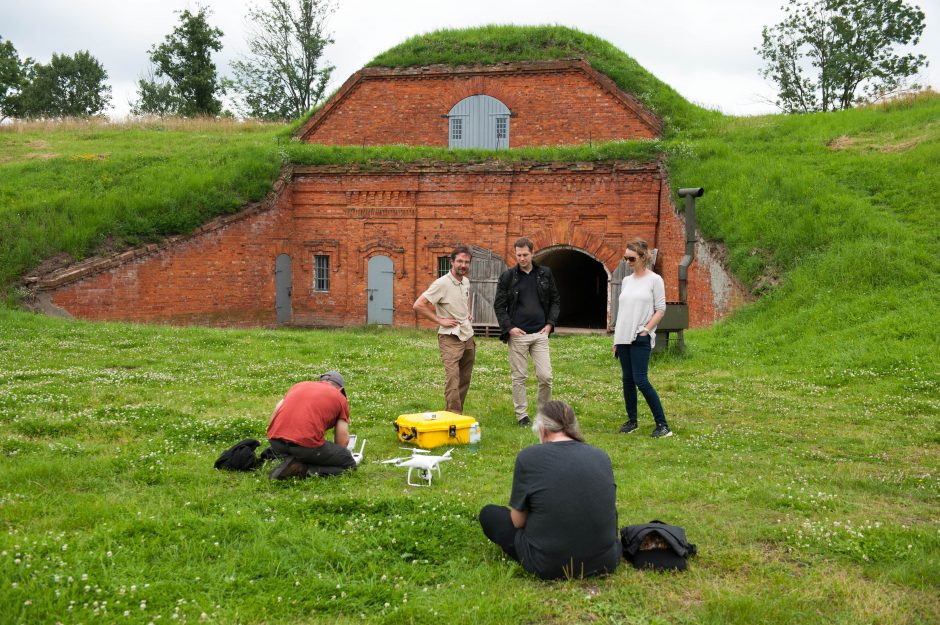
The second season of archaeological excavations is under way at the site of the destroyed Great Synagogue in Vilnius and the surrounding Shulhoyf complex of Jewish buildings. A team of Israeli, Lithuanian and American volunteers began work on July 10 and will continue until July 21.

The objective is to continue last year’s work  researching the water system of the complex developed in the 18th century and two mikvaot, ritual baths. Plans are to open “an area … probably near the entrance staircase descending into the synagogue and around the area of the bimah.”

Screening of NOVA Documentary about Ponar

Dear all,

The Vilna Gaon State Jewish Museum and the embassy of the United States of America in Vilnius kindly invite you to a screening of the documentary film “Holocaust Escape Tunnel” at the museum’s Tolerance Center (Naugarduko St. 10/2, Vilnius) on Tuesday, July 18, at 5:30 P.M. The screening will be followed by a discussion with the archaeologists featured in the film.

On Issues Surrounding the Protection and Conservation of Anti-Semites


by Sergejus Kanovičius

bernardinai.lt
July 29, 2016

Recently members of the City of Vilnius’s Commission of Names, Monuments and Memorial Plaques (hereinafter the City Commission) visited these issues.

Members of the Commission apparently didn’t feel a lack of expertise in the matters at hand and didn’t seek the advice of the Lithuanian Language Commission on how to write Washington Square (there is no W in Lithuanian, but in any case it wasn’t Wrocław), didn’t ask for public input on Ukraine Square and felt confident enough to deliberate on issues related to commemorating Jonas Basanavičius.

But one question was the subject of much–how to say it precisely–profound avoidance of responsibility and competence. This was the issue connected with Vilnius City Council member Mark Harold’s statement in which he argued for renaming Kazys Škirpa Alley the Alley of the Righteous Gentiles. What did the Commission do? The Commission said they didn’t know what to do. They asked for help from another institution which, also not knowing what to do, issued historical reports on Škirpa full of evasions (he didn’t take part in mass murder because the Germans wouldn’t allow him to travel, he didn’t murder anyone personally, he was just the head of the anti-Semitic LAF and called for getting rid of the Jews in this manner: “Having examined the anti-Semitic statements encountered in texts prepared by the Berlin LAF organization, it can be stated its members proposed solving ‘the Jewish problem’ not through genocide, but by means of driving them out of Lithuania.” This is a quote [translated] from Center for the Study of the Genocide and Resistance of Lithuanian Residents director T. B. Burauskaitė’s history report sent to the head of the municipal administration of Kaunas).