
Holocaust

They Rewrote History before Our Eyes

They Rewrote History before Our Eyes

by Grant Gochin, June 24, 2026

Lithuania condemns Russian falsification of history. On June 19, its own parliament provided the screen for another falsification.

Holocaust revisionism was not whispered in a corridor of the Lithuanian parliament. It was projected onto the wall of the Hall of the Act of 11 March.

On June 19, 2026, the Seimas hosted an international conference marking the eighty-fifth anniversary of the 1941 Lithuanian uprising. The official announcement promised a discussion based on “sources and historical analysis,” rather than later stereotypes. The program listed the speaker of the Seimas, senior politicians, members of parliament and historians. This was not a private gathering in a rented hotel room. It carried the location, publicity and institutional prestige of the Lithuanian legislature. (Seimas conference program)

One presentation was delivered by Roman Kuzmyn of Lviv Polytechnic National University. Its subject was the supposed similarities and differences between the 1941 uprisings in Lithuania and Western Ukraine.
Remembering the Garage Pogrom 85 Years On

Remembering the Garage Pogrom 85 Years On

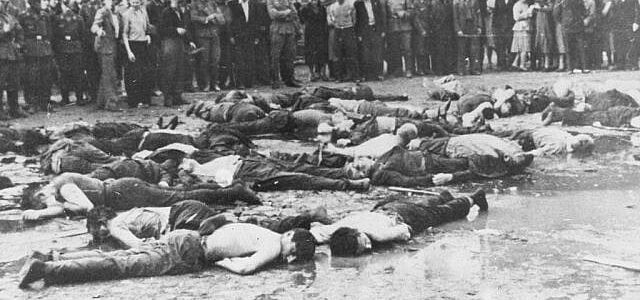
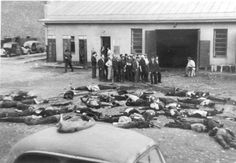
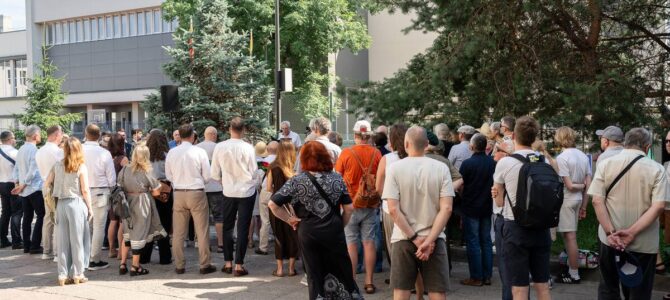
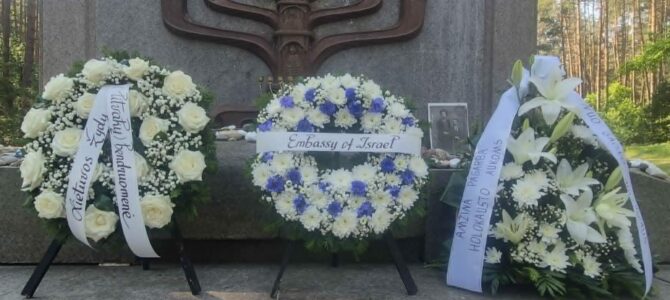
On Monday the Kaunas Jewish Community held a public commemoration for the victims of the Lietūkis Garage massacre in Kaunas. Although the exact number of victims remains unknown to this day, it’s believed around 50 Jewish men were rounded up and then tortured to death at the automobile repair cooperative before the German army had taken control of Kaunas, Lithuania’s provisional capital.

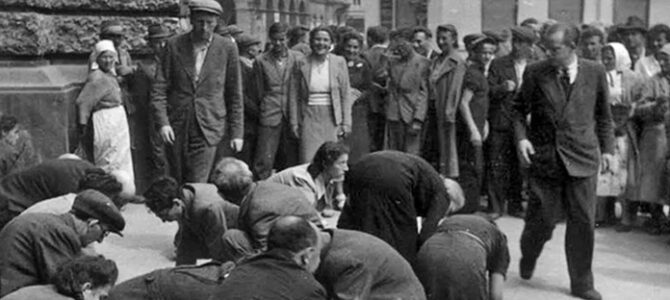
The mass murder attracted spectators, mainly Lithuanians but also Wehrmacht soldiers and officers. It happened on June 27, 1941. Firehoses were forced down the throats of many of the victims, bursting their stomachs and intestines, leading to death. Those who survived the various tortures were murdered with crowbars. The corpses were piled up in the parking lot and one of the perpetrators climbed on top and played a Lithuanian song. Some witnesses said it was the Lithuanian national anthem.

The commemoration took place at the site in Kaunas with a commemoration in the evening at Vytauts Magnus University there. Both commemorations featured live music, including accordion music at the mass murder site.

Kaunas Jewish Community chairman Gercas Žakas spoke at the commemoration at the site, as did Israeli ambassador to Lithuania Shelly Hugler Livne. The latter decried the world turning its collective back on the lessons learned from the Holocaust. Also attending were the American, German, Estonian and French ambassadors.

Keeping Memory Alive

Keeping Memory Alive

A small group marked the 85th anniversary of the beginning of the Holocaust in Lithuania at the Ponar Memorial Complex yesterday.

The Holocaust began in late June of 1941. Withing a few months about 95% of all Jews in Lithuania had been murdered.

Writer and director of the Vilna Gaon Museum Sergejus Kanovičius said: “Words can never express our respect for those who were murdered as well as prayer does. Their memory will always live in our hearts.”

Lithuanian Jewish Community chairwoman Faina Kukliansky said: “Those gathered here today are the people who don’t need salutes from an honor guard or ceremonies planned in the finest detail in order to understand that the massacre of Jews begun 85 years ago was a tragedy for all of Lithuania, not just for our people.”

Israeli ambassador to Lithuania Shelly Hugler Livne said it was horrible people hadn’t learned from the painful lessons of history. She said the ever-growing anti-Semitism around the world happening today was the best proof of that. Hugler Livne said it was said to see the world going down the same road again.

The Tragedy in Palanga 85 Years Ago Must Not Be Forgotten

The Tragedy in Palanga 85 Years Ago Must Not Be Forgotten

by Mindaugas Surblys

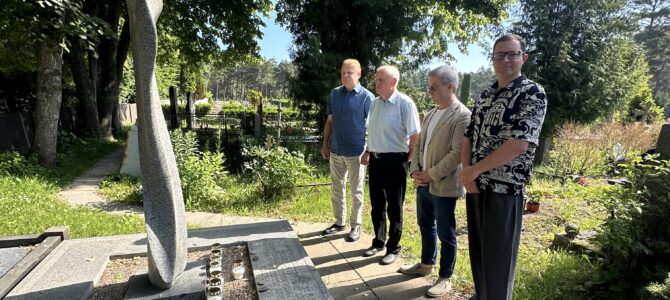
Today we commemorate the men and young men of the Palanga Jewish community who were murdered in Birutė Park in Palanga in 1941. Palanga Jewish Community chairman Vilnius Gutmanas, Palanga deputy mayor Rimantas Mikalkėnas, Palanga municipal culture department director Robertas Trautmanas and members of the community lit commemorative candles and placed commemorative stones.

The army of the Third Reich occupied Palanga on June 22, 1941, and by June 26 all of the town’s Jews had been locked up inside two synagogues, mothers, children and the elderly in one and men and young men in the other. The 106 males were taken on June 27 to Birutė Park and murdered, along with 5 Lithuanians accused of collaborating with the Soviet government. The remaining 300 or so women, children and elderly were murdered on October 11 and 12, 1941, in the Kunigiškiai forest.

The males were exhumed in July of 1958 and moved to the Palanga city cemetery, where a single marker marks the mass grave.

Memory lives so long as we remember.

Chairman Gutmanas said: “Eighty-five years have passed but time is powerless to erase our pain. People who had families, dreams and lives were silenced forever. They were murdered because of their origin. It is our duty today not just to commemorate them, but not to allow their stories to be forgotten.”

Holocaust Testimonies in Palanga

Holocaust Testimonies in Palanga

The Palanga Jewish Community and the Jonas Šliūpas Museum invite you to attend Lithuanian-American historian and journalist Ina Navazelskis;s presentation “Voices from the Blood-Lands” which includes eye-witness testimonies of the Holocaust and World War II. Ina worked at the US Holocaust Museum in Washington, D.C., for 25 years, soliciting oral testimonies from over three hundred witnesses and Holocaust survivors. She focused on Eastern Europe and especially the Baltic republics in her work, even writing a book about the period between 1990 when Lithuania declared independence from the Soviet Union and the attempted coup in Moscow in the fall of 1991. The presentation includes testimonies from Poles, Jews, Lithuanians, Germans and others. The presentation is free and open to the public, but the organizers ask that you register beforehand by calling +370 612 86114 or by sending an email to j.sliupo.muziejus@lnm.lt. Palanga Jewish Community chairman Vilius Gutmanas will also speak at the event. A discussion is planned after the main presentation.

Time: 5:00 P.M., Wednesday, July 15
Place: Jonas Šliūpas Museum, Vytauto street. no 23a, Palanga

Happy Birthday

Happy Birthday

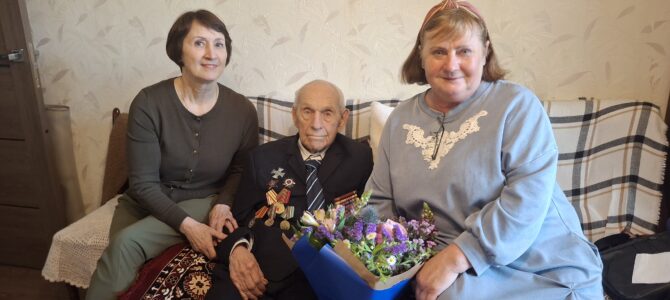
Lithuanian Jewish Community member Aleksandras Asovskis just turned 105. His life spanning entire eras is an inspiration to all of us. We wish him good health, the love of family and friends, much joy and many happy moments to come. Mazl tov. Bis 120.

Condolences

Julija Zibuc has died. She passed away June 18. Born in 1936, she was a member of the Lithuanian Jewish Community and a client of the Saul Kagan Welfare Center. We extend our deepest condolences to her family and friends.

The Wreath and the Knife

The Wreath and the Knife

by Grant Gochin

On June 27, 2026, the eighty-fifth anniversary of the Lietūkis Garage massacre will be marked in Kaunas and by Lithuanian diplomats in Israel and the USA.

Expect the wreaths. Expect the candles, the bowed heads, the violin music, the brief and dignified statement. Expect a Lithuanian official, perhaps a diplomat, to speak of the Jews who “perished,” who were “lost,” whose world “vanished.” I have set out elsewhere, in What Lithuania Means When It Says “Vanished,” “Lost,” or “Perished,” what that vocabulary is built to hide. The short version is that none of those words contains a killer. They are the grammar of a state that has learned to mourn the Jews it cannot bring itself to say were murdered by Lithuanians.

Watch closely this June, because the commemoration is the knife.

United States Holocaust Envoy Visits Shnipishok

United States Holocaust Envoy Visits Shnipishok

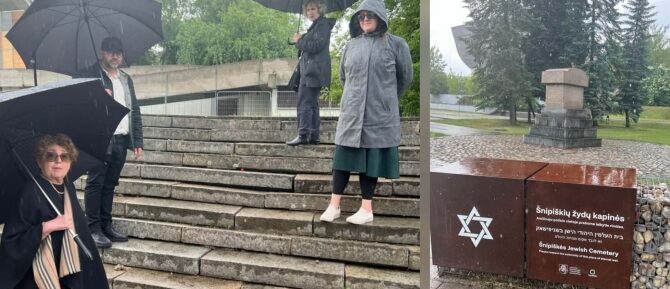
Ellen Germain, the special envoy for Holocaust issues at the United States Department of State, visited the old Jewish cemetery in the Shnipishok or Šnipiškės neighborhood of Vilnius last week, spoke with representatives of the Lithuanian Jewish Community about the site housing the ruins of the Soviet Palace of Sports complex and discussed plans for the site.

Lietūkis Garage Commemoration

Lietūkis Garage Commemoration

The Kaunas Jewish Community is inviting the public to mark the 85th anniversary of the Lietūkis Garage massacre on Monday, June 29. The ceremony will take place at the commemoration to victims at Miško street no. 3 in Kaunas at 4:00 P.M., followed by a concert in the Great Hall at Vytautas Magnus University, Gimnazijos street no. 7, Kaunas, at 6:00 P.M.

Jewish Life in the Baltic Countries, 1917-1945

Jewish Life in the Baltic Countries, 1917-1945

Vytautas Magnus University in Kaunas in cooperation with the US Holocaust Museum, the Sugijara House Museum in Kaunas and the Ninth Fort Museum in Kaunas is holding a conference called “Jewish Life in the Baltic Countries, 1917-1945: from June 9 to June 11. The conference marks the 85th anniversary of the beginning of the Holocaust in the Baltic states with presentations on Jewish life including art, music, literature, education, languages, religion, government, land and nature, emigration, resistance, the rescue of Jews and commemoration. The Kapela Kotra trio will perform Litvak music and documentary films by Saulius Beržinis will be screened.

The conference will be held in the Senate Hall at Vytautas Magnus at Donelaičio street no. 28 in Kaunas. The program begins at 9:00 A.M. on Tuesday, June 9. It begins at 11:00 A.M. on June 10 and at 9:30 A.M. on June 11.

More Visitors in Panevėžys

More Visitors in Panevėžys

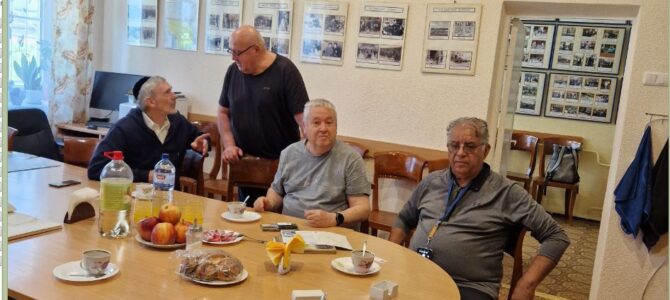
A delegation of three guests from Israel visited the Panevėžys Jewish Community last week. Mordechai (Moudi) Ben Shach’s father and grandparents had lived in Panevėžys and ran the former Kommerts Hotel there. His grandfather Yaacov Chachvich from the Tuch family came to Panevėžys in 1890 from the town of Gedera in what is now Israel.

The rabbi accompanying the other two visitors was looking at the Community’s photography exhibit and was surprised to see a photograph of his great-grandfather, also a rabbi. He said it was a great honor to visit Panevėžys, one of the most important Jewish religious and cultural centers in the world.

Moudi Ben Shach said the foundation for the life of the community is not just various activities and projects, and that meeting and talking to people, keeping in contact and working together for the good of the community are just as important if not more so.

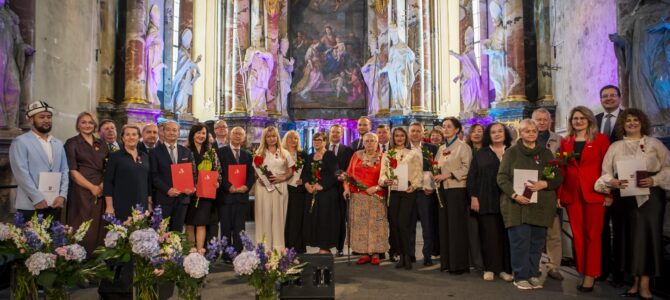
Ethnic Minorities Department Awards Ruth Reches, Gercas Žakas

Ethnic Minorities Department Awards Ruth Reches, Gercas Žakas

The Lithuanian Culture Ministry awarded its order of merit to psychologist and school principal Ruth Reches and Kaunas Jewish Community chairman Gercas Žakas on Friday, Lithuania’s Cultural Minorities Day.

Gercas was recognized for his work in preserving Jewish identity, commemorating famous Litvaks, care for Holocaust victims and rescuers and Holocaust commemoration.

Lithuanian Ethnic Minorities Department director Dainius Babilas presented Reches the silver order of merit, third degree, for her consistent work in minority education, teaching Jewish culture and history and her work to have the Yiddish language included on Lithuania’s list of immaterial cultural treasures.

Reches is actually a Hebrew teacher as well as psychologist and principal. She earned a PhD in psychology several years ago and her publications and academic work include topics such as attachment disorders, trans-generational Holocaust trauma and developmental psychology. She has served as the principal of the Sholem Aleichem ORT Gymnasium in Vilnius, the capital city’s only Jewish primary and secondary school, for over a decade. She is the daughter of Lithuanian Jewish Community chairwoman Faina Kukliansky.

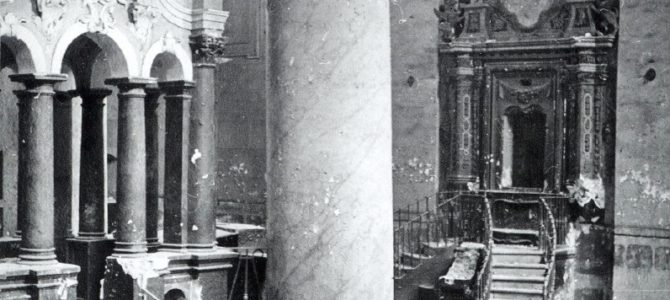
Great Synagogue Exhibit at Litvak Identity Museum

Great Synagogue Exhibit at Litvak Identity Museum

The Litvak Identity Museum of the Vilna Gaon Jewish History Museum will open a new exhibit dedicated the Great Synagogue in Vilnius, damaged by the Nazis and destroyed by the Soviets, but never completely forgotten by Vilnius and the residential community.

The exhibit includes archaeological discoveries, depictions in art, historical photographs and reconstructions.

The opening ceremony is to include a performance by cantor Shmuel Ya’atom and a guided tour of the Gros-Shul exhibit by its curators. The exhibit runs till January 31, 2027.

Time: 6:00 P.M., Tuesday, May 19
Place: Litvak Culture and Identity Museum, Pylimo street no. 41, Vilnius

Kaunas Jewish Community Thanks Righteous Gentiles

Kaunas Jewish Community Thanks Righteous Gentiles

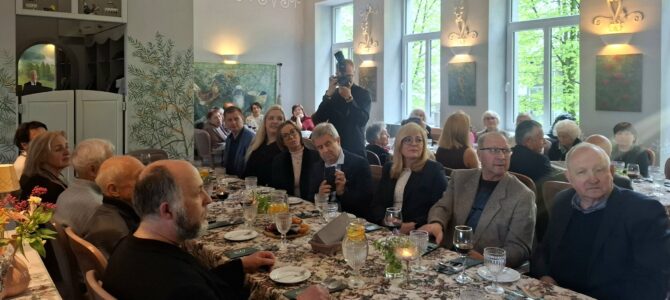
For more than 30 years now the Kaunas Jewish Community has thanked rescuers of Jews every spring with a special ceremonial dinner, expressing deep gratitude and appreciation for the bravery and humanity they demonstrated. This the ceremony was held last week.

“Discussing Lithuanian and other European Jewish communities after World War II is impossible without the stories of the rescuers of Jews. If not for them, who are mainly humble and quiet about it, not boasting of their heroism, many of us would not be here in this land, and the dark time of the Holocaust would be even darker,” Kaunas Jewish Community chairman Gercas Žakas told the audience this year.

As time passes there are fewer and fewer rescuers remaining, although there are examples of living rescuers such as Righteous Gentile Vladas Palkauskas who is now 93 and still going strong.

News from Panevėžys

News from Panevėžys

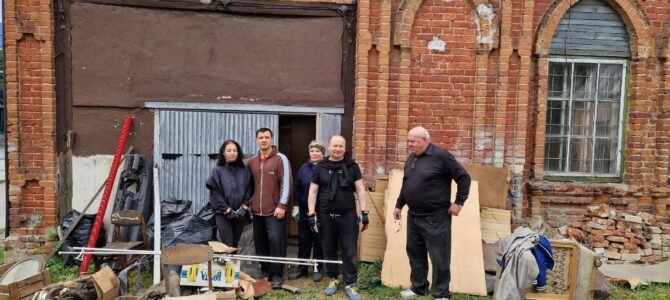
Last weekend volunteers from the Panevėžys Jewish Community cleaned the interior and grounds of the Chevra Torah synagogue there. The brick synagogue was built in 1910. It was closed in 1940, the interior was destroyed and the decorative façade heavily damaged.

On May 6 Panevėžys Jewish Community representatives attended a lecture at the Lost Shtetl Museum in Šeduva by Holocaust historian Christoph Dieckmann called “How Did It Happen?” During questions afterwards, Panevėžys Jewish Community chairman Gennady Kofman thanked Dieckmann and asked about sources on Jewish vital statistics from the period between 1938 and 1941, engendering a discussion about the drop-off in marriages and births at a time when the Jewish community sensed the onset of tragedy.

Natalja Cheifec to Give Guided Tour of Choral Synagogue

Natalja Cheifec to Give Guided Tour of Choral Synagogue

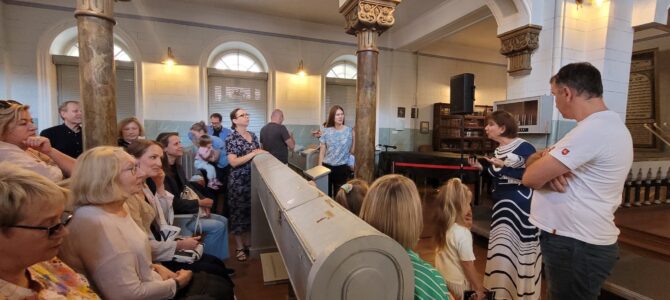
Teacher and lecturer Natalja Cheifec will provide a guided tour of the Choral Synagogue in Vilnius on Wednesday evening. The only traditional synagogue still working in Vilnius has a long and interesting history. Cheifec will talk about its architecture, symbolism and traditions, and about its place in Jewish life before and now. Cheifec will conclude the tour with questions from the audience. Participants are asked to donate 2 euros to the synagogue.

Prior registration is required, click here.

Time: 6:00 P.M., Wednesday, May 13
Place: Choral Synagogue, Pylimo street no. 39, Vilnius

Lost Shtetl Fifth Most Beautiful Museum in the World

Lost Shtetl Fifth Most Beautiful Museum in the World

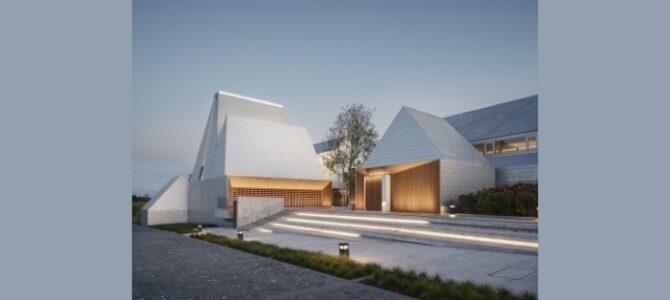
The Lost Shtetl Museum in Šeduva, Lithuania, placed fifth in the Prix Versailles selection of the world’s most beautiful museums announced May 4 at UNESCO in Paris. Prix Versailles judges singled out the museum’s architecture designed by Finland’s Rainer Mahlamäki. The outer form of the museum is intended to replicate the silhouette of the skylines of typical Lithuanian shtetlakh.

Full story in Lithuanian here.

Holocaust Exhibit at Ninth Fort in Kaunas

Holocaust Exhibit at Ninth Fort in Kaunas

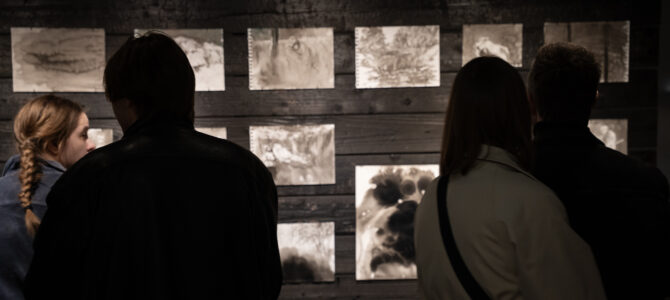
The Ninth Fort Museum in Kaunas has opened a new exhibition called “Raised from the Ashes, Kaunas,” a series of drawings by Mindaugas Lukošaitis.

Kaunas Jewish Community chairman Gercas Žakas expressed his own enchantment, respect and gratitude for the exhibit, as all as that of the Kaunas Jewish Community, and thanked the Ninth Museum, the organizers of the exhibit, the performer at the opening and the artist.

The exhibit will run till October 4.

LJC Hosts TOLI Seminar

LJC Hosts TOLI Seminar

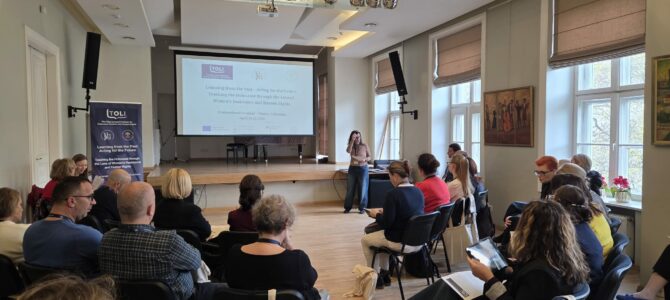
The Lithuanian Jewish Community hosted for the seventh time last week a seminar organized by the New York-based Olga Lengyel Holocaust Studies and Human Rights Institute (TOLI) and the International Commission to Assess the Crimes of the Nazi and Soviet Occupational Regimes in Lithuania. Thirty teachers from 15 countries attended.

The motto for this seminar was “Learning from the past, we work for the future.” The seminar provides participants the opportunity to hear Holocaust testimonies from survivors and provides access to the best research material in order to attempt to make sense of what happened and what the consequences were and are.