History of the Jews in Lithuania

News from the Panevėžys Jewish Community

News from the Panevėžys Jewish Community

Every month the Panevėžys Jewish Community celebrates its members’ birthdays and anniversaries. In July and August we congratulated Diana Narevič and Rimantas Rimkus and Jurijus and Svetlana Grafman on their anniversaries.

We also provided and provide material support to our members.

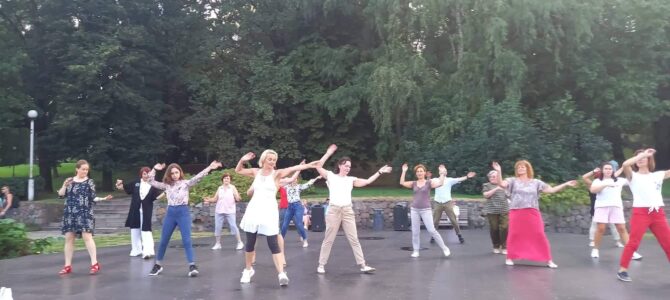
Despite summer vacations, cultural and athletic events are being held and members are participating in Panevėžys regional events and scouting activities.

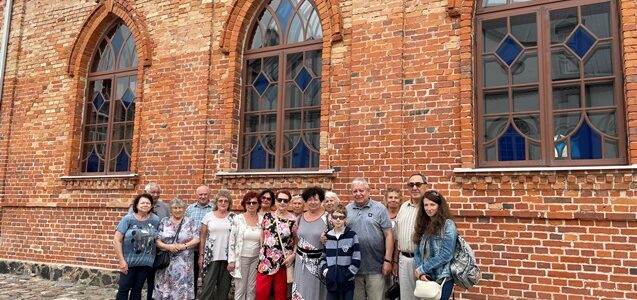
In the summer we usually have a large number of guests who care about their family histories. They often talk about their families over a cup of tea at the Panevėžys Jewish Community. One of the newer stories is about a family who emigrated to South Africa, then later between 1900 and 1910 they went their separate ways to Canada, China, England and Israel. They came back to Lithuania to learn about the former shtetl where their forebears once lived.

Happy Birthday to Semionas Finkelšteinas

Happy Birthday to Semionas Finkelšteinas

We wish a very happy milestone birthday to Semionas Finkelšteinas, modern founder and president of the Lithuanian Makabi Athletics Club and head of Lithuanian Makabi delegations abroad. We wish you great health, happiness and a continued sharp wit. Mazl tov. Bis 120!

Jewish Headstones Removed From Vilnius Church, Returned to Jewish Cemetery

Jewish Headstones Removed From Vilnius Church, Returned to Jewish Cemetery

As restoration took place on the Evangelical Reformist Church [used as the Chronika cinema in Soviet times] on Pylimo street in Vilnius, it was discovered Jewish cemetery headstones had been used for the front stairs leading to the main entrance. They have been returned to a Jewish cemetery, the Lithuanian Cultural Infrastructure Center reported.

When restoration work began, local residents noticed some kind of inscriptions on the stones. Experts from the Lithuanian Jewish Community were able to determine the origins of the stones from the shallow inscriptions, in some places barely visible. They approached Lithuania’s Cultural Heritage Department and commission was formed which determined the stones were actually Jewish grave markers. The stairs were removed and the monuments were sent to the old Jewish cemetery.

Lithuanian News Site on Pakruojis Synagogue

Lithuanian News Site on Pakruojis Synagogue

Pakruojis Synagogue is a Monument to All the Jewish Houses of Prayer Which Stood in Lithuania

15min.lt, reprinted from a facebook user

It’s believed there were about 500 or 600 different Jewish houses of prayer in our country, although no one knows the exact number. There might have been more than 100 synagogues in Vilnius alone.

Most of Lithuania’s synagogues were wooden, but today we only have about a dozen. On the other hand, no other European state has so many surviving wooden synagogues.

The question of restoring these historically and culturally very valuable wooden buildings is coming up more and more. One wonderful example of a restored wooden synagogue stands in the town of Pakruojis. After walking through its interior and getting a closer look at its careful restoration, I was pleasantly surprised at what had been returned from the ravages of time, people’s neglect and even fires.

Full text in Lithuanian here.

Jerusalem of the North Orchestra Camp

Jerusalem of the North Orchestra Camp

The Jerusalem of the North youth orchestra camp will take place from August 15 to 25 at the Preila Library in Preila on the Curionian Spit in Lithuania under the tutelage of renowned Lithuanian conductor professor Donatas Katkus, Martynas Švegžda von Bekker, Dalia Dedinskaitė, Gleb Pyšniak and Darius Mažintas. The 10-day orchestra workshop will conclude in a joint concert with Vilnius’s St. Christopher Orchestra and the new orchestra made up of young participants, performing a jointly-prepared program of Jewish music.

“The Jewish culture of education means the book, music and sports. It’s not for nothing that the Jewish people have been literate for more than 5,000 years. The Lithuanian Jewish Community is happy the orchestra convened at this camp will perform Jewish music. That there aren’t many Jewish children attending the camp this year is, I think, a tourism mistake. Israeli families would love to vacation in Nida while their children attend camp and learn. There should be greater state support brought to these sorts of private and NGO initiatives. The children and adults who will prepare this concert will learn about Jewish composers. We all know how to talk about tolerance, but not all of us know how practice tolerance through deeds. The LJC and the orchestra are doing tolerance, which is what the state institutions should be doing,” Lithuanian Jewish Community chairwoman Faina Kukliansky explained.

Litvak Descendant Jenny Kagan Opens Interactive Holocaust Exhibit in Kaunas

Litvak Descendant Jenny Kagan Opens Interactive Holocaust Exhibit in Kaunas

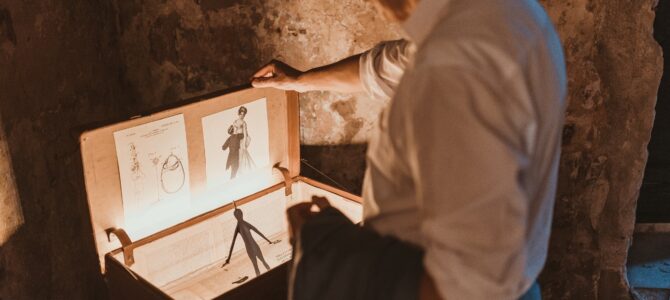
Litvak descendant and artist Jenny Kagan has opened an exhibit telling her family’s story during the Holocaust. The “Out of Darkness” exhibit’s main motif is that of a box, the one in which her parents Joseph and Margaret hid, among the few survivors of the Kaunas ghetto. Through interactive objects and audio/video installations the exhibit tells her family history. She told BNS she wanted to provide exhibit goers with a real emotional experience. She added that while the story is a narrative, she comes from a theatrical background and decided to make the experience a theatrical one. The exhibit was first installed in the atmospheric Viaduct Theatre in Halifax, Nova Scotia, in 2016.

Full story in Lithuanian here.

Memory Wars

Memory Wars

Lithuanian Archive reference LCVA R683, aprašas 2, byla2 lapas 80

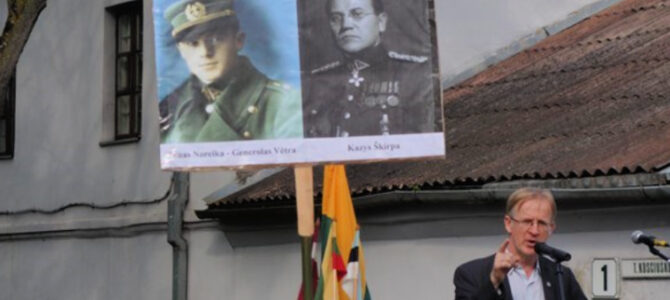
“Memory Wars” are fought worldwide. The United Nations and Jew-haters everywhere appear to have reasonable certitude that Jews do not have much of any historical link to Israel, and should not “occupy” Israel. History is a tool of propagandists, able to be rewritten to fight any current conflict and to re-frame a national identity. Soviets did it, North Korea does it, Putin does it, Lukashenko in Belarus does it. But no government in the world has developed historical revisionism into the art form that Lithuania has. They have created an entire government agency to rewrite history, called “The Genocide Center.”

Lithuanian Government

The following is an excerpt from a text by the Center for the Study of the Genocide and Resistance of Residents of Lithuania (the Genocide Center) titled “On Accusations against Jonas Noreika (General Storm), March 27, 2019, Vilnius”:

Five EU Countries Who Shouldn’t Be Throwing Stones

Five EU Countries Who Shouldn’t Be Throwing Stones

Efraim Zuroff

Accusing Russia of rewriting the Holocaust for its current propaganda is fair, but not when you’ve always whitewashed the Holocaust for your own purposes

Several days ago I was shocked to learn that five heads of state from Lithuania, Romania, Estonia, Latvia and Poland, all post-Communist Eastern European countries, had recently beseeched the leaders of the European Union to step up efforts to “preserve historical memory.” It was addressed to the European Council president, European Commission president and the Czech prime minister, whose country currently holds the rotating EU presidency.

For the past three decades since their transition to democracy, these countries have excelled in grossly distorting their own respective histories of the Holocaust. Yet the quintet of leaders now maintains that the Kremlin “is seeking to rewrite history and use it to justify its aggression against sovereign states.” Thus they urge the bodies of the EU to take a leadership role in “preserving historical memory and preventing the Russian regime from manipulating historical facts.” They contend that this concern “is particularly relevant in light of Russia’s intensive use of history for propaganda purposes in the context of the war in Ukraine.”

Full editorial here.

Tisha b’Av on Saturday

Tisha b’Av on Saturday

Tisha b’Av, the 9th day of the month of Av on the Hebrew calendar, falls on Saturday, July 6 this year.

Tisha b’Av commemorates the destruction of the First Temple of Solomon ca. 587 BCE and the Second Temple in 70 CE in Jerusalem and is traditionally a day of fasting and mourning. Observance includes five prohibitions, the main one being a 25-hour fast. The Book of Lamentations is read in the synagogue followed by the recitation of kinnos, liturgical dirges for the Temple and Jerusalem. Since the day has become associated with other major Jewish tragedies, some kinnos recall other events, including the murder of the Ten Martyrs in ancient Rome, pogroms against medieval Jewish communities and the Holocaust.

According to tradition, the sin of the Ten Spies is the real origin of Tisha B’Av. In the Book of Numbers, 13:1-33 when the Israelites accepted their false report of the Promised Land, they wept, thinking God could no help them. The night the people wept and wailed was the ninth day of Av, which then became a day of weeping and misfortune for all time, according to tradition, following which the Jews were made to wander the desert for 40 years.

Video from Opening of Exhibit of Interwar Litvak Photographers Mausha Levi and Shimon Bayer

Video from Opening of Exhibit of Interwar Litvak Photographers Mausha Levi and Shimon Bayer

The Maironis Museum of Lithuanian Literature and Faina Borovsky organized an exhibit of the photography of interwar Litvak photographers Mausha Levi and Shimon Bayer which opened July 28 at the museum located at the Old Town Square, Rotušės aikštė no. 13, in Kaunas. The exhibit is part of the Kaunas, Capital of European Culture 2022 program. The video below shows the opening of the exhibit, visited by both Gercas Žakas, chairman of the Kaunas Jewish Community, and Robert Gilchrist, US ambassador to Lithuania.

Litvak Descendant Jenny Kagan Comes Back to Kaunas: How Can You Live Here When You Know Any Passerby Might Have Beaten Your Father to Death?

Litvak Descendant Jenny Kagan Comes Back to Kaunas: How Can You Live Here When You Know Any Passerby Might Have Beaten Your Father to Death?

Lithuanian state radio and television has published an interview with Jenny Kagan:

As Margarita Štromaitė, born in Kaunas, wrote in her memoirs, her future husband she met in the ghetto, Juozas Kagan and his mother Mira were rescued by Vytautas Rinkevičius’s family: “Regardless of the deadly danger, which threatened his entire family, he set up a hiding place for us in the attic of the forge. It was where the straw was, separated by an imaginary wall.” Twenty years after the Holocaust Margarita met her only surviving relative, her brother Aleksandras Štromas. In 1965 she and Joseph had a daughter, Eugenia. Or Jenny.

Jenny Kagan will be in Kaunas beginning August 4 for the exhibit “From Darkness” which is part of the Kaunas Capital of European Culture 2022 program, which will present her family history in subtle artistic techniques including text and audio, revealing previously unknown pages from the story of Kaunas.

This is also the story of the humanness and light we require to survive as a civilization. The exhibit will be held at Gimnazijos street no. 4 in Kaunas as part of the Histories Festival of the Kaunas Capital of European Culture 2022 program.

Full interview in Lithuanian here.

Panevėžys Jewish Community Celebrates 30th Birthday

Panevėžys Jewish Community Celebrates 30th Birthday

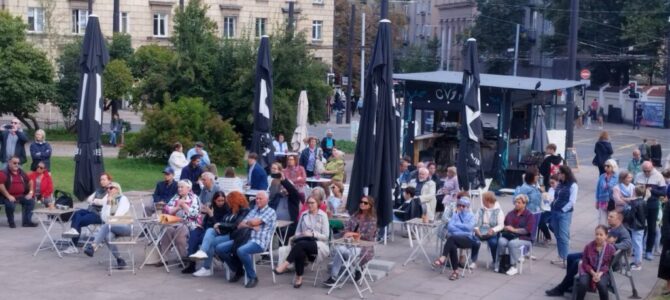
On July 24 members, partners and friends of the Panevėžys Jewish Community gathered to celebrate the organization’s 30th birthday. Chairman Gennady Kofman thanked active members of the community in carrying on Jewish tradition and preserving Jewish heritage and gave special thanks to supporters and partners for their contribution in expanding the Community’s activities.

Community members recalled how the Community was formed and paid respects to its first chairman, the journalist Anatolijus Fainblumas, and others. Sincere words of gratitude went to Righteous Gentile Jonas Markevičius’s son Vidmantas and daughter Janina, who have helped promote the Community as well in the local community. Thanks were given to executive board members Jurijus Grafman and his wife Svetlana. Deep gratitude was expressed for the Lithuanian Jewish Community and its chairwoman Faina Kukliansky.

Chairman Kofman told the 30-year story of the Community. On July 8, 1991, the Panevėžys Jewish Community was officially reconstituted and articles of incorporation filed at the Panevėžys municipality. Goals and duties were set then: “To develop the national consciousness of members, to raise the level of culture and spirituality, to conduct our activities based on exemplary behavior and sincerity, to cooperate with all sorts of democratic organizations and religious confessions,” etc.

Thank You to Faina Kukliansky

Dear chairwoman,

I am sincerely grateful to be part of the program “Support for Rescuers of Jews during World War II.” I would like to give a big thank you to senior coordinator Ema Jakobienė, social programs department director Michail Segal and to your entire wonderful collective, thanks to whom I am receiving material and financial support.

My parents, Stasė and Pranas Karalevičiai, rescued 19 citizens of Jewish ethnicity during the war. As a six-year-old I also contributed to this honorable activity to the extent that I could. I was awarded the Life-Saver’s Cross which was presented by president Valdas Adamkus.

Respectfully,

Elena Čepanonienė
Semeliškės, Lithuania

Limmud in the Woods 2022

Limmud in the Woods 2022

The annual international Limmud conference will be held August 19 and 20 in the woods of south Estonia. To register, go to the Limmud page here. For more information, check out Limmud’s facebook page here.

Happy Birthday to Gennady Kofman

Happy Birthday to Gennady Kofman

The entire Lithuanian Jewish Community wishes Panevėžys Jewish Community chairman Gennady Kofman a terrific milestone birthday. He has done so much to collect and share information about the city’s once numerous Jewish community, and always finds the time and energy to meet and help travellers looking for their roots and to teach school children and the wider community about the Holocaust. Mazl tov. Bis 120!

Condolences

Richard Freund passed away in Charlottesville, Virginia, on July 14 due to complications involving a bone-marrow transplant he received 18 years ago. He was 67. Freund was a frequent visitor to Vilnius and a friend of the Lithuanian Jewish Community. Besides annual summer digs at the Great Synagogue site in Vilnius, revealing many new facts and the existence of surviving elements and a few surprises at that site, he also headed the non-invasive investigation of the escape tunnel dug by the brenner kommando at Ponar, Jews who were forced to exhume corpses, burn the flesh and crush the bones, who themselves were slated for death upon completion of their task aimed at hiding Holocaust crimes. The rediscovery of the tunnel was featured in an hour-long documentary by NOVA on the American public television network PBS. Freund also led the effort to map the lost Jewish shtetl of Rumshishok (Rumšiškės) just outside Kaunas flooded in the post-war period to create a hydroelectric generation station, and worked on a number of other Jewish sites in Lithuania. He also used non-invasive techniques to investigate the Warsaw ghetto in 2021.

Freund always found the time in the middle of his work to explain his finds to interested on-lookers, and presented his findings to the Lithuanian Jewish Community in a series of presentations in Vilnius.

We mourn his loss and extend our deepest condolences to his widow Eliane, his three children Eli, Ethan, and Yoni and his many other family members and friends at the University of Hartford and around the world.

Condolences

We are sad to report the death of our volunteer, medical doctor and otorhinolaryngologist (head and neck medicine) Valentina Barsukaitė on July 13. She was born in 1938. We extend our deepest condolences to her daughter, Veronika, and her many friends and colleagues.

Who Are the Degenerates Now?

Who Are the Degenerates Now?

Grant Gochin

In a study by the UN titled ”History under Attack,” António Guterres, secretary-general of the United Nations, stated: “Understanding the history of the Holocaust is crucial to safeguarding our future. This is particularly crucial as we see some seeking to rewrite history or to whitewash and rehabilitate those who committed crimes against humanity. If we fail to identify and confront the lies and inhumanity that fueled past atrocities, we are ill-prepared to prevent them in the future.” This article borrows heavily from this UN study.

UN Findings

The UN finds that Holocaust distortion is just as pernicious as Holocaust denial. Holocaust distortion depends upon and spreads antisemitism. It threatens the ability to remember and learn from the past by misrepresenting the historical record. It is an attack on truth and knowledge. It feeds on and spreads antisemitic tropes and prejudices, and threatens our understanding of one of the most tragic and violent histories–the genocide of six million Jews.