History of the Jews in Lithuania

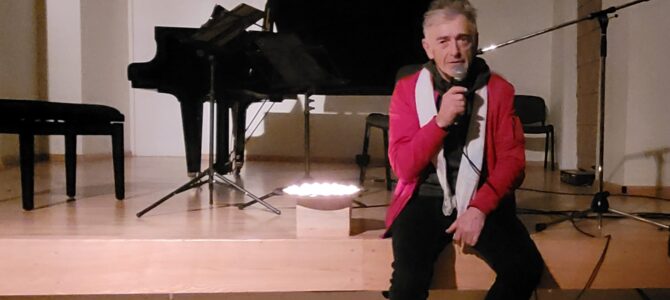
Kaunas Jewish Community Holding Concert to Commemorate Herman Perelstein

Kaunas Jewish Community Holding Concert to Commemorate Herman Perelstein

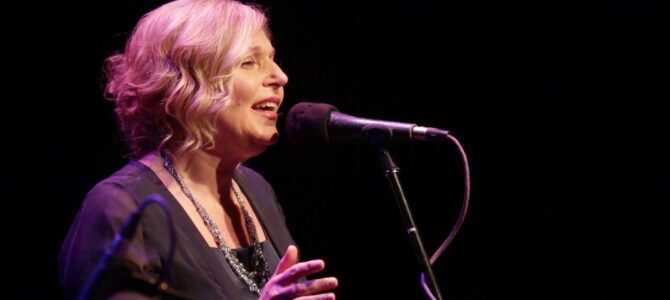
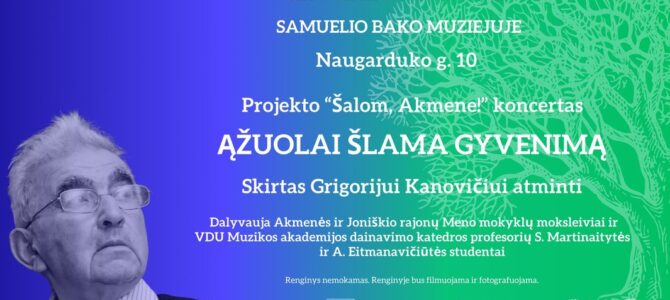
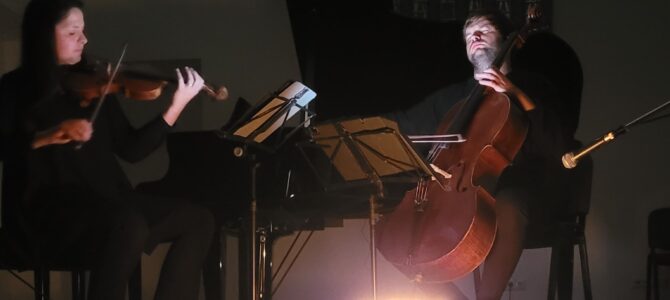
The Kaunas Jewish Community is holding a concert to celebrate the 100th birthday of Herman Perelstein, the renowned choir director and professor. The concert and birthday party is being called Šefas, Lithuanian for boss. It happens at 7:00 P.M. Monday, November 6, at the Kaunas State Philharmonic, Ožeškienės street no. 12, Kaunas. It will include a performance by the Ąžuoliukas boys choir Perelstein founded, other performances and recollections from students about the man. It is free and open to the public. The Kaunas Jewish Community thanks the Kaunas city municipality and Goodwill Foundation for making this event possible.

Grosse Aktion Marked in Kaunas

Grosse Aktion Marked in Kaunas

Members of the Kaunas Jewish Community and the general public turned out on the last weekend in October to mark the anniversary of the Grossaktion, the mass murder operation during which around 10,000 Jews were taken from the Kaunas ghetto and murdered at the Ninth Fort in a 25-hour period on October 28 and 29, 1941.

The entire population of the Kaunas ghetto was assembled on Democrat Square inside the ghetto where Gestapo officer Helmut Rauca personally selected many of the victims. Rauca later found refuge in Canada, where he opened a holiday resort on a lake in Ontario. He was never tried.

Simon Karczmar Exhibit Opens

Simon Karczmar Exhibit Opens

Photo: Left: Simon Karczmar and wife

The Old Town Hall in Vilnius will open an exhibit of paintings by Litvak artist Simon Karczmar (1903-1982) at 6:00 P.M. on Monday, November 6. Originally from Dieveniškės, Lithuania, Karczmar moved to Jerusalem later. The exhibit runs till November 30.

Žemaitaitis Update

Žemaitaitis Update

Lithuanian MP Remigijus Žemaitaitis came under fire last spring for posting anti-Semitic and anti-Israel statements on facebook. He was removed from his party and condemned by other political parties, but when he refused to apologize and continued to make similar posts, the ruling coalition sought to impeach and remove him as a member of parliament. The opposition were initially cool towards the idea, but warmed to it after Hamas attacked Israel two weeks ago. The ruling coalition and speaker of parliament filed a complaint with the prosecutor general alleging the MP was sowing ethnic discord against Jews in Lithuania. The prosecutor’s office is calling the MP a “special witness” because he enjoys parliamentary immunity from prosecution. Žemaitaitis says the impeachment commission was formed outside the bounds of parliamentary regulations and is unconstitutional. All sides agree the commission’s initial findings will have to be adjudicated by a court of law, most likely Lithuania’s Constitutional Court, before proceeding to the next stage in the process. This is the latest installment in the on-going saga.

Impeachment Commission No Longer Inviting Remigijus Žemaitaitis to Testify: MP Intentionally Avoiding Attending Meetings
by Gailė Jaruševičiūtė-Mockuvienė, Lrytas.lt, October 23

As Lithuanian MP Remigijus Žemaitaitis continues to fail to appear at meetings of a special interpellation commission, the commission resolved Monday not to send any more summons to the MP.

“We won’t undertake additional measures. We will simply send an access link to all meetings we hold in the future and will provide the member of parliament the chance to connect and explain his position,” commission chairman Arūnas Valinskas said during the commission meeting held Monday.

Valinskas said Remigijus Žemaitaitis’s refusal to present his own explanations could be interpreted as a conscious effort to discredit the commission’s actions, and might include using loop-holes in the parliamentary statute for that purpose.

Šiauliai Ghetto Doctor’s Testimony Recalls Drowning “Illegal” Newborns

Šiauliai Ghetto Doctor’s Testimony Recalls Drowning “Illegal” Newborns

Photo: Šiauliai ghetto territory in 1988, unknown photographer, courtesy Ninth Fort Museum.

by Kristina Tamelytė, LRT.lt, October 15, 2023

“A young girl had to be killed so we decided to drown her,” doctor Aharon Pitsk wrote in his diary in 1942. He died just before the Šiauliai [Shavl] ghetto was “liquidated” with surviving ghetto prisoners sent on to Dachau and Stutthof. Šiauliai had a Jewish population of over 8,000 people before the Holocaust and only a few hundred survived.

The Nazis issued an order it was illegal for Jews to procreate so a newborn was a danger to the family, the community and everyone. Unborn children also posed a danger so ghetto officials encouraged and demanded women get abortions. This was considered the lesser evil, the death of one person instead of several. The children who were born were subject to poisoning. This often wasn’t lethal so “a more effective method” was found.

Pitsk called Lithuania “my homeland” in his diary.

Condolences

With deep sadness we report the death of Ida Vileikienė on October 17. She was born in 1942 in the Šiauliai ghetto. The Lithuanian Jewish Community sends our deepest condolences to her widower Petras, daughter Svajonė and son Donatas.

Kaunas Jews Deeply Worried about War in Israel

Kaunas Jews Deeply Worried about War in Israel

Photo from AFP

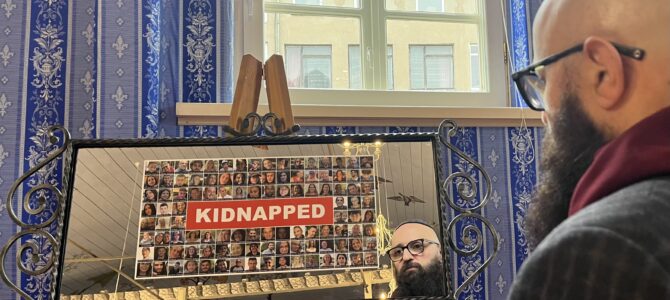
Kaunas resident Bella Shirin communicates with her relatives in Israel, which has turned into a kind of hell, day and night. She fears for her son, grandchildren and great-grandchildren who are now spending most of their time in a hiding place in their apartment.

Eyes without Pity

Shirin returned to Kaunas from Israel seven years ago after experiencing two wars in Israel. She says she has looked into the eyes of an Hamas close-up.

All she saw there, she says, was hatred for Jews.

Condolences

We are deeply saddened to report the death of Ida Vileikienė, a long-time member of the Šiauliai Jewish Community. The Šiauliai Jewish Community sends our deepest condolences to her husband Petras, daughter Svajonė and grandson Donatas.

Šiauliai Jewish Community


Statement by Lithuanian Jewish Community, All 32 Constituent Members, about the War in Israel and the Situation in Lithuania

Statement by Lithuanian Jewish Community, All 32 Constituent Members, about the War in Israel and the Situation in Lithuania

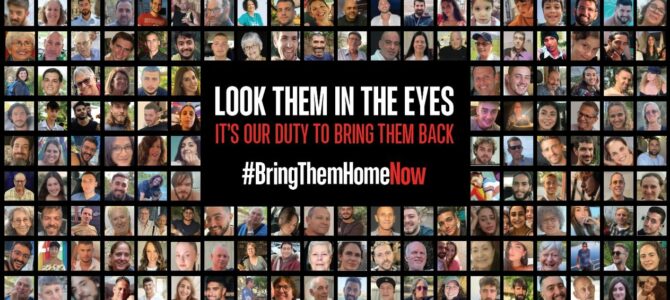
When terrorist group Hamas attacked Israel on October 7 the world witnessed acts of incomprehensible brutality where women, children, the disabled and the elderly were taken hostage and murdered, taken hostage and used as human shields, and publicly tortured and executed.

We say with no reservations at all that Israel is a sovereign state. No one has the right to attack Israel, to invade Israel’s territory and to murder the people of Israel. There can be no justification nor mercy of any kind for the murderers.

Today, 50 years later, the words of beloved Israeli prime minister Golda Meir sound prophetic: we had a secret weapon in the war: there was no alternative. Again Israel is fighting for survival.

This brutal war is especially painful to the members of the Lithuanian Jewish Community, there is no Jewish family in Lithuania whose members haven’t been touched by these terrific events. Our close relatives are fighting on the front lines, healing the wounded, rescuing people buried in rubble, helping those who are stuck and who could die. We are extremely proud of them.

Our thoughts and hearts are with our parents, brothers, sisters, children, grandchildren and friends who remain in Israel. With every person fighting for our historical homeland. With everyone who is experiencing the horror and loss.

Unfortunately it isn’t just our relatives in Israel who have found themselves in danger, but also in Lithuania. In the country where we were born, grew up and work, the country which we love, whose citizens we are, anti-Semitism is spreading, not just on the social media and at protests, but from the podium at the Lithuanian parliament, and even children are being attacked: they are being threatened and hurt on purpose. Yesterday a Bolt taxi driver of dark complexion who didn’t speak Lithuanian asked a minor, a child, what his ethnicity was, and when he found out his passenger was Jewish, he refused to take him to school. This is certainly not the only and not the worst incident, but it’s very illustrative of the situation.

These kinds of incidents make our community feel unsafe, but we are concentrated and unified, we are unified both by our thousands of years of history, but also by the future.

We are inn close cooperation with the Lithuanian Police Department and other security structures. Ee are in continual contact with the Israeli Ministry of Foreign Affairs, the Lithuanian embassy to Israel and international Jewish organizations. We are exchanging information and sharing data.

Despite the shock of it all, we are striving to help Lithuanian citizens stranded in Israel as well, and to help Israeli citizens in Lithuania to fly home. We are providing information, consulting, helping to provide solutions to the unexpected problems which have come up all at once.

We thank Lithuanian president Gitanas Nausėda, speaker of parliament Viktorija Čmilyte-Nielsen and prime minister Ingrida Šimonytė for the firm support for Israel and the Lithuanian Jewish Community they have expressed. We are very encouraged Lithuania has condemned unequivocally the actions of the terrorists and has stood for the right and just side.

We are extraordinarily grateful to the people of Lithuania as well who have sent us their messages of condolence and support and who are praying for our brothers and sisters taken hostage by the terrorists. At the same time we caution people should assess critically the information they receive and only share news from official Israeli institutions and agencies.

Am Yisral khai. The people of Israel live.

Faina Kukliansky, chairwoman
Lithuanian Jewish Community

Event to Mark 80th Anniversary of Kinder Aktion in Šiauliai Ghetto

Event to Mark 80th Anniversary of Kinder Aktion in Šiauliai Ghetto

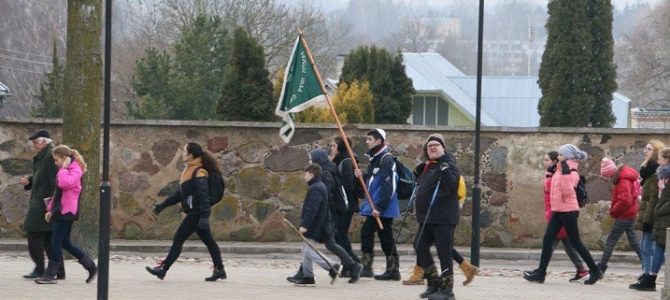
On November 5, 1943, the Kinder Aktion, one of the most brutal Holocaust crimes perpetrated in Lithuania, was carried out in the Šiauliai ghetto. The mass murder operation aimed at Jewish children took 725 of them and they were sent to Auschwitz in cattle cars where they were murdered. The Lithuanian Jewish Community and the Šiauliai City and Šiauliai Regional Jewish Communities invite you to remember and commemorate the victims of this crime.

The event begins at 12:00 noon on November 5 at the stone monument on the corner of Trakų and Ežero streets marking the location of one of the former gates to the ghetto. At 12:30 P.M. a procession leads from there to the Chaim Frankel villa. At 1:00 P.M. there will be a ceremony at the villa to remember the children murdered. The villa is located at Vilniaus street no. 74 in Šiauliai. This will include the opening of a joint exhibition by the Šiauliai City Jewish Community and Yad Vashem museum of photographs of the child victims of the Kinder Aktion.

Please note: Those wishing to attend the commemoration on November 5 are asked to register by sending an e-mail to info@lzb.lt.

Famous Russian/Soviet Blues Guitarist to Perform at LJC

Famous Russian/Soviet Blues Guitarist to Perform at LJC

Renowned blues and rock guitarist Yuri Naumov, originally from Sverdlovsk but transplanted to Novosibirsk and since 1990 based in the United States, will perform at the Jascha Heifetz Hall at the Lithuanian Jewish Community on October 21.

An accomplished song writer and composer, he gained fame in January of 1983 when he formed the band Prokhodnoy Dvor, which included Vladimir Zotov on drums and Oleg Kurokhtin on guitar. After the band issued a bootleg tape, they became popular in the USSR, and the KGB forced Naumov to leave Novosibirsk Medical University for “the promulgation of decadent Western values.” He initially sought refuge in Leningrad and Moscow. In 1990 Naumov moved to New York. Naumov plays a unique 9-string guitar custom-built for him by famous violin maker Sergei Nozdrin in the 1980s. He used to tour Russia once or twice a year.

Of Italian and Jewish origins, Naumov’s rock ballads have long been considered classics, including the Tale of Karl, King of Rock and Roll; Stanislov Theater and Starry Night. Many call him the greatest Soviet and greatest Russian bluesman ever.

Time: 6:00 P.M., Saturday, October 21
Location: Lithuanian Jewish Community, Pylimo street no. 4, Vilnius

Tickets available at www.bilietai.lt.

Guests from Kupiškis Join Sukkot Celebrations in Panevėžys

Guests from Kupiškis Join Sukkot Celebrations in Panevėžys

A delegation from the town of Kupiškis attended the Sukkot celebration by the Panevėžys Jewish Community and presented a new book and student art exhibit about the former Jewish community in the small town.

The local history book “Kupiškio žydų bendruomenės atspindžiai. Kupiškėnų atsiminimai apie žydų bendruomenė” [Reflections of the Kupiškis Jewish Community: Kupiškis Residents Recall the Jewish Community” was compiled by historian Aušra Jonušytė who also delivered an address at the Sukkot celebration about the former Kupiškis Jewish community and their fate. Book illustrators Augustė Žalkauskaitė, Nojus Pajarskas and Vytė Sabaliauskaitė spoke about their work on the book.

Kupiškis regional NGO coalition executive chairwoman Marytė Semaškienė and art school principal Daiva Šakickienė also spoke in Panevėžys. Šakickienė’s students from the Kupiškis Art School also presented an exhibit of their works of art revolving around the former Kupiškis Jewish community.

Intellectual Heritage of Vilner Jews

Intellectual Heritage of Vilner Jews

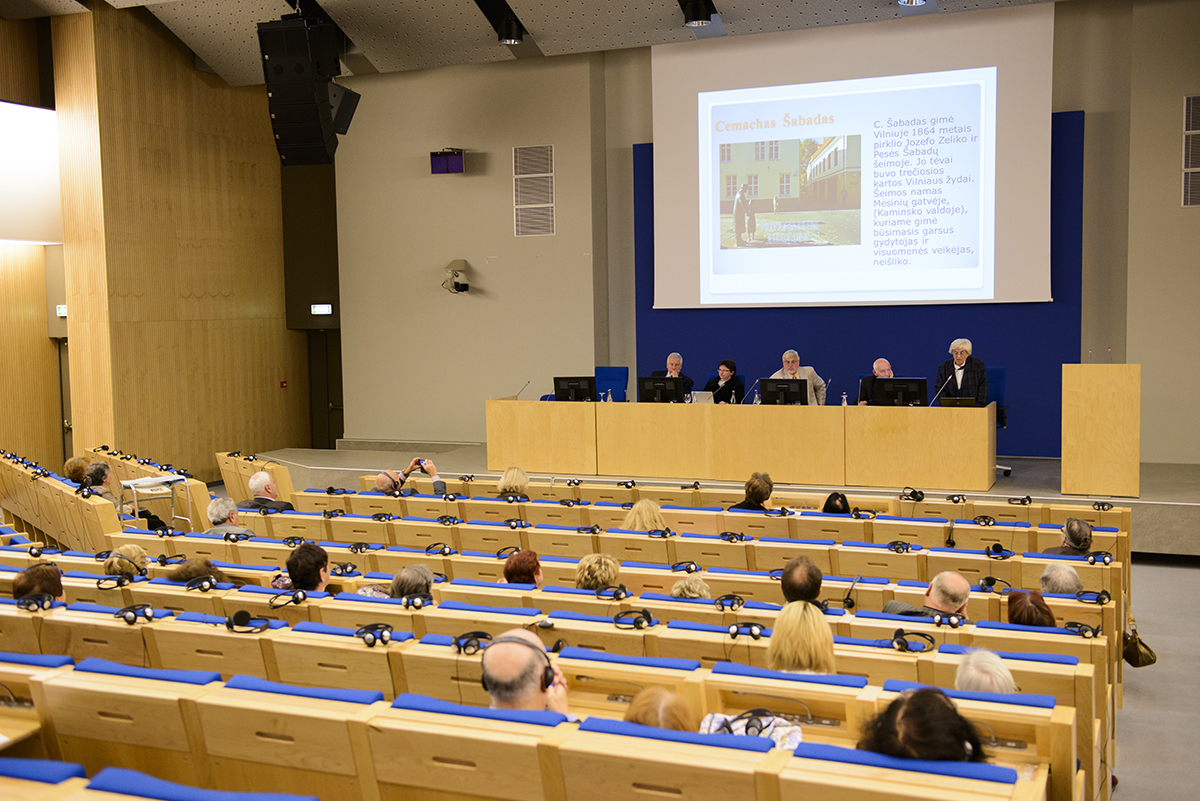
The Lithuanian Academy of Sciences and the Israeli Academy of Sciences and Humanities invite you to attend an international conference called “The Intellectual Heritage of the Jews of Vilnius” on October 10 and 11 at the Lithuanian Academy located at Gedimino prospect no. 3 in Vilnius.

According to the Lithuanian Academy’s press release:

“Thanks to the support of the Research Council of Lithuania, we were able to invite such world-renowned experts in Jewish history and culture as Israel Bartal, David Fishman, David Roskies, Benjamin Brown, Alex Lubotzky, Marcin Wodzinski, Jon Seligman, Avner Holtzman, Tsvia Walden, Mordechai Zalkin and others.

“The conference will also feature presentations by prominent Lithuanian scholars: Giedrė Jankevičiūtė, Mindaugas Kvietkauskas, Lara Lempertienė, Jurgita Verbickienė and doctoral student Saulė Valiūnaitė.”

A program is available in English here.

For more information, visit the Lithuanian Academy’s website here.

Holocaust Monuments Vandalized in Palanga

Holocaust Monuments Vandalized in Palanga

Palanga Jewish Community chairman Vilius Gutmanas contacted the city mayor and police regarding the desecration of Holocaust monuments in the Lithuanian seaside resort town.

Lithuania marked both the 80th anniversary of the liquidation of the Vilnius ghetto and the Lithuanian Day of Remembrance of Jewish Victims of Genocide during the third week in September. On September 22 the Palanga Jewish Community, city representatives, teachers and students lit candles, placed stones inscribed with the names of victims and read passages from the history of the Jews of the city at a Holocaust monument there. The next day all the candles and stones had been removed.

“This came as an unpleasant surprise to me and visitors from Israel who had read about the event which took place the evening before,” chairman Gutmanas said.

He also surveyed markers and monuments in memory of the Jewish victims of the Holocaust in the area and discovered much damage, including a stele marking the mass murder and mass grave site of Jewish women and children from Palanga erected by British House of Lords member Greville Janner in the Kunigiškiai Forest, and the complete removal of a monument including its plinth on Vytauto street.

“This isn’t the work of some accidental passer-by. Someone really hates that Lithuania is commemorating Holocaust victims, that we are paying our respects to innocent citizens of our country who were brutally murdered, that we are telling young people the facts about this tragic period of history so they can learn from the mistakes of the past and not repeat them,” the chairman of the Palanga Jewish Community said.

Discussion Club on Sukkot and Other Jewish Holidays: How Do They Compare with Lithuanian Holidays?

Discussion Club on Sukkot and Other Jewish Holidays: How Do They Compare with Lithuanian Holidays?

The 15th of Tishrei, which fell on Friday, September 29 this year, is when Sukkot, one of the more important Jewish holidays, begins. Jewish families pitch a tent or build a booth where every day, except on the Sabbath, they “dwell,” meaning they spend some time at the table inside, or spend the night in warmer climes. This is meant to remind us of the 40 years the Hebrew people dwelt in the desert following the exodus from Egypt living in tents.

The ŽydiškiPašnekesiai discussion club led by writer and journalist Arkadijus Vinokuras is inviting participants to come inside the traditional sukka this Wednesday, October 4, to talk about the Jewish holidays in the fall season.

“Sukkot is a week-long Jewish holiday which is celebrated five days after Yom Kippur. Sukkot celebrates the harvest and recalls God’s miraculous protection to the children of Israel after the exodus from Egypt. We celebrate Sukkot in a booth called a sukka decorated with vegetation and by handling the four species of vegetation,” Vinokuras said.

Victims of Holocaust Commemorated in Švenčionys

Victims of Holocaust Commemorated in Švenčionys

We commemorated the 80th anniversary of the mass murder of Jews in Švenčionys on Sunday. In October, 1943, the Švenčionys ghetto was liquidated and the last survivors of the 8,000 Jews who lived in the area before the war were killed.

Švenčionys Jewish Community chairman Moishe Shapiro organized the commemoration and invited LJC chairwoman Faina Kukliansky, Vilnius Jerusalem of Lithuania Jewish Community chairman Algirdas Malcas, Ukmergė Jewish Community chairman Artūras Taicas, Polish and German embassy representatives, district mayor Rimantas Klipčius, Vilnius Sholem Aleichem ORT Gymnasium principal Ruth Reches and a large contingent of students, among others, to light candles and lay wreaths at the Menorah statue in Švenčionys’s central park, marking the border of the ghetto there. Attendees also viewed an exhibit on Jewish history at the Nalšia Museum, then went to the mass murder site in Platumai village to commemorate the victims.

Telzh Yeshiva Reopens to Public

Telzh Yeshiva Reopens to Public

The famous Telzh (Tels, Telšiai, Telz) Yeshiva, a cultural heritage site, has reopened with a new public use. Last week a branch of the Alka Museum opened its doors inside the yeshiva building. The new museum space housed in the Jewish school will feature and protect the Jewish material heritage there.

The Telzh Yeshiva exhibit there was set up based on the yizkor Sefer Ṭelz (Sefer Ṭelz (Liṭa): matsevet zikaron li-ḳehilah ḳedoshah) compiled by Yitzhak Alperowitz and published in Israel in 1984. In 2022 the books was translated into Lithuanian as “Telšiai. Atminties knyga” [Telzh: Book of Memory], opening the door for Lithuanian speakers to discover the traces of Jewish life in the small town and find out more about its history.

Daring Dani Dayan and the Complicity of Lithuanians in the Holocaust

Daring Dani Dayan and the Complicity of Lithuanians in the Holocaust

Photo: Chairman of Yad Vashem Dani Dayan at the memorial ceremony in the Ponary forest, remembering the over 200,000 Lithuanian Jews brutally murdered during the Holocaust, at this very site, courtesy X, formerly Twitter, used in accordance with clause 27a of US copyright law.

by Efraim Zuroff

The locals may never own what they did, but Yad Vashem’s chairman spoke truth to power, calling out their role in eliminating a vibrant Jewish world

During the past two decades, virtually every country in Europe, and many in the Western Hemisphere, have adopted a Holocaust memorial day, many inspired by the decision of the United Nations to do so in 2005. Quite a few have chosen to follow the example of the UN by commemorating the date of the liberation of Auschwitz death camp on January 27, 1945, but others chose dates that mark significant events in the history of the Shoah in their respective countries. In some cases, the choice is a reflection of the significance of specific Holocaust events for their societies, or the desire, or lack thereof, to emphasize the complicity of local Nazi collaborators.

Thus, for example, France chose July 16, the anniversary of the mass arrest in Paris in 1942 of 13,152 French Jews, who were deported to their deaths in Auschwitz by the local police. Similarly, Hungary chose April 16, the date of the initial orders for the ghettoization of Hungarian Jewry, the prelude to the deportation of 437,000 of them to Auschwitz in spring of 1944. Bulgaria, by contrast, chose March 10, the date on which the government revoked its original plan to deport the country’s entire Jewish population to Treblinka.

Will Lithuania Take Responsibility for Holocaust after Dayan’s Seimas Address?

Will Lithuania Take Responsibility for Holocaust after Dayan’s Seimas Address?

by Silvia Foti

Yad Vashem Chairman Dani Dayan addressed the Lithuanian Seimas on September 21, 2023, three days before the Jewish holiday Yom Kippur, the Day of Atonement. He took the opportunity to proclaim loudly and clearly the widespread knowledge of Lithuanian participation in the Holocaust, urging Seimas members to stop glorifying Holocaust perpetrators.

For me, the speech was electrifying because it was a vindication of so much hard work by so many people who have been beating the drum of Lithuania’s Holocaust distortion–including Rūta Vanagaitė, Efraim Zuroff, Dovid Katz, Evaldas Balčiūnas, Andrius Kulikauskas, Arkadijus Vinokuras, and the three of us who are mostly focused on my grandfather Jonas Noreika, namely Grant Gochin, Michael Kretzmer, and myself.

Full text here.